
A contemporary accent chair is simply the piece you use to prove that a room was designed on purpose, not assembled by accident. It bridges the gap between stark modernism and curated comfort, yet the category spans sculptural shells, low-slung loungers, and bold upholstered thrones. The real challenge is matching the right silhouette to your space, traffic flow, and budget.
Below, six distinct interpretations show you exactly what works, who it suits, and what it takes to pull each one off.
Key takeaways
- A curved silhouette softens sightlines in open-plan rooms, but you’ll need at least 36 inches of clearance from the sofa to avoid blocking traffic.
- Pair a new sculptural chair with a dated sofa only if the seat heights fall within 2 inches of each other, or the mismatch reads as an accident.
- For compact spaces, pick an armless or low-back model under 30 inches wide, and test that you can pass a 24-inch path behind it when pulled out 12 inches for sitting.
- The rental-friendly route skips upholstery entirely, choose a powder-coated metal frame with a washable cushion cover, and expect to re-tighten joints every 6 months.
Curved Silhouette for Open-Plan Living
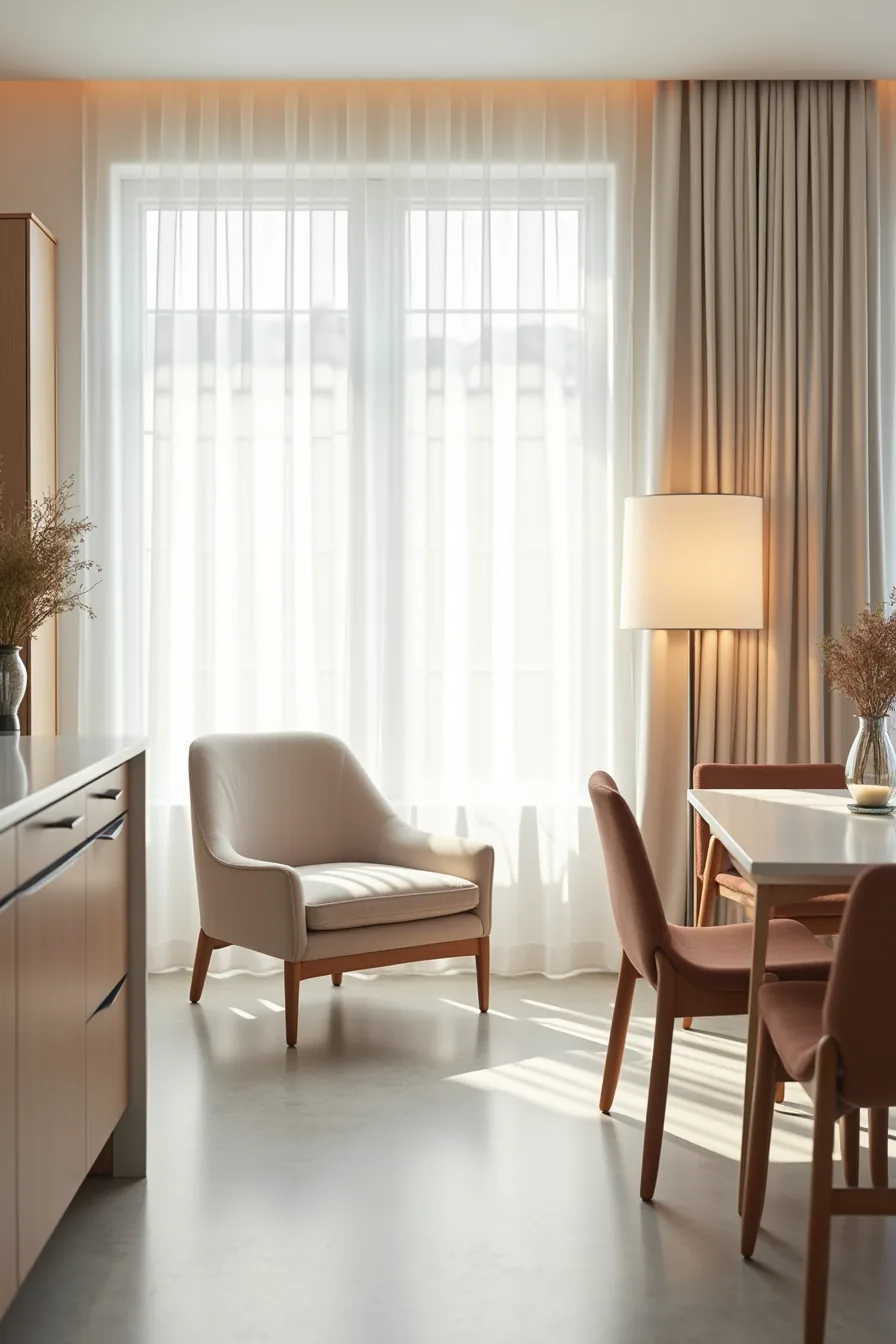
A curved contemporary accent chair earns its place in an open floor plan by doing what angular furniture can’t: it defines a zone without creating visual walls. Place one between the kitchen island and the living area, and its rounded back keeps sightlines open to the dining table beyond, so you maintain that connected feel while still separating functions. Traffic flows around its sweep naturally, making it a practical choice for households where people move constantly.
For medium to large rooms, look for a seat depth of 22-24 inches and an overall width under 36 inches, which allows the curve to read boldly without swallowing floor space. You want roughly 18-24 inches of clearance behind the chair for walkways, any less and you’ll be squeezing past it daily. Polished concrete floors like the ones surrounding this setup work beautifully here, but add felt pads to the legs if you’ve hard flooring to prevent scratches and noise.
The chair suits someone who hosts frequently and needs flexible seating that doesn’t interrupt the room’s flow.
Pairing a New Chair With an Old Sofa
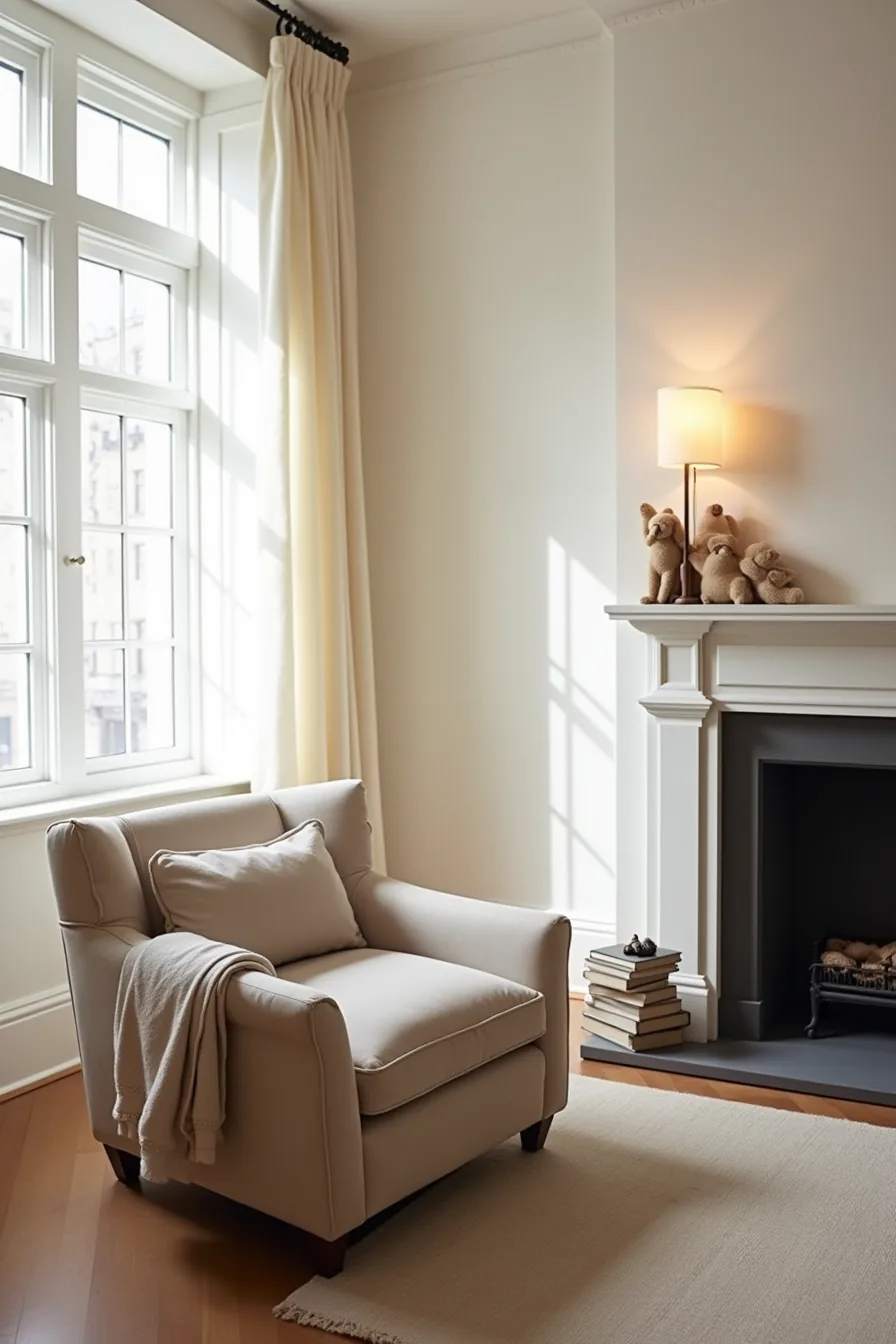
The trick to mixing a new contemporary accent chair with a vintage sofa is finding one shared language, usually color temperature or material weight, then letting the silhouettes disagree freely. In this setup, a natural linen chair sits beside a rolled-arm sofa in darker upholstery, and the connection works because both fabrics are matte and textural, even though their tones differ. Match your chair’s undertone to the sofa’s secondary color, not its dominant one, and you’ll avoid the mismatched-furniture-store look.
Scale matters more than style here. Your new chair should sit within 2-4 inches of the sofa’s seat height, and its arm height shouldn’t exceed the sofa’s by more than 3 inches. The shared throw blanket draped over the sofa arm visually ties the two pieces together without you having to buy matching fabric.
This approach suits a living room with a fireplace as the focal point, where both pieces face the same direction and the chair acts as a conversational anchor rather than a competing focal point.
Contemporary Neutral Look With Textural Layers
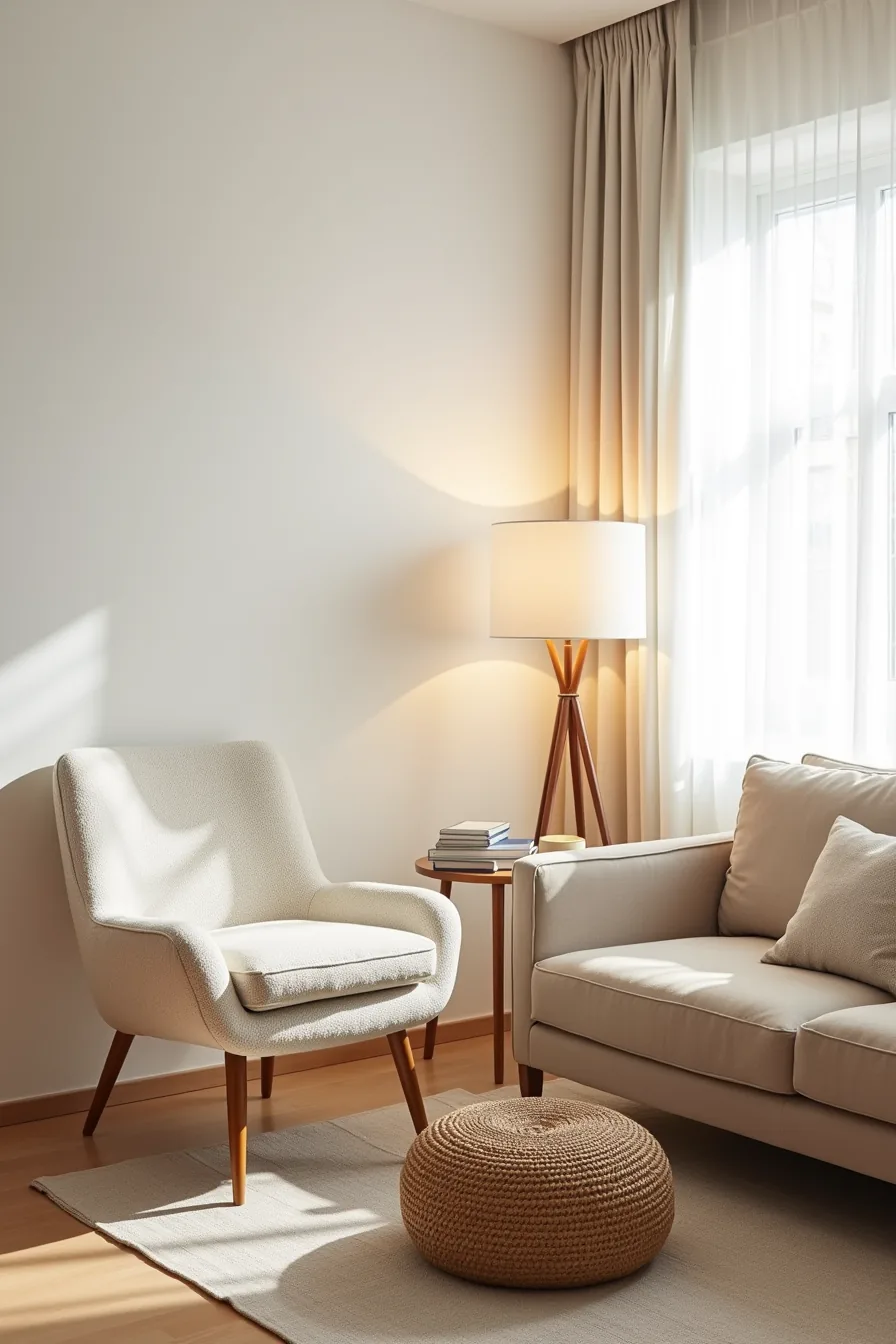
A contemporary neutral look never relies on color, it leans entirely on how materials meet the eye and hand. In a cream boucle accent chair beside an oatmeal linen sofa, the weave contrast does the work: boucle’s looped, nubby surface against linen’s flat, crisp weave creates two distinct visual weights in the same tonal family. The woven jute pouf between them adds a third texture, rough, coarse, and visibly handcrafted, so the grouping reads as intentionally layered rather than accidentally beige.
This approach suits living rooms with warm northern light, where subtle loom differences stay visible without harsh shadows. The boucle chair takes more maintenance than smooth upholstery: its looped fibers trap pet hair and need a vacuum with a soft brush attachment weekly. The linen sofa fades in direct sun within 18-24 months, so position it away from south-facing windows or add sheer-filtered curtains.
Keep all three pieces within 6-8 inches of each other to frame the pouf as a footrest and visually bind the textural trio into one narrative.
Compact Living Room Solutions Under 30 Inches Wide
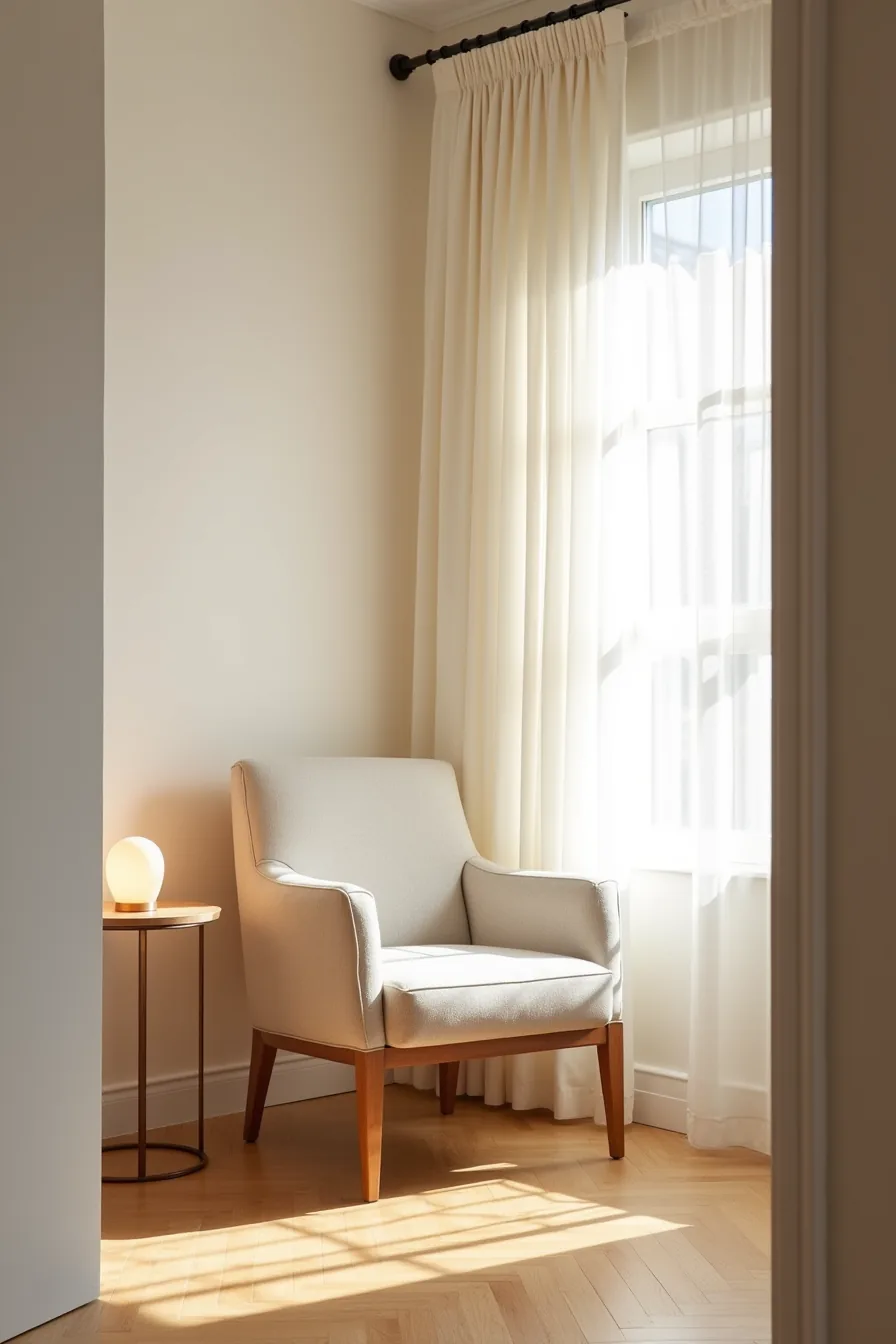
In a tight floor plan, the legless contemporary accent chair earns its keep by eliminating the visual gap beneath the seat, so the piece reads as furniture rather than an obstacle. A 26-30 inch wide, floor-hugging frame tucked into a corner nook against two walls claims zero circulation space; the adjoining round accent table sits perpendicular to the chair’s arm, keeping a drink within reach without extending the footprint. This placement works best in rooms where the doorway-to-window path stays clear, measure 24-30 inches of walkway in front of the chair before committing.
The corner orientation suits readers and phone-scrollers who value proximity to an outlet or daylight over conversation placement. Because there are no legs to lift the seat, cleaning underneath requires sliding the chair out or using a flat vacuum attachment; a low-pile rug simplifies this. For Contemporary Accent Chair Ideas for Compact Living Rooms, prioritize a fixed, rigid backrest, a low, sloping version offers no neck support when you sit upright against a wall.
Budget, Rental, and Investment Routes

Your purchasing strategy hinges on how long you plan to keep the chair and how much abuse it will take. A basic fabric chair with wood legs, typically in the $150-$400 range, covers short-term needs, but expect the seat cushion to flatten within two to three years of daily use. This route suits first apartments or staging a room you intend to redesign soon.
For rentals or high-traffic households, the slipcovered chair is your pragmatic middle ground. A washable slipcover in performance fabric runs $400-$900, and the ability to strip and launder the cover every few months protects your security deposit and your sanity. Choose a tailored fit with zippered cushions, loose, billowy covers shift constantly and need re-tucking weekly.
The high-end upholstered piece with turned legs represents the long-term play at $900-$2,500. These chairs use kiln-dried hardwood frames and high-density foam wrapped in down, holding their shape for a decade or more. You pay for the ability to reupholster later, which costs roughly half the original price and extends the chair’s life another ten years.
Maintenance, Placement, and Room-Scale Matching
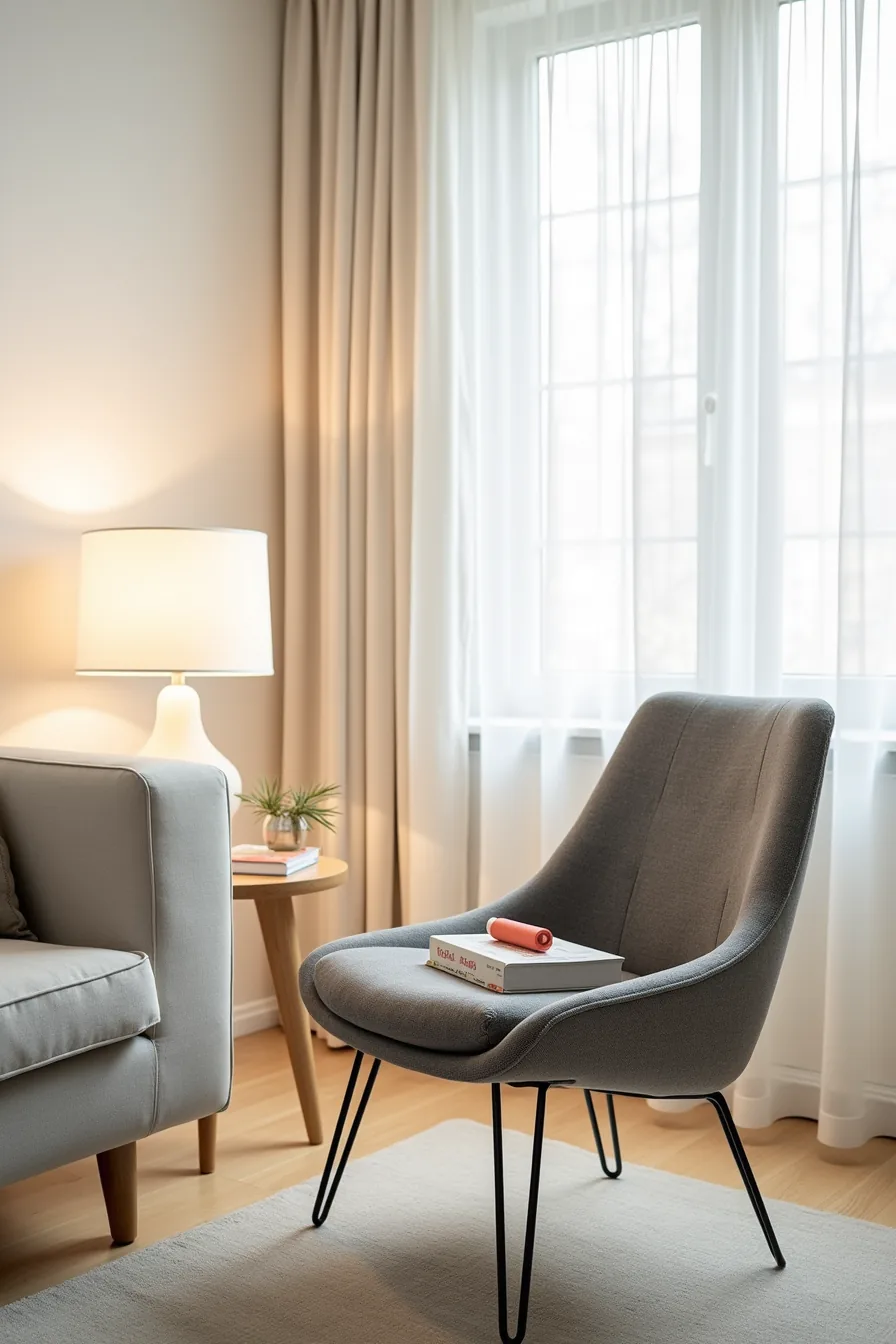
Fabric care dictates how often you can use the chair without visible wear. Vacuum the seat and back weekly with an upholstery attachment, and treat spills within 60 seconds using a blotting, never rubbing, motion. A fabric care kit with a soft brush and mild detergent handles most stains, while a lint roller catches pet hair and dust before it embeds into the weave.
Clearance determines whether the chair feels integrated or obstructive. The gray upholstered chair with metal hairpin legs should sit 18 inches from the sofa’s end, measured from armrest to armrest, leaving enough space to walk past without brushing the fabric. Hairpin legs add a visual lightness that suits this proximity, but they expose the floor beneath, so keep that zone clear of clutter or the effect collapses.
Proportion rules are simple: the chair’s seat height should match your sofa’s seat height within two inches, and its total width shouldn’t exceed two-thirds of the sofa’s length. In a small room, choose a chair with a 30-34 inch depth to avoid eating floor space; in a large open plan, a deeper 36-38 inch seat anchors the arrangement. Wood legs suit warm, traditional flooring, while metal legs work better on concrete or cool-toned tile, match the leg finish to your existing hardware rather than the upholstery.
What to do first
Before you buy, measure your floor space and mark the chair’s footprint with painter’s tape. This single step prevents the most common mistake – a chair that looks right in the showroom but overwhelms your room at home. Compare the taped outline against your existing walkways, ensuring at least 18 inches of clearance for traffic flow.
Then, set your budget ceiling before browsing. Contemporary accent chairs range from roughly $200 for budget finds to over $1,500 for investment pieces, so knowing your limit narrows the field immediately. Start your search with one non-negotiable: a fabric that matches your household’s real-life demands, whether that’s stain-resistant performance velvet or washable cotton covers.
Frequently Asked Questions
What size contemporary accent chair fits a small bedroom or studio apartment?
Look for an armless or low-back chair with a seat depth under 20 inches and an overall width around 25–30 inches. Compact proportions preserve floor space while still offering a distinct visual anchor.
Can you mix a modern accent chair with a traditional sofa without clashing?
Yes. Choose a chair with clean lines but a warm material, like bouclé or walnut, to bridge styles. Keep the chair’s silhouette simple and let the sofa’s details carry the traditional character.
How much clearance does a contemporary accent chair need from a sofa or wall?
Allow 18–24 inches between the chair’s front edge and a sofa or coffee table for comfortable legroom. Keep 6–8 inches from a wall to prevent cushion crushing and enable easy cleaning.
What upholstery fabric works best for a contemporary accent chair in a high-traffic home?
Choose a tightly woven, solution-dyed polyester or a performance microfiber with a rub count above 30,000. These resist stains, fading, and pilling, and they wipe clean with mild soap and water.