
Metal chair design spans a far wider range than the chrome diner stools and wire café seats you picture first, and the real work is matching the right interpretation to your room’s proportions, your cleaning tolerance, and your budget. From sculptural black steel to powder-coated outdoor pieces, the material’s strength lets you go thinner, bolder, or more minimal than wood or upholstery ever allow. The trade-off is that metal punishes mistakes: wrong scale, poor finish, or a bad floor protector turns a design win into a maintenance headache.
The six approaches below break down what each style demands of you, your space, and your wallet, so you can spot the one that fits before you commit.
Key takeaways
- Choose your frame based on traffic flow: tubular frames (curved, continuous) suit tight corners and high-traffic kitchens, while angular frames (sharp, welded) demand clear floor space and work best in open dining areas.
- Match the metal finish to your room’s existing hardware, brushed steel or matte black for industrial spaces, polished chrome or brass-toned for refined interiors, and expect to re-clear-coat raw steel every 1-2 years to prevent rust.
- Use metal chairs to lighten a heavy room by selecting slim-profile frames (legs under 1 inch thick) and open backs, which visually reduce visual mass by up to 30% compared to upholstered or solid-wood alternatives.
- Scale your chairs by room size: for small spaces (under 150 sq ft), keep seat heights at 17-19 inches and chair widths under 18 inches; for large rooms, extend to 20-22 inch seat depths and add 24-30 inches of clearance between chairs for comfortable pull-out.
Tubular vs Angular Frame: Which Structure Fits Your Space
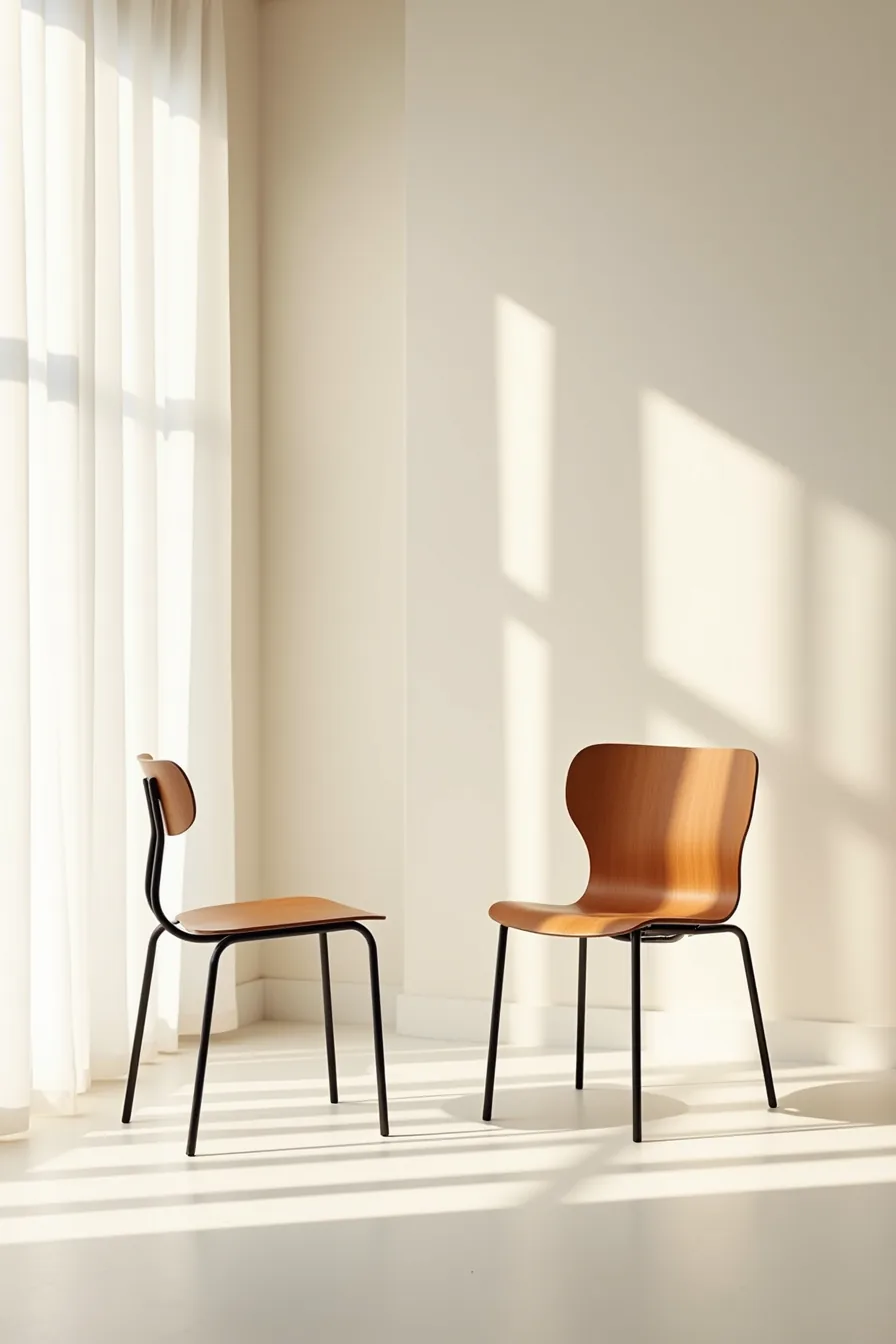
The bent-tube metal frame, with its smooth curves and minimal visual weight, suits rooms where you want seating to disappear into the background. Its continuous lines make it the better choice for narrow dining areas or breakfast nooks because the rounded corners reduce the perceived bulk, letting you slide chairs closer to a table without the frame feeling obstructive. Expect less material stress at joints, which typically means a lighter chair that’s easy to move for cleaning.
A welded angular frame reads differently: sharp joints and flat geometric planes give it structural presence that anchors a space. Choose this style for larger, open-plan rooms or loft layouts where the chair must hold its own against substantial furniture. The trade-off is weight, angular frames usually pack more steel into the structure, making them sturdier but harder to shift, so factor that in if you rearrange often.
Both frames touch the floor directly, so check for protective glides or rubber feet; bare metal will scratch hardwood over time.
Metal Plus Leather: Balancing Industrial Edge with Comfort
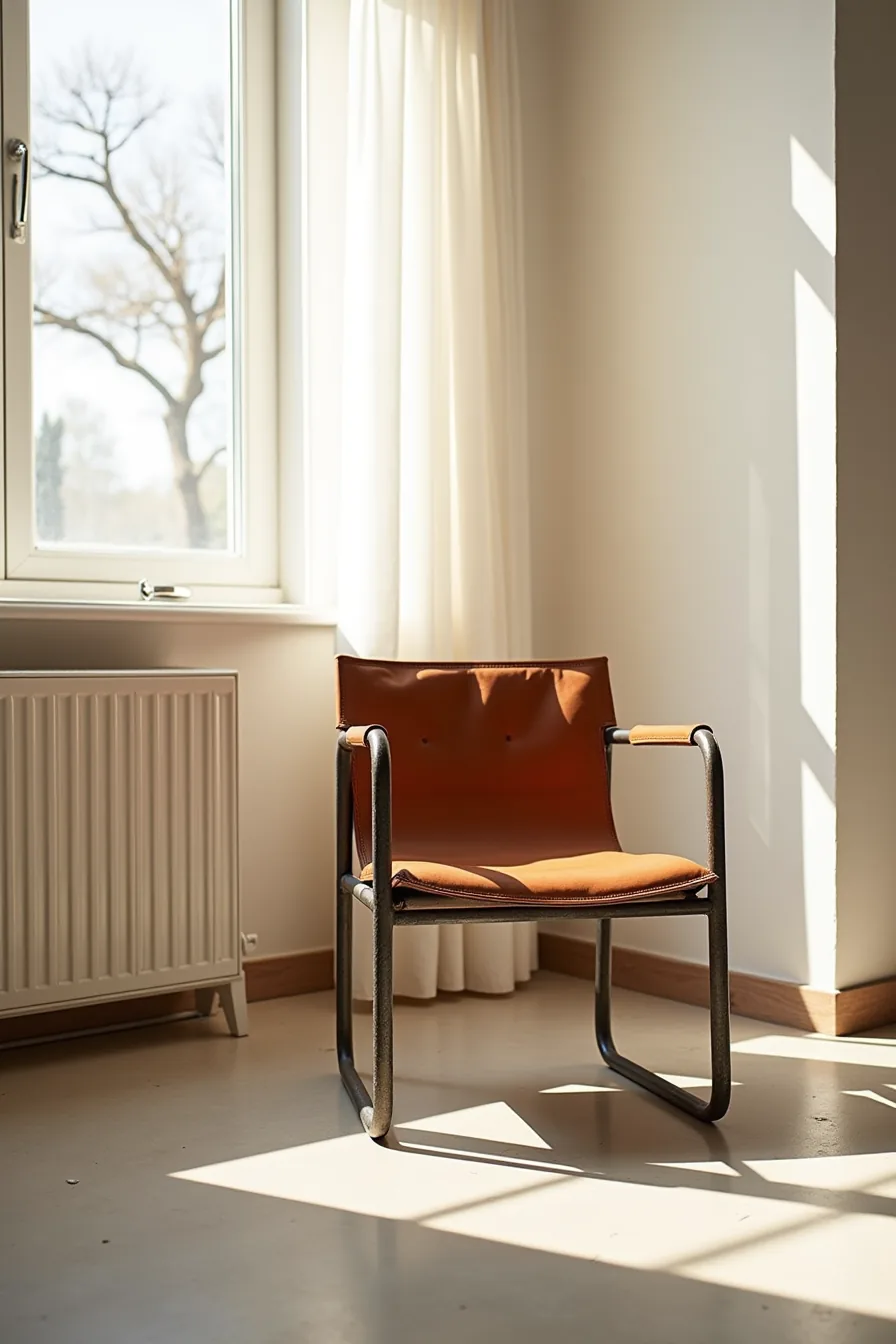
Sitting directly on bare metal punishes your back after 20 minutes, which is why pairing a raw steel frame with a leather seat and backrest changes the chair from a statement piece into daily-use furniture. The visible welds and patina on the frame keep the industrial character, while the cognac-brown leather introduces warmth that stops the piece from feeling cold or utilitarian. Natural creasing in the hide is a sign of quality, not a defect, it indicates full-grain leather that will soften and mold to your body over time.
For high-traffic areas like a kitchen used three times daily, choose top-grain or full-grain leather with a protective finish; it resists the body oils and friction that cause premature wear. Avoid bonded or corrected-grain leather here, they peel within a couple of years under regular use. The leather’s natural moisture content also helps you grip the seat edge when you push back from a table, reducing the slip you’d get on polished metal.
Expect to condition the leather twice a year to prevent cracking, a 10-minute task that doubles the life of the seat.
Industrial vs Refined: Matching Metal Finish to Your Interior
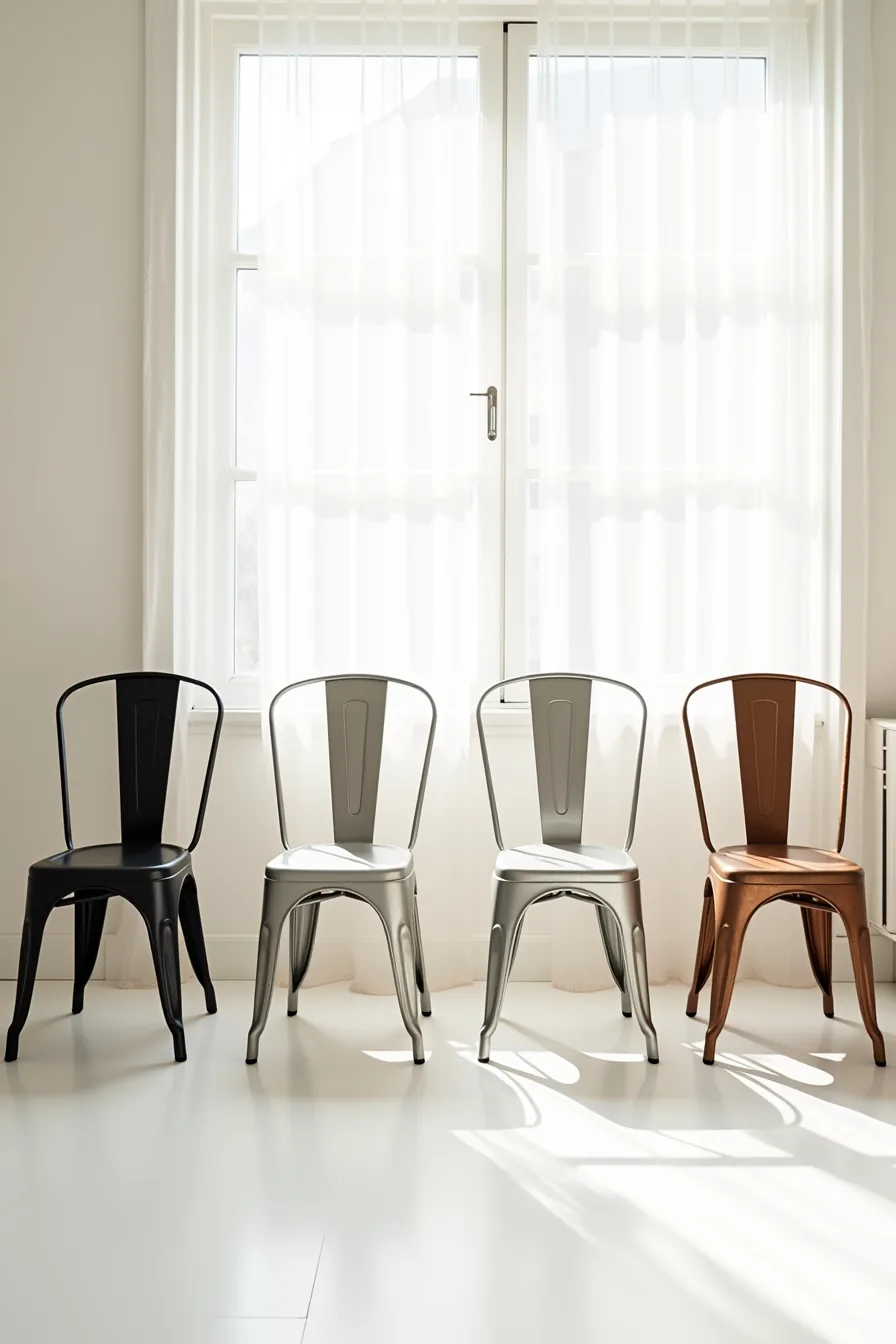
The finish on a metal chair determines whether it reads as sculptural furniture or salvaged factory equipment. Four chairs with identical frames but different finishes, matte powder-coat, brushed aluminum, polished chrome, and raw steel with rust patina, demonstrate how surface treatment changes the design language entirely.
- Matte black powder-coat signals deliberate, contemporary minimalism. It hides fingerprints and minor scuffs, making it the lowest-maintenance option for dining rooms or home offices used daily. This finish suits interiors with clean lines and neutral palettes, where the chair should recede rather than command attention.
- Brushed aluminum reads as precision-engineered and slightly futuristic, with a soft sheen that catches light without glare. It resists corrosion and requires only a damp cloth to maintain, making it the smart choice for kitchens with high humidity or outdoor-adjacent spaces. It pairs well with pale wood and white cabinetry.
- Polished chrome amplifies light and reads as glamorous or retro, depending on context. It shows every smudge and water spot, so budget for weekly wiping with a microfiber cloth. It works best in lower-traffic areas like a formal dining room or a powder room vanity, where its reflective surface can carry the design.
- Raw steel with rust patina is the most explicit industrial expression, but it will transfer rust to your hands, clothing, and flooring for the first several months. Apply a clear matte sealer to stabilize the surface, then expect to touch up thin spots annually. The patina deepens over time, suiting lofts, workshops, or creative studios where weathered texture is the point.
The distinction between industrial and refined is rarely about the frame shape, it’s about how much visual weight and maintenance you’re willing to accept. Brushed aluminum and matte powder-coat err toward refined; polished chrome splits the difference; raw steel is unapologetically industrial. All four finishes work in the same rooms, but the raw and polished options come with upkeep costs that the other two don’t.
Use Metal Chairs to Lighten a Heavy Room
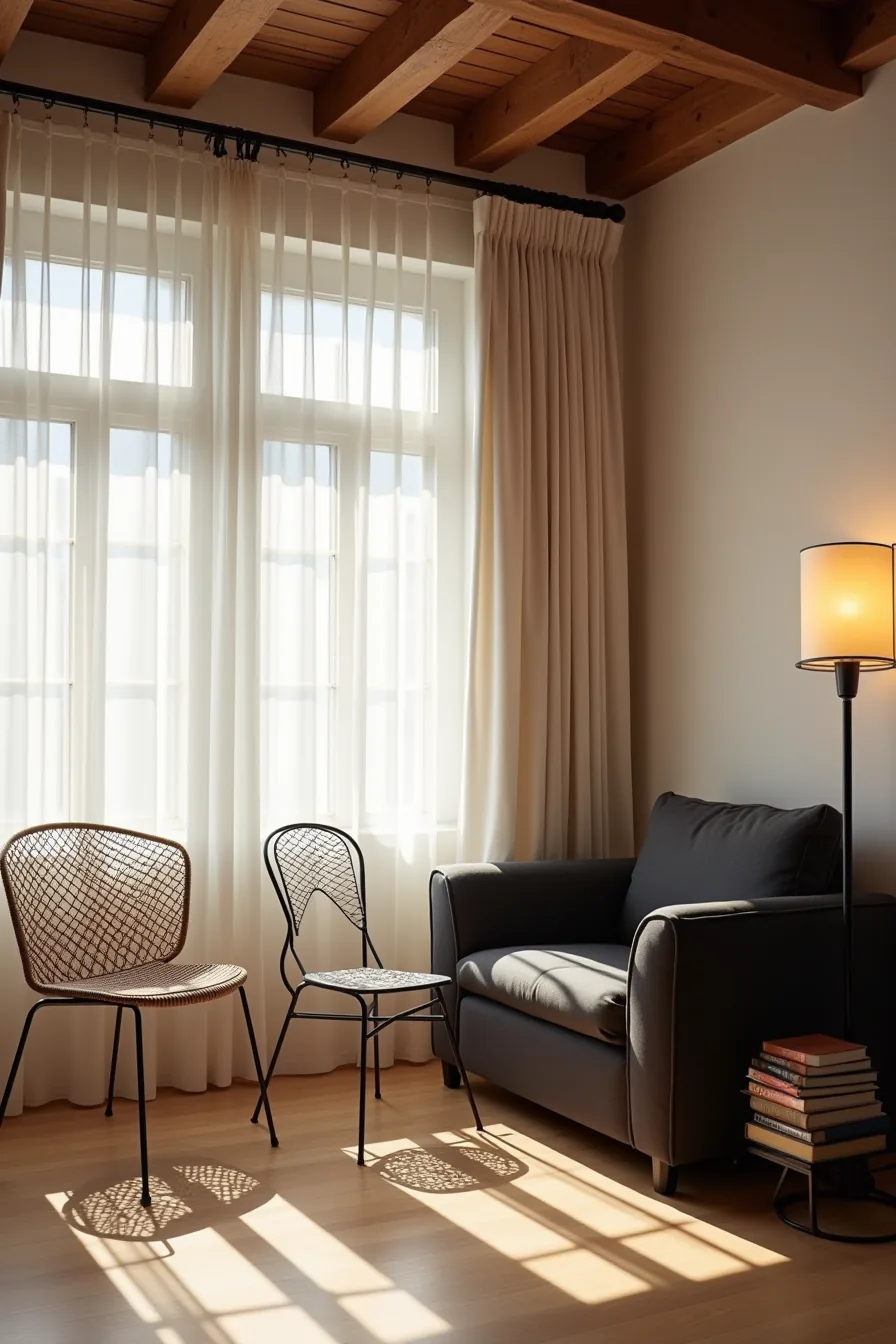
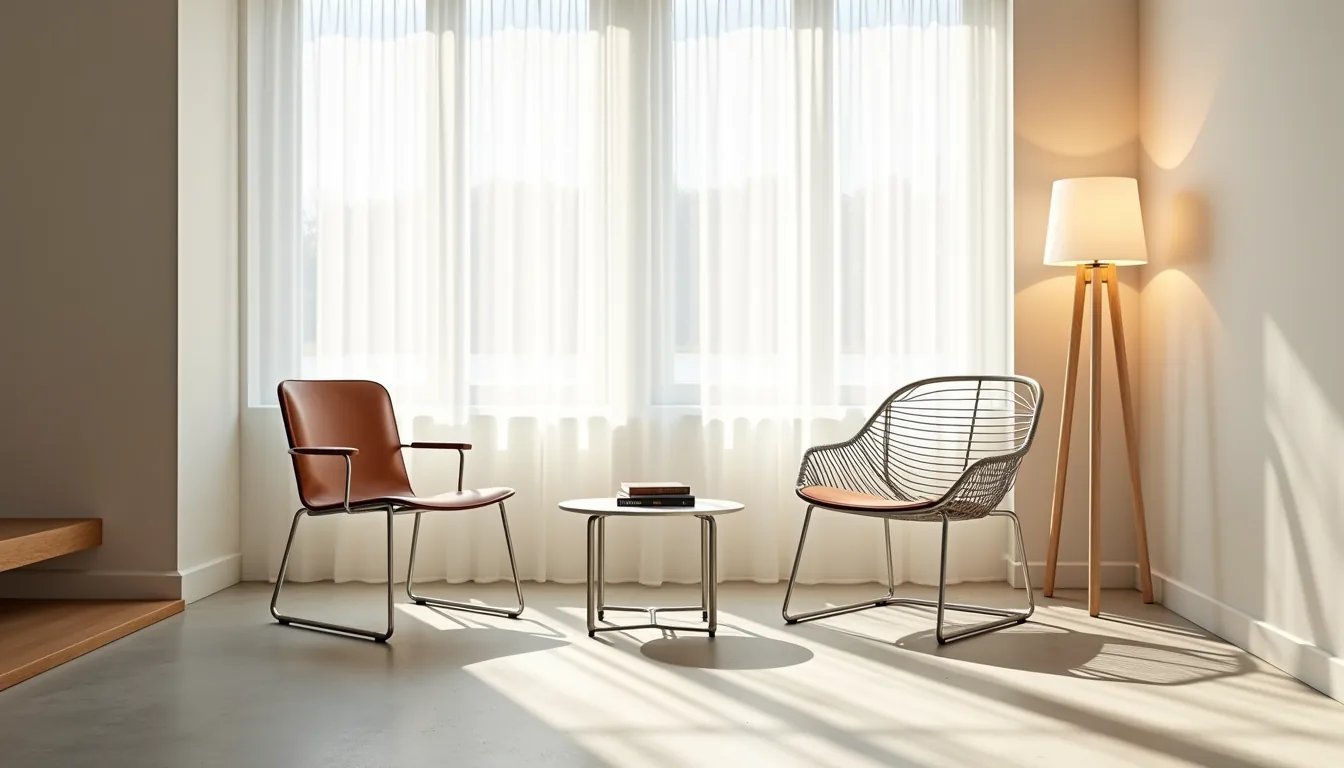
When a room carries dark wood beams, deep wall tones, and a bulky upholstered sofa, the cumulative visual weight can make the space feel smaller than it’s. The fix isn’t more furniture, it’s subtraction through transparency. Three metal chairs with open frames and light finishes, placed at staggered depths, break up the mass of a dark interior without adding solid volume.
Position one chair at the foreground edge of the seating area, angled toward the sofa, and set the other two further back near a wall or window. The gaps between the frame members let the wall color and floor pass through visually, so the chairs read as lines rather than blocks. Light powder-coat finishes like off-white, pale gray, or soft silver reflect whatever ambient light exists, which matters more in a dark room than the chair’s actual brightness.
Keep the quantity at three or fewer, more than that starts to create visual noise instead of relief. These chairs suit a den, basement lounge, or library where heavy millwork dominates, and they require no more maintenance than a quarterly wipe-down to keep the open frames from collecting dust in the crevices.
Scale and Proportion: Sizing Metal Chairs for Small, Medium, and Large Rooms
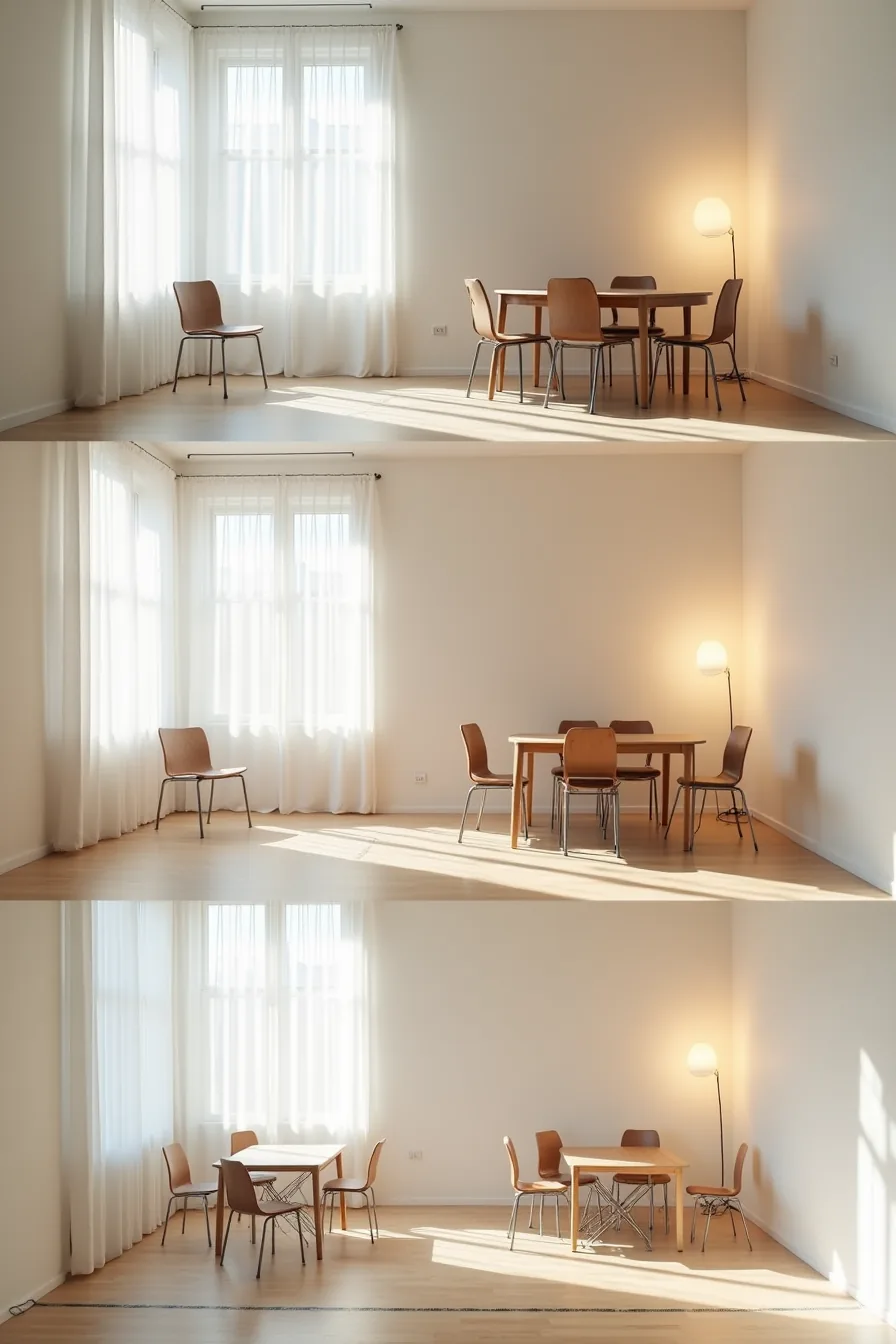
Scale dictates whether a metal chair anchors a space or gets lost in it. In a compact studio, one slim metal chair with a seat height of 17–19 inches and a frame width under 20 inches works best placed flat against a wall, leaving at least 30 inches of clear floor space in front for passage. The open frame keeps the visual footprint minimal, so it reads as a sculpture rather than an obstruction.
A medium apartment typically calls for four metal chairs around a dining table. Match the chair seat height to the table, most standard dining tables sit 28–30 inches high, so your chair seats should land 10–12 inches below that. Allow 24–28 inches of clearance between each chair when pulled out, and keep at least 36 inches between the table edge and any wall to let people sit and rise comfortably.
In a large loft, six metal chairs spaced across an open floor plan need generous breathing room. Set them 30–36 inches apart to avoid a cluttered look, and anchor them near a rug or seating zone so they don’t float aimlessly. A measurement tape at the room perimeter helps you verify that each chair sits at least 18 inches from walls and 48 inches from high-traffic pathways.
Budget, Rental, and Investment Routes: Three Paths to Metal Chair Design

Your budget route starts with a flat-pack metal chair, typically running $40–$90 per unit. The trade-off: powder-coated steel over thinner gauge tubing, so expect minor wobble after two years of daily use. Assembly hardware is included, but you’ll need a hex key and about 20 minutes per chair.
These work best in low-traffic dining corners or as occasional seating you don’t lean back in.
The renter-friendly route swaps drilling for adhesive feet pads and a no-drill wall bracket that grips with industrial-strength tape. You get the anchored, built-in look without putting a single hole in your walls, ideal when your security deposit depends on it. Weight capacity is the limitation here; keep these chairs under 250 pounds total and expect the adhesive to weaken after 18 months of humidity or temperature swings.
The long-term investment is a hand-welded heirloom chair with premium leather upholstery. You’re paying for visible craftsmanship: smooth weld seams, solid brass or stainless hardware, and leather that develops a patina rather than peeling. Expect $300–$900 per chair, but the frame is repairable and the leather can be reupholstered decades later.
This is your route if you want a piece that outlives three moves and still looks intentional.
Your decision checklist
Before you buy, measure the footprint. Allow 18–24 inches of clearance behind each chair for pulling out and sitting down. Match the seat height to your table, dining tables typically pair with chairs between 17 and 19 inches high.
Check the finish against your lifestyle. Powder-coated steel resists scratches and works in high-traffic kitchens; raw or painted metal requires touch-up paint and dry cloths. If you rent, skip wall-mounted or permanently fixed pieces and choose freestanding chairs you can move.
Prioritize one purchase that solves a problem, a stackable set for a small apartment, an upholstered-seat model for long dinners, or a fully welded frame for outdoor exposure. Start with a single chair in your space, live with it for a week, and test its comfort and clearance before committing to the full set.
Frequently Asked Questions
Do metal chair frames rust, and how often do they need maintenance?
Yes, untreated steel rusts, but powder-coated or galvanized finishes resist corrosion significantly. Indoor chairs need light maintenance every 6-12 months; outdoor ones require checking every 3-6 months for chips, touching up with rust-inhibitive paint as needed.
Can you use metal chairs in a small apartment without making the space feel cold?
Absolutely. Pair slim metal frames with warm wood table tops, wool throws, or upholstered seat pads. Choose matte black, bronze, or brass finishes instead of polished chrome to add warmth.
Open, minimalist designs also prevent visual clutter in tight spaces.
What is the typical seat height for a metal dining chair, and how do I measure for the right fit?
Standard seat height is 18-19 inches from floor to seat top. Measure from the floor to the underside of your table’s apron; you need 10-12 inches of clearance between seat and table. Sit with feet flat, knees should be at a 90-degree angle.
Are metal chairs comfortable for long periods, or do I need cushions?
Bare metal is hard and cold for extended sitting, plan for 1-2 inch foam cushions if you’ll sit over 30 minutes. Chairs with contoured seats or slight flex in the frame improve comfort. For dining, add pads; for occasional seating, bare metal is fine.