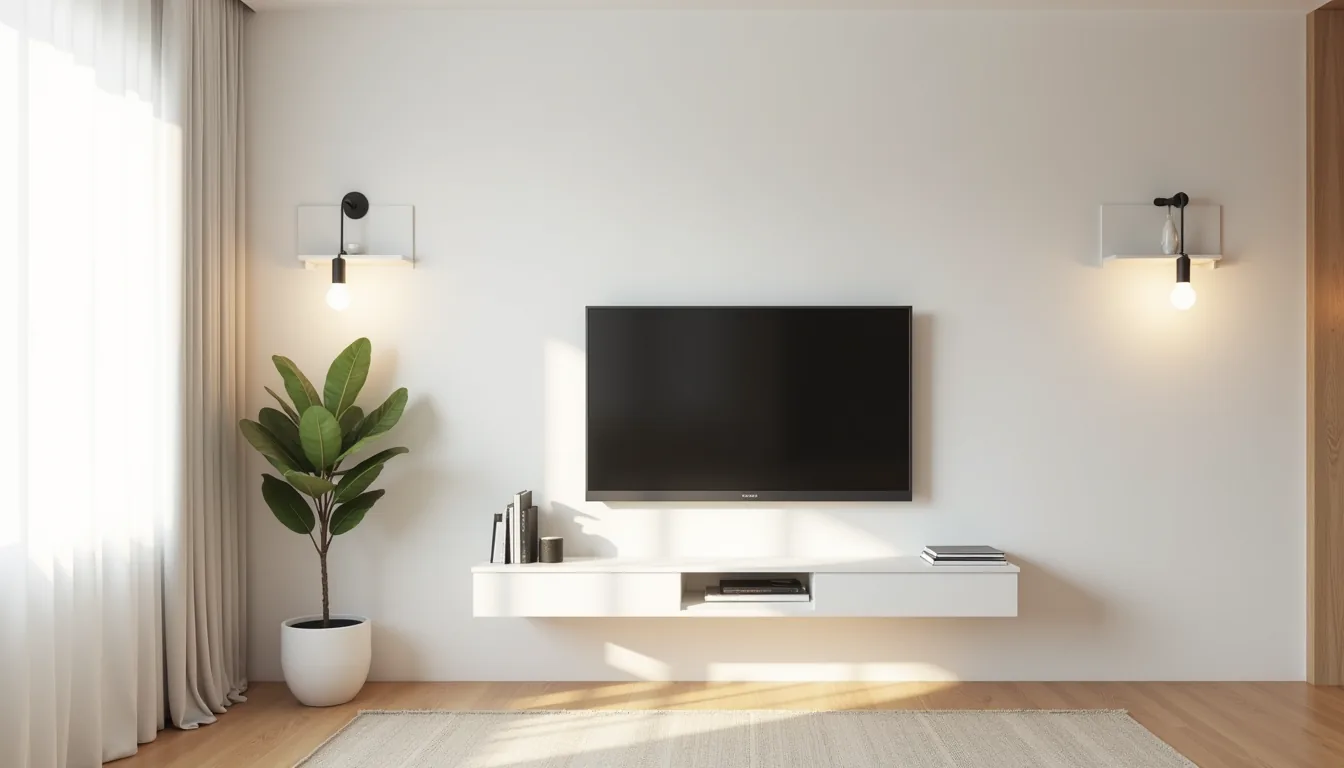
A simple TV console design is less about a specific style and more about matching the unit’s footprint, storage, and finish to how you actually use the room. Before you browse anything, measure the wall and the clearance you need for doors or walkways. Then decide whether you need open shelving for a game console, closed cupboards for cables, or a mix of both.
The right choice comes down to three practical factors: scale, surface material, and how much visual clutter you can tolerate.
Key takeaways
- A floating shelf suits rooms under 10 feet wide, but you must verify stud placement and cable routing before cutting anything.
- Handle-free fronts hide AV gear best when you pair them with a 2-3 inch open gap above the cabinet for infrared remotes.
- One open media niche works only if it’s at least 12 inches taller than your tallest component; otherwise, heat buildup becomes a real risk.
- Wood legs raise the console 6-8 inches for easy floor cleaning, but they require a level floor or adjustable feet to prevent wobble.
Floating Shelf Setup for Tight Spaces
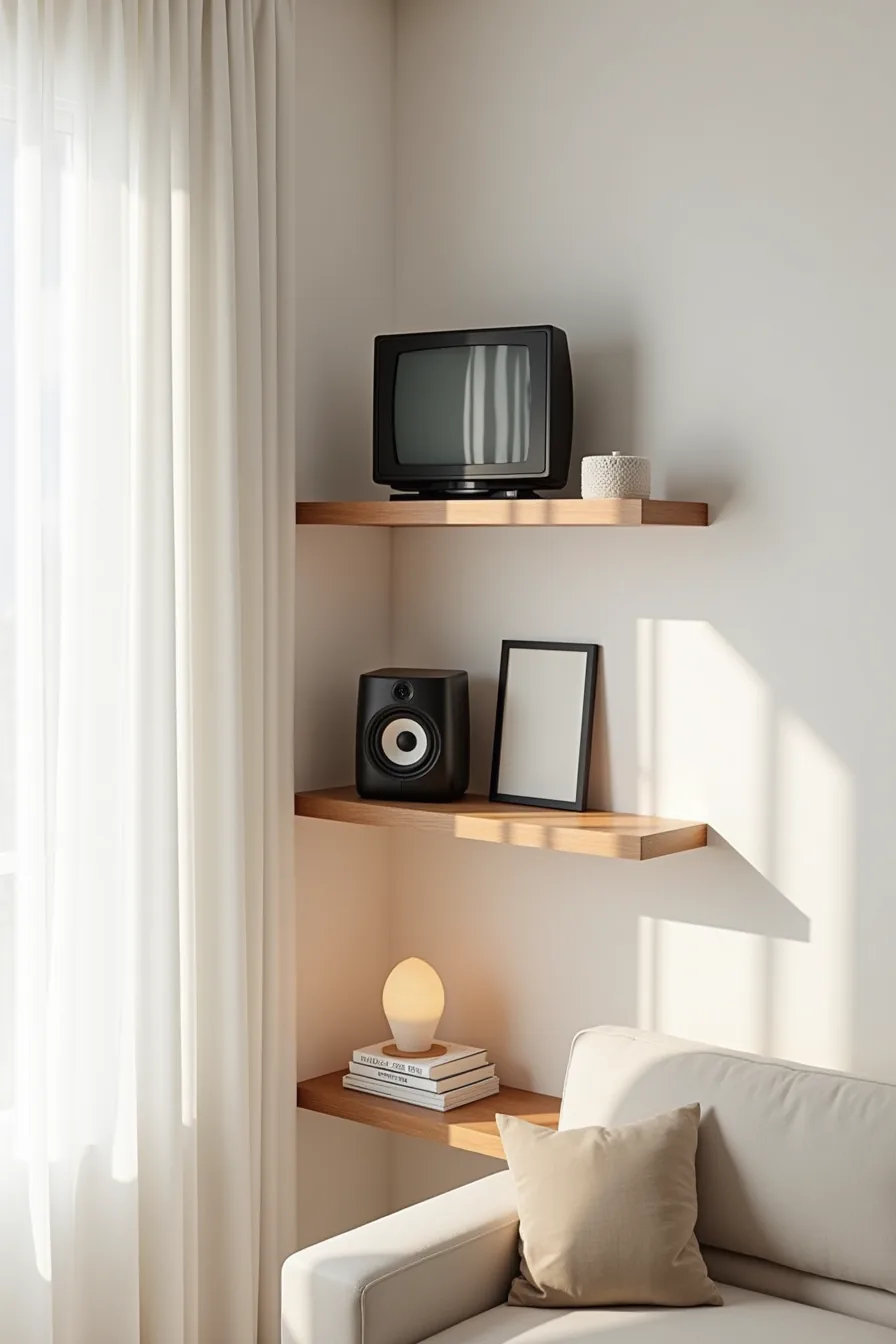
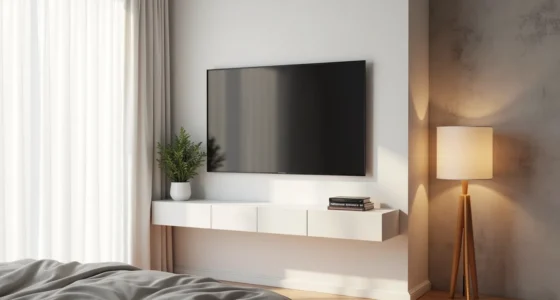
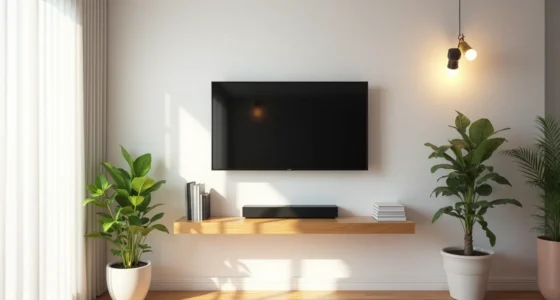
Wall-mounted floating shelves swap the floor footprint of a traditional cabinet for vertical air, which makes them the most direct route to a simple TV console design in a room under 10 feet wide. The setup pictured stacks three shelves at staggered heights, with the TV sitting on the top tier, a compact speaker and a single framed object on the middle one, and the bottom shelf left empty. That empty bottom tier isn’t wasted space, it visually anchors the composition and gives you a landing zone for a media remote or a small plant without adding clutter.
This approach suits renters because it requires only a stud finder, a drill, and a level; you patch the screw holes before you move out. Check your wall construction before buying shelves: drywall over studs supports 30–50 pounds per shelf with proper anchors, but plaster or metal studs demand specialized hardware. Keep the total load, TV plus media box, under two-thirds of the rated capacity to leave a safety margin.
Position the lowest shelf 24–30 inches from the floor, matching the eye-line of a seated viewer, and space the others 10–12 inches apart for breathing room.
Handle-Free Fronts with Closed Storage
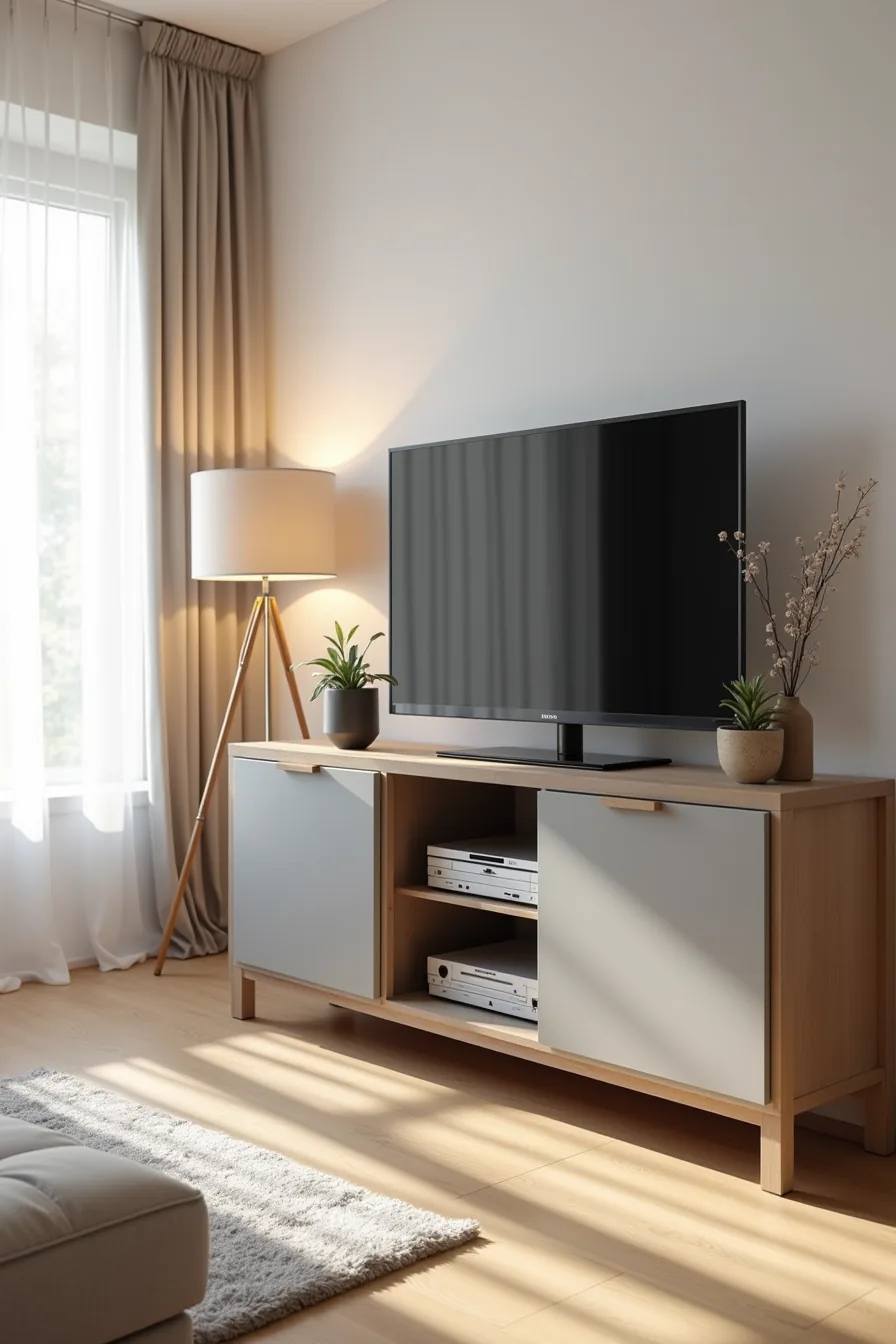
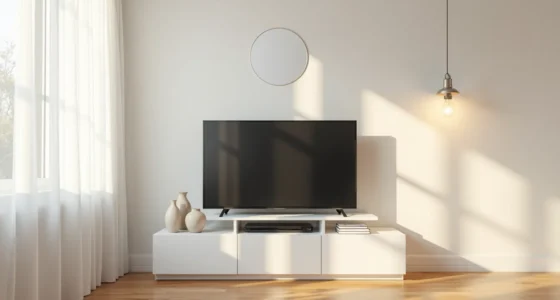
Push-to-open doors and recessed pulls erase the visual noise that handles create, letting the cabinet read as a single solid form. That matte gray finish works because it absorbs light rather than reflecting it, so the flush fronts disappear against a dark TV screen when the set is off.
You lose nothing in function: the media boxes stacked inside stay reachable, but their blinking lights and tangled cords stay out of sight until you need them. Hardboard-faced MDF keeps costs down (most units run $150–$400), while solid oak or walnut plywood fronts push the price to $800–$1,500 but resist scratches from daily use. Match the cabinet width to your TV, a 55-inch screen wants a console at least 50 inches wide, while a 75-inch set needs 65 inches or more to avoid a top-heavy look.
Fingerprint-prone matte finishes need a dry microfiber wipe weekly; avoid polish, which leaves residue on the low-sheen surface.
One Open Media Niche as Central Focus
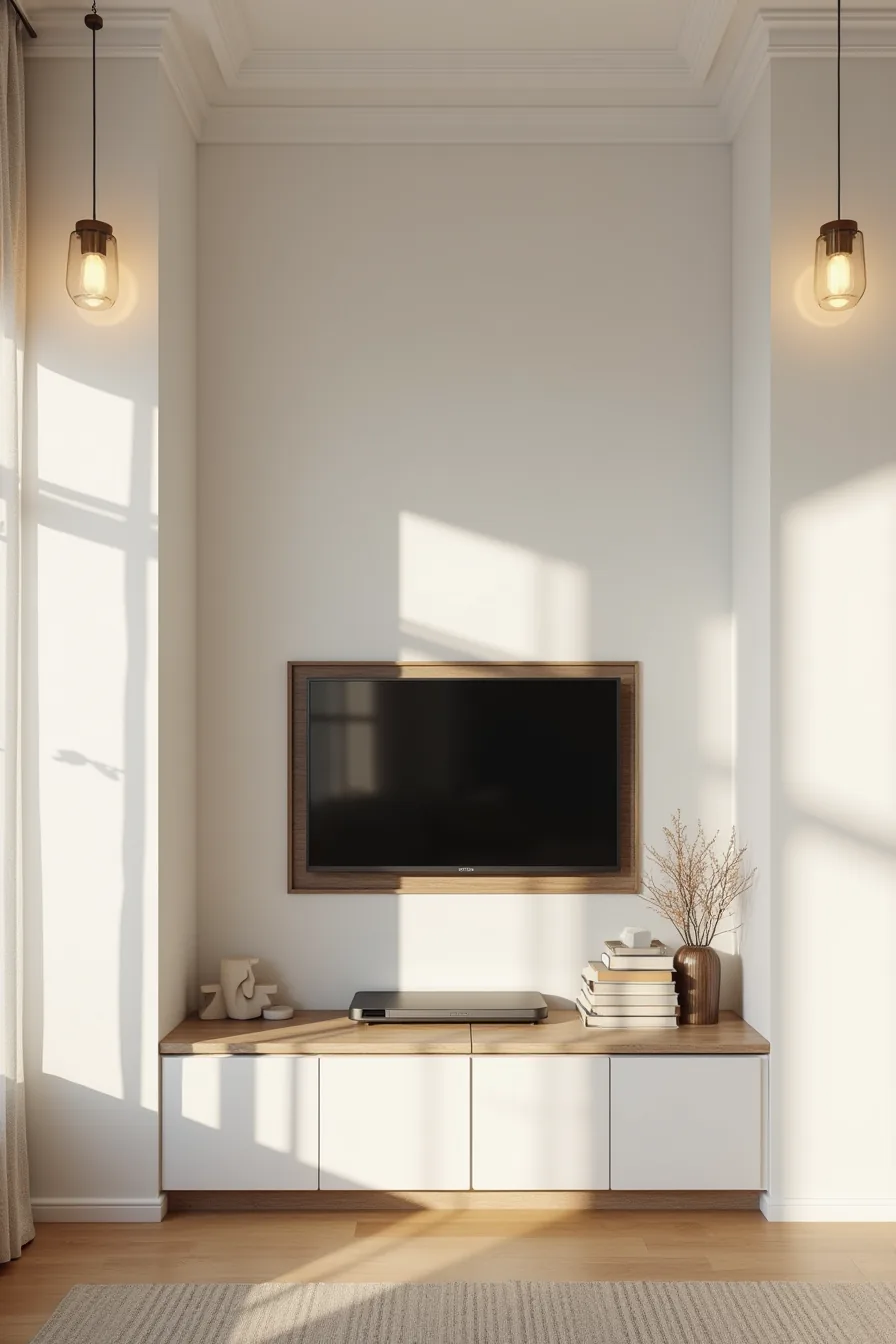
A single recessed niche framed in dark wood trim turns the wall itself into the console. You skip the furniture piece entirely: the drywall cavity hides the TV’s depth, so the screen sits flush with the surrounding white surface, and the dark trim gives the opening a deliberate, architectural edge rather than a cutout look.
This approach suits a minimalist living room where floor space is scarce, or a media wall you want to read as one calm plane. The niche should run roughly 10–20% wider than your TV on each side, with the bottom edge 24–30 inches off the floor so sightlines land mid-screen from a seated position. You’ll need a licensed electrician to add a recessed outlet inside the cavity, and you surrender wall insulation in that spot, acceptable on interior walls, less ideal on exterior ones.
A 55-inch set typically requires a niche 65–80 inches wide and 38–44 inches tall, leaving enough room for a soundbar beneath without crowding the trim.
Minimal Wood Console on Legs
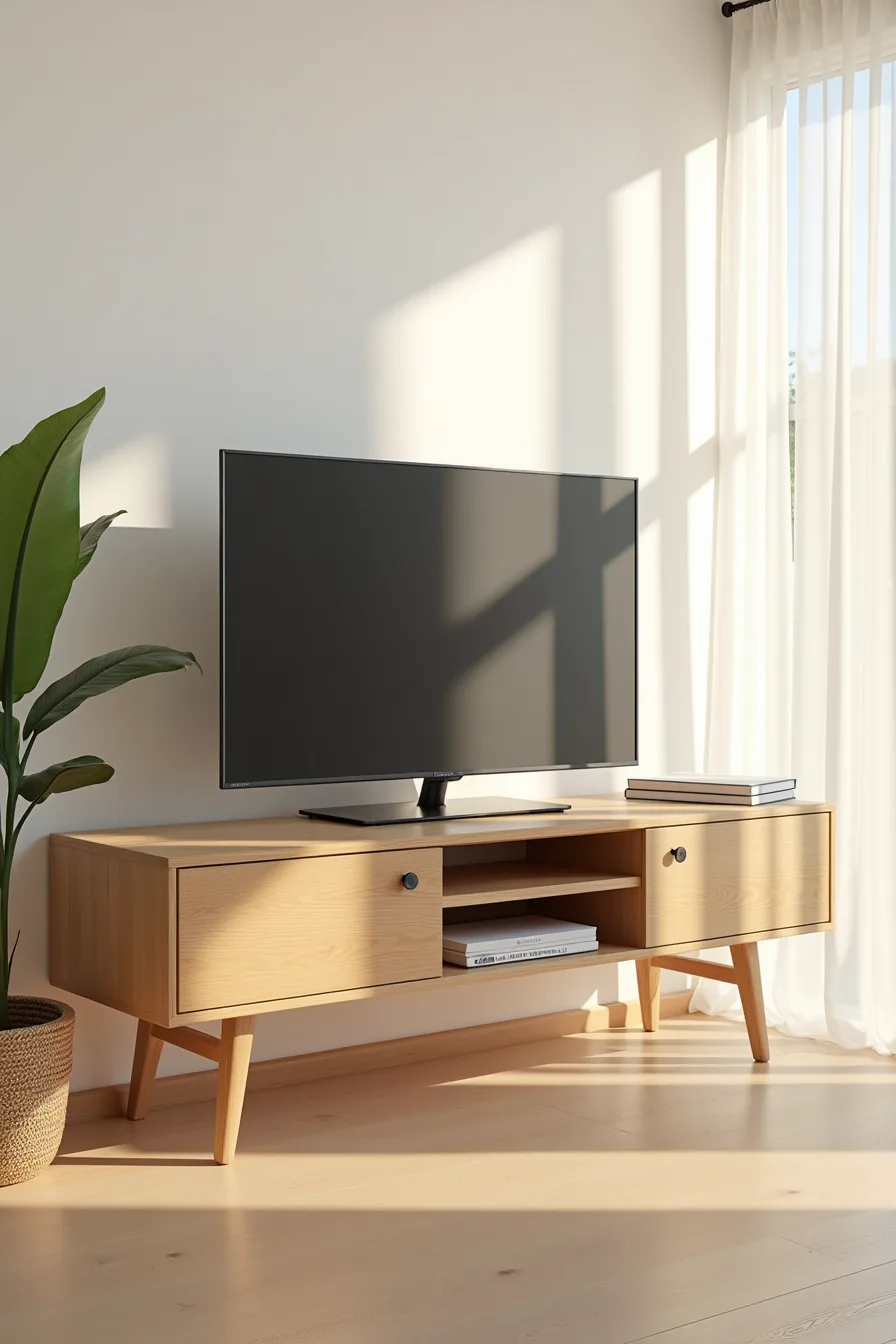
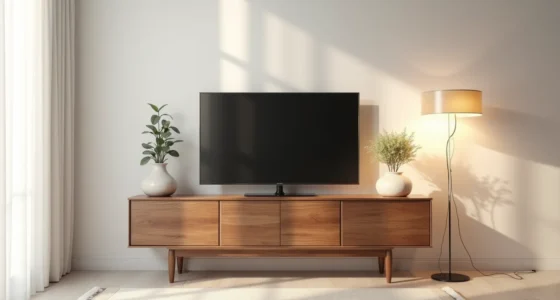
A natural oak console with four tapered legs is the most forgiving version of simple TV console design you can buy. The raised silhouette, typically 8–10 inches of clearance beneath, visually lightens the piece and makes floor cleaning effortless, which matters more than you think once dust settles behind media cables.
Choose solid oak or walnut over veneer if you want the grain to age gracefully; both take minor scratches without looking damaged. Legs should be at least 6 inches tall to accommodate a soundbar or gaming console on the surface without blocking the screen, and the console depth should run 14–18 inches, enough for a 55-inch TV’s base but shallow enough to keep walkways clear in tight rooms. Finish matters: matte polyurethane resists water rings and requires only a damp cloth, while oiled wood needs reapplication every 6–12 months.
This setup suits renters because it’s freestanding, and it suits anyone who wants a warm, tactile anchor without committing to built-ins.
Adapting Simple Design to Room Size
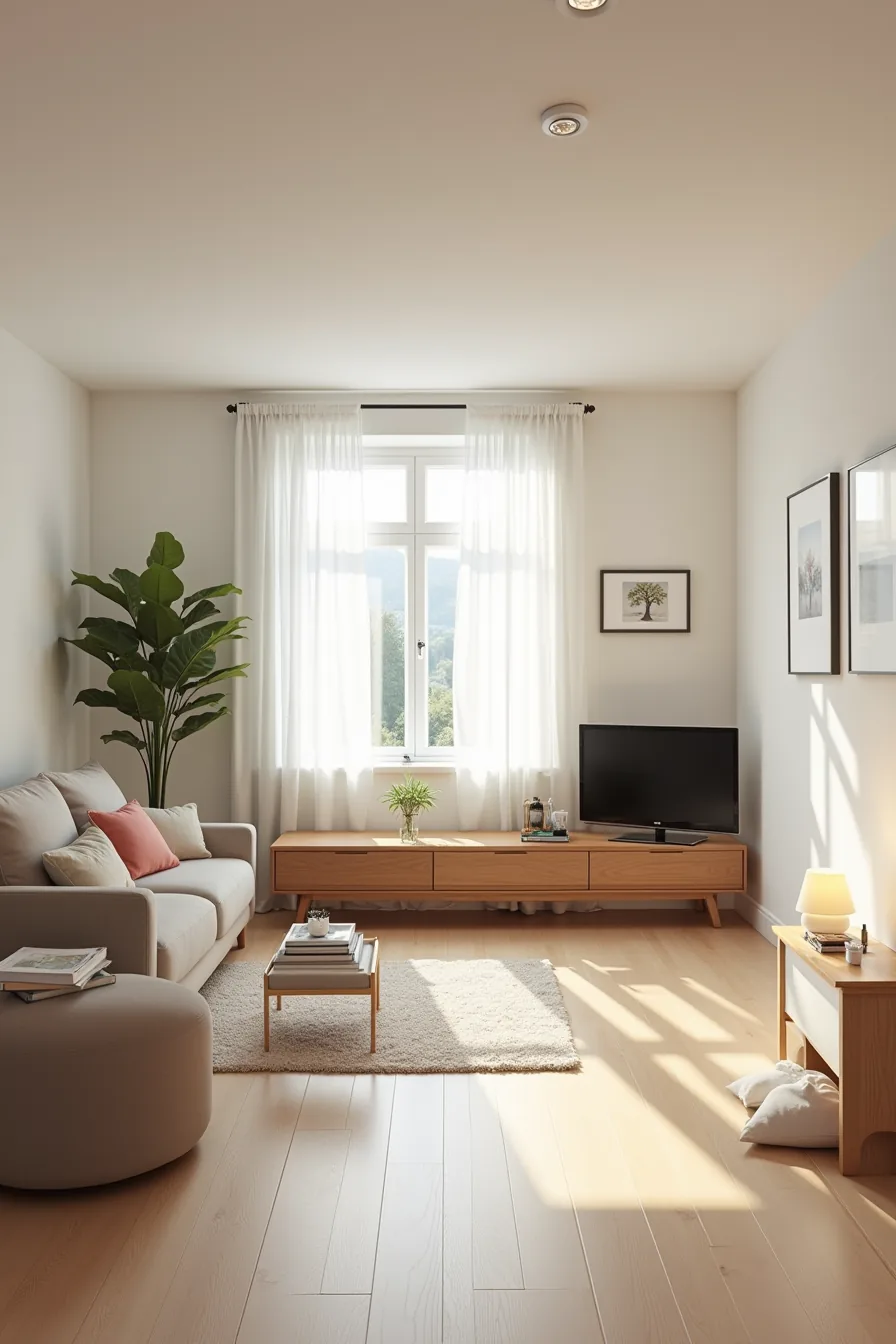
Scale the console to the wall, not the television. In a small apartment, a 40–50 inch console with a 12–14 inch depth keeps the walkway open; anything deeper eats floor space you can’t spare. A medium living room handles a 55–65 inch console comfortably, and it should span at least two-thirds of the TV’s width to anchor the visual weight without overwhelming the wall.
In the open-plan space shown here, the wide walnut console runs roughly 60–70 inches, and its lower-profile legs drop the silhouette to keep sightlines clear across the room. The generous floor space on both sides is deliberate, it preserves traffic flow and lets the eye read the walnut base as a deliberate, furniture-scale element rather than a floating shelf. The rule of thumb: leave 6–12 inches of wall clearance on each side, and match the console width to about 10 percent of the room’s length.
That ratio keeps proportions right whether your ceiling height is 8 feet or 12.
Give Your TV Area a Clutter-Free Reset
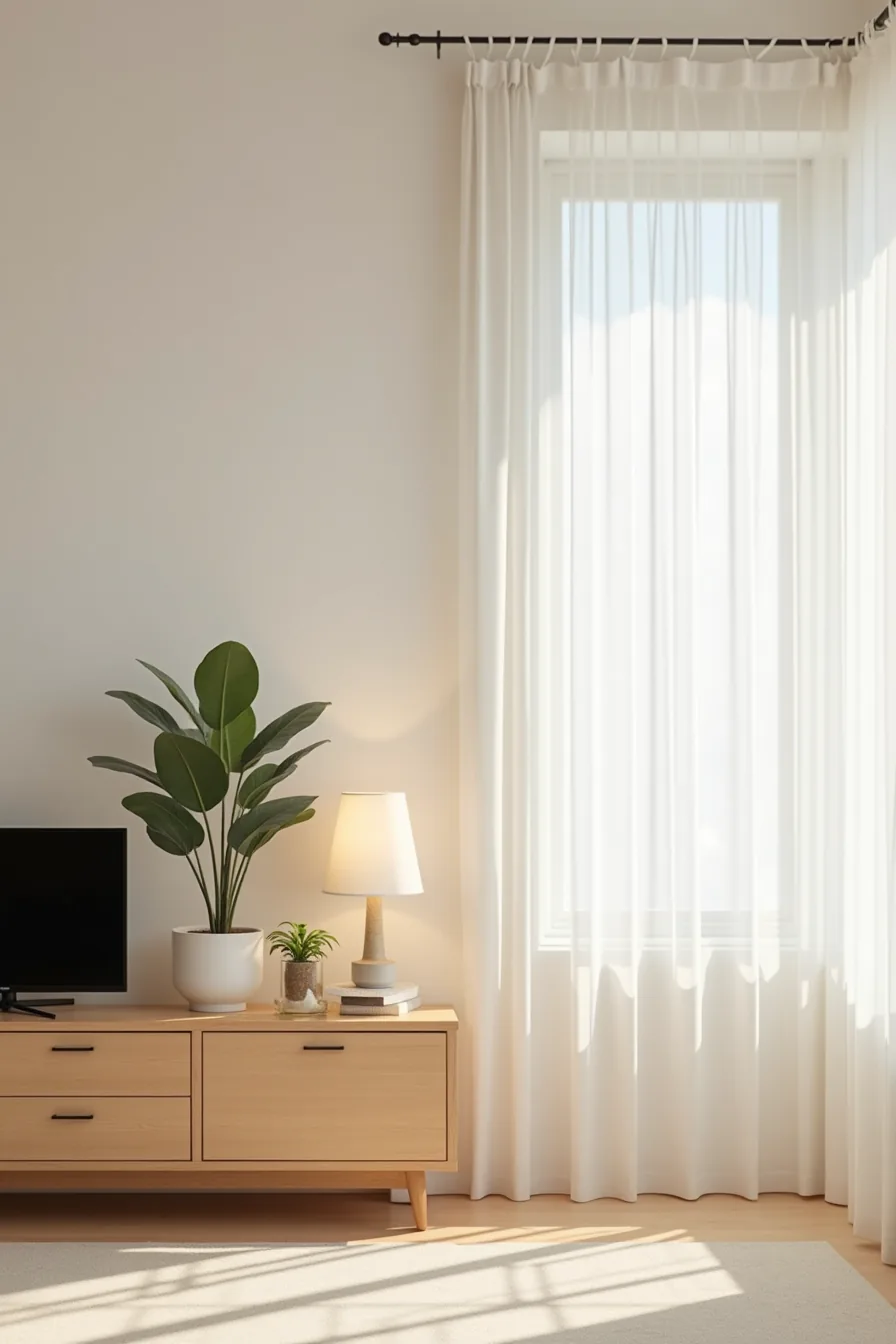
Start by removing every item from the console surface and inside the cabinetry. Sort everything into three piles, daily-use electronics, items you reference weekly, and pieces you haven’t touched in a month. The third pile should leave the room entirely; if you haven’t needed it near the television in 30 days, it doesn’t belong there.
The setup that works best in practice keeps exactly three objects on top: the TV, one small decorative object, and one potted plant. The closed cabinet does the heavy lifting, remotes, game controllers, streaming devices, and spare cables all live behind doors, where they stay accessible but invisible. For the decorative object and plant, choose pieces under 12 inches tall so they don’t compete with the screen for visual attention.
Make the reset stick with a five-minute weekly sweep: dust the top surface, wipe the cabinet fronts with a damp microfiber cloth, and return any item that migrated onto the console to its designated drawer. Cables should be bundled with Velcro ties and routed along the back edge of the console, never across the floor. If you find yourself accumulating items on the surface between sweeps, the cabinet is under-allocated, reassign one shelf to everyday items and keep the top surface as a hard rule, not a suggestion.
What to do first
Measure your wall and seating distance before browsing anything. That single number filters out most consoles instantly, too long looks sloppy, too short makes the TV float. Then pick your non-negotiable constraint: budget, renter-proofing, or longevity.
That decision narrows your material and mounting options immediately.
Commit to one, a floating shelf, a low bench, or a closed cabinet. Buy the longest piece your space allows, keep visual weight below eye level, and hide cables before you style anything else. Your next step: grab a tape measure and write down your wall width and viewing distance right now.
Frequently Asked Questions
What is the ideal depth for a simple TV console?
Most TV consoles run 14–18 inches deep. This comfortably holds a standard TV stand base while leaving 6–10 inches of clearance behind for cables and ventilation. Deeper units waste floor space.
Can I use a simple TV console design in a rented apartment?
Yes. Choose a freestanding console with legs rather than wall-mounted units. It requires no drilling, and you can add felt pads to protect floors.
Avoid built-ins or units requiring permanent anchoring.
How do I hide cables in a minimal wood console?
Use a cable raceway adhered to the back panel, then route cords through a grommet hole. For a cleaner look, install a power strip inside the console and drill a 2-inch access hole in the back.
What’s the difference between a floating shelf and a wall-mounted console?
A floating shelf is a shallow, cantilevered board, typically 6–10 inches deep, for decorative items. A wall-mounted console is deeper (12–16 inches) and structurally reinforced to hold a TV’s weight. Shelves can’t safely support televisions.