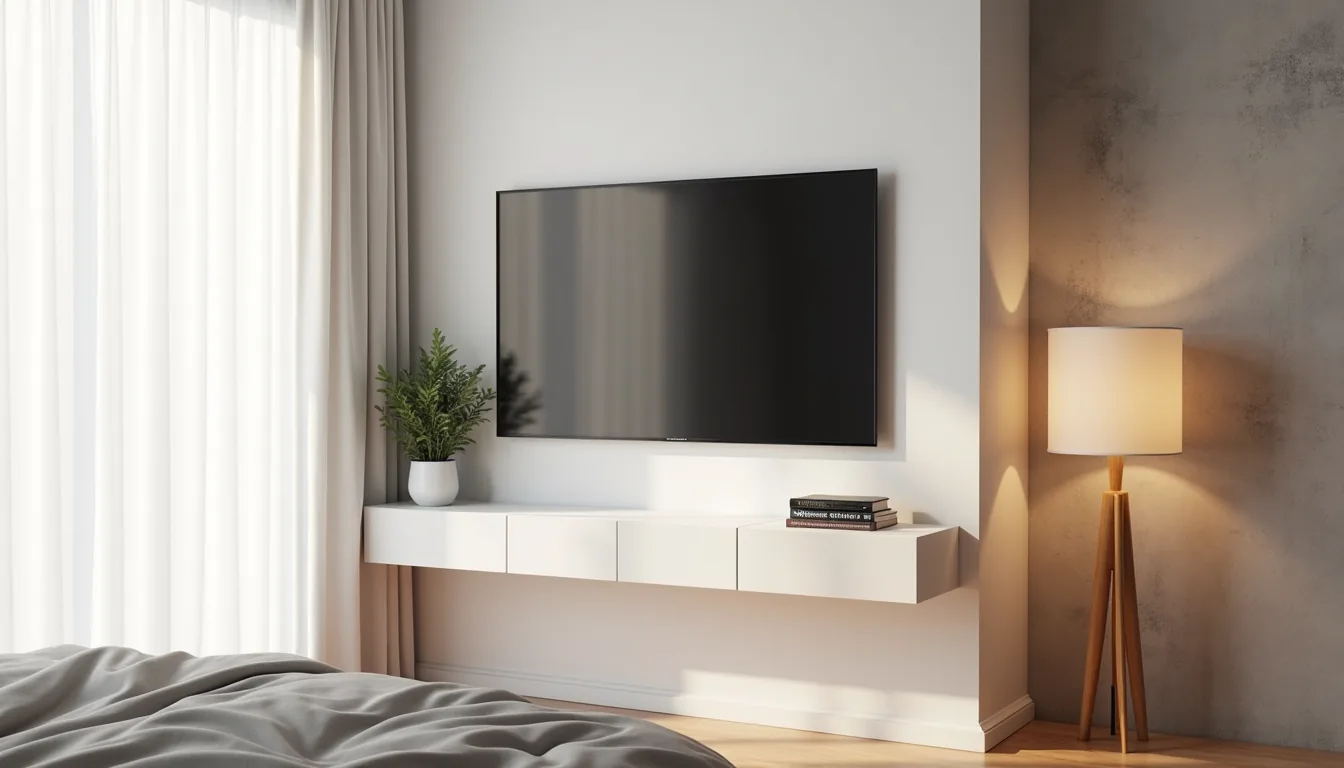
A bedroom TV stand is the anchor of your viewing setup, and the right one does more than just hold a screen, it defines how the rest of the room functions. The choices range from floating shelves that free up floor space to heavy, full-grain credenzas that anchor a large suite. Each route carries distinct trade-offs in cost, storage, and installation effort, which is why you need to match the stand to your actual habits, not just the room’s square footage.
Key takeaways
- Measure your wall and viewing distance first; a 43-inch TV needs a console roughly 48–55 inches wide, while smaller setups suit 36–42 inches.
- Floating shelves work best for bedrooms under 100 square feet, but require wall studs, use toggle bolts rated for 50+ pounds or you risk sagging and damage.
- A low-profile console under $200 is your budget route, but expect MDF construction and a 3–5 year lifespan; solid wood alternatives run 2–3 times the cost but last decades.
- Barn door cabinets hide clutter and suit renters only if the track is surface-mounted and removable; otherwise, drilling into drywall forfeits your security deposit.
Floating Wall-Mounted Shelves for Compact Rooms
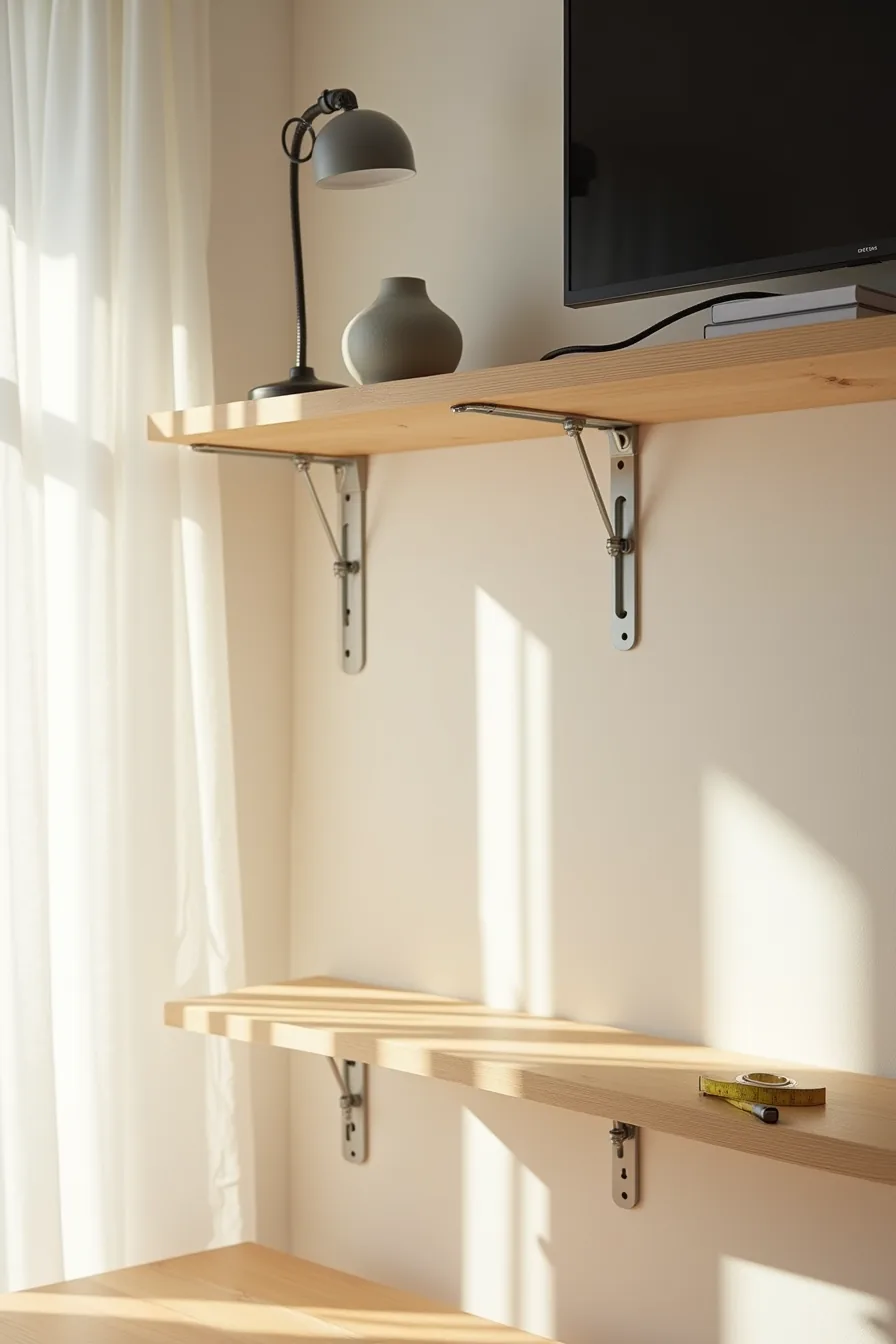
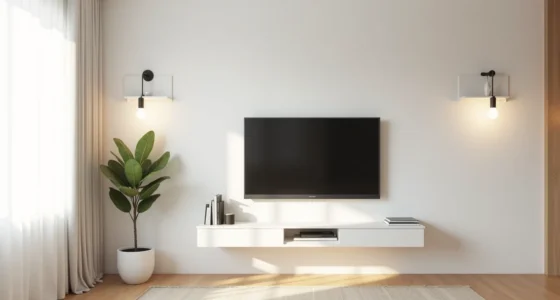
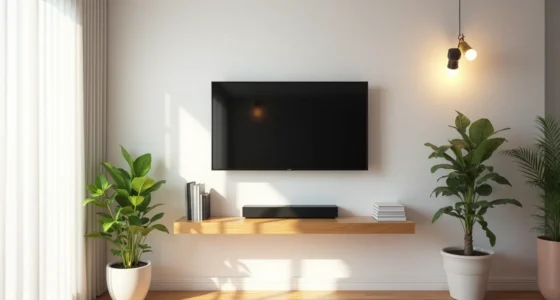
If floor space is your constraint, a floating shelf removes the footprint entirely. A wooden shelf secured directly into wall studs, visible as the structural anchors behind the bracket hardware, supports both the TV and a tape measure’s worth of accessories. You’ll need to locate studs with a finder before drilling; drywall alone won’t hold a television’s weight.
Most residential studs sit 16 to 24 inches apart, and the mounting brackets must span at least two of them to distribute the load safely.
This setup suits bedrooms where a console would block a door swing or narrow the walkway, typically rooms under 100 square feet. Cable management becomes harder without a cabinet to hide wires, so plan for a channel kit or cord cover running down the wall. It’s a permanent solution, removing the shelf leaves patching work behind, making it a poor choice for renters.
The payoff is a clean, open floor plane that makes a small room feel larger.
Low-Profile Media Console as a Budget Route
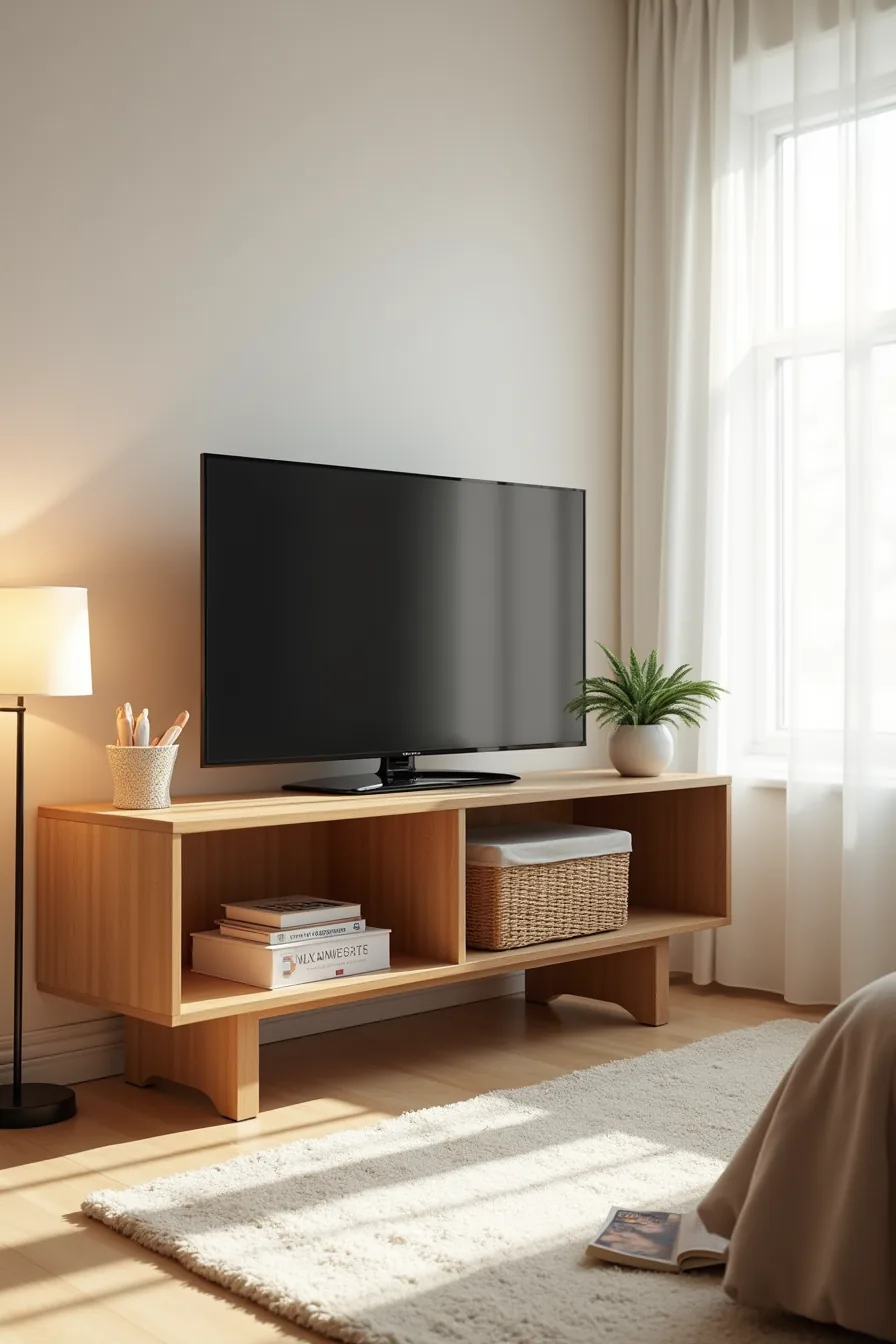
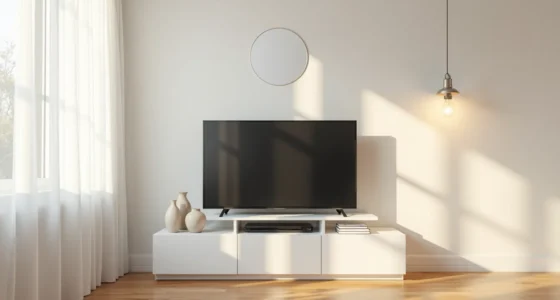
A low-profile console under 18 inches tall keeps the TV at seated eye level, which matters most when you watch from a reclined position in bed. For a 50-inch television, you’ll want a top surface at least 44 inches wide and 16 inches deep to allow a stable 2-inch margin on each side and behind the stand’s feet. Particle-board construction with a laminate finish keeps the cost between $80 and $150, but it will chip along the edges if you move it more than once, consider this a 3-to-5-year piece rather than a heirloom.
The open lower shelf in this setup holds a woven storage basket, which is the budget route’s secret weapon. You get concealed storage for cables, remotes, and extra bedding without paying for drawer hardware that fails first on inexpensive pieces. This works best in medium bedrooms of 120 to 200 square feet where you’ve floor clearance but don’t want a tall piece competing with your headboard for visual weight.
The low silhouette also makes a ceiling feel higher, a trick that costs nothing extra. Pair it with a matte finish to hide dust from your bedroom carpet, and wipe with a damp cloth only, laminate dulls quickly with chemical cleaners.
Tall Shelving Unit for Storage-Heavy Layouts
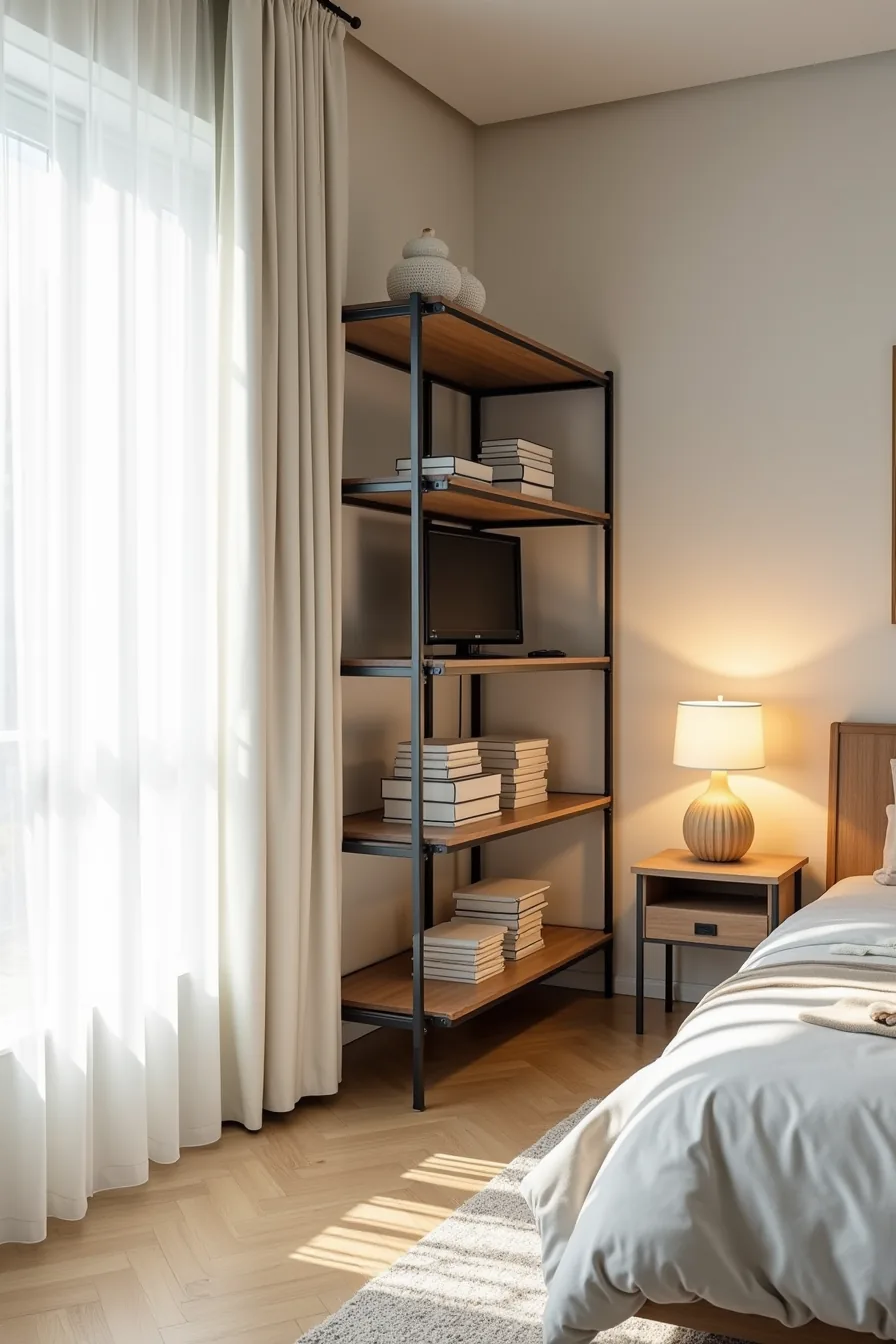
When your bedroom doubles as a reading nook and display space, a five-tier metal shelving tower delivers vertical storage without the bulk of a full wall unit. Placing the TV on the middle shelf puts the screen at eye level when you’re propped against pillows, while the lower tiers hold stacked books and decorative boxes that anchor the visual weight at the floor. The open metal frame keeps the silhouette airy, so the unit reads as furniture rather than a wall of black holes.
You need a minimum footprint of roughly 24 inches wide by 14 inches deep, but the real requirement is ceiling clearance, measure from floor to the top shelf and leave at least 6 inches of breathing room above. Stability is your primary concern: anchor the unit to a stud with a furniture strap, especially if you place it on carpet, where the weight of books on lower shelves can make the top tiers sway when you pull out a stack. This setup suits rooms over 120 square feet where a low console would leave upper wall space unused minerals, and it gives you stylish TV storage that adapts as your book collection grows.
Wipe metal frames with a dry microfiber cloth weekly; the open shelves will collect dust faster than any closed cabinet, so budget five minutes a month for that chore.
Sliding Barn Door Cabinet for Concealment
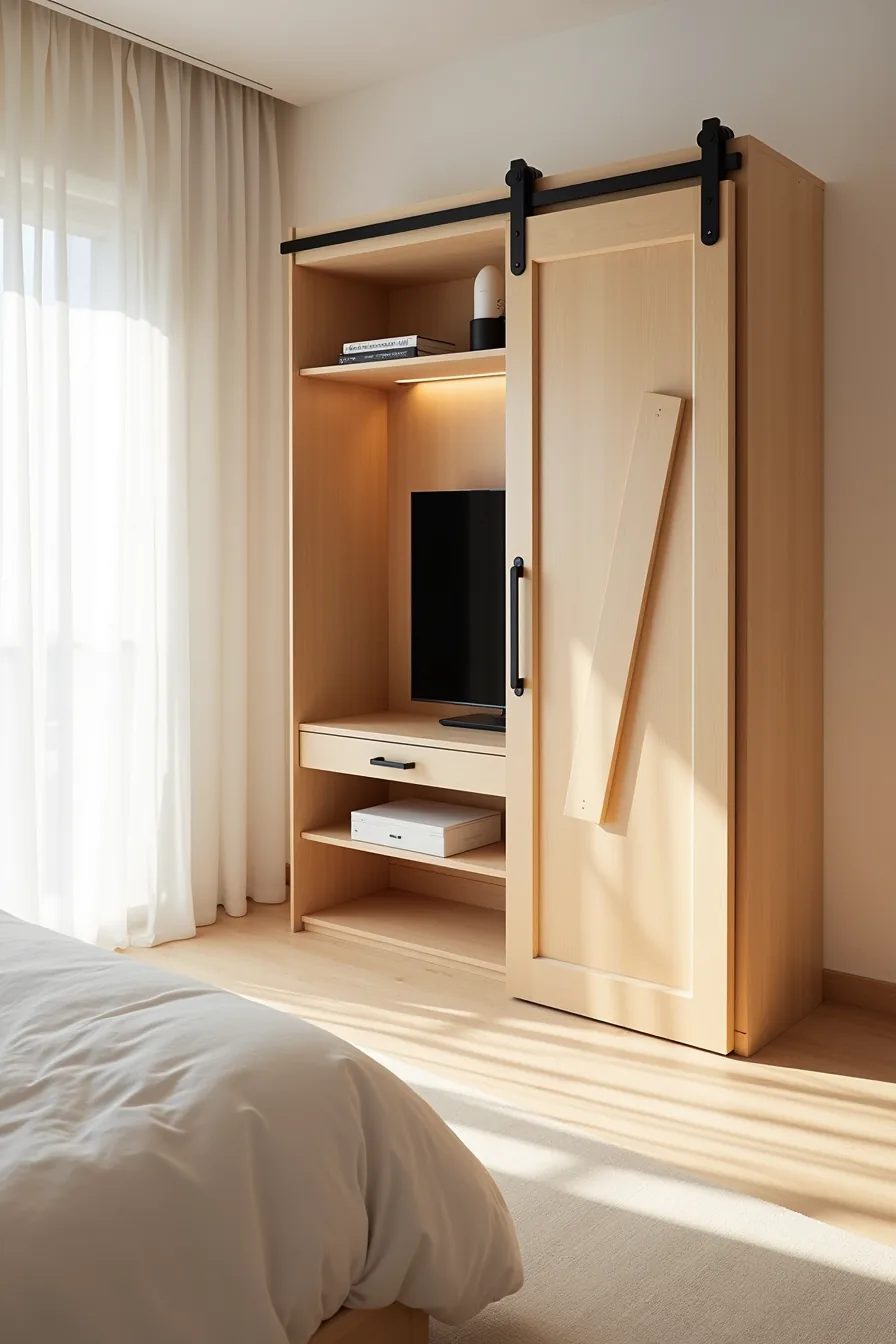
A wooden cabinet with a sliding barn door gives you the best of both worlds: the TV stays accessible for viewing, but vanishes behind the panel when you want the room to read as pure furniture. The metal track mounted at the top carries the door’s weight, so the cabinet itself can be shallow, typically 16 to 20 inches deep, which frees up floor space in tighter bedrooms. The door handle serves as a tactile grip for one-handed operation, and the partially closed position shown here lets you frame the screen rather than fully hide it.
Track installation is the deciding factor. Permanent mounting requires screwing into header studs and adds about two hours to your setup time, but renters can use adhesive tracks rated for 20 to 30 pounds if the door is hollow-core or lightweight solid wood. Swing clearance is minimal compared to hinged doors, you only need roughly the width of the door panel alongside the cabinet, not a full arc, so this works in layouts where a standard door would block a nightstand.
Hardware maintenance is straightforward: apply silicone lubricant to the rollers every six months and check the track screws for tightness seasonally, but expect the adhesive version to lose grip after 12 to 18 months in humid climates.
Corner TV Stand to Maximize Awkward Spaces
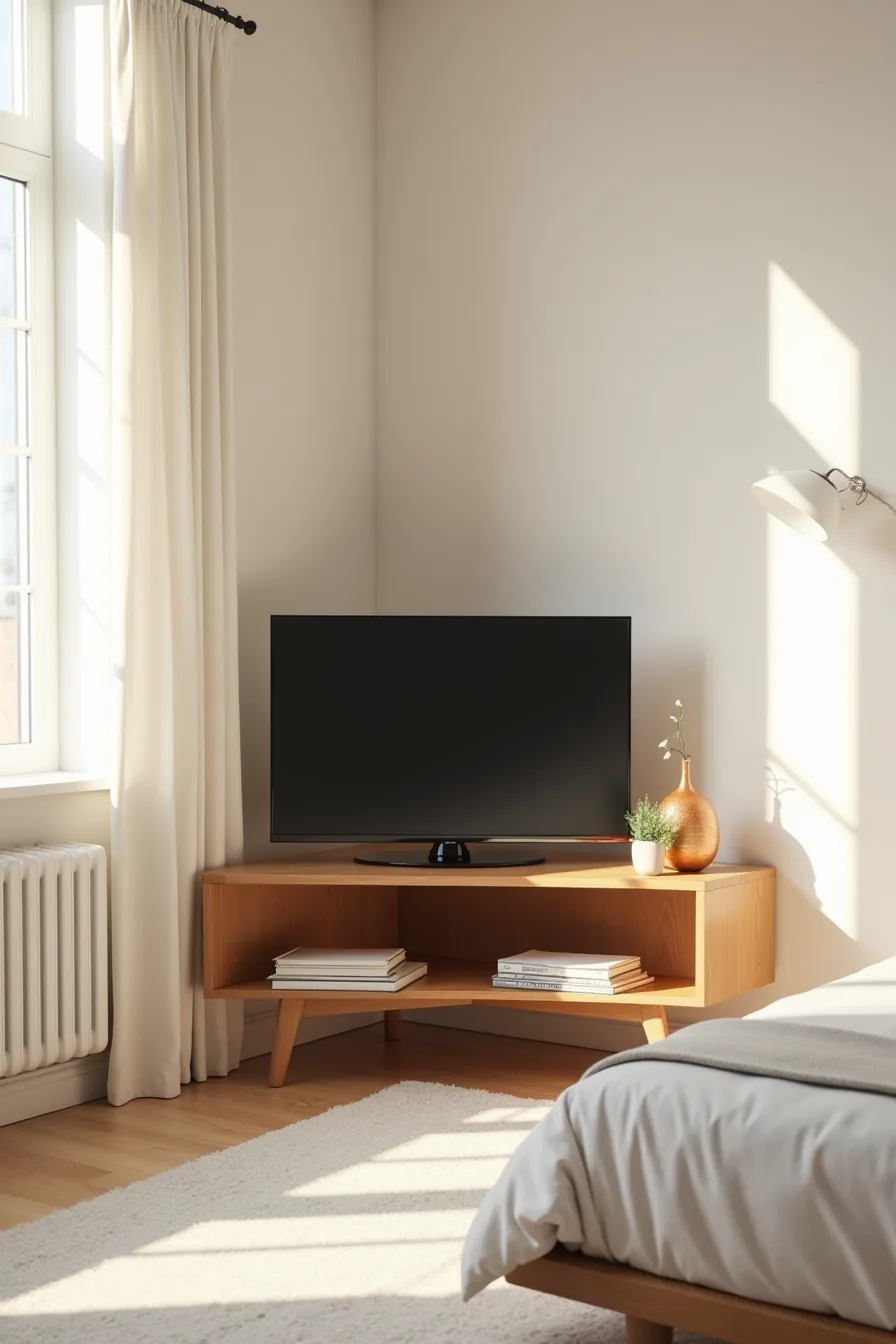
A triangular corner stand converts a dead zone into the room’s focal point, letting you watch from two distinct seating areas without reorienting furniture. The angled TV faces outward from the corner, so you get a straight-on view from both the bed and a reading chair placed along the adjacent wall, something a flat-front cabinet can’t deliver. The lower shelf in this triangular stand holds decorative baskets and a small stack of books, keeping the footprint compact while adding storage that a media console against a flat wall would claim from your walking path.
Measure the corner’s true depth before buying; most corner units need 18 to 24 inches of clearance from each wall, and a TV larger than 50 inches will overhang the stand’s angled face unless the unit is specifically built for that screen size. Sloped-ceiling bedrooms benefit most here, since the stand’s triangular profile tucks into the lowest part of the room where a full-height cabinet wouldn’t fit. Just verify the corner isn’t shared with a radiator or forced-air vent, enclosed corner units can trap heat and shorten electronics’ lifespan.
Bedroom TV Stand as a Long-Term Investment Piece
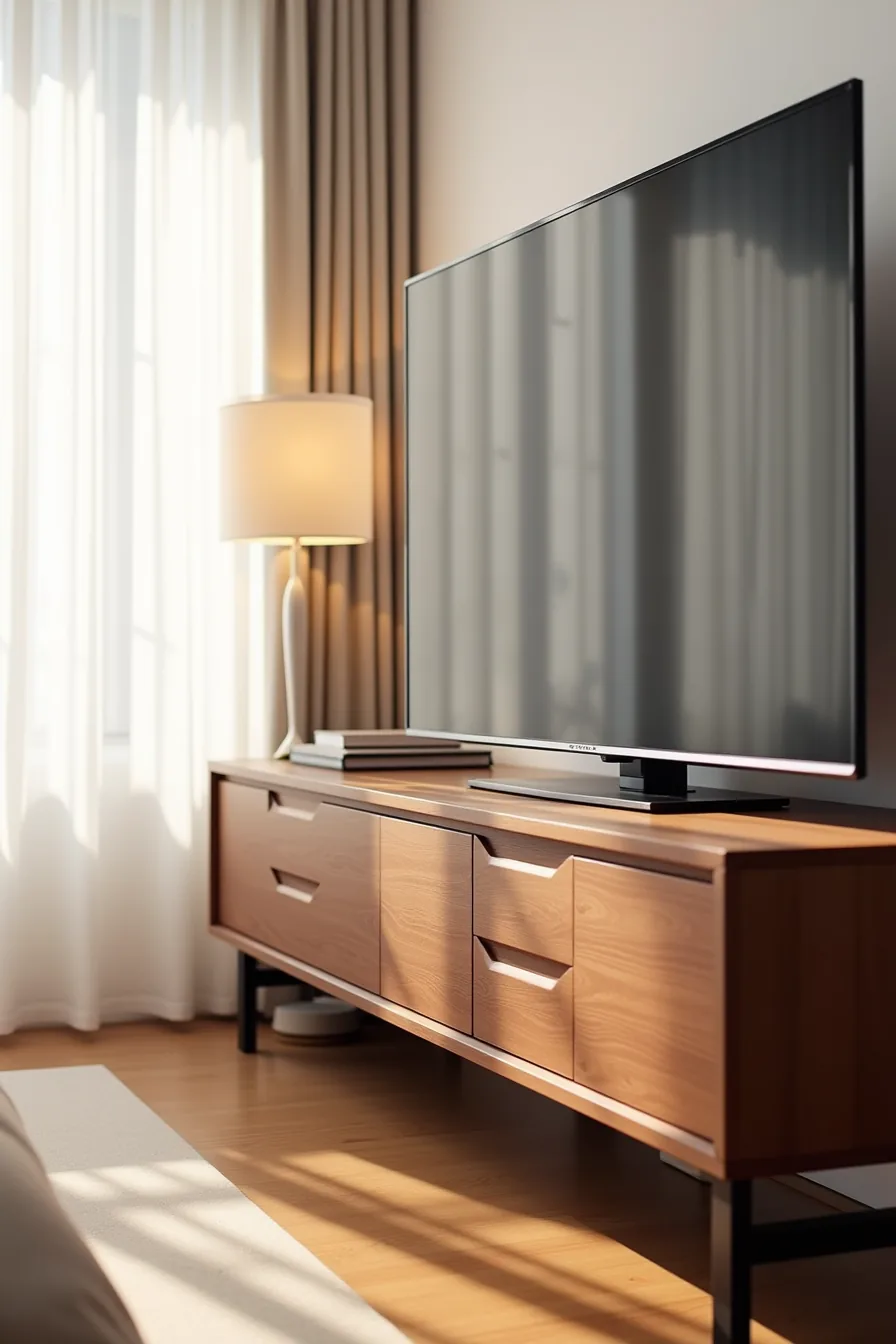
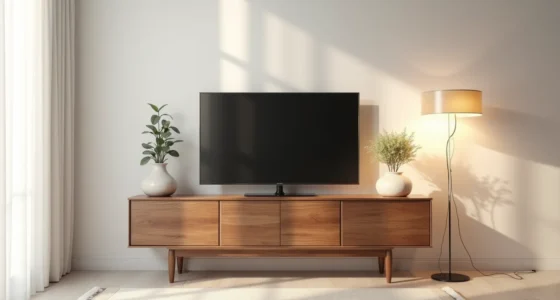
A solid walnut console on a metal frame base changes the economics of your bedroom TV stand entirely. Where a particleboard unit might need replacing every 3–5 years, this construction carries a realistic 10–15 year lifespan if you choose pieces with through-tenon joinery or dovetailed drawers rather than cam-lock fittings. Expect to pay 3–5 times more upfront, typically $600 to $1,200 for a quality walnut piece in this category, but the cost per year of use lands below most budget alternatives that fail at the first move.
The metal frame base deserves as much scrutiny as the wood. Look for welded or bolted joints with at least 14-gauge steel; anything thinner flexes when you disassemble and reassemble it during relocation. If you move frequently, favor a modular design where the base, top, and drawer bank separate into three manageable loads, a fixed monolith piece becomes a liability when staircases and van lines get involved.
For finish maintenance, wipe walnut quarterly with a damp cloth and apply a fresh coat of furniture oil annually to prevent the grain from drying and cracking in low-humidity bedrooms.
Your Decision Checklist
Before you buy, measure your wall width and viewing distance first. A TV that’s too high strains your neck; one that’s too low gets blocked by pillows. Match the stand’s depth to your room’s walkway, leave at least 24 inches of clearance.
Prioritize two features: cable management and ventilation. Everything else is style. If you rent, pick a freestanding unit; if you own, consider wall-mounting to free up floor space.
Start by sketching your room’s dimensions and listing the gear you must store. That single sheet of paper will filter out half the options you’re eyeing right now.
Frequently Asked Questions
What size TV stand do I need for a 55-inch television?
Choose a stand at least 55–60 inches wide. The surface should extend a few inches past each side of the TV. Depth of 15–18 inches typically works.
Can I use a bedroom TV stand in a rental apartment?
Yes, choose a freestanding unit without wall mounting. Look for lightweight materials like MDF or metal, and keep the original packaging for easy disassembly and moving. Avoid drilling by using furniture-level TV placement.
How high should a TV stand be off the ground for comfortable viewing?
The center of the screen should align with your eye level when seated or reclined in bed. For most beds, that means the stand’s top sits 28–36 inches from the floor. Adjust for your specific mattress height.
What’s the difference between a TV console and a TV stand in terms of function?
A TV stand typically has open shelves or legs, allowing space underneath for media players. A TV console is a closed cabinet with doors, offering hidden storage for cables and accessories. Choose based on your need for display versus concealment.