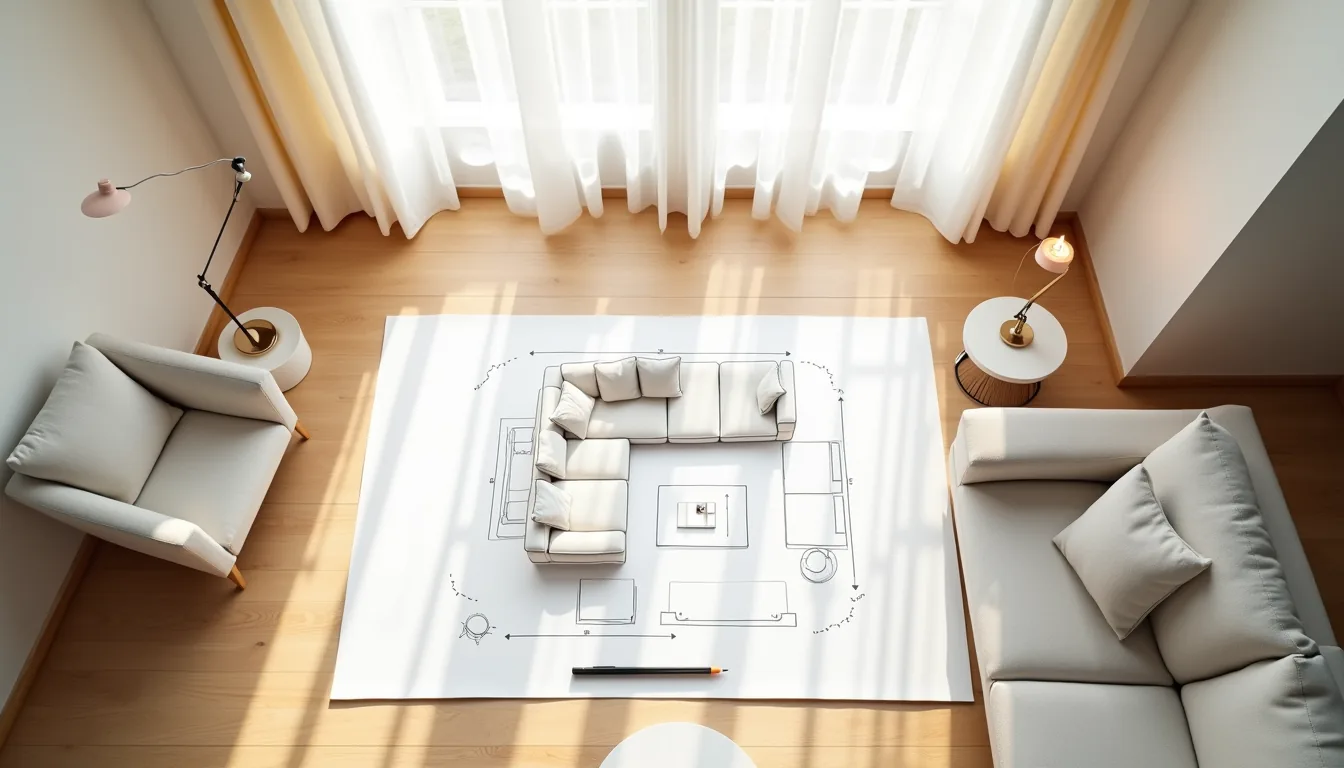

Choosing the right chair design for living room layouts comes down to a single decision: what job you need that chair to do, not which one looks best in a catalog photo. Whether you need a reading nook anchor, a flexible extra seat for guests, or a sculptural focal point, your choice hinges on three measurable factors: seat depth, arm height, and clearance. The six configurations ahead break down the trade-offs between cost, footprint, and maintenance so you can match a chair to your actual floor plan, not a trend.
Key takeaways
- Match chair scale to your sofa by keeping seat heights within 2-3 inches and overall widths proportional, a 40-inch chair beside a 90-inch sofa looks undersized, while a 34-inch chair beside a 70-inch sofa works.
- Use contrast deliberately, a leather chair against fabric upholstery or a dark frame against light walls defines a seating zone without adding walls, making it ideal for open-plan rooms.
- Angle chairs 10-15 degrees toward the sofa’s center to create a conversation triangle, but leave at least 18 inches of clearance for walking paths behind each chair.
- Choose materials by traffic, performance polyester or Crypton resists pet stains for under $800, while full-grain leather develops a patina over 10+ years but requires conditioning twice annually.
Match Chair Scale to Your Sectional or Sofa
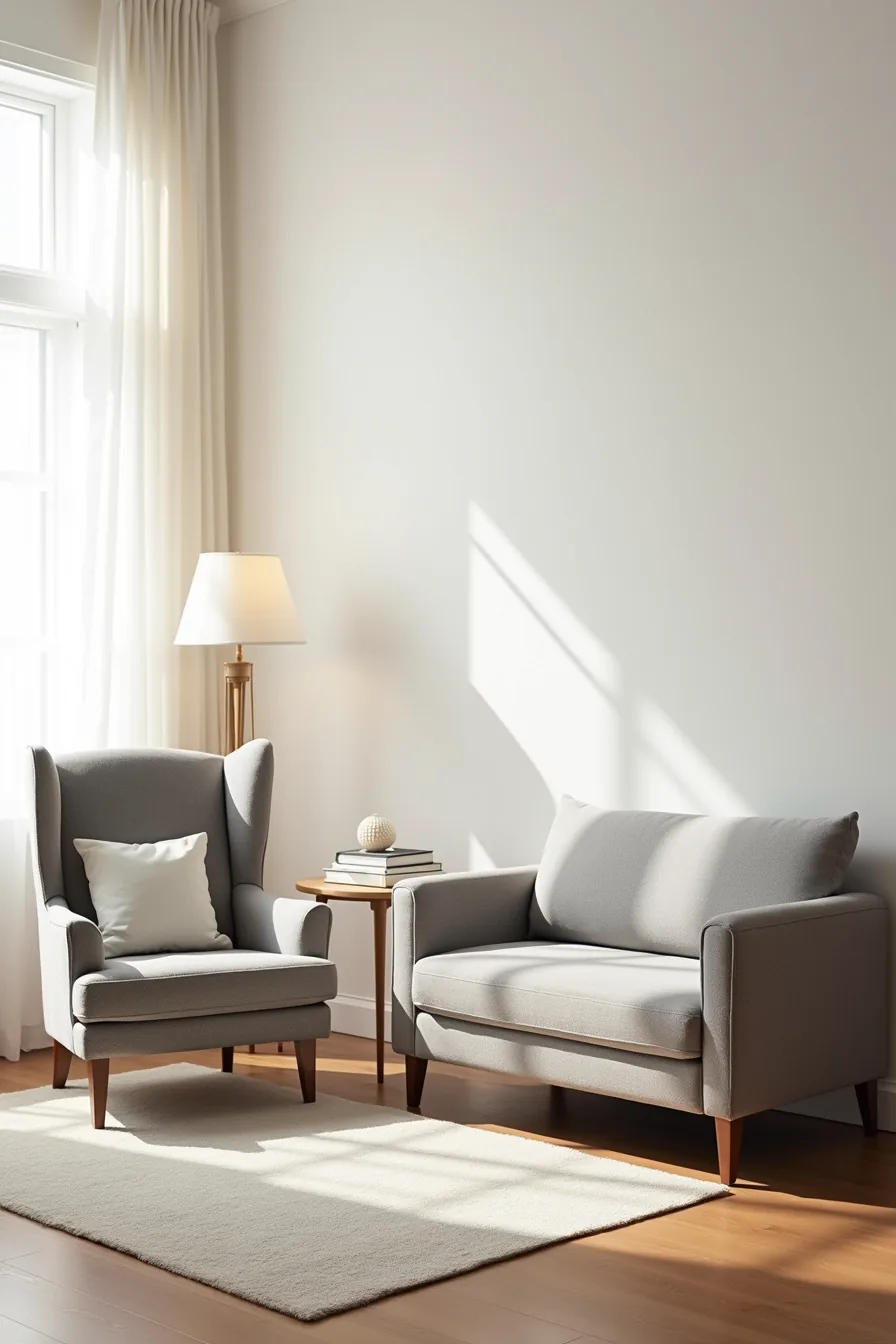
The wingback chair beside the gray sectional works because its seat height aligns with the sofa’s cushion height, most standard chairs sit 18–20 inches high, which matches typical sectionals. The chair’s back rises to roughly 40 inches, a full 10 inches shorter than the sectional’s back, so it reads as a supporting piece rather than a competing throne. When you measure your own setup, compare three numbers: seat depth, arm height, and overall width.
The chair’s 30-inch width leaves the side table breathing room without creating a gap that feels accidental. For a three-seat sofa, choose a chair between 28 and 32 inches wide; for a sprawling L-shaped sectional, you can push toward 36 inches. If your chair dwarfs the sofa, your conversation zone fragments into two separate seating islands.
Any throw pillow you add should match the chair’s scale, a 20-inch square looks proportional, while an oversized 24-inch lumbar will overwhelm the seat.
Use Contrast to Define Seating Zones
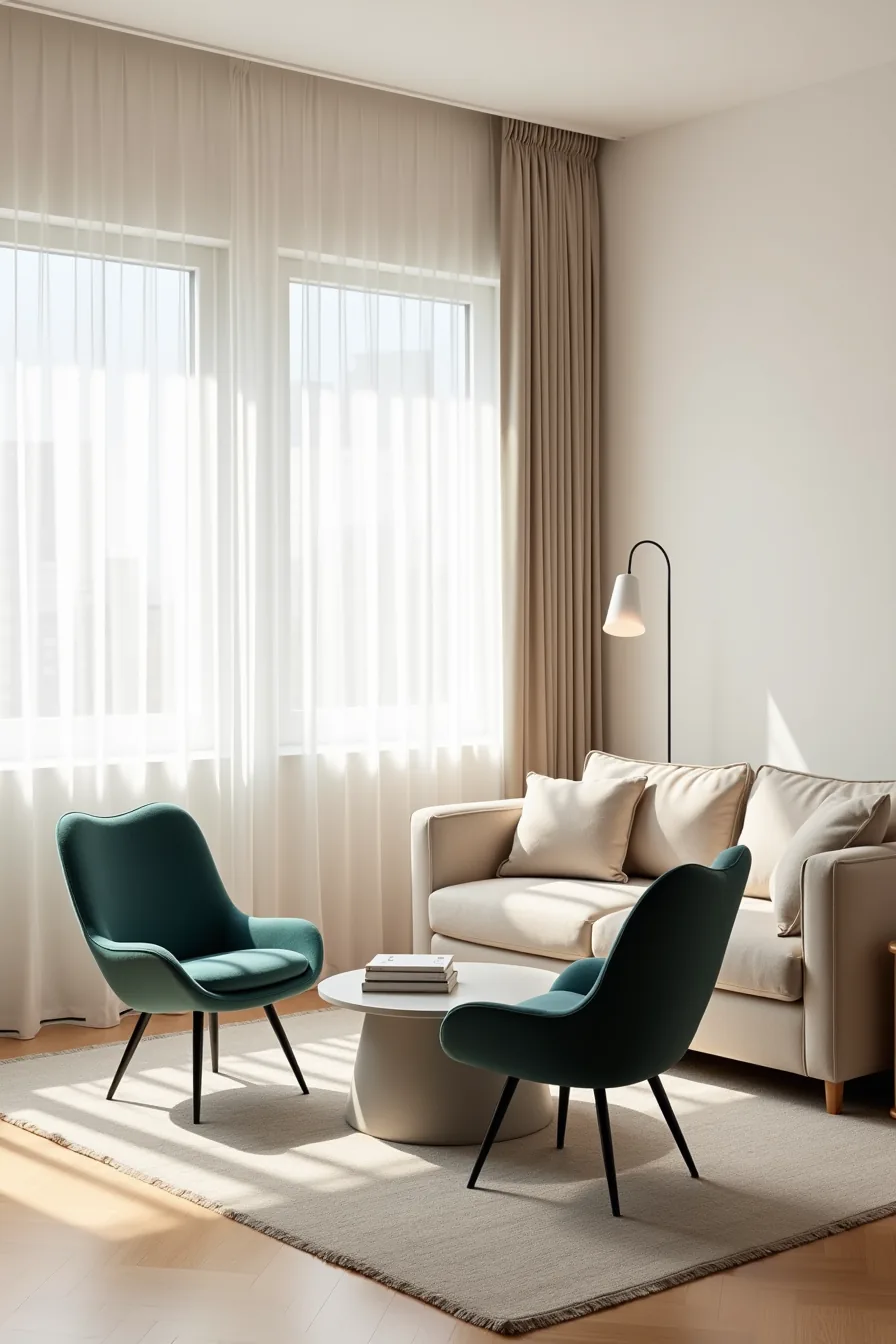
Contrast the sofa shape with your chairs to carve out distinct functions within one open-plan footprint. A beige linen sofa reads soft and horizontal; a pair of deep teal chairs on slim metal legs reads crisp and vertical, so the eye separates the lounging zone from the conversation zone without a single wall. Angle those teal chairs toward each other across a low concrete coffee table, and you create a second gathering point that draws people past the sofa rather than onto it.
This tactic suits anyone who hosts mixed groups, some guests want to sink into cushions, others prefer a firmer perch. The metal legs keep visual weight low, so sightlines over the chairs stay clear in a room under 12 feet wide. For a larger space, let the rug define the boundary: pull the teal chairs just onto the rug’s edge, leaving the sofa fully on it, and the zones read as intentional.
Keep the chair upholstery at least two shades darker than the sofa to maintain the contrast without introducing pattern clashes.
Arrange Chairs at a Conversation Angle
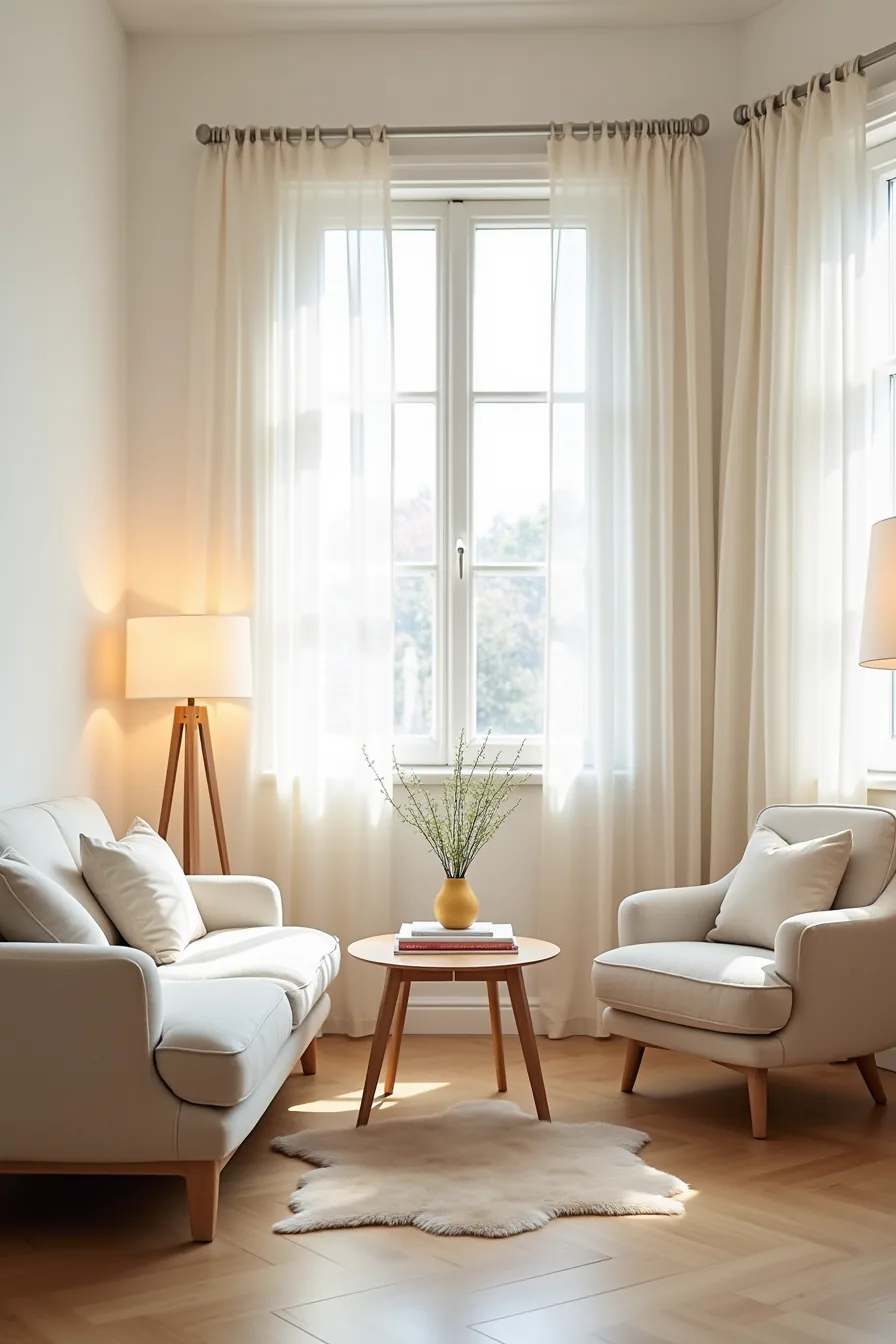
Positioning chairs at a 45-degree angle to the sofa is the single most effective way to make a seating arrangement feel welcoming rather than like a waiting room. In the arrangement described here, two upholstered chairs sit angled inward on either side of a neutral sofa, all oriented toward a central round table topped with a table lamp. That lamp anchors the grouping visually, giving guests a focal point that makes the 45-degree placement feel deliberate instead of accidental.
This works because the angle shortens the physical and visual distance between seats. People seated in the chairs face roughly toward the sofa’s center, so eye contact happens naturally without anyone twisting in their seat. A rigid 90-degree arrangement, by contrast, forces guests to turn their heads sharply to converse.
For a compact living room, keep the chairs 18–24 inches from the sofa’s front edge so the circulation path behind them stays at least 30 inches wide. In a larger room, you can afford to pull the chairs farther out, but maintain the same 45-degree orientation relative to the sofa’s centerline. The round table should sit at the midpoint, approximately 14–18 inches from each seat, close enough for a drink but far enough to stand up without bumping it.
Choose Materials That Suit Your Lifestyle

The material you choose determines how often you clean, how quickly the chair wears, and whether it survives pets, kids, or daily spills. A performance fabric with a tight textured weave resists moisture and stands up to heavy use, making it the pragmatic pick for a family room or a chair near an entry point. Expect to vacuum it weekly and spot-clean with mild soap; it typically costs less than leather and forgives abrasive contact far better than linen.
Polished leather develops a patina over time, which some owners love and others mistake for damage. It demands little beyond occasional wiping, but it scratches visibly, feels cold in winter, and runs hotter in summer, suiting a low-traffic den or a formal sitting area more than a busy playroom. Natural linen offers the softest, most breathable hand feel, but it stains easily, fades in direct sun, and requires professional cleaning for anything beyond crumbs.
If you’re drawn to linen, reserve it for a chair that gets light, careful use.
Adapt Chair Design for Small Spaces

An armless chair is your strongest ally in a tight room. It tucks closer to walls, slides under a console table when not in use, and visually disappears by leaving sightlines open. Light gray fabric amplifies that effect, pale tones reflect more available light and make the chair’s mass read as smaller than a dark, bulky frame would.
Position the chair diagonally in the corner, angled toward the room’s center, rather than parked flush against the wall. That placement claims less floor area than a perpendicular arrangement and creates a conversational triangle with your sectional. Choose a chair with exposed tapered legs; the visible floor beneath the seat adds breathing room that a skirted base would swallow.
A compact sectional against the adjacent wall completes the seating circle without doubling the footprint. Above it, tall open shelving draws the eye upward and frees valuable floor space that a bookcase or cabinet would have taken. These Living Room Chair Ideas for Better Small Space Flow depend less on buying the smallest possible chair and more on choosing one that leaves gaps, around the arms, under the seat, and between you and the sofa.
Budget, Rental, and Investment Routes
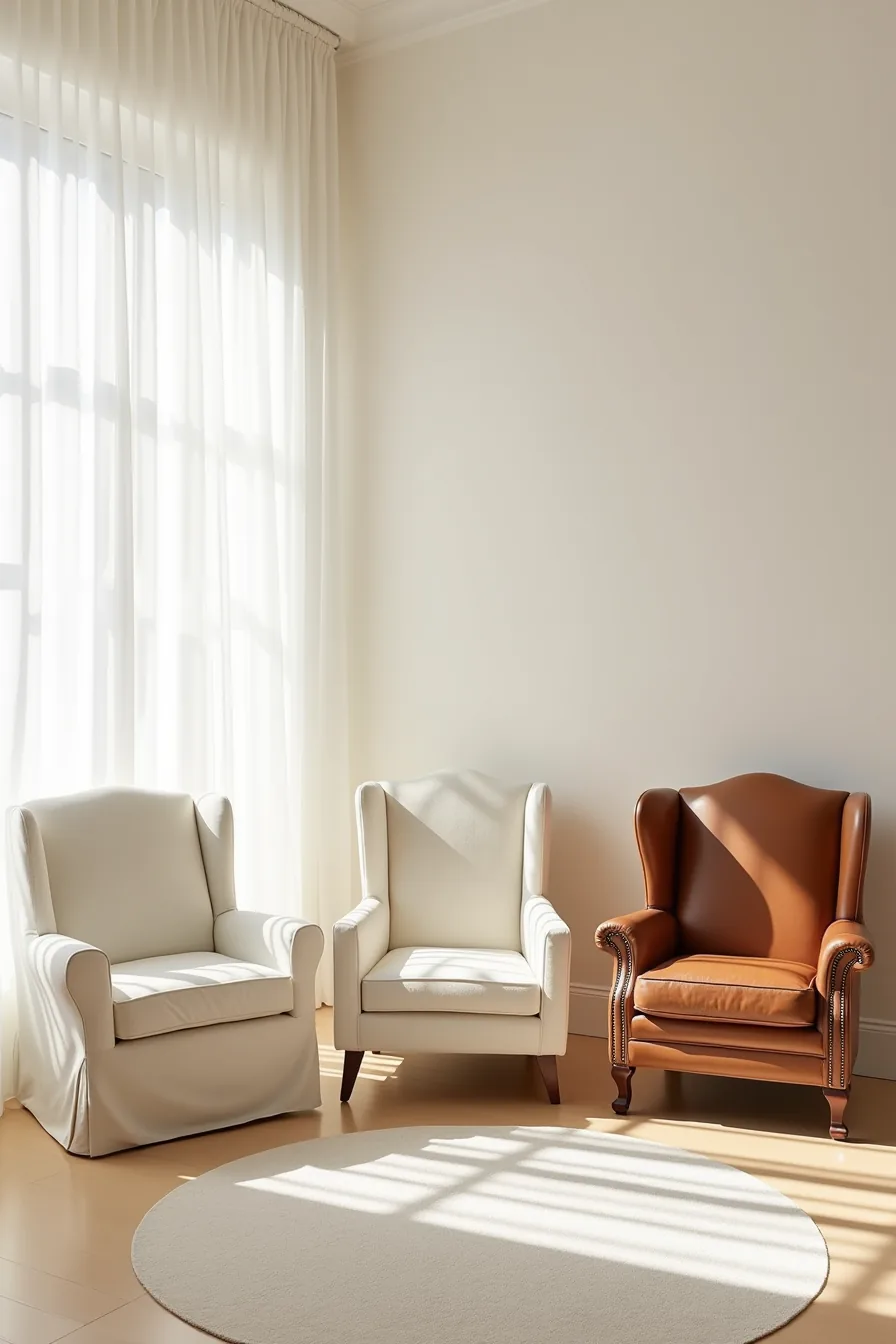
A slipcovered budget chair is your fastest route to a refreshed look, with most quality options landing between $200 and $400. The washable cover extends its lifespan through heavy everyday use, though expect the fill to soften and flatten noticeably within two to three years, acceptable for a piece you may want to swap anyway.
The rental-safe upholstered chair in the middle solves the two biggest landlord headaches: damage and moving logistics. Its removable legs let you disassemble it into a flat base and separate back, which fits through narrow doorways and into a standard sedan. Most models in this mid-range bracket run $500 to $900 and feature a tight-back construction that holds its shape for five to seven years with routine vacuuming.
The leather wingback with nailhead trim is the long-term play. A well-built frame with eight-way hand-tied springs and full-grain leather typically costs $1,500 to $3,500 and should last fifteen years or more. Leather requires conditioning twice a year to prevent cracking, and the nailhead trim will occasionally need tightening, but this is the piece you reupholster or pass down rather than replace.
Choose this route when you want a permanent anchor and your seating needs are stable.
Your first move
Measure your floor plan before you browse a single chair. Mark door swings, walkway widths, and the distance from your sofa to the opposite wall, you need at least 30 inches of clearance for comfortable traffic flow. Write down your ceiling height and the width of your largest wall.
Then take that paper to a store or open a measuring-tape app. Sit in every candidate for five full minutes, checking arm height against your sofa’s arm and seat depth against your thigh length. A chair that fits your body but blocks your path fails the only test that matters.
Frequently Asked Questions
What size chair works best with a large sectional?
Choose a chair whose seat width falls between 24 and 32 inches. This range balances the sectional’s mass without overwhelming the room. Oversized club chairs over 36 inches wide can crowd the layout.
Can I mix different chair styles in one living room?
Yes, but anchor them with a shared element, same wood tone, fabric color, or arm height. Limit yourself to two distinct styles. Three or more competing silhouettes create visual chaos rather than intentional contrast.
How far should a chair sit from the sofa for conversation?
Place the chair 36 to 48 inches from the sofa’s front edge. This distance keeps voices clear and allows legroom. Closer than 30 inches feels cramped; beyond 60 inches breaks the conversational circle.
What’s the most durable fabric for a living room chair with kids or pets?
Choose a tightly woven synthetic like solution-dyed acrylic or polyester. Both resist stains, fading, and abrasion. Avoid linen, velvet, and cotton blends, they pill, snag, and absorb spills quickly.
Look for a rub count above 30,000.