
Sofa chair design is a matter of matching the chair’s seat height, depth, and arm style to your room’s traffic flow and your own sitting habits, not just picking a shape you like. Get those three measurements right, and the chair disappears into your daily routine; get them wrong, and even the most beautiful piece becomes an obstacle you step around. The choices ahead, from compact perches to sprawling loungers, each solve a specific spatial problem, and knowing which one fits your square footage and lifestyle will save you from a costly mistake.
Key takeaways
Match your sofa chair’s width to your room’s longest wall, oversized chairs need at least 24 inches of clearance from the wall for circulation, while compact versions suit rooms under 12 feet wide. Curved lounge shapes work best in open-plan corners or as a visual break in rectangular layouts, but they consume 30–40% more floor space than straight-back equivalents. Leather outlasts fabric by 10–15 years in high-traffic households, yet fabric offers easier spot-cleaning and lower upfront costs, choose based on whether you prioritize longevity or maintenance effort. For rentals, a slipcovered chair hides wear and changes look instantly, while a solid-wood-frame investment piece retains resale value, never buy a sofa chair with particleboard joints if you plan to move it more than twice.
Compact vs Oversized: Matching Scale to Your Room
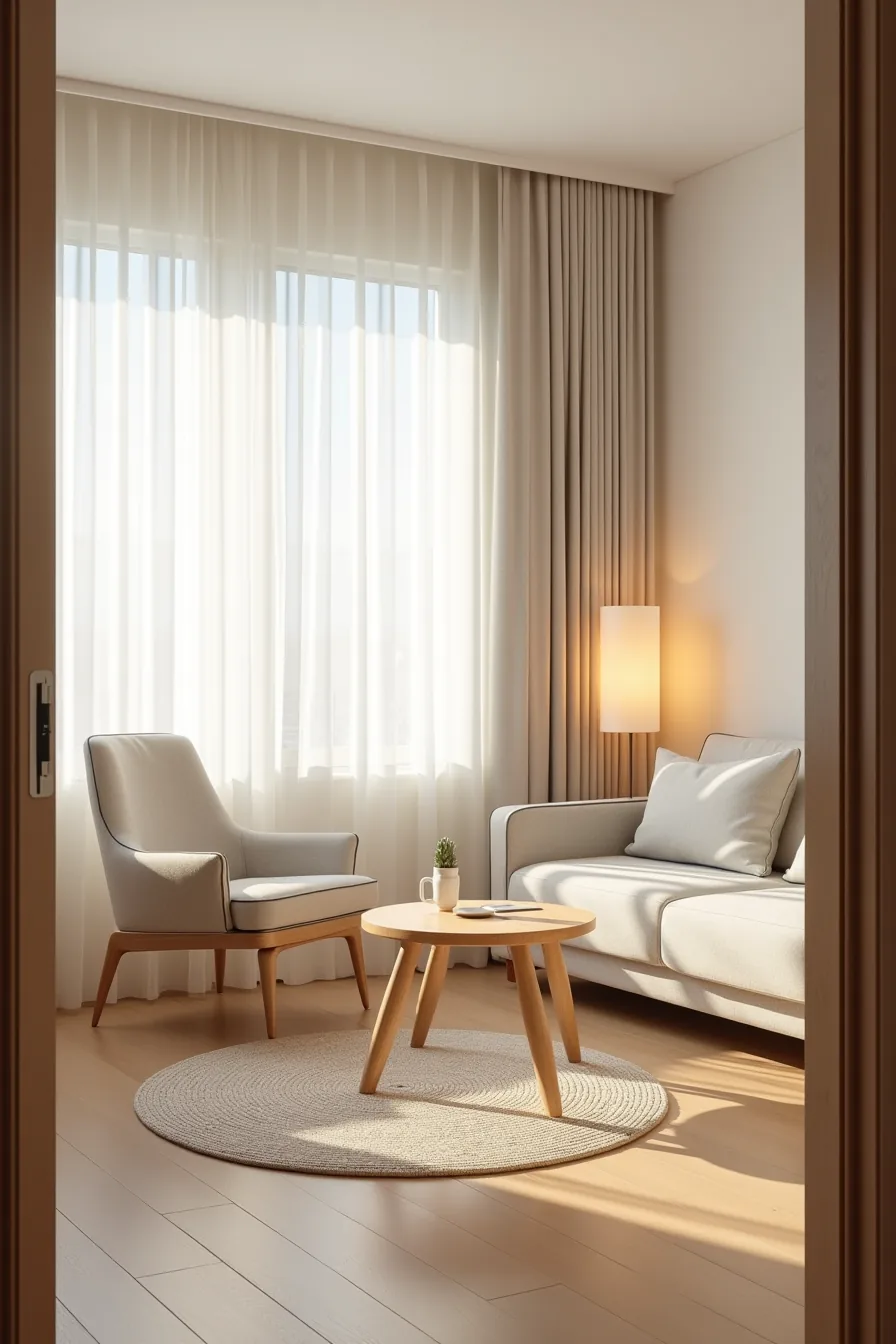
Start with a tape measure before you look at a single fabric swatch. For a compact sofa chair to work, you need at least 18-24 inches of clear floor space on three sides, the setup in this room gets it right. The chair sits against one wall, the coffee table lands within arm’s reach, and the accent rug anchors the seating zone without extending into the walkway.
Compact sofa chair design suits rooms under 150 square feet where a full-size chair would eat the floor plan. Most compact frames run 28-34 inches deep and 30-36 inches wide, and you’ll trade some seat depth for that footprint. Oversized versions, typically 36-44 inches wide, demand a room with at least 8 feet of wall space to avoid blocking circulation.
Measure your doorways too, a chair that fits the living room but not the hallway becomes a delivery-day problem.
The Curved Lounge Shape and When to Use It
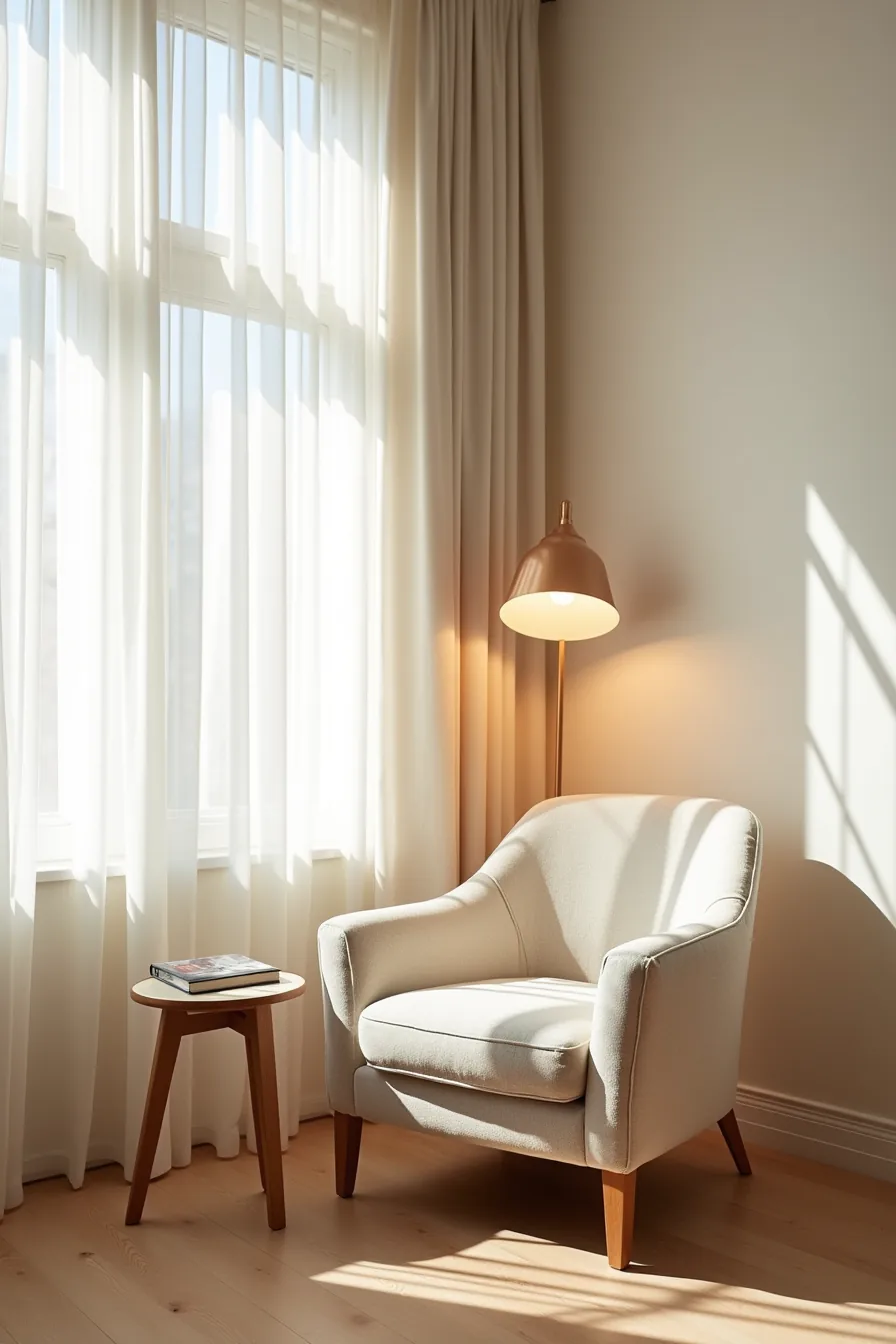
A curved lounge chair works because it redirects traffic flow instead of fighting it. The rounded back and rolled arms create a natural pocket that pulls the eye toward the corner, which makes the shape ideal for rooms where a straight-backed chair would create a visual dead end. In the corner nook setup, the curve mirrors the junction of the two walls, so the chair reads as part of the architecture rather than an obstacle.
You’ll need more floor space than you might expect: most curved lounge frames run 32-38 inches deep and 30-36 inches wide, with the widest point at the arms. That extra depth means the chair suits living rooms, wide hallways, or reading corners of 120 square feet or more, not tight apartment entries. The shape thrives in rooms with an open plan, where its rounded profile softens the hard lines of a sectional or a media console.
Pair it with a side table set just past the arm’s sweep and a floor lamp behind the shoulder; you’ll get a functional reading zone without blocking the path to the adjacent room. The trade-off is real: the curve eats corner space, so keep at least 6 inches between the chair’s widest point and the wall to avoid scuffing the finish.
Placement Strategies for Living Room Flexibility

Floating a sofa chair is the most adaptable setup for living room flexibility because it creates two distinct zones from one piece. Position the chair at a 45-degree angle to the fireplace, with its back facing the room’s main walkway, and you instantly define a conversation cluster without relying on walls. You need at least 18-24 inches of clearance on every side, enough for someone to pass behind the chair while someone else is seated.
Flank the floating sofa chair with two accent tables, one on each side, and you’ve built a symmetrical landing spot for drinks, books, or a lamp. This arrangement works best in rooms of 150 square feet or more; anything smaller and the floating chair starts blocking the path between doorways. The key is to keep the chair’s back at least 12 inches from the fireplace hearth so heat and embers stay clear of the upholstery.
If your room has a low-traffic corner, anchor the chair there instead, but you’ll lose the dual-zone effect that makes the floating placement worth the floor space.
Material and Maintenance Trade-Offs by Lifestyle
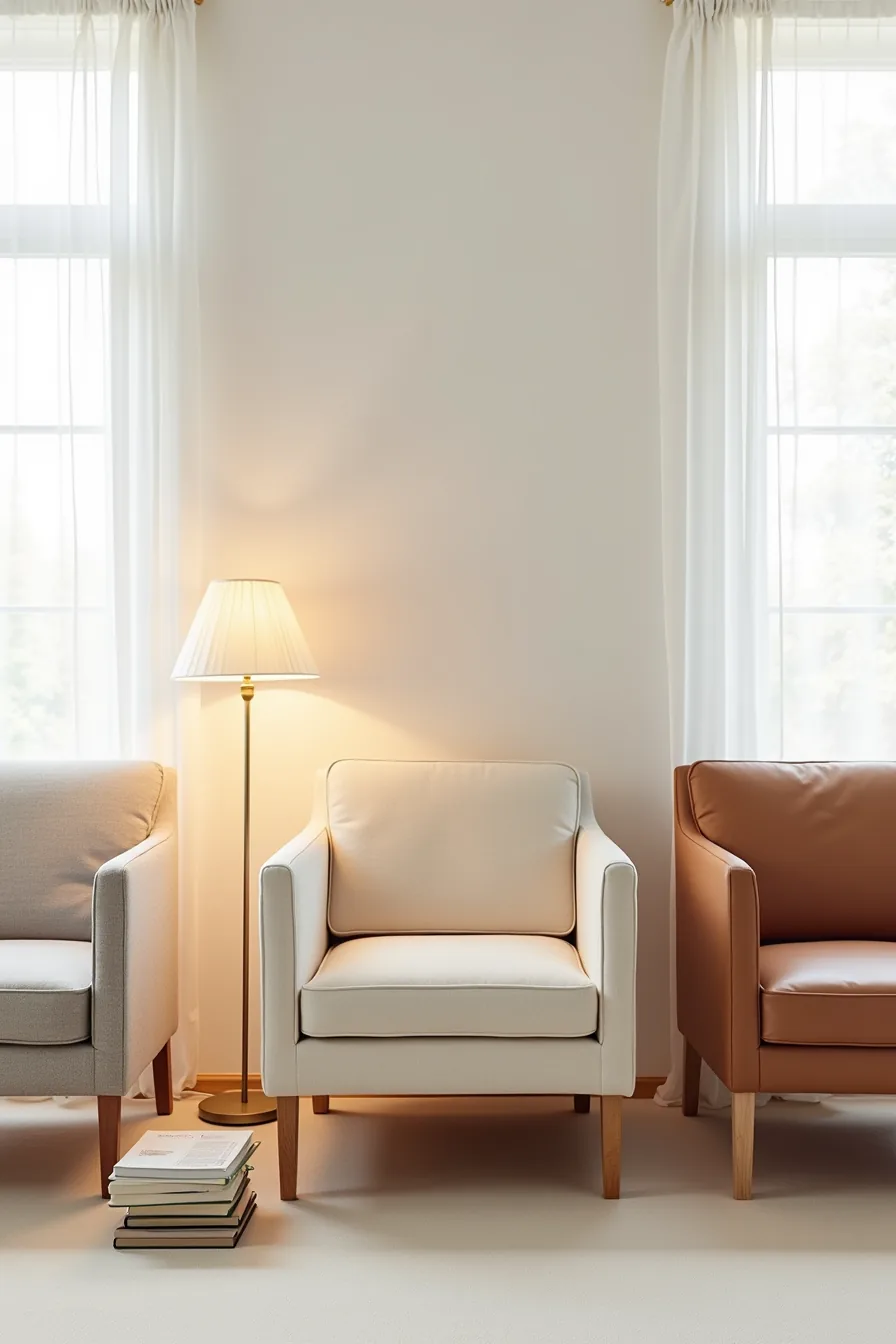
Your fabric choice determines your weekly routine more than any other design decision. A linen sofa chair looks effortless but wrinkles on contact and stains permanently within seconds of a red wine spill, plan on professional cleaning every 6-12 months and keeping a lint roller within arm’s reach, as seen beside the linen sample. Leather demands opposite care: wipe spills immediately, condition every 6-12 months with cream, and accept that scratches from pets or belt buckles will age into patina rather than disappear.
Performance fabric sits in the middle as the low-maintenance sweet spot. Most performance weaves resist water and oil-based stains, so a diluted bleach solution or enzyme stain remover handles most accidents without leaving marks. You still need to vacuum weekly to prevent dirt from grinding into the weave, and high-abrasion ratings (30,000+ double rubs) matter only if the chair gets daily use in a high-traffic family room.
If you’ve kids under five or a dog that claims the furniture, skip linen entirely, the cost of repeated cleaning will exceed the price difference within two years.
Budget, Rental, and Investment Routes
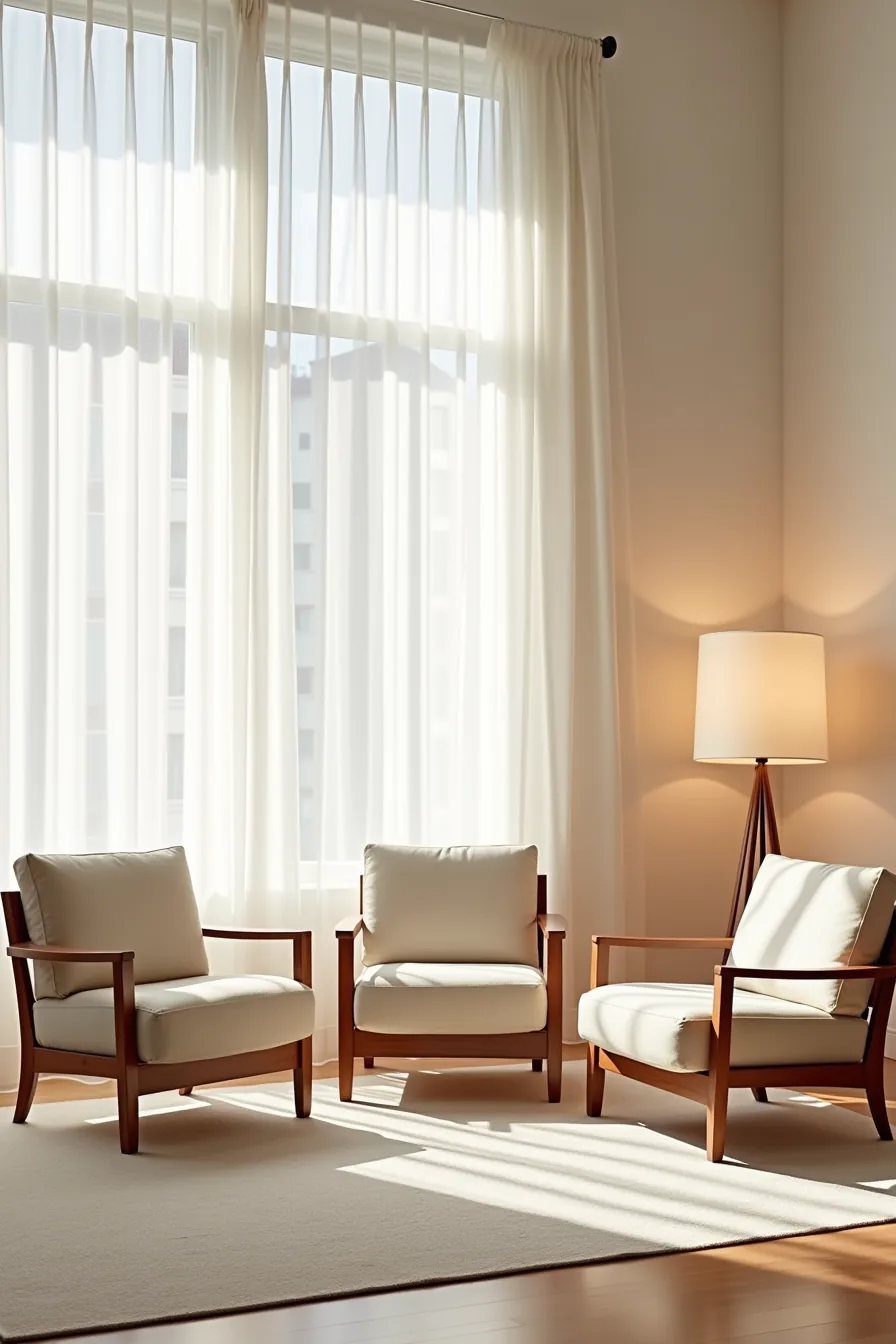
The leftmost piece, a simple frame with basic upholstery, is your entry point. Expect to pay $200–$500 for a chair that looks presentable but uses a kiln-dried hardwood blend and a mid-grade weave that will pill under daily use. It suits a first apartment, a guest room used twice a year, or a rental where landlord-grade furniture is the baseline.
You’re buying three to five years of service, not a legacy.
The modular rental-style chair in the middle solves the commitment problem. Its removable, machine-washable covers mean you can change the color scheme without buying new furniture, and the frame disassembles into flat-packed sections that fit through narrow stairwells and into compact cars. This route costs $400–$800, but the real value is portability: you can take it to three different apartments without renting a van, and replace only the cover when it wears out.
The heirloom piece on the right carries a four-figure price tag for a reason. A solid hardwood frame with joinery, eight-way hand-tied springs, and high-density foam wrapped in down will hold its shape for 20–30 years, and reupholstering it costs roughly half the price of a new mid-range chair. Choose this only if you’ve a permanent address and you’re prepared to maintain it, this is the route that anchors a room you intend to keep for a decade or more.
When you choose a sofa chair that fits everyday lounging, your budget determines not just quality but how easily you can change your mind later.
Adapting Sofa Chair Design to Small, Medium, and Large Spaces
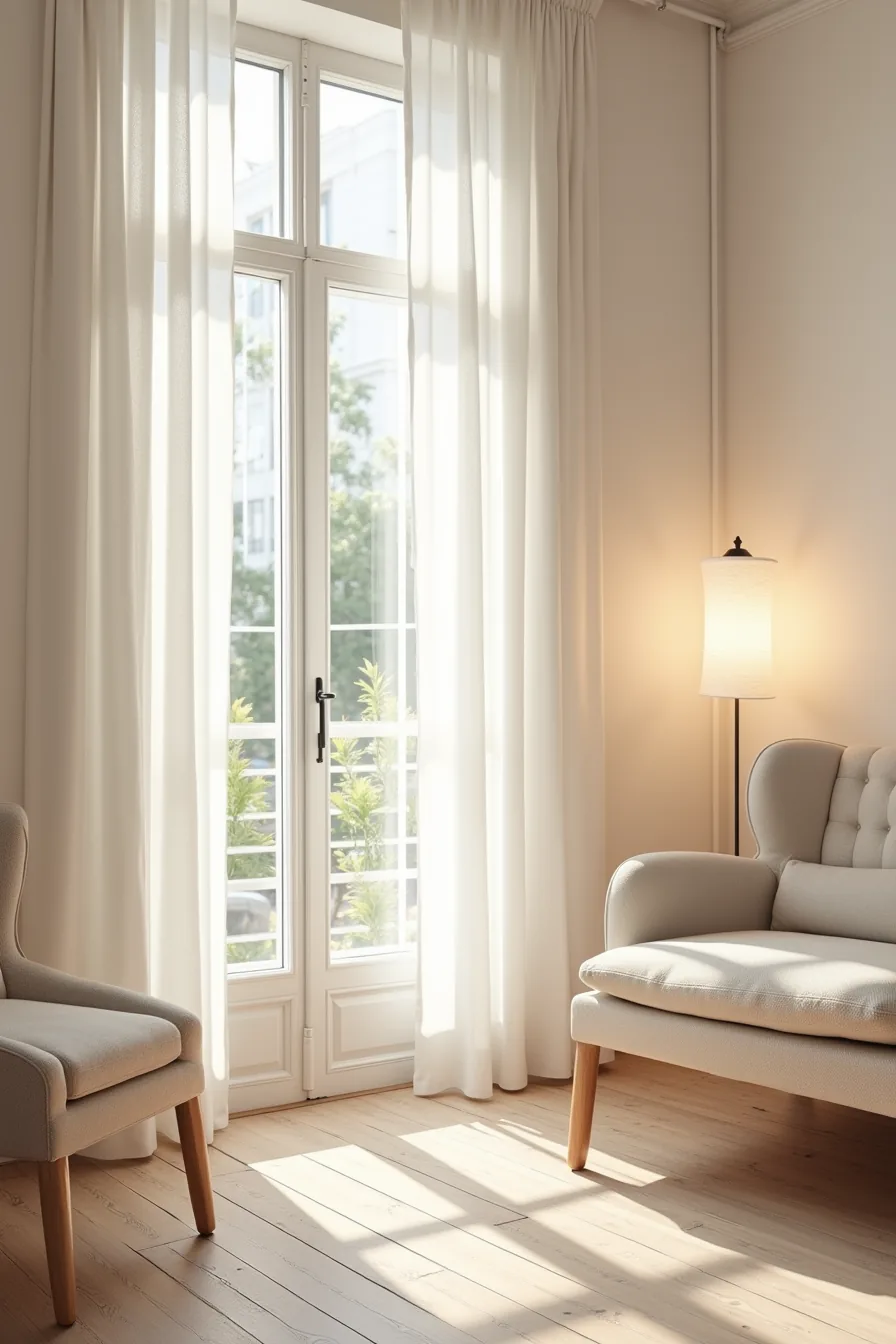
In a studio, your petite chair should stay within 28–32 inches in width and depth, leaving at least 18 inches of clearance between its front edge and your coffee table or media console. A light solid or low-contrast pattern keeps the visual weight down, and a slim, exposed-leg frame lets floor space show through so the room reads larger than it’s. Skip a matching ottoman; a compact side table doubles as a footrest without adding bulk.
The mid-sized living room suits a standard sofa chair at 34–40 inches wide, paired with a 60–72-inch sofa on the perpendicular wall. Keep the chair’s upholstery within two shades of the sofa’s tone to unify the seating group, and anchor it with a 4×6-foot rug that extends at least 6 inches beyond the chair’s front legs. A floor lamp beside it replaces a table lamp, freeing surface area for drinks and remotes.
In a large open loft, an oversized sectional chair at 50–60 inches across becomes a room divider rather than a perimeter piece. Float it 36–48 inches from the wall, back facing the dining or entry zone, and let its deep seat, 22–24 inches, define a lounging pocket. Use a darker, textured weave to ground the scale, and add a 5×8-foot rug beneath the front legs to pull the arrangement together.
Measure your ceiling height before committing; anything above 40 inches in seat height will visually crowd a standard 8-foot ceiling.
Your next move
You now have six distinct routes to a sofa chair that fits your life. The right one depends on three variables: your available floor space, your budget ceiling, and how long you plan to stay in your current home.
Start by measuring your target corner, doorway clearance included, before you browse anything. That single step eliminates half the options instantly.
Then commit to one route from this guide. Order a fabric swatch, sketch a floor plan, or book a consultation this week. Action beats another hour of scrolling.
Frequently Asked Questions
What is the ideal depth for a sofa chair that fits everyday lounging?
Most sofa chairs range 34–40 inches in seat depth. For everyday lounging, target 36–38 inches. Shorter users (under 5’4″) should stick closer to 34–35 inches to avoid pressure behind the knees.
Can you fit a curved lounge sofa chair in a small apartment?
Yes, if the curve is gentle and the footprint stays under 30 square feet. Place it in a corner or diagonally to avoid blocking traffic. Measure doorways and hallways first, curved frames often require disassembly for moving.
How much clearance do you need around a sofa chair for comfortable movement?
Keep at least 18–24 inches in front for legroom and 12–16 inches on each side for passing. In narrow hallways, reduce side clearance to 8 inches but never block a doorway or window swing path.
What upholstery material requires the least maintenance for a sofa chair?
Performance polyester or crypton-style microfiber resists stains, fading, and abrasion with minimal upkeep. Avoid linen and velvet, they require professional cleaning. Leather is low-effort but needs periodic conditioning to prevent cracking in dry climates.