Bedroom chair design comes down to three decisions, function, scale, and placement, and getting them right matters more than the chair’s style. A chair that looks perfect but blocks your closet or sits too far from natural light fails its purpose. The six approaches ahead break down what actually works for small, medium, and large rooms, with specific dimensions, material trade-offs, and budget routes you can apply today.
Key takeaways
- Bedroom chair design starts with purpose: a reading chair needs armrests and a side table within reach, a dressing chair needs a low back, and an accent chair needs to earn its floor space through material or color.
- For small rooms, skip the armchair entirely and use a slim, 16- to 18-inch-deep chair with exposed legs, placed at a 45-degree angle to the bed to keep the walking path clear.
- A bench at the foot of the bed serves as dressing seating without blocking circulation, but leave at least 24 inches between the bench and the dresser or wall for comfortable movement.
- For long-term investment, buy a solid-wood frame with a removable, washable cover and a seat depth of 20 to 22 inches; expect to pay 30 to 50 percent more than a trend-driven piece, and reupholster every 8 to 12 years.
Defining Bedroom Chair Design by Purpose
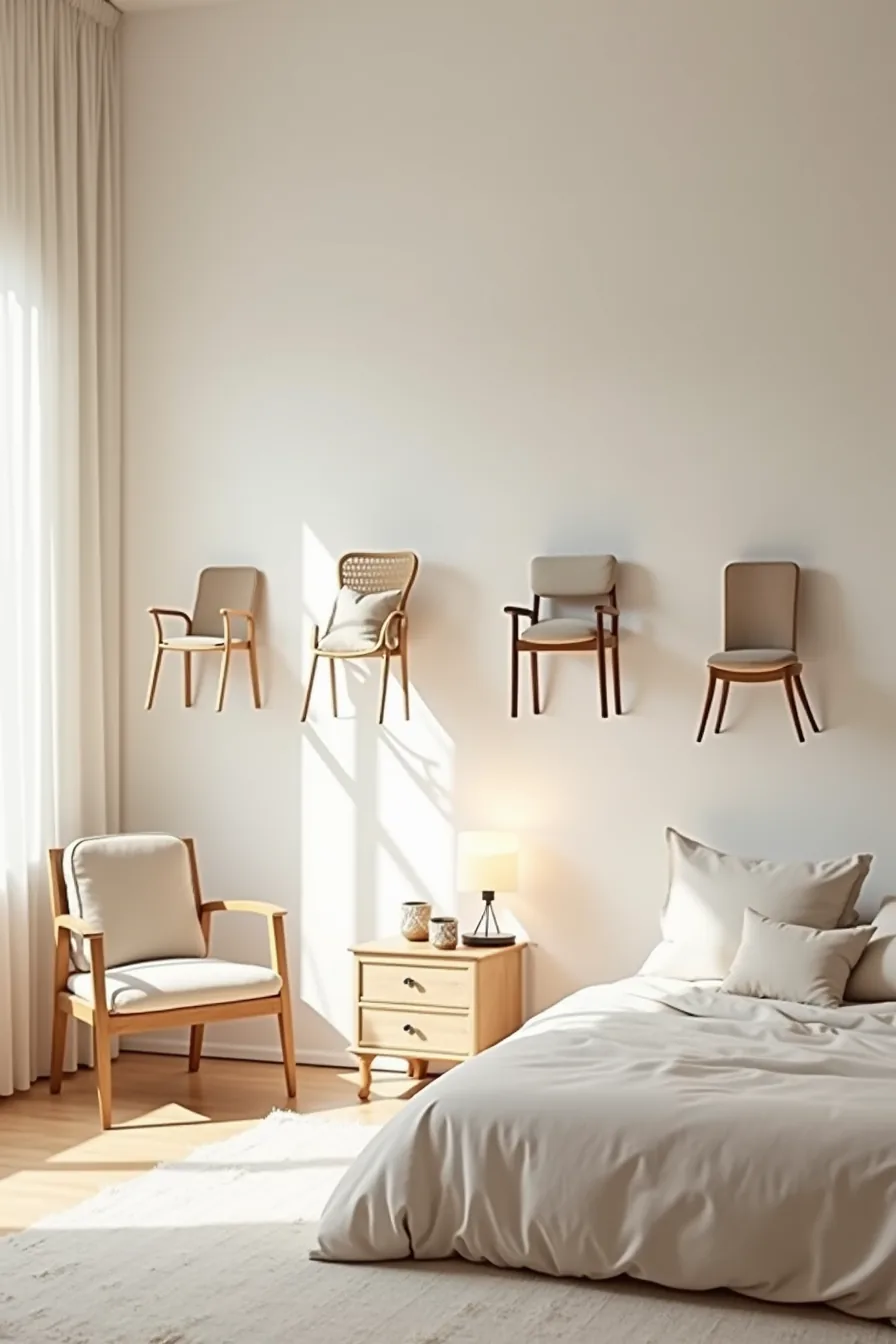
Bedroom Chair Design starts with a single question: what will you actually do in that seat? The answer dictates everything, scale, placement, and material. A reading chair with an ottoman demands deep, supportive cushions and a side table within arm’s reach.
A low bench at the foot of the bed suits dressing, so it needs a firm, wipe-clean surface and clearance to open drawers beneath. A meditation frame on the floor changes your posture entirely, requiring nothing more than a stable base and a clear perimeter. A compact side chair works for brief guest seating, where a smaller profile keeps traffic lanes open.
A guest-scale armchair, slightly larger, signals a longer stay, so it should sit near natural light. If you skip the purpose-defining step, you end up with a decorative object that obstructs circulation or goes unused. Define the function first; the style follows.
The Reading Chair: Scale and Placement for Small Spaces
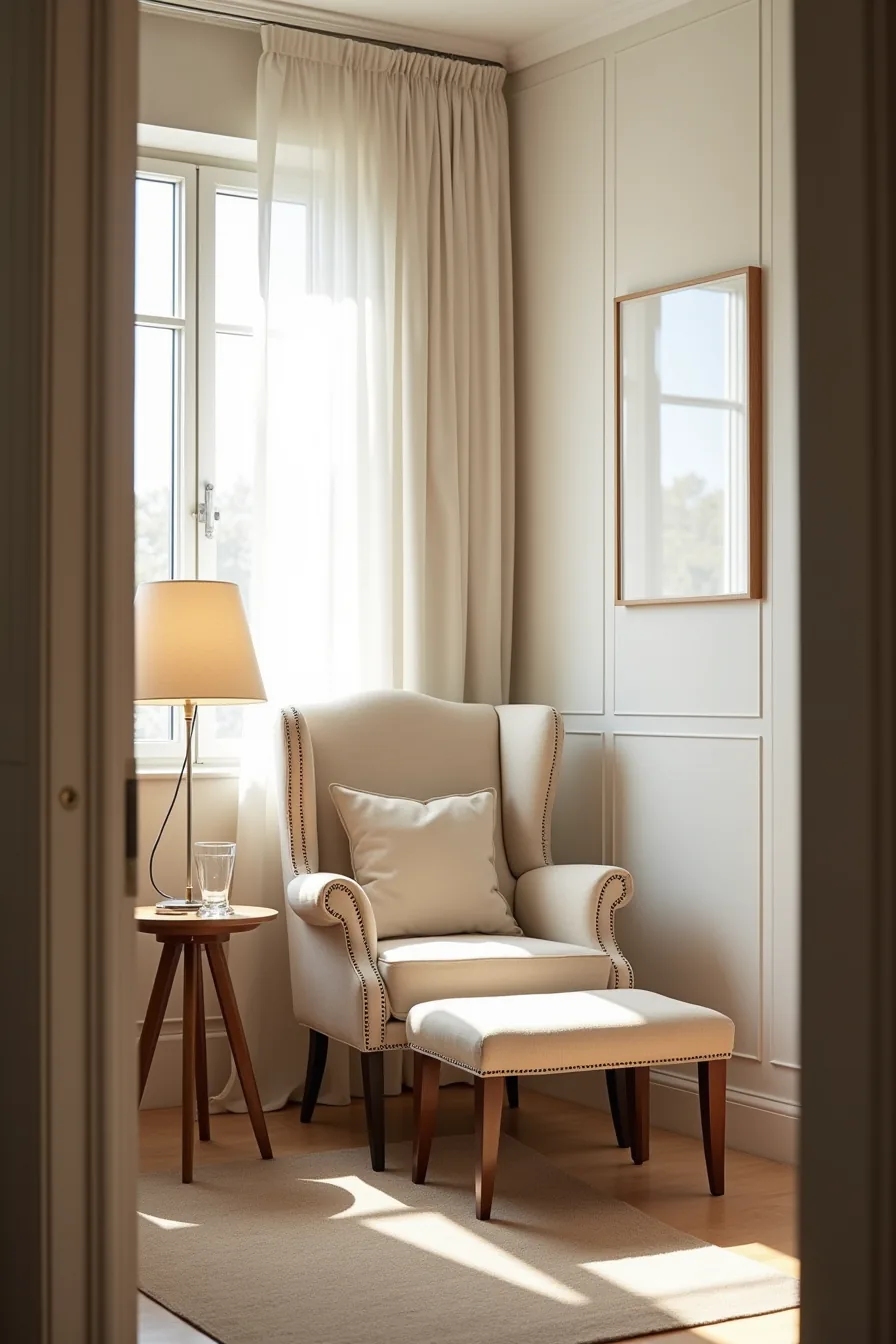
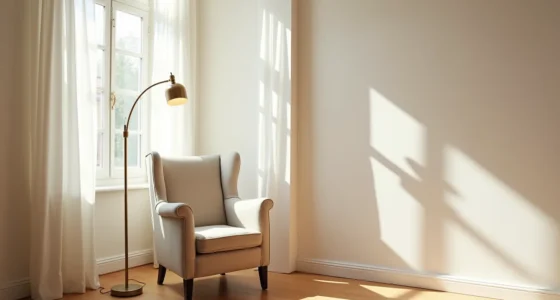
A wingback reading chair fits a corner nook when you match three numbers: seat height, seat depth, and total footprint. Most compact models measure 30–36 inches wide and 32–38 inches deep, with a seat height around 18–20 inches. That leaves a 30-inch clearance in front for your legs to stretch, and the wingback’s tall back, usually 36–42 inches, anchors the corner without needing wall space behind.
Position the chair so the armrest sits 6–10 inches from the window frame, leaving the glass fully accessible for opening and natural light to fall over your shoulder. Tuck a small side table, 12–16 inches wide, within reach of the right arm, and keep a footstool (roughly 16–18 inches square) underneath when not in use. For a renter-friendly route, choose a slipcovered version you can wash and re-drape; a budget option is a secondhand chair with a tight-back profile that you re-cover in a durable cotton twill.
The trade-off: a wingback’s high back can block a low windowsill’s sightline, so measure the sill height before committing. If the corner is narrower than 30 inches, skip the wings and pick a compact club chair with a lower back, it reads equally inviting but fits tighter footprints.
The Dressing Chair: Bench-Style Seating at Foot of Bed

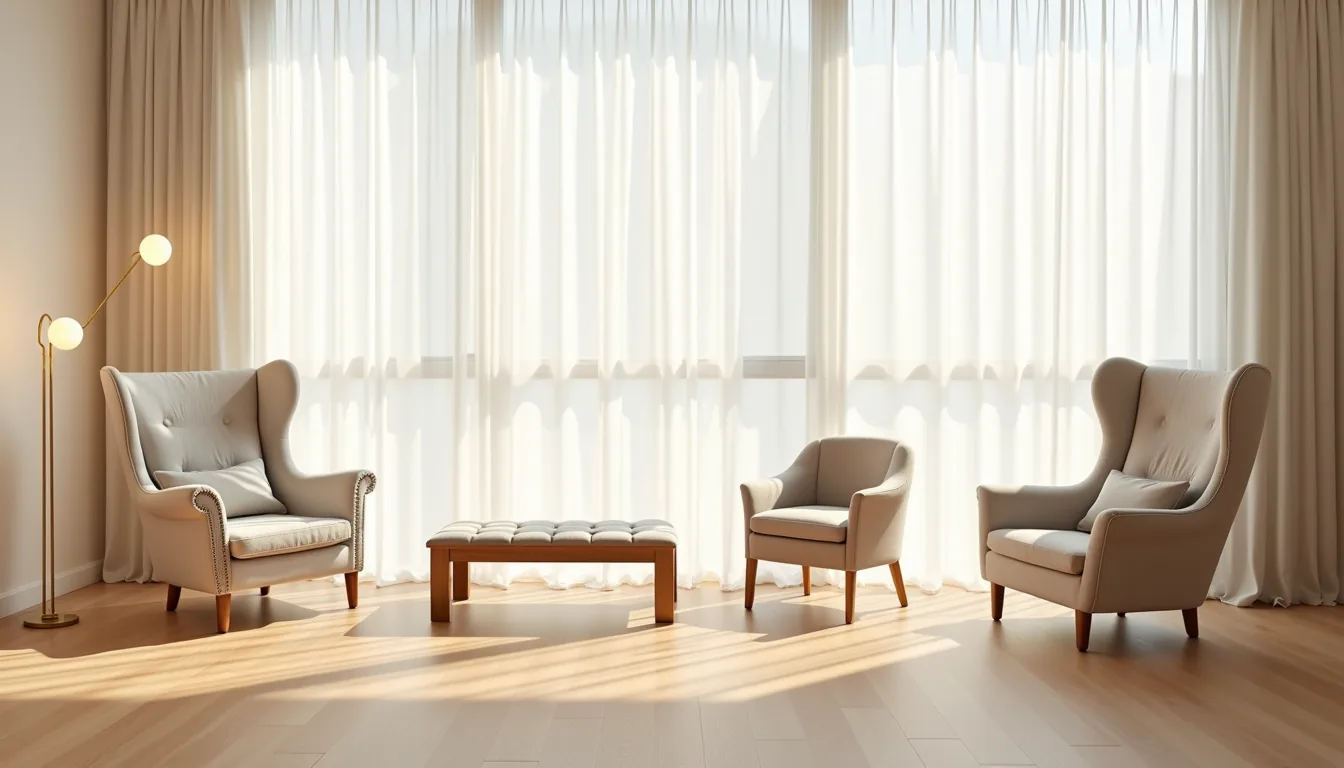
A low, open-frame wooden bench at the foot of your bed solves the dressing-room problem without the visual bulk of a full armchair. Because the bench’s seat sits 16–18 inches high, roughly 4–6 inches lower than a standard chair, it clears the bed’s footboard sightline and leaves the room feeling airier. The open frame matters more than the material: you can see floor space beneath it, which visually expands a small bedroom and simplifies vacuuming underneath.
For the setup you’re looking at, the bench runs 42–48 inches wide, which aligns with a queen or full bed’s 60-inch footprint while leaving 6–12 inches of breathing room on each side. That clearance keeps the path to the bathroom and closet unobstructed. The folded linen throw draped over one end adds texture, but it also protects the wood from the metal buttons on jeans, a practical reason to keep it there.
Choose a hardwood bench with a matte finish for durability; pine scratches easily, while oak or walnut holds up to daily sitting and dropped heels. A budget route is a solid-wood bench from a big-box store at $100–$200, but inspect the joinery, dowels beat staples. A renter-friendly option is a lightweight bench you can move against a wall when you need floor space.
Skip benches with sharp corners if you’ve small children; a rounded-edge version costs the same and prevents bruised shins during rushed mornings.
Soft Bedroom Silhouette: Upholstered Chairs for Medium Rooms
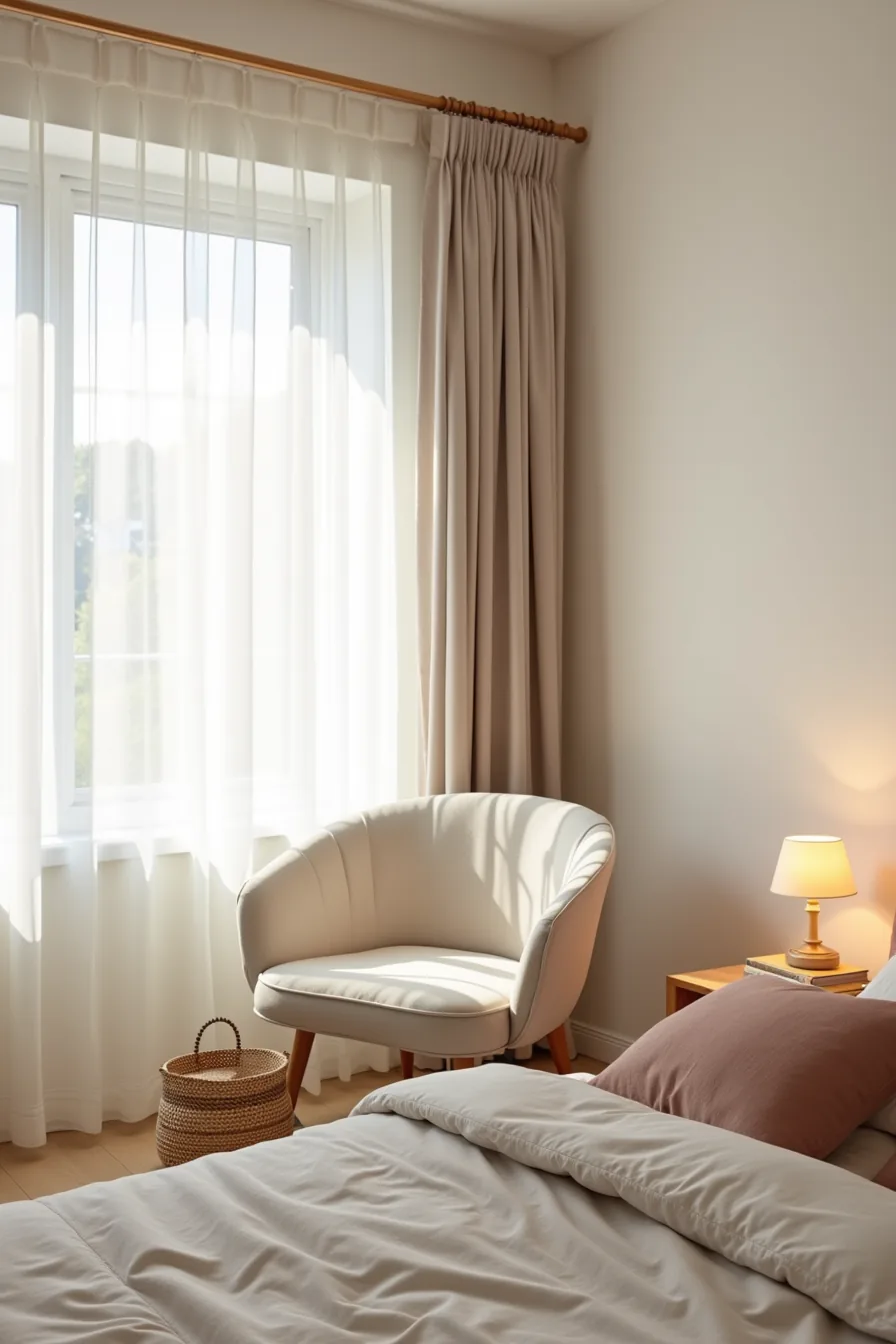
A curved, low-profile upholstered chair introduces a soft bedroom silhouette that contrasts with the hard vertical lines of a bed frame and dresser. The rounded back and arms absorb sound and soften the room’s acoustics, which matters more in medium bedrooms where hard flooring and large windows create echo. In the corner opposite your bed, this chair reads as a deliberate resting zone rather than leftover space, especially when paired with a small side table for a book and a woven basket beneath for storing a throw blanket.
Choose a chair with a seat height of 17–19 inches, matching your bed’s mattress height so you can sit and swing your legs directly onto the bed. For fabric, a performance polyester or crypton weave resists pilling from denim and cleans with mild soap, skip linen or velvet in high-use spots. A medium room needs a chair 28–34 inches wide; anything larger crowds the corner and blocks the path to the window.
To prevent a cluttered feel, keep the side table to 12–16 inches wide and leave the basket empty or nearly so.
Accent Chairs as Long-Term Investment Pieces
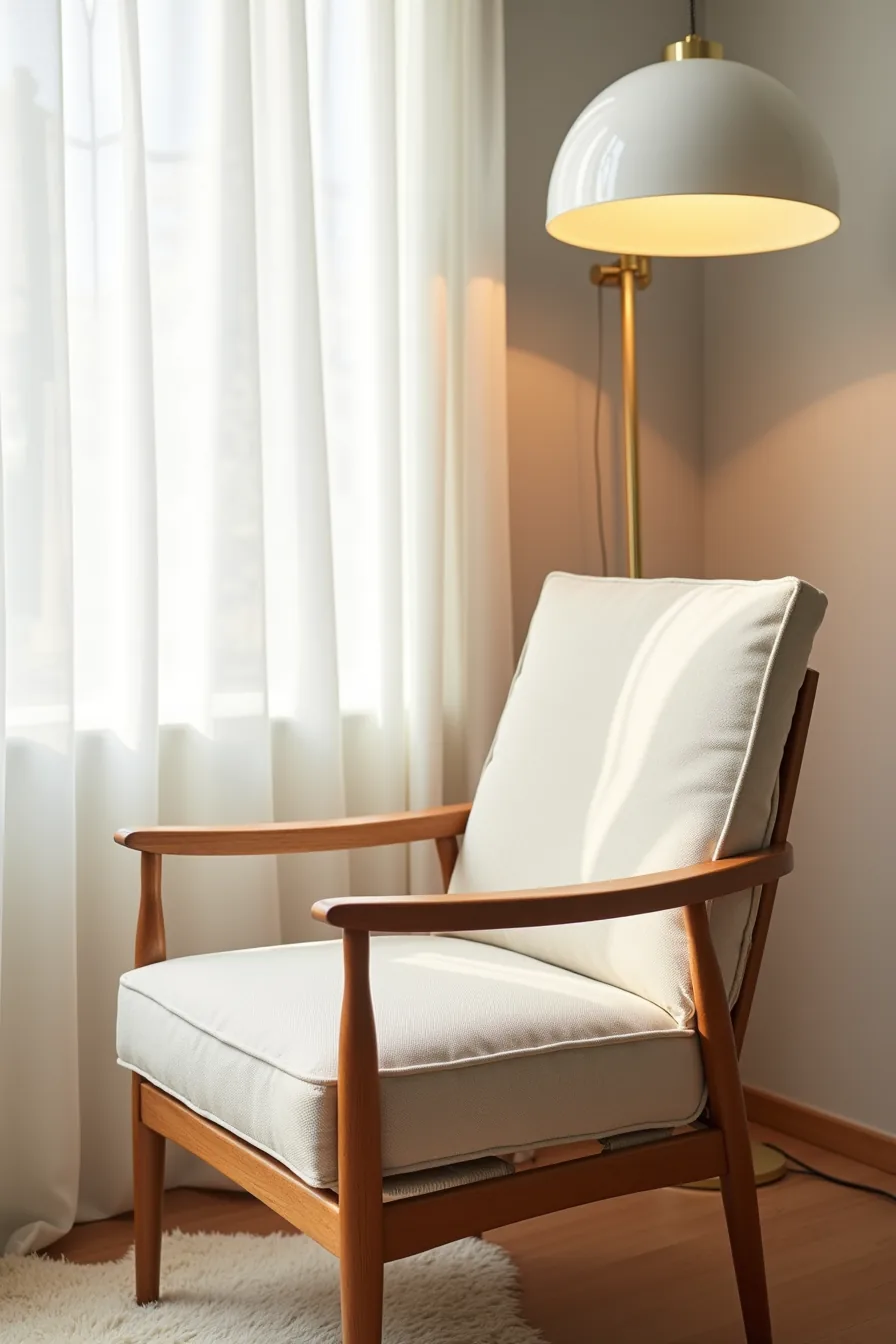
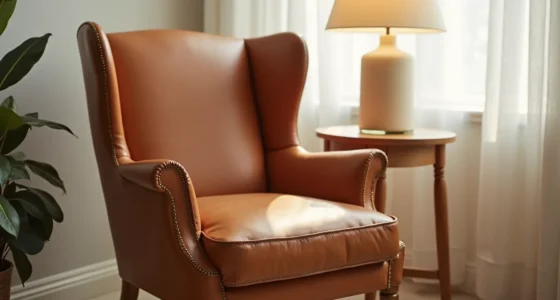
A well-made accent chair outlasts three trend cycles, and the construction markers are visible before you sit down. Look underneath first: suspension webbing should be tight elastic straps spaced 2–3 inches apart, never loose or frayed. The frame joint where the arm meets the back should show a mortise-and-tenon or dowel connection, visible wood grain running continuously through the corner, not a staple line or glued butt joint.
A brass leg ferrule protects the floor and signals the leg is solid hardwood, not particleboard wrapped in veneer.
You’re paying 2–3 times more upfront for a chair that needs one reupholstery in 15 years instead of full replacement every 4–5. Protect that investment with a scotchgard-type treatment applied annually, and rotate cushions monthly to distribute wear on the fabric weave. If you’ve pets, choose a tight-back style over loose cushions, the weave stays taut and claws catch less.
For a relaxed morning corner that earns its square footage for a decade, this is the route to take when other furniture in the room is already quality-built and you want the chair to match that lifespan.
Adapting Bedroom Chair Design to Room Size and Layout
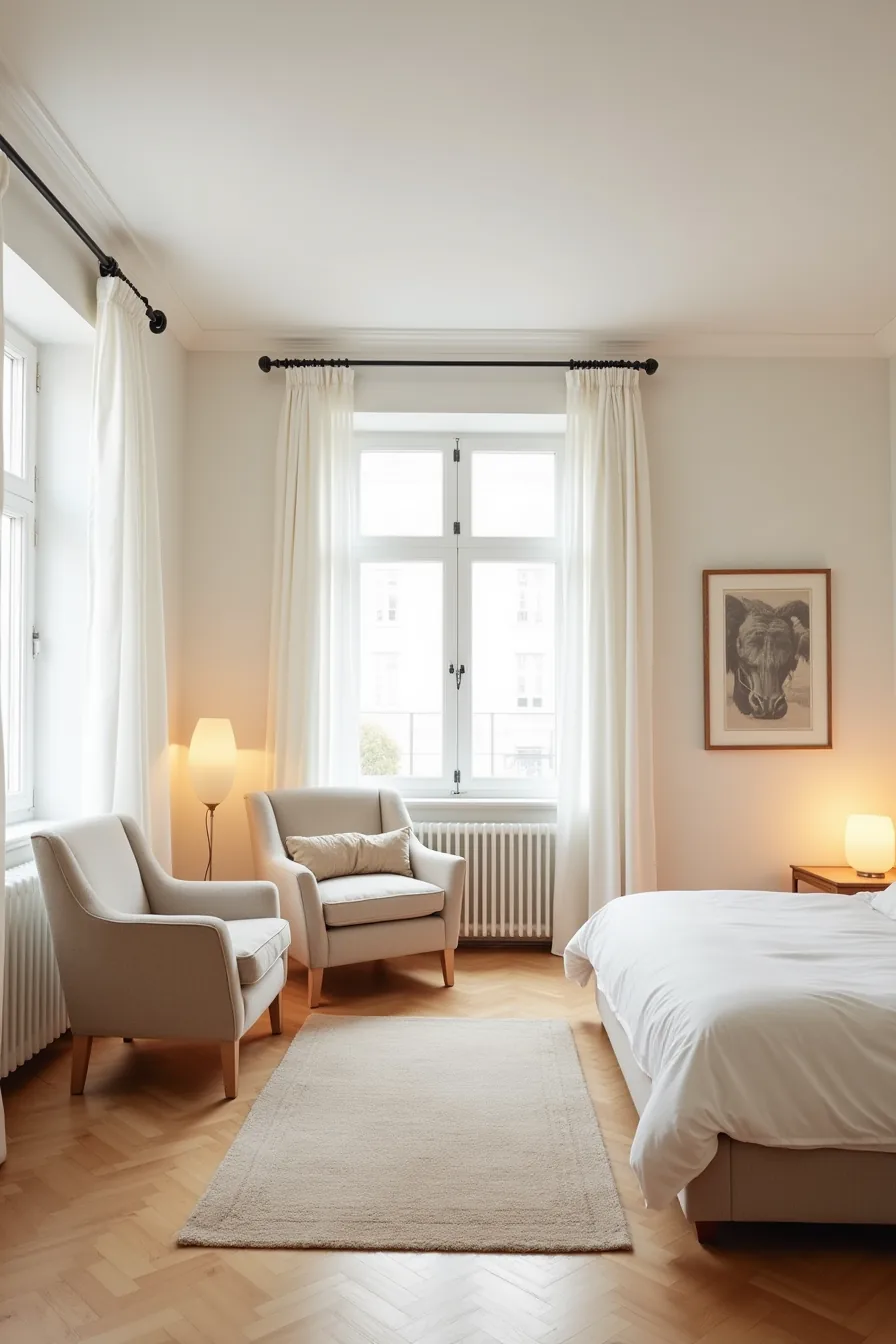
Your room’s square footage dictates arm width before it dictates style. In a bedroom under 120 square feet, a compact wingback with 28–32 inch arm heights and a seat depth under 22 inches fits a corner without eating the path from door to bed. Place it flush against the wall diagonally opposite the door so it doesn’t intercept the main traffic lane, and skip the area rug if the floor width between bed and chair drops below 24 inches.
A medium bedroom between 120 and 200 square feet allows an upholstered chair with wider proportions and proper clearance. Angle it 30–45 degrees near the window, keeping 30 inches of walking space from chair front to bed foot. The rug in this setup extends under the chair’s front legs only, a full tuck flattens the pile and makes the room feel smaller.
In a bedroom over 200 square feet, center a statement accent chair on an area rug at least 6 feet wide, positioned to face the bed or the window depending on your morning routine. You’ve room to keep the chair 40–48 inches from the footboard, preserving circulation for two people dressing simultaneously. Scale your chair footprint up to 35–40 inches wide to fill the visual void without creating empty margin along walls.
Your First Move
Before you browse another catalog, measure the available floor space and the clearance from bed to wall. A chair that fits visually in a screenshot can still block your dresser drawers or closet swing path.
Settle on one role first, reading nook, dressing seat, or accent piece, and let that dictate the frame size, not the other way around.
The fastest way to start: tape the chair’s rough footprint onto your floor with painter’s tape. Live with the outline for a day, then commit to a purchase you’ll actually use.
Frequently Asked Questions
What size chair fits a small bedroom without blocking the door or windows?
Keep the chair’s footprint under 24 inches deep and 30 inches wide. Leave at least 30 inches of clearance in front of doors and windows. Measure your path from door to bed first.
Should a bedroom chair have arms, and does it affect how the room feels?
Arms add visual weight and require 4–6 extra inches of width. Armless chairs feel lighter and slide under desks or vanities. Choose arms only if you’ve 36+ inches of open floor space.
How do I choose between a reading chair and a dressing bench for the foot of my bed?
Pick a reading chair if you sit upright for 20+ minutes daily, it needs lumbar support and a 17–19 inch seat height. Choose a dressing bench if you primarily sit to put on shoes; it should match your bed’s height and be under 18 inches deep.
What upholstery fabric holds up best in a bedroom chair with daily use?
Look for a high-performance weave with a rub count of 30,000 or more, polyester, olefin, or tightly woven microfiber. Avoid linen and cotton blends; they pill and fade within a year of daily sitting. Crypton or Sunbrella-style fabrics resist stains and pet hair best.