The corner of a room is wasted square footage unless you give it a job, and an accent chair corner turns that dead zone into the most intentional seat in the house. But the fix isn’t one look, it’s a spectrum, from a sculptural reading nook to a compact workspace anchor. The right choice depends on your square footage, your traffic flow, and how bold you’re willing to go with color and texture.
Before you buy, you need to know which corners forgive a tight fit and which ones demand a departure from the obvious.
Key takeaways
- A windowed nook works best with a chair 28–32 inches wide and a floor lamp whose shade sits just above eye level when seated, so you get task light without glare.
- In a studio apartment, a 24–28-inch-wide chair with a slim side table under 16 inches deep keeps a corner usable while leaving a 30-inch walkway clear.
- The reading formula pairs a chair with a table at elbow height (16–20 inches) and a throw that’s washable, since natural-fiber textiles need dry cleaning or spot treatment.
- For renters, skip wall-mounted sconces and use a plug-in floor lamp with a cord cover, plus a free-standing corner shelf that requires no drilling, so you get the look without losing your deposit.
The Windowed Nook with Chair and Floor Lamp
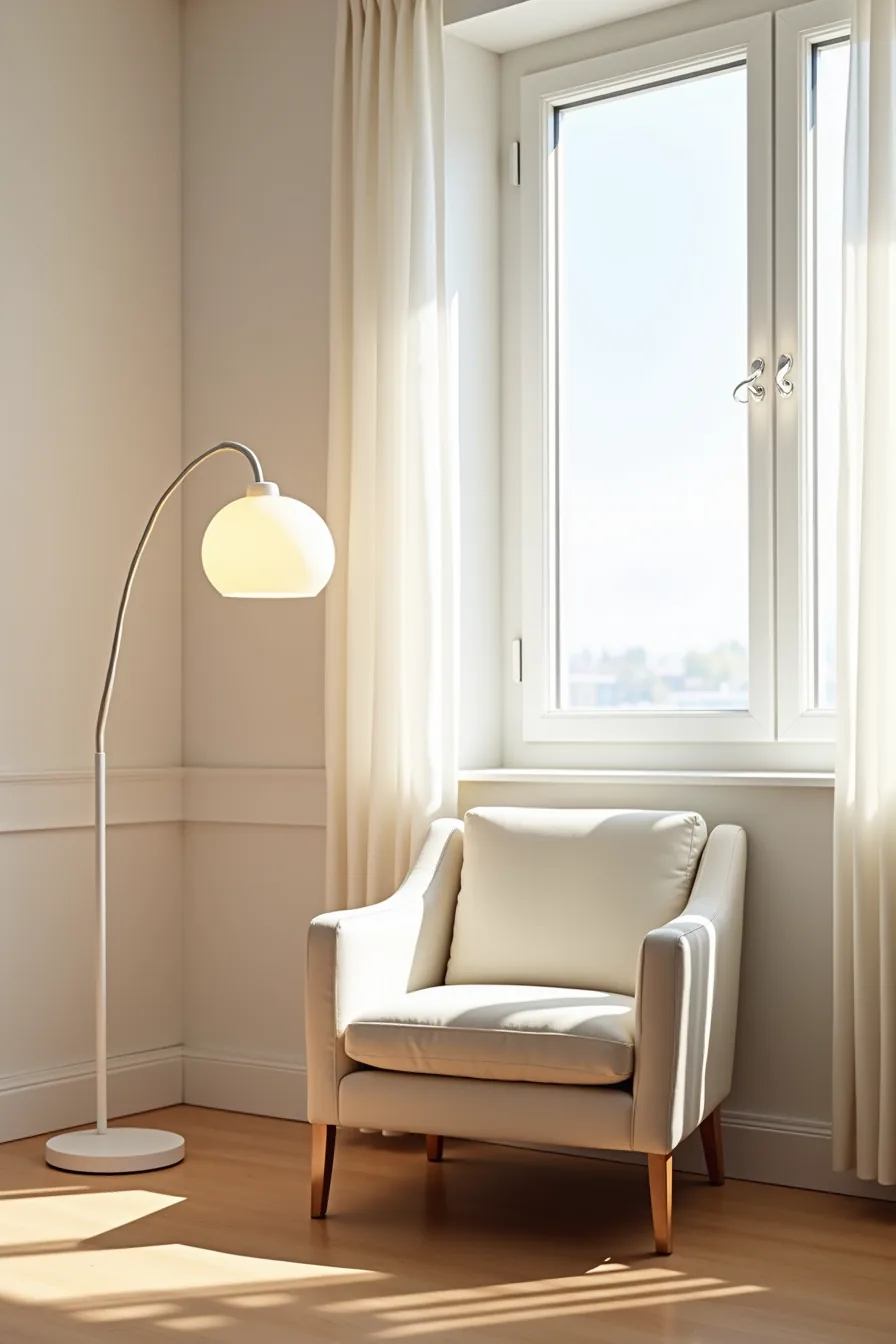
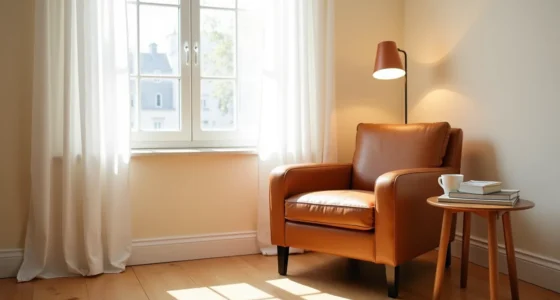
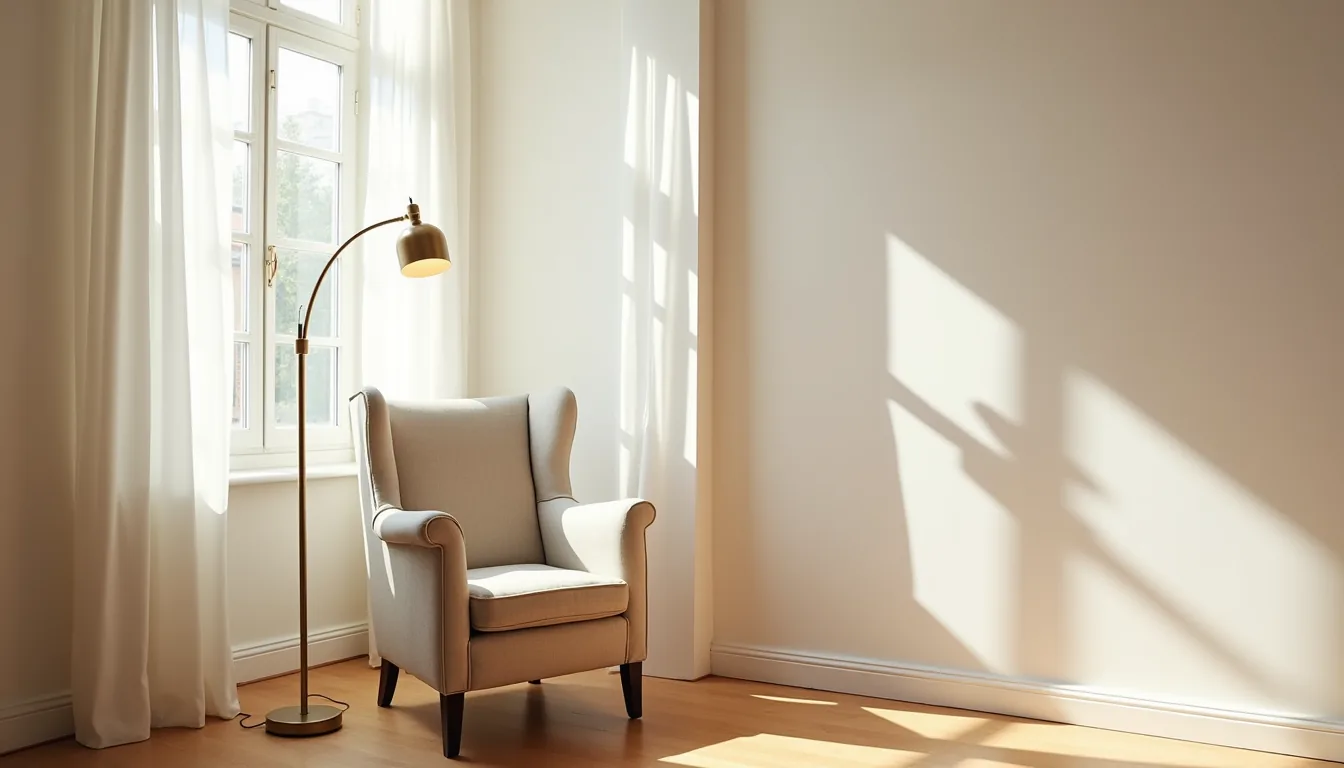
Position a compact armchair perpendicular to a south-facing window with white trim, leaving 12–18 inches between the backrest and the glass. This orientation lets you sit facing the light without staring directly into glare, creating an ideal reading zone that remains bright from mid-morning to late afternoon.
Place an arc floor lamp behind the chair so its curved neck casts light forward onto the seat. This setup works best when the lamp’s shade sits at head height or slightly above, typically 48–60 inches from the floor, ensuring the page stays lit without shadowing from your own body. Pale curtains filter harsh direct sun into soft ambient light, protecting upholstery from fading while keeping the space functional.
This combination suits small-to-medium living rooms where you want a dedicated spot for morning coffee and a book without adding permanent fixtures. The chair plus floor lamp approach requires zero electrical work, just a standard outlet, and the arc base tucks neatly beneath the seat, leaving the wood flooring clear for easy cleaning. For sunny climates, choose fade-resistant fabric (solution-dyed acrylic or tightly woven cotton) and rotate the cushion seasonally to keep wear even.
Tiny Corner Setup for Apartments and Studios
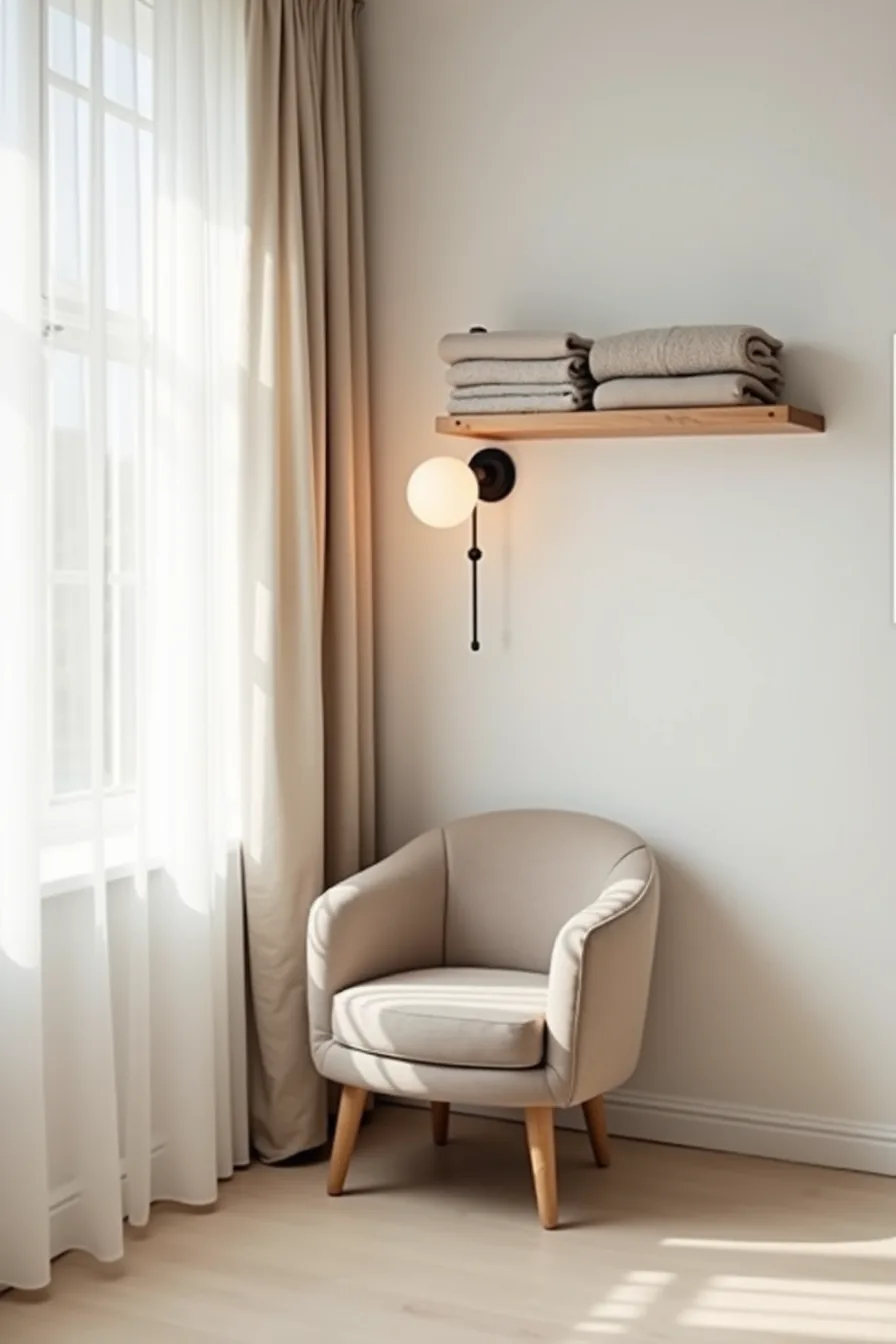
In rooms under 200 square feet, your accent chair corner succeeds or fails on two numbers: seat width and clearance. A petite barrel chair with a 28–32-inch width fits where standard armchairs (35–40 inches) won’t, and it leaves roughly two feet of clear floor space on either side, enough to walk past without sidestepping. The taupe fabric reads lighter than a dark hue would, visually pulling the chair away from the wall instead of anchoring it.
Skip the side table entirely. A floating wall shelf mounted 12–18 inches above the armrest holds folded blankets without consuming the square footage a floor-standing alternative would demand. Stack three blankets vertically to keep the shelf from reading as clutter; any more and the corner starts to feel like storage rather than a deliberate seating spot.
This setup suits studio dwellers who need a guest seat that doubles as a place to pull on shoes or set down a coffee mug while standing. The trade-off is bare-bones comfort, no ottoman, no table surface at arm level, so reserve this configuration for corners you’ll use in short bursts rather than hour-long reading sessions.
The Reading Nook Formula: Chair, Table, and Textiles
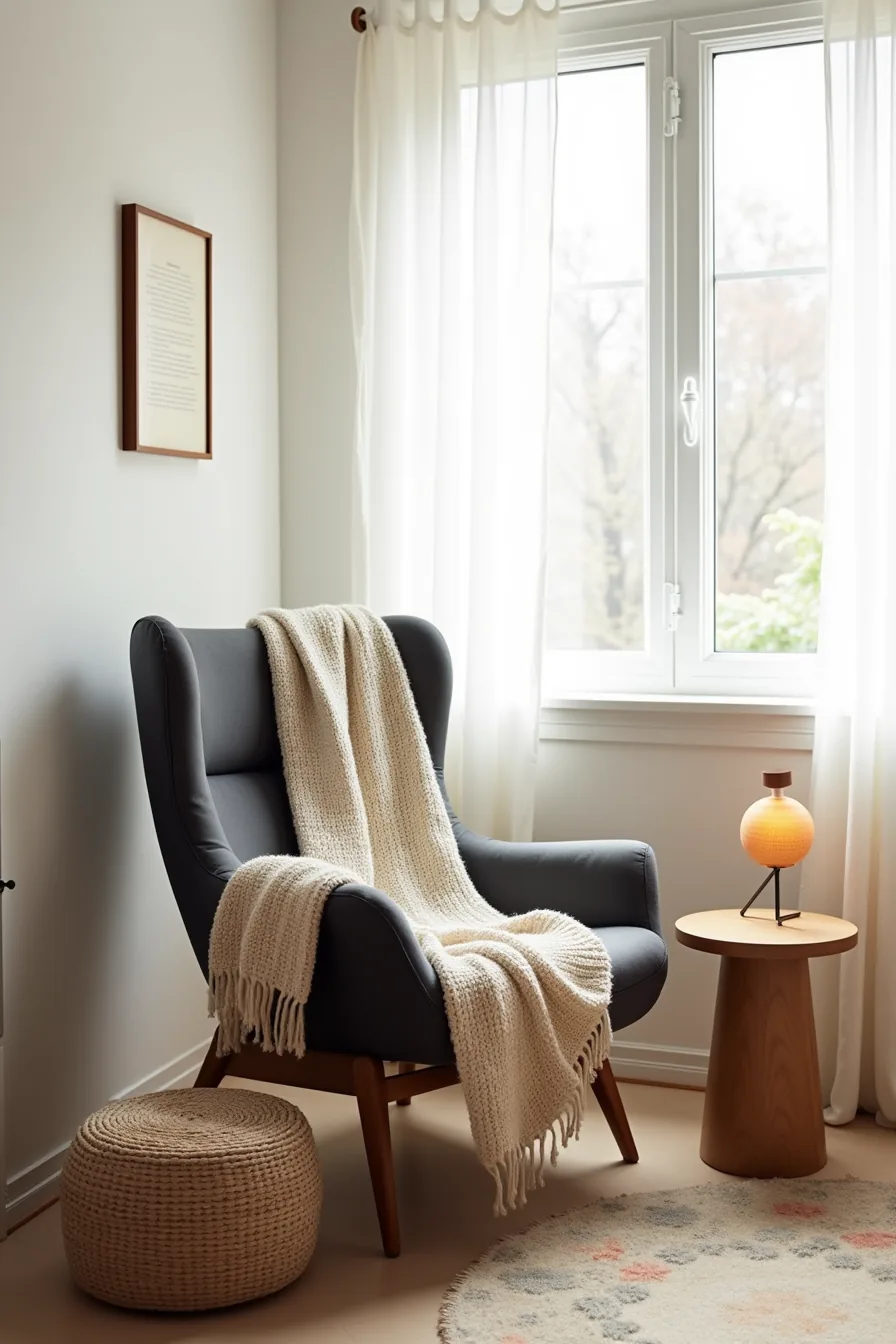
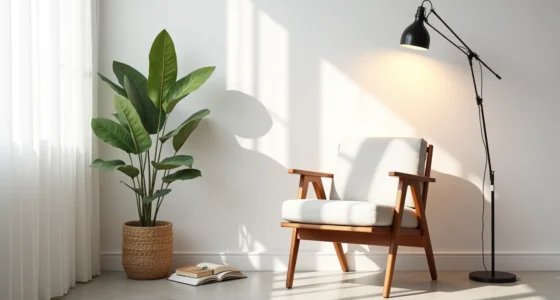
The reading nook formula relies on three touchpoints at specific heights: your seat, a surface at arm level, and textiles that soften the transition between them. A mid-century chair in charcoal upholstery works because its low, angled back (typically 28–32 inches) keeps the silhouette from towering over a small corner. Position a round wooden side table so its top sits 1–2 inches below your elbow when seated, that’s roughly 22–25 inches for most chairs, placing your drink or book within a natural reach arc without leaning forward.
The chunky knit throw draped over one arm serves a dual purpose: it adds visual weight to balance the chair’s slim profile and provides warmth without altering the room’s temperature. The patterned floor cushion beside the table leg catches foot traffic and offers overflow seating for a second reader or a child. A woven basket underneath the table consolidates the zone’s clutter, store current reads, glasses, or a lap blanket, so the micro-zone reads as intentional rather than scattered.
This configuration suits medium rooms (200–400 square feet) where a corner deserves a complete destination, and it requires about 6–8 square feet of floor space.
Budget Route: Thrifted Chair and DIY Styling
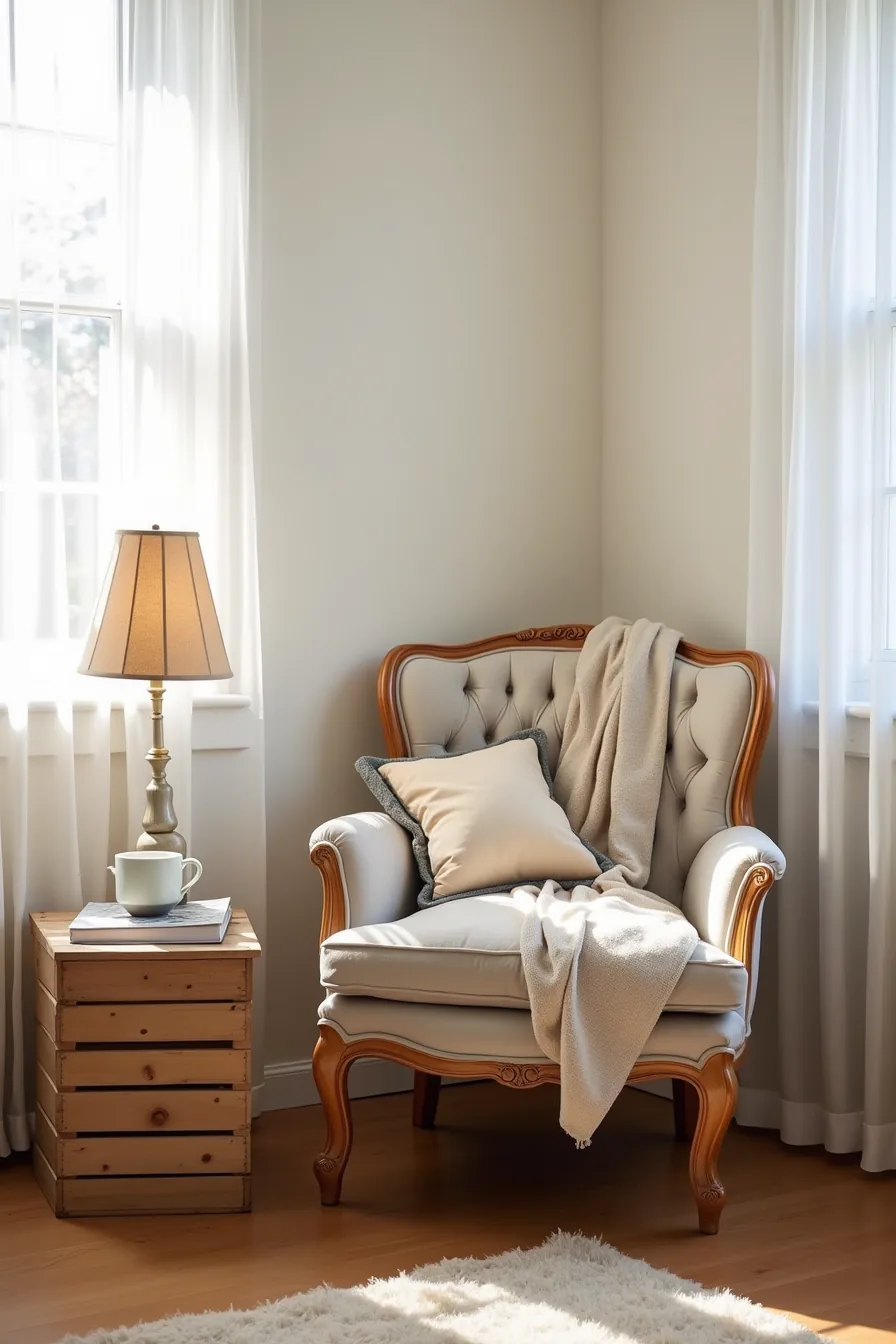
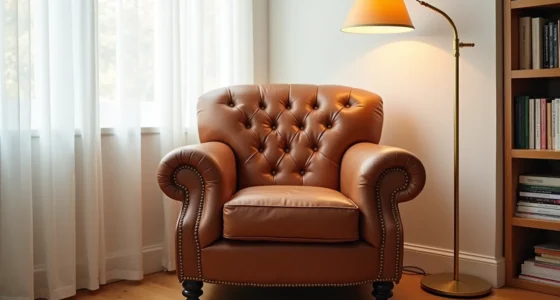
A vintage tufted chair in faded velvet costs a fraction of new upholstery, but the savings depend on your tolerance for its existing condition. Check the frame first: sit and rock side to side, if the joints creak or shift, re-gluing and corner-blocking runs $50–$150, which can still beat a new chair. Surface stains on velvet are often liftable with a damp microfiber cloth and a drop of dish soap, so test an inconspicuous spot before committing.
Dress the faded fabric with a contrasting linen throw draped over the back and two mismatched vintage pillows to shift the eye from wear to styling. A repurposed wooden crate as a side table costs nothing if you own one, just sand rough edges and wipe with a damp cloth, and its open slats keep the corner from feeling heavy. This route suits renters and first-time decorators because every piece remains movable and reversible: the throw, pillows, and crate all pack into a car trunk, and you can re-donate the chair if your taste changes.
Expect to spend $40–$150 on the chair itself and under $30 on accessories if you shop secondhand.
Renter-Friendly Accent Chair Corner
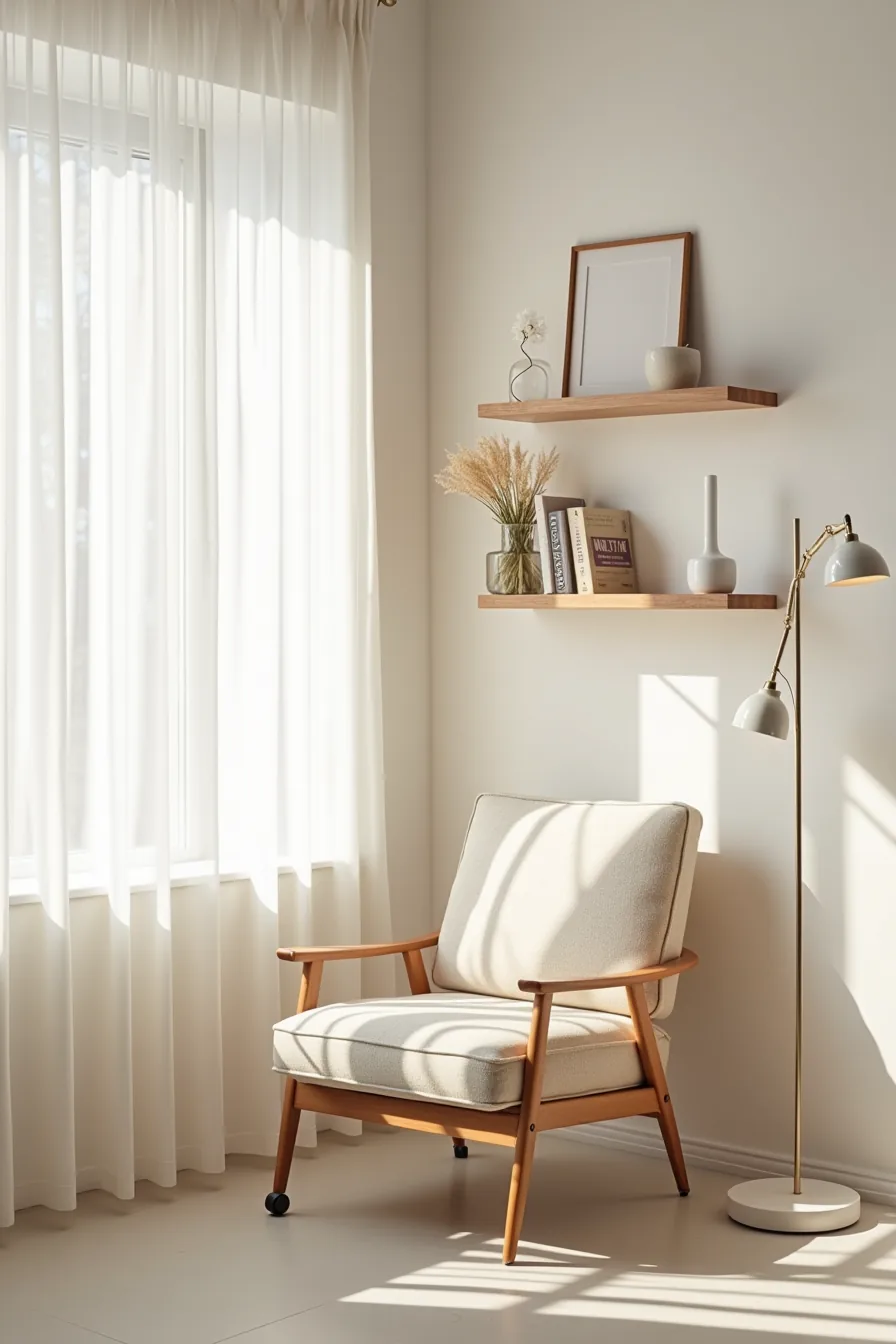
You can build a complete accent chair corner without drilling a single hole. Choose a chair on casters, typically 28–32 inches wide, so you can roll it across the room for movie nights or vacuuming, and it leaves no marks on your flooring. Position it 12–18 inches from the wall to keep the space feeling open and to avoid scuffing the paint when you pivot in and out of the seat.
Light the corner with a tension rod floor lamp that grips between floor and ceiling, no wiring or wall anchors required, and it adjusts to your ceiling height in seconds. Above the chair, mount removable peel-and-stick shelves rated for 10–15 pounds each; they pull off cleanly with a hairdryer to soften the adhesive when you move out. Display unframed art or lightweight ceramics directly on the shelves, and keep the arrangement flexible so you can swap pieces monthly without committing to wall damage.
This setup suits anyone in a short-term lease who still wants a styled reading nook. The total damage deposit risk stays near zero, and every element, chair, lamp, shelves, art, fits into a single sedan on moving day. Budget $150–$400 for the chair, $40–$80 for the lamp, and $30–$60 per shelf.
Refresh an Accent Chair Corner for Every Season
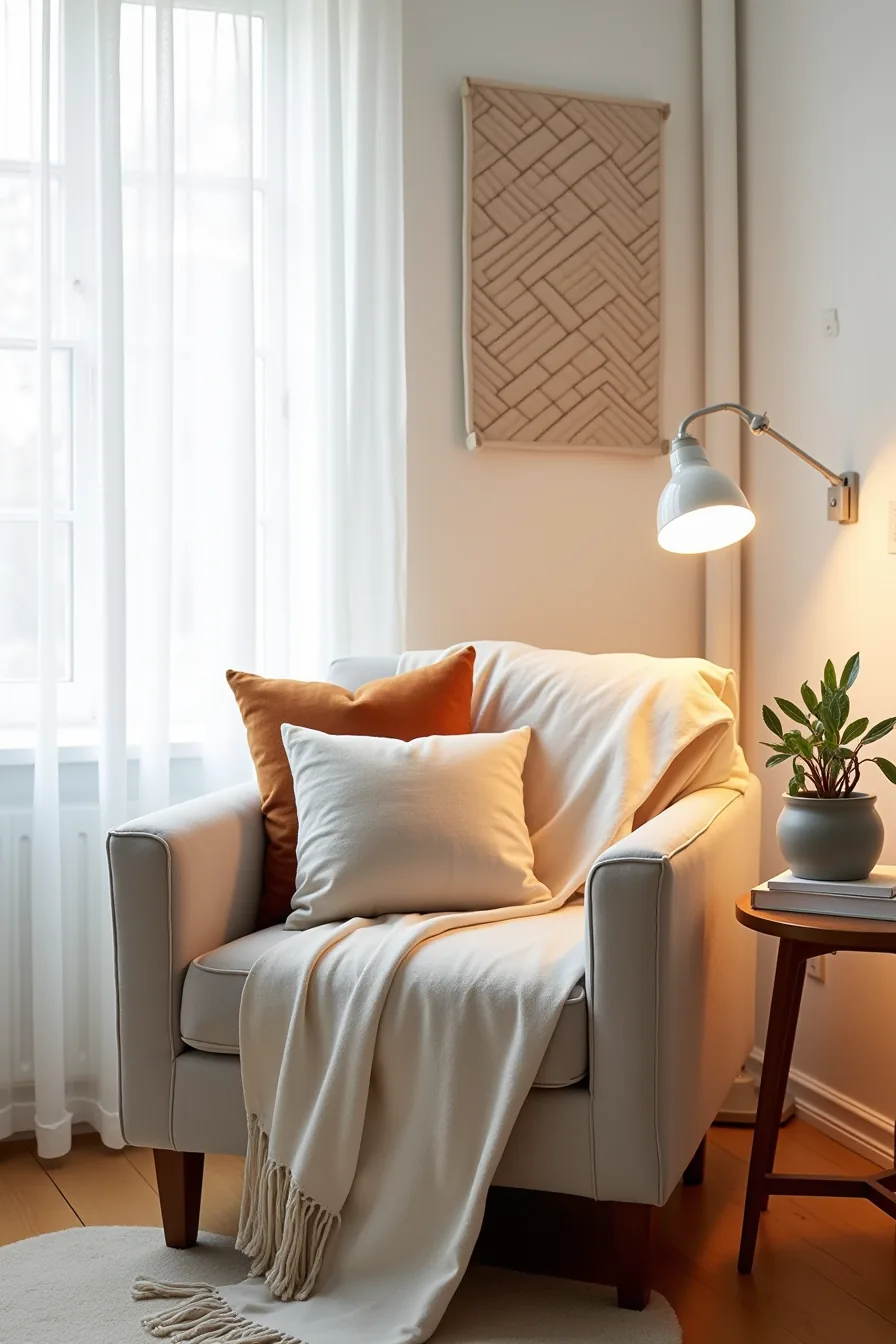
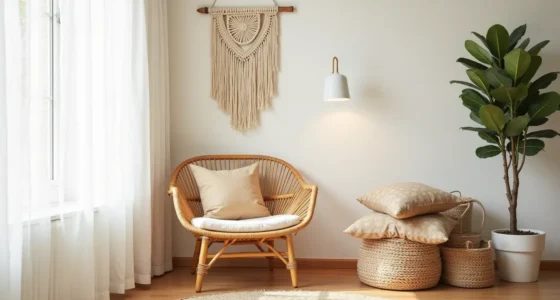
Keep the same chair year-round and rotate three layers: textiles, lighting, and surface styling. In autumn, swap your everyday pillows for two seasonal ones in burnt orange and rust, and drape a lightweight linen throw over the arm, it adds warmth without the bulk of wool. Hang a quilted wall hanging above the chair to introduce texture and pattern, and switch to a warm, low-wattage bulb in your floor lamp so the corner reads cozy by 5 p.m.
Spring calls for the reverse: remove the quilted hanging, replace the pillows with lighter fabrics, and swap the ceramic vessel’s dried stems for fresh greenery. A potted succulent on the wooden side table works all year and requires watering only every 2–3 weeks. Budget $40–$80 per seasonal textile refresh, and launder throws monthly, linen air-dries in 4–6 hours, while pillows with removable covers can go in the machine on a gentle cycle.
This approach suits anyone who wants a low-maintenance, high-impact corner that never feels stale.
Your next move
Start with the corner you use most, not the one you want to photograph. Measure the floor space first, then choose a chair shape that fits without blocking the path to the door, window, or outlet.
Pick one anchor piece: a chair, a floor lamp, and a side table. Add a rug only after the chair is in place, and keep the seat clear of decorative pillows you’ll have to move every time you sit down.
Set a budget before you browse. Decide whether you want a temporary fix, a rental-safe option, or a long-term piece, then commit to that lane. Your first step: measure the corner, snap a photo, and compare two chairs against that image tonight.
Frequently Asked Questions
What size accent chair fits a corner in a small bedroom?
For a small bedroom, choose a chair with a seat width under 22 inches and overall depth under 30 inches. A slim armless or club chair works best, leaving at least 18 inches of clearance for walking.
Can I put an accent chair in a corner without a side table?
Yes. Place a floor lamp beside it or use a wall-mounted shelf at arm height. Skip the table entirely if the corner is under 30 inches wide, a chair alone keeps the space open.
How do I protect an accent chair corner from dust and fading?
Use a fabric with UV-resistant treatment or add sheer curtains to block direct sun. Vacuum weekly with an upholstery attachment and rotate the chair 180 degrees monthly to even out fading.
What’s the best floor lamp to pair with an accent chair?
Choose an arc lamp with a 60–70 inch reach if the chair sits deep in a corner. For tight spots, a slim torchiere under 15 inches wide directs light upward without crowding the chair.