
A luxury arm chair earns the label not through a single look, but through the precision of its proportions, the integrity of its materials, and how it anchors the space around it, and the six approaches below show you exactly how to choose, place, and maintain one that fits your room, budget, and lifestyle. From a sculptural bouclé statement to a leather investment piece built for decades, each option addresses a different spatial constraint and a different definition of indulgence. You’ll learn the specific measurements that prevent a showpiece from becoming a circulation hazard, the fabric weights that survive daily use, and the one renter-friendly route that requires zero wall anchors.
The goal isn’t to admire these chairs from a catalog, but to walk into your living room with a clear verdict on which one belongs there.
Key takeaways
- Choose material by lifestyle: leather resists stains but needs conditioning every 6-12 months, while velvet hides wear longer but demands professional cleaning for liquids.
- Match chair depth to your room’s traffic path: allow at least 24-30 inches of clearance in front and 18 inches on the sides for comfortable entry and exit.
- For small spaces, pick a compact frame under 35 inches wide with a low back (under 30 inches), and skip oversized arms that can visually crowd the room.
- A rental-friendly route is a slipcovered armchair in performance fabric, washable covers solve the permanence problem and still deliver a tailored, plush silhouette.
Velvet vs Leather: Material Trade-Offs for Luxury Seating
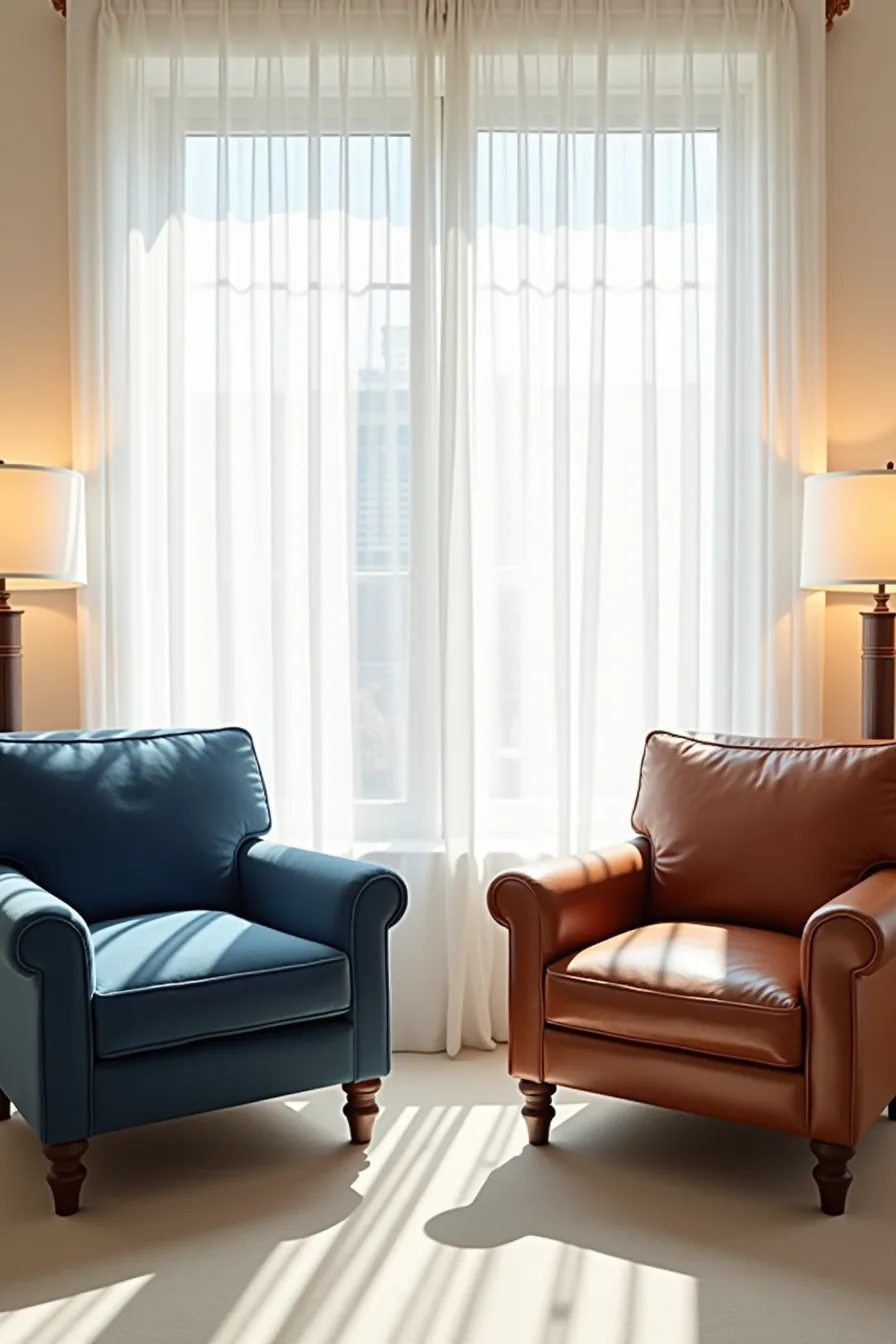
The velvet arm chair and leather arm chair seated side by side represent the two poles of luxury seating. Velvet delivers immediate visual warmth, its deep blue pile catches light differently with every shift, making the rolled arms feel soft and inviting. Leather, in cognac with visible grain, reads as more masculine and long-lived.
You’ll maintain these materials very differently.
Velvet requires regular vacuuming with a soft brush attachment and immediate blotting of spills; it shows wear fastest on armrests. Leather needs only occasional conditioning, resists stains, and develops a patina that actually improves with age. For comfort, velvet wins in temperature, it stays neutral in winter and summer, while leather feels cold initially and can stick to bare skin in heat.
Budget-wise, quality leather runs roughly 30-50% higher than comparable-grade velvet. Choose velvet if your room sees low traffic and you prioritize cozy aesthetics; select leather for family spaces, homes with pets, or if you plan to keep the chair for over a decade.
The Sculptural Statement Chair: Making Scale Work
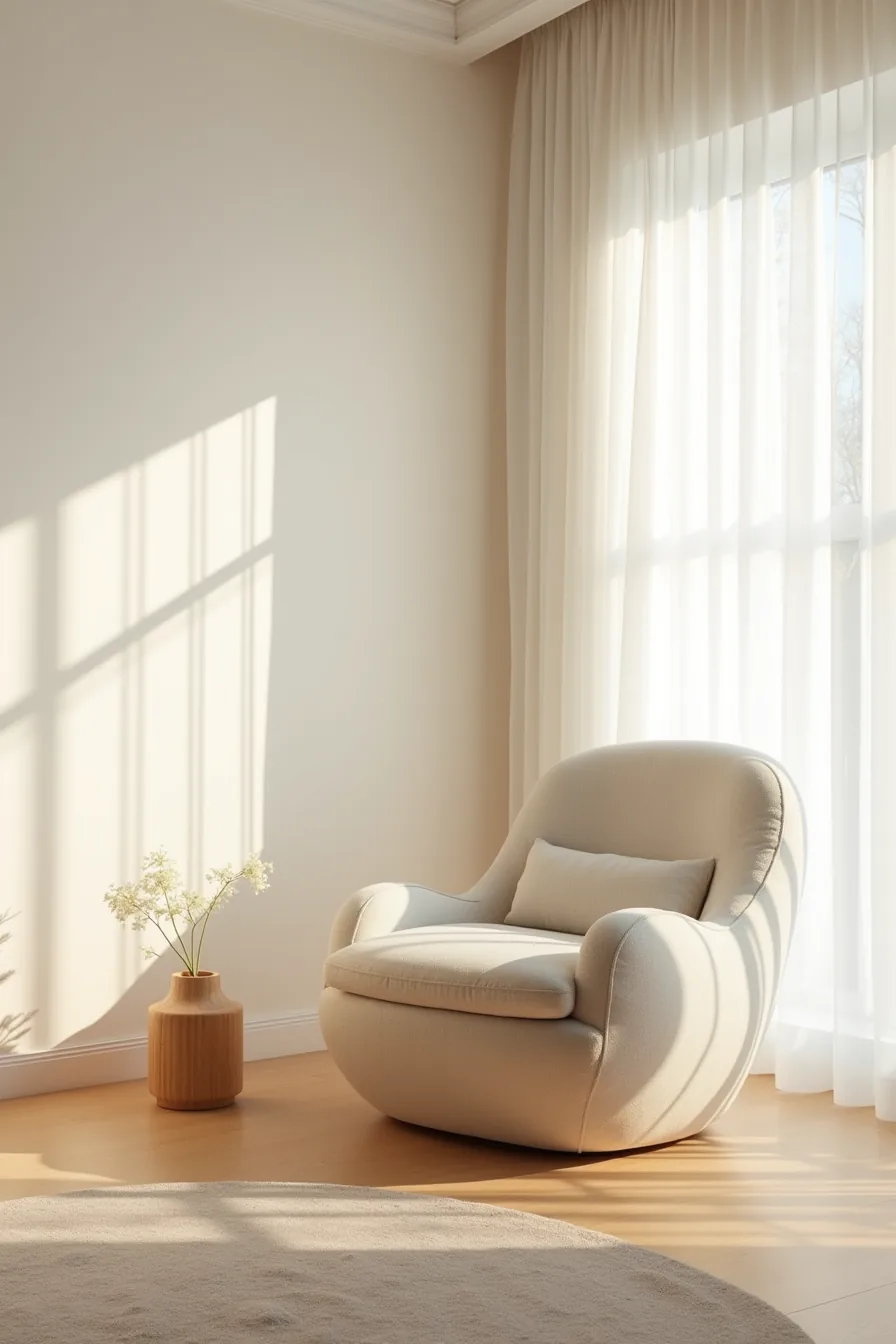
A sculptural arm chair turns an empty corner into a deliberate focal point, but scale decides whether it anchors the room or suffocates it. The curved, geometric frame in a light-filled corner works because it occupies roughly one-quarter of the visible floor space, leaving generous negative space around it. If your chair consumes more than a third of the corner area, it starts blocking sightlines and making the room feel cramped.
Position the sculptural arm chair at least 18-24 inches from adjacent walls to preserve its silhouette from every angle. Pull it slightly forward, not flush against the molding, so the curved back reads clearly and air circulates behind it. For rooms under 200 square feet, choose a sculptural chair with a seat depth under 22 inches and slim, tapered legs; larger spaces can handle a wider footprint, just keep the chair’s height below your window sills to avoid breaking the horizontal line of the room.
Quiet Luxury Seating: Neutral Tones and Restrained Details
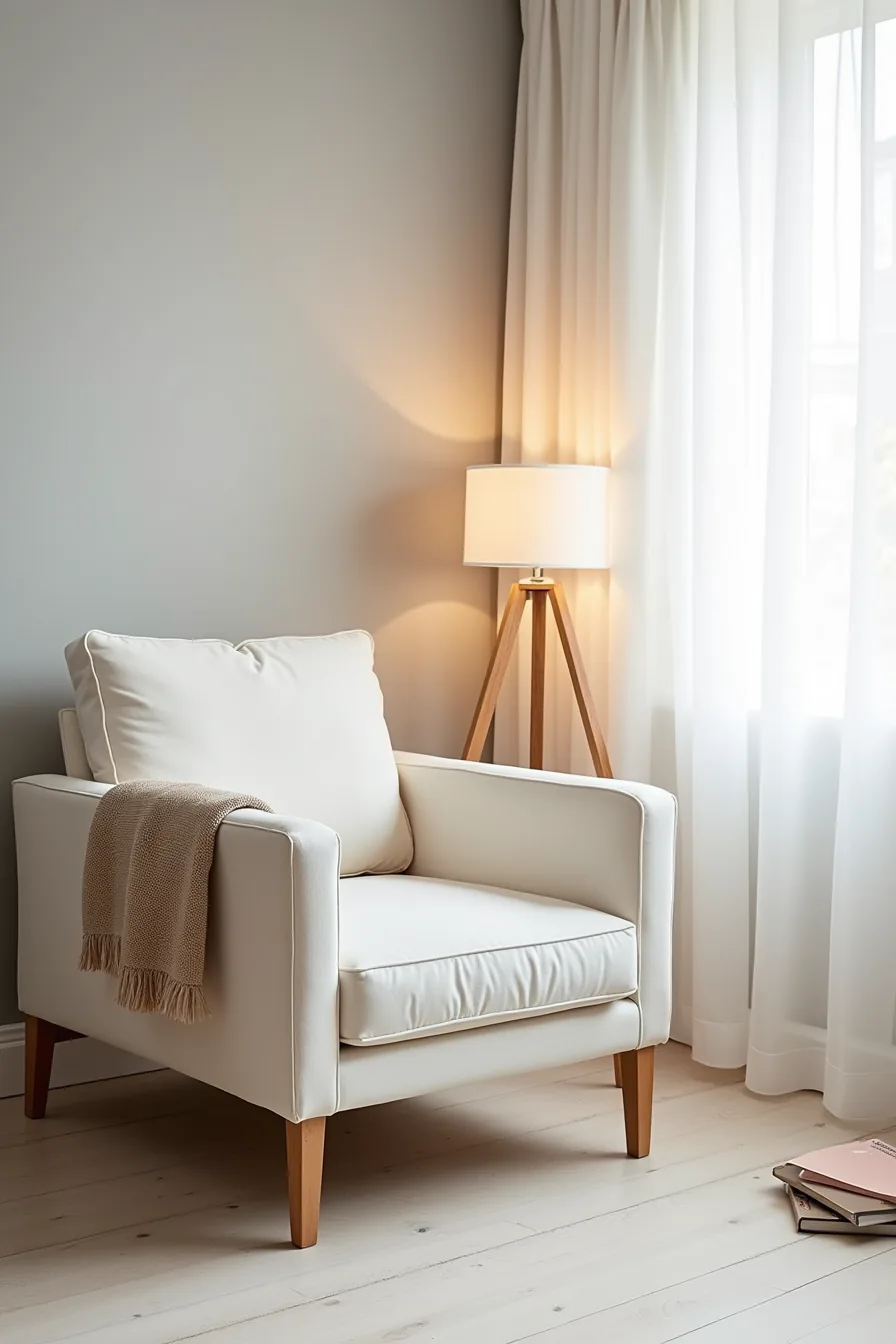
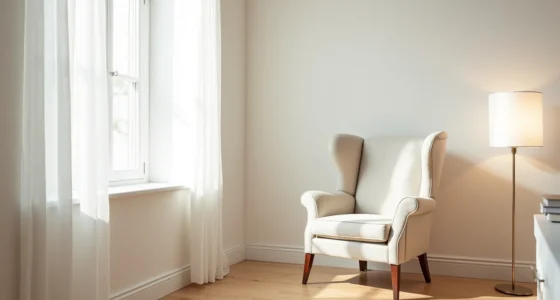
Quiet luxury seating earns its name through subtraction, no tufting, no nailheads, no carved wood. A cream linen arm chair with simple track arms succeeds because the fabric does the talking. Linen with a mid-weight weave (typically 12-14 ounces) drapes without wrinkling excessively and softens naturally over two to three months of use, which is why it reads as lived-in luxury rather than showroom stiffness.
The woven throw draped over one arm is the operative detail here: it signals that the chair is for use, not display. Match the throw’s fiber to the season, cotton or light wool for warmer months, cashmere-blend for winter. Against a soft gray wall, the cream upholstery needs contrast in texture, not color, so skip patterned pillows and let the single throw carry the accent.
For maintenance, linen requires professional cleaning only; spot-treat spills within minutes and use a fabric shaver monthly to prevent pilling at the arm rests. If you need stain resistance, specify a Crypton-treated linen blend at the same visual weight, you lose a fraction of the natural drape but gain washability.
Luxury Arm Chair Ideas for Cozy Winter Corners
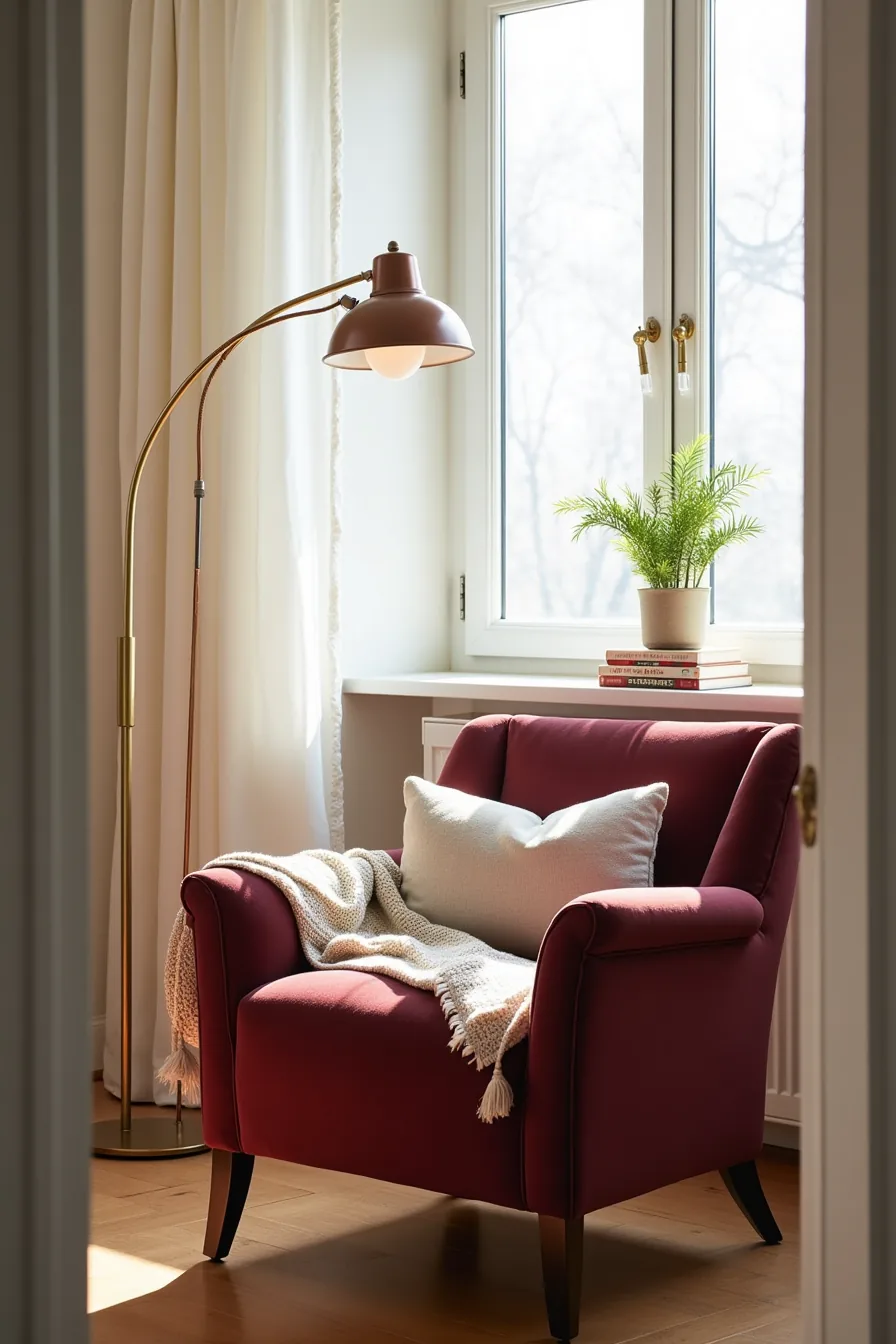
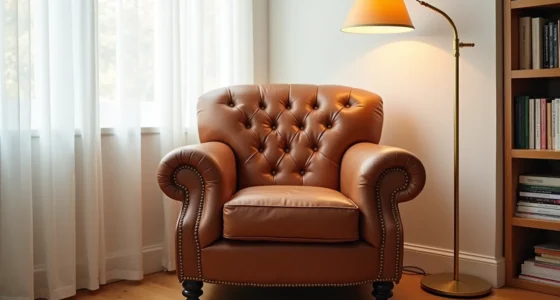
A burgundy velvet arm chair positioned at a 45-degree angle toward the window captures the two things a winter reading corner needs most: warmth and daylight. Velvet’s pile traps heat against your back, and a deep jewel tone absorbs rather than reflects the low-angle winter sun, making the seat feel visually warmer than a pale linen would.
The brass arc lamp matters as much as the chair itself, position the shade so it hovers just forward of your shoulder, casting light onto the page rather than your face. This prevents glare on glossy book pages and keeps the window view unobstructed.
Layer your textiles for actual temperature regulation: a dense knit blanket on the seat for lap warmth, a linen pillow behind your lower back to support the lumbar curve that many velvet chairs lack. Place the potted plant on the sill within arm’s reach, it gives you a verdant focal point when the winter landscape outside turns monochrome. For winter performance, expect velvet to pill with friction; use a low-speed fabric shaver biweekly on the arm rests and keep the chair at least 12 inches from the radiator or heat vent.
Adapting Luxury Seating to Small, Medium, and Large Spaces
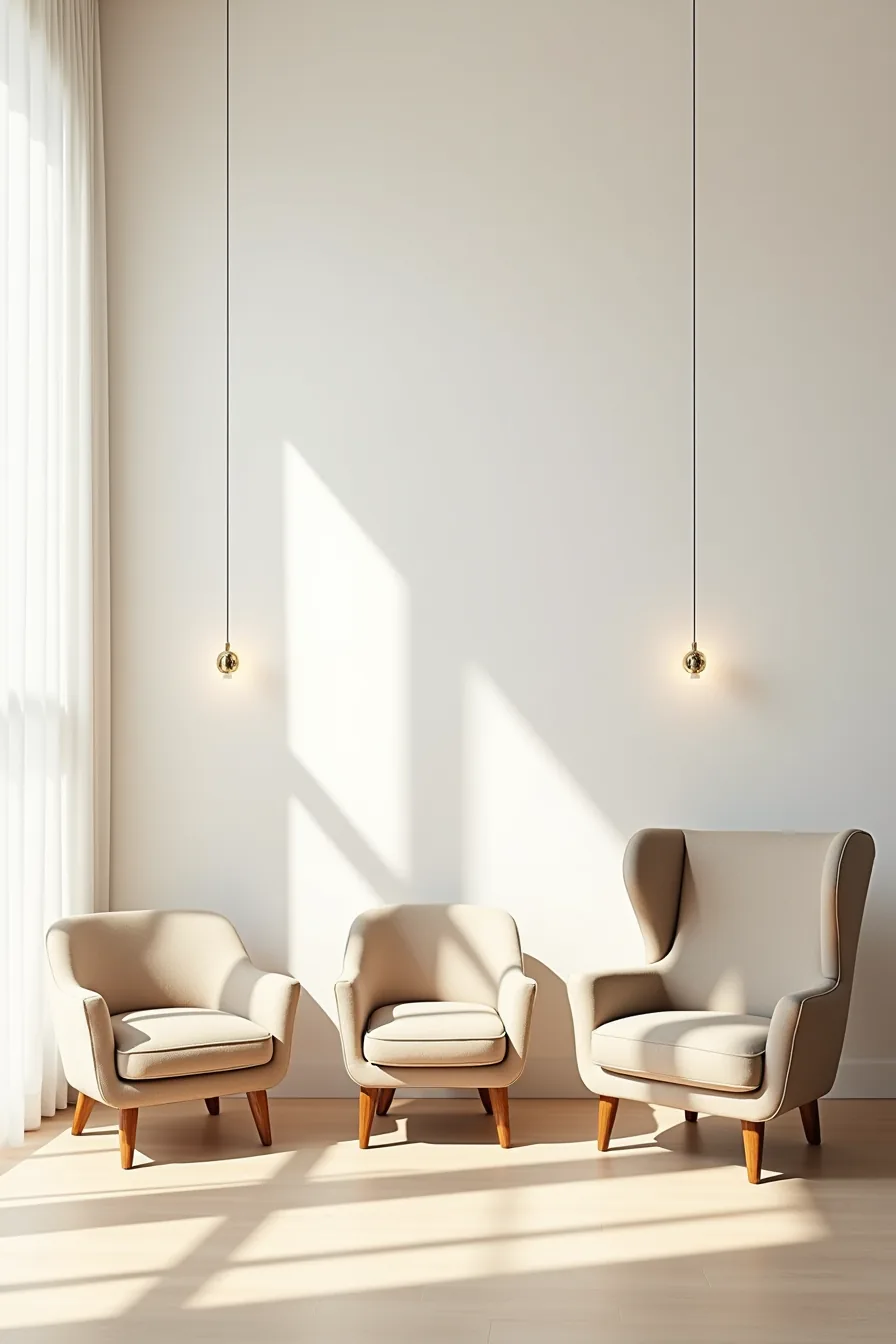
Scale dictates whether a luxury arm chair anchors a room or overwhelms it. For a small space, a compact barrel chair at roughly 24 inches wide fits tight corners and narrow alcoves without blocking pathways, keep armrests slim and the back height under 30 inches so it doesn’t visually truncate a low ceiling. Place it flush against the wall in a bedroom or home office where floor space is scarce.
A standard wingback, around 32 inches wide, suits medium living rooms best. Float it 6-8 inches from the wall with a small side table beside it; this creates a defined conversation zone without eating the room’s central walkway. In a large open plan, an oversized club chair at 38-42 inches wide delivers the visual weight needed to balance a deep sofa or long media console.
Arrange all three sizes in a row on a neutral floor for a graduated gallery effect, spacing them 4-6 inches apart. This works only when the floor is bare and the room is at least 14 feet long; otherwise, cluster the club chair solo near a fireplace or window. For any size, leave 18-24 inches of clearance in front of the seat for comfortable standing and sitting.
Budget, Rental, and Investment Routes to Luxury Arm Chairs

A simple upholstered frame chair in a performance-grade polyester starts around $400–$700 and delivers a solid 5–7 years of daily use. Choose a tight-back construction over loose cushions, they hold shape longer, and you can refresh the look with a washable slipcover rather than replacing the piece. Skip bonded leather at this price point; it peels within 2–3 years.
For renters, a mid-tone modern chair with removable legs solves both logistics and deposits: the legs detach in under a minute for stairwell moves, and the frame stays under 75 pounds in most models. Expect to pay $800–$1,200, and verify the fabric is at least 50,000 double rubs if you want it to survive a two-year lease cycle.
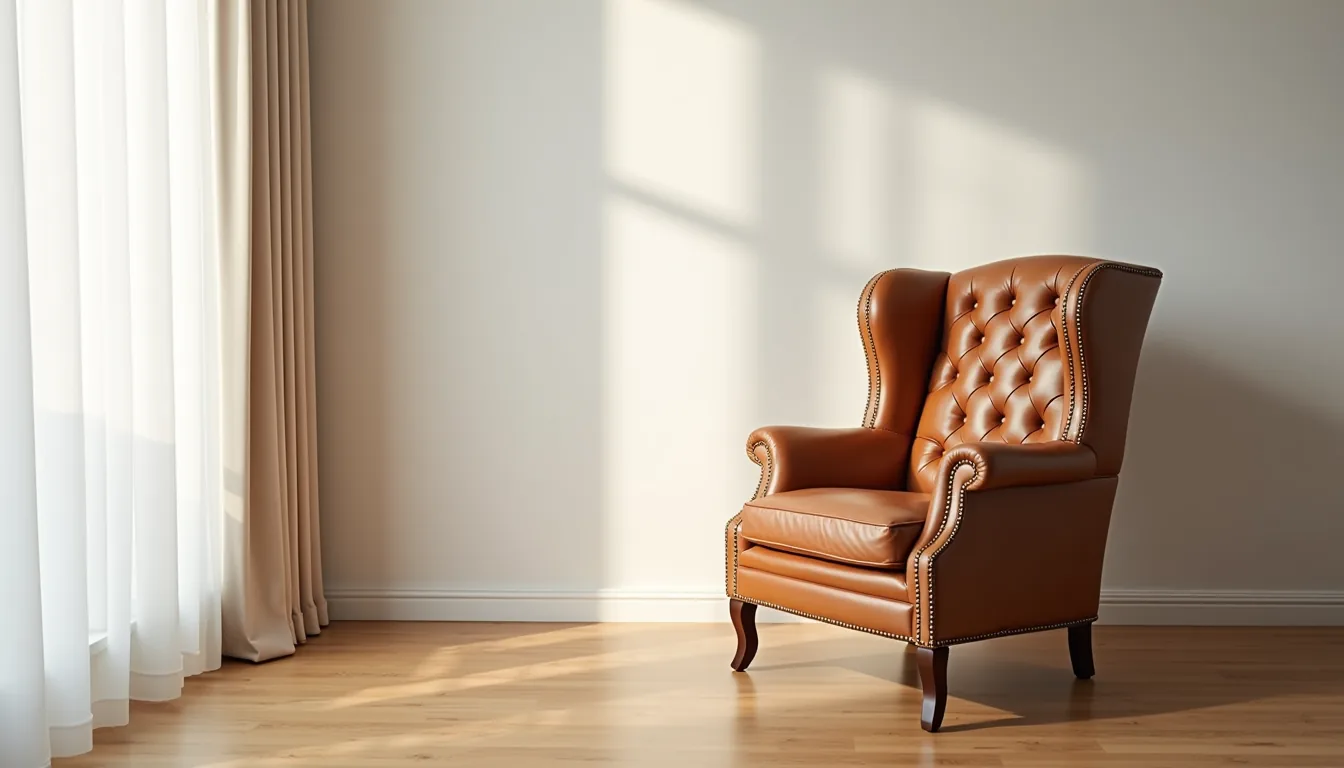
At the top end, a high-backed leather Chesterfield with brass studs is a 15–20 year commitment. Full-grain leather, not top-grain, develops a patina rather than cracking, and the hand-tufted buttons require re-tightening every few years by an upholsterer. Budget $2,500–$4,500 upfront, plus roughly $200 per re-tufting service.
The brass studs will need occasional polishing with a non-abrasive metal cleaner to prevent tarnishing, especially in humid climates.
Your Decision Checklist
Before you buy, measure your doorway width and hall clearance, most armchairs need at least 30 inches of turning space. Verify the seat depth against your height: your knees should rest at a 90-degree angle with feet flat. For fabric, demand a rub count above 30,000 double-rubs for daily use.
Weigh your trade-offs: budget pieces sacrifice frame joinery, renter options limit upholstery choices, and investment buys require leather conditioning every 6–12 months.
Walk through your room with painter’s tape, mapping the chair’s exact footprint. If the tape feels cramped, size down.
Your first move: measure your doorway and tape the floor plan today, before you browse a single catalog.
Frequently Asked Questions
What makes an arm chair ‘luxury’ versus just expensive?
Luxury comes from proportions engineered for comfort, premium fill materials that retain shape, and construction like kiln-dried hardwood frames with eight-way hand-tied springs. Expensive pieces often rely on brand names or exotic skins without these structural qualities.
Can you put a luxury arm chair in a small bedroom without it dominating the space?
Yes, if you choose a compact club chair with a seat depth under 22 inches and slim arms. Place it diagonally in a corner, leaving at least 30 inches of clearance for walking. Skip oversized wings and ottomans.
How often do velvet arm chairs need professional cleaning?
Professionally clean velvet every 12 to 18 months with regular use. Vacuum weekly using a soft brush attachment to prevent crushing. Spot-clean spills immediately with a damp cloth, never rub, as this permanently mats the pile.
What’s the typical lifespan of a high-quality leather arm chair with regular use?
A top-grain or full-grain leather chair on a solid hardwood frame lasts 15 to 25 years with proper care. Condition the leather every six months and keep it away from direct sunlight to prevent cracking. Cheaper bonded leather fails within three to five years.