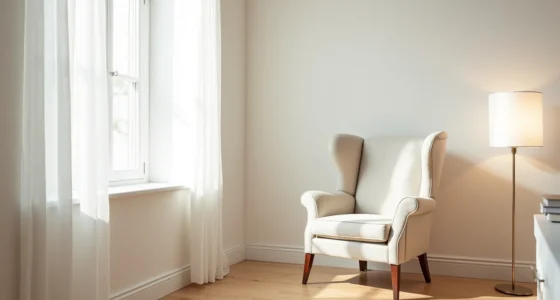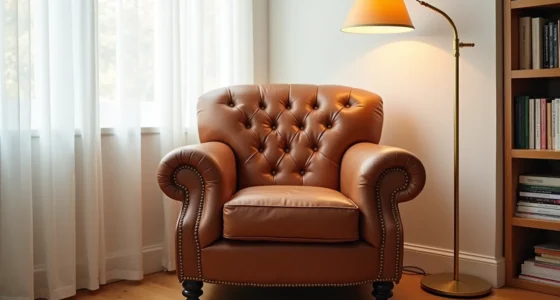
A wood accent chair earns its place in a room by doing two jobs at once: it fills a visual gap with warmth and texture, and it gives you a functional seat that most purely decorative pieces never provide. The category spans far more than rustic farmhouse styles, from sculptural bentwood forms to clean-lined oak lounge chairs. What separates a successful choice from a regrettable one comes down to scale, joinery, and how the frame interacts with your existing upholstery.
You need a framework for judging each option before you commit to a purchase.
Key takeaways
- Match proportions first: A mid-century frame with tapered legs suits tight corners under 24 inches wide, while sculptural frames need at least 3 feet of clearance to avoid blocking traffic.
- Prioritize joinery over finish: For long-term buys, look for mortise-and-tenon or dowel joints and hardwoods like oak or walnut; softwoods like pine save money but dent within a year of daily use.
- Renters get removable wins: Choose woven-seat or upholstered-back chairs with exposed wood arms that require no wall mounting, just a 30-60 pound footprint and a rug to protect flooring from leg scuffs.
- Budget route costs trade-offs: A $150-$250 chair with rubberwood or MDF legs works for occasional seating but needs felt pads and annual tightening; a $500+ solid-wood piece lasts 10-15 years with only occasional oiling.
Mid-Century Frame with Tapered Legs
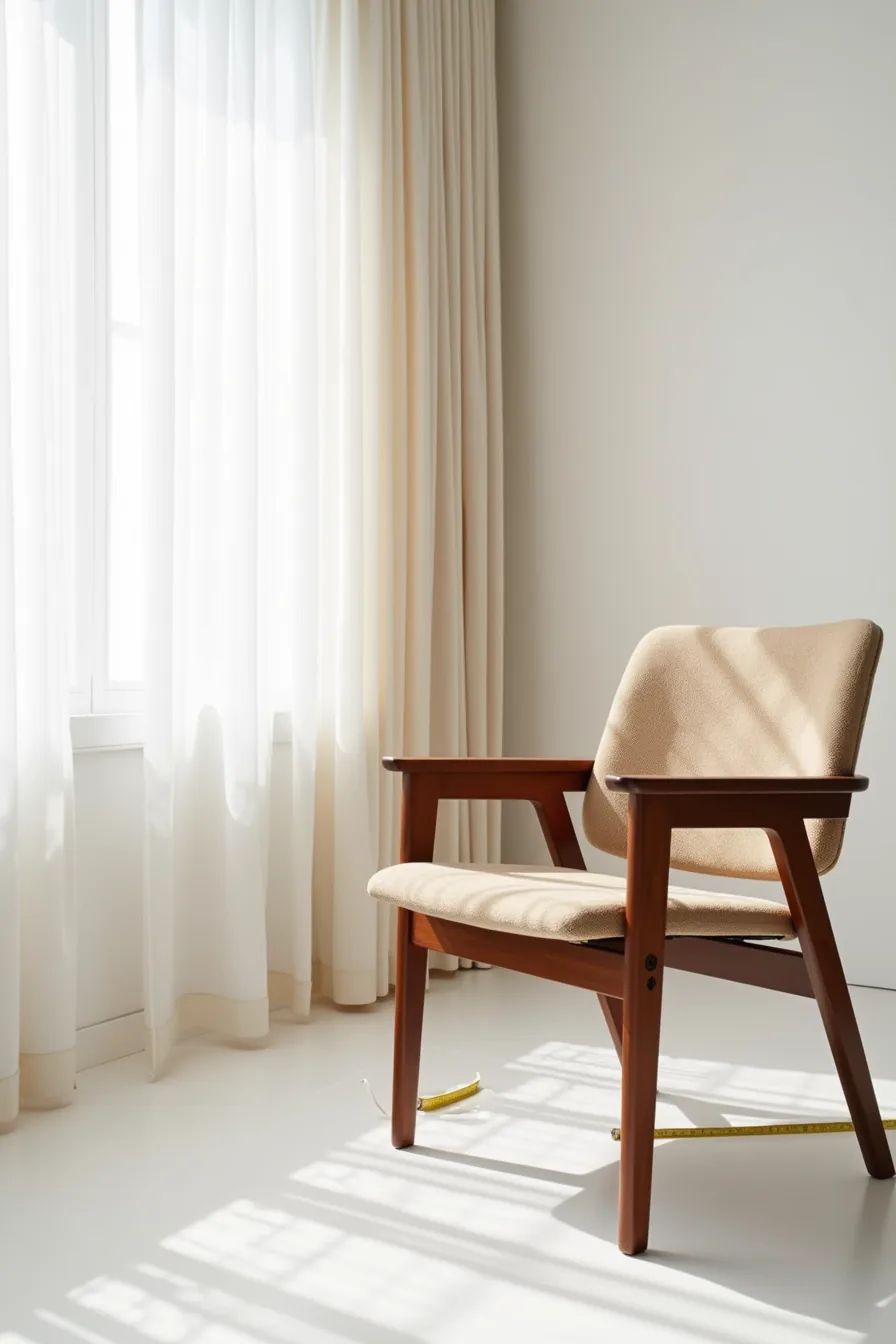
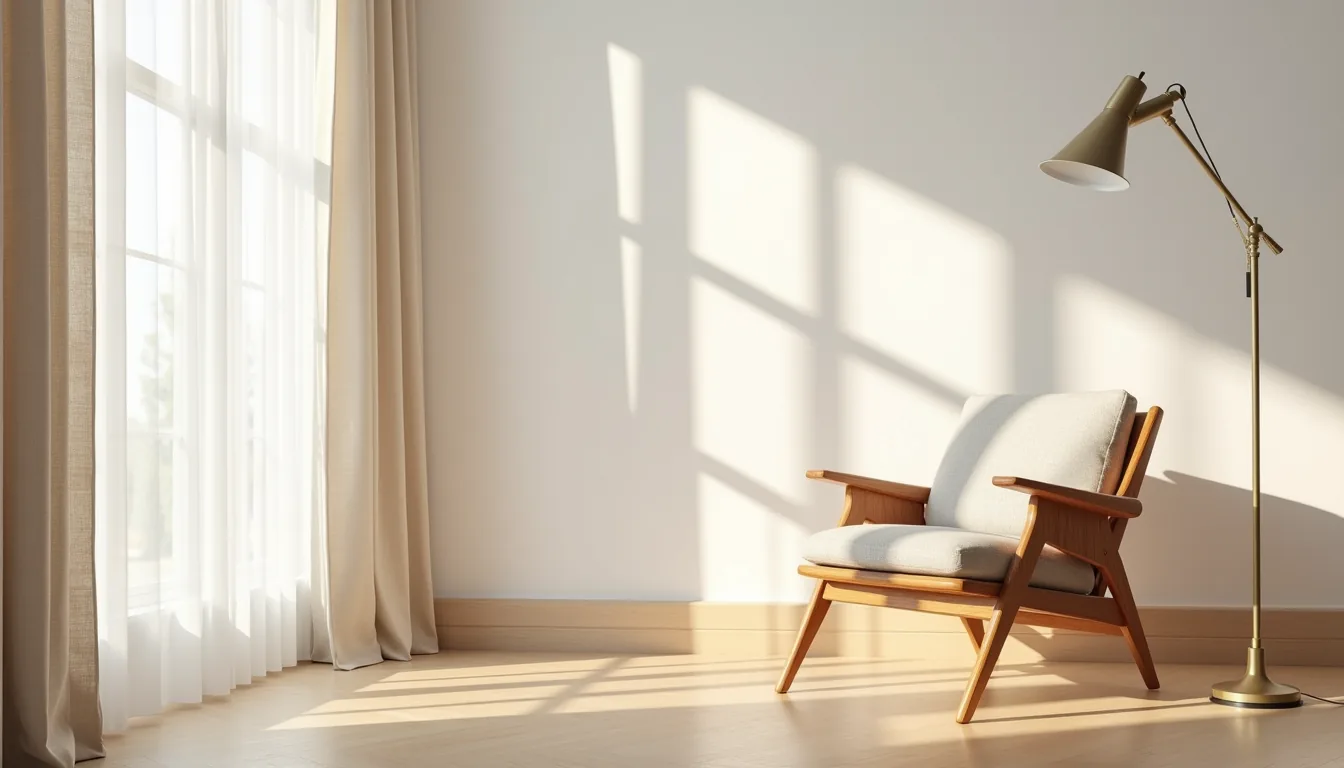
A walnut accent chair with splayed tapered legs is the most direct interpretation of the mid-century modern style, and it earns its place in compact spaces through geometry rather than bulk. The exposed wood joinery visible on the frame does double duty: it signals craftsmanship and visually breaks up the silhouette so the chair reads as lighter than its actual footprint. For a small living room or a narrow reading nook, look for a seat depth in the 20–22 inch range; anything deeper will consume floor space and make getting up awkward for shorter users.
The splayed legs, which angle outward from the seat, aren’t merely decorative. They widen the base for stability while keeping the top profile slim, which means you can place the chair closer to a wall without it toppling when you lean back. This design suits someone who wants a piece that anchors a corner without overwhelming it, pair it with a slim side table and a floor lamp, and you’ve a functional vignette in under 30 inches of width.
The walnut tone works best against white or light-gray walls; against dark paint, the frame will disappear, so reserve that pairing for rooms with ample natural light.
Woven Seat Detail and Natural Fiber
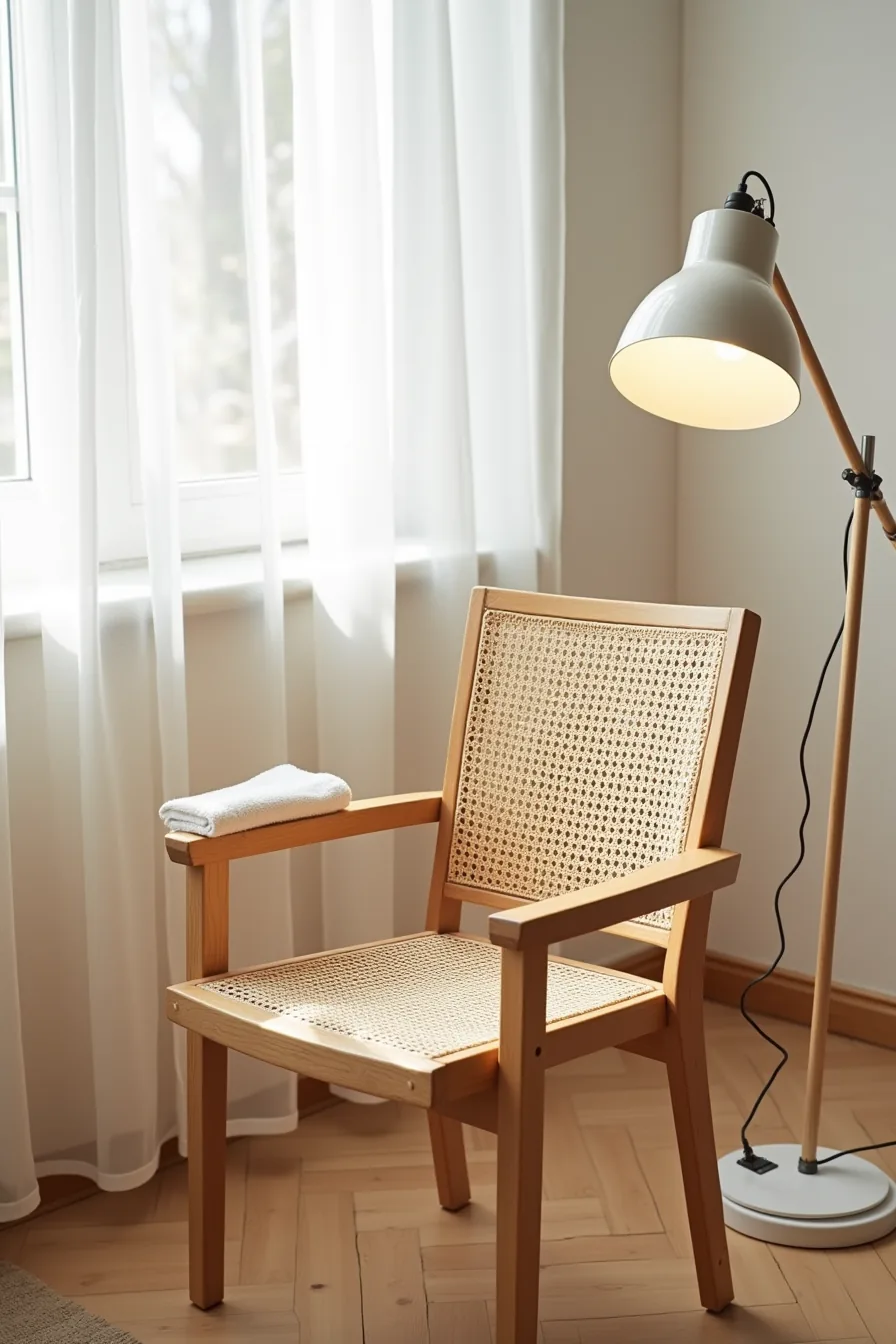
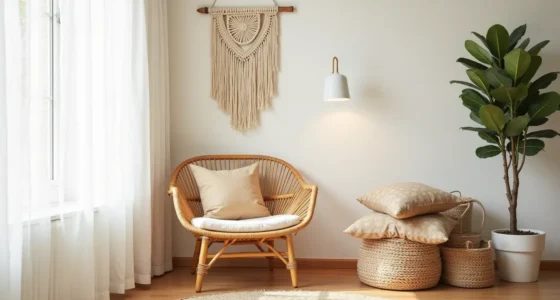
A rattan or cane seat is the practical counterpoint to a solid wood frame: it cuts weight, adds give, and changes how the chair breathes in a warm room. The open weave pattern visible on the seat and back allows air circulation, so this style suits sunrooms, conservatories, or any space that runs warm, you won’t stick to the surface in summer the way you would with a fully upholstered chair. The tightness of the rattan weave matters; a dense pattern supports more weight without sagging, while a looser weave reads airier but will need a cushion for long sitting sessions.
Maintenance is the trade-off. The woven seat traps dust in its crevices, so run a dust cloth over the surface weekly, as the one resting on the arm in this setup suggests. Keep the chair out of direct, constant sunlight, because natural fiber will dry and crack within a few seasons under harsh exposure.
This approach works best for a secondary seating spot, a bedroom corner or entryway perch, where you value texture over hour-long comfort.
Sculptural Frame as Room Anchor
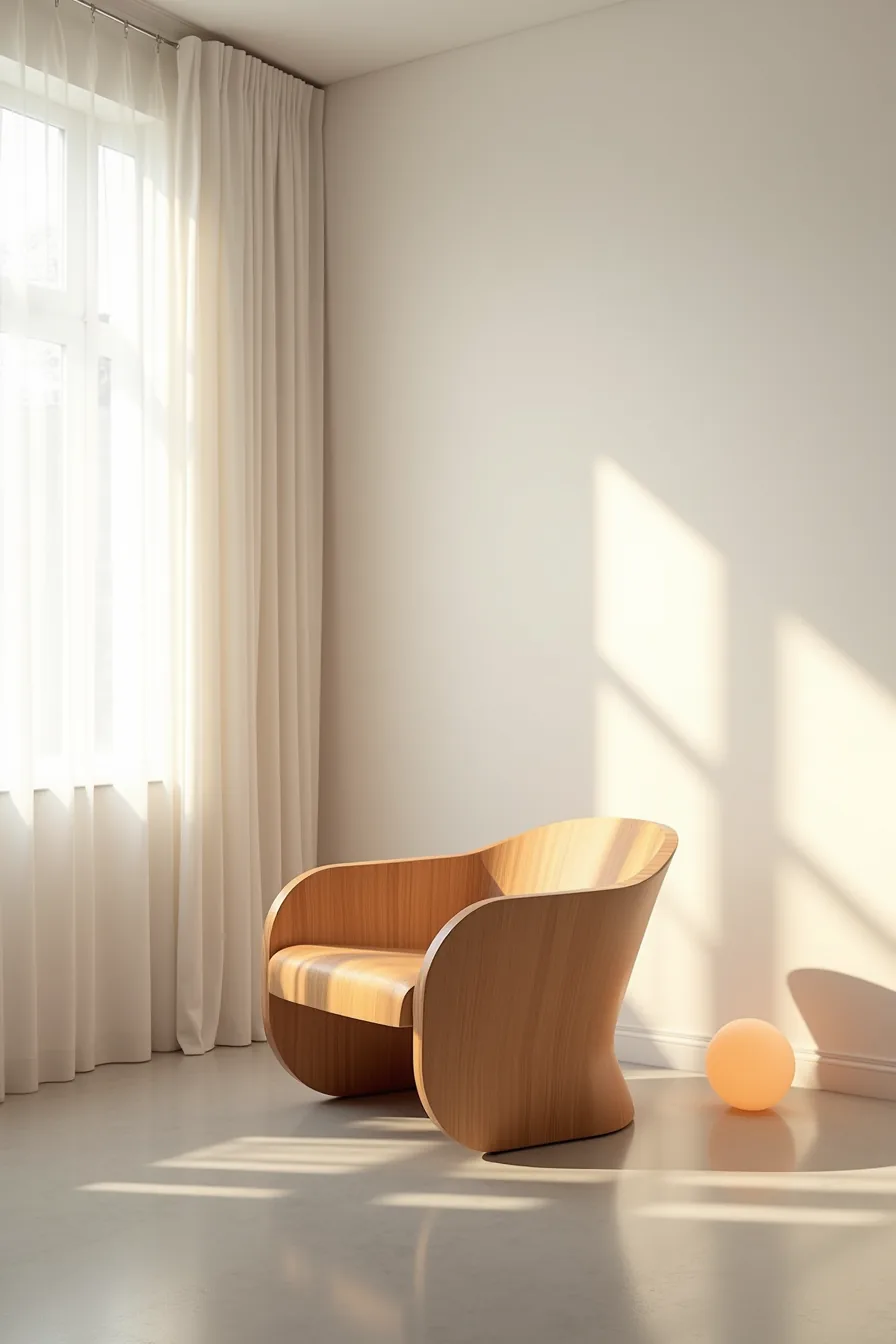
A curved wooden frame shifts the chair from seating to sculpture, and the empty corner with polished concrete flooring is precisely the context that makes it work. The organic lines create drama through contrast, organic curves against hard surfaces, warm wood against cool concrete, while the wall behind catches shadows that change throughout the day.
Scale determines success here. In a small room, keep the chair’s footprint under 30 inches wide and pull it 12-18 inches from the wall so the silhouette reads fully. For medium to large spaces, you can push the footprint to 34-38 inches and angle the chair toward the room’s center, letting the back curve face the corner.
A sculptural frame demands breathing room; a cluttered surround will dilute its impact.
This approach suits a reading nook, a gallery-style entry, or a bedroom where you want one strong object rather than many small ones. Placement matters more than cost, the chair works as a focal point only when nothing competes with it within a six-foot radius.
Upholstered Back with Exposed Wood Arms
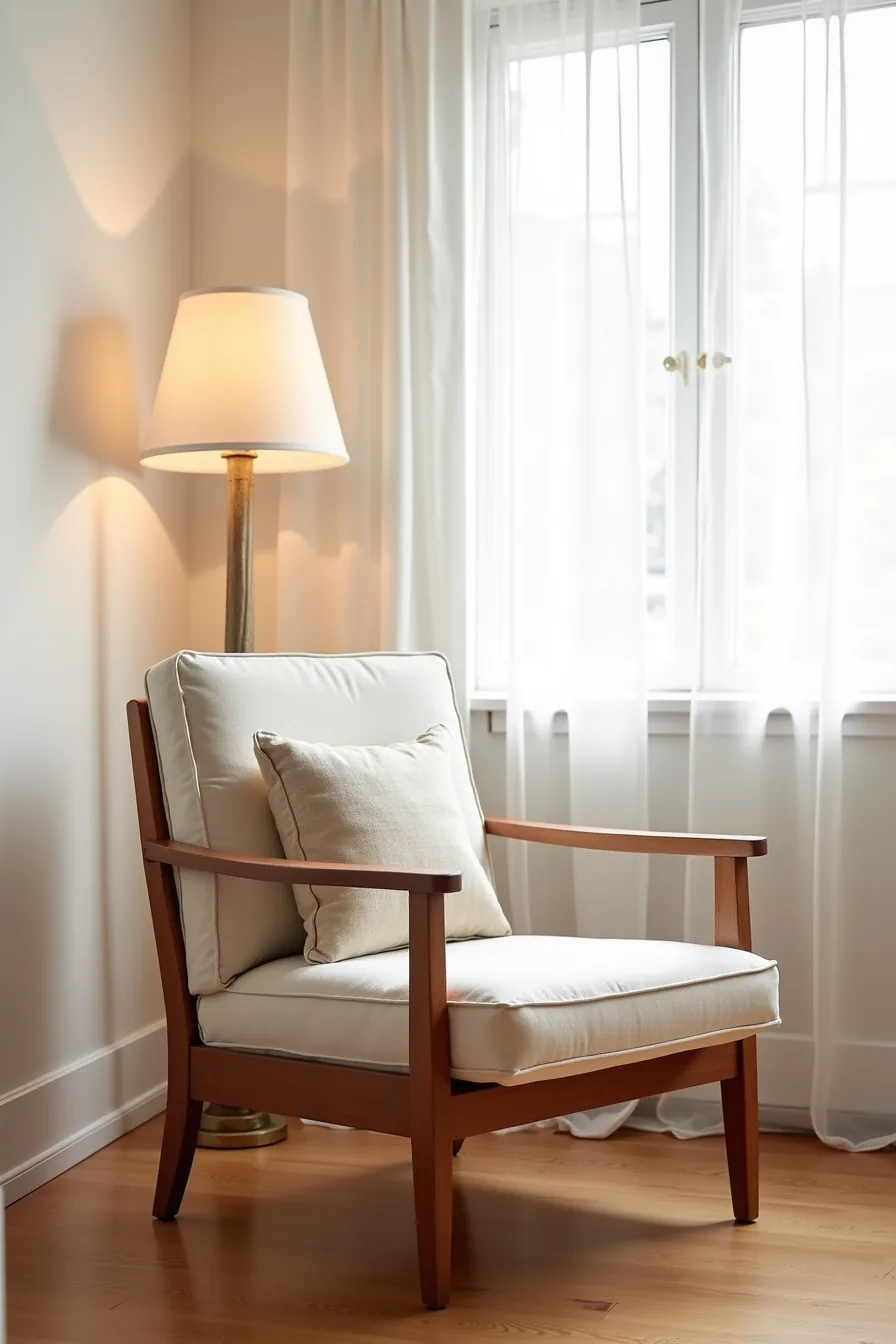
The hybrid approach pairs a cream linen upholstered back and seat with exposed cherry wood arms and frame, giving you the comfort of fabric where your body lands and the durability of wood where your hands and elbows make contact. This division of materials is practical, not decorative: fabric wears fastest at the seat and back, while wood resists the oils, spills, and friction that ruin upholstery on armrests within a few years.
Choose a wood finish that contrasts with your upholstery rather than matching it. Cherry’s warm reddish tone against cream linen creates a visible line between the two materials, which reads as intentional design. A matching finish would blur the boundary and make the chair look like a failed attempt at all-wood construction.
This configuration suits a dining room, home office, or entryway where chairs get moved, bumped, and used daily. The exposed wood arms also make the chair easier to lift and reposition than fully upholstered alternatives. For maintenance, treat the cherry with a matte polyurethane every two to three years, and spot-clean the linen with a damp cloth only, avoid chemical cleaners that strip the fabric’s natural finish.
The natural linen throw pillow adds texture but requires dry cleaning, so keep it in a low-traffic corner if you want it to last.
Budget-Friendly and Renter-Approved Options
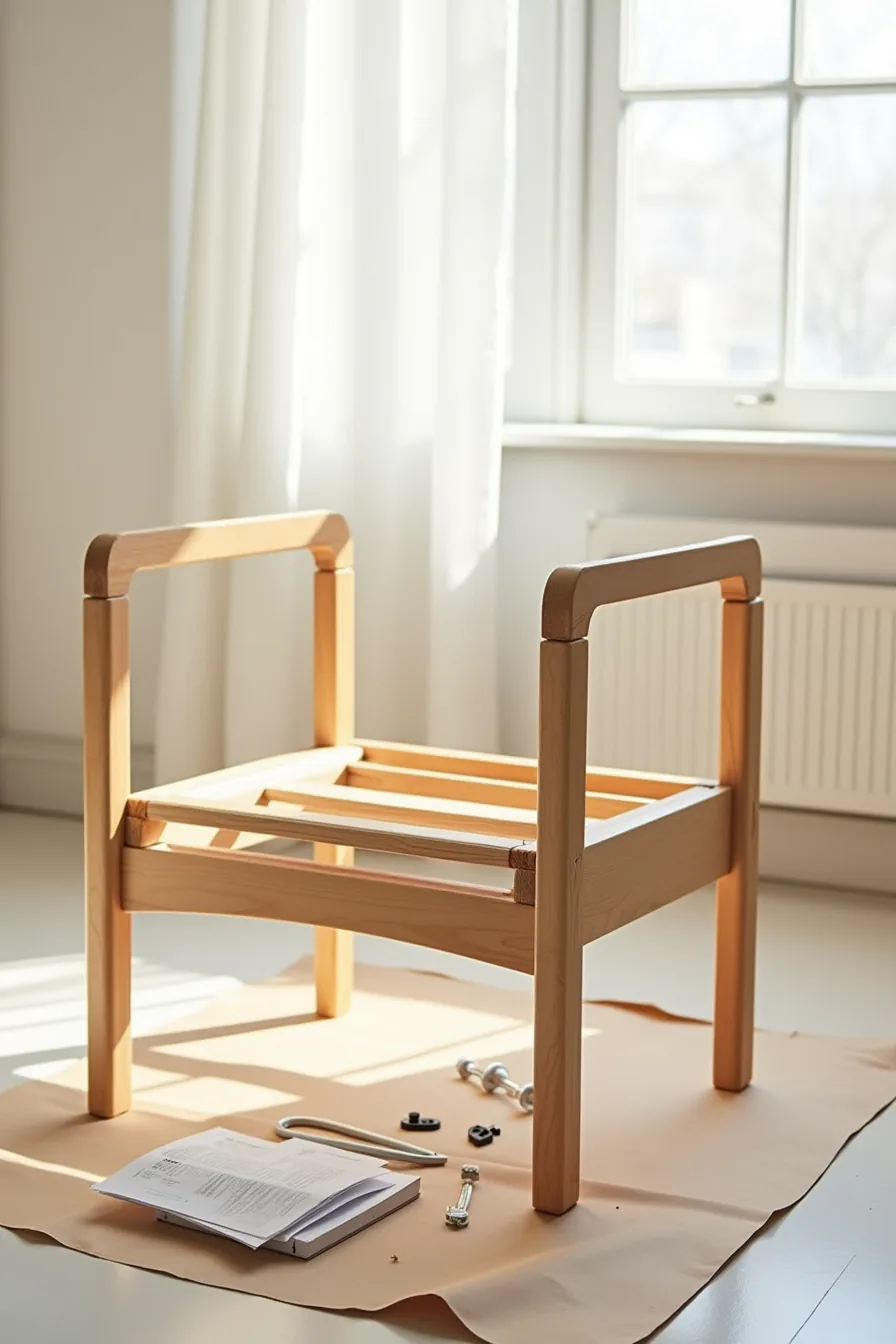
A flat-lay assembly view tells you everything about a budget chair before you commit: the seat frame, four legs, hardware package, and a single instruction sheet arranged on kraft paper signal a straightforward build you can complete in 20–40 minutes with just a screwdriver. This category typically runs $100–$250, and the trade-off is visible in the parts, lighter woods like rubberwood or pine, pre-drilled holes, and metal brackets instead of mortise-and-tenon joinery.
The renter-friendly advantages are practical: these chairs disassemble back into flat components for transport, fit through narrow doorways and stairwells fully broken down, and reassemble in under an hour at your next place. Before ordering, verify the return policy covers assembled chairs, several budget brands require returns in original packaging, which means keeping those boxes flat somewhere accessible for 30–60 days.
For small apartments or temporary styling, this is the smart entry point. You get the visual weight of wood without the commitment, and you can test whether the look holds up in your space before investing in a heirloom-grade piece later.
Long-Term Investment Pieces and Wood Selection
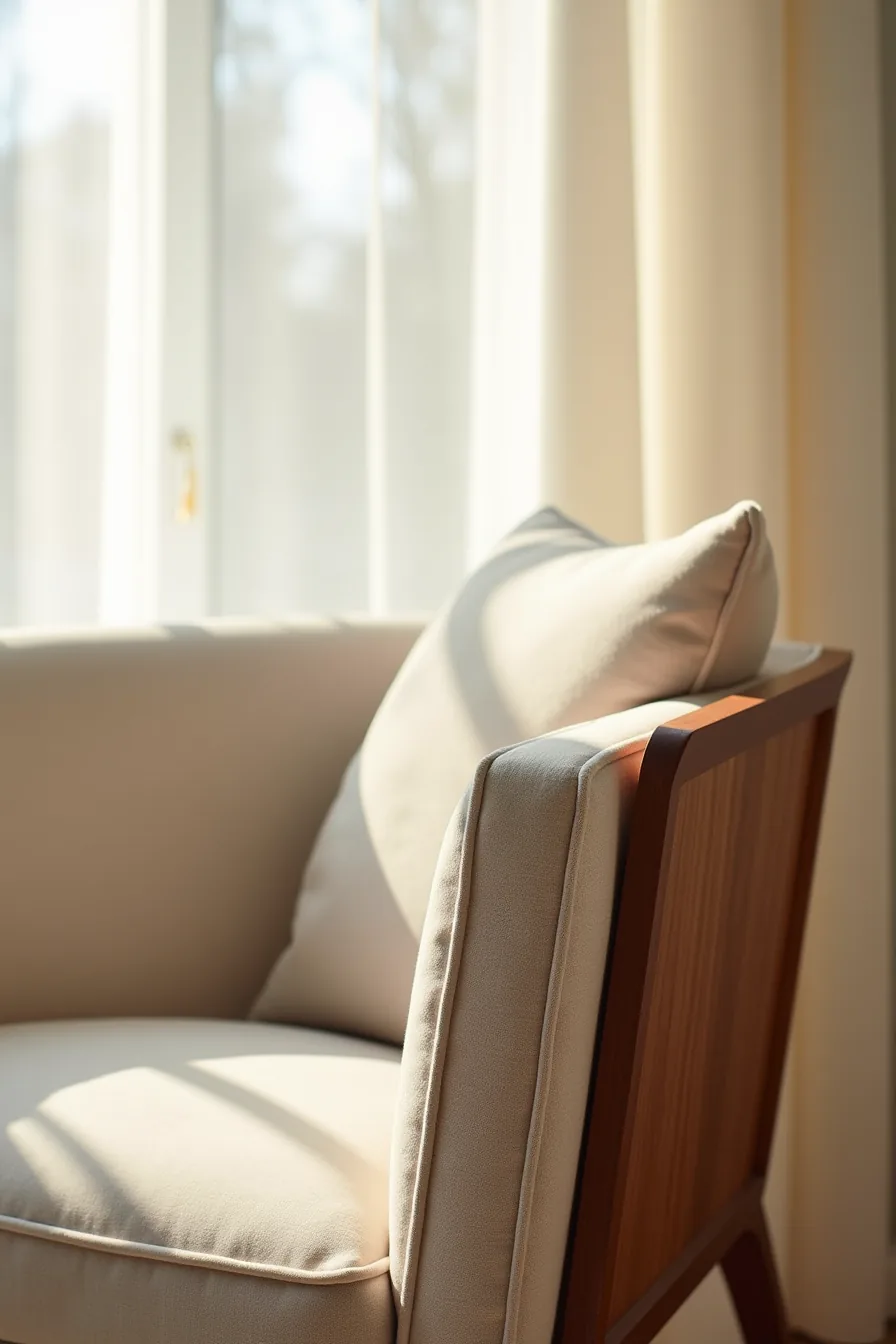
The cross-section comparison tells you everything: a solid walnut frame reveals subtle tonal shifts and a pronounced grain pattern at the cut edge, while the veneer sample shows a uniform, paper-thin surface layered over engineered wood beneath. When you flip the chair over, look for a maker’s stamp on the frame edge, that mark, alongside visible joinery like dovetails or dowels, signals a piece built to last decades, not seasons.
Solid wood species aren’t equal. Walnut and oak deliver the best durability-to-beauty ratio for daily-use chairs, with hardness ratings (Janka scale) around 1,010–1,360 for oak and 1,010 for walnut, enough to resist dents from normal foot traffic. Softer woods like pine (around 400–540) will show wear quickly in a high-traffic living room, making them better suited to low-use spaces like a bedroom reading nook.
Expect to pay $400–$1,200 for a true solid-wood accent chair from a mid-tier maker; that price buys you the option to refinish scratches and re-stain the surface decades later, something veneer can never offer.
When you see the chair arm edge, examine how the wood meets the frame, solid construction shows continuous grain flowing around curves, while veneer reveals a visible seam where the thin layer wraps. Choose solid wood when you plan to keep the chair for 10+ years, expect heavy daily use, or want the option to repair rather than replace. Choose veneer when budget is tighter but you still want the wood look at $250–$500, just know you’re committing to the finish as-is, with no refinishing possible down the line.
Your Decision Checklist
Before you buy, confirm the chair’s seat height matches your table or sofa (most dining seats run 18–19 inches, lounge chairs 17–20). Measure your floor space and add 24–30 inches of clearance for walking paths. Decide your maintenance tolerance: solid oak costs more but resists dents, while rubberwood or mango offers budget durability with lighter grain.
If you rent, choose a chair with removable cushions and water-based finishes you can touch up. For a long-term piece, verify joinery, dowel or mortise-and-tenon beats staples. Match wood tones to your existing floor or trim, not your furniture, to avoid clashing.
Start by measuring your intended spot and saving three chairs that fit those dimensions before comparing prices.
Frequently Asked Questions
What dimensions should a wood accent chair be to fit a small bedroom?
Choose a chair with a seat height of 17–19 inches and an overall width under 24 inches. Depth should stay around 20–22 inches so you keep at least 30 inches of walking clearance.
How do you protect a woven wood seat from staining and wear?
Apply a clear matte polyurethane or shellac sealer every 12–18 months. For daily protection, place a washable cushion or felt pad on the seat and wipe spills immediately with a dry cloth.
Can you use a wood accent chair in a rental without damaging walls or floors?
Yes. Use felt pads under all legs and a rubber floor protector underneath. Skip wall anchoring entirely, choose a freestanding chair with a low, stable base instead of a rocking or swivel model.
What wood species holds up best in a sunny room without fading or warping?
White oak and teak resist UV damage and dimensional change better than pine or maple. Both are dense, closed-grain woods; finish them with a UV-blocking matte lacquer to extend color stability.