

The French arm chair is less a single piece of furniture than a design language spanning gilded curves, rustic linen, and clean modern lines, and choosing the right interpretation depends entirely on your room’s scale, traffic flow, and how much maintenance you’re willing to take on. What works in a spacious living room will suffocate a narrow entryway, and a bergère’s upholstered back demands different care than a cane-seated model. The following six approaches break down the practical trade-offs, cost, durability, and footprint, so you can match the silhouette to your actual space, not just a magazine spread.
Key takeaways
French arm chairs split into two camps: ornate carved frames with exposed wood for formal rooms, and relaxed linen-covered silhouettes for casual living spaces. For dining rooms, choose a Louis XVI frame with a 24-26 inch seat height to match standard table clearance, and allow 60-90 cm between chair arms and table legs. In bedrooms, a single upholstered arm chair works best at 70-90 cm wide, it fits a small nook, doubles as a clothing valet, and needs spot-cleaning twice yearly. Budget and rental routes favor slipcovered or painted pieces (repaintable, damage-masking, under 300 dollars typically), while solid oak frames with wool- or leather-upholstery justify a 1,000-plus investment for daily use.
Ornate vs Relaxed: Two Core Interpretations
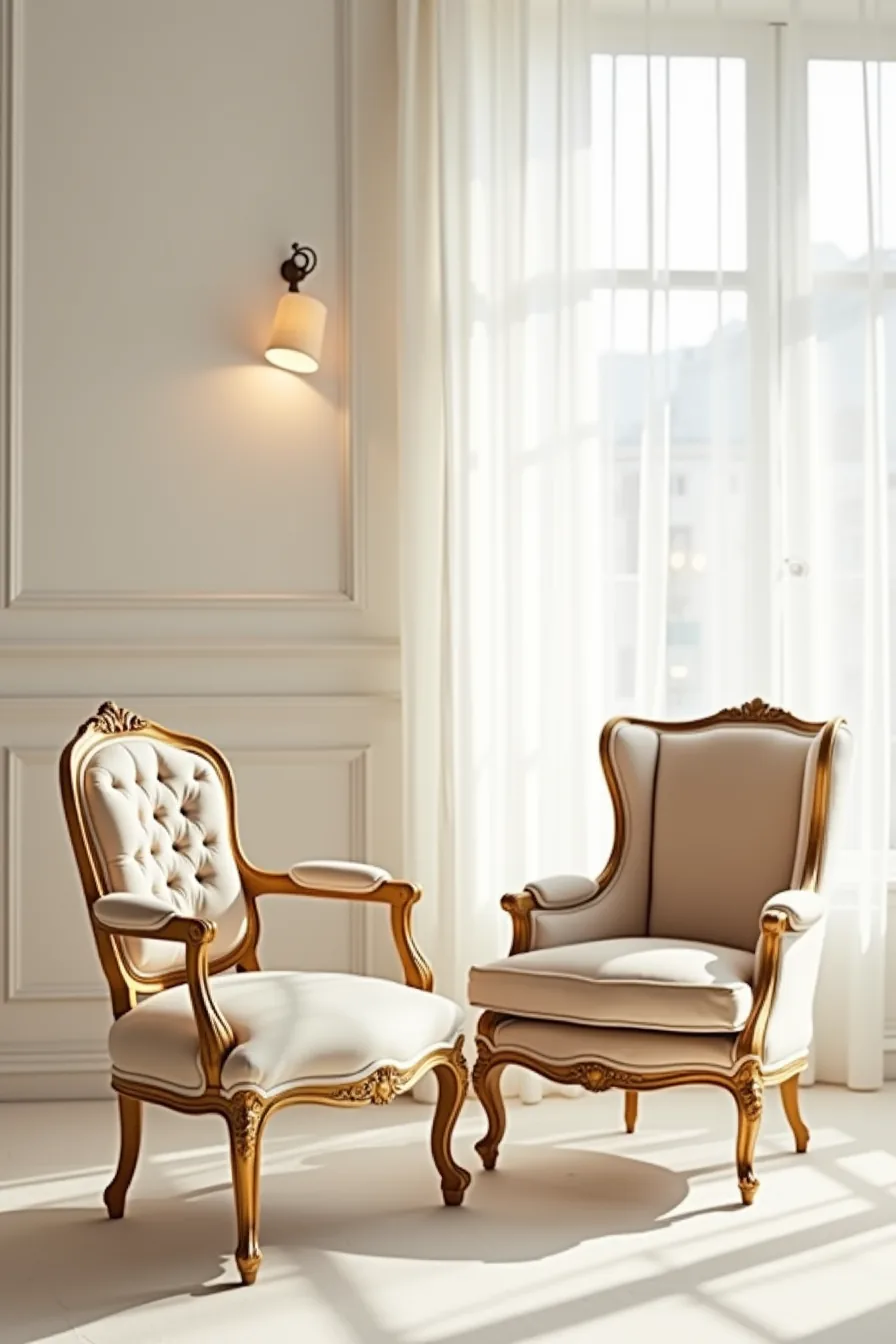
The French Arm Chair spectrum spans two poles, and your choice hinges on the atmosphere you want to command. On the ornate end sits the formal Louis XVI frame, gilded wood, cabriole legs, and a tufted velvet seat that delivers immediate ceremony. This version suits dining rooms, entry halls, or any space where you host guests and want a clear visual anchor; it demands a room with enough architectural weight to carry its formality.
On the opposite side, the relaxed bergère-style chair wraps a beige linen body around rounded arms, softening the silhouette into something approachable. This interpretation fits living rooms, reading corners, or transitional spaces where comfort outweighs spectacle. The trade-off is plain: ornate frames tolerate less wear and require more visual clearance, while relaxed linen versions accept daily use but read casual rather than curated.
Match the chair to your room’s primary function, not just its style.
The Formal Louis XVI Frame for Dining Rooms
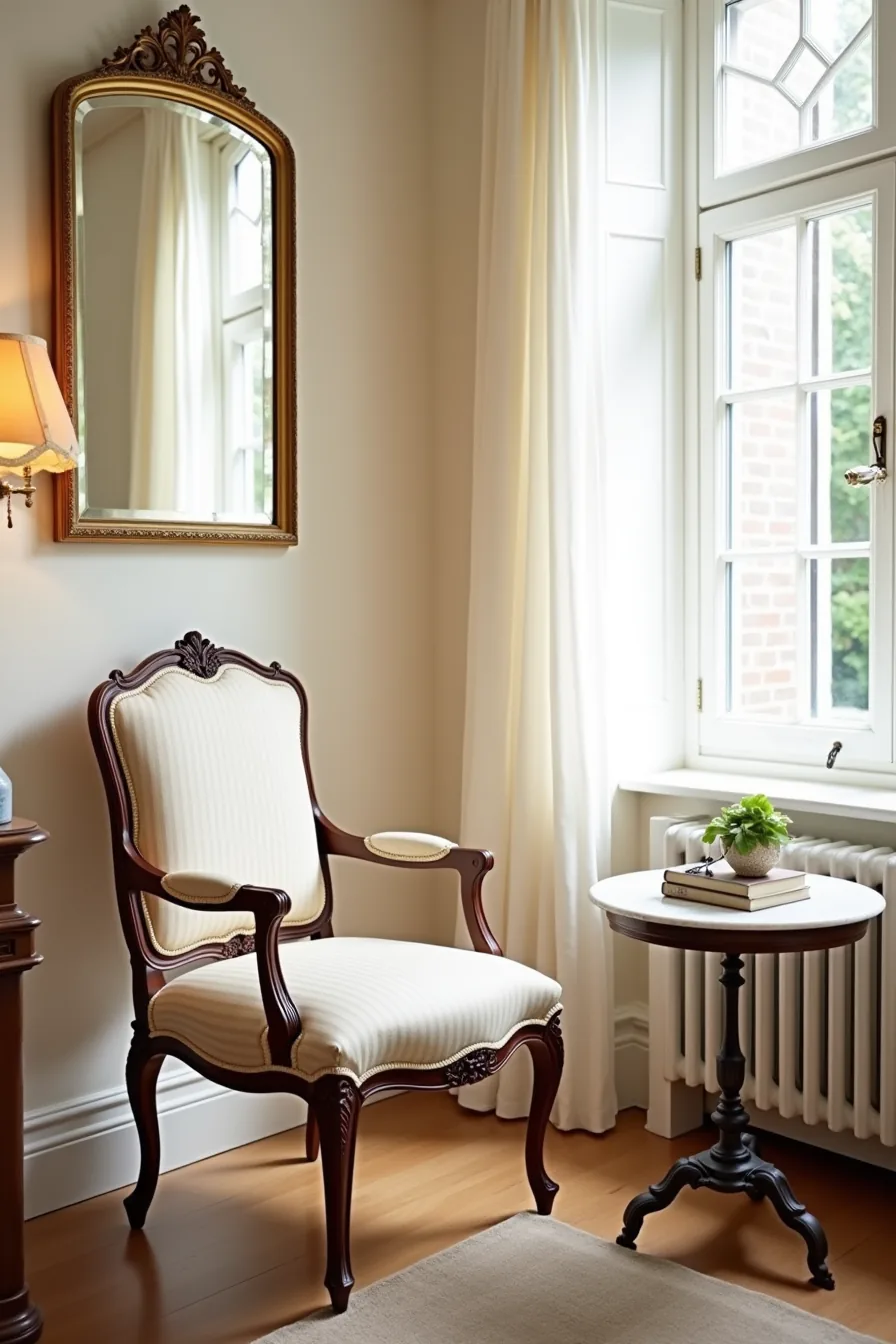
A carved mahogany frame with exposed, turned legs brings the Louis XVI profile into focus: symmetrical, structured, and quietly ceremonial. Pair it with damask striped upholstery to reinforce the vertical lines, and the chair reads as architecture rather than mere seating. This combination works best beside a round marble-topped side table, where the chair’s rigid geometry contrasts the table’s curve, and beneath a gilt-framed mirror that echoes the wood’s warm undertones.
Specify a seat height of 18–20 inches to align with standard dining tables, and allow 24–28 inches of width per chair so guests can pull out without scraping adjacent pieces. Use this French arm chair as a single accent at the head of a table or flanking a console; it anchors formality without demanding a full matching set. For upholstery, choose a performance-grade weave with a high rub count, damask in cotton or a linen blend handles nightly use better than silk, which shows wear within months.
Expect to pay a premium for hand-carved joinery; machine-carved alternatives cost less but lose the crisp detail that makes the frame read authentically period.
Relaxed Linen Upholstery Look for Living Spaces
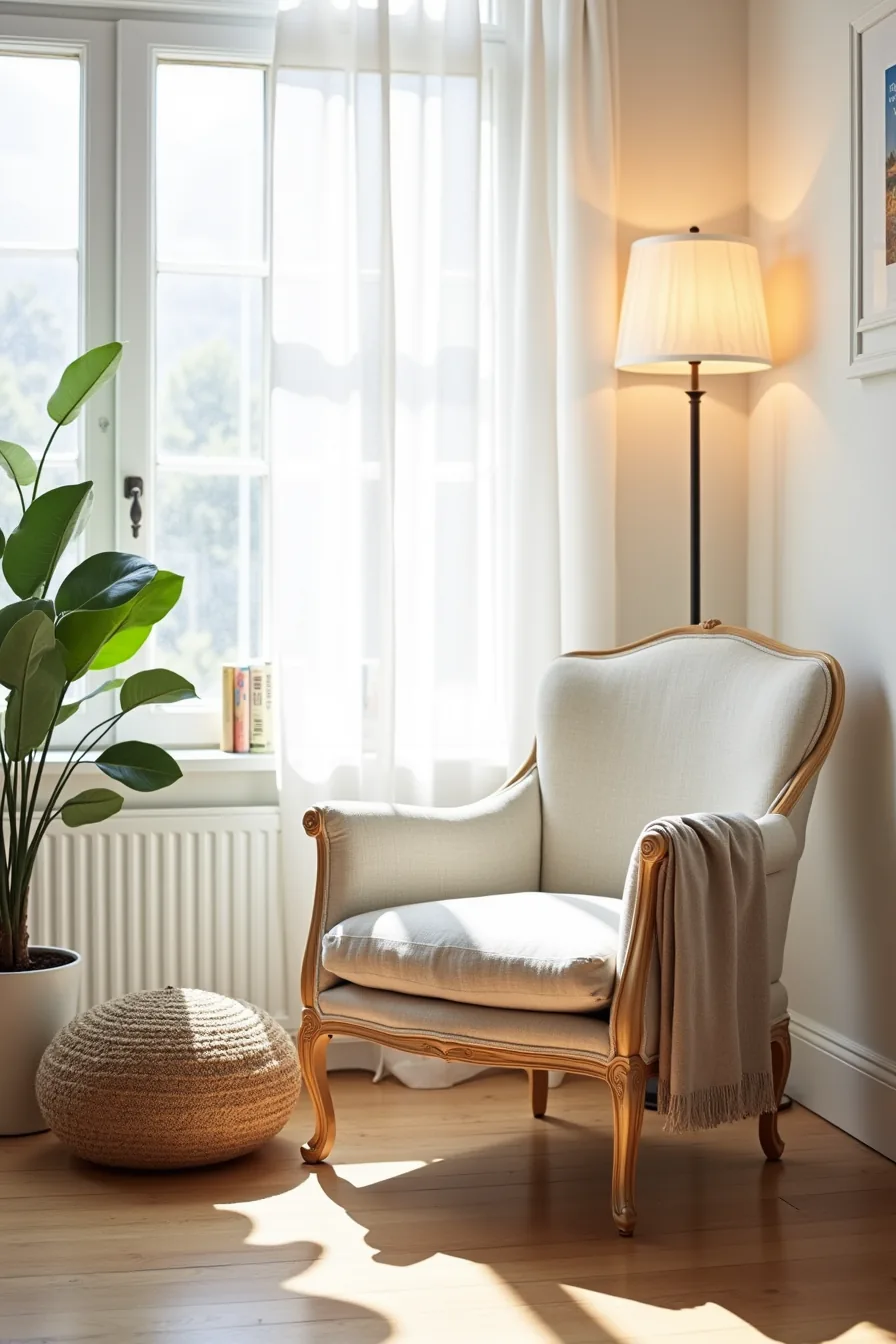
The soft linen upholstery look trades carved wood for a simplified frame, often with gently curved arms and minimal exposed timber. Natural linen’s slubby texture absorbs light rather than reflecting it, which softens a room’s edges and makes the chair feel like a fixture rather than a statement piece. Place it beside a woven jute pouf and a potted plant on wood flooring to build a layered, lived-in vignette that suits casual or transitional living rooms.
Choose a linen-blend fabric with at least 40% synthetic content, pure linen wrinkles beautifully but pills under daily use and fades in direct sun. Color-wise, undyed natural or oatmeal tones hide spills better than white and pair with both cool gray and warm beige palettes. For small spaces, select a frame with slim, tapered arms to keep the visual footprint light; in larger rooms, a deeper seat at 22–24 inches invites longer lounging.
Budget for professional re-covering in five to eight years, as linen’s relaxed drape comes at the cost of durability.
Parisian Room Pairing: Layering Accent Chairs
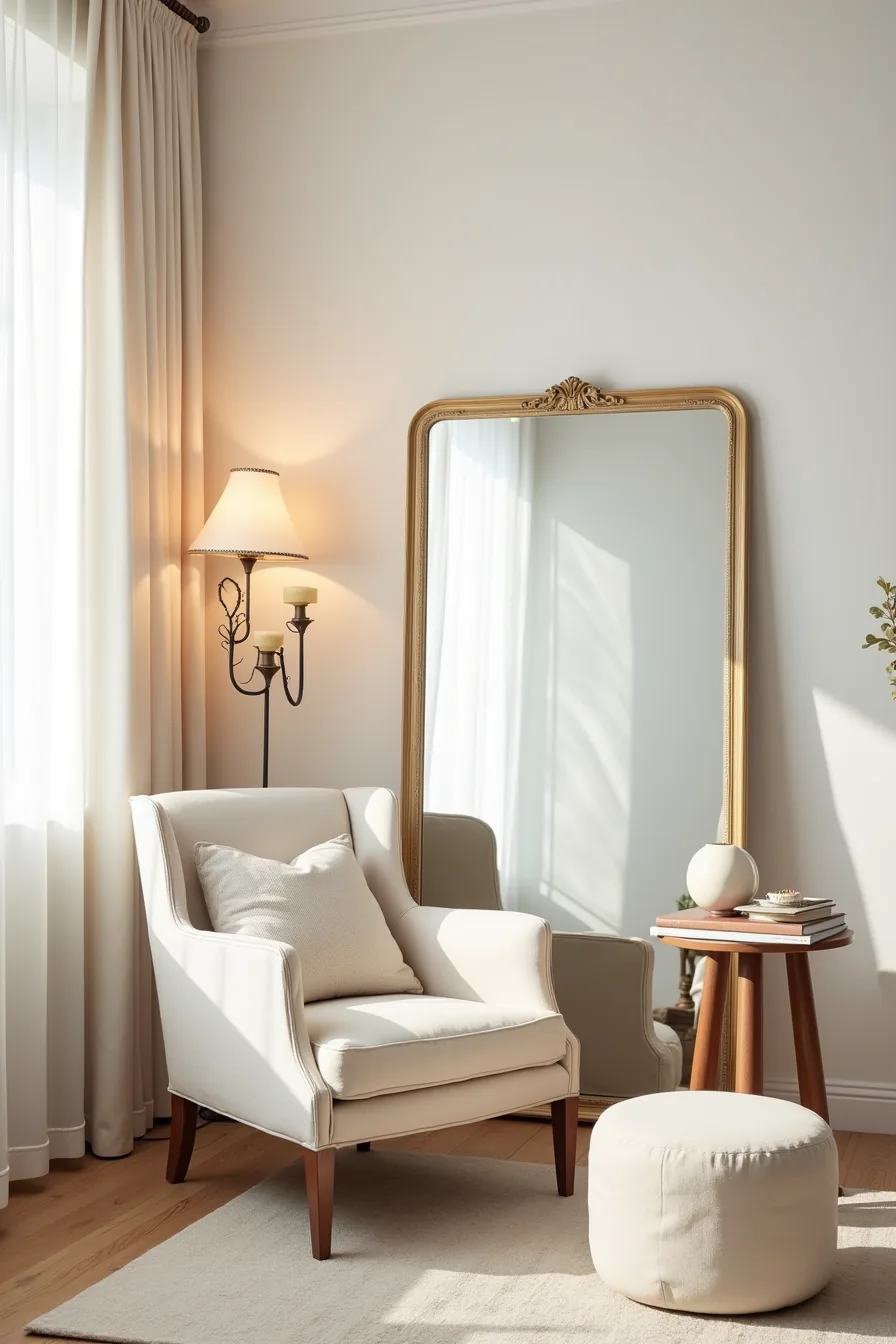
The Parisian room pairing treats the French arm chair as one layer in a composed corner, not an isolated object. Position a cream linen chair to the left of a brass floor lamp, with a small brass side table to its right, and lean a large mirror against the wall behind, this arrangement creates a triangular sightline that anchors the grouping without crowding it. The mirror doubles the available light and visually widens a medium room, while the table keeps a book or coffee within arm’s reach.
For scale, match the chair’s arm height (typically 26–29 inches) to the floor lamp’s lowest shade edge to keep sightlines clean. In a medium room, leave 18–24 inches between the chair and adjacent furniture; in a small space, reduce that to 12–15 inches and swap the floor lamp for a wall-mounted sconce. A layered area rug beneath the chair and table defines the zone, so the corner reads as intentional rather than accidental.
French Arm Chair Ideas for a Romantic Bedroom
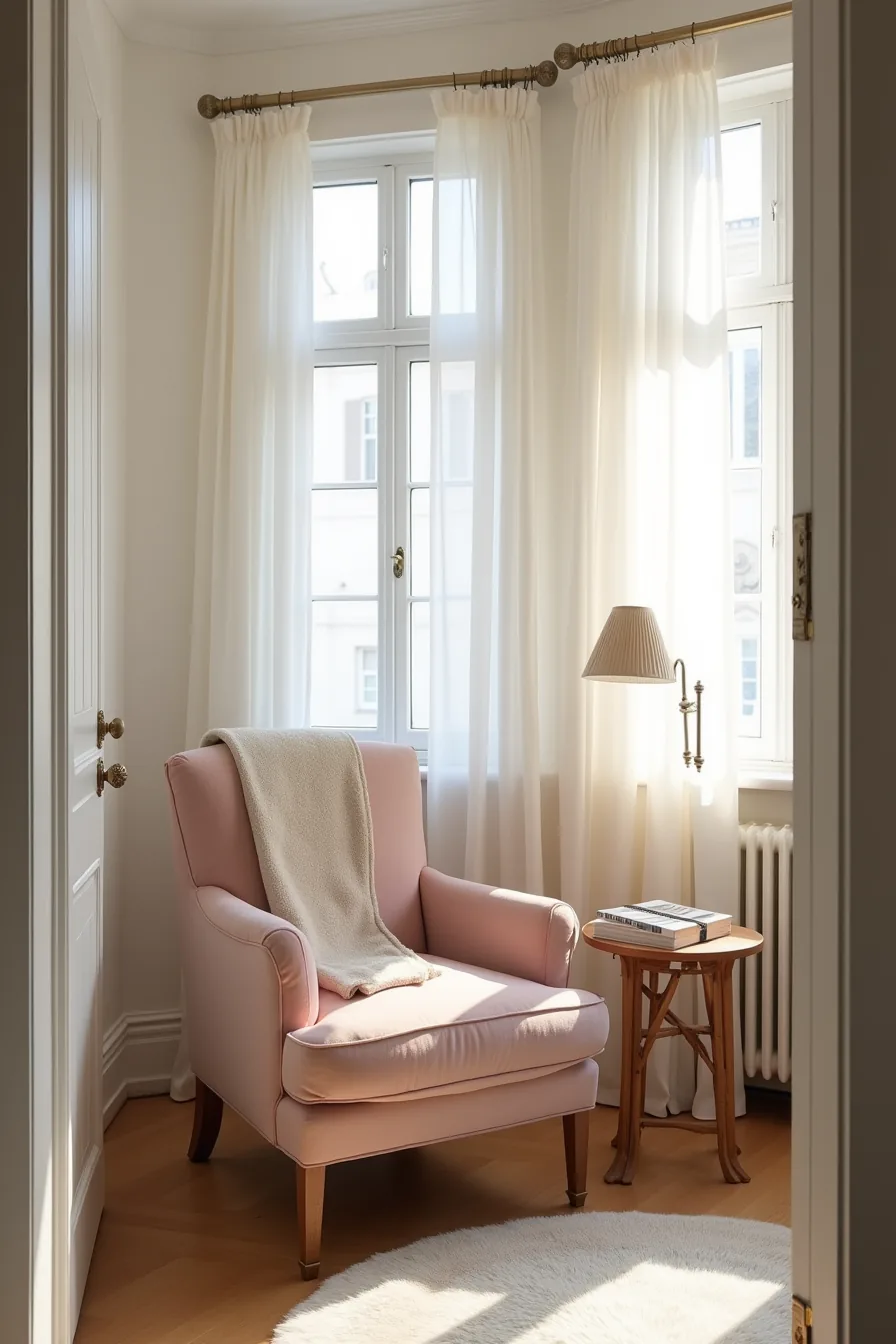
A bedroom reading nook needs a chair that whispers rather than shouts. Blush velvet works here because its low-luster pile absorbs morning light instead of bouncing it around the room, which keeps the space calm before you’re fully awake. Position the chair at a slight angle to the window, not square to it, so the natural light falls across your shoulder while you read, rather than glaring onto the page.
Pair the chair with a compact writing desk no deeper than 16–18 inches to preserve floor space in a standard 10×12-foot bedroom. Drape a folded linen throw over one arm; linen breathes better than cotton in humid months, and the fold gives the chair a lived-in softness that plain upholstery lacks. Set a table lamp with a pleated shade on the desk surface, the pleats diffuse the bulb’s glow into even bands, which reads as romantic rather than clinical.
For fabric upkeep, vacuum the velvet weekly with a soft brush attachment and spot-clean spills immediately; velvet holds moisture and will watermark permanently if left to dry on its own.
Budget, Rental, and Investment Routes
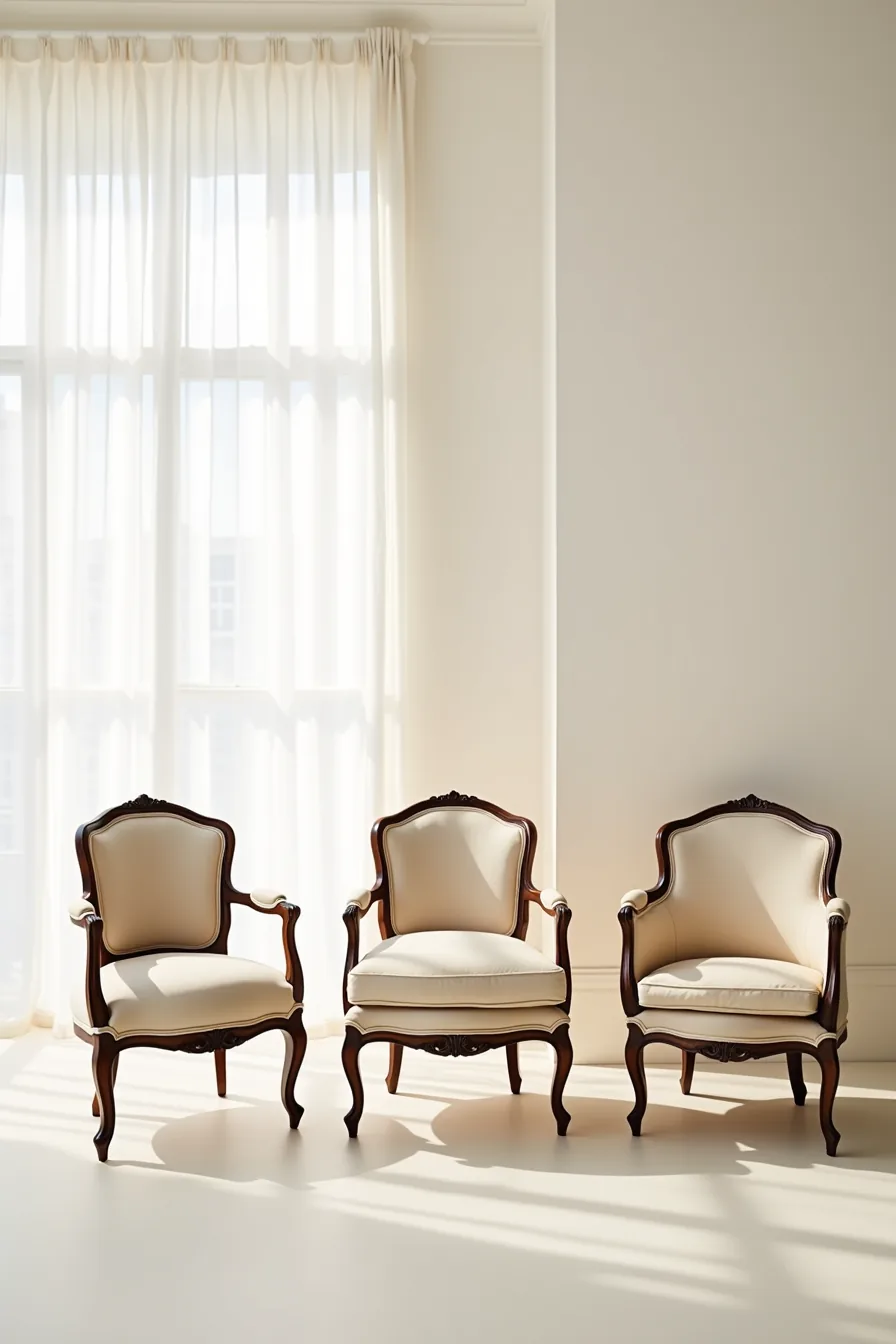
Your budget dictates how much chair you actually get. A sub-$400 upholstered model typically pairs a particle-board frame with polyester fabric. Polyester resists fading and cleans easily, but the frame will wobble within a few years of daily use, fine for a guest room or a rarely used corner, not for your primary reading spot.
A renter-friendly slip-covered version solves the permanence problem. The removable cream canvas cover washes at home, so you can reverse a coffee spill or a shedding pet without a professional cleaning bill. Canvas also hides the chair’s underlying frame construction, which means you can buy a cheaper base and upgrade the look later by swapping the slipcover, ideal if you move frequently or change decor seasonally.
At the top end, an heirloom carved walnut frame with hand-tied springs starts around $1,200 and justifies the cost through repairability. Hand-tied springs can be re-tied by an upholsterer, and a solid hardwood frame outlasts several reupholstery cycles. The trade-off: you commit to the chair’s silhouette for decades, so choose a neutral linen or wool that won’t clash with future room changes.
Your Decision Checklist
Before you buy, measure the width of your intended spot, most French arm chairs span 22–28 inches across the seat, so verify it clears doorways and paths. Test the seat height against your table (a 19-inch seat suits a 30-inch dining table) and check the frame joints for movement.
If you rent, stick with a slipcovered version you can wash; if you’re investing, choose solid beech or oak over particleboard. Match the upholstery to your lifestyle, performance velvet handles pets, linen shows wear within months.
Your next step: save three chairs you like, then compare their seat depth and arm height side by side. The right one will feel obvious within five minutes of sitting.
Frequently Asked Questions
What is the difference between a French arm chair and a wingback chair?
A French arm chair has open, curved arms and a low, exposed back, while a wingback chair features tall side panels that extend from the back to the arms. Wingbacks shield you from drafts; French chairs prioritize lightness and elegance.
Can a French arm chair fit in a small apartment, and how should I position it?
Yes, choose a compact model with slim, tapered legs and a seat depth under 22 inches. Place it angled in a corner or beside a narrow console, leaving at least 18 inches of clearance in front for walking.
How do I clean and maintain linen upholstery on a French arm chair?
Vacuum weekly with a brush attachment to remove dust. Blot spills immediately with a dry cloth, never rub. Professionally steam-clean once a year, and keep the chair out of direct sunlight to prevent fading.
Is a French arm chair suitable for a modern or minimalist room?
Absolutely. Select a version with clean, straight lines, no ornate carving, and upholstery in a solid neutral like charcoal or oat. Its sculptural silhouette adds warmth without visual clutter, complementing concrete, glass, or metal surfaces.