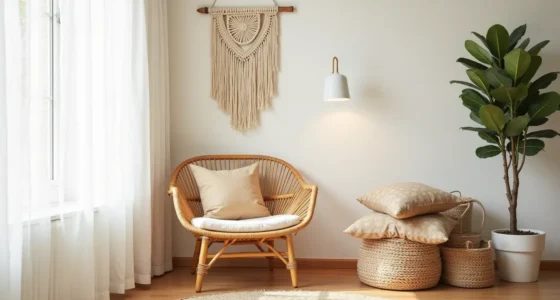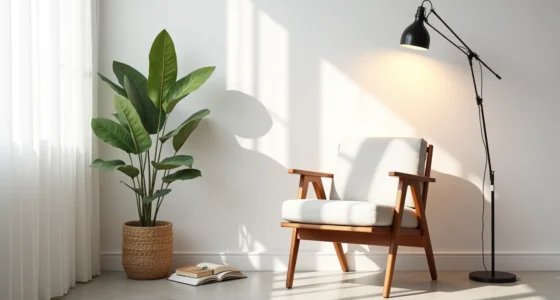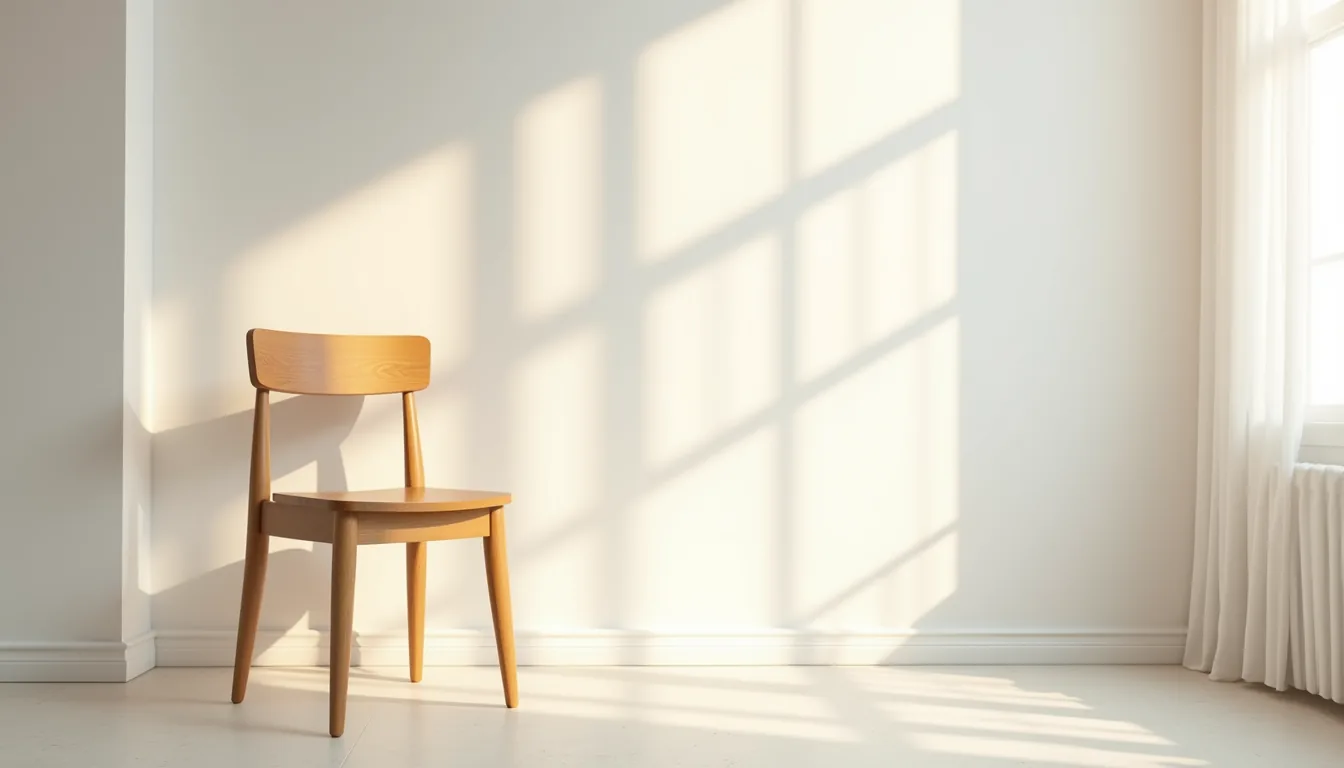

Simple Chair Design isn’t a single look, it’s a practical framework for choosing a seat that fits your room’s proportions, your daily habits, and your budget without visual clutter. It spans everything from a sculptural plywood shell to a no-arms upholstered stool, each with distinct trade-offs in comfort, footprint, and upkeep. The key is matching the chair’s structural logic to your space, not chasing a generic aesthetic.
You’ll see six concrete interpretations next, each with the dimensions, maintenance needs, and placement rules that make them genuinely workable.
Key takeaways
Simple chair design works best when you commit to one dominant material, wood, metal, or fabric, and let it carry the visual weight. Choose your base on your floor type: wood frames suit carpets, metal legs slide easily on hard floors, and upholstered bases protect tile from scratches. Measure your clearance before buying: allow at least 18-24 inches of walking space behind a chair and 12-16 inches between the seat edge and a table apron. Invest in joinery over looks for longevity: solid wood with mortise-and-tenon or dowel joints outlasts glued butt joints by decades, regardless of finish.
The Minimalist Wood Frame: Structure Without Ornament
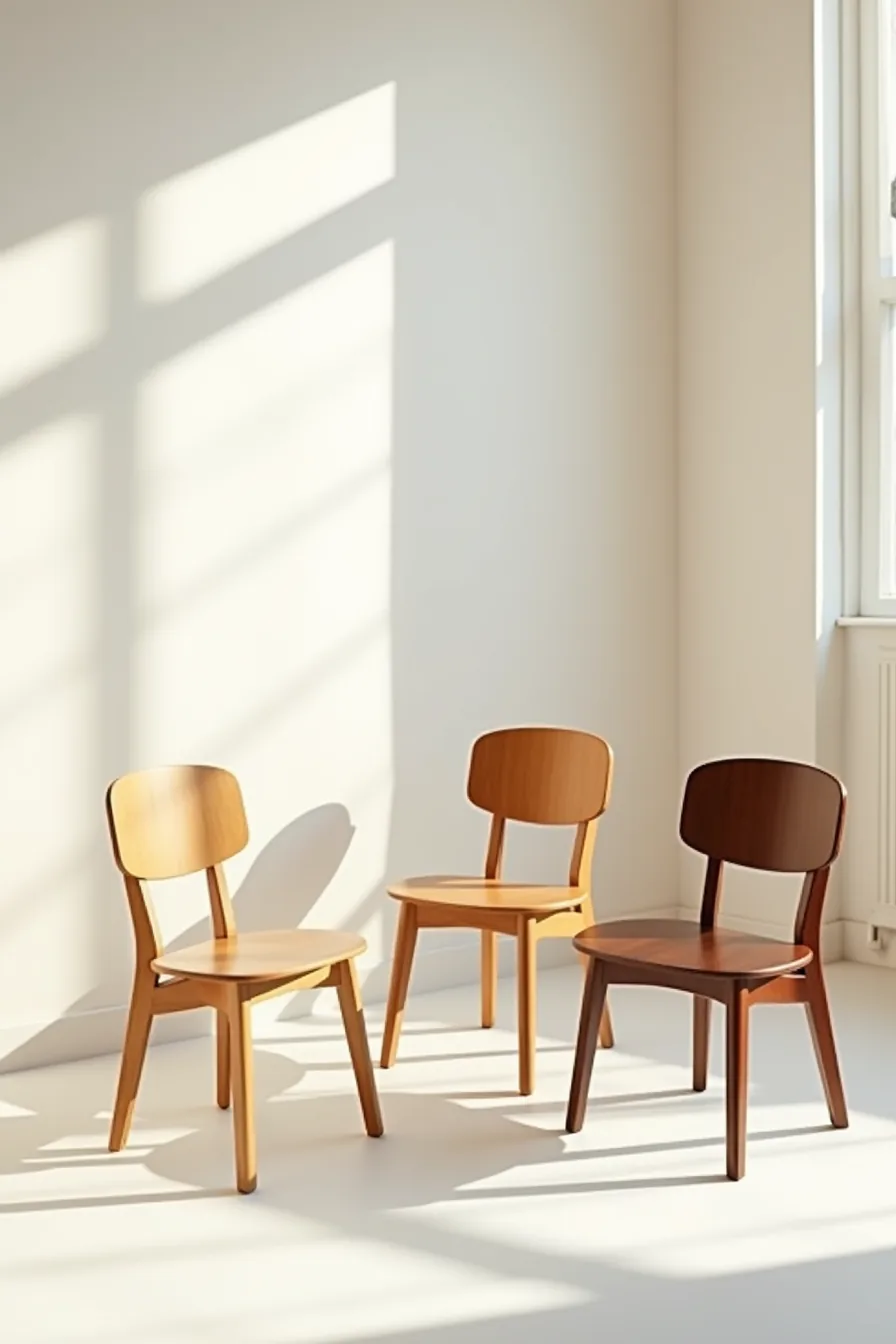
A simple wood frame chair, legs, seat, and nothing else, is the definition of the versatile chair form. Its power lies in subtraction: no arms, no backrest padding, no visible joinery drama. What remains is a silhouette that reads as furniture’s basic grammar, adaptable to a farmhouse kitchen, a mid-century living room, or a gallery-style entryway.
The three chairs here, an ash, an oak, and a walnut, show how the identical shape changes character purely through timber choice. Ash is the budget route, with a pale, open grain that suits casual or coastal rooms; expect minor dents with heavy daily use. Oak sits mid-range, harder and more forgiving, reading neutral in most settings.
Walnut is the investment, darker and richer, but it demands coasters and regular oiling to prevent water rings and drying.
Scale this form easily. For small spaces, a 16-18 inch seat height without arms slips under counters or into tight corners. In large rooms, repeat the same chair in a row to build rhythmic visual structure.
Maintenance is simple: dust weekly, wipe spills immediately, and reapply furniture oil twice a year on the walnut only.
Upholstered Simplicity: Fabric as Your Only Detail
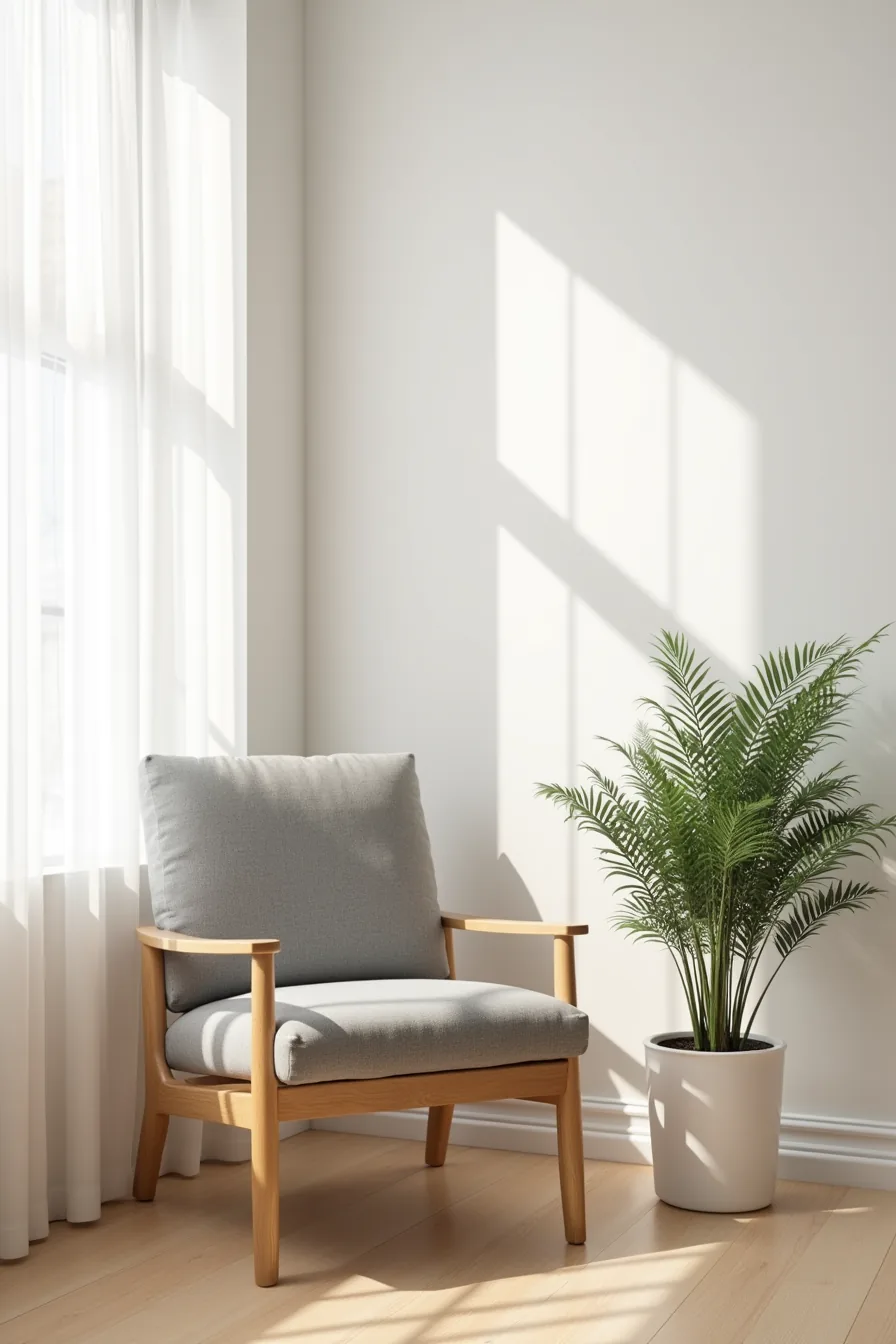
When a simple chair swaps bare wood for a single upholstered surface, the room’s noise level drops instantly. The gray linen seat and back on that wooden frame do the visual work, so the chair asks nothing else from its surroundings. That’s why this interpretation suits calm minimal rooms: the fabric introduces texture while the silhouette stays quiet.
You must choose fabric with a tight weave for daily use. Linen blends at 50-60% linen content resist pilling better than pure linen and hide minor crumbs between vacuum passes. A mid-gray tone like the one on this chair masks the light dust that settles on any seat within three days.
Position the chair at a 45-degree angle to the wall, as beside that white wall and potted fern, and the light catches the weave instead of flattening it.
Maintenance decides whether this style stays intentional or slides toward shabby. Vacuum the seat weekly with an upholstery brush, and treat spills within sixty seconds with a damp white cloth. The wooden frame needs only a dry dusting monthly.
For renters, a slipcovered version of the same form offers the identical look with machine-washable practicality. These Simple Chair Designs for Calm Minimal Rooms trade the wood-care ritual for a fabric-care one, and the exchange favors anyone who dislikes polishing.
Metal-Leg Versatility: Adapting a Single Form Across Rooms
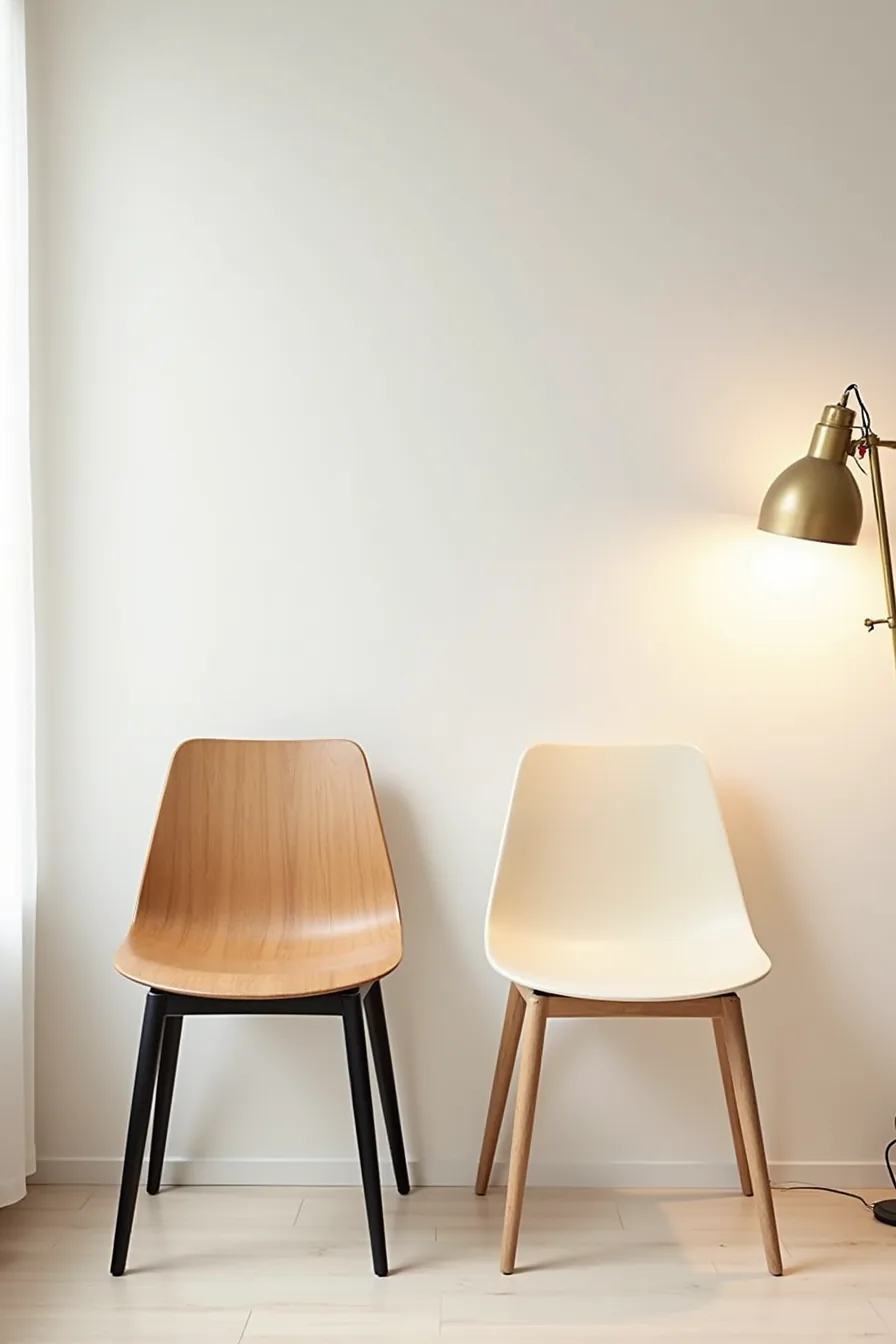
With the same silhouette, a black steel frame and natural wood seat read as industrial-minimal, while matte brass legs and cream upholstery shift the identical form toward warm sophistication. That’s the core of Simple Chair Design: one geometry, two personalities, no redesign required. The wood seat works best in monochrome or concrete-heavy spaces, where its grain adds warmth without clutter; the brass-leg version suits rooms with existing gold or bronze hardware, softening a neutral palette.
Metal legs offer practical advantages over wood for both renters and owners. Most dining-chair legs run 16–18 inches from floor to seat and 15–18 inches across the footprint, so verify your table underclearance before buying. Steel resists scratches from daily dragging; brass patinas gracefully but needs occasional polishing.
For renters, metal-leg chairs are lighter to move between apartments, expect 8–12 pounds versus 15–20 for solid wood, and wipe clean with a damp cloth. Long-term owners should choose powder-coated steel over painted steel, which chips at the corners within a few years of normal use.
Stackable and Modular: Simple Design for Flexible Spaces
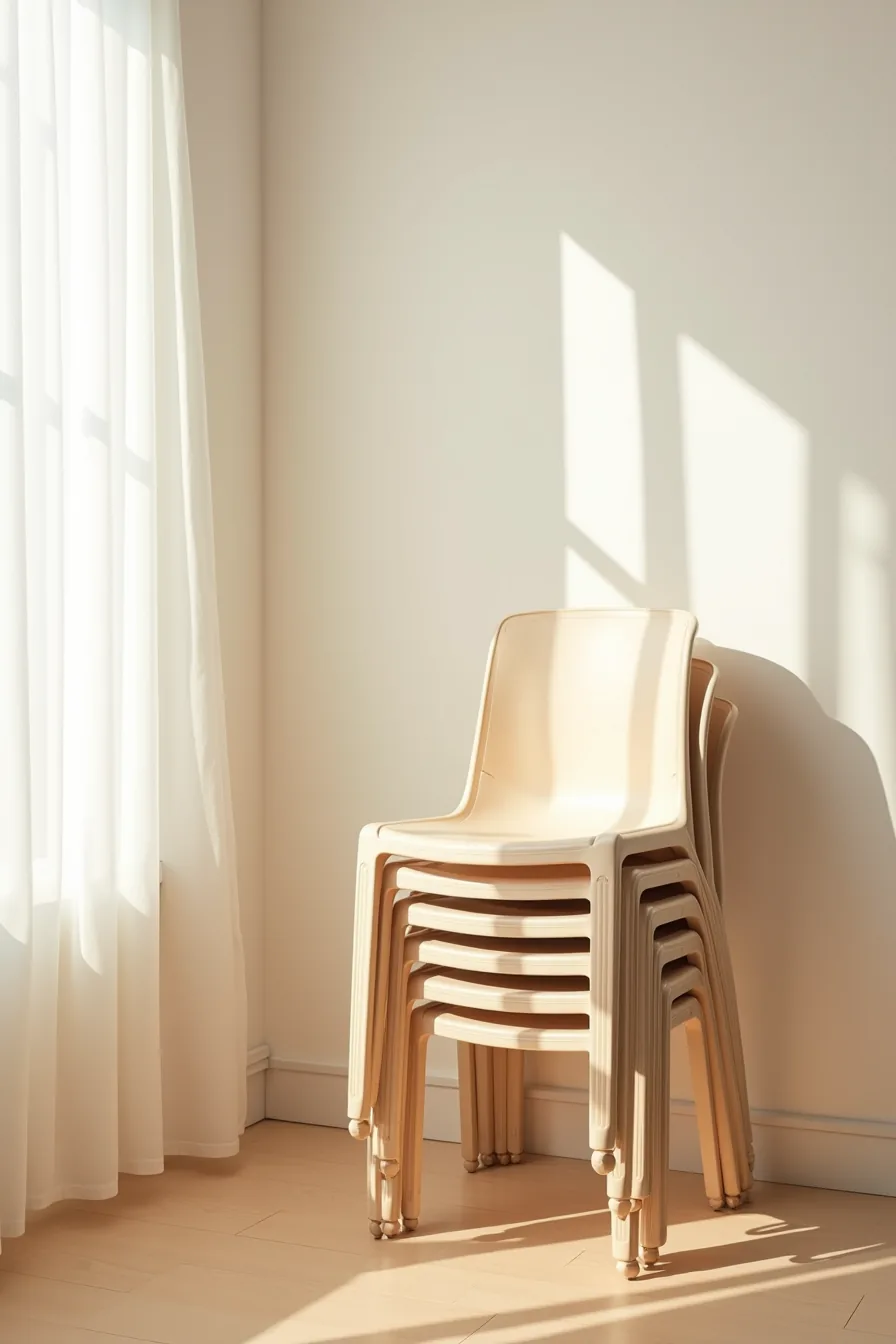
A stack of five identical molded-wood or polypropylene chairs, nested to roughly two feet in height, occupies less floor area than a single armchair. That compact footprint makes stacking the most direct answer to Simple Chair Design in apartments where dining space doubles as a home office or workout area. You gain seating for guests without permanently sacrificing circulation paths, pull out four for dinner, return them to the stack in under a minute.
Repeated nesting wears on contact points, so material matters. Polypropylene resists cracking and costs $20–60 per chair, but it scuffs visibly and shows every drag mark. Molded plywood, typically $80–150, develops a patina rather than damage and holds up to thousands of stacking cycles.
Either way, check that the chairs stack without forcing, tight nesting strains the frame and can split plastic within two years.
Arrange stacks against a wall or inside a shallow alcove, never in a traffic lane. Keep them to five or fewer units; taller columns become unstable and visually heavy. For a more modular approach, mix two stackable designs with matching seat heights (most run 17–19 inches) so guests can grab any chair without visual discord.
The Renter’s Route: Temporary Simple Seating Without Commitment
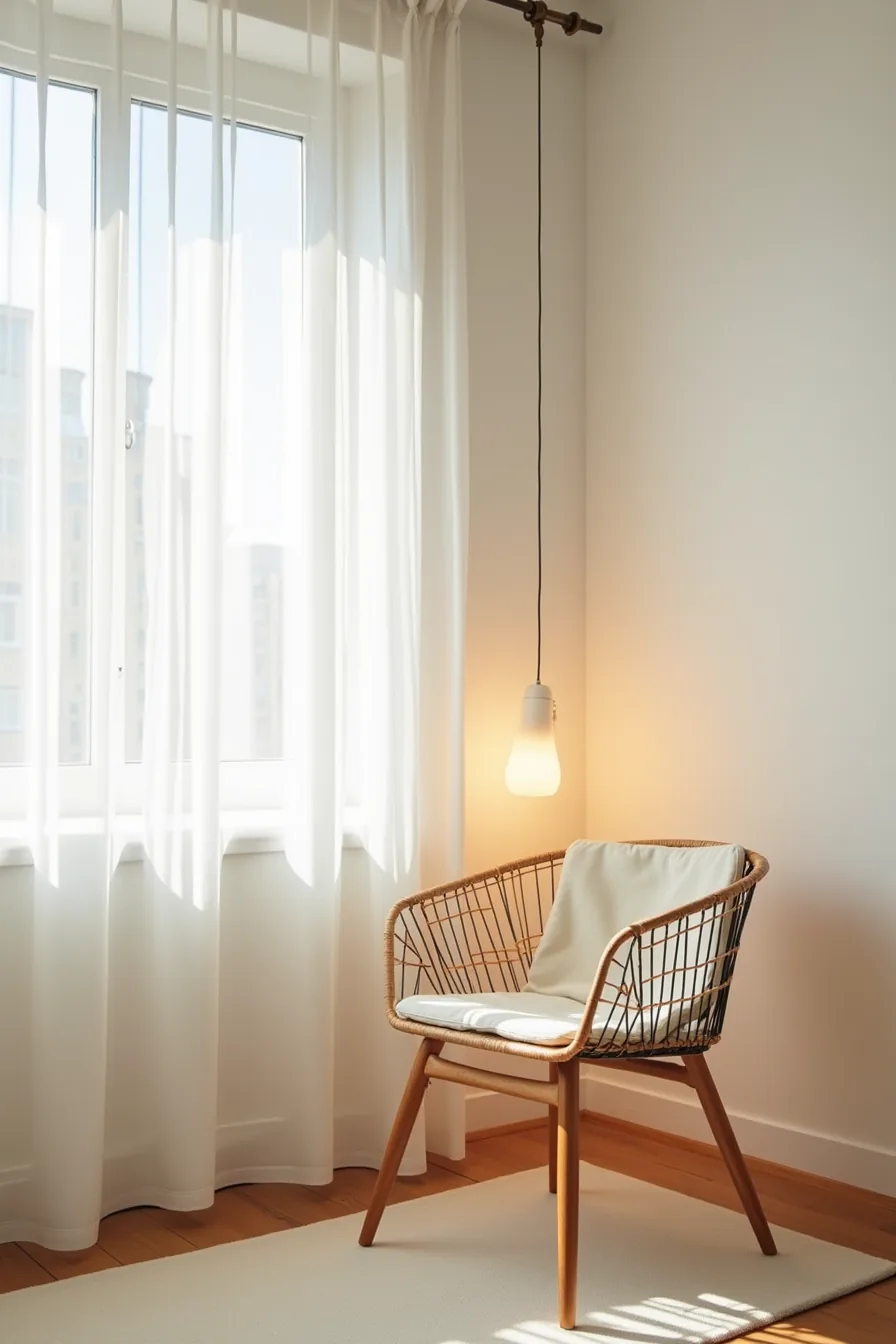
A lightweight wire-frame chair with a canvas seat solves the rental dilemma outright: it delivers visual simplicity without a single screw, adhesive, or wall anchor. The open frame lets you carry it one-handed, most models weigh 8–12 pounds, and the canvas sling folds flat for storage in a closet or under a bed. You position it where needed, and when the lease ends, you lift it and leave zero trace.
Protective floor mats matter more here than in any other setup. Canvas seats and wire legs concentrate weight on small contact points; a rubber or felt mat (roughly a 24-inch square) prevents dents in softwood floors and keeps the frame from scratching concrete. Avoid chairs with rubber feet that leave black marks on light tiles, look for glides or add adhesive felt pads yourself.
Choose designs with removable, washable canvas covers if you rent near pets or children; most slip off via a simple sleeve and survive machine washing at cold temperatures. Skip chairs with welded joints that can’t be tightened, the renter-friendly category should allow field repairs with a hex wrench. For a full apartment set, buy four matching units, but store two flat when not entertaining; the visual weight of stacked wire frames reads cluttered in a way that molded plastic doesn’t.
Investment Pieces: Simple Chairs Built to Last Decades
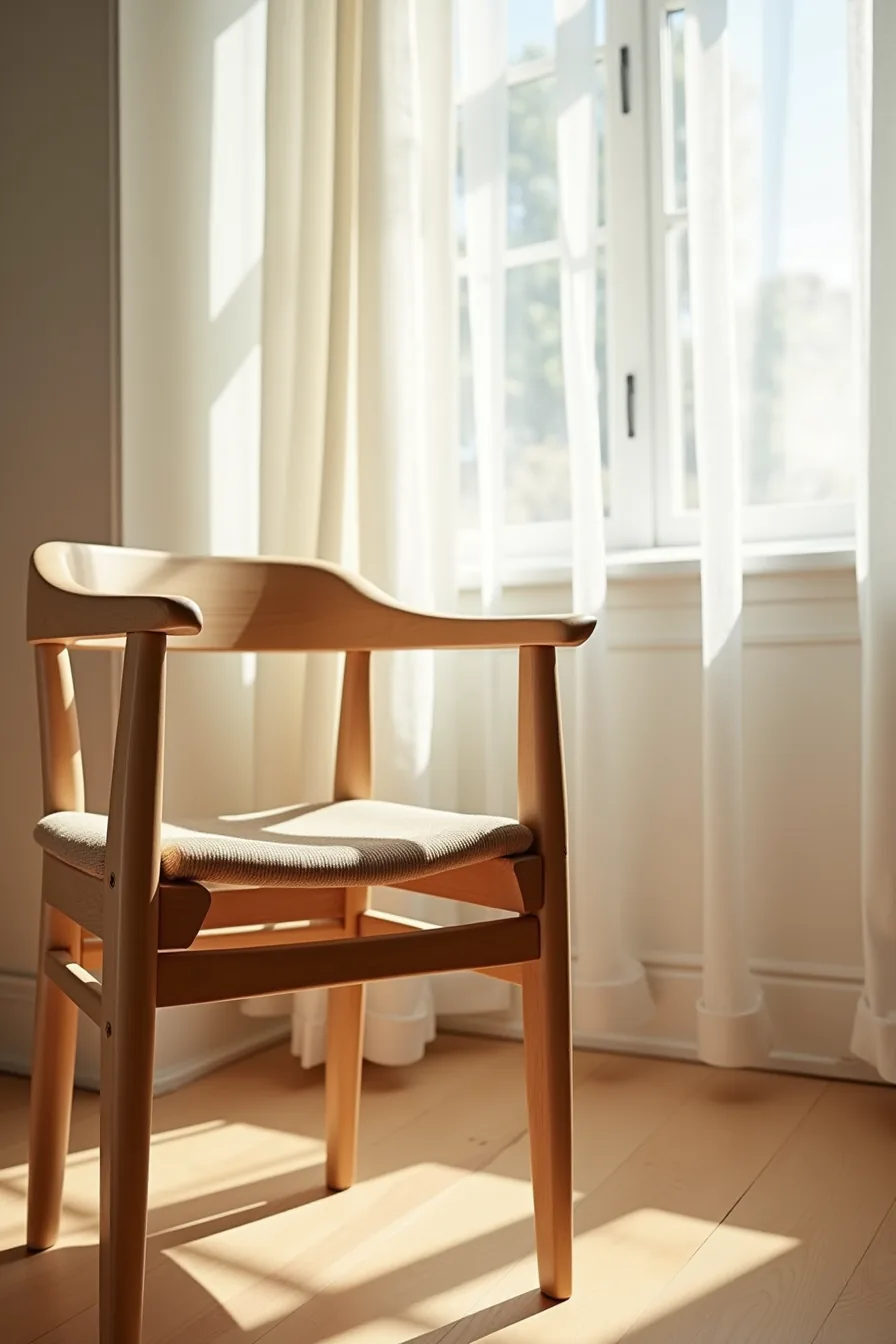
When you flip a potential investment chair and see a mortise-and-tenon joint where the back leg meets the seat rail, you’re looking at the difference between a 10-year chair and a 50-year chair. That interlocking wood connection, where a protruding tenon fits snugly into a carved mortise, holds firm as the wood expands and contracts with humidity. Glued butt joints and staples fail silently over time; a tight mortise-and-tenon joint, visible as a clean line of solid wood grain with no filler or gaps, signals that the frame was built to be repaired, not replaced.
Expect to pay $400–$900 for a solid-wood chair with this joinery in oak, ash, or walnut, and $1,200–$2,500 for a version with a hand-tied upholstered seat. You’re paying for the absence of plywood, MDF, and visible screws, every component in this range is solid stock, sanded flush. Before you buy, run your hand along the seat rail: any rough patch or misaligned grain indicates rushed sanding that will telegraph through the finish in three to five years.
For this price point, you’re also buying a chair that can be re-broken-down: the tenon can be re-glued, the seat re-stuffed, and the finish re-oiled, making it a true multi-generational purchase rather than a disposable trend. This is the Less-detail design philosophy at its most rigorous, every line and joint exists because it must, not because a catalog rendered it so.
Where to start
Open your living room door and stand where you’d normally sit. Measure the clearance you actually have, not the clearance you wish for. That single number determines whether you need a slim armless chair, a compact occasional seat, or a full lounge piece.
Match the chair to your real habits: if you eat meals in it, prioritize washable upholstery; if it’s purely decorative, wool or boucle is fine. If you rent, skip permanent wall mounting and choose a freestanding piece with removable legs.
Your next step: Tape the chair’s footprint onto your floor with painter’s tape, live with it for two days, then buy.
Frequently Asked Questions
What makes a chair design ‘simple’ versus just cheap or unfinished?
Simple means deliberate reduction: clean lines, balanced proportions, and honest materials executed with precision. Cheap reads as accidental, wobbly joints, uneven finishes, or hardware that draws attention. Simplicity hides craftsmanship; cheapness exposes lack of it.
Can a simple chair design work in a modern living room with other patterned furniture?
Yes, if you anchor it with solid, neutral upholstery or wood tone. Let the chair act as visual rest between busy patterns. Choose one with a low back and slim arms so it doesn’t compete for attention.
How do I know if a simple wood-frame chair will support my weight long-term?
Check joinery: look for mortise-and-tenon or doweled joints, not staples or butt joints. Sit and rock gently, no creaks or lateral give. For heavier users (over 220 lbs), choose hardwood like oak or ash, not pine.
What’s the difference between a renter-friendly simple chair and one meant for permanent placement?
Renter-friendly means lightweight (under 30 lbs), tool-free assembly, and no wall anchoring. Permanent chairs are heavier, use glued and screwed joints, and often require floor protection. Renters should avoid chairs with fixed arms that block narrow doorways.