
A wooden accent chair earns its place in a room by doing two jobs at once: providing a comfortable seat and anchoring a corner, entryway, or reading nook with a distinct material presence. But the term covers a surprisingly wide spectrum, from sculptural, light-toned lounge pieces to dark, structural thrones built for decades of use. The right choice depends entirely on your room’s scale, your lifestyle, and whether you’re furnishing for permanence or flexibility.
The following six approaches break down the practical trade-offs in material, cost, and maintenance so you can match the chair to the space you actually live in.
Key takeaways
Match wood tones to your floor or trim, not your furniture, to avoid a cluttered look. Prioritize seat depth over style, most adults need 18–20 inches of seat depth for comfortable lounging. Budget for reupholstery if you buy a woven-seat chair, since natural fibers wear out in 3–5 years of daily use. Anchor a small room with one dark-wood accent chair and a light rug, rather than two chairs that crowd the space.
Mid-Century Modern: Tapered Legs and Angled Backs
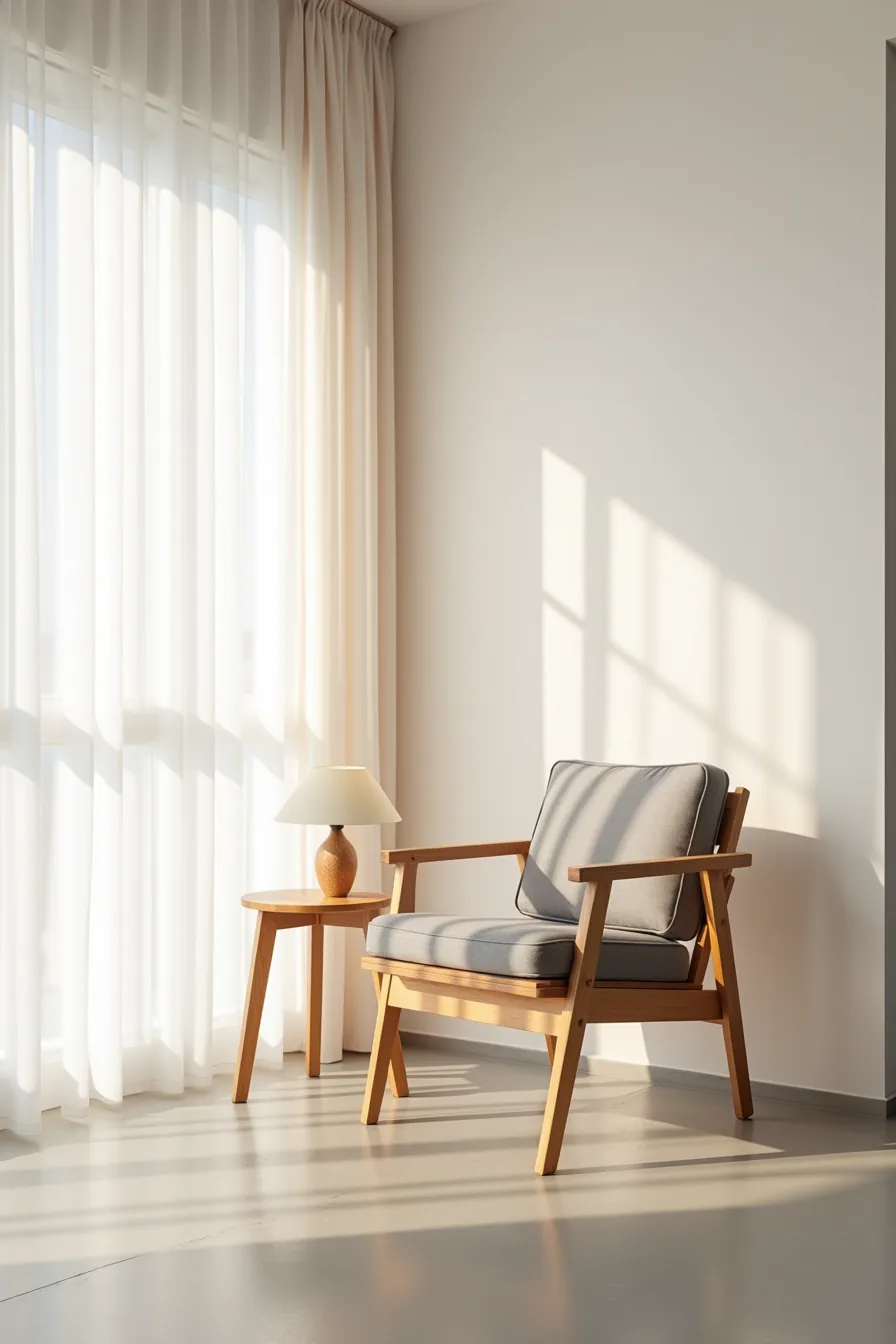
The mid-century modern interpretation of a Wooden Accent Chair hinges on geometry and lift. Splayed legs that angle outward from the seat create a visual lightness, making the chair feel less bulky than its footprint suggests. This makes it a strong choice for compact living rooms where you want seating without visually crowding the floor space.
In a studio corner, pair an ash-finish frame with minimal gray cushioning to keep the look crisp against white walls and a polished concrete floor. The low angled backrest encourages a relaxed, reclined posture rather than upright formality, which suits a reading nook or a secondary seat that doesn’t need to support long meals. Position the chair roughly 12-18 inches from a small side table so the splayed legs have clearance for your feet when you sit down, and the angled back doesn’t interfere with the tabletop’s edge.
Mid-tone wood finishes like ash or oak hide daily scuffs better than pale maple and feel warmer than dark walnut, striking a balance that works in both bright and low-light rooms.
Light vs Dark Wood: Matching Your Existing Palette
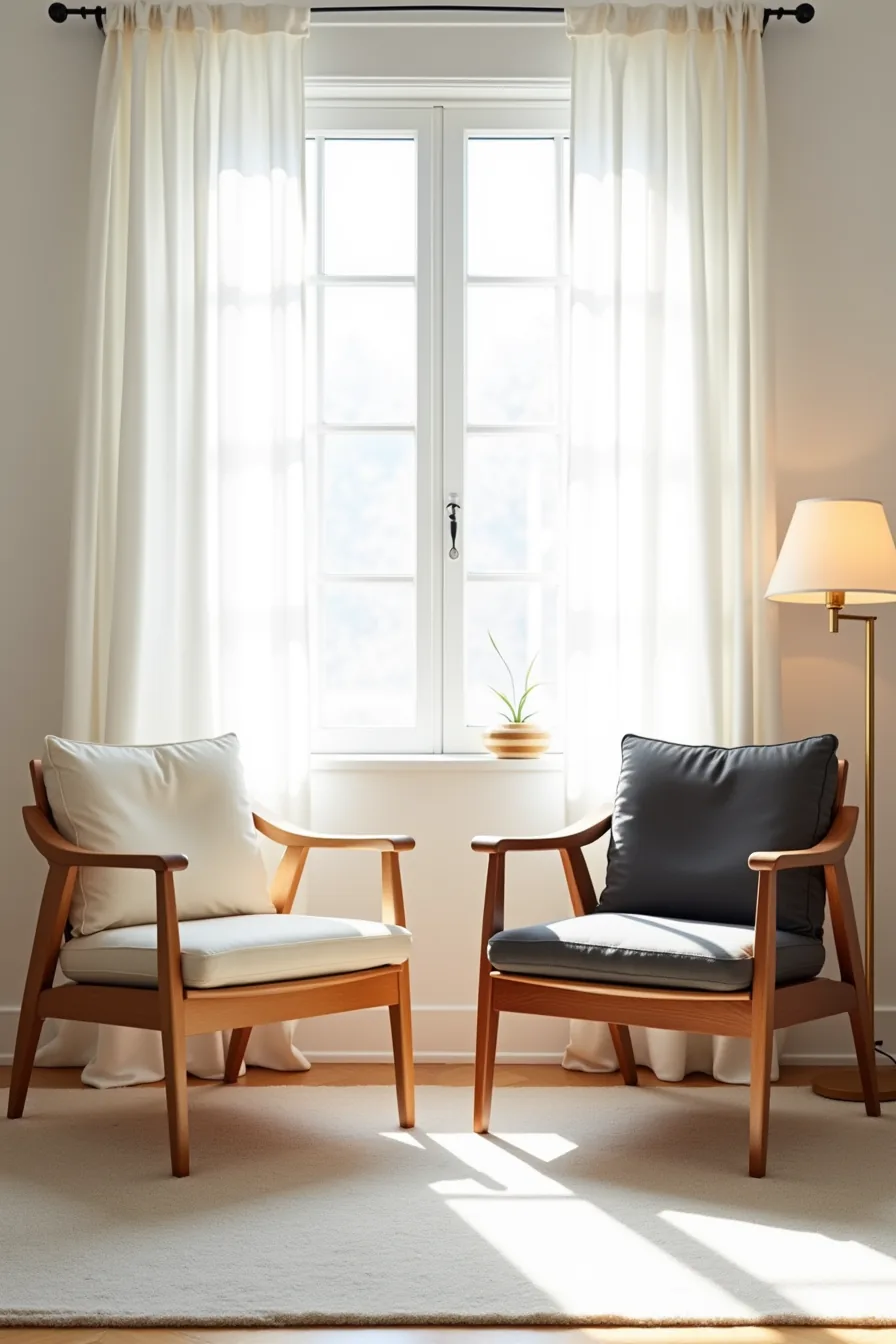
The choice between light ash and dark walnut frames comes down to how much contrast your room already has. A light ash chair with a cream cushion recedes into pale walls and bright floors, making it ideal for small spaces where you want the seating to feel like part of the background rather than a focal point. Dark walnut with a charcoal cushion, by contrast, anchors a room with visual weight, so it works best in larger, airier spaces that can absorb the darker silhouette without feeling heavy.
To assess your own palette, look at the room’s natural light at midday. North-facing rooms with cool, gray light tend to make dark wood look flatter and less rich, so ash or oak reads warmer there. South-facing rooms with strong sunlight will deepen walnut’s grain beautifully but can wash out pale finishes, making them appear almost white.
Match the chair’s undertone to your existing furniture’s dominant tone, if your dining table is oak, a walnut accent chair will clash; if your floors are dark, a light frame provides necessary contrast.
Cushioned vs Woven Seat: Comfort and Durability Trade-offs
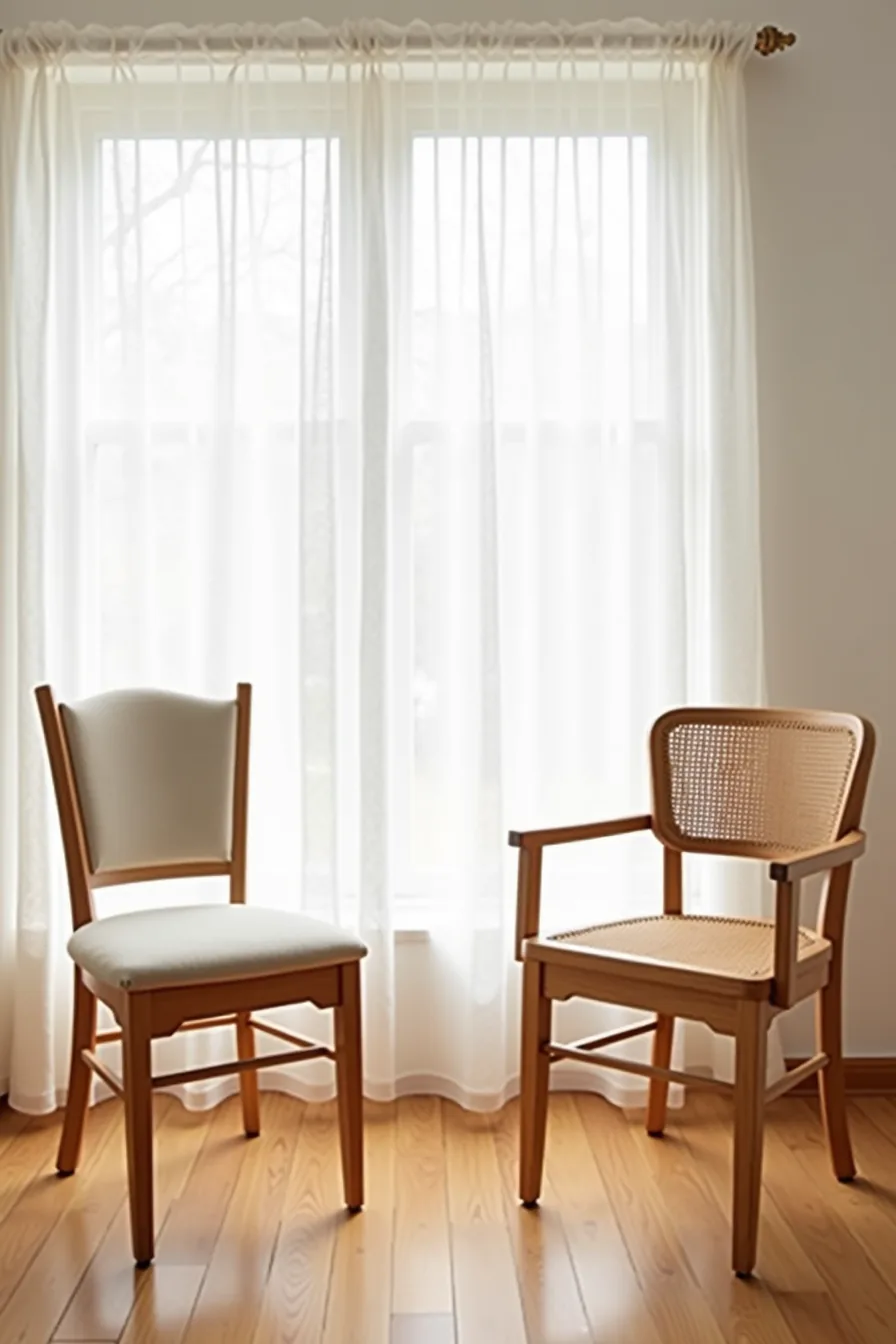
The two oak frames on the hardwood floor illustrate the core decision you’ll face: a thick foam cushion with a linen cover versus an open-weave rattan seat. The cushioned option delivers immediate sink-in comfort for long reading sessions or dining, but it demands regular vacuuming and expects a 5- to 10-year lifespan before the foam compresses and the cover shows wear. The woven rattan seat, by contrast, stays firm and supportive without any padding, so it suits shorter sitting periods, think entryway perches or dining chairs where you want posture support rather than lounging.
Rattan is the lower-maintenance pick: a quick dusting and occasional wipe with a damp cloth keeps it clean, and a well-made seat lasts 15 to 20 years if you avoid direct sunlight, which dries the fibers and causes cracking. Expect to replace a woven seat every 8 to 12 years if the chair gets daily use, and budget for a specialist to re-cane it, typically a third of the chair’s original cost. If you’ve young children or pets, the cushion wins on washability (remove the cover and machine-wash), while the woven seat traps crumbs and pet hair in its gaps, requiring more deliberate cleaning.
Choose cushioning for comfort-first rooms, woven for durability-first spaces.
Natural Texture: Rattan, Woven, and Carved Details
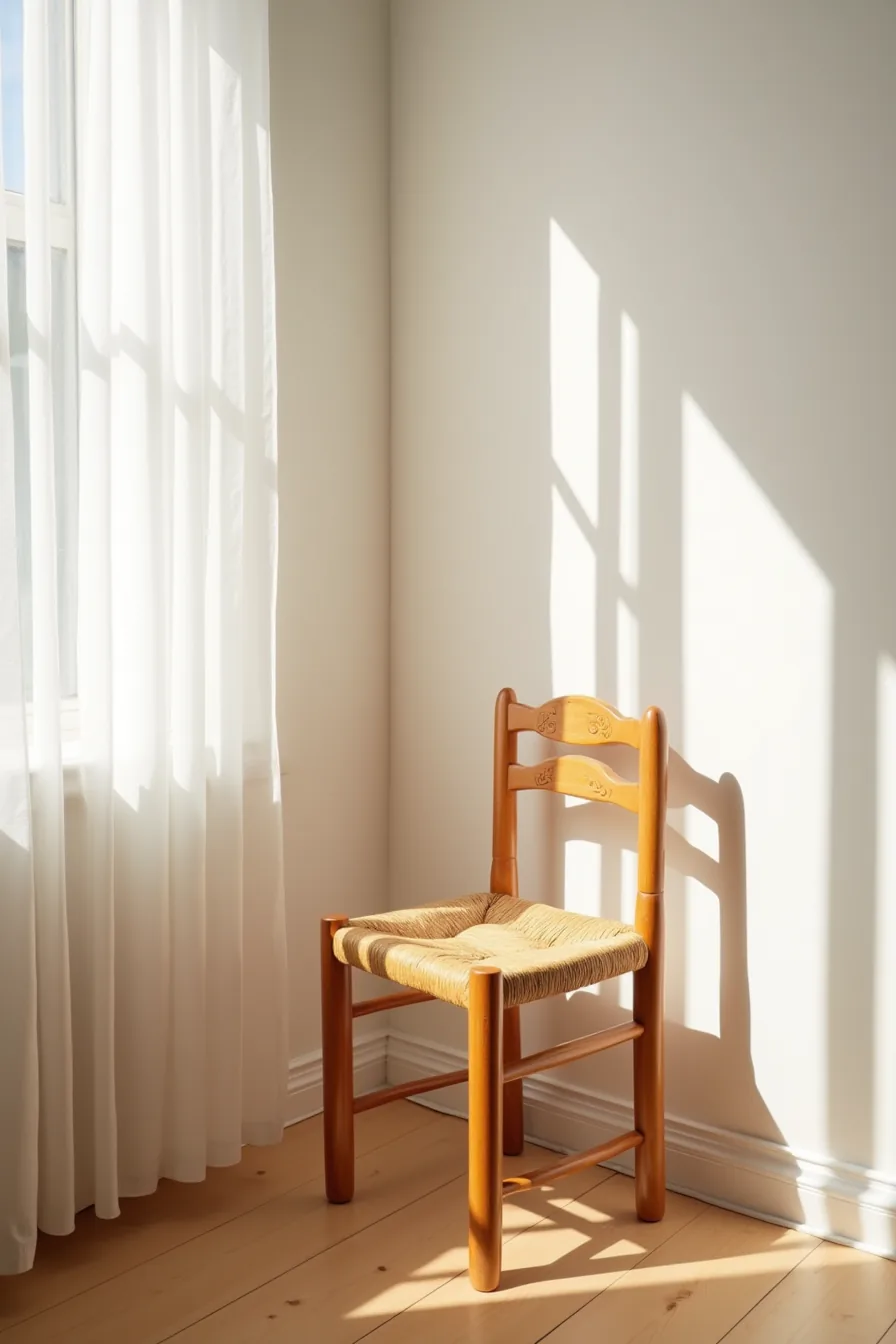
A carved backrest changes how a wooden accent chair reads in a small corner. The honey-toned frame in this setup, roughly 24 inches wide, fits a tight nook without overwhelming the wall behind it, while the carved pattern casts a soft shadow onto the textured wall, adding depth that costs nothing in floor space. That shadow play is the practical payoff: you get visual interest from the chair’s silhouette alone, no throw pillows or extra decor required.
The woven rush seat brings a second texture that contrasts with the smooth wood, but it does demand specific care. Vacuum it weekly with a brush attachment to clear dust from the gaps, and keep the chair away from radiators or south-facing windows, dry air and direct sun cause rush fibers to shrink and crack within a few seasons. If your room has a humid climate, expect the rush to expand slightly and tighten; that’s normal and actually prolongs the seat’s life.
Match the carved detail to your existing trim or door frames rather than the floor, it anchors the chair to the room’s architecture instead of competing with it.
Seasonal Room Refreshes: Swapping and Repositioning
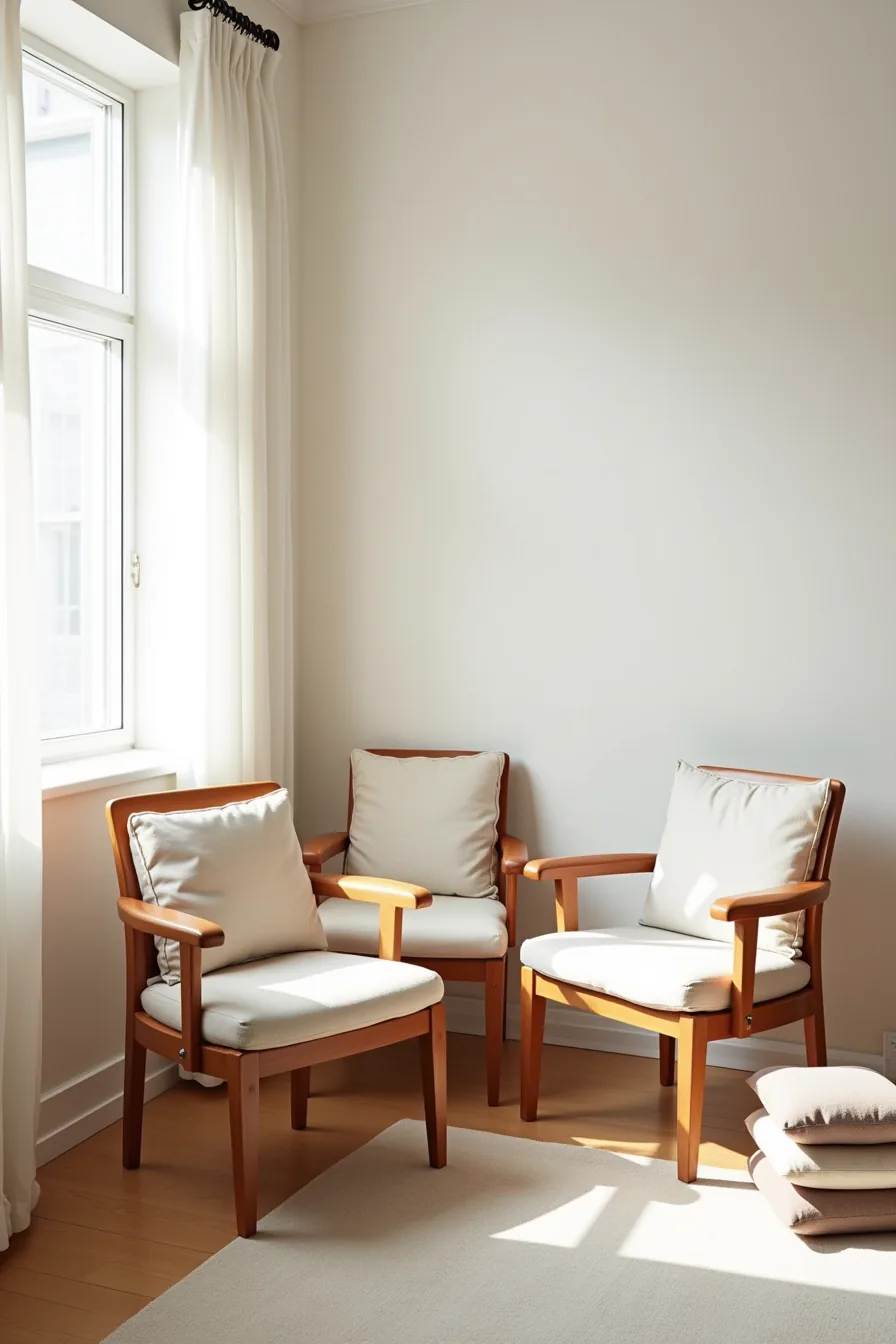
Your wooden accent chair earns its keep when it moves with the calendar. In summer, slide it near a window with a light linen cushion cover, the breathable fabric keeps the seat from trapping heat, and the position makes the most of natural light without fading the wood finish. Direct sun will still bleach an unprotected oak or walnut frame over two to three months, so rotate the chair’s orientation each week to even out exposure.
Winter calls for the opposite corner: tuck the chair beside the fireplace and swap in a thick wool cushion cover. The wool traps body heat and adds a tactile layer that suits the season, but it also holds moisture, so air it out monthly to prevent mustiness. Keep a third chair in transit, moving one piece between rooms refreshes two spaces at once.
Stack four to five spare cushion covers in a nearby basket, and swap them with the season rather than buying new furniture. This rotation system works best with chairs under 30 inches wide; anything larger becomes a two-person lift and you’ll stop bothering.
Budget, Rental, and Investment Routes
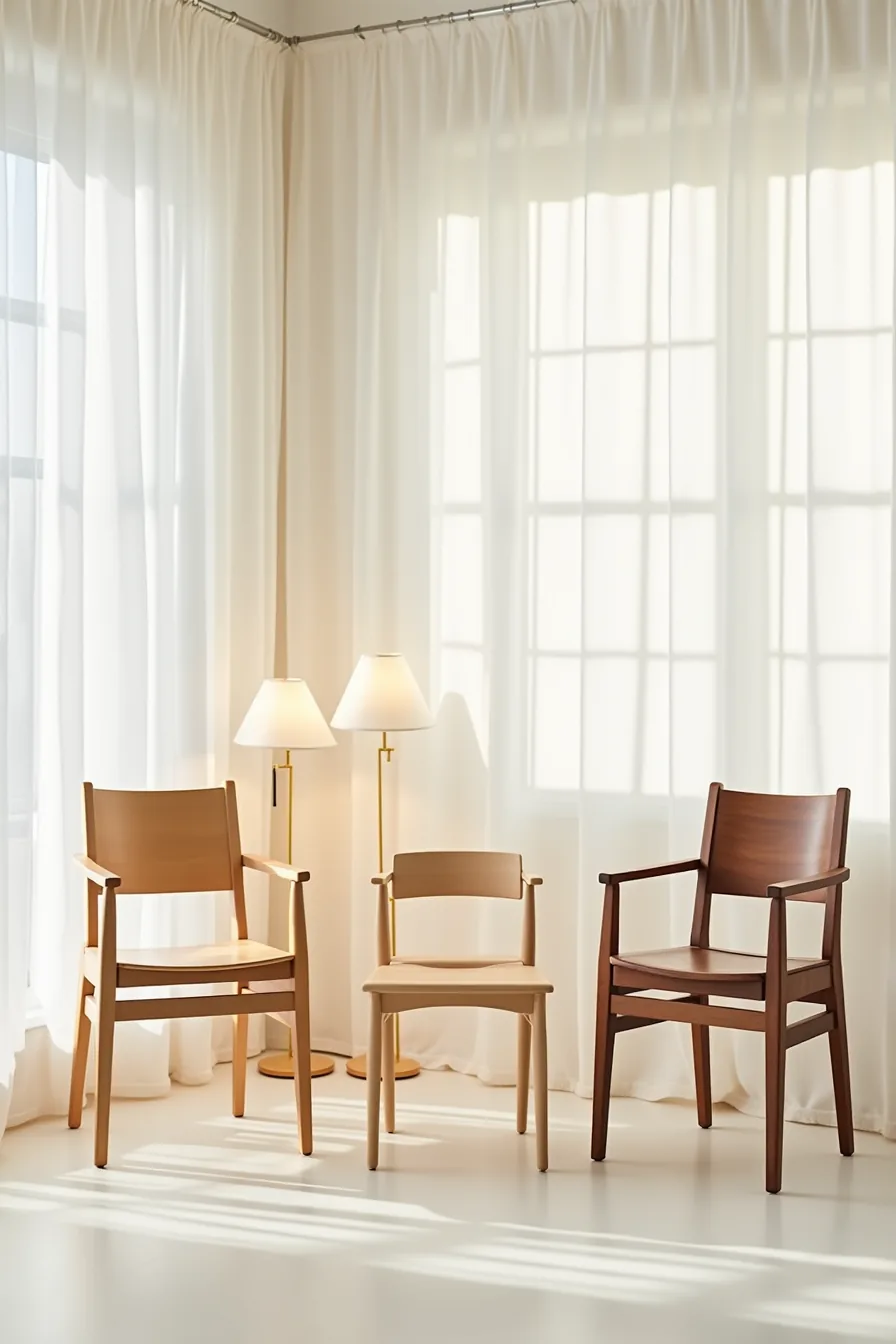
Three distinct paths lead to the right wooden accent chair, and your living situation should dictate which one you take. The flat-pack option runs $150–$300 and uses particle board with dowel joints, fine if you need temporary seating in a home office you might reconfigure next year. Its 38–42-inch height works as a reading nook accent, but the board core swells permanently if you leave it on damp floors, so add felt pads.
For renters, the pine middle chair costs $300–$500 yet survives moving trucks that snap thinner frames. Its protective lacquer resists the scratches you’d otherwise lose a security deposit over, and the reinforced cross-bracing handles two years of routine shifts. If you plan to leave an apartment in under five years, this is the value sweet spot.
The walnut investment chair runs $700–$1,200 but solid-wood frames with through-tenon joints last decades. At $60 a year across a 15- to 20-year lifespan, it beats replacing the pine chair three times; buy it when you’ve settled into permanent space and want a piece you’ll pass down.
What to do first
Start with your floor plan, not the chair. Measure the intended spot and mark the chair’s footprint with painter’s tape, you need at least 18 inches of clearance from adjacent furniture for comfortable seating. Then match the chair’s scale to your room: compact frames around 28–32 inches wide suit small corners, while larger pieces up to 40 inches anchor open living areas.
Your next move is a 10-minute online search for “wooden accent chair” filtered by your top two priorities, budget, durability, or style. Save three candidates that meet your measurements. This narrows the field before you commit to any purchase.
Frequently Asked Questions
What size wooden accent chair fits a small bedroom or corner nook?
Look for a chair with a seat height of 17–19 inches and an overall width under 26 inches. Armless styles or slim-track arms save 3–5 inches of floor space, making them ideal for tight corners.
How do I protect a wooden accent chair from water damage and pet scratches?
Apply a paste wax or polyurethane finish annually to seal the wood. Place felt pads under legs and use a washable, fitted throw over the seat and back, this blocks moisture and claws without hiding the frame.
Can I move a wooden accent chair between rooms seasonally without damaging the wood?
Yes, if you let it acclimate for 24–48 hours in the new room before use. Sudden humidity shifts cause cracks, so carry it by the frame, not the arms, and avoid placing it near radiators or air vents.
What’s the difference in durability between a cushioned wooden chair and a woven-seat wooden chair?
A cushioned chair with a solid wood frame lasts 10–15 years but requires foam replacement and fabric cleaning. A woven-seat chair, using rattan or seagrass, holds up 5–8 years under daily use and needs reweaving only if the weave loosens.