
An accent chair earns its name only when it does something useful, and these six approaches show you exactly how to make it pull its weight in your room. The difference between a chair that anchors a corner and one that collects clutter comes down to placement, proportion, and purpose. You’ll find a budget-friendly route, a renter-safe solution, and a long-term investment option, each matched to a specific room size and lifestyle.
The checklist at the end turns these ideas into a two-minute decision process.
Key takeaways
- Anchor the chair with a side table within arm’s reach, 14 to 18 inches from the seat, to make the pairing functional, not just decorative.
- Skip the pillow in high-traffic areas or small rooms, but add one with a removable cover in low-use corners for visual weight without permanent commitment.
- Thrift first for budget impact: reupholster or layer a slipcover over a solid secondhand frame, keeping total cost under $200 for a statement piece.
- Choose a timeless frame (like a wingback or mid-century shell) in a neutral fabric for the investment route, it holds resale value and adapts to style shifts over 10+ years.
Chair Plus Side Table: The Foundation Pairing
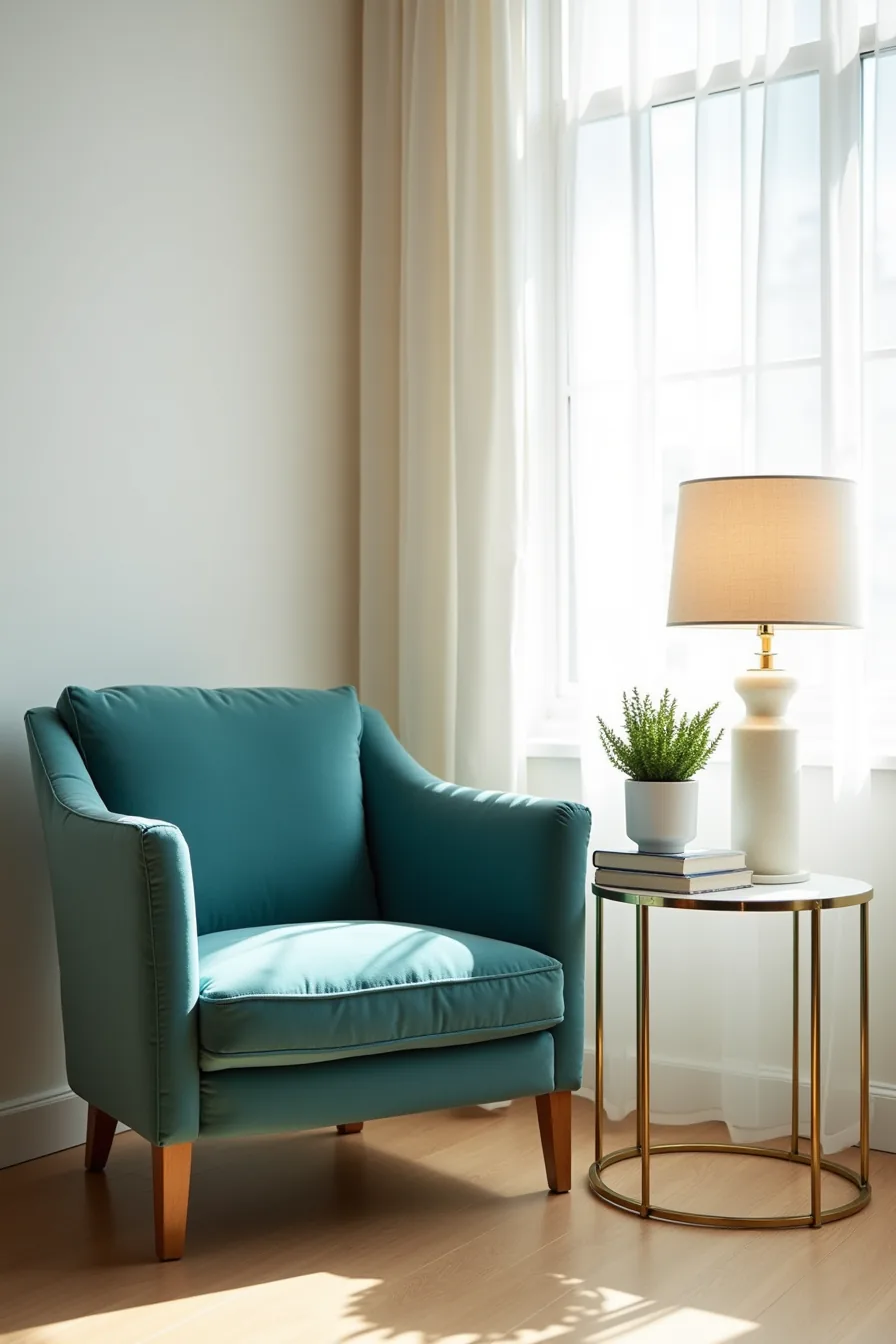
Accent Chair Decor starts with one non-negotiable: a side table within arm’s reach. Without it, the chair becomes a dead-end, forcing you to set drinks on the floor or leave books scattered. The pairing turns a lone seat into a functional reading nook or conversation anchor.
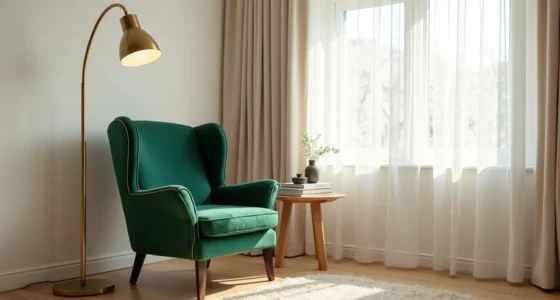
The teal velvet chair beside a brass-framed glass table works because the materials offset each other. Velvet absorbs light and feels tactile; glass and brass reflect it, keeping the corner from feeling heavy. For scale, match the table’s height to the chair’s armrest, most side tables land 2–4 inches below it.
A table that rises above the armrest forces awkward reaching; one too low strains your back.
Choose the table material by room use. Solid wood suits high-traffic family rooms where spills happen; glass or metal fits a formal living area. If the chair has patterned upholstery, keep the table plain, the brass frame here provides contrast without competing.
Pillow or No Pillow? Matching Comfort to Your Space
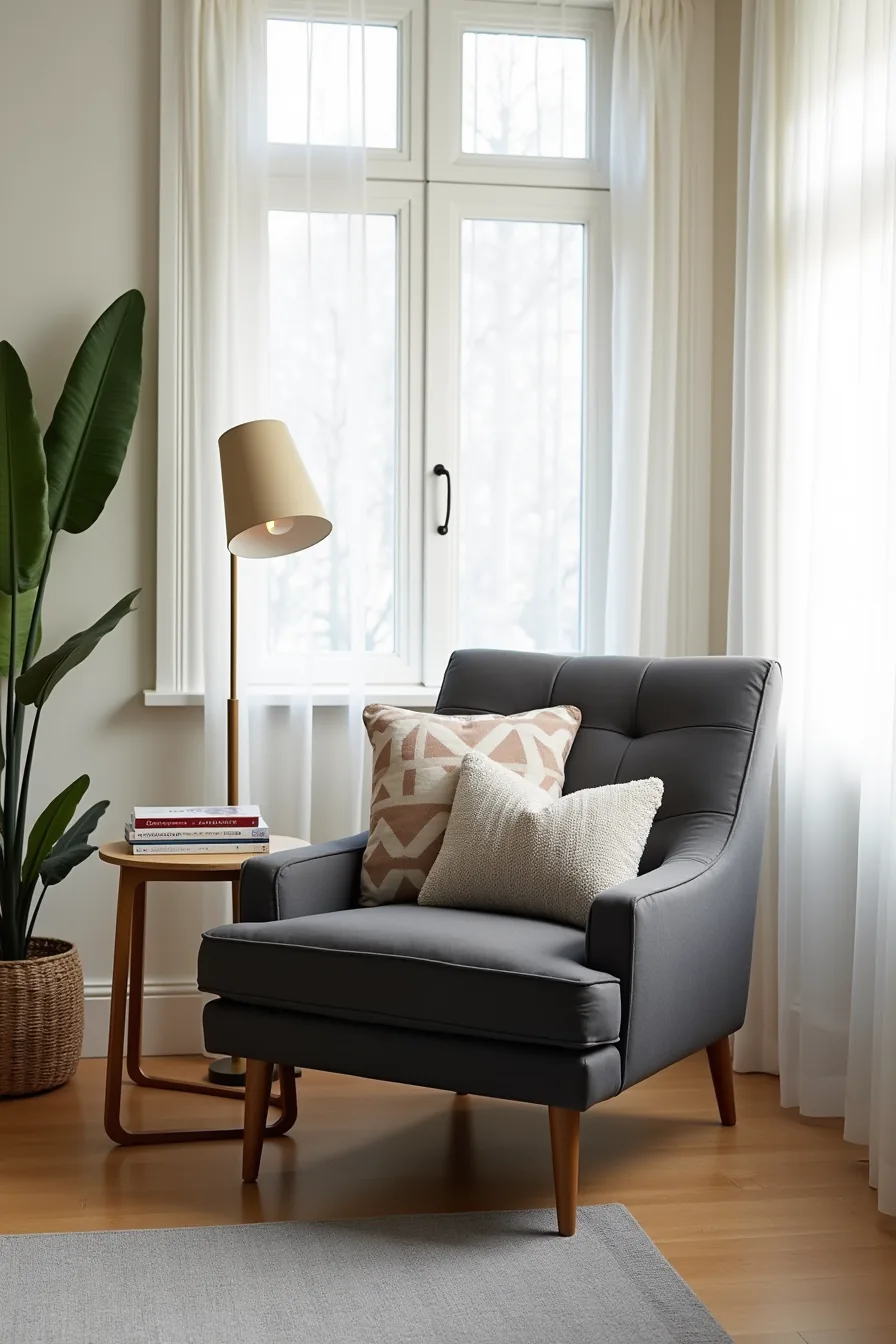
The charcoal accent chair with a geometric linen pillow and a textured wool one demonstrates the sweet spot: two pillows, never three. Two cushions define the backrest without burying the seat, and the contrasting textures, smooth linen against nubby wool, add depth to the light gray area rug beneath. One pillow reads minimalist; three starts to look like a sofa that lost its way.
Sizing matters more than count. A standard 18–20 inch square pillow suits a chair with a seat depth of 20–22 inches; anything larger overpowers the silhouette and pushes you forward off the lumbar support. If the chair is a primary seating spot for reading or watching TV, skip the throw entirely, pillows create a physical barrier you’ll constantly shove aside.
Maintenance dictates the fabric choice. Linen covers need steam pressing after washing, and wool sheds for the first few weeks; both require dry cleaning. For homes with pets or kids, a polyester-blend pillow with a removable zippered cover costs less to replace and survives daily abuse.
Match pillow scale to chair scale, not room size, a petite chair with oversized pillows looks like a child wearing adult shoes.
Complete the Corner: Turning Dead Space Into a Focal Point
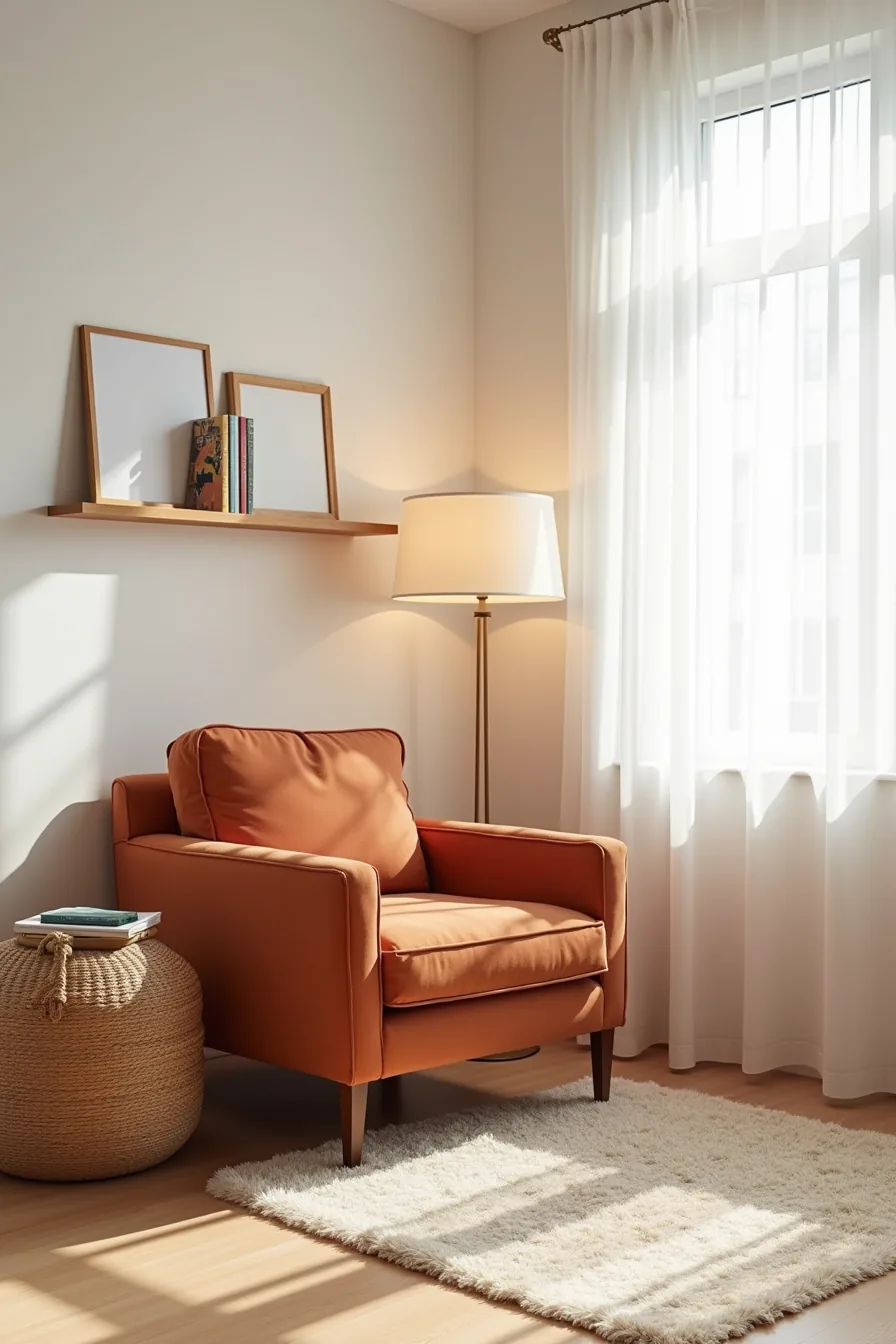
Angling a rust-colored accent chair into a corner transforms wasted square footage into a purposeful reading nook, but the angle matters more than the furniture. Position the chair at roughly 45 degrees to both walls so the back corner sits about 6–8 inches from each surface, this opens the seat toward the room and prevents the cramped, trapped feeling you get from pushing furniture flush against walls.
Symmetry isn’t your friend here. The tall woven basket on one side absorbs visual weight with its vertical texture, while the slender floor lamp on the other balances height without bulk. Match lamp shade height to your seated shoulder line (typically 40–46 inches from the floor) so illumination lands on the page, not your forehead.
The floating shelf above the chair completes the composition: hang it 12–18 inches below the ceiling, and keep the framed prints within the chair’s width to avoid dragging the eye outward.
In small rooms, skip the basket and use a single stack of hardcovers to ground the corner. Large rooms can handle a wider floor lamp base or a taller basket (28–32 inches) to fill vertical space without crowding the chair’s armrest. Whatever the room size, leave at least 18 inches of clearance in front of the chair for foot traffic, a focal point you’ve to sidestep stops being decorative.
Budget Route: Thrift and Layer for Instant Impact
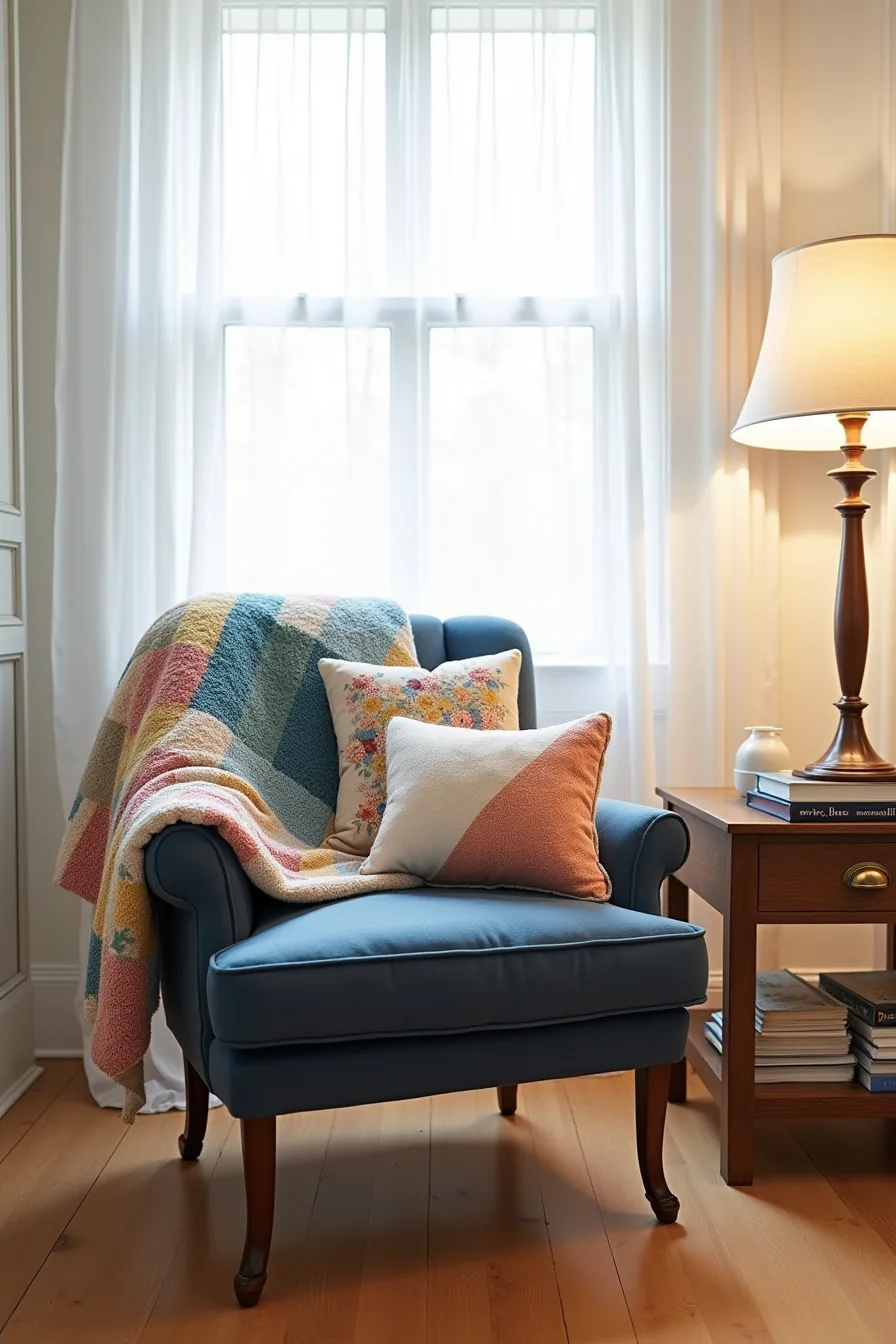
A faded navy thrifted chair becomes intentional décor through contrast, not condition. The patchwork throw draped over the back injects three or four accent colors at once, while two mismatched pillows, one geometric, one solid, break up the monotony without requiring a matched set. This layering strategy works because the textile noise distracts the eye from minor upholstery flaws, which is exactly what you want when the frame cost you under $50.
The reclaimed wood side table beside the chair should sit at seat height or a few inches lower, typically 18–22 inches for most chairs, so it feels connected rather than accidental. Stacked vintage boxes on top add vertical rhythm and hide remotes, but the real trick is the color story: pull one hue from the throw and repeat it in the boxes or a vase to tie the grouping together. Budget décor fails when every element claims equal attention, so let the chair be the anchor and everything else a supporting cast.
Before committing, test the chair’s frame by rocking it gently, wobbly legs and creaking joints are structural problems no throw can fix.
Renter-Friendly Route: Removable Styling Without Commitment
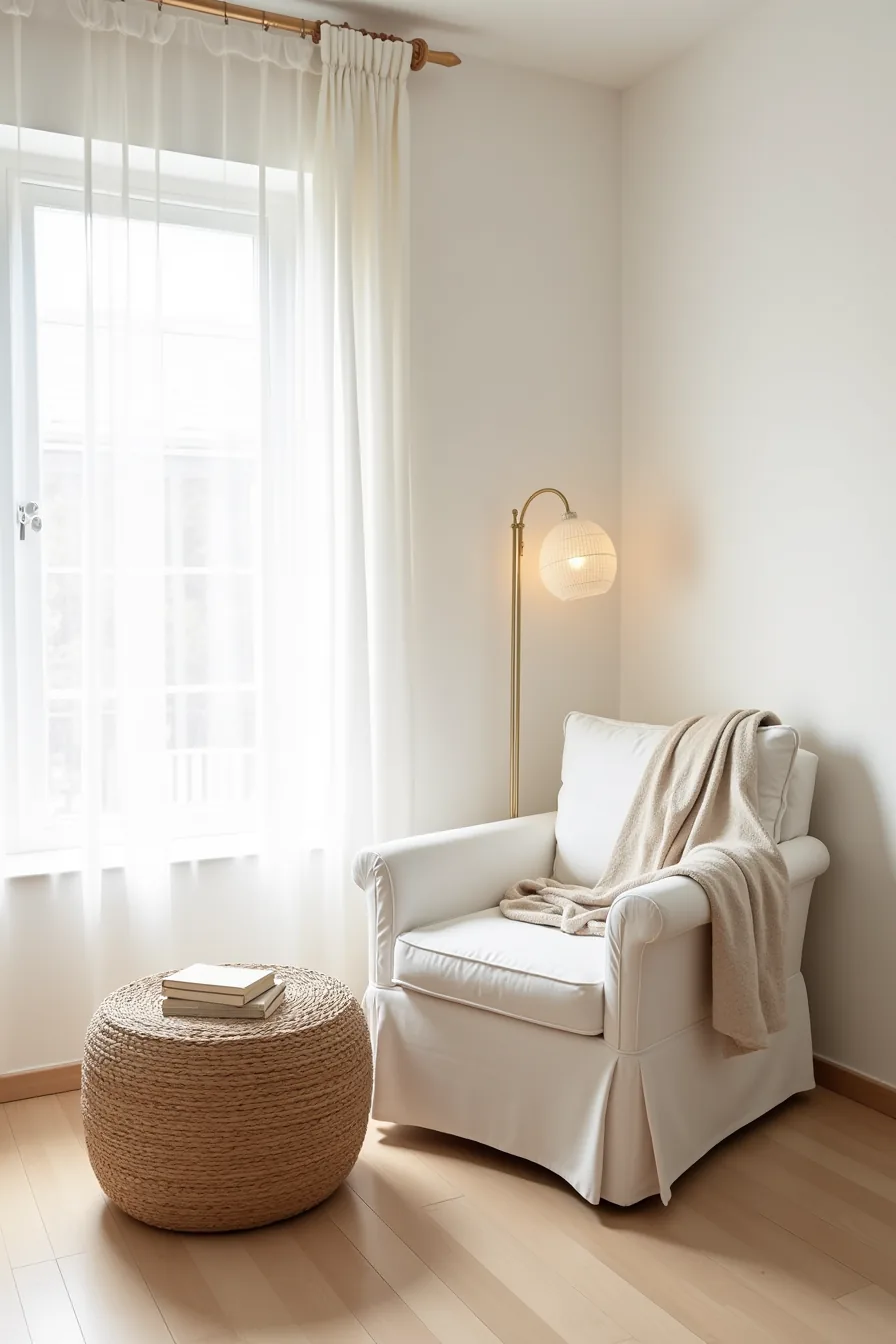
A rental-white accent chair becomes a design asset the moment you add a fitted slipcover. Choose one in a washable cotton-poly blend with a snug, tailored fit, loose covers read as sloppy rather than styled. The slipcover transforms the chair’s entire color story without a single screw or staple, and it comes off in minutes when you move.
Pair it with a draped linen throw in a contrasting tone; the throw adds texture while doubling as a protective layer for high-contact areas like armrests.
The standalone woven ottoman nearby serves double duty as a footrest and a spare seat, and it requires zero wall attachment. Keep it within 12–18 inches of the chair’s front edge for comfortable reach. All three pieces, slipcover, throw, and ottoman, are free-standing, so your security deposit stays intact.
For renters, the real constraint is proportion: a slipcover adds bulk, so avoid oversized chairs that will look puffier than their original silhouette. Test the fit before buying, and expect to re-tighten the cover after a few weeks of use.
Investment Route: Long-Term Pieces That Anchor a Room
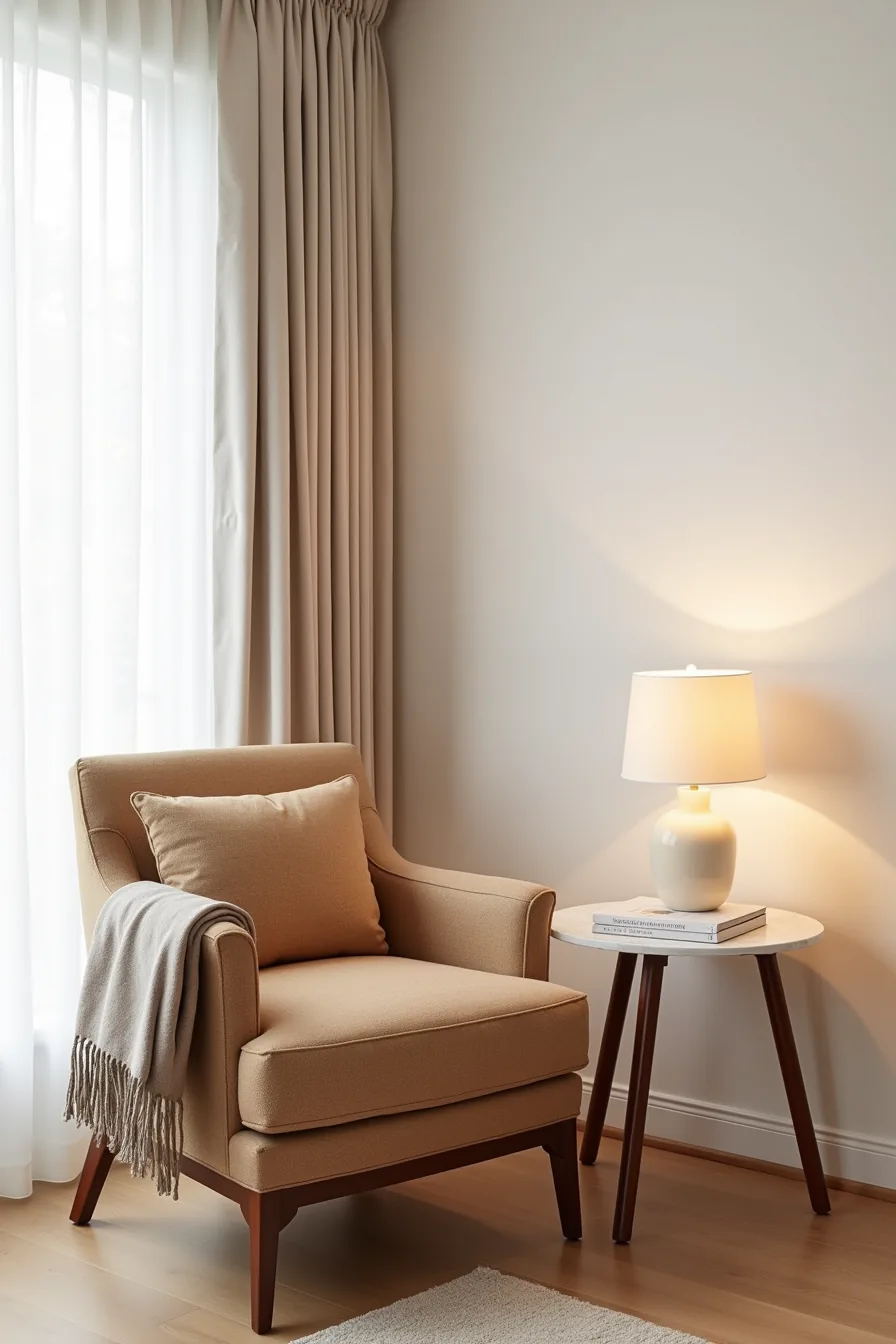
If you’re done with temporary fixes and want an accent chair to serve you for fifteen years or more, invest in the frame and the upholstery first. A solid walnut frame, not veneer over engineered wood, will hold its joints through decades of daily use, while a camel wool upholstery fabric resists pilling and wears gracefully in a way that synthetic blends can’t. The wool’s natural breathability also keeps the chair comfortable across seasons, which matters if the chair becomes your primary reading spot.
Pair it with a heritage linen throw draped over one arm; linen softens with washing rather than degrading, making it a practical layering piece that won’t need replacing.
The marble-topped side table beside the chair adds weight and permanence, but it requires tempered glass coasters for anything cold or acidic, marble etches easily. In a large living room, this combination anchors a conversation zone without overwhelming it. In a compact space, choose a smaller-scaled version of the same chair (roughly 28–32 inches wide at the seat) so the investment pieces don’t dominate the floor plan.
Expect to pay 40–60% more for the walnut-wool-marble trio than for a comparable look in engineered materials, and budget for annual professional upholstery cleaning to protect your outlay.
Where to Start
Measure your space before you shop. You need at least 18 inches of clearance in front of the chair for comfortable sitting, and 12 inches on each side if you want to pull it away from the wall.
Identify your primary use case first, reading, conversation, or a quiet corner, and let that dictate shape and material. A leather chair suits heavy daily use; a boucle piece works better for low-traffic styling moments.
Start with one chair that anchors the space, then layer in a side table and lamp. Your next move: measure your floor plan and identify one empty corner that needs definition.
Frequently Asked Questions
What size side table works best next to a standard accent chair?
Choose a side table 2-4 inches lower than the chair’s arm height. A typical accent chair arm sits 24-27 inches, so target a table 20-25 inches tall. Width should stay under 20 inches to avoid crowding.
How many pillows should I put on an accent chair without making it look cluttered?
Limit yourself to two pillows maximum. One lumbar support pillow at the lower back plus one square accent pillow (16-18 inches) at the corner reads intentional. Three or more starts to hide the chair’s silhouette and invites visual noise.
Can I use accent chair decor in a small bedroom, or will it take up too much space?
Yes, but only if you’ve at least 30 inches of clear floor space in front of the chair. Opt for a slim armless or barrel chair with a 28-32 inch depth. Skip the ottoman and use a wall-mounted sconce instead of a floor lamp.
What’s the difference between styling an accent chair for a living room versus a bedroom?
Living rooms favor performance fabrics like leather or crypton to handle traffic, with a side table and task lamp for conversation. Bedrooms prioritize soft textures like bouclé or velvet, with a small footstool for dressing and a warmer, dimmer light source for winding down.