
A mid century accent chair is a design decision with a practical payoff: it delivers sculptural form, ergonomic support, and a defined visual anchor for roughly 28–34 inches of floor space, but only if you match its silhouette, material, and scale to your room’s traffic flow and existing seating layout. The real challenge isn’t finding one, it’s choosing among the six distinct interpretations that follow, each with specific trade-offs in comfort, durability, and cost. You’ll see which suits a rental, a tight corner, or a long-term investment, and how to avoid the common mistake of prioritizing looks over clearance.
The right pick changes how the room feels; the wrong one wastes both square footage and budget.
Key takeaways
- Choose tapered legs for open floor plans, as the exposed silhouette and raised profile keep sightlines clear and make the chair feel lighter in high-traffic zones.
- Opt for a compact wingback under 30 inches wide in small spaces, pairing it with a slim side table to avoid blocking walkways while still delivering visual presence.
- Prioritize a wood frame with visible joinery as the focal point, since the natural grain and angled backrest create instant mid-century character without needing bold upholstery.
- Mix a period chair with a contemporary rug to anchor the look, but keep the rug’s pattern geometric and low-pile, this balances the chair’s retro lines while minimizing maintenance and tripping hazards.
The Tapered Leg Chair for Open Floor Plans
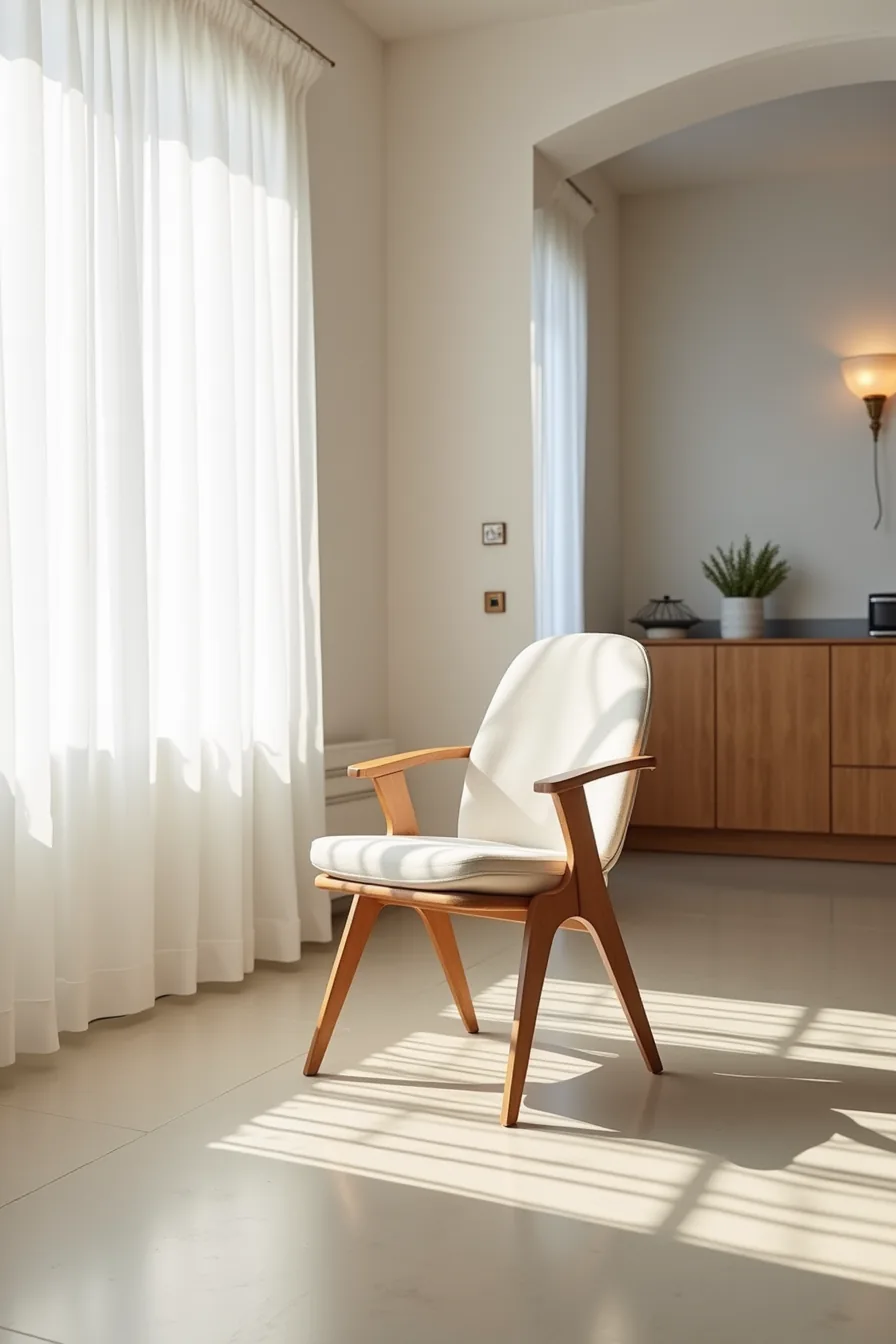
Splayed wooden legs are the defining trait here, and they earn their keep in open layouts by preserving sightlines. A chair with a solid base or skirt blocks visual flow between zones; tapered legs let your eye travel from the sofa edge to the kitchen beyond without interruption. On a polished concrete floor, the chair reads as a sculptural object rather than a piece of bulky furniture, which is exactly what you want when it occupies space alone.
Scale matters more than style in a double-height or combined living area. Measure your ceiling height and the sofa’s sightline before committing, a chair with legs under 10 inches will feel grounded, while anything over 14 inches starts to float visually. For fabric, choose a tight-weave wool or Crypton blend if the chair sits near a kitchen or high-traffic path; these resist pilling and show less wear than linen or bouclé.
A retro chair modern room benefits from this choice, as it bridges mid-century warmth with contemporary durability.
Compact Wingback for Small Spaces
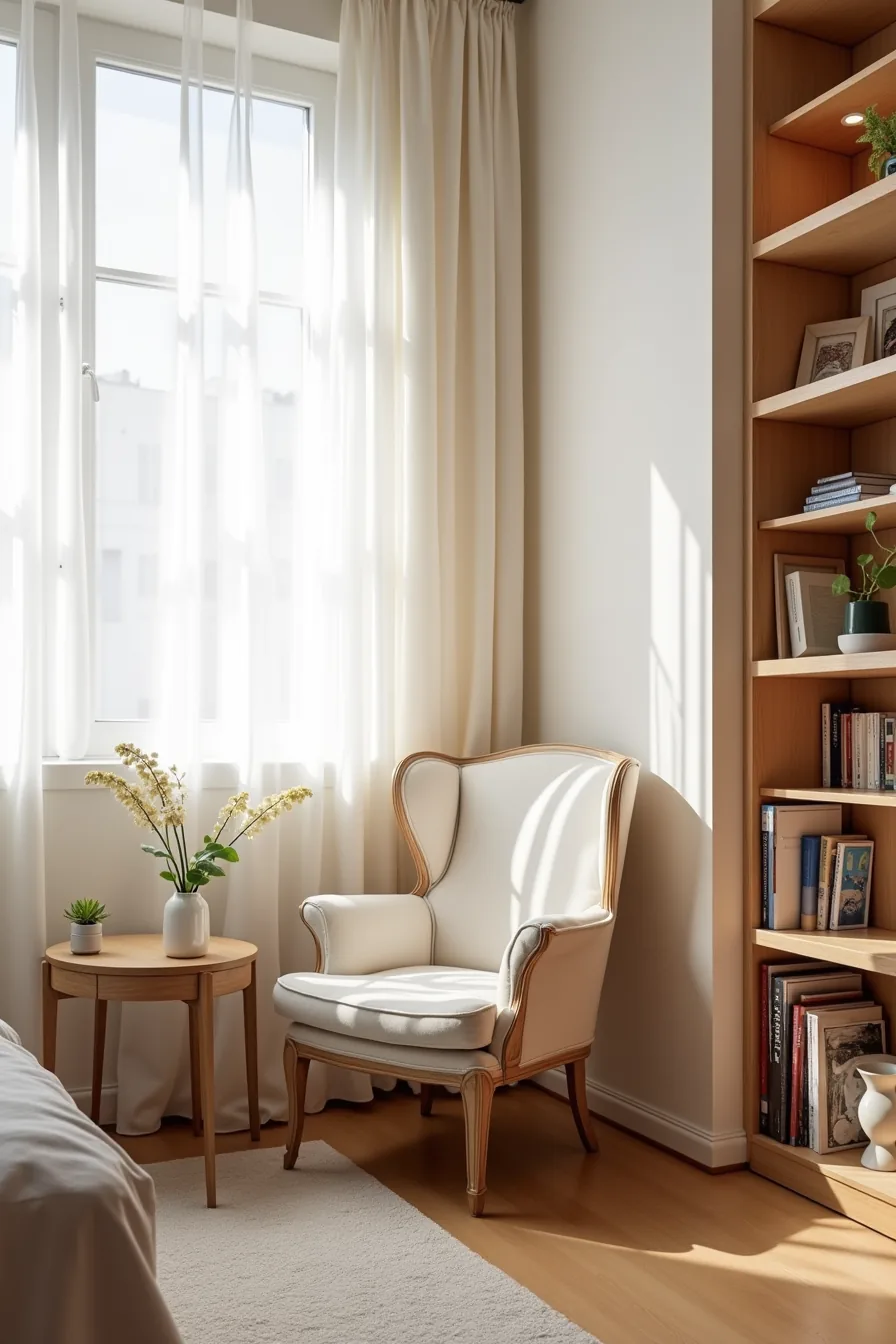
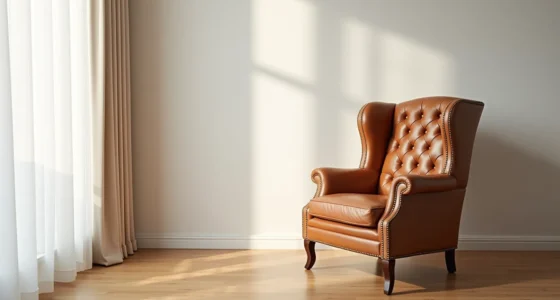
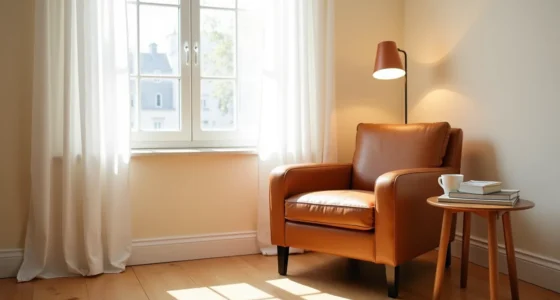
When your floor plan dips under 100 square feet, the winged silhouette actually works in your favor, it creates a defined “seat zone” without needing a full partition. Tuck a low-profile wingback chair into a corner junction where a side table and a narrow bookshelf already meet. The chair’s back and wings frame the space visually, giving the alcove a deliberate purpose rather than leaving it as dead square footage.
In this setup, the side table holds a lamp within arm’s reach, while the bookshelf’s vertical lines balance the chair’s horizontal mass.
Choose a version with a seat height between 16 and 18 inches and armrests that sit close to the body. Anything wider will eat into the walkway clearance you need in a studio. For renter-friendly options, skip the heavy upholstered base and look for a slipcovered chair with a removable cover, you can wash it before moving out, and the lighter frame is easier to carry up narrow staircases.
A solid oak or walnut frame with tight-back construction keeps the profile slim, usually 28 to 32 inches wide, which fits most corners without blocking the path to a window or closet.
Wood Frame Detail as a Focal Point
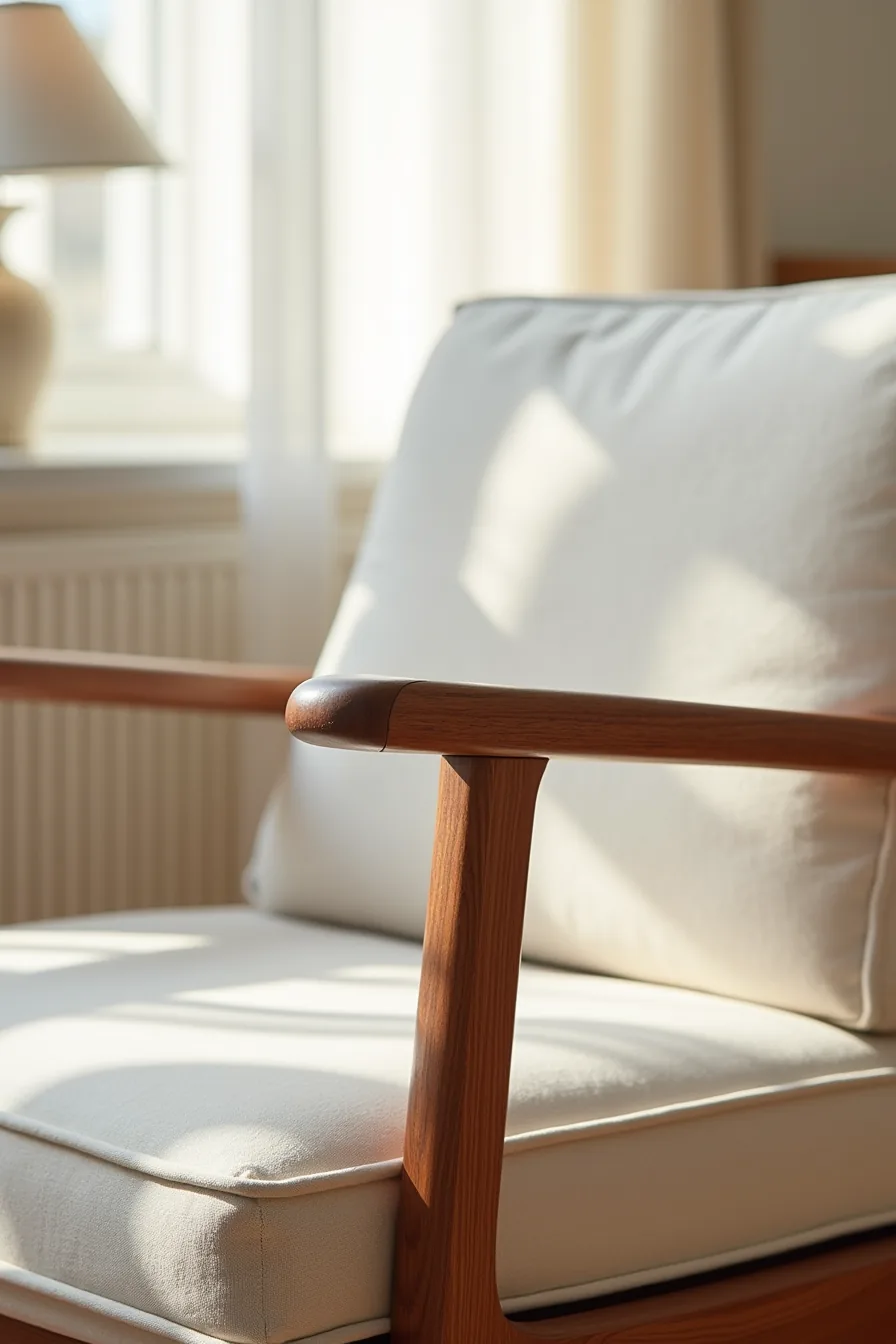
An exposed walnut frame transforms the chair from a soft furnishing into a structural statement. The arm joint where the horizontal rail meets the vertical post becomes the visual anchor, a crisp right angle that reads as intentional craftsmanship rather than accident. When the wood grain carries visible cathedrals and flecks, it introduces a warm, organic contrast against the neutral linen upholstery blurred behind it.
You don’t need to match the frame to every other wooden piece in the room. A single walnut chair works best when it sits against lighter floors or walls, letting the dark timber pop without competing against a walnut credenza across the room. If your space leans cool-toned, gray walls, steel accents, the warm brown wood provides the counterbalance that keeps the palette from feeling sterile.
Maintenance is straightforward but non-negotiable. Dust the frame weekly with a dry microfiber cloth; once every six months, apply a thin coat of furniture oil to the bare wood sections. Avoid placing the chair in direct afternoon sunlight, as walnut will fade and shift toward a gray-brown within a few seasons.
The linen upholstery, meanwhile, needs spot-cleaning only, a full cover removal is rarely possible on a tight-back chair, so treat spills immediately with a damp cloth and mild soap.
Period Mix Styling with Contemporary Rugs
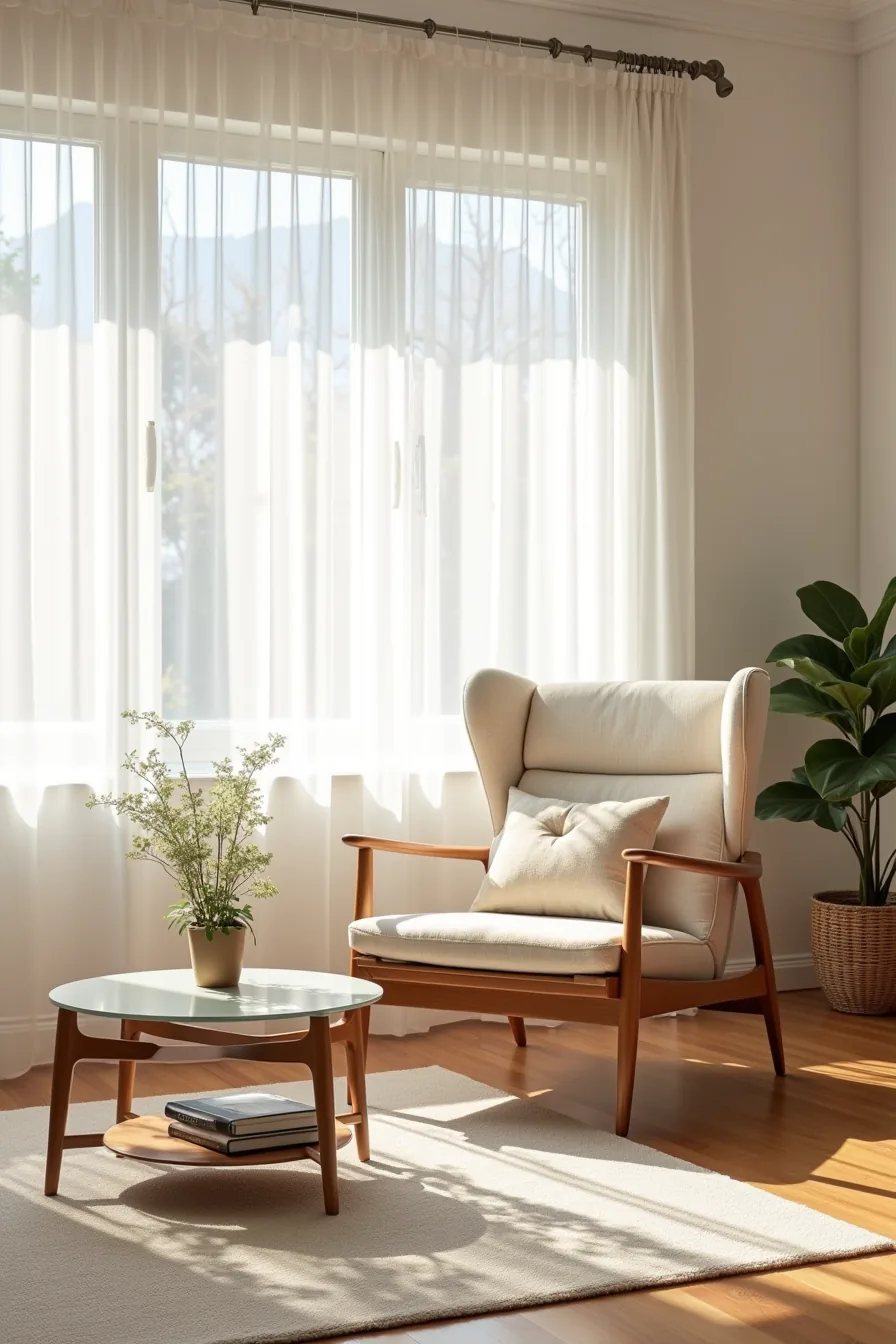
The retro silhouette of a mid-century chair gains new life when it sits on a geometric contemporary rug. You pair the tapered legs and angular back with a bold, abstract pattern in the carpet, the visual friction between old and new keeps the chair from feeling like a museum piece. A glass coffee table beside it lets the rug pattern run uninterrupted, so the floor becomes the second layer of interest beneath the wood frame.
This combination suits a living room with neutral walls and a mix of furniture eras. The rug’s texture, flat-weave wool or a looped viscose blend, contrasts with the chair’s smooth upholstery and adds acoustic softness to a hard-floored space. The potted plant contributes a vertical green accent that bridges the organic wood tones and the rug’s cooler palette.
For period mix styling, keep the rug large enough that the chair’s front legs rest entirely on it, and choose a pattern with at least one color pulled from the chair’s upholstery to anchor the pairing.
Budget Routes vs. Long-Term Investments
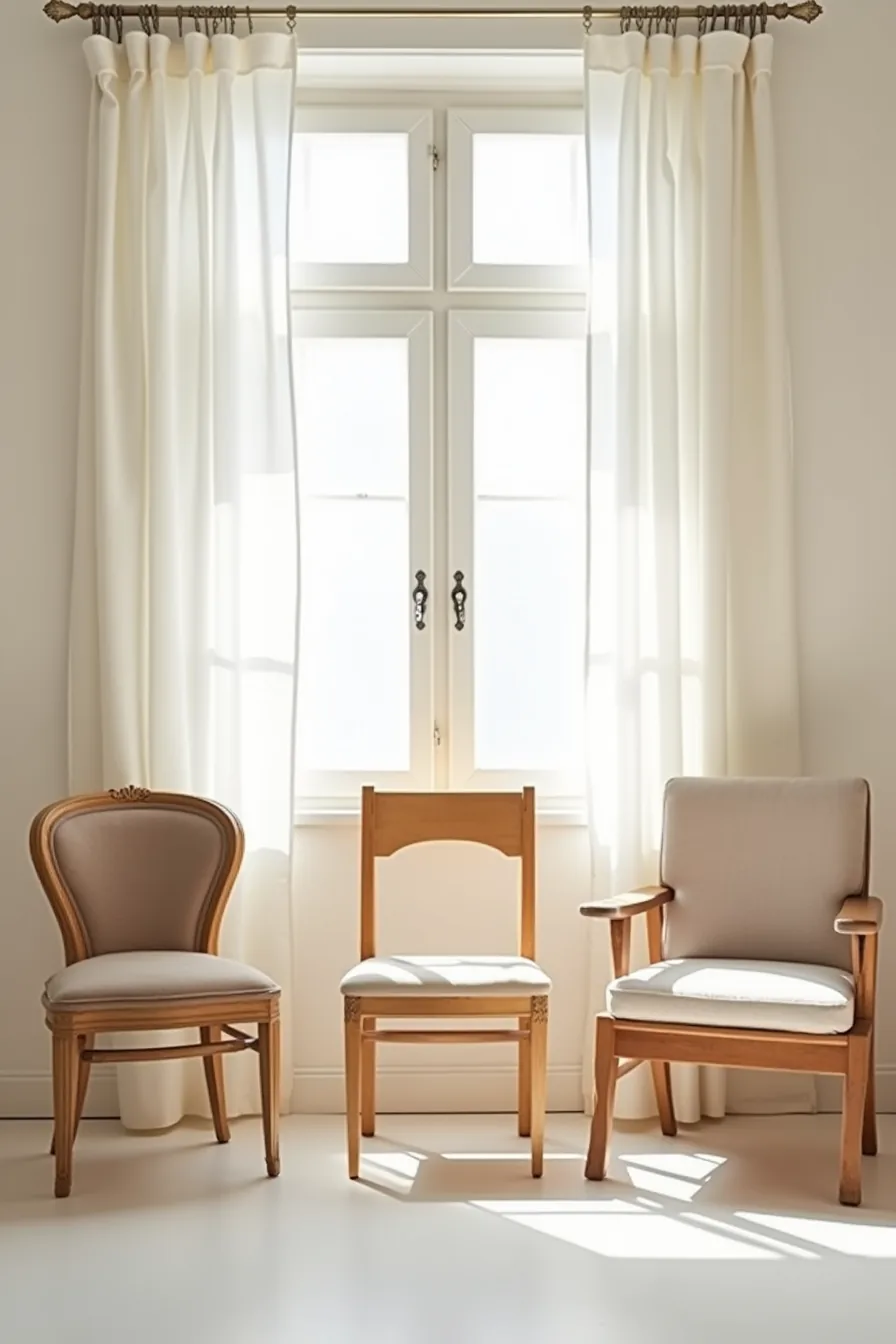
The worn vintage chair on the left carries a price tag most reproductions can’t touch, expect to pay $150–$400 at estate sales or flea markets, but budget another $300–$600 for reupholstery and new foam. You accept slight frame wobble and irreversible fabric stains in exchange for solid kiln-dried hardwood and a patina that resale buyers actively seek. If you need it usable immediately, skip the project and look for a reproduction in the center: $500–$900 buys a new frame with consistent joinery, though you sacrifice the original’s character and the wood will be a veneer over engineered core, not solid lumber.
The custom upholstered chair on the right demands the most upfront, $1,200–$2,500 depending on fabric grade, but it outlasts both alternatives by a decade or more. You choose the foam density, spring system, and fabric wear rating, which matters for a chair used daily. A vintage piece with original upholstery in excellent condition sits between routes: it costs $800–$1,500 but holds value better than any reproduction if you ever sell.
Placement and Proportion for Medium to Large Rooms
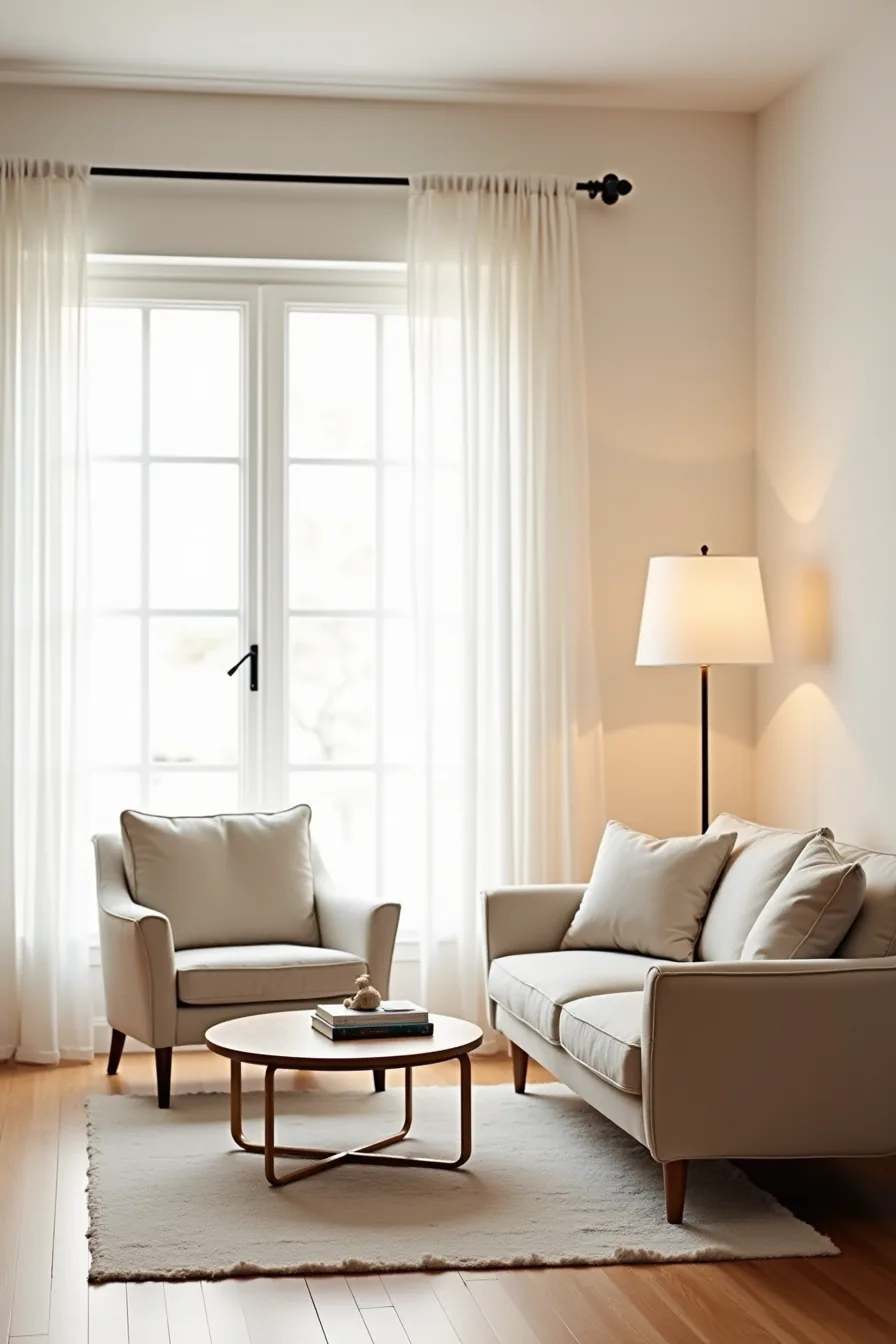
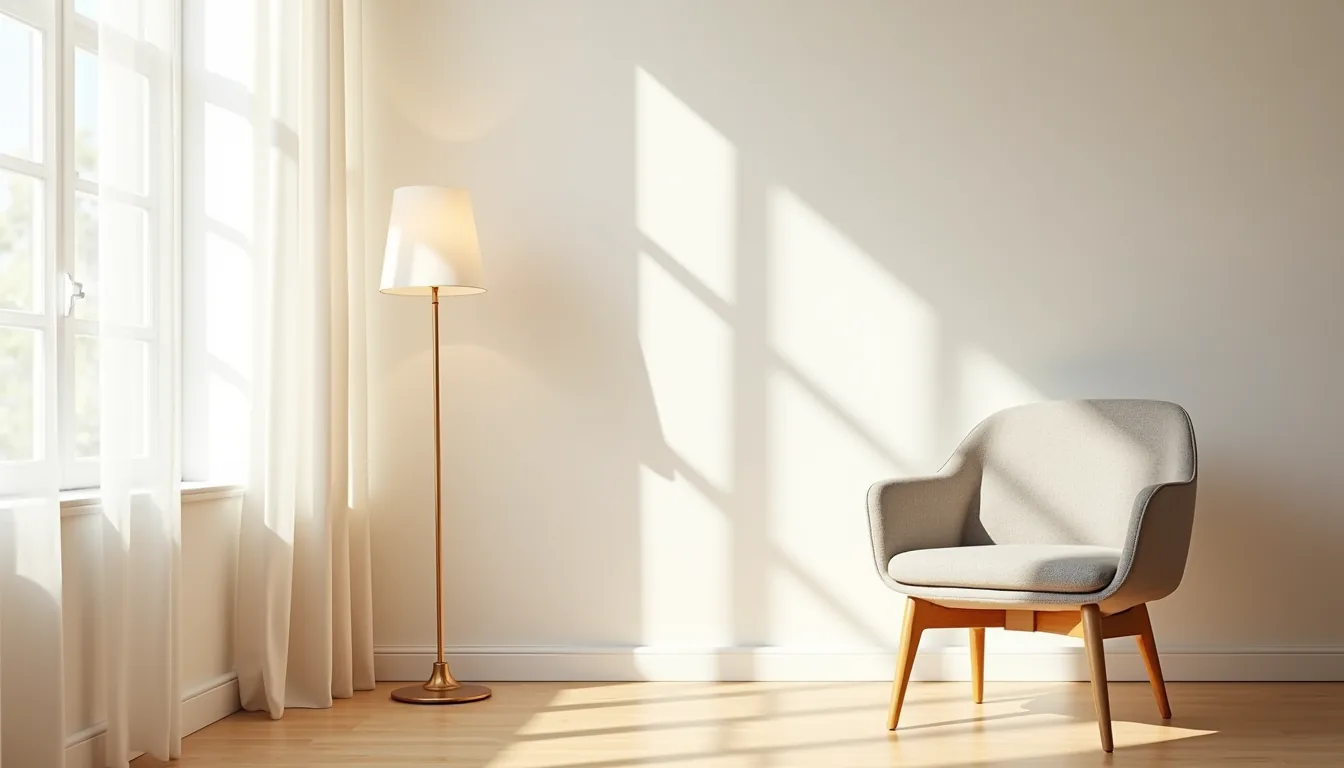
In a room with generous floor space, the goal is to create distinct conversational zones rather than pushing every piece against a wall. Position a single accent chair roughly 7–9 feet from the sofa, with a coffee table between them to anchor the arrangement; this gap keeps sightlines open while still allowing two people to converse without raising their voices. A floor lamp placed behind the chair’s shoulder provides task lighting without competing with overhead fixtures, and it visually completes the seating cluster.
Measure your clearance before committing. You need at least 18 inches between the chair’s front edge and the coffee table for comfortable legroom, and a 24–30-inch walkway around the entire grouping. In a 12×16-foot living room, this setup leaves the corners free for a plant or sideboard, preventing the space from feeling either cavernous or overcrowded.
If your sofa runs longer than 84 inches, consider a pair of accent chairs instead of one, two chairs at 24–28 inches wide each balance the sofa’s mass better than a single piece would.
Your First Move
You already know what your space needs now. Measure your floor area and door width, then set a budget range you can defend. That single step eliminates half the options before you browse.
Start with placement: mark the chair’s footprint with painter’s tape and live with it for a day. If you can walk past it without sidestepping, you’ve your answer.
Order a fabric swatch or sample before committing. Every material change alters the room’s feel, so verify against your existing light and decor. Your next chair is one measurement away.
Frequently Asked Questions
What size mid century accent chair fits a room under 10 by 12 feet?
Choose a chair with a seat width of 19–22 inches and overall depth under 30 inches. Skip swivel bases and wide arms; a slim, tapered-leg frame keeps visual bulk low and preserves walking clearance.
Can you use a mid century accent chair with modern sofas without it looking out of place?
Yes, if you match undertones, warm wood legs pair with beige or olive sofas, black legs with gray or navy. Keep one shared material, like leather or boucle, to bridge the styles.
How do you clean and maintain wood frame details on vintage mid century chairs?
Dust weekly with a dry microfiber cloth. For grime, wipe with a slightly damp cloth and mild soap, then dry immediately. Apply furniture wax twice a year; avoid silicone polishes, which build up and attract dirt.
Are reproduction mid century accent chairs worth buying over authentic vintage pieces?
Buy reproductions if you need consistent sizing, firmer cushions, or lower maintenance, they cost 40–60% less than restored originals. Choose authentic vintage only if you prioritize patina and don’t mind sourcing replacement springs or webbing.