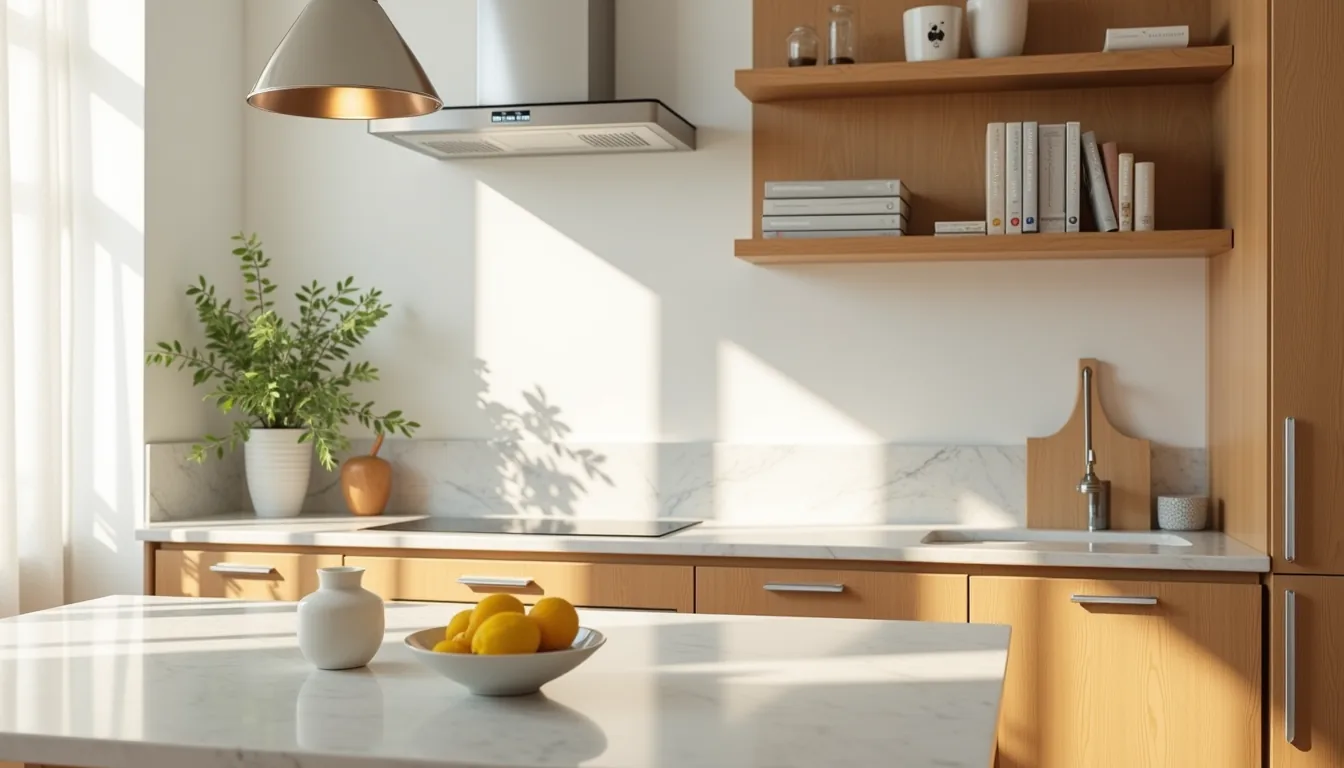
Designing a kitchen around a trend is a waste of money unless you know exactly how that trend behaves in your actual room, which is why the 2024 kitchen cabinet trends below are broken down by implementation, budget, and space type. You’ll see six distinct directions, from matte black to two-tone to reeded glass, each with the specific material, hardware, and clearance requirements you need before you commit. If you weigh the maintenance and cost trade-offs upfront, you can choose a look that survives daily use rather than one that only photographs well.
Key takeaways
Warm wood revival favors rift-sawn oak or walnut veneers, which resist warping better than flat-cut lumber in humid kitchens. Two-tone cabinetry works best when upper and lower units contrast by at least three shades, with darker lowers hiding scuffs near the floor. Handleless designs require push-to-open hardware rated for 30,000-plus cycles, or you’ll replace springs within two years. Integrated appliance fronts need a 3-millimeter reveal around the panel, or door expansion will cause sticking in summer.
Warm Wood Revival and Natural Finishes
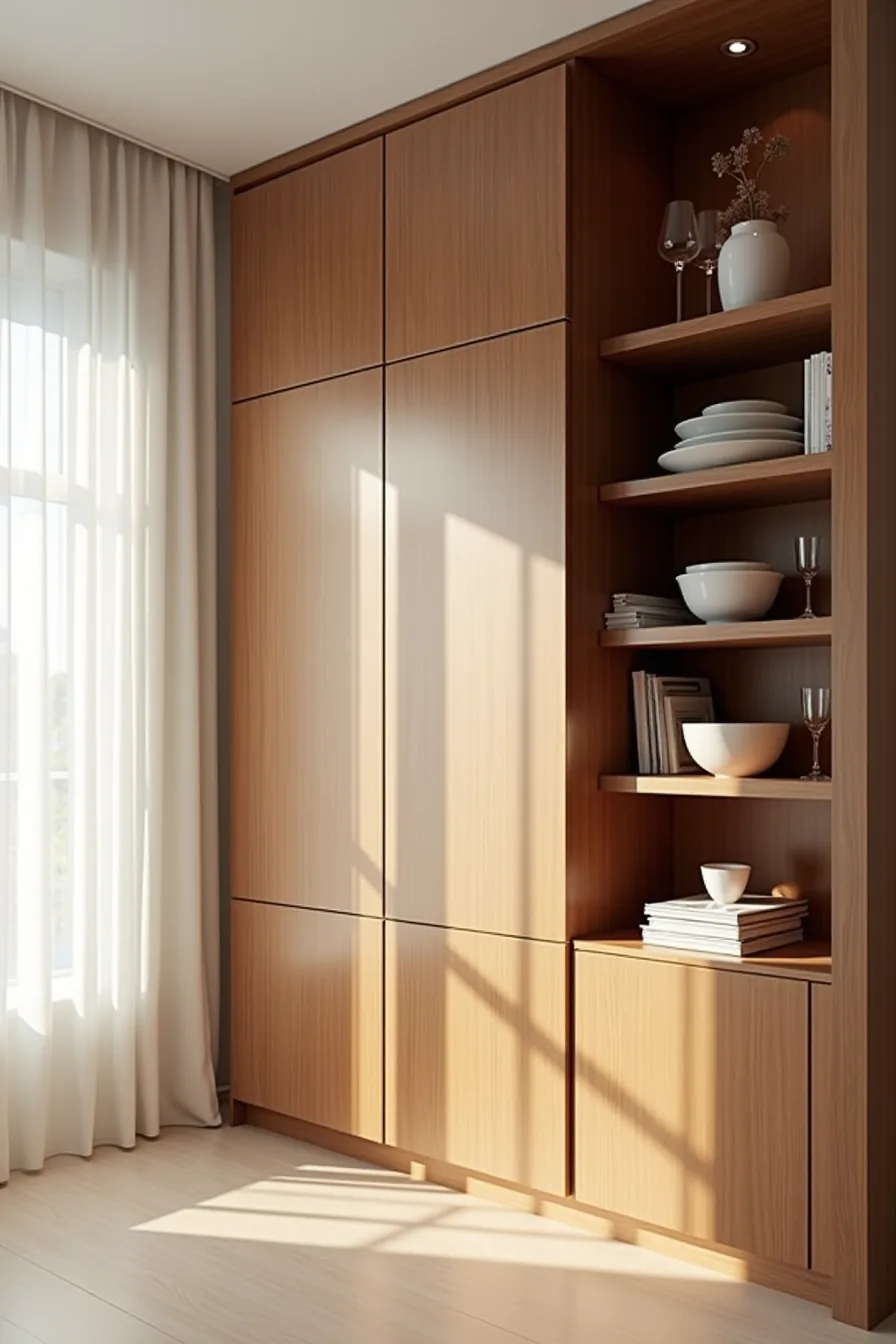
Solid wood with visible grain is the defining move in 2024 kitchen cabinet trends, and the walnut wall you’re looking at is a prime execution. Floor-to-ceiling cabinetry in a mid-tone walnut shifts the room’s character from utilitarian to furniture-like, anchoring the space with warmth that painted MDF can’t replicate. That built-in look works because the open shelving breaks up the mass of the cabinet face, letting the ceramic bowls and glassware create rhythm against the grain.
This approach suits medium-to-large kitchens where upper cabinets won’t block sightlines; in a small galley, restrict the walnut to a single run and paint the rest a light neutral to avoid a cave effect. White oak and walnut are the practical species here, white oak tolerates humidity better, while walnut scratches more visibly but ages gracefully with oil. For a budget route, specify walnut veneer over plywood (saves 30-40% versus solid) and keep the grain direction continuous across doors.
Renter-friendly? A peel-and-stick wood-grain film on existing flat fronts delivers the look for under $150 and removes cleanly. For a long-term investment, solid walnut with dovetailed drawers and soft-close hardware will outlast a remodel cycle.
Maintenance is non-negotiable: apply a matte hardwax oil annually to resist water rings and UV fading near windows.
Which 2024 Cabinet Trends Still Feel Fresh Today, this warm wood revival tops that list because it pairs with nearly any countertop material, from marble to soapstone.
Two-Tone and Contrast Cabinetry
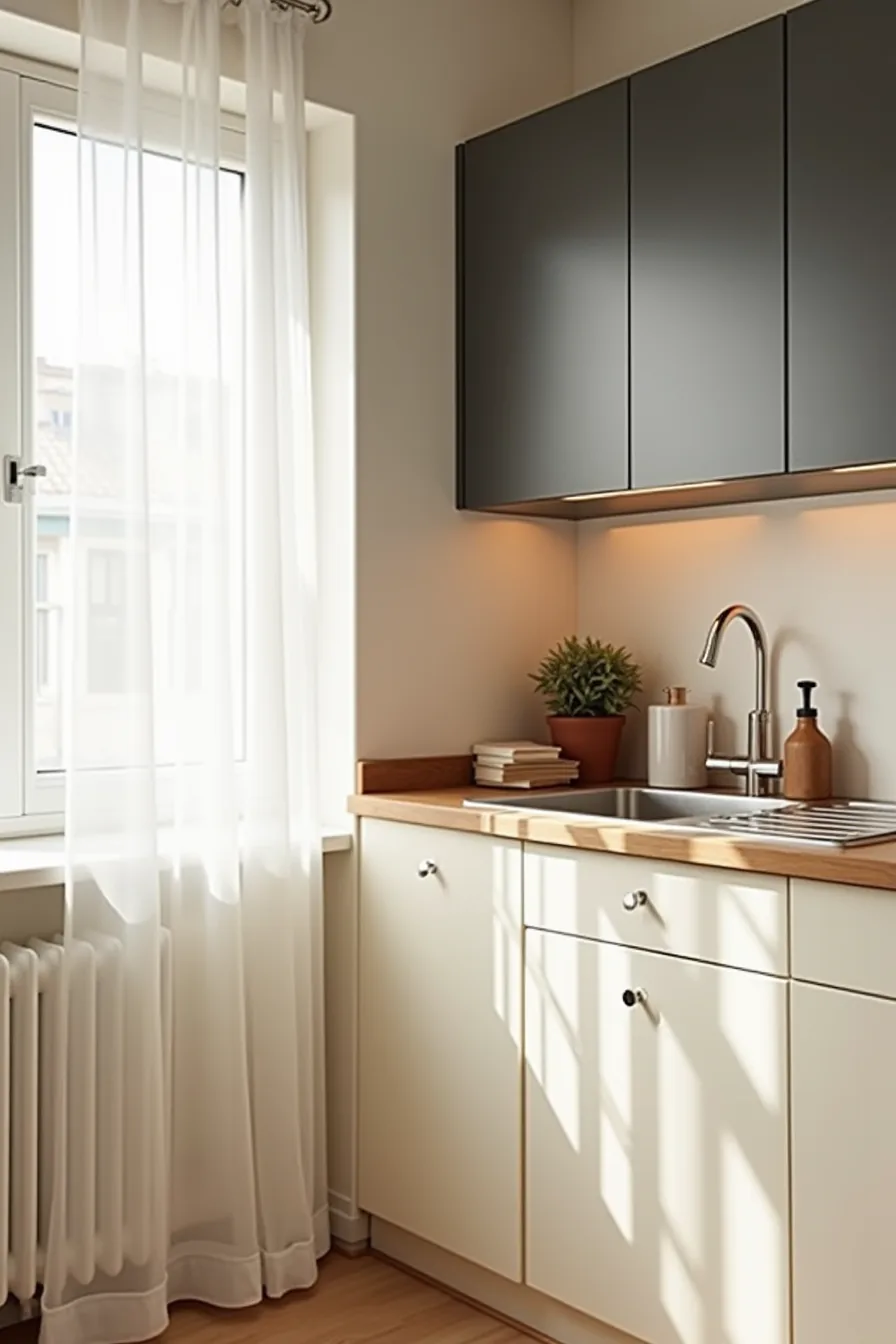
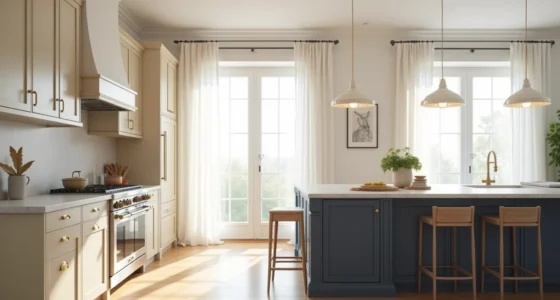
The cream lower cabinets and charcoal upper cabinets meeting at the corner create a grounded base with an airy top, a combination that reads as custom without requiring a full redesign. Dark uppers recede visually, which makes the ceiling feel higher, while light lowers hide the daily scuffs from pots and pans near the stainless steel sink and faucet. This split works best in medium kitchens; in a small galley, keep charcoal to the upper run only, and in a large open plan, add a matching charcoal island to balance the visual weight.
Practical placement rules: never pair dark lowers with light uppers if you’ve low natural light, and always test samples against your countertop edge before committing. Cream finishes need a matte or satin sheen, gloss shows every water spot around the sink. For a budget route, paint existing lowers cream and uppers charcoal (two gallons total, ~$80), and for renters, use removable contact paper on upper fronts only.
The long-term investment version specifies thermofoil or painted MDF for uppers and solid wood for lowers, since lower doors take more impact. Expect to repaint the cream lowers every 3-5 years; charcoal hides wear far longer.
Handleless and Minimalist Hardware
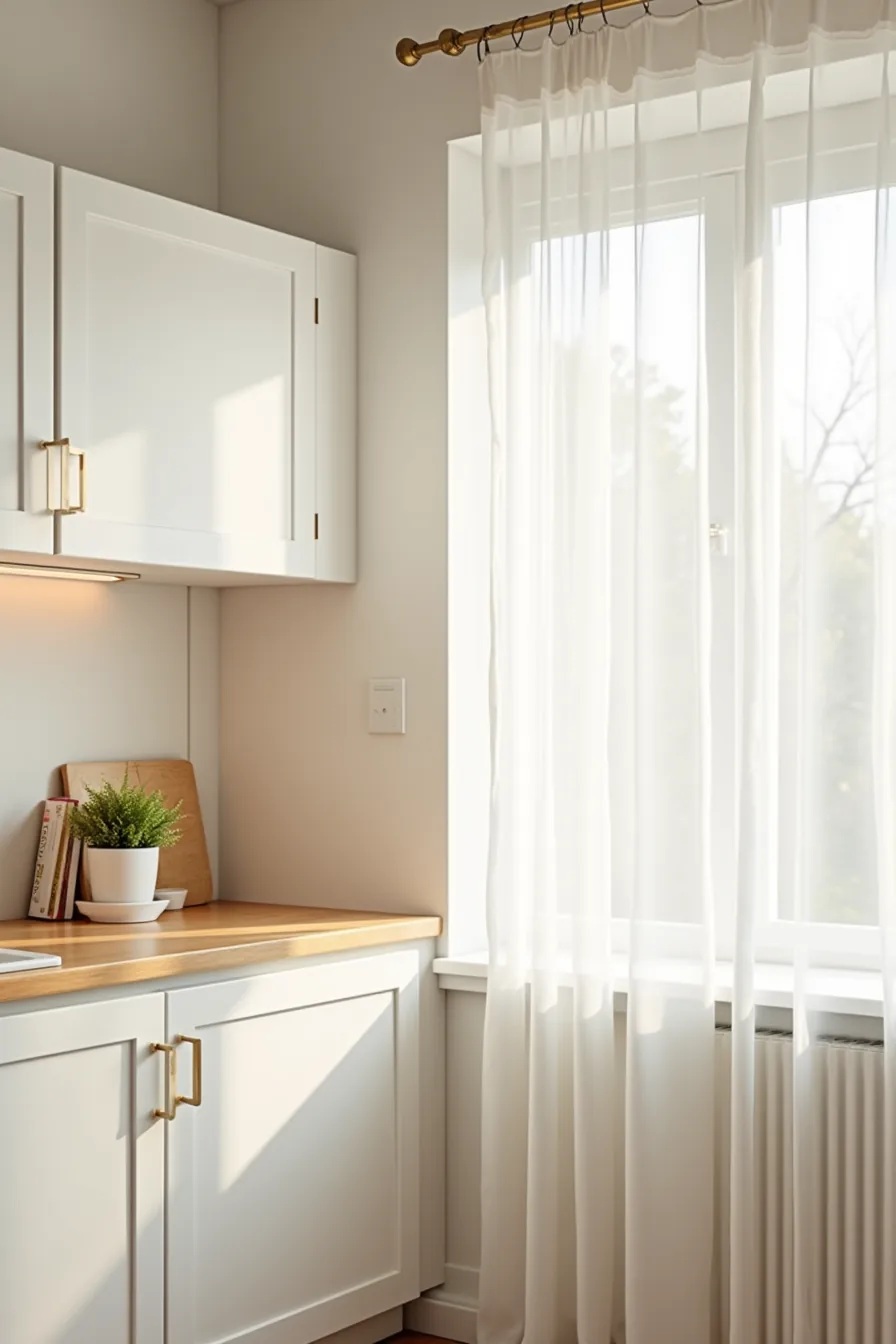
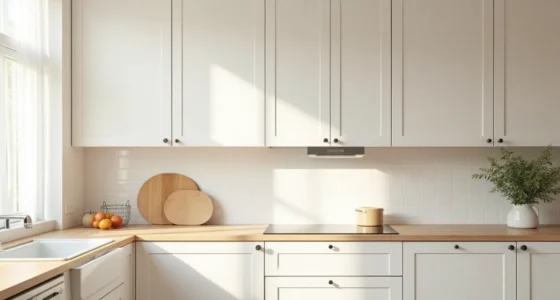
The flat-fronted white cabinetry with a push-to-open door relies on the absence of handles to create a smooth wall of storage. That single potted plant on the clean countertop is the only visual interruption, which is the entire point, this style turns the kitchen into a monolithic block rather than a collection of individual boxes. It suits open-plan layouts and small galley kitchens where protruding hardware snags clothing or interrupts traffic flow around the sink and stove.
Push-to-open mechanisms use spring-loaded hinges that release the door when you press the edge. Budget for about 20–30% more than standard hinges per door, and know that the mechanism adds a slight gap between door and frame, dust collects there and requires quarterly wipe-downs. The white flat fronts show fingerprints less than dark matte finishes, but they do reveal smudges around the push points themselves; keep a microfiber cloth near the coffee station.
Installation demands perfectly aligned cabinet boxes; if your existing frames are out of square, the doors will rattle. Renters should skip hardware removal and instead swap existing knobs for slim bar pulls in brushed nickel, which approximates the minimal look without structural changes. The long-term investment version specifies full-overlay doors with integrated J-pull channels routed directly into the MDF, no moving parts to fail, but expect cabinetmakers to quote 15–25% above standard door pricing.
Open Shelving and Hybrid Storage
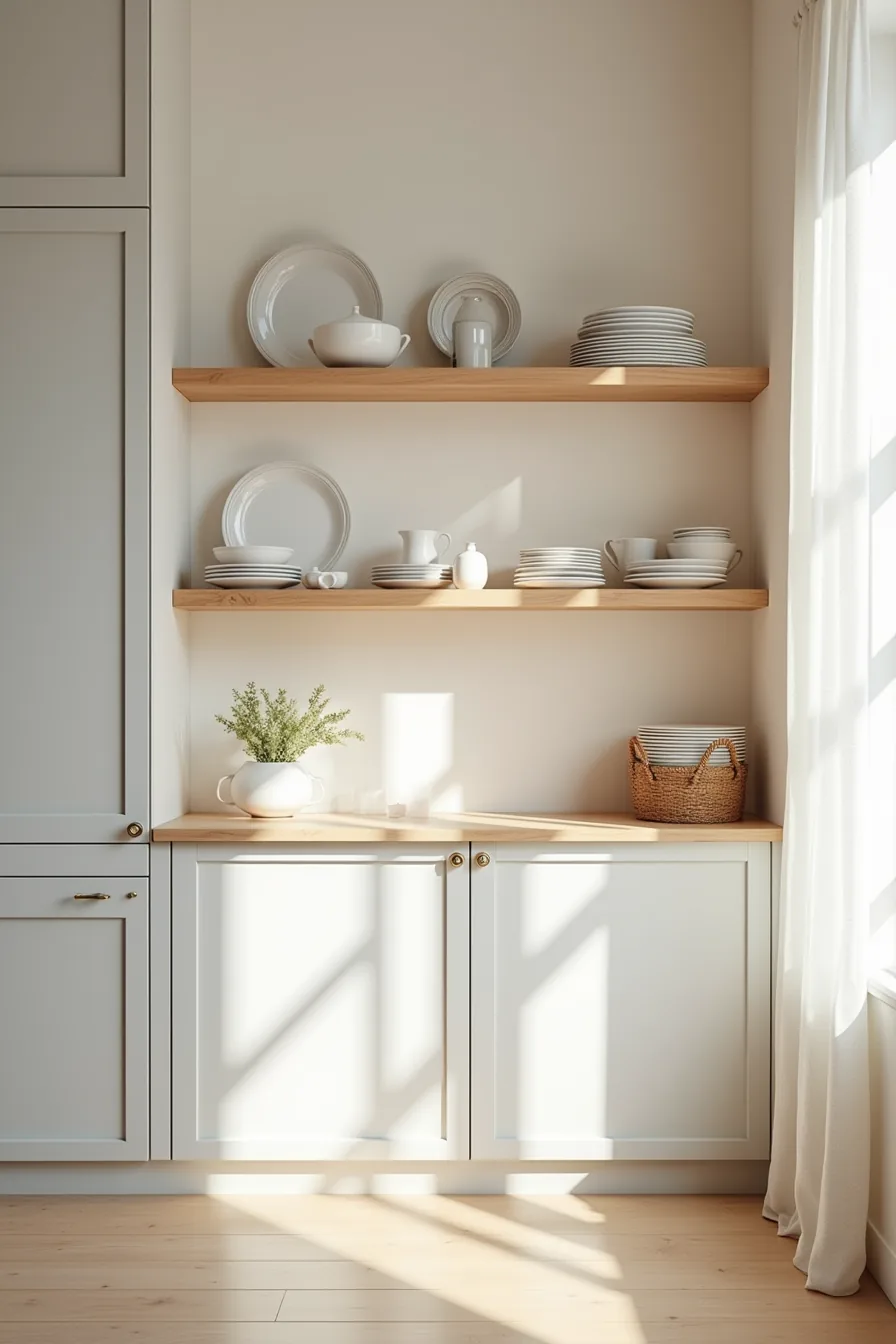
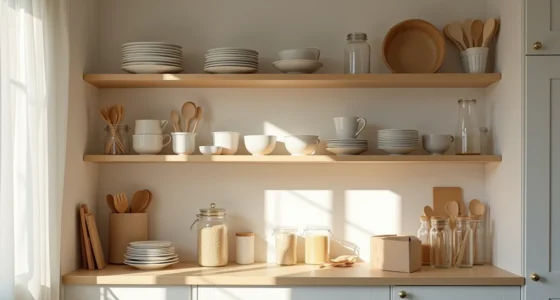
The hybrid approach pairs lower closed cabinets in soft gray with upper wooden shelves holding stacked white plates, glassware, and decorative pottery, creating a rhythm of concealment and display. It works because the closed base anchors the visual weight while the open uppers break up wall mass, ideal for medium-sized kitchens where you want personality without committing to full exposure. The pottery and glassware earn their place through deliberate styling: group items in odd numbers, keep the most-used pieces at waist-to-shoulder height, and leave negative space between clusters.
Dust management is the real trade-off. Open shelves collect grease film and particulates, so expect to wipe surfaces and wash displayed items every two to three weeks depending on cooking frequency. Budget for shallow shelves, 12 to 16 inches deep, to prevent items from disappearing into the back and to make daily retrieval practical.
For renters, install freestanding wall-mounted shelving units with brackets that require only small pilot holes, easily patched on move-out; avoid permanent built-ins unless your lease allows modifications. The long-term investment route specifies solid hardwood shelves with concealed steel brackets, supporting heavier display loads, but plan for yearly oiling to prevent drying and warping in humid kitchens.
Textured and Matte Finishes
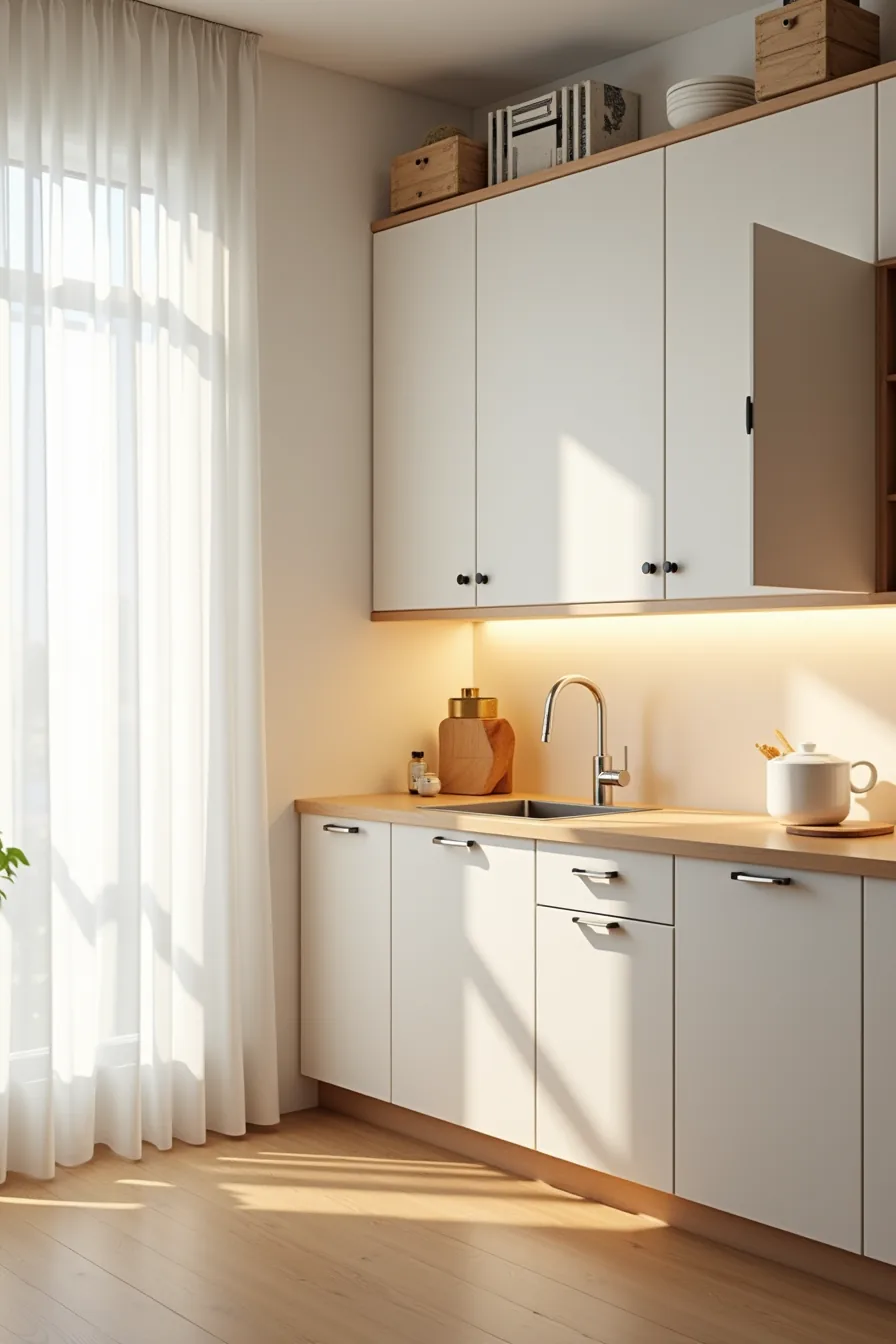
Flat-front doors in matte white, greige, or warm taupe are replacing high-gloss in 2024 because they read as calm and tactile, not reflective. The surface texture, often a micro-ribbed, brushed, or stippled pattern pressed into the door material, breaks up large wall expanses and hides daily fingerprints far better than gloss. If you open one of these cabinet doors to reveal interior shelving, you see the contrast between the deliberately muted exterior and the functional, uncluttered inside, which is exactly the effect you want in a busy family kitchen.
The trade-off is cleaning. Matte finishes require pH-neutral cleaners only; abrasive pads or citrus degreasers will leave permanent sheen marks. Expect to wipe spills within 30 minutes to prevent staining, especially on light colors.
Textured surfaces cost 10–20 percent more than flat matte laminates but less than true wood veneer. What still holds up in high-traffic kitchens is a matte thermofoil or laminate, durable, moisture-resistant, and forgiving, though neither accepts repainting. Solid wood with a matte conversion varnish is the long-term investment, but it demands yearly re-oiling and careful humidity control.
For renters, matte adhesive film over existing doors delivers the look with zero permanent damage, lasting 2–3 years before replacement.
Integrated Appliances and Smooth Fronts
A panel-matched refrigerator and dishwasher, fronts clad in the same natural oak as surrounding cabinetry, turn appliances into architectural features rather than interruptions. The visual payoff is a continuous wall of cabinetry that reads as one designed unit, which makes the kitchen feel larger and more ordered. This approach suits open-plan layouts where the kitchen shares sightlines with living areas, since the eye travels across an unbroken surface instead of stopping at stainless steel.
The cost reality is significant: expect to pay 15–30 percent more than standard appliances for the custom panels and the installers who must align them precisely to the cabinet faces. You also commit to the trend for the appliance’s lifespan, because replacing the refrigerator later means commissioning a new panel to match your existing finish. For renters or those uncertain about commitment, consider a refrigerator with factory-installed front panels that mimic your cabinet color, not a true match, but it delivers 80 percent of the effect at half the cost.
In compact kitchens, seamlessness prevents visual clutter from multiple metallic surfaces; in large ones, it anchors the room. The trade-off is access: paneled dishwashers require slightly recessed handles, so confirm your cabinet hardware clears the appliance’s opening arc before ordering.
Where to start
Before you buy a single hinge, measure your floor-to-ceiling height and cabinet face widths. Write down your current storage capacity in cubic feet, this number determines whether you can afford the visual weight of dark matte finishes or need the space-expanding effect of high-gloss white.
Decide your primary constraint first: budget, lease terms, or longevity. That single choice eliminates half your options immediately. Then order one sample door in your top two finishes, never choose from a screen.
Order your samples today, and keep them in the room for 48 hours before deciding. Natural light changes everything.
Frequently Asked Questions
Which 2024 kitchen cabinet trends work best for small kitchens?
Two-tone cabinets with light uppers and darker lowers add depth without overwhelming. Handleless flat-panel doors reduce visual clutter, while open shelving on one upper section creates breathing room. Stick to matte finishes to minimize glare.
Can you adapt 2024 cabinet trends if you’re renting?
Yes. Use peel-and-stick contact paper on cabinet fronts, swap in removable handles, or install tension-rod shelving inside existing cabinets. Avoid permanent changes like painting or replacing doors unless your lease explicitly permits them.
Do warm wood cabinets require more maintenance than painted finishes?
Yes. Warm wood, like oak or walnut, needs periodic oiling or waxing every 6–12 months to prevent drying and staining. Painted finishes only require occasional wiping with mild soap, but they chip more easily and demand touch-up paint over time.
What’s the difference between a trend and a timeless cabinet choice?
A trend, like bold green paint or fluted details, feels current for 3–5 years and dates quickly. A timeless choice, such as shaker doors in white or natural oak, stays visually neutral for a decade or more, making it easier to resell and update with hardware alone.