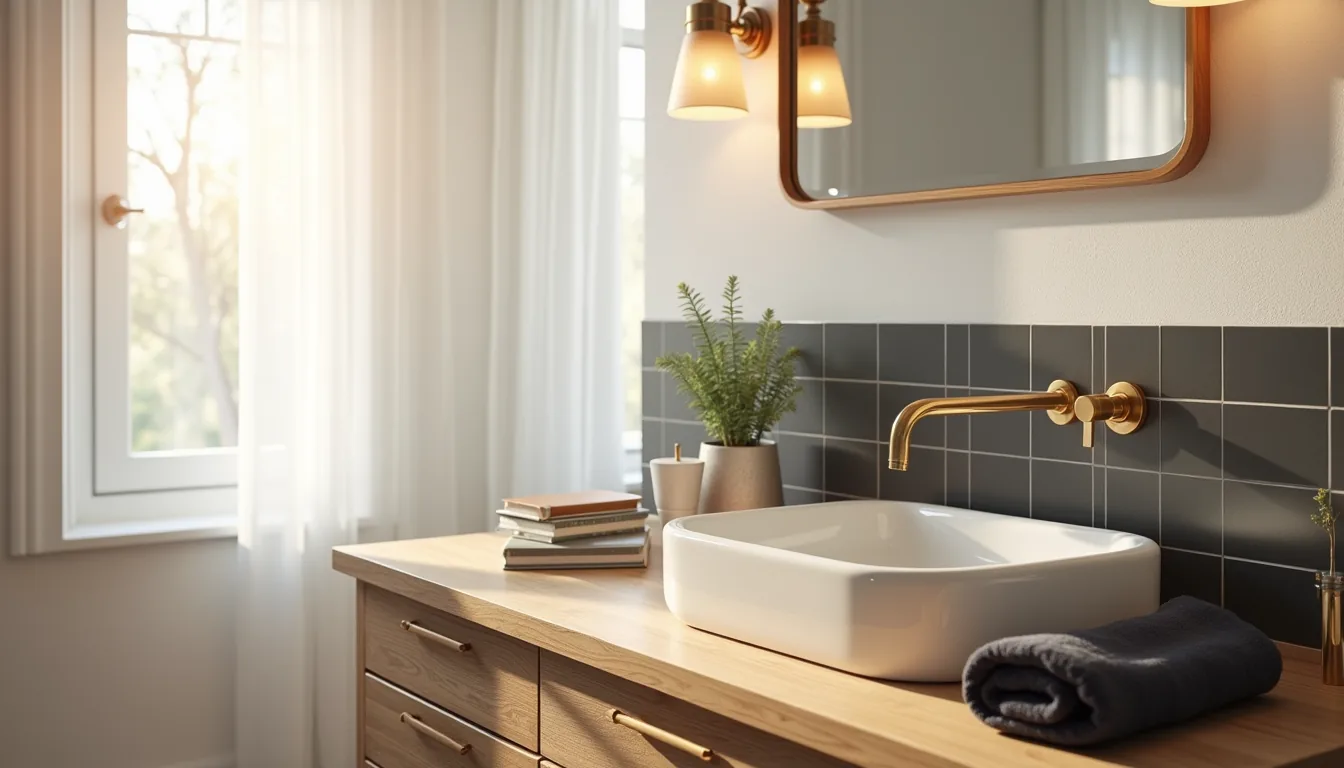

A dark bathroom aesthetic doesn’t mean a black box, it means layering deep tones, texture, and light so the room feels deliberate, not dim. It’s a strategy of contrast, not a single color. Done well, it turns a functional space into a moody retreat; done poorly, it makes the room feel smaller and harder to clean.
The difference comes down to six specific choices, from tile finish to mirror placement, that you can apply to any size bathroom.
Key takeaways
- Dark bathroom aesthetic works best when you anchor it with a matte stone palette, think slate, basalt, or soapstone, to absorb light rather than reflect it, which suits medium-to-large rooms with existing natural or layered artificial light.
- Warm metal accents of unlacquered brass or copper balance the darkness and prevent a cave-like feel, but they require monthly polishing to avoid tarnishing, so choose them only if you’re ready for that upkeep.
- For renters, peel-and-stick vinyl tile in a charcoal finish and a matte black shower curtain rod deliver the look without permanent changes, costing roughly $100–$200 for a standard 5×7-foot bathroom and removing cleanly with no residue.
- In small spaces, use a single dark feature wall behind the vanity, not all four walls, paired with a large mirror (at least 60% of the wall width) to create visual depth, while reserving full dark coverage for rooms over 100 square feet with a window or skylight.
Moody Stone Palette: The Foundation Layer
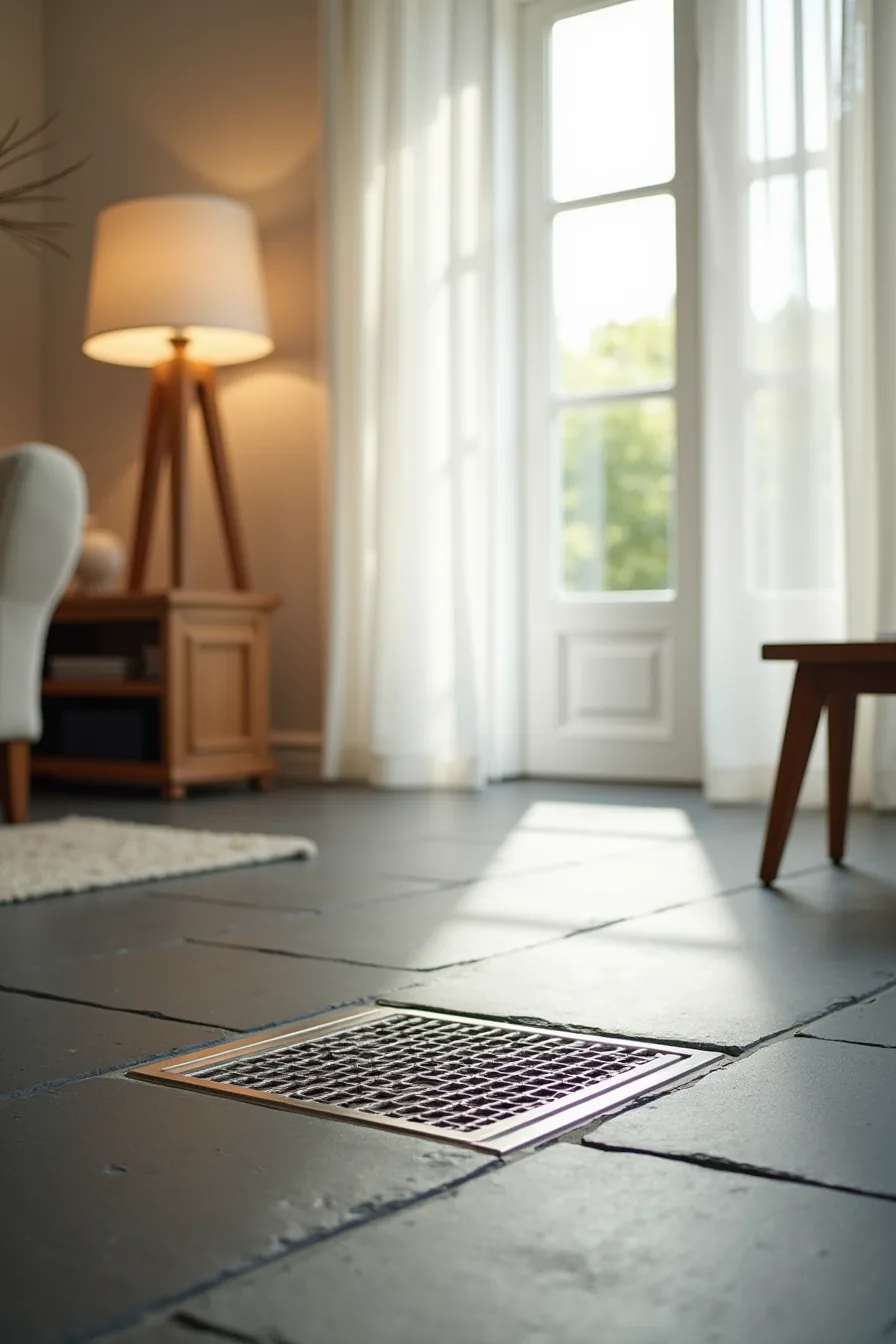
A dark bathroom aesthetic rarely succeeds on paint alone; it needs a structural anchor, and stone is the most forgiving one. Large-format slate tiles, typically 12 by 24 inches or larger, reduce grout lines, which means fewer weak points for moisture and staining. On a floor, this matters because every grout joint is a maintenance seam you must seal and scrub.
In the slate example you see here, the raking light across the tile surface reveals natural cleft texture, which hides water spots and soap scum far better than polished porcelain. The flush stainless steel drain grate isn’t an afterthought; it prevents water pooling and makes cleaning the floor with a squeegee genuinely effective. For a small bathroom, keep the stone continuous up one feature wall to avoid visual fragmentation.
In a larger space, let the dark stone define a wet zone, then transition to a lighter wall finish to prevent the room from feeling like a cave. Choose through-body porcelain if you want the slate look without the annual sealing that natural stone demands, it costs more upfront but removes the recurring maintenance burden.
Warm Metal Contrast: Balancing Dark with Brass and Copper
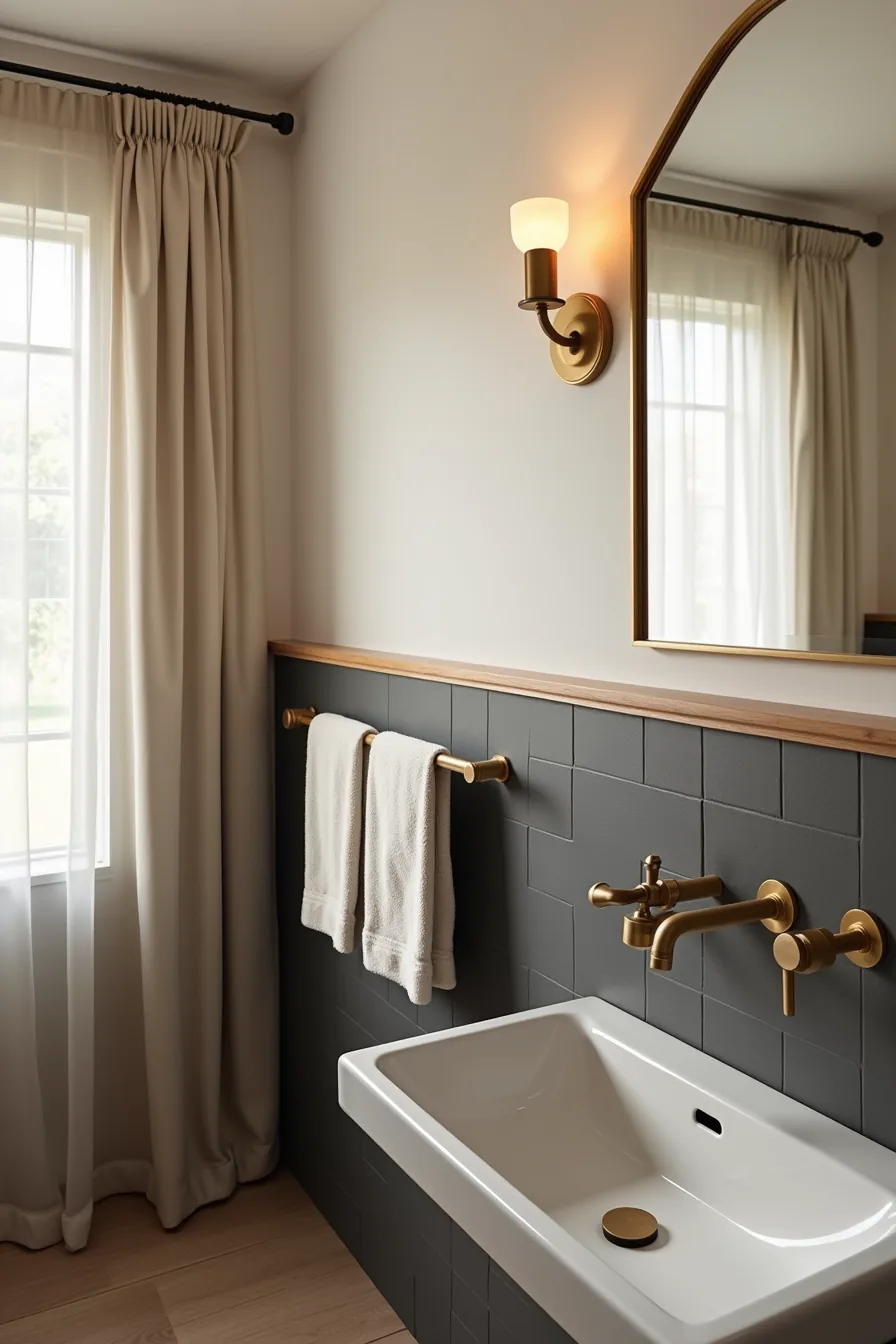
Dark surfaces absorb light, so the warm metal contrast you introduce becomes the room’s primary light source by reflection. A brass towel bar, a brass soap dispenser, and a brass mirror frame mounted against matte dark tiles create three distinct points of sparkle that pull the eye across the wall. Unlacquered brass develops a patina over time, you either embrace that living finish or choose a PVD-coated version that holds its polish for years without maintenance.
Position fixtures where your hand naturally lands: the towel bar at 48–52 inches above the floor, the soap dispenser within arm’s reach of the sink edge. For a rental or a tight budget, swap only the mirror frame and towel bar to brass while keeping the existing faucet, two accents are enough to shift the temperature of the room. Brushed copper reads warmer than polished brass but shows water spots more readily, so reserve it for dry zones like mirror frames rather than wet areas near the shower.
Spa-Dark Aesthetic: Layering Texture and Soft Light
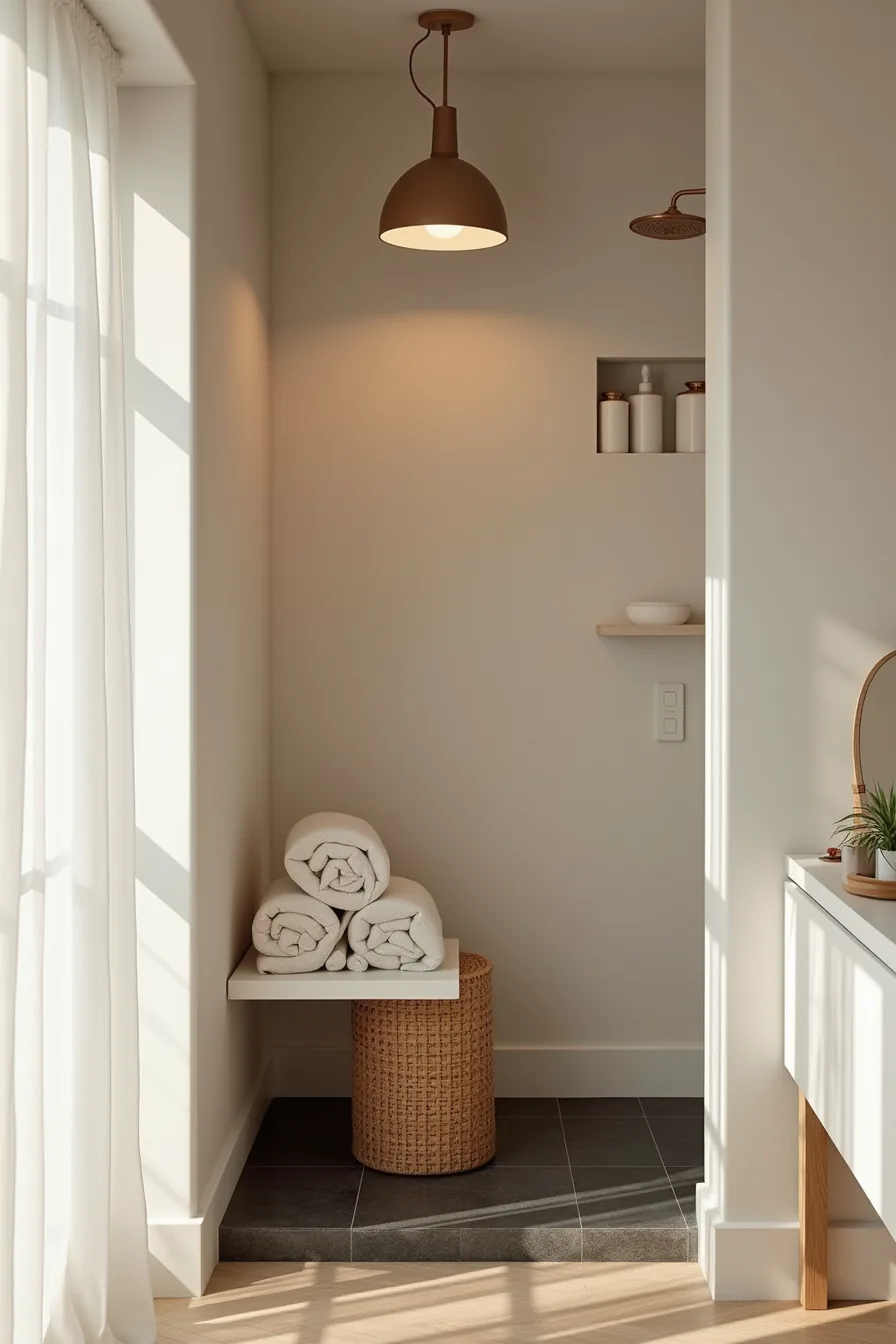
The spa-dark aesthetic trades glossy surfaces for matte, tactile ones that absorb light rather than bounce it. In a dark-tiled shower alcove, a woven wooden bath stool introduces organic grain that breaks up the monotony of the tile field, while rolled linen towels on a low shelf add softness without introducing color. A ceramic soap dish provides a subtle glossy counterpoint, small, functional, and easy to replace if it chips.
Lighting is the load-bearing element. A single pendant fixture suspended above the stool creates a focused pool of warm light that defines the bathing zone without illuminating the entire room, which keeps the space feeling intimate rather than cavernous. Mount it 60–72 inches above the floor so it clears your head when you sit, and use a dimmer to drop output to roughly 10–20 percent for evening soaks.
Linen towels are the practical choice here because they dry faster than cotton in humid air and resist the musty smell that plagues darker bathrooms. For maintenance, brush the wood stool monthly to prevent mildew in the grain, and hang the towels on a rack rather than leaving them stacked, as trapped moisture can spot the tile grout over time. This look suits medium to large bathrooms where you need texture to fill visual space, and it pairs well with winter months when a warm, cocooning atmosphere feels intentional rather than gloomy.
Dark Bathroom Ideas for Renters: Temporary Approaches
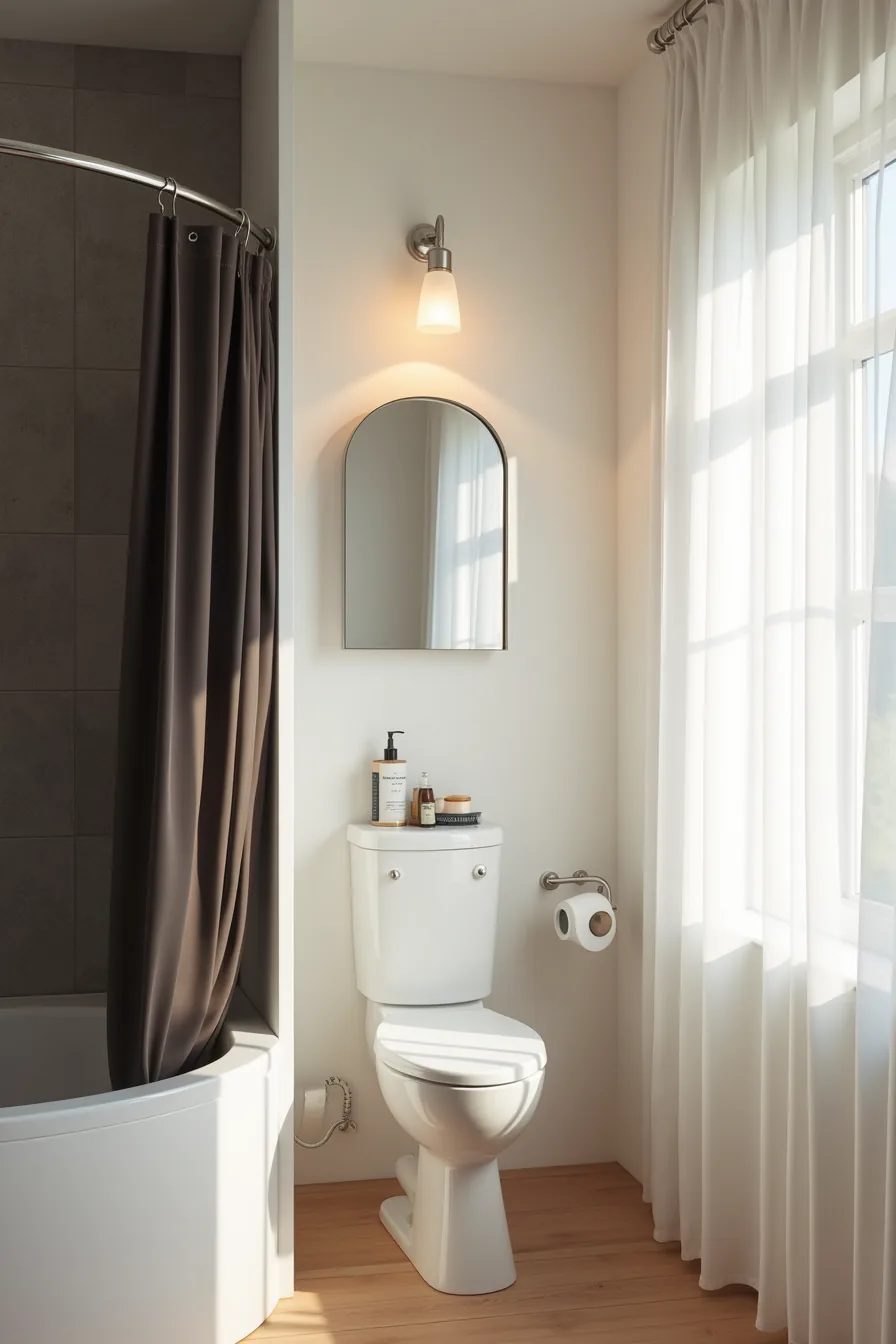
Peel-and-stick tile wallpaper delivers the dark aesthetic without a security deposit at risk. A standard roll covers roughly 25–30 square feet, and most brands remove cleanly if you heat the adhesive with a hairdryer before pulling, test a corner patch first, as cheap paint can lift. Choose a matte finish with a subtle texture; glossy vinyl reflects light and draws attention to imperfections in your wall underneath.
Pair that wallpaper with a tension rod and a dark shower curtain. The rod installs in minutes without tools, and the curtain gives you a large swath of dark color that you can swap out when you move. Complement the setup with an adhesive-backed mirror rated for bathroom humidity, look for one with a plastic or acrylic frame, as metal can corrode from steam within a year.
The limitation is honesty: peel-and-stick reads as temporary up close, so this route suits renters who want mood rather than a flawless finish. It also works well in small bathrooms where the wallpaper covers a single wall only, usually the one behind the vanity, which keeps the look cohesive without overwhelming the space.
Small-Space Dark Bathrooms: Proportion and Visual Depth
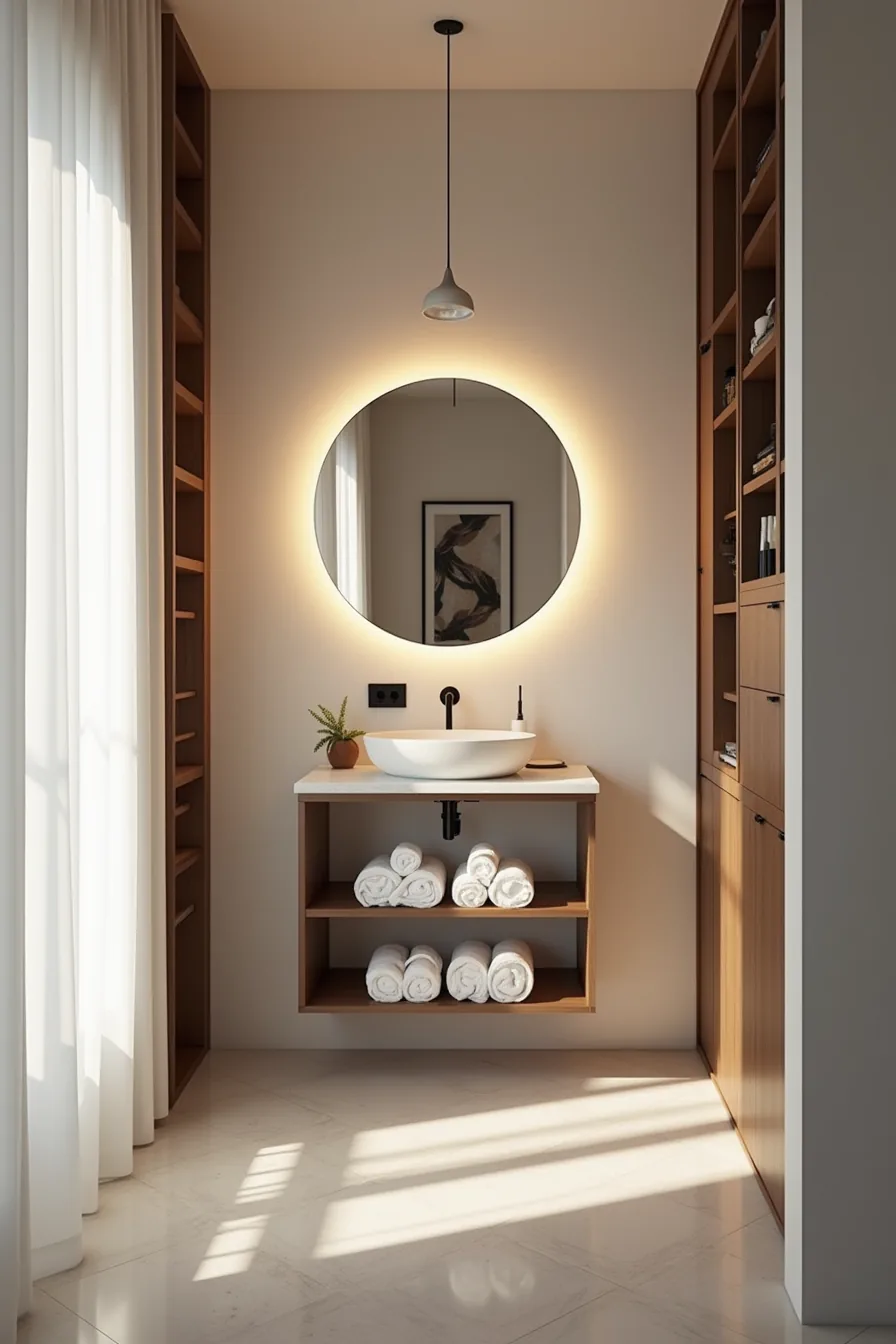
Dark walls in a small bathroom fail when they eliminate depth, so you need a deliberate light anchor. Hang a large circular mirror, aim for 24–30 inches across, above a compact vanity; its reflective surface doubles the perceived space and breaks up the dark mass. Mount it so its center sits at eye level, typically 56–60 inches from the floor, to keep the reflection useful rather than decorative.
Color distribution matters more than the dark itself. Paint three walls in your deep tone, but leave the wall facing the doorway a shade lighter, this creates a receding effect that pulls the eye forward. On the dark walls, install vertical open shelving stocked with rolled towels; the stacked cylinders add texture and break the flat color into readable segments.
A single pendant light centered overhead prevents the room from closing in, but size it correctly, a 10–14 inch shade works for most vanities under 30 inches wide. This setup suits the smallest layouts because it uses light and reflection to carve space without sacrificing the moody palette.
Long-Term Investment: Durable Materials and Resale Considerations
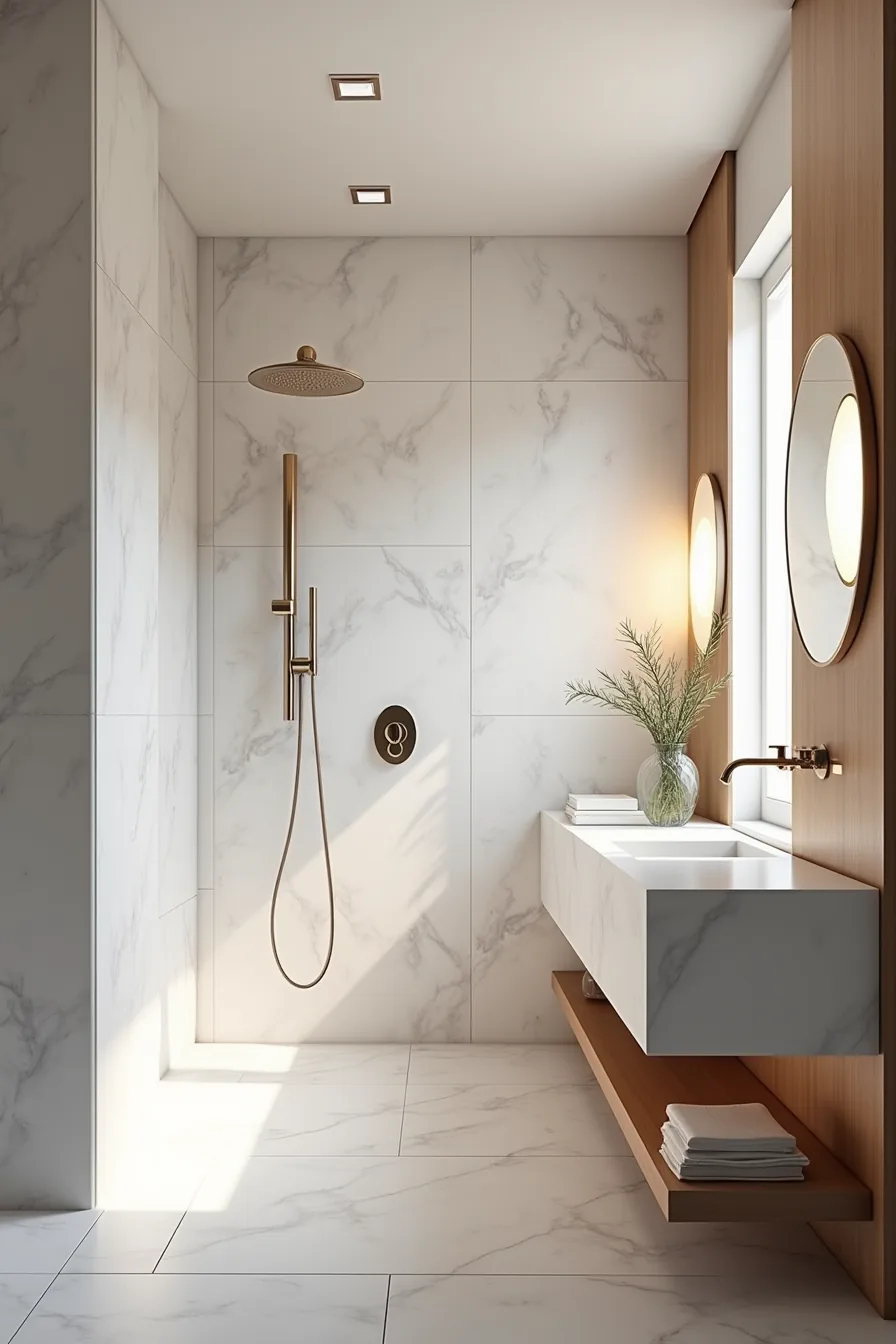
If you’re committing to this aesthetic for a decade or more, spec materials that age well and resist moisture. Honed black marble wall cladding delivers the look with a matte finish that hides water spots far better than polished stone, expect to pay a significant premium over porcelain tile, but the material’s density reduces sealing frequency to once every 12–18 months.
The polished chrome rainfall showerhead in this setup is a practical choice, not just a luxury one. Its wide face distributes water evenly, which means less pooling on the marble below, and chrome is the easiest finish to maintain, wipe it down weekly and it will outlast brushed or matte black alternatives that show scale and fingerprints.
A marble-topped floating vanity with an integrated basin eliminates the grout line where a drop-in sink meets the counter, removing a common mold trap. This design also exposes the floor beneath the vanity, which simplifies cleaning and visually lightens the lower third of the room. Recessed lighting in the ceiling keeps the marble’s veining as the focal point without adding fixture clutter.
Before you commit, weigh the resale implications. A full marble bathroom reads as high-end to most buyers, but an all-black palette narrows your audience, stick to dark walls and fixtures while keeping the ceiling and trim light to preserve a neutral base that future owners can rework without a full gut renovation.
Your Starting Point
You now have six distinct paths to a dark bathroom aesthetic, each with different costs, commitment levels, and maintenance demands. Match your choice to your bathroom’s size, lighting, and how long you plan to stay in your home. A renters-friendly peel-and-stick treatment costs a fraction of a full tile renovation but won’t survive a decade of steam and scrubbing.
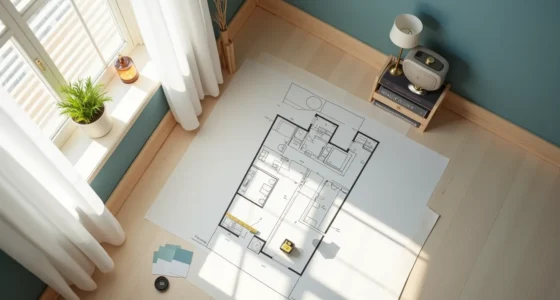
Begin by measuring your wall space and testing a single dark paint swatch on the largest wall. Live with it for three days, observe it in morning light, evening shadows, and under your vanity bulbs. That one sample will tell you more than any gallery of inspiration images ever will.
Frequently Asked Questions
Does a dark bathroom aesthetic make a small bathroom feel smaller?
Not necessarily. The effect depends on your lighting and finish choices. High-gloss surfaces and layered lighting reflect light, keeping the space visually open.
Matte, low-light rooms will feel boxy and cramped.
What lighting do you need in a dark bathroom to avoid it feeling gloomy?
You need three layers: ambient ceiling light, task lighting at the mirror, and accent lighting on walls or floors. Dimmable fixtures let you adjust the mood. Aim for warm white bulbs, 2700K to 3000K, to keep the space inviting.
Can you achieve dark bathroom aesthetic on a tight budget?
Yes. Paint is your cheapest tool. Use a deep matte or satin finish on walls and trim.
Add dark accessories, towels, a shower curtain, a bath mat, to extend the look without replacing tile or fixtures.
How do you maintain dark tile and stone in a bathroom without showing water spots?
Use a squeegee after every shower to remove standing water. Install a water softener if you’ve hard water. For stone, seal it annually and dry it with a microfiber cloth to prevent etching and mineral buildup.