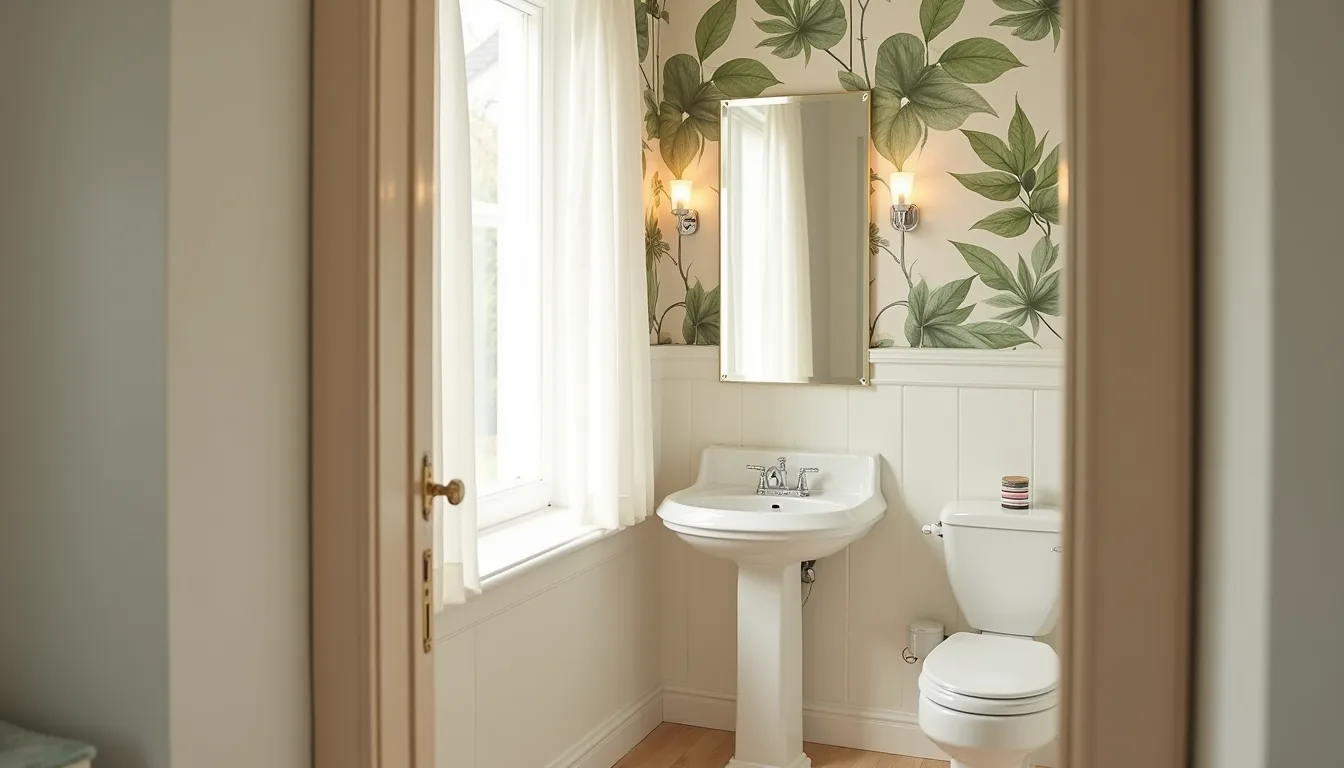
Small bathroom wallpaper works best when you treat it as a deliberate design tool, not a leftover roll from another room, because the right pattern, material, and placement can make a 40-square-foot space feel twice its size, while the wrong choice can shrink it further. The difference comes down to three decisions you control: scale relative to your wall area, finish relative to humidity, and coverage that respects your fixtures. The six approaches below range from peel-and-stick rentals to moisture-rated investments, each with the exact conditions required to pull it off.
Key takeaways
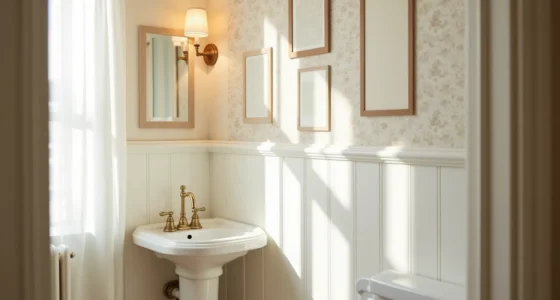
Large-scale prints trick the eye into reading a compact room as larger, so choose a mural-style pattern that spans the full wall rather than a busy all-over repeat. Geometric anchors work best when the pattern’s scale matches the wall’s width, aim for motifs roughly 12–24 inches across to avoid visual clutter in a 5–7-foot-wide space. Vertical stripes add perceived height only if they run floor-to-ceiling without interruption; pair them with a contrasting wainscot or border to stop the effect from feeling monotonous. Peel-and-stick panels are the renter-friendly route, but verify the adhesive’s removal rating, most brands specify “damage-free” for up to 2 years, while textured walls may still leave residue.
Large-Scale Prints for Perceived Space
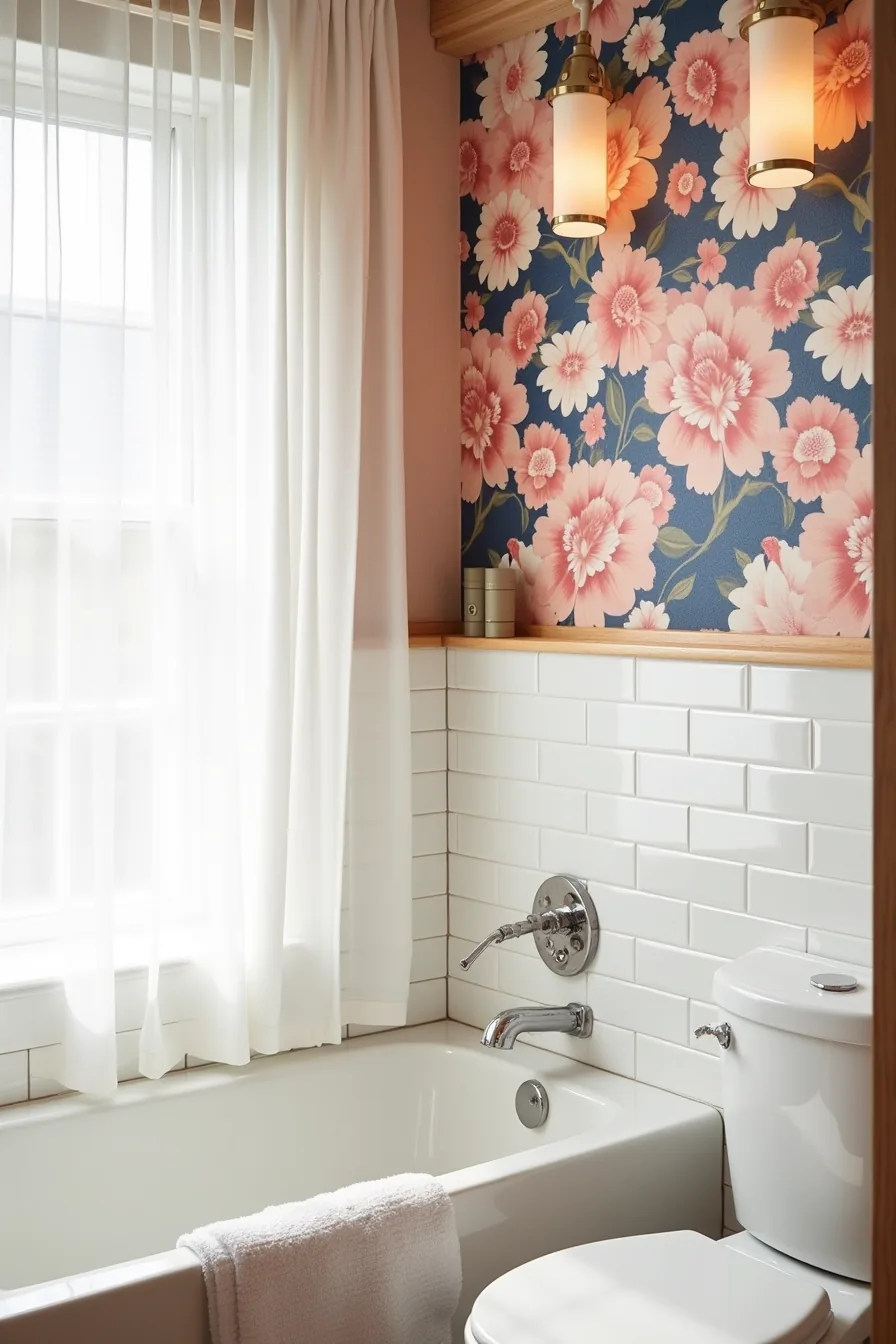
A bold floral with 8-10 inch blooms in coral and navy, set against a white subway tile base, tricks the eye into reading the wall as deeper than it’s. The large repeat pulls your focus outward, away from the room’s physical boundaries, so the space feels expansive rather than boxed-in. This approach suits a powder room or a guest bath with at least 4 feet of clear wall above the tile; anything less and the pattern gets chopped, losing its depth effect.
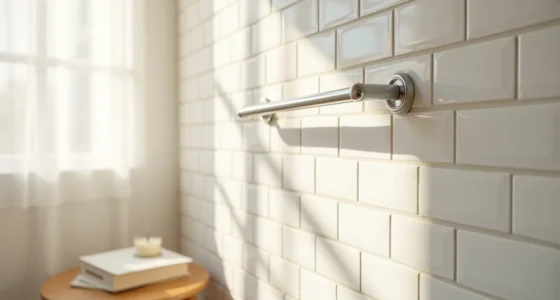
The chrome towel bar and small shelf unit anchor the lower half of the room, so the print stays visually dominant without competing for attention. Limit the wallpaper to one wall or the upper half of the room, never all four surfaces, which would overwhelm the sightline and make the room feel like a tunnel. Keep fixtures minimal and matte to let the pattern carry the design.
For a small bathroom (under 50 square feet), a big print like this beats a tiny one: small patterns vibrate and clutter, while large repeats read as a single, calm surface.
Geometric Patterns That Anchor Tight Layouts
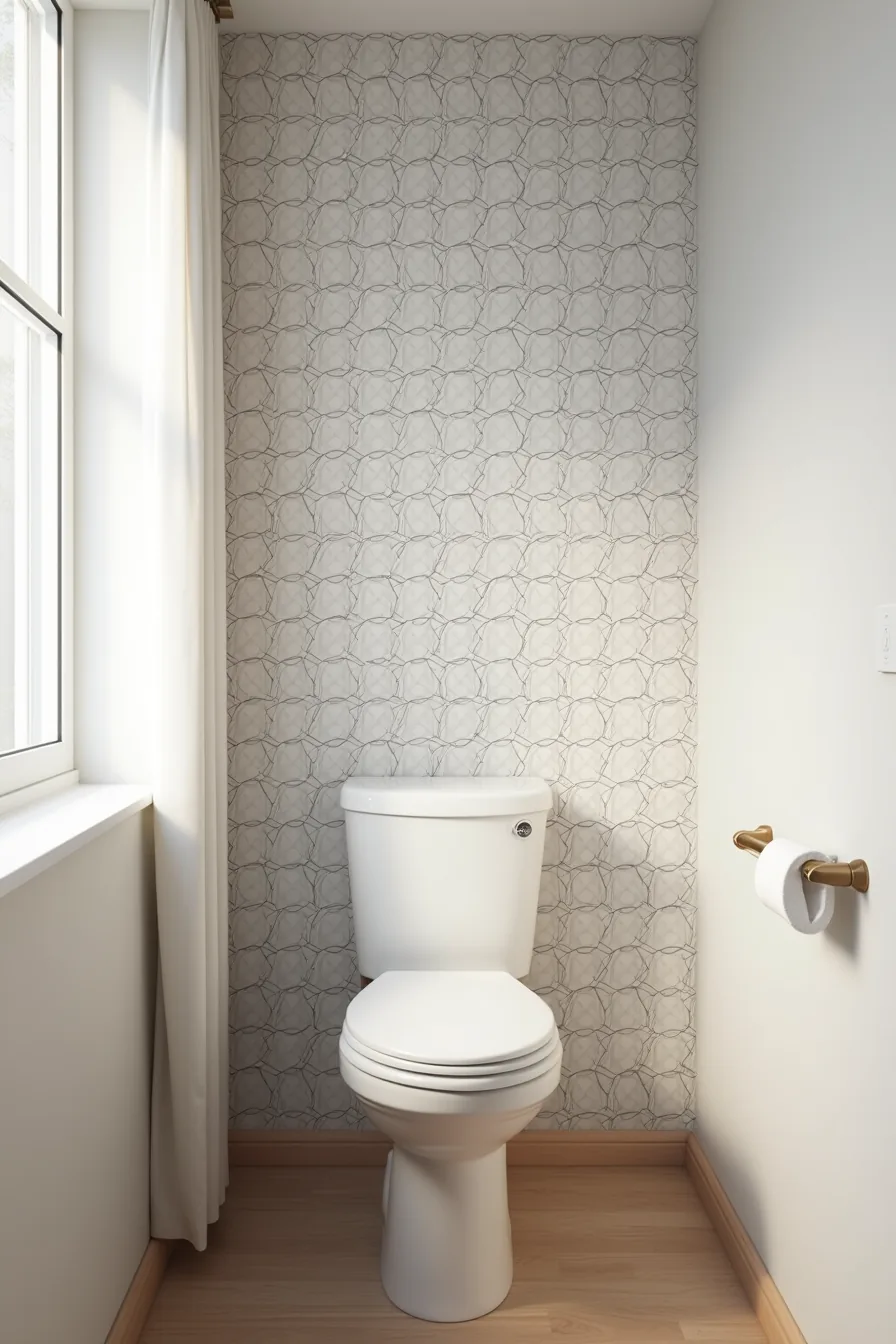
A black-and-white hexagon repeat, with tiles roughly 3-4 inches across, turns the wall behind the toilet into a structural focal point rather than a decorative afterthought. The modular rhythm gives the eye a fixed pattern to lock onto, which actually calms a cramped room, the geometry reads as intentional architecture instead of noise. This suits a half-bath or a tight corner layout where you need visual order more than visual expansion.
Linear geometries, like herringbone or chevron, draw the eye along their axis, so use them vertically beside a tall porcelain tank to emphasize height, or horizontally behind a low console to widen a narrow run. Modular patterns like this hexagon work best when centered on the wall behind the toilet, with the pattern’s rhythm aligning to the tank’s centerline rather than the room’s midpoint. The rounded tank lid softens the hard edges of the print, so you don’t need additional décor to balance the contrast.
Use a matte vinyl wallpaper here, the wall behind a toilet sees splatter and condensation, and vinyl wipes clean without the sheen catching glare.
Vertical Stripes and Ceiling Height Tricks
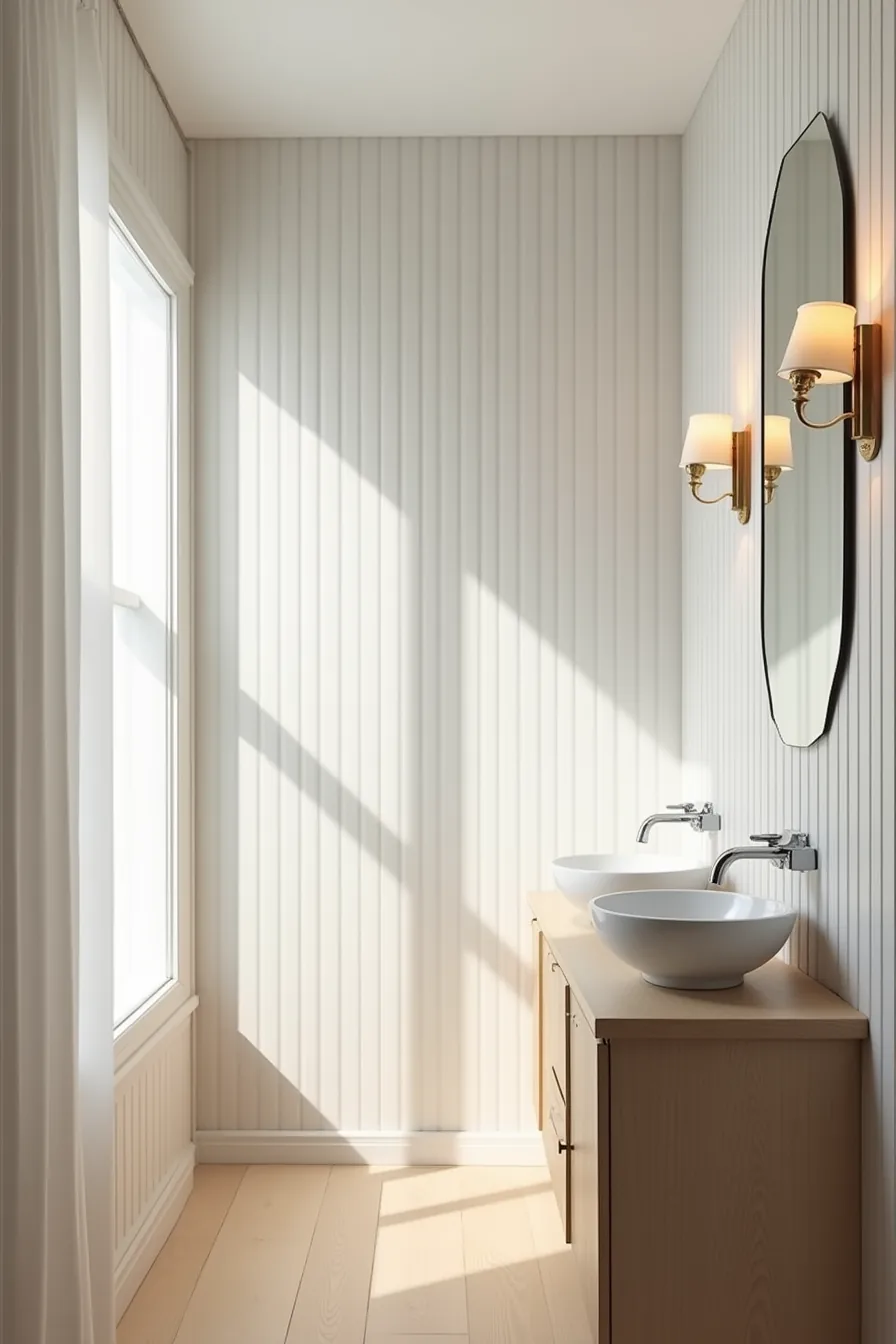
Vertical stripes are the most direct tool you’ve for visually raising a ceiling. On walls that run floor to ceiling, a stripe width of 2–3 inches creates a continuous vertical rhythm that pulls the eye upward, making a standard 8-foot ceiling feel closer to 9 feet. In the sink area pictured, the soft gray-and-white repeat behind the double round basins does this without adding contrast that would compete with the chrome faucets, the hardware becomes the accent because the wall stays quiet.
For low ceilings under 7 feet 6 inches, keep the stripe contrast subtle. A difference of two to three shades between stripes creates the height illusion; a stark black-and-white pairing will instead emphasize the room’s width and feel busy. Matte finishes work better here than gloss, since sheen reflects light horizontally and can break the vertical flow you’re trying to establish.
This approach suits a powder room or a main bath you want to feel taller without remodeling, it’s purely optical, so it costs nothing extra in materials and requires no structural changes.
Textured and Grasscloth Options for Durability
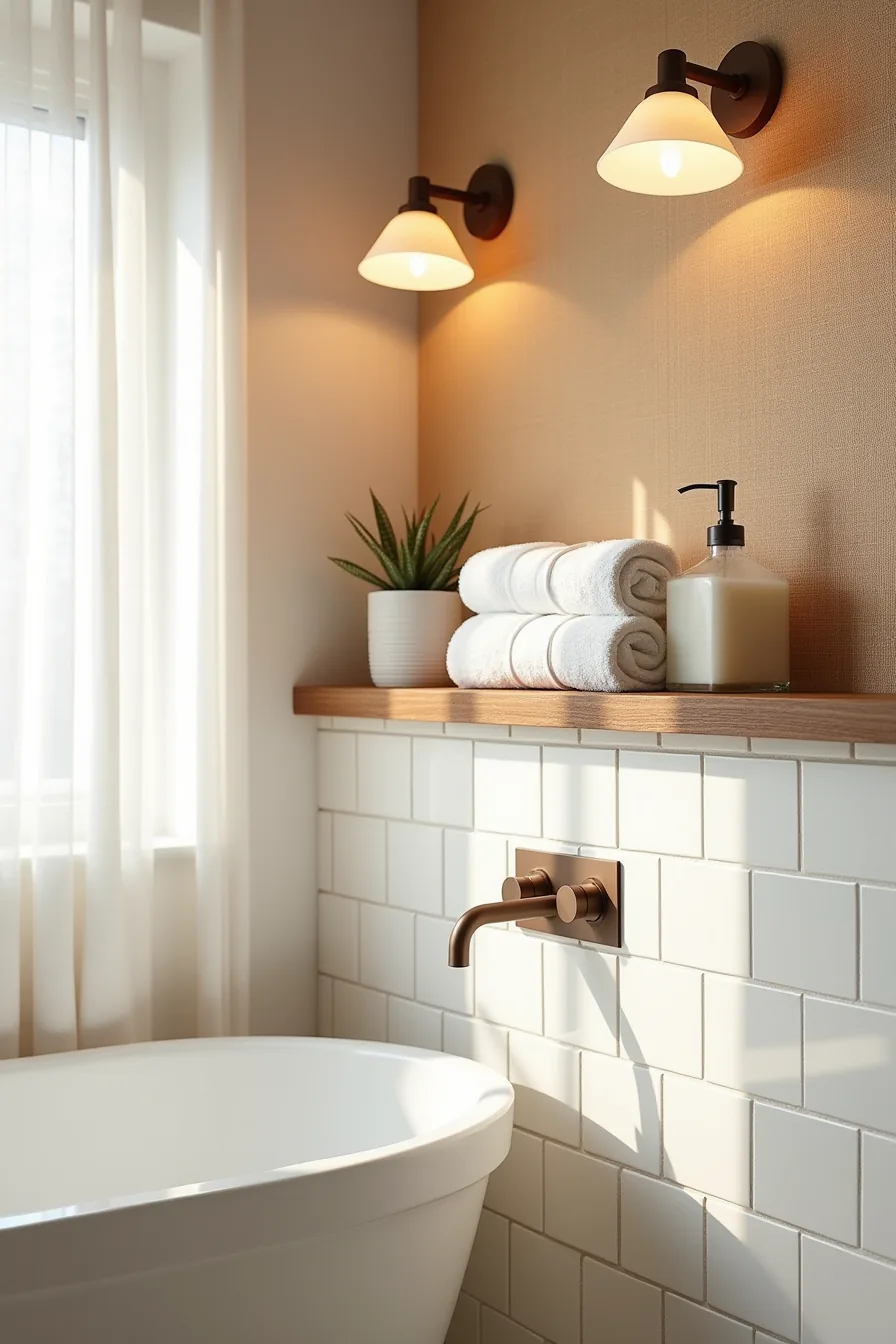
Grasscloth brings a natural fiber texture that hides minor wall imperfections far better than smooth vinyl. The tan weave in the wall covering paired with white subway tile wainscoting creates a deliberate break: tile protects the lower 3–4 feet where splashes happen, while the textured upper wall stays dry. The wooden floating shelf above the wainscoting holds rolled towels and a glass soap dispenser, keeping both within reach without adding floor clutter.
Expect to pay roughly $3–6 per square foot for genuine grasscloth, plus professional installation, because the natural material stretches and requires precise seam matching. A synthetic grasscloth-look vinyl runs $1.50–3 per square foot and handles humidity better, but lacks the depth of real fibers. Use grasscloth on one accent wall only in a small bathroom, full coverage in a 40-square-foot space reads as visually heavy, and the fibers can absorb moisture if ventilation is weak.
Clean with a dry brush or vacuum attachment only; water-based cleaners will stain natural fibers permanently.
Peel-and-Stick Solutions for Renters and Budget Shoppers
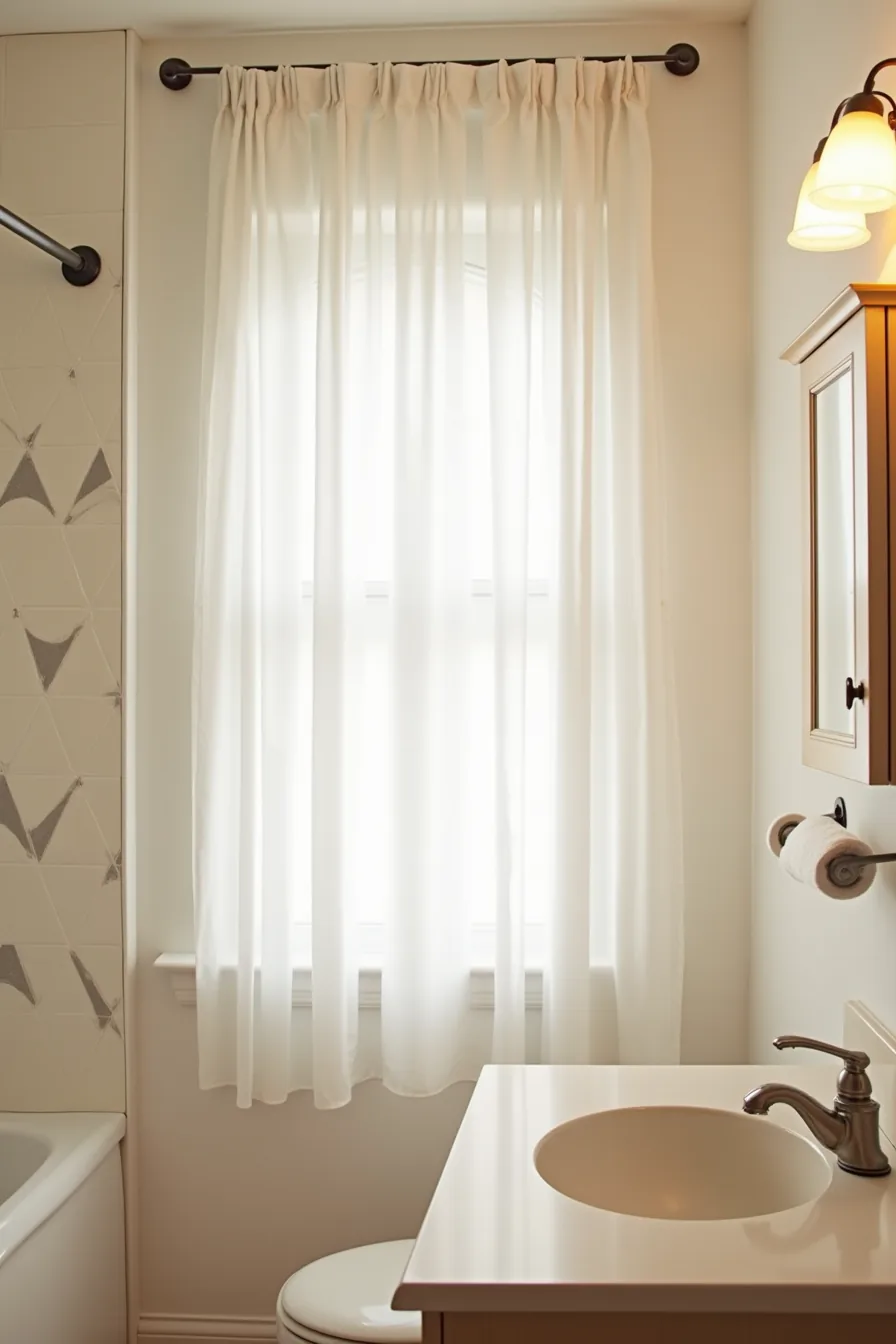
Peel-and-stick wallpaper solves the rental dilemma: it removes cleanly without damaging paint when you follow the manufacturer’s instructions, typically a 90-degree pull at a slow, steady angle. The geometric triangle pattern on smooth painted drywall adheres well because glossy, textured, or freshly painted surfaces reduce grip; expect a realistic lifespan of 1–2 years in a bathroom before edges lift. Humidity is the enemy, so avoid placing it directly opposite the shower spray.
A plastic shower curtain rod and liner keep moisture contained, letting the wallpaper stay dry near the medicine cabinet mirror and toothbrush holder shown here.
Budget-friendly options run $1–2.50 per square foot, making a 40-square-foot accent wall roughly $40–100. Use it behind the vanity only, the area least exposed to steam, and re-press edges monthly with a seam roller. Removal takes 30–60 minutes per wall and leaves no residue if the substrate was sound.
For under $150 total, you get a full visual transformation you can reverse before move-out day.
Dark Jewel Tones vs. Light Neutrals: Trade-Offs
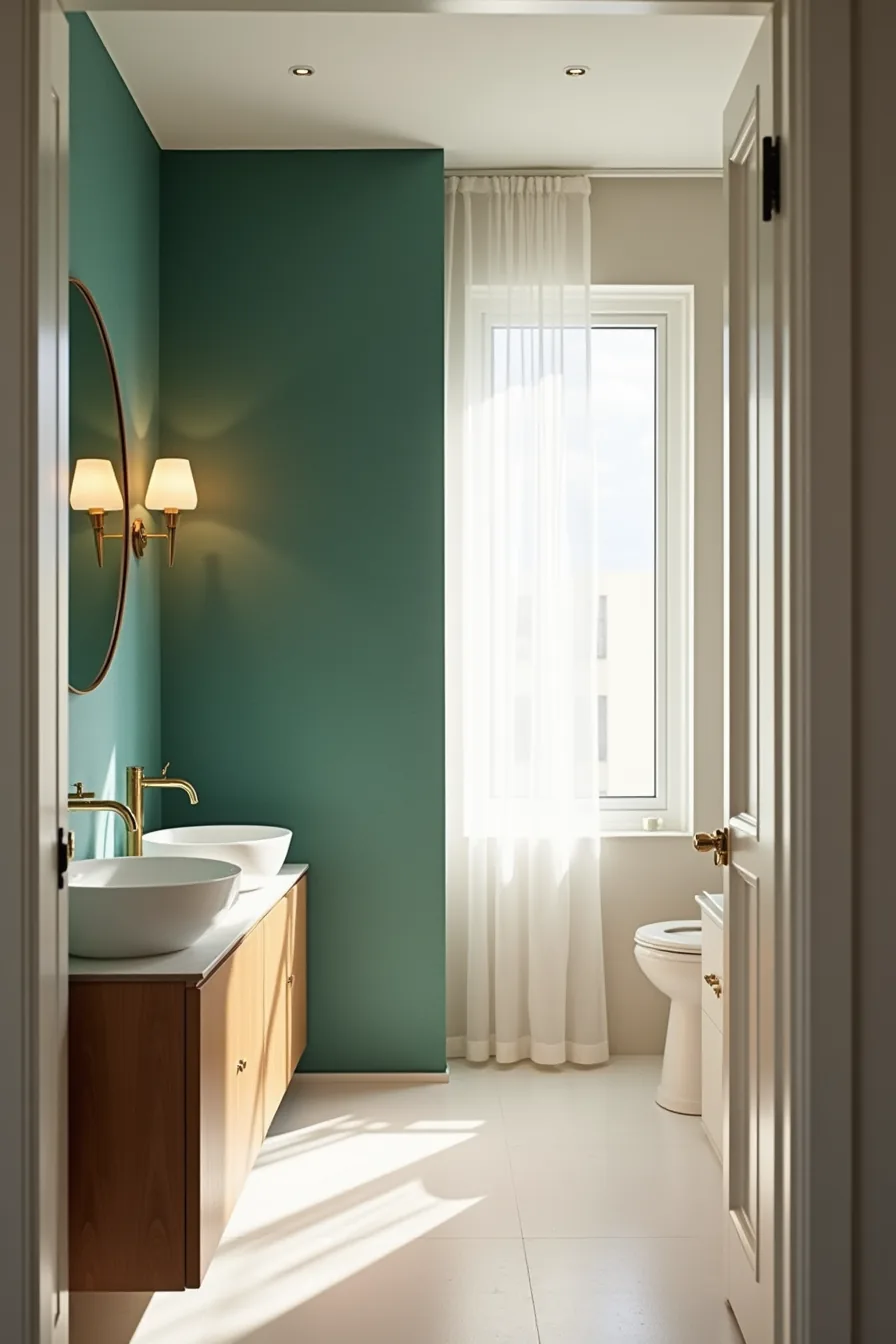
Split the difference between drama and openness by choosing where the eye should land. The emerald wallpaper paired with brass fixtures shrinks perceived square footage by roughly 10–15 percent, but it delivers powder room drama that makes the space feel intentional rather than cramped. Darkness absorbs light, so this route demands a minimum of two light sources, an overhead vanity bar and a sconce work best, otherwise the room reads as a cave.
The pale cream wallpaper with chrome fixtures does the opposite: it reflects available light and visually pushes walls outward, which suits a bathroom under 35 square feet or one with no window. The trade-off is maintenance visibility, cream shows water spots and toothpaste splatter within days, while emerald hides them for a week or more. Match dark jewel tones to white or marble tile for contrast, or pair light neutrals with colored tile to avoid a washed-out effect.
Brass warms a cool palette, chrome recedes against busy patterns, so let your fixtures dictate which side of the split you commit to.
Your First Move
Measure your bathroom’s largest wall and order a sample of your top two patterns before committing to anything. Most retailers offer swatches for under $10, and seeing the scale against your tile and fixtures beats any screen preview.
Start with the peel-and-stick option if you rent or crave flexibility, it installs in an afternoon and removes without residue. For permanent transformations, prioritize moisture-resistant vinyl and professional installation to avoid peeling seams.
Your bathroom will feel dramatically different within a week. Choose one wall, order that sample, and test it against your lighting before buying the full roll.
Frequently Asked Questions
Can you use regular wallpaper in a small bathroom, or do you need moisture-resistant types?
Regular wallpaper will fail quickly in a bathroom. Use vinyl-coated, vinyl, or peel-and-stick wallpaper designed for high-humidity spaces. Grasscloth and untreated paper absorb moisture, warp, and peel within months.
How do you prevent wallpaper from peeling in a steamy bathroom?
Run an exhaust fan during and 30 minutes after showers, and keep the room below 60% humidity. Apply a moisture-resistant primer to bare walls, seal seams with clear seam sealer, and use mildew-resistant adhesive.
What size pattern works best in a bathroom smaller than 40 square feet?
Choose medium-scale patterns, roughly 12–24 inches repeat. Large prints overwhelm the space, while tiny motifs get visually busy. A vertical stripe or a subtle geometric in that range adds depth without shrinking the room.
Should you wallpaper the entire small bathroom or just an accent wall?
Wallpaper the entire room if your pattern is light and low-contrast. For bold or dark designs, limit to one feature wall behind the vanity or toilet. Full coverage in a tiny space can feel claustrophobic; a single wall keeps the room airy.