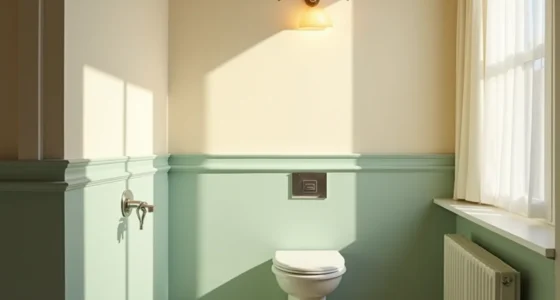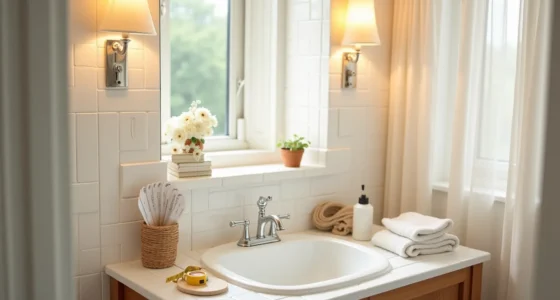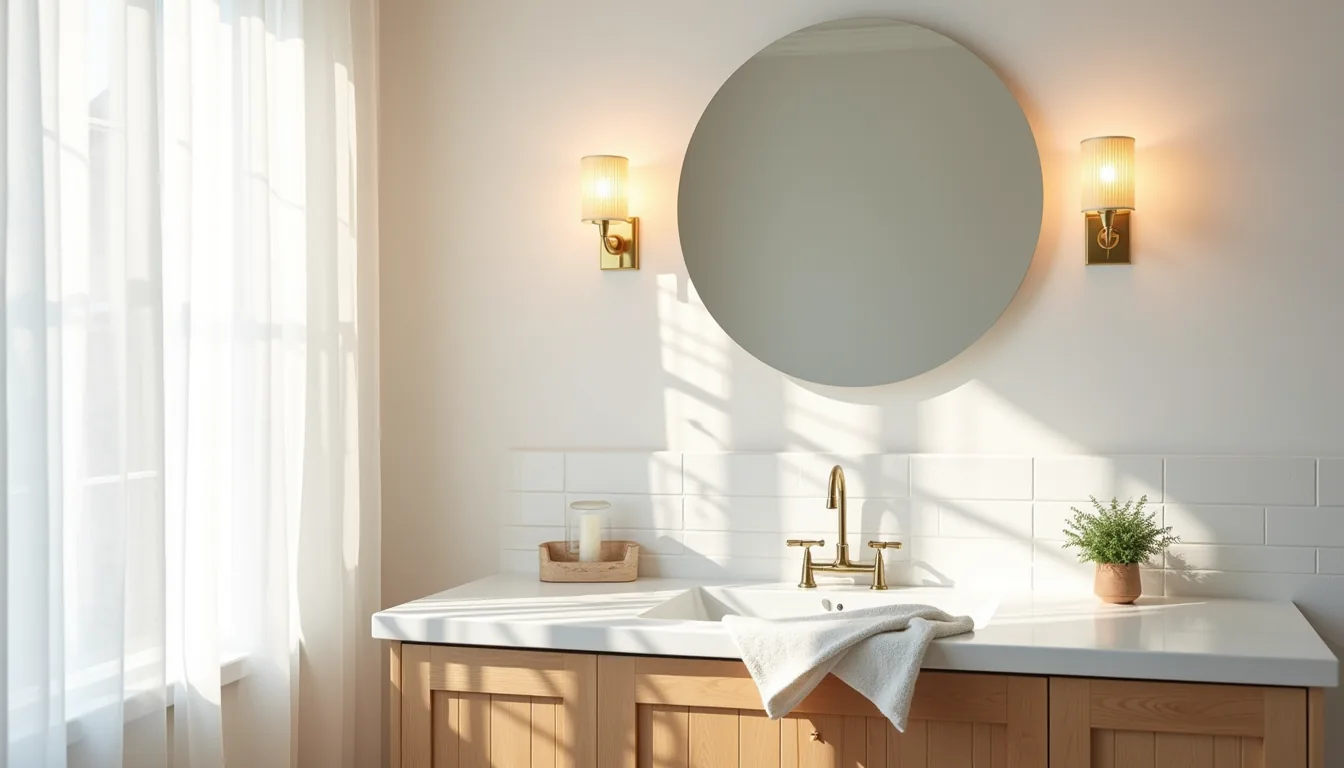

Bathroom wall sconces are the single most effective upgrade you can make to your vanity lighting, and choosing the right style comes down to three factors: your wall space, your wiring situation, and the mood you want after dark. Before you buy anything, measure the distance from your mirror edge to the nearest corner, this single number will disqualify half the options you see online. The remaining choices break down into six distinct approaches, each with its own installation demands and payoff.
You’ll find one that fits your rental agreement, your budget, and your morning routine.
Key takeaways
Mirror-side symmetry works best at 36–40 inches apart, centered on the sink, with sconces mounted 66–70 inches from the floor to avoid shadows on your face. Globe sconces suit wide vanities and powder rooms because they cast diffused light, while vertical bars excel in narrow spaces where horizontal clearance is tight. Renter-friendly plug-ins need a nearby outlet within cord reach, and adhesive-mount options cap around 5–10 pounds, so choose lightweight fixtures under that limit. Hardwired sconces cost 2–3 times more upfront than plug-ins but eliminate visible cords and boost resale value, making them the right call for a primary bath you’ll keep for 5+ years.
Mirror-Side Symmetry: The Standard Vanity Setup
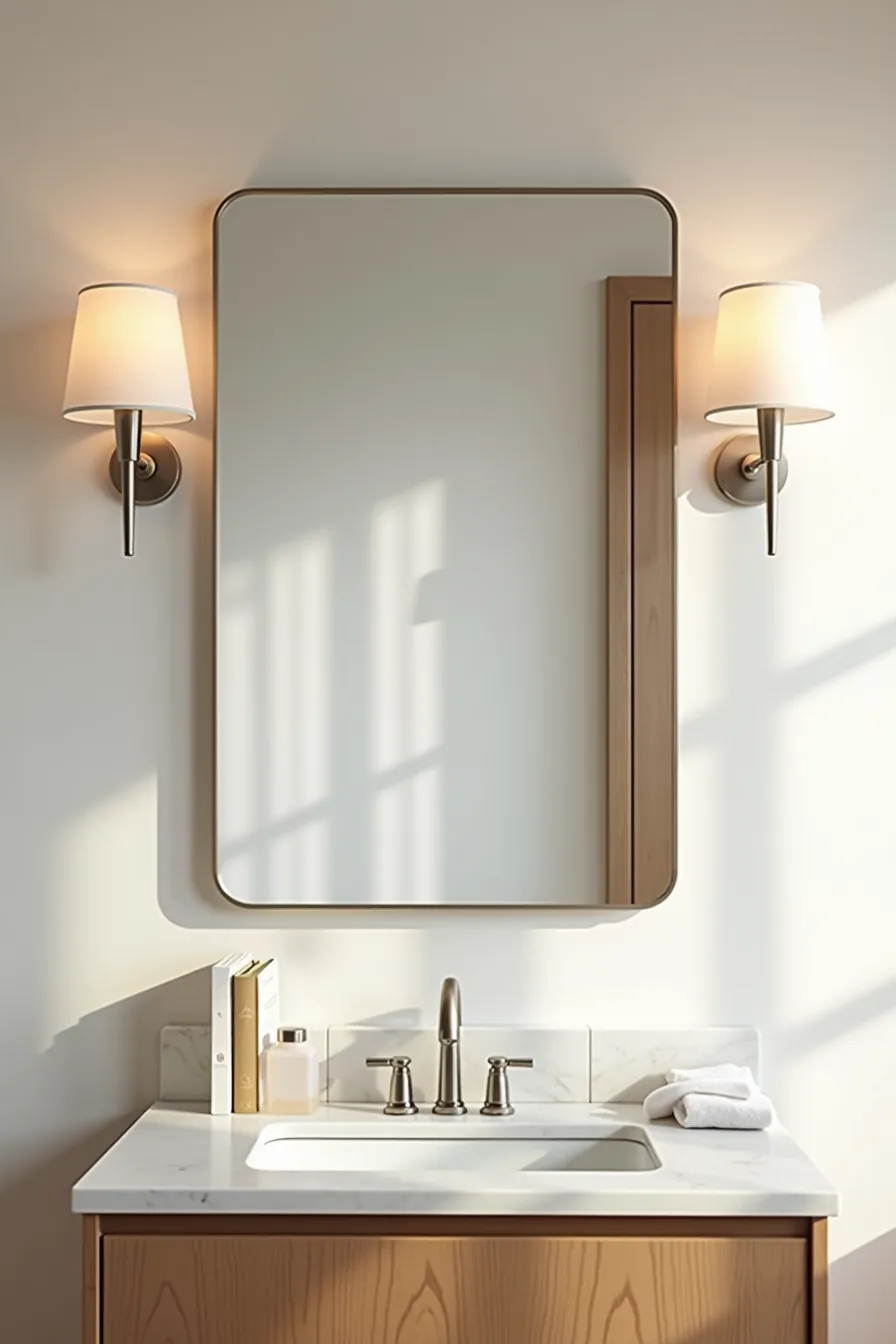
Flanking a rectangular mirror with two identical brushed nickel sconces remains the most reliable configuration for bathroom wall sconces because it eliminates shadows across your face. Position each fixture at eye level, typically 60–66 inches from the floor to the center of the shade, and space them 36–40 inches apart to match the width of a standard 24–30 inch vanity. This placement throws light evenly across both cheeks, making it the best choice for daily grooming and makeup application.
The setup suits medium to large bathrooms where the mirror spans at least 24 inches. On a marble countertop with a soap dispenser and hand towel nearby, the brushed nickel finish ties the fixtures to faucet and hardware tones without competing with the stone’s veining. In smaller spaces, narrow the sconce spacing to 30 inches and choose shades that project no more than 6 inches from the wall to avoid crowding the sink.
Avoid placing sconces directly above the mirror’s edge, this creates a dark band across your face and undermines the vanity lighting mood you’re trying to build.
Globe vs. Vertical Sconce: Comparing Form and Function
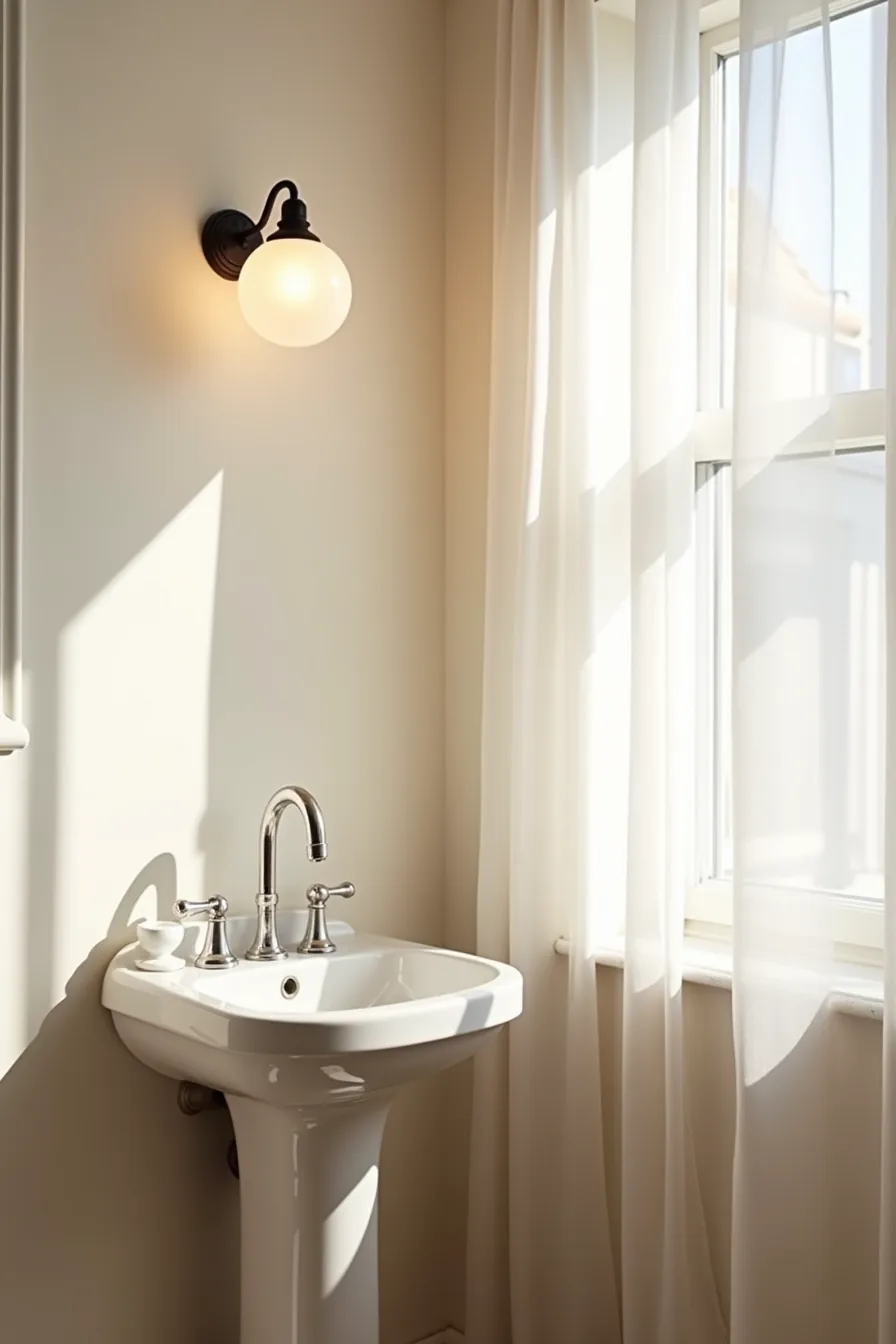
A globe sconce, like the frosted glass fixture mounted beside that pedestal sink, pushes light in every direction, washing the wall and your face with soft, shadow-free illumination. You sacrifice wall depth for that even glow, most globe shades project 5–7 inches from the wall, so reserve them for corners with at least 12 inches of clearance to the vanity edge. The chrome fixture arm and ceramic basin beside it tolerate this footprint comfortably; a tight half-bath wouldn’t.
The slim vertical arm sconce solves that problem. Mounted nearly flush against the surface, it directs light downward in a focused cone, which suits small powder rooms and narrow corridors beside a pedestal sink. You lose the ambient spread of a globe but gain clearance, making it the better choice when the door arc or foot traffic passes within 8 inches of the wall.
For grooming precision, pair a vertical sconce with an overhead fixture; for relaxed ambient light, choose the globe.
Single Statement Sconce Above the Mirror
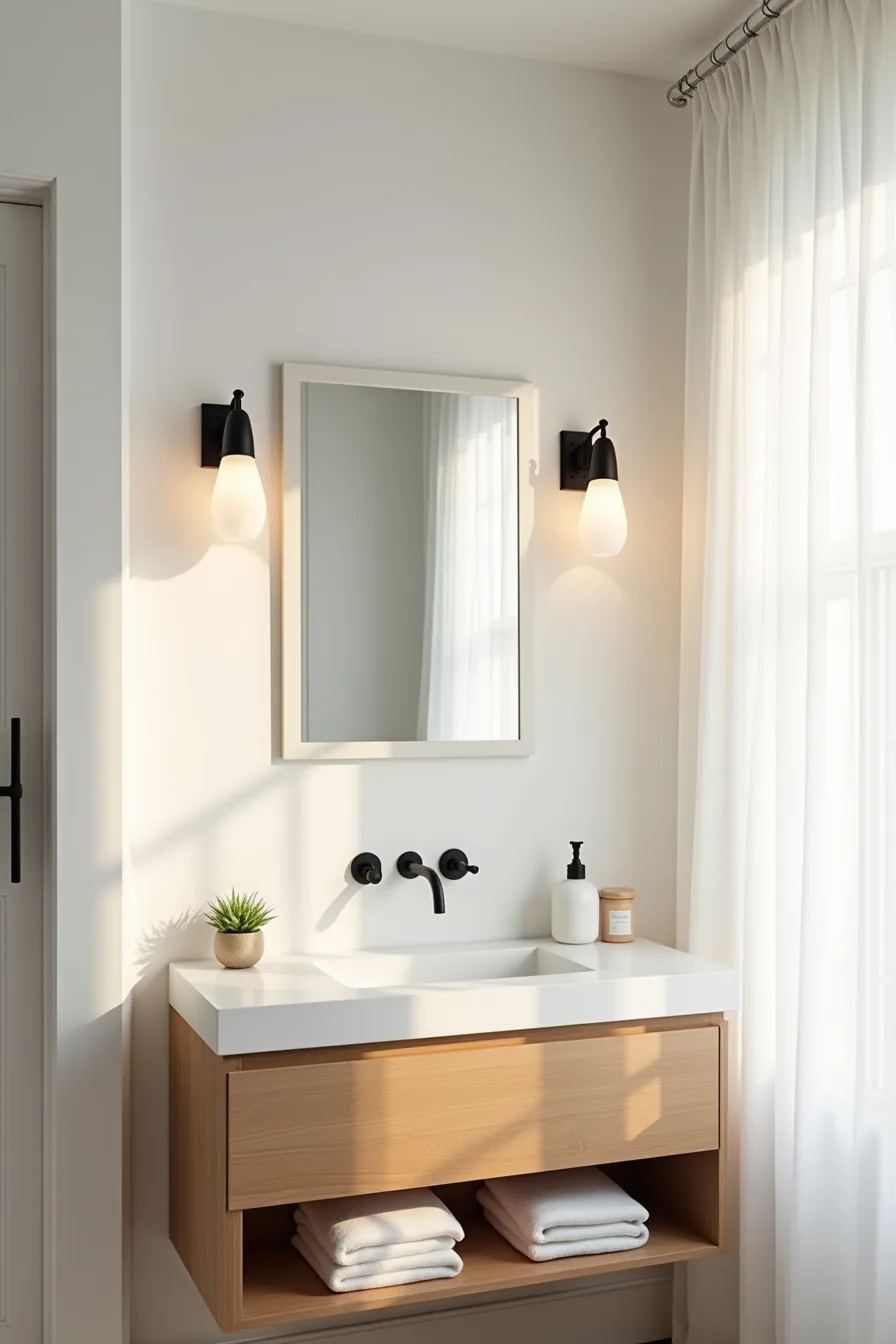
A single black metal sconce mounted centered above a rectangular mirror works when your vanity is too narrow for paired fixtures. Most powder rooms and compact vanities under 30 inches wide lack the wall space for two even lights, so one overhead fixture delivers sufficient task light without crowding the mirror’s edges. The black finish anchors the white walls and pulls the eye to the grooming zone.
This setup suits the minimalist who prefers fewer objects to dust and wipe down. Mount the base 75–80 inches from the floor to the sconce’s bottom edge, keeping it just above the mirror’s top for even facial illumination. The small shelf with folded washcloths beside the vanity benefits from the spill light without needing its own fixture, making this a cost-efficient choice for secondary bathrooms where you don’t shave or apply makeup daily.
Renter-Friendly Plug-In and Adhesive-Mount Options
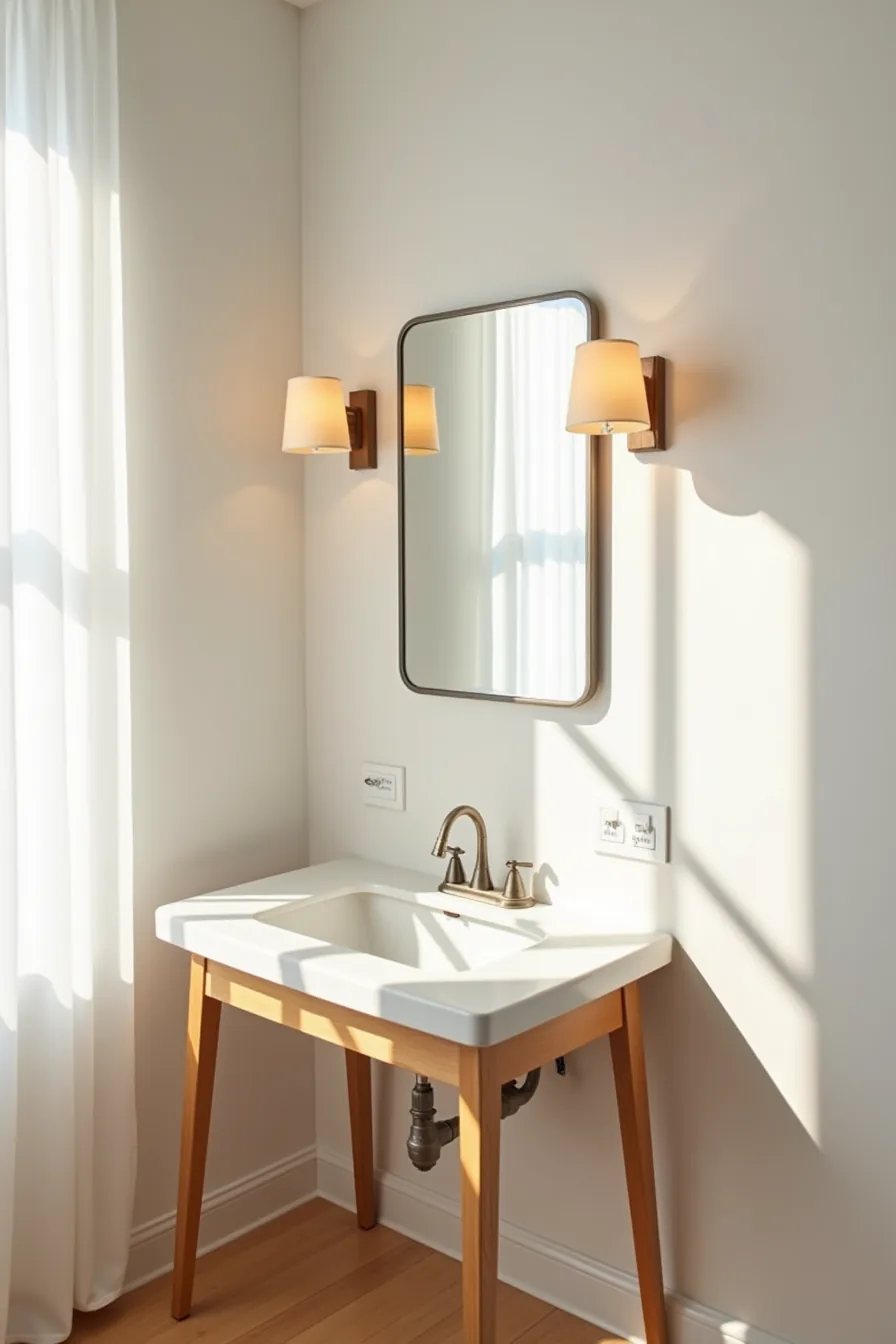
Plug-in sconces with adhesive backing solve the no-drilling problem without sacrificing style, provided you manage two realities: the cord and the output. In this setup, two adhesive-mount sconces flank a builder-grade mirror, with each power cord running down the wall to an outlet below the countertop. Cord clips hold the wires flush against the tile, so the visible cords read as intentional rather than accidental, but you must commit to those clips staying in place, since adhesive strips may pull paint when removed.
These fixtures suit renters who want task lighting at eye level without patching holes at move-out. Expect 300–500 lumens per sconce, fine for washing your face or brushing teeth, but insufficient for detailed makeup application. Position them 60–66 inches from the floor, centered at your face height, and keep them at least 6 inches from the mirror’s outer edge to avoid shadows.
The adhesive rating matters more than the fixture price: look for strips rated for bathroom humidity, and clean the wall with rubbing alcohol before mounting or they’ll fail within weeks. For Bathroom Sconce Ideas for Better Morning Lighting that you can reverse in ten minutes, this is the lowest-commitment route.
Hardwired Sconces for Long-Term Investment
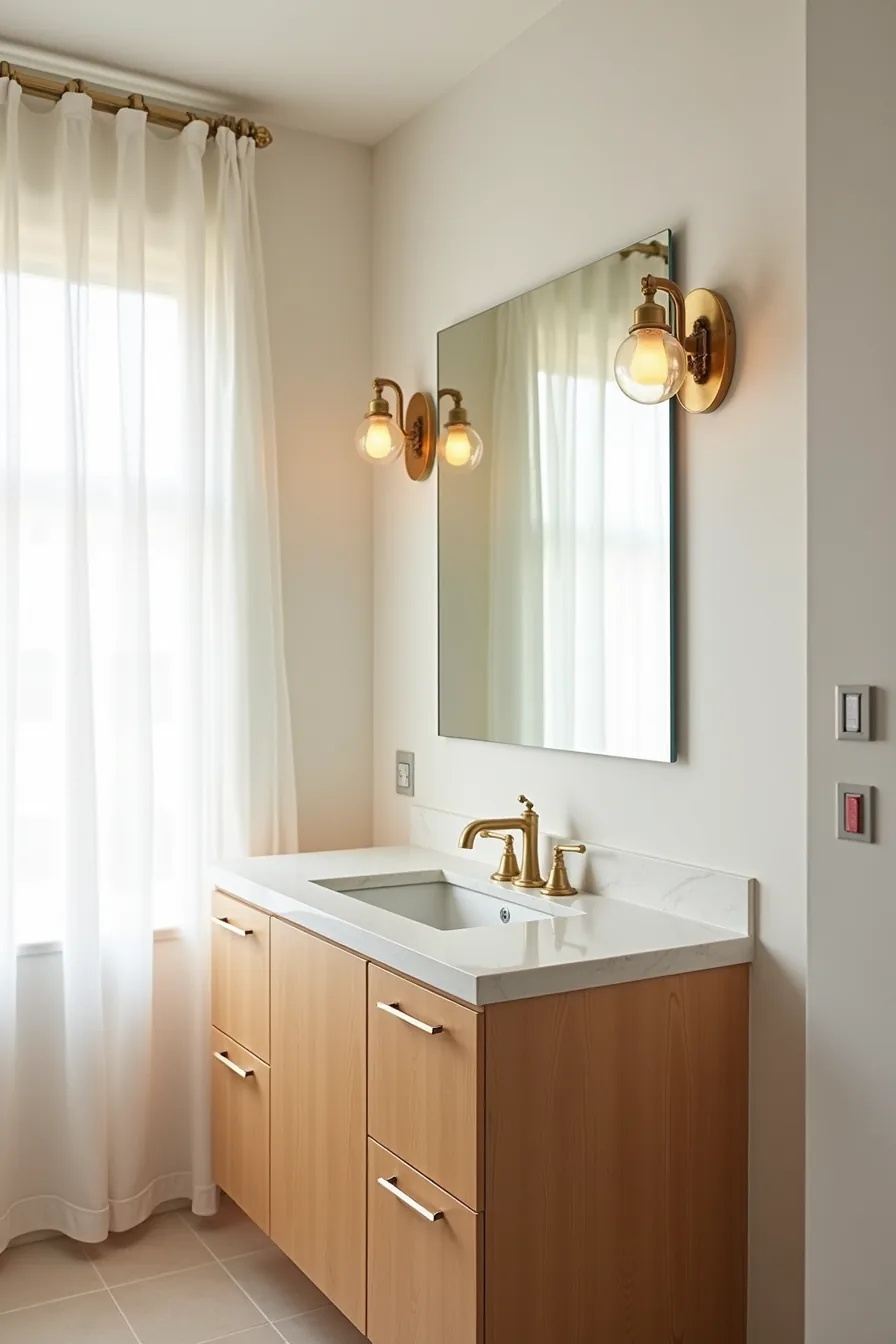
Hardwired fixtures deliver 800–1,200 lumens per sconce, roughly double what plug-in models produce, and they eliminate the cord-management compromise entirely. The real advantage is reliability: no batteries, no outlet dependency, and a dimmer switch will genuinely control the output for late-night use. Plan for this route during renovation, because the junction boxes and wire conduit visible in the open drywall must be framed and routed before tile or paint goes up.
Budget realistically: expect $150–$400 per fixture, plus $200–$500 per sconce for an electrician to run new circuits, depending on your wall construction and local rates. If your vanity backs onto an unfinished basement or attic, access makes this dramatically cheaper. Choose wet-rated brass or stainless fixtures if they sit within 3 feet of the shower or tub; damp-rated works elsewhere.
Mount them 60–66 inches from the floor, spaced 36–40 inches apart for a double vanity, and verify the junction boxes align with your mirror width before closing the drywall, moving a box afterward costs more than the fixture itself.
Adapting Sconce Style to Room Size and Layout
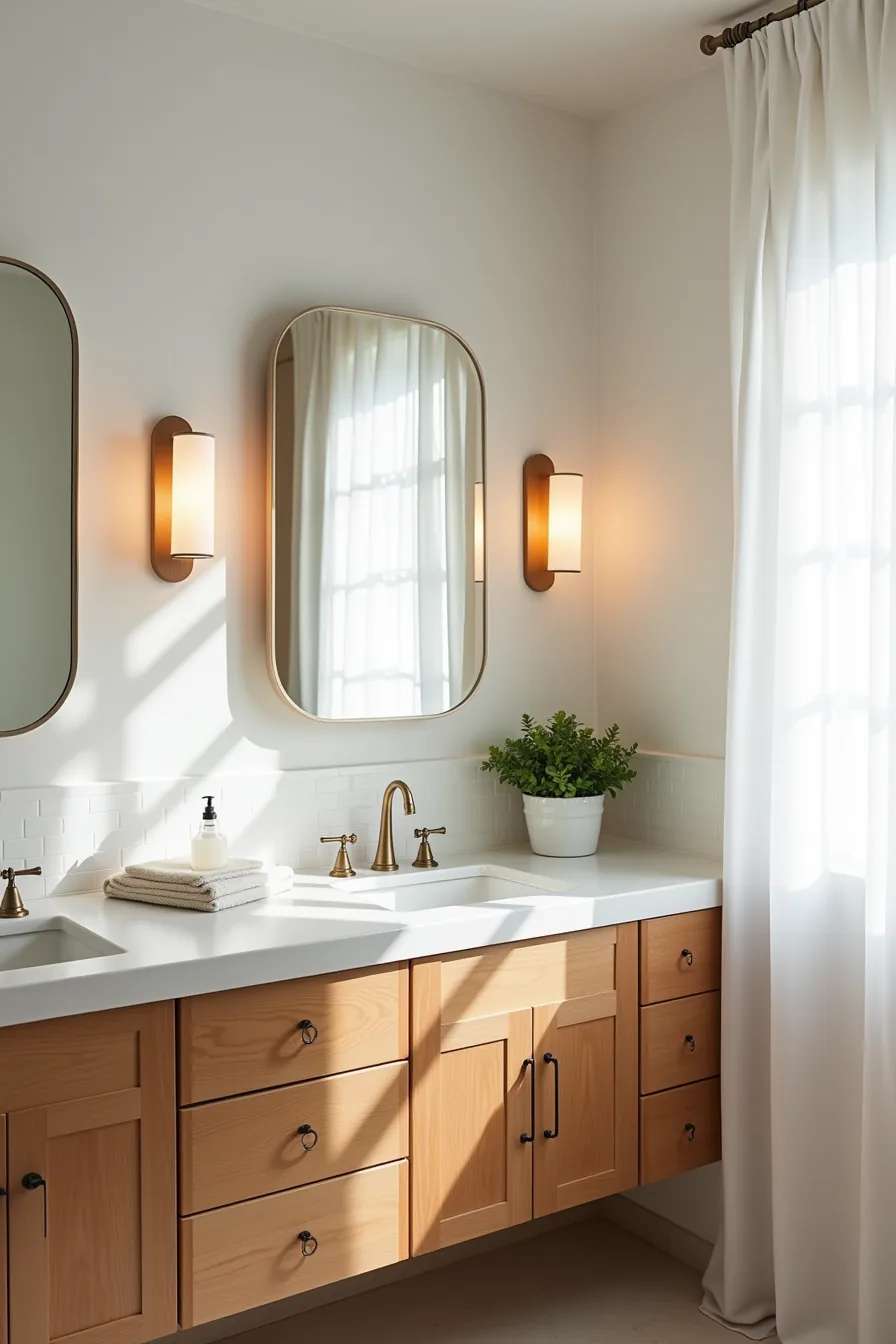
In a powder room, keep sconce widths under 5 inches and arm extensions to 6–8 inches so they don’t crowd a 24–30 inch vanity. A single wide sconce above a mirror works, but flanking a 36-inch mirror with two 6-inch-wide sconces spaced 24 inches apart creates balanced task lighting without overwhelming the wall, this setup suits a medium master bath where you need shadow-free illumination for grooming. For a recessed medicine cabinet, mount sconces on the outer edges of the cabinet rather than directly beside it; this prevents the cabinet door from blocking the light beam when opened.
On subway tile backsplashes, position sconce bases in the grout line’s midpoint to avoid drilling through tile edges, which crack more easily. Large spaces call for 8–10 inch wide fixtures with 10–12 inch arms to maintain proportion against a 60–72 inch double vanity, while small bathrooms should skip sconce installation entirely if wall clearance drops below 12 inches from the mirror edge, task lighting from a ceiling fixture becomes the better call.
What to do first
Before you buy a single sconce, measure your vanity width and mirror placement. Most bathrooms need fixtures mounted 60-66 inches from the floor, with 6-8 inches of clearance between the sconce edge and the mirror frame. Write those numbers down, then check your wiring access.
Snap a photo of your wall, note whether you’ve existing junction boxes, and take both to a lighting showroom or browse online with measurements in hand. That single photo, paired with your dimensions, will filter out half the options instantly.
Your next move: order one sconce, mount it temporarily with painter’s tape, and live with it for 48 hours before committing to the full set.
Frequently Asked Questions
How far apart should bathroom wall sconces be from the mirror?
Mount sconces 30–36 inches apart, centered on the mirror’s width, with fixtures placed at eye level (60–66 inches from floor). This spacing prevents shadows and ensures even facial illumination.
Can you use bathroom wall sconces in a small powder room, and what size works?
Yes. Choose compact sconces with backplates under 5 inches wide and arms extending 4–6 inches. Place them flanking a mirror narrower than 24 inches, or use a single sconce above the mirror to save wall space.
Do bathroom wall sconces need to be hardwired, or can renters use temporary options?
Renters can use plug-in sconces with cord covers or battery-operated LED fixtures. Hardwired options require an electrician and are permanent. Temporary versions mount with adhesive strips or screws, and you can remove them without damaging walls.
What’s the difference between a globe sconce and a vertical sconce for bathroom lighting?
A globe sconce emits diffused, 360-degree light from a spherical shade, ideal for ambient glow. A vertical sconce directs light up and down in a linear beam, better for task lighting at a mirror. Choose globes for softer mood; verticals for sharper visibility.