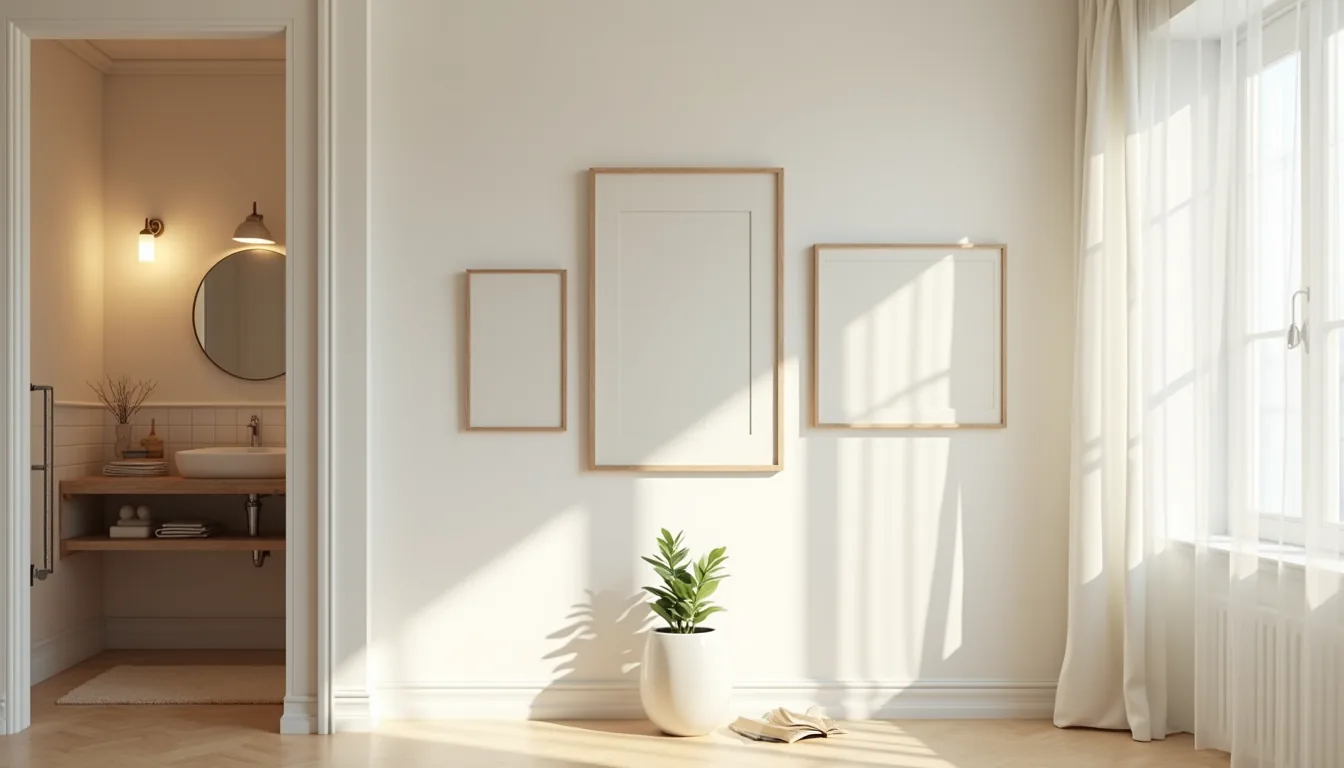
Bathroom wall decor ideas fail most often not from a lack of inspiration, but from a mismatch between the piece you choose and the physical constraints of the room, humidity, wall space, and how you actually move through the space. You can fix that by treating the wall as a functional layer, not just a canvas. The six approaches below, from renter-friendly adhesive panels to moisture-proof ceramic tiles, each solve a specific problem, so you can match the right tactic to your square footage, budget, and tolerance for maintenance.
Key takeaways
- Art wins when you need a humidity-proof focal point; opt for framed prints with acrylic glazing or metal panels rated for damp zones.
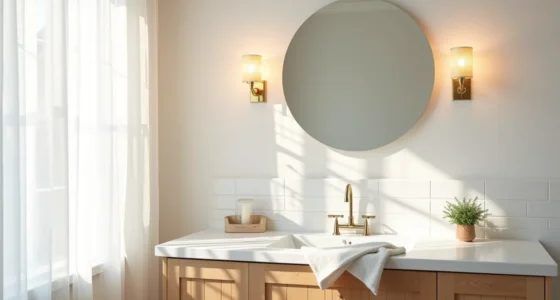
- Mirrors double as functional decor in tiny baths, choose a round or arched style 18–24 inches wide to avoid overwhelming a 30-inch vanity wall.
- Floating shelves demand a strict edit: limit yourself to 3–5 objects per shelf, mixing one tall item, one stacked book pile, and one small plant for balanced negative space.
- Removable wallpaper suits renters and trials, but verify it’s vinyl-based and test adhesion on a 12-inch square patch for 48 hours before committing to a full wall.
Art vs Mirror: Choosing Your Primary Wall Feature
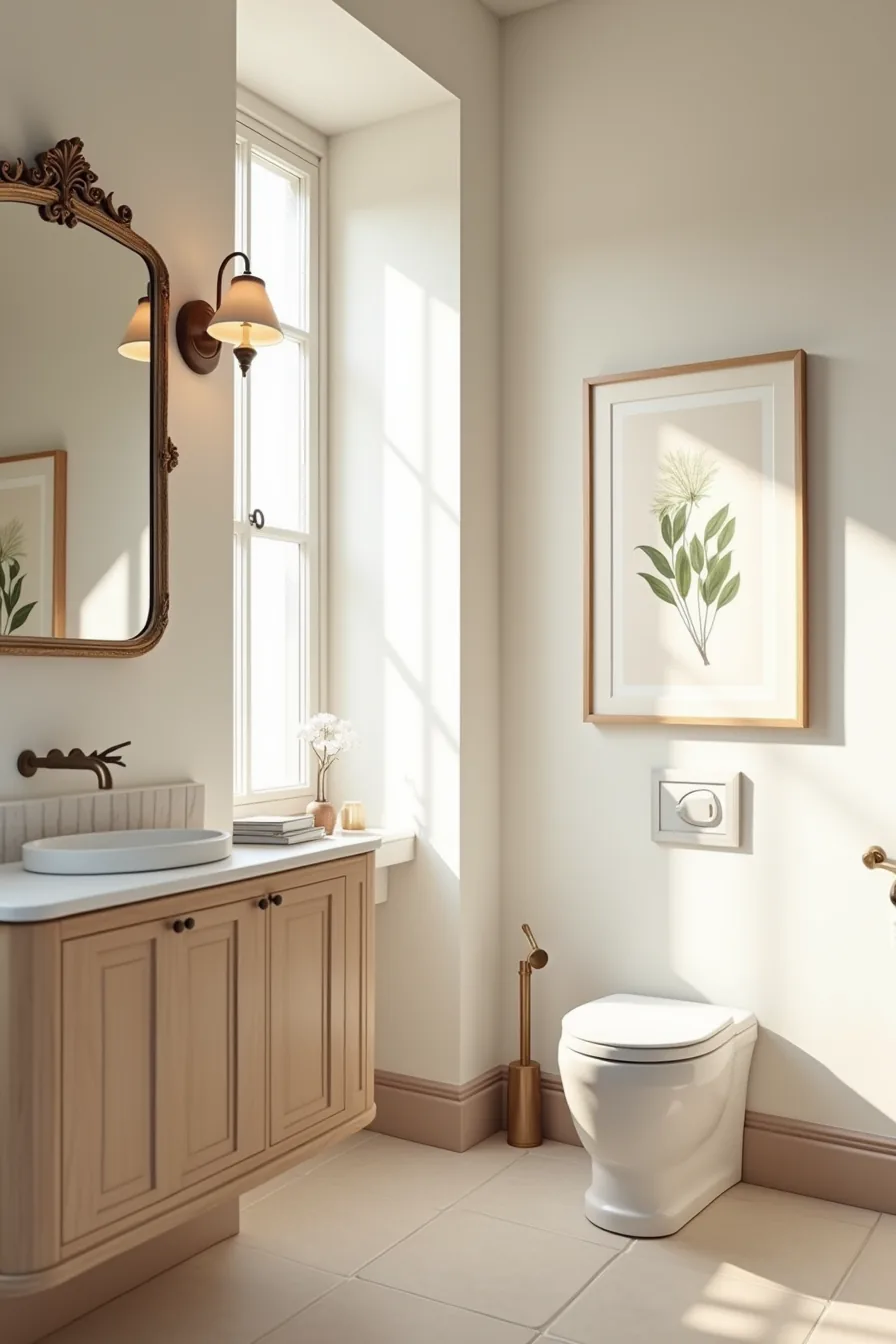
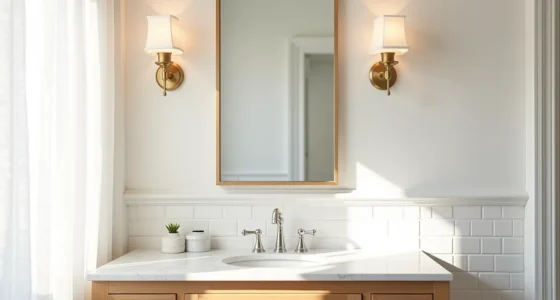
The single biggest decision for your bathroom wall decor ideas is choosing between art and a mirror as the dominant element. A large ornate mirror on one side of a tile wall reflects window light, doubling the perceived brightness of the room and making a narrow space feel wider. This works best in powder rooms or small baths with limited natural light, where every reflected ray counts.
Keep the mirror’s frame sealed with a waterproof finish, as steam will damage untreated wood within months.
A framed botanical artwork at eye level on the opposite wall serves a different purpose: it introduces color, texture, and personality without competing for light. This route suits larger bathrooms where you want visual warmth rather than utility. The trade-off is maintenance, artwork requires a moisture-resistant frame and glass, or prints will curl and discolor.
You can rotate prints seasonally for near-zero cost, while a quality mirror is a one-time investment that never needs updating. Match the wall feature to your room’s primary need: brightness or character.
Small Wall Styling for Compact Bathrooms
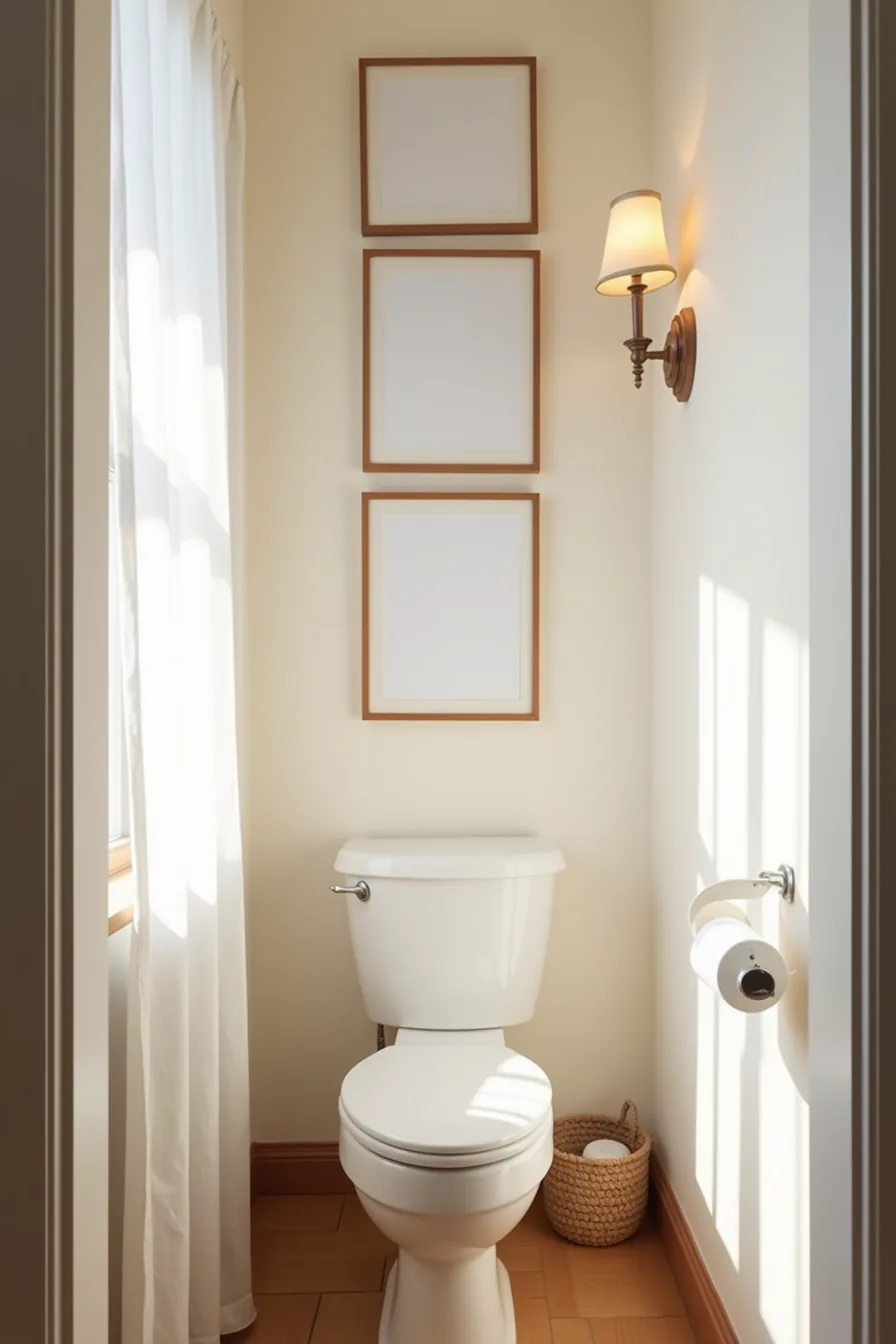
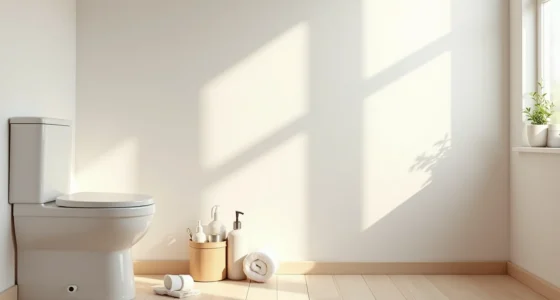
In bathrooms under 40 square feet, the wall above the toilet is prime real estate, and the most common mistake is treating it like a shelf. Five small framed prints stacked vertically in a tight column draw the eye upward, making the ceiling feel higher and using dead space without consuming floor area. Keep each frame under 8 inches on its longest side; anything larger in a narrow space will visually crowd the toilet and make the room feel tighter than it’s.
A single small woven basket hung to the side adds organic texture and holds rolled hand towels or spare toilet paper, doubling as storage you can reach from a seated position. Keep spacing between items to 2–3 inches, anything wider reads as scattered, and anything tighter becomes visual noise. This setup suits renters or anyone avoiding permanent changes: lightweight frames with sawtooth hangers and adhesive strips hold up to 5 pounds each and remove cleanly, while the basket’s natural fiber dries quickly if steam reaches it.
For small wall styling, the rule is verticality over volume: one tight column, one functional accent, and nothing that protrudes more than 3 inches from the wall.
Floating Shelf Decor: Edit and Arrangement
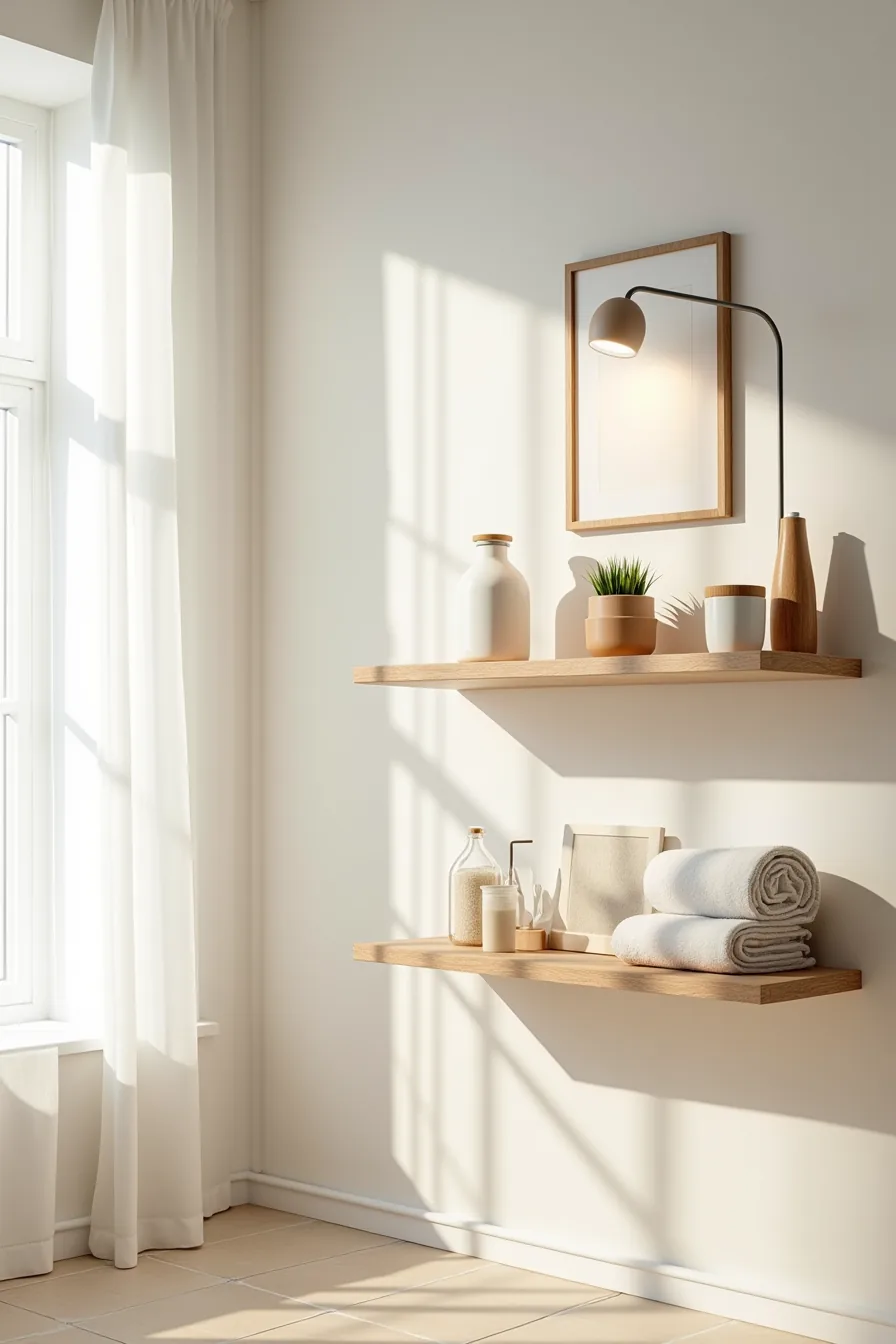
The shelf-decor edit starts with subtraction: limit yourself to four items per two-foot shelf, and let each one earn its place. A rolled towel on the left provides practical function, while a glass jar holding cotton swabs and a small ceramic vessel for jewelry keep daily essentials within arm’s reach. The trailing plant on the right introduces the only organic element, softening the hard lines of the tile without demanding attention.
Mount the shelf at 60–66 inches from the floor, high enough to clear the vanity top but low enough to access without stretching. Distribute weight unevenly: heavier ceramics on the ends, lighter glass and plants toward the center, preventing sagging over time. For materials, choose solid teak or sealed bamboo; both handle steam better than raw pine, which will warp within months in a humid bathroom.
Leave a 1.5–2 inch gap between items so each object reads distinctly. This arrangement suits medium bathrooms (40–80 square feet) where a single shelf acts as a focal point rather than a storage catch-all.
Tile and Wallpaper: Permanent Wall Treatments
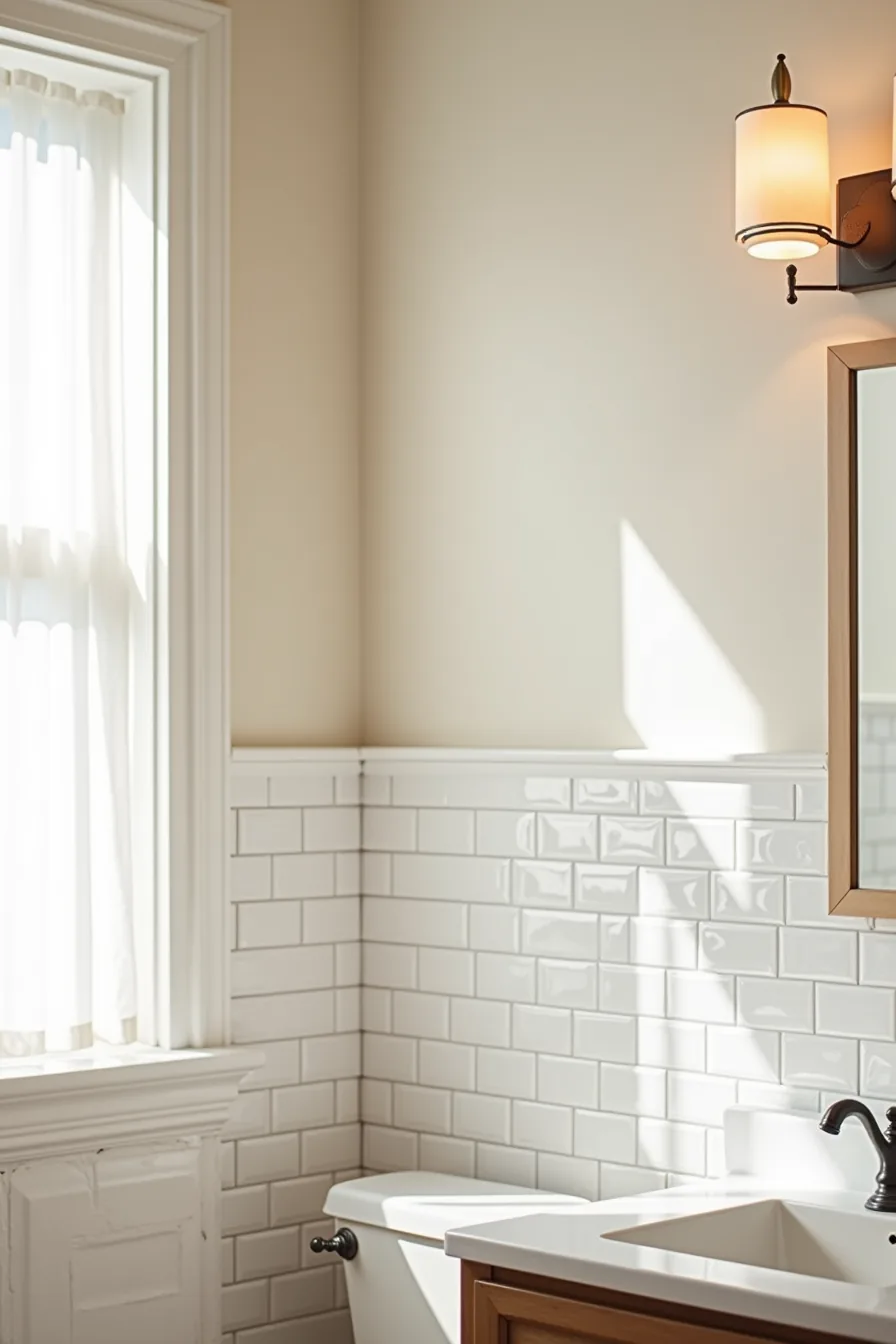
The half-wall treatment, subway tile below wainscot height, geometric peel-and-stick wallpaper from that line to the ceiling, remains the most forgiving permanent option for humid bathrooms. The tile handles the splash zone where moisture sits heaviest, while the wallpaper sits high enough to escape condensation damage. This combination suits homeowners wanting a long-term investment: expect to pay two to three times more for tile installation than wallpaper alone, but gain zero-maintenance durability that lasts decades.
For renters, the peel-and-stick route carries a critical caveat: adhesion fails above 60 percent humidity unless the wall is primed and smooth. Test a 12-inch square in a corner for 48 hours before committing to the full install. When applying the paper, keep seams tight against the corners, gaps here show within months as moisture curls the edges.
Matte finishes outperform gloss in bathrooms because they mask the minor bubbling that steam inevitably causes. If you rent, skip the tile and use the wallpaper alone from floor to ceiling; it reads as intentional design, not a compromise, and removes cleanly when the lease ends.
Quick Refresh with Removable Decor
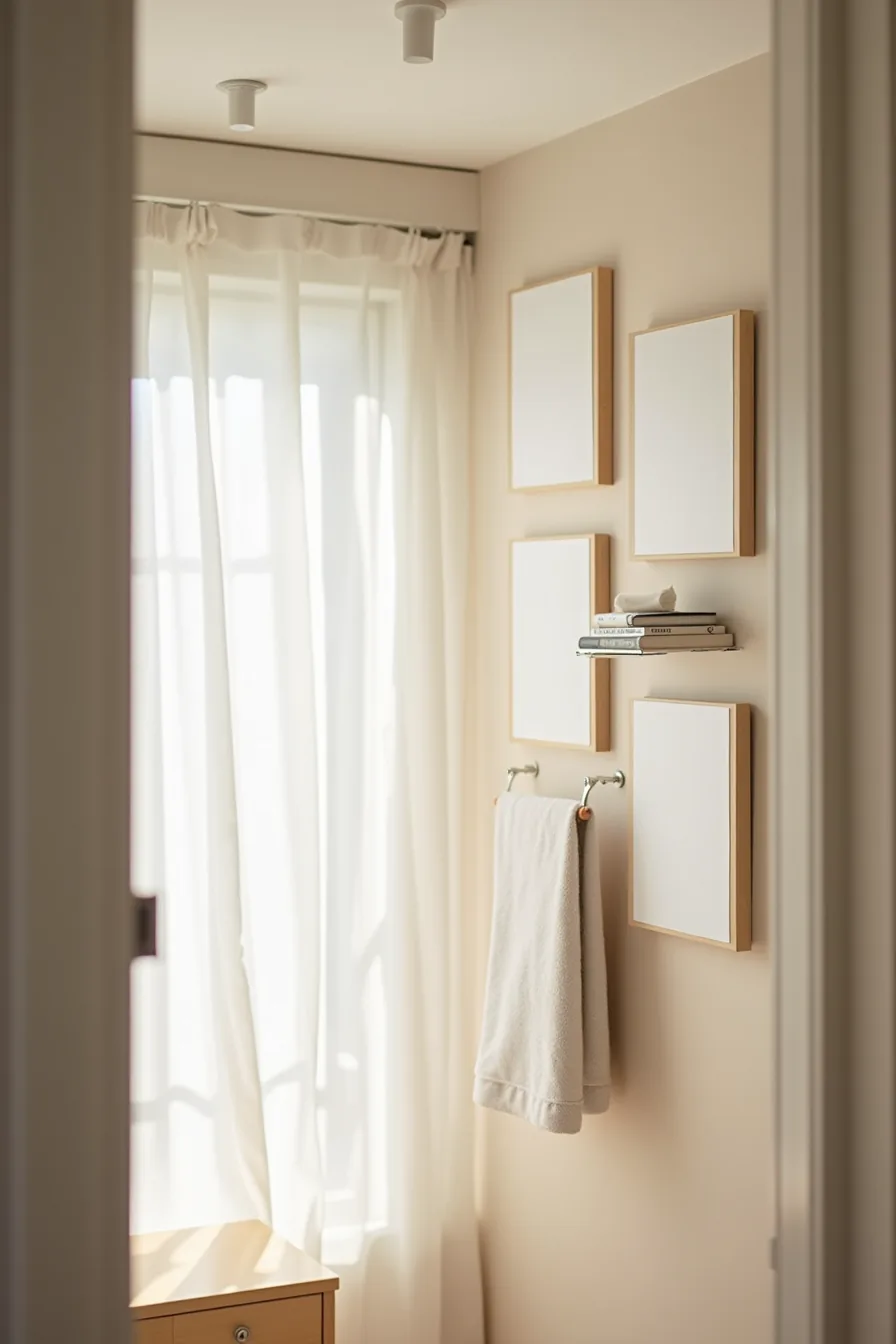
The most straightforward route to new bathroom wall decor ideas for a quick refresh uses Command-style adhesive strips, which hold up to 90 percent of the weight of a nail for canvas prints and lightweight frames, provided the wall is clean and dry. The four canvas prints in this setup each weigh under two pounds, so three strips per print on the top and bottom edges keep them secure without a single puncture. This approach suits renters and anyone who changes their decor with the seasons.
The magnetic panel expands your options without added wall damage. Mount a 12-by-18-inch steel sheet using the same strips, then attach a small metal shelf or lightweight accessories with neodymium magnets. Keep the magnetic items under one pound each, anything heavier will slide down the panel over a week of steam exposure.
For the fabric banner, a tension rod fitted inside the wall gap holds it taut with zero hardware. Choose a quick-dry synthetic fabric, as cotton stays damp and can mildew within three weeks in a standard bathroom.
Scaling Decor to Your Bathroom Size
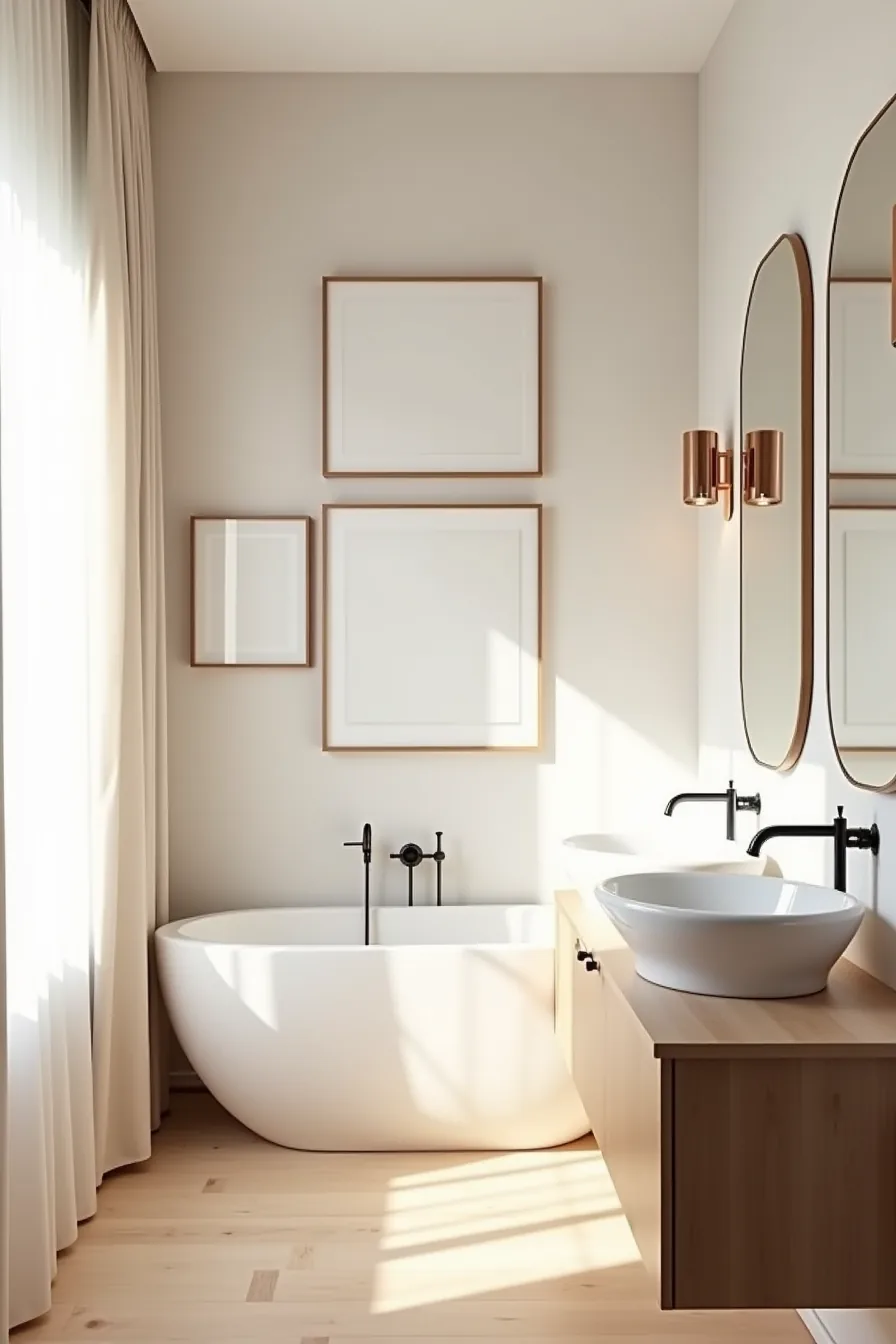
Proportion drives whether a wall feels curated or cluttered. In a large bathroom, typically over 100 square feet, a single piece gets visually lost, so the seven-piece arrangement here works because it distributes visual weight across the full expanse. Two large mirrors anchor the composition; the three medium framed prints between them create a rhythm you read left to right, while the two wall sconces add functional light at eye level.
The asymmetric placement keeps the eye moving instead of settling on a static grid.
For small bathrooms under 50 square feet, drop the count to three pieces maximum, and keep any single item under 18 inches in its longest dimension. In medium baths, five pieces across a 60–72-inch wall reads balanced with roughly 6–8 inches of negative space between frames. Sconces should clear the mirror edge by 3–4 inches and sit 60–66 inches from the floor.
Hang artwork so its center lands at 57–60 inches, the standard gallery height, but raise it 2–3 inches in rooms with taller vanities.
What to do first
You now have six distinct directions, each with known costs, maintenance loads, and spatial requirements. Before buying anything, measure your available wall area and note the distance from the shower or tub to your chosen mounting spots, this alone filters out half your options.
Pick the single solution that solves your biggest problem first, whether that’s zero-drill installation, moisture resistance, or visual impact. Then walk through your bathroom and confirm it won’t block the door swing, toilet access, or towel bar.
Start by taping paper cutouts to the wall at your intended placement. Live with them for 24 hours, then commit to the purchase.
Frequently Asked Questions
What size artwork works best in a small bathroom?
Stick to pieces no larger than 12–18 inches wide in a small bathroom. Oversized art overwhelms the wall and competes with mirrors and fixtures. One focused piece beats three cluttered ones.
Can I use regular wall decor in a humid bathroom, or do I need special materials?
Regular framed prints can work if sealed and placed away from direct shower spray. Choose metal, glass, or sealed wood frames over raw canvas. For consistent moisture, opt for waterproof tiles, acrylic, or resin pieces instead.
How do I hang things in a rental bathroom without damaging walls?
Use removable adhesive hooks or strips rated for damp environments, they hold up to 5–10 pounds and peel off cleanly. Skip nails and screws entirely. Test the adhesive on a small corner first to confirm it won’t lift paint.
Should I fill every wall or leave some space empty in a small bathroom?
Leave at least 40–50 percent of wall space bare in a small bathroom. Empty wall keeps the room feeling open and prevents visual clutter. Focus decor on one feature wall, like above the toilet or beside the mirror.