
Antique brass bathroom fixtures offer a warm, lived-in alternative to chrome and stainless steel, but the style spans far more than a single faucet finish, it includes everything from unlacquered bronze that develops a natural patina to polished brass with a mirror shine, each demanding different maintenance and suiting different bathroom layouts. The key to pulling off this look is matching the finish to your room’s size, water hardness, and how much upkeep you’re willing to take on. Below, you’ll find six distinct interpretations with the exact trade-offs, placement rules, and costs to help you choose without a costly mistake.
Key takeaways
Start with the faucet, swapping a single widespread or centerset faucet for an antique brass model delivers the most visual impact for under $150 and takes under an hour with basic plumbing tools. Match patina to use, high-traffic fixtures like a showerhead or towel bar should get a lacquered antique brass finish, while a low-touch vanity mirror can safely show raw, unlacquered aging. Scale down the metal, in a bathroom under 50 square feet, choose slimmer 4-inch centerset faucets and 18-inch towel bars so the brass reads as an accent, not an overwhelming glow. Mix by zone, not by piece, keep chrome on the shower valve and plumbing rough-in, but run antique brass on visible handles and spouts; the two finishes coexist cleanly when separated by a clear visual boundary like a shower curtain or wall tile line.
Faucet-First Strategy: The Quickest Refresh
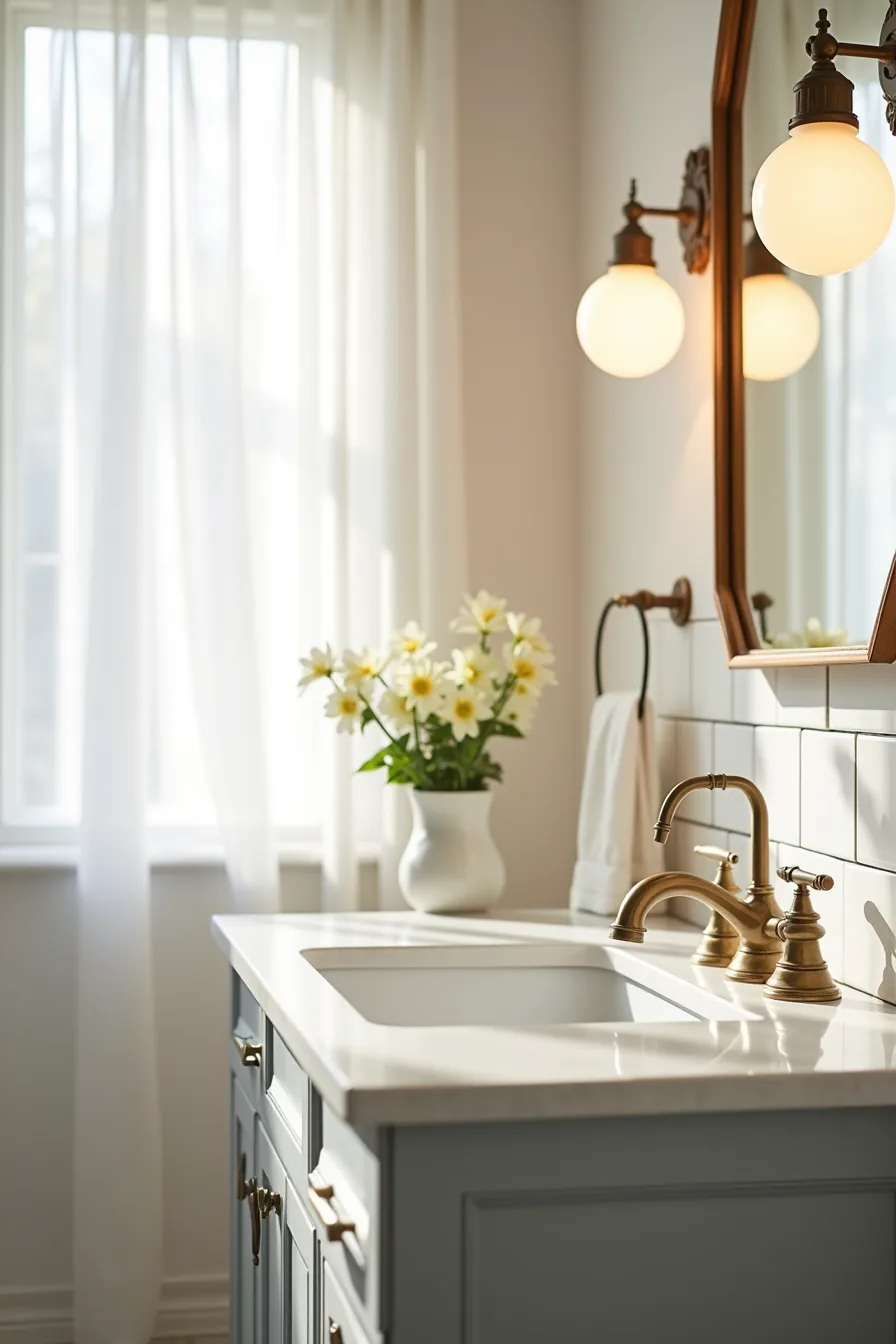
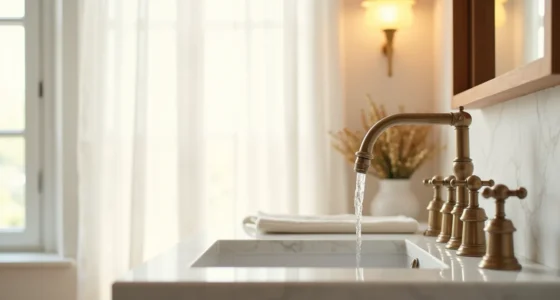
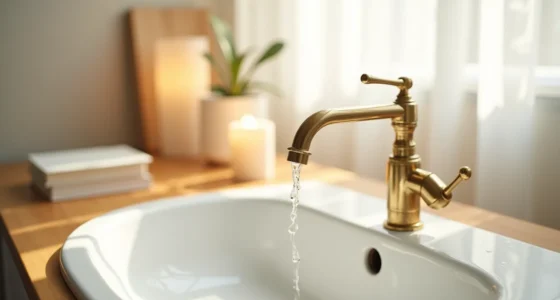
Replacing a single faucet is the highest-impact, lowest-effort way to introduce Antique Brass Bathroom Fixtures. You skip demolition, plumbing re-routing, and tile work entirely. A light gray vanity countertop paired with a white subway tile backsplash creates the neutral canvas this finish needs to read as intentional, not accidental.
Match the faucet’s scale to your sink’s deck width. A centerset model suits a 4-inch spread on standard 24- to 30-inch vanities, while a widespread unit with 8-inch handles fits wider counters. Expect to pay $120 to $400 for a quality brass faucet, plus $100 to $200 for a plumber if you can’t shut off the water and connect supply lines yourself.
The key limitation: your sink’s hole configuration. If you’ve a single-hole faucet opening, choose a matching single-handle antique brass model. Adapter plates exist but add visual clutter, defeating the clean look you’re after.
Vintage Vanity Look with Salvage Hardware
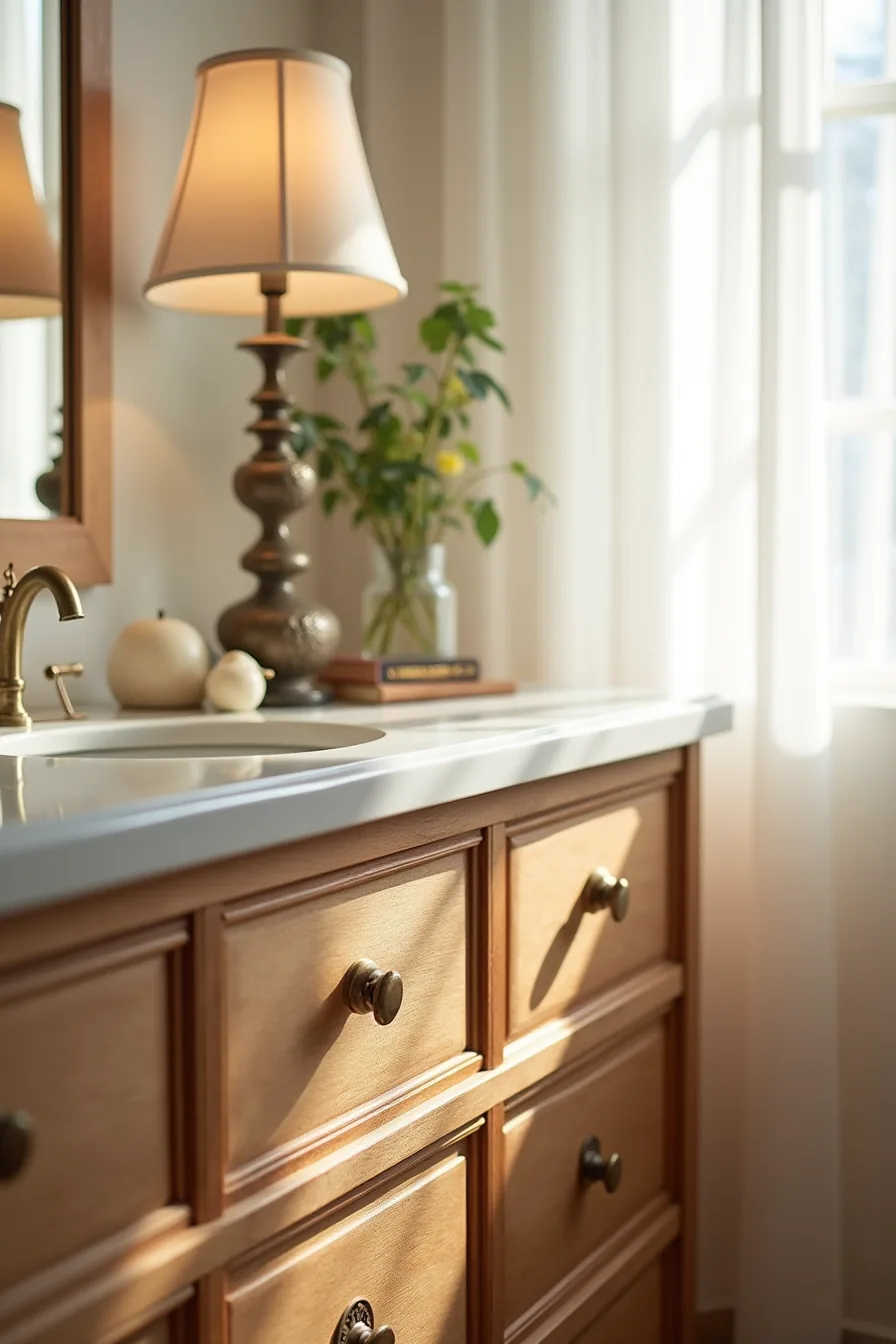
Reclaimed brass hardware transforms an ordinary vanity into a piece with old-world metal detail, and you can do it without touching the cabinet box. The setup shown here, three brass cup pulls and matching escutcheon plates on a plain wooden vanity, works because the hardware becomes the focal point while the natural wood grain supplies warmth. This approach suits traditional, cottage, or eclectic bathrooms where a fully brass faucet might feel excessive.
Source pulls from architectural salvage yards or online resellers specializing in reclaimed fittings; expect to pay $8 to $30 per pull depending on age and condition. Measure the existing hole spacing before buying, most cup pulls require 3-inch centers, but vintage pieces can vary by a quarter-inch. If the holes don’t align, a brass backplate bridges the gap without looking improvised.
Use a felt washer behind each pull to protect the drawer face from scratches, and tighten screws gently to avoid stripping the soft brass threads.
Patina as Character: Maintaining Aged Finishes
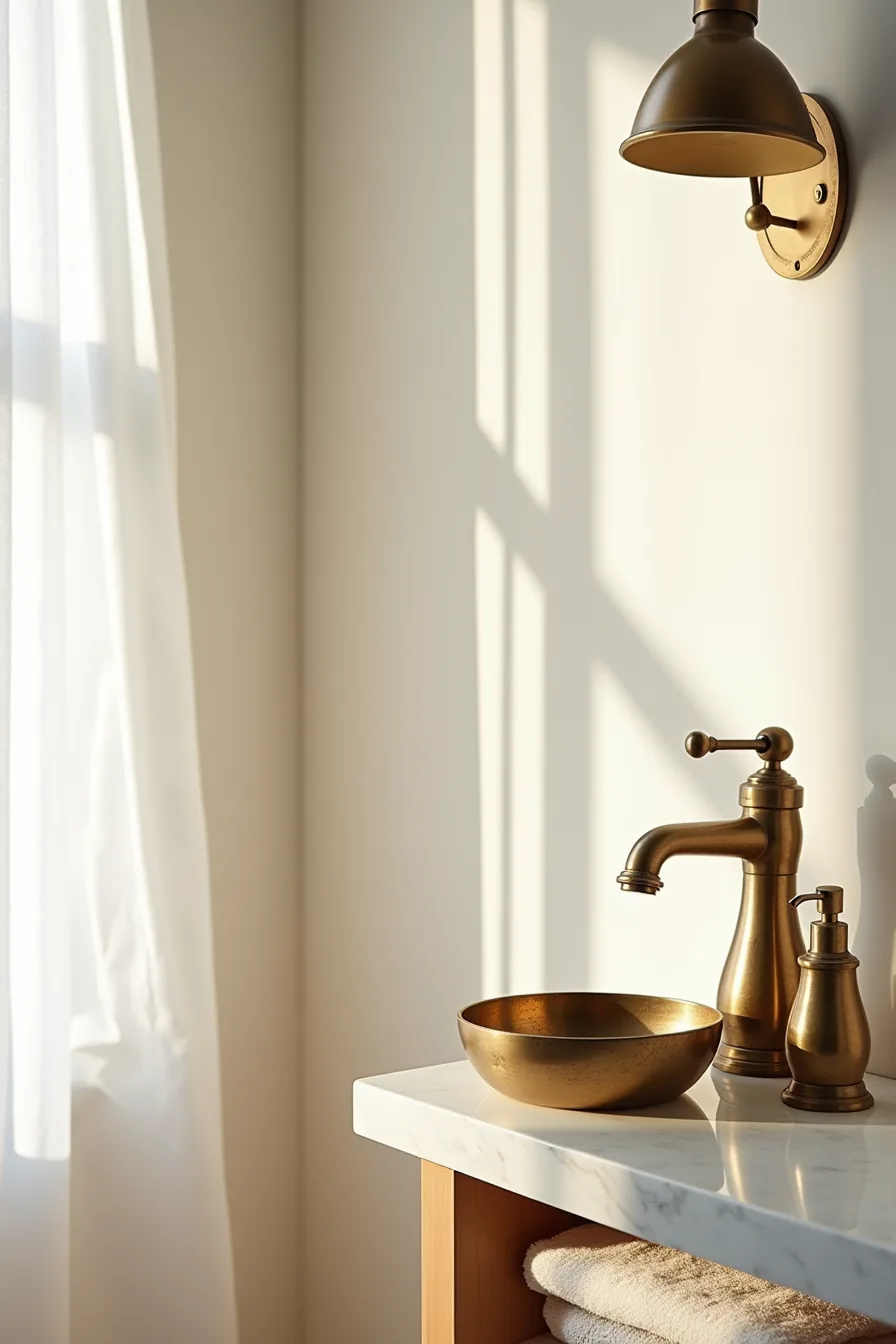
The weathered towel bar, brass soap dish, and tarnished brass hook on that marble shelf share one trait: uneven oxidation that no factory finish can replicate. That patchwork of dark streaks and mottled color variation is the entire point of choosing antique brass, you want surfaces that look like they’ve absorbed decades of steam and touch, not a uniform metallic sheen.
Treat patina as a living surface, not a flaw to correct. Polish only the high-contact areas where your hands actually grip, like the towel bar’s center section, and leave the recesses untouched. A microfiber cloth dampened with warm water removes soap residue without stripping the aged layer; avoid ammonia-based cleaners, which dissolve the dark oxidation unevenly.
Expect brass to darken slightly each year, especially in humid bathrooms. If a spot becomes blotchy rather than rich, apply a thin coat of Renaissance wax every six months to even out the tone without fully polishing it away.
Small-Space Scaling: Antique Brass for Compact Bathrooms
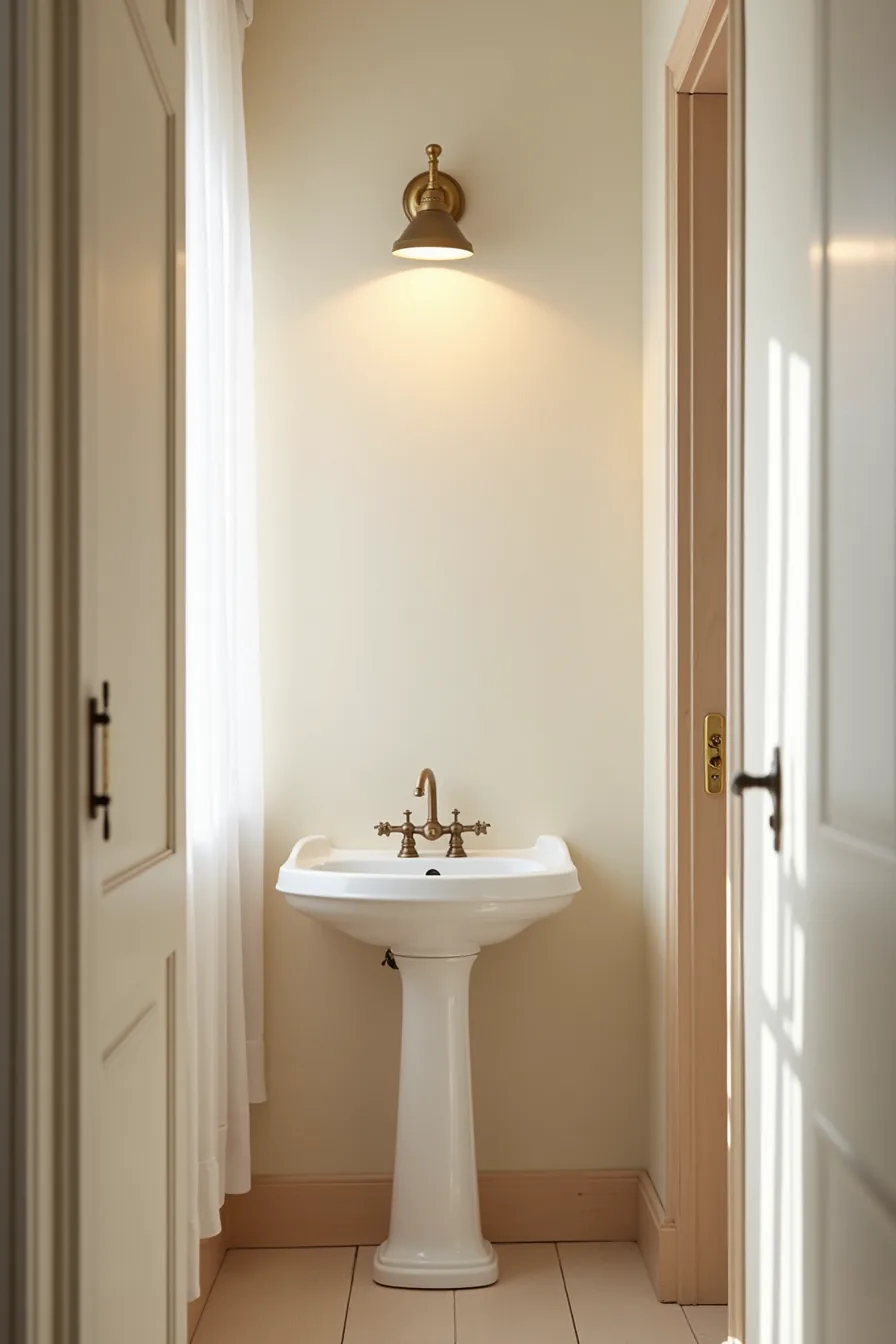
A wall-mounted antique brass faucet on a small pedestal sink opens up a tight floor plan because it eliminates the deck-mount hardware that eats counter space. Pair it with a single brass towel ring mounted at hand height beside the sink. That combination keeps the metal’s warm glow concentrated in a narrow vertical band, which draws the eye upward and makes the room feel taller than it’s.
Choose fixtures with slimmer profiles in small bathrooms. A widespread faucet with 8-inch centers will overwhelm a 20-inch pedestal; a centered single-handle unit or a wall-mount with a 4- to 6-inch spout reach suits the scale better. For renters, swap the permanent wall-mount for a brass towel ring that attaches with adhesive strips rated for 10-15 pounds, and pick a faucet mount that clamps onto the sink rim rather than requiring new plumbing holes.
Measure your sink’s depth before buying, a wall-mounted spout must clear the basin’s front edge by at least 2 inches to avoid splashing.
Full-Install Investment: Coordinated Fixtures and Accessories
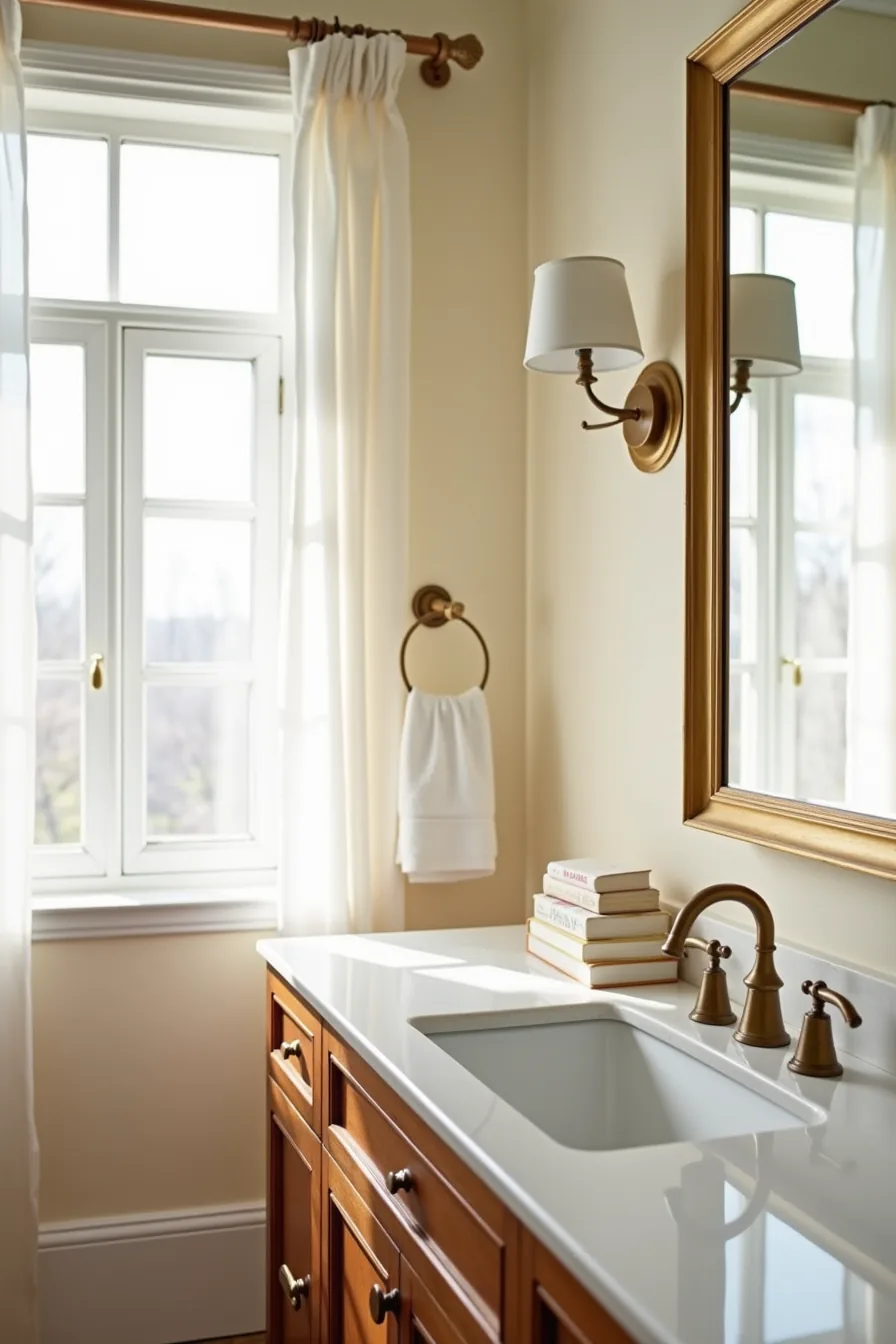
Committing to a full suite of Antique Brass Bathroom Fixtures for Character-Rich Spaces means every touchpoint, the faucet, the mirror frame edge, the towel bar, and the drawer pulls, shares one uniform patina. That consistency is what separates a deliberate design scheme from a collection of mismatched hardware. When you coordinate all four elements in the same finish, the visual line from the vanity top to the mirror creates a continuous frame that anchors the room, making the space feel intentional rather than accidental.
This route suits homeowners planning to stay put for 10-plus years, because the upfront cost runs roughly 2-3 times higher than mixing metals or using budget alternatives. Expect to pay a premium for solid brass construction, typically 30-50% more than zinc-alloy fixtures with a brass coating, but the trade-off is durability: solid brass resists the green corrosion that plagues plated fixtures in humid bathrooms within 3-5 years. You’ll need to commit to a living finish: unlacquered brass darkens and develops character over time, so if you prefer a static look, insist on a lacquered or PVD-coated version from the start.
Before purchasing, verify every piece lists the same finish code from the same manufacturer, because “antique brass” varies noticeably between brands, a mismatch in undertone (greenish vs. Reddish) will break the cohesive effect you’re paying for.
Mixing Metals: Balancing Brass with Chrome and Nickel
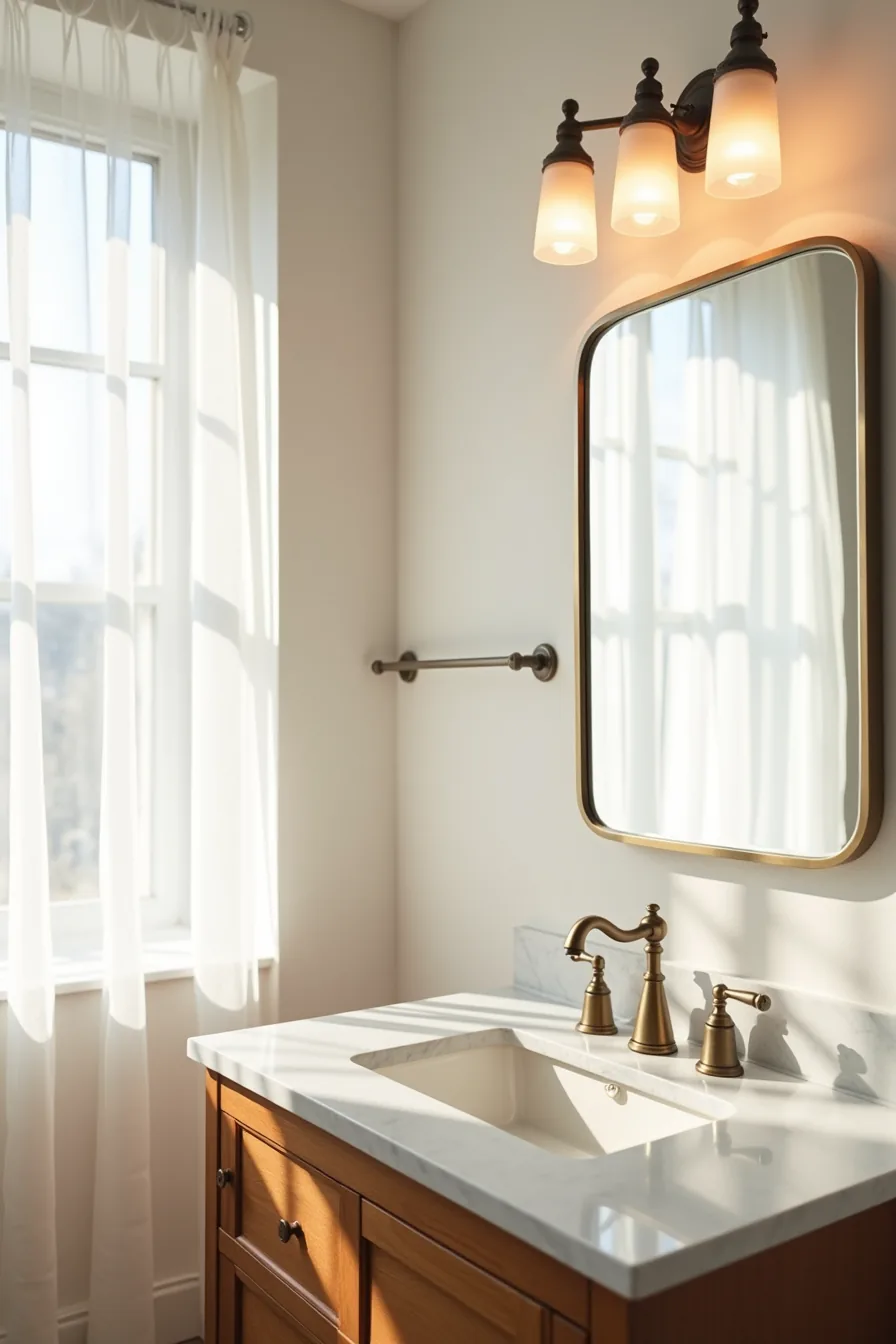
The three-metal arrangement on your vanity, an antique brass faucet, a polished chrome towel bar, and a brushed nickel light fixture, works because each finish occupies a distinct visual zone. The brass anchors the sink at eye level, the chrome sits higher on the wall where its reflective quality catches ambient light, and the nickel frames the mirror without competing for attention. The rule that keeps this from looking cluttered: limit yourself to three finishes maximum, and ensure one dominates roughly 60% of the visible hardware.
This approach suits renters or anyone upgrading incrementally, since it requires replacing only one fixture at a time. When pairing brass with chrome, choose unlacquered brass, its warmer undertone contrasts cleanly against chrome’s cool, mirror-like surface. Avoid placing brass and nickel side by side on the same fixture; instead, separate them by at least 12-18 inches of wall space.
For character-rich spaces, pair brass with oil-rubbed bronze instead of chrome if your existing hardware leans dark; the brass becomes the accent that lifts the heavier tones.
Your decision checklist
Before you buy, confirm three things: the finish matches your existing metals (mix warm brass with chrome only if you’ve a true eclectic style), the scale suits your sink or tub (a 4-inch widespread faucet looks lost on a 30-inch vanity), and you can commit to the care routine. If you rent, stick with spray-paint-grade finishes on temporary fixtures you can swap out. If you own, invest in solid brass with a lacquered coating, expect to pay 30–50% more than chrome equivalents.
Measure your rough-in spacing, set a budget range, and order one sample piece first. That single faucet will tell you everything about the patina, weight, and upkeep before you commit to the full set.
Frequently Asked Questions
How do I know if antique brass fixtures will fit my existing plumbing?
Check the valve type first. Most modern faucets use quarter-turn ceramic cartridges, while older homes may have compression valves. Measure the centerset distance, standard is 4 inches, and confirm thread sizes match your supply lines.
Can I use antique brass fixtures in a rental bathroom?
Yes, choose a wall-mounted or deck-mounted faucet that connects to existing supply lines without altering pipes. Stick to single-hole designs and avoid plumbing changes. Keep the original fixtures in storage and swap back before moving out to secure your full deposit.
What’s the difference between antique brass and brushed brass finishes?
Antique brass has a dark, aged patina with deep brown undertones and visible wear marks. Brushed brass is lighter, matte, and uniformly textured, like satin. Antique reads traditional; brushed reads contemporary.
Both resist fingerprints, but antique shows water spots more quickly.
How often do I need to clean antique brass to keep the patina?
Wipe down weekly with a soft, damp cloth and mild soap. Avoid abrasive cleaners or ammonia-based products, they strip the lacquer and accelerate uneven aging. If you skip cleaning for more than two weeks, mineral deposits can etch the finish permanently.