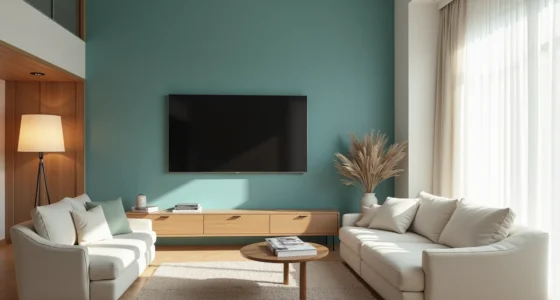
Styling a TV wall with modern luxury comes down to one principle: the screen should anchor the room without dominating it, and you achieve that through scale, contrast, and deliberate layering, not through ornate frames or busy galleries. That means the wall treatment, the furniture beneath it, and the accessories around it all work as one composed unit. The payoff is a living room that feels expensive and intentional, even if your budget is modest.
Below are six distinct approaches, each with the specific measurements, materials, and trade-offs you need to execute it in your own space.
Key takeaways
Anchor the screen with one oversized sculptural piece or art object placed off-center to balance the TV’s mass, not a cluster of small decor. Budget routes favor floating shelves with 3-5 curated objects, costing $50–$150 total, while paneled backdrops run $300–$800 for materials and labor. Renter-friendly symmetry uses peel-and-stick wall panels and cordless battery sconces, avoiding permanent holes or rewiring. Maintain visual weight by keeping the console’s height under 24 inches for a 55-inch TV mounted at eye level, and opt for matte finishes to reduce glare and fingerprints.
Sculptural Accessories: The Anchor Method

A single sculptural accent flanks the TV to ground the wall without competing with the screen itself. In this setup, a tall abstract bronze sculpture sits to the left of a wall-mounted television, with a smaller marble obelisk balancing the right side. Both pieces rest directly on the floor, drawing the eye upward with vertical weight against a neutral wall, this mimics the visual stability of a fireplace mantel without requiring built-in joinery.
The sizing rule is straightforward: the combined height of your sculpture and obelisk should fall between two-thirds and three-quarters of the TV’s vertical dimension. For a 55-inch screen (roughly 28 inches tall), that means floor pieces in the 18-22 inch range at minimum; go taller only if your ceiling clears 9 feet and the wall feels otherwise empty. Bronze and marble finish matte better than polished for modern luxury restraint, glossy surfaces reflect screen glare and cheapen the look under track lighting.
This suits open-plan living areas 250 square feet and larger, where the TV dominates one sightline and needs companions with presence. You can replicate it on a budget by sourcing a single cast stone sculpture (priced between $80-$200) and a dark granite cube from a stone yard for under $50. Dust both pieces biweekly with a dry microfiber duster; bronze develops a natural patina you shouldn’t polish away, as that’s part of the deliberate aged aesthetic.
Floating Shelves with Edited Styling
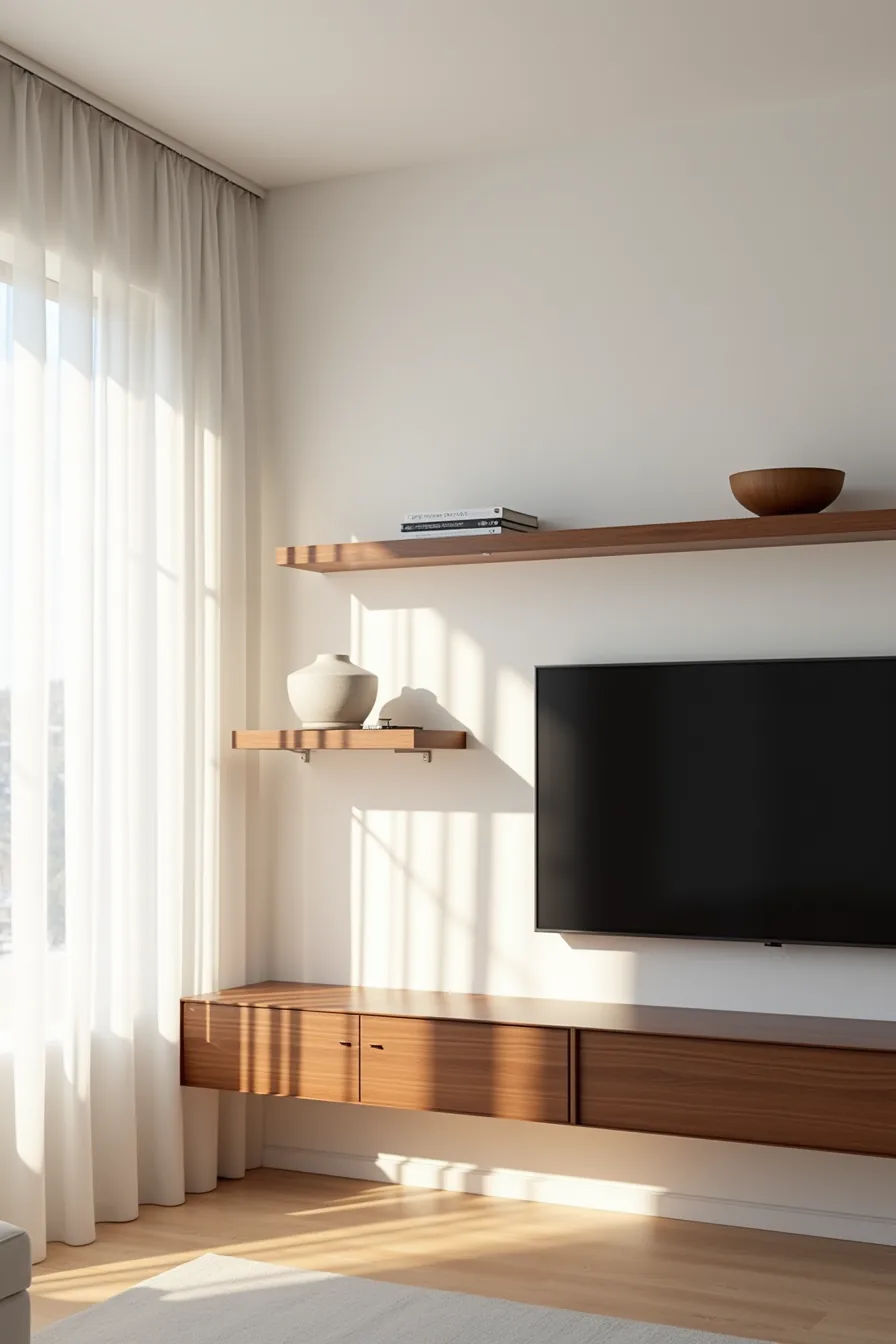
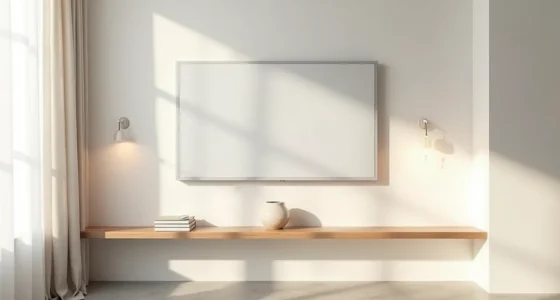
Three walnut floating shelves mounted at staggered heights above a wall-mounted TV create a gallery rhythm without adding floor bulk. The arrangement shows the core discipline of a shelf styling edit: top shelf holds a single ceramic bowl, middle shelf displays one sculptural object, and the bottom shelf stays empty, negative space doing as much work as the objects themselves.
Anchor the shelves 12–18 inches above the TV frame and keep each shelf depth under 10 inches to avoid visual collision with the screen’s plane. Walnut reads warmer than blackened steel; choose it for rooms with oak flooring or leather furniture, and switch to matte black for grey stone or concrete surfaces.
This route suits medium spaces (150–250 square feet) where a console would crowd circulation. Budget-wise, three solid-wood floating shelves run $40–$120 each depending on length; install into studs with a minimum 1-inch bracket depth for any shelf holding more than 10 pounds. Wipe walnut monthly with a damp cloth followed by a dry pass, skip polish, which streaks and attracts dust.
Paneled Backdrops and Wall Treatments
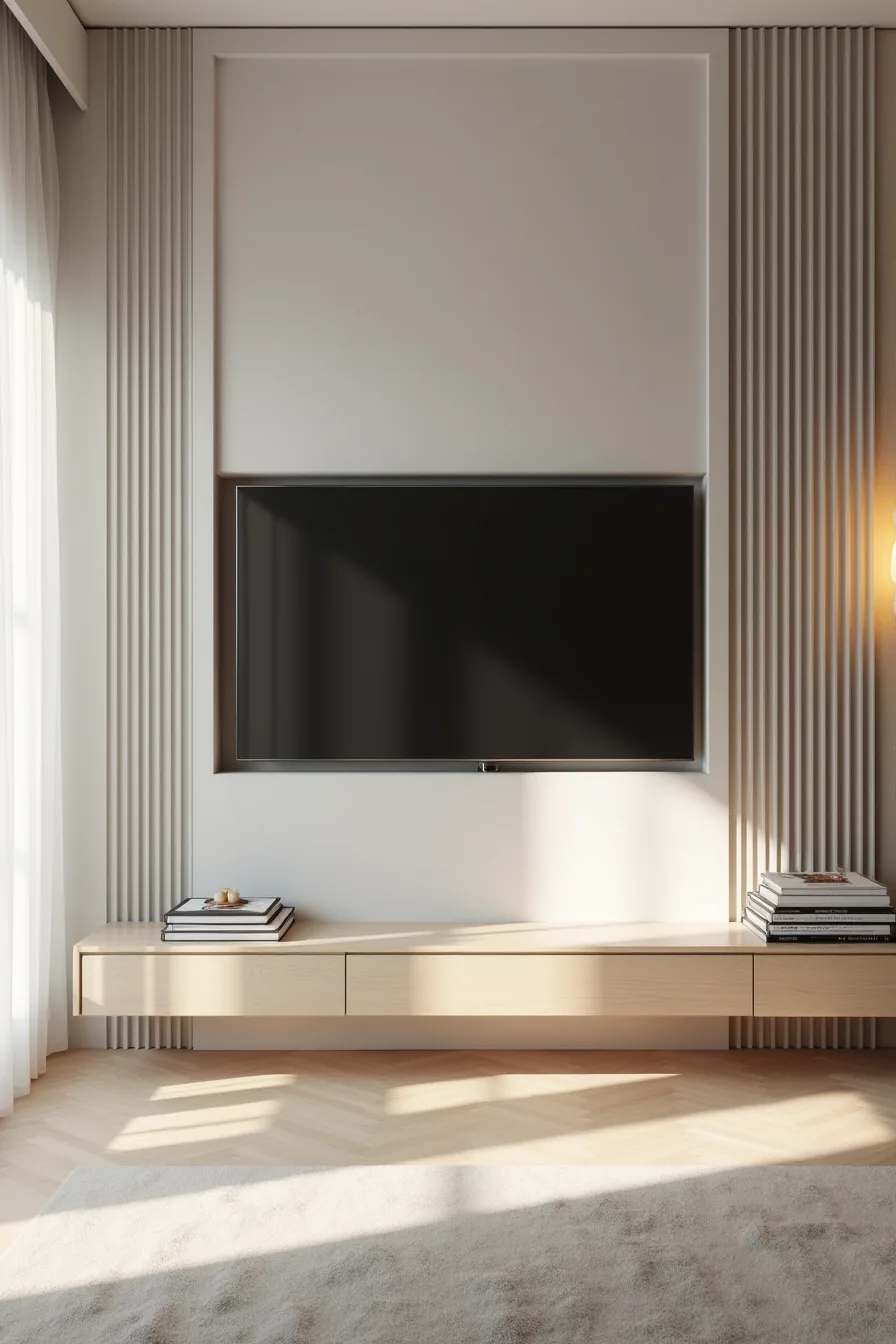
A floor-to-ceiling backdrop of vertical fluted panels in soft gray reframes the TV as an intentional architectural feature rather than a floating black rectangle. The panels run from baseboard to ceiling, with clean grout lines between each section, and the screen sits recessed into the plane, no visible bracket, no clutter on either side. This treatment works because the repetitive vertical rhythm draws the eye upward and makes the wall itself the focal point, not the electronics.
For renters, peel-and-stick fluted wallpaper in a warm greige achieves nearly the same depth at $3–$8 per square foot, with zero permanent damage. Permanent MDF or PVC fluted panels cost $5–$15 per square foot installed; they demand a flat, primed wall and a solid backing board to support the TV mount. In a large living room (over 250 square feet), extend the panels across the full wall for a boutique-hotel effect; in a small space, limit them to a 6–8 foot section centered on the screen to avoid overwhelming the room.
Clean fluted panels weekly with a microfiber duster, the grooves trap dust, and vacuum attachments risk scratching softer finishes.
Minimalist Console Tables Below the Screen

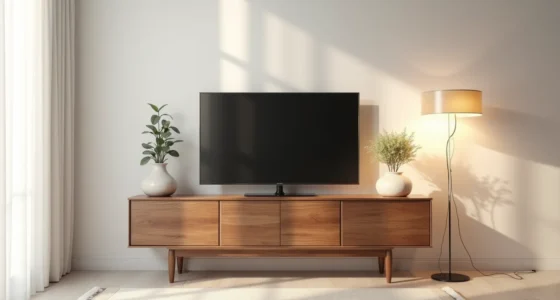
A low-profile oak console anchors the wall-mounted TV by giving the composition a visual base, while its open shelving breaks up the mass of the wall with negative space. The woven basket and single stone object on display introduce texture without adding visual noise, exactly the restraint that separates modern luxury from simple clutter. For a small apartment, choose a console no deeper than 14–16 inches to keep walkways clear; in a large living room, extend the console to match 80–100% of the TV’s width for proper proportion.
Budget route: an IKEA Bestå or similar flat-pack unit in oak veneer runs $200–$400 and delivers the same silhouette. Long-term investment: a solid white-oak piece with dovetailed joinery costs $1,200–$2,500 but resists sagging on wide spans. Cable management matters more than the furniture itself, route cords through a grommet hole or raceway behind the console, or the entire effect collapses.
Dust the open shelves weekly; woven baskets tolerate a vacuum brush, but stone objects need a dry microfiber cloth to avoid streaking.
Hotel-Inspired Symmetry and Lighting
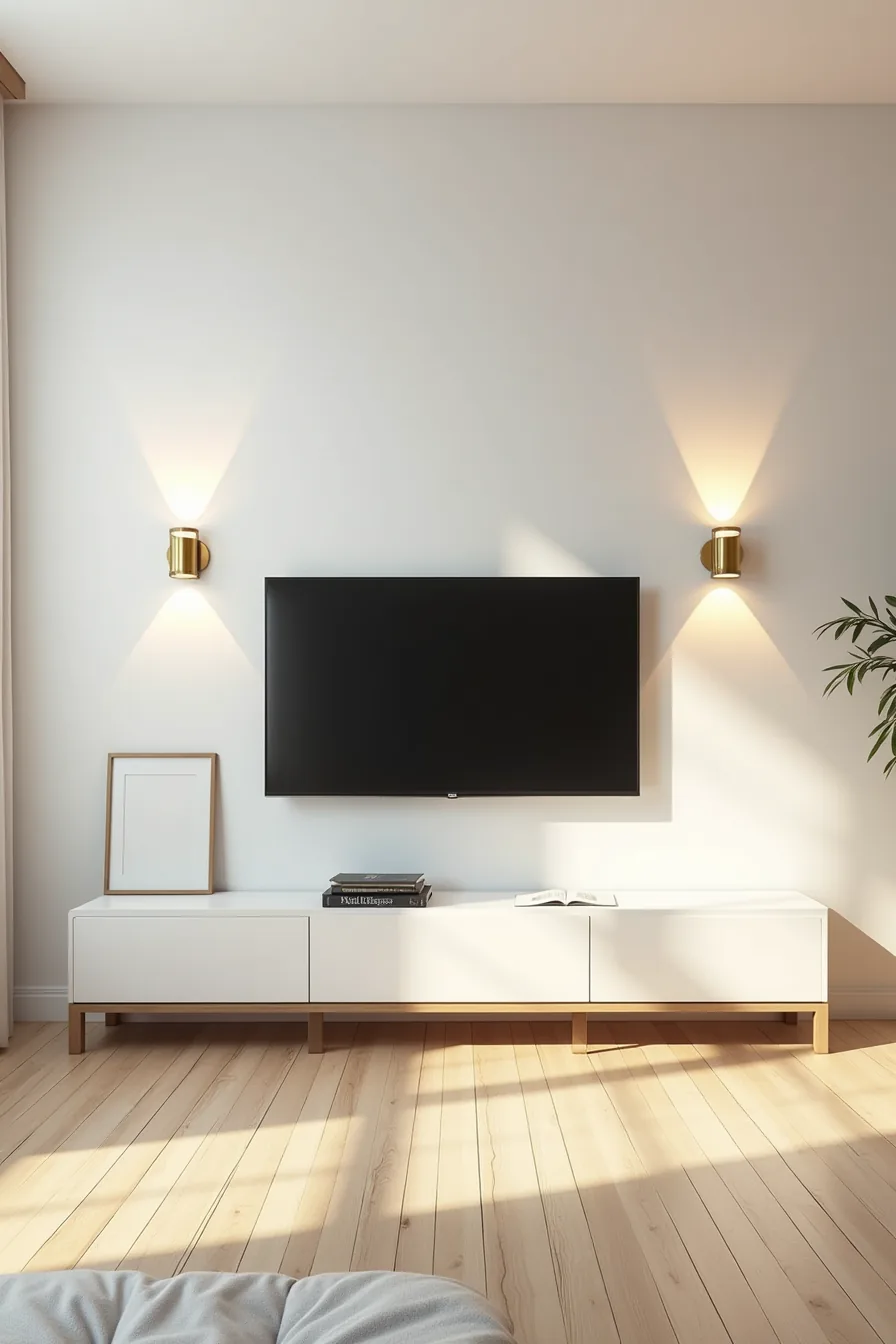
Flanking the wall-mounted TV with identical brass sconces and matching framed abstract artworks creates a deliberate, centered composition that reads as high-end hospitality rather than home entertainment. The symmetry signals intention: the eye lands on the screen first, then moves outward to the warm pools of light and the artworks, which borrow a gallery-like gravitas. This layout suits a living room with a clear focal wall and at least 5–6 feet of unobstructed wall width on either side of the TV, any less and the arrangement feels squeezed rather than luxurious.
Mount the sconces 60–66 inches from the floor and 12–18 inches above the TV’s top edge, keeping them out of the screen’s direct sightline. Position the frames at eye level on each side, roughly one-third of the TV’s width away to maintain balance without competing for attention. Brass sconces need occasional polishing, a dry microfiber cloth every 2–4 weeks prevents tarnish in humid climates.
This is the most affordable route to hotel-inspired luxury TV wall decor for a hotel-inspired living room: quality sconces run $80–$200 per pair, and framing two identical prints costs $60–$150, making the entire flanking setup achievable under $350. The trade-off is that you commit to that wall’s layout, moving the TV later means patching and re-drilling.
Material and Color Restraint for Longevity

The luxury here’s what you leave out. A warm white plaster wall, a pale linen console, a natural wood floating shelf, and brushed brass accents create a composition that resists trend cycles because it contains no pattern and no bold color. Neutral bases with quality finishes stay current for 10–15 years, whereas a marble-patterned or matte-black wall reads dated within three to five.
This approach suits a household that prefers quiet interiors over statement-making onesaineasures and who plan to keep the same furniture layout for several years. Linen upholstery is a renewable fiber that repels dust well, but it stains easily, treat it with a fabric protector and vacuum it monthly. Satin or matte plaster finishes hide fingerprints better than high-gloss, and a 30–60 percent sheen reads distinctly more expensive than flat paint while remaining wipeable.
Wood shelves need occasional conditioning; a beeswax polish twice a year prevents drying and cracking in air-conditioned rooms. The financial trade-off is upfront material cost rather than redecoration: quality plaster work and solid wood run 2–3 times the cost of drywall and laminate, but you won’t replace them. The visual reward is a space that still feels intentional in a decade.
Your first move
Decide your room’s size and your tolerance for permanent changes before you buy anything. A renter in a compact apartment should start with a floating shelf and a single matte-black frame; a homeowner with a 10-foot wall can plan a full stone cladding project over several weekends.
Measure your wall, mark the TV’s viewing height, and set a budget range before browsing. That one decision filters out 80 percent of options and keeps the design cohesive.
Take a photo of your wall, print it, and sketch three layouts directly on the paper. Pick the strongest sketch and order samples of your two preferred materials before committing to the full install.
Frequently Asked Questions
What is the difference between modern luxury TV wall decor and minimalist TV styling?
Modern luxury adds layered materials, sculptural forms, and warm metallics for richness. Minimalism strips to bare essentials with flat surfaces and neutral tones. Luxury feels curated and tactile; minimalism feels sparse and quiet.
Can I style a TV wall for modern luxury in a small apartment or rental?
Yes. Use renter-friendly options like peel-and-stick wall panels, oversized framed art, and floor-mounted consoles. Keep depth under 12 inches and avoid heavy built-ins.
Focus on vertical lines and one statement piece to expand visual space.
How do I prevent a decorated TV wall from looking cluttered or dated?
Limit yourself to three material families, wood, stone, and metal, and one accent color. Maintain at least 6 inches of negative space around the TV. Swap seasonal decor rather than layering permanent pieces.
Avoid trends like fake greenery or word art.
What materials hold up best for TV wall decor in high-traffic living rooms?
High-density MDF or solid wood for panels, porcelain or quartz for stone-look surfaces, and brushed or matte aluminum for trim. Avoid glossy lacquers and thin veneers that scratch easily. Use matte finishes to hide fingerprints and dust between cleanings.