
Your bedroom dressing table is the one piece of furniture that must balance mirror height, storage volume, and surface area against the literal square footage of your room, and getting that balance wrong makes the whole space feel crowded. The fix isn’t buying a bigger unit; it’s matching the table’s footprint to your wall space, your routine, and your budget. Below are six distinct configurations, from a floating shelf system to a repurposed console, each with the exact dimensions, placement rules, and maintenance trade-offs you need to decide confidently.
Key takeaways
- Scale dictates function: Match the dressing table depth to your room’s width, allowing at least 30 inches of clearance in front for a chair, and choose a 24–30 inch depth for small spaces to avoid blocking circulation.
- Lighting beats mirrors: Position a window-mounted table perpendicular to the glass to prevent glare, and supplement with a 15–20 inch task light; a mirror alone won’t fix shadowing on your face.
- Renter-friendly means weight-driven: Use a freestanding table with a clamp-on mirror and adhesive cable clips instead of wall anchors, ensuring the total load stays under 50 pounds to avoid surface damage and deposits.
- Storage follows routine zones: Allocate one drawer for daily-use items (skincare, brushes) within arm’s reach, and use a shallow tray for jewelry, this cuts morning prep time by roughly 10 minutes compared to unsorted piles.
Window-Mounted Dressing Table for Natural Light
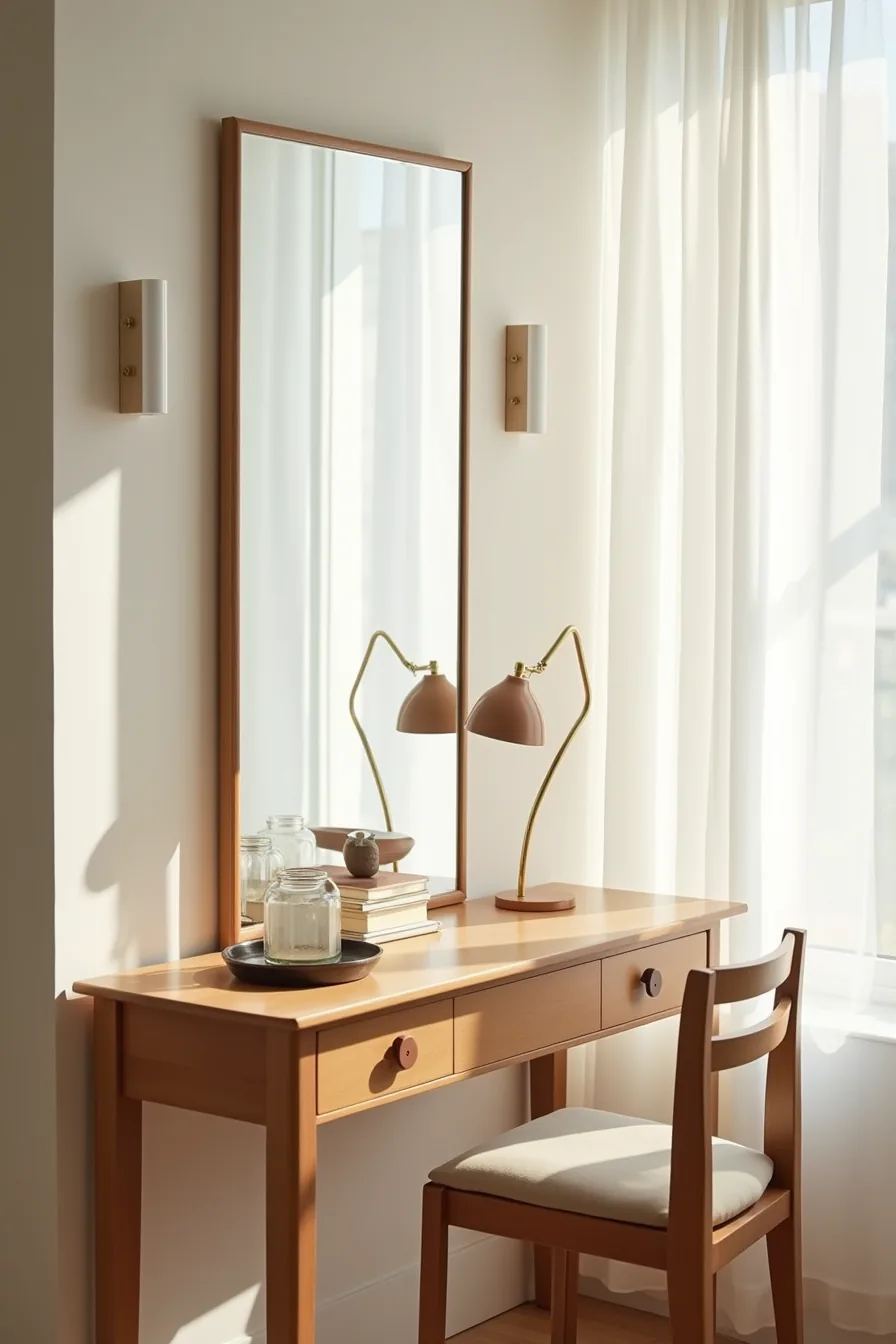
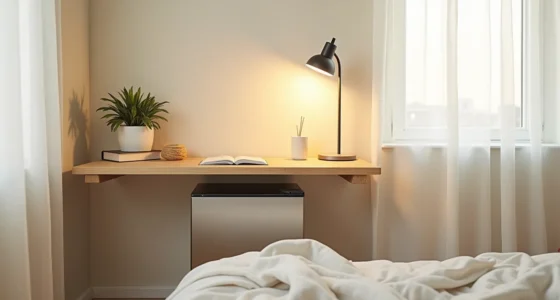
Positioning your bedroom dressing table by the window puts daylight directly on your face, which is the most accurate light for makeup application and grooming. For this setup, butt a narrow table, typically 12–16 inches deep and 30–36 inches wide, directly against the window frame, not in front of the sill, so you can open the window without clearing the surface.
Mount a large rectangular mirror on the wall above the table, aligning its bottom edge 6–8 inches above the surface so you can see your full face without leaning forward. Keep the surface minimal: a single glass jar for cotton pads, a small tray for rings or daily jewelry, and an adjustable desk lamp for overcast mornings when daylight alone won’t cut it.
This works best for medium bedrooms where you can spare a wall with window access, and it suits anyone who prefers natural light over vanity bulbs. Use a slim table with open legs rather than a full cabinet, it lets light pass underneath and keeps the window area feeling airy. Wipe the surface weekly, since direct sun will fade wood finishes over time.
Compact Vanity-Desk Hybrid for Small Bedrooms
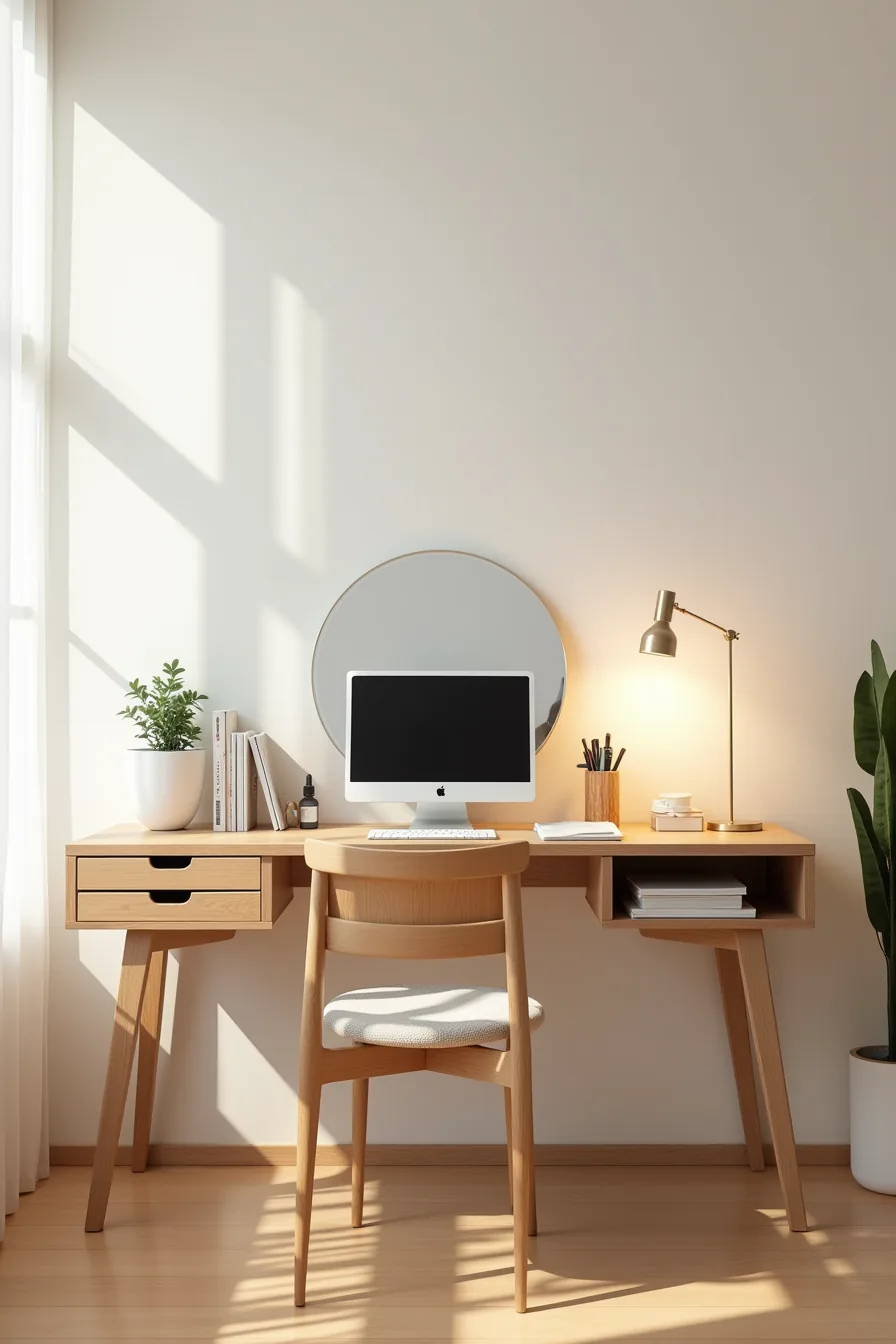
Under 120 square feet, a separate dressing table and desk simply won’t fit. A vanity plus desk hybrid collapses both functions into a single footprint, typically 40–48 inches wide and 20–24 inches deep, which keeps the floor plan workable without sacrificing either routine.
The setup that works: a slim desk with a fold-down mirror mounted to the back edge, so the mirror flips up for makeup and lies flat when you need the surface for a monitor. Storage cubbies underneath split the space by function: one side holds your laptop, keyboard, and work documents; the other side holds a makeup organizer with daily products and a potted plant for a bit of greenery. A single desk chair serves both activities, so you never move furniture between tasks.
This suits anyone who works from home and wants to get ready in the same spot, especially renters who need one piece instead of two. Measure your chair’s clearance first, you need at least 24 inches between the seat front and your bed or wall to slide in and out comfortably. The trade-off: your workspace must stay tidy because a cluttered desk becomes a cluttered vanity, and vice versa.
Wall-Mounted Dressing Table for Tight Spaces
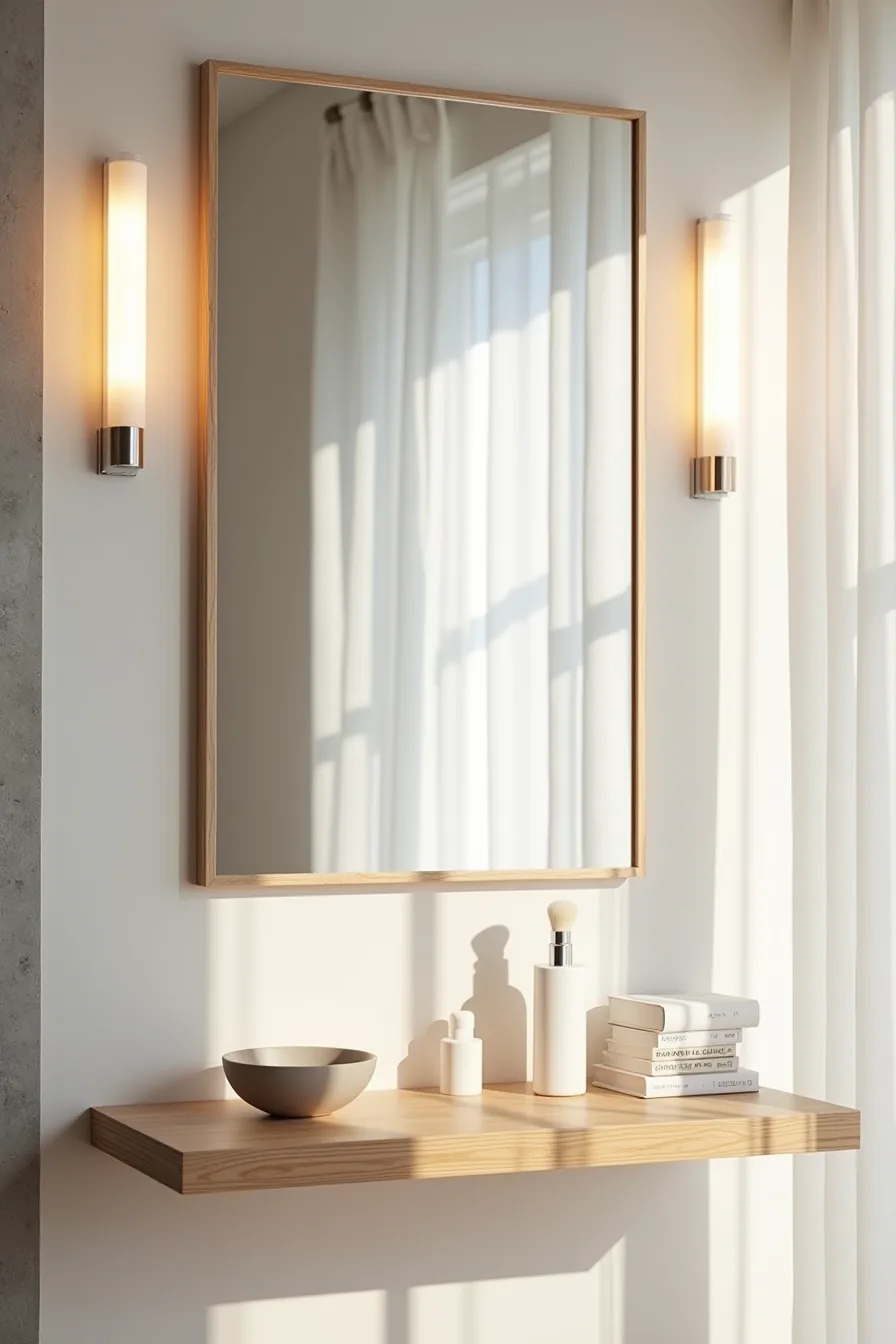
When floor space is nonexistent, mount your dressing surface to the wall. A floating shelf at waist height, typically 30–32 inches from the floor, holds everything you need for daily grooming without consuming a single square foot of floor. Pair it with a frameless mirror hung directly above, and the entire setup occupies only 24–30 inches of wall width.
The practical components: a ceramic dish corrals rings and earrings, a makeup brush holder keeps applicators upright and reachable, and a battery-operated LED strip light mounted under the shelf rim provides shadow-free task lighting without requiring an electrician. The polished concrete wall reflects the light, which further reduces the need for additional fixtures.
This is the best empty wall solution for narrow hallways, awkward alcoves, or rooms where any floor-mounted furniture would block circulation. You trade storage for openness, this setup holds perhaps a dozen daily-use items, so rotate products weekly and keep the rest in a nearby drawer. A stool or small chair tucks beneath when not in use, completing the zero-footprint vanity.
Freestanding Statement Dressing Table for Large Bedrooms
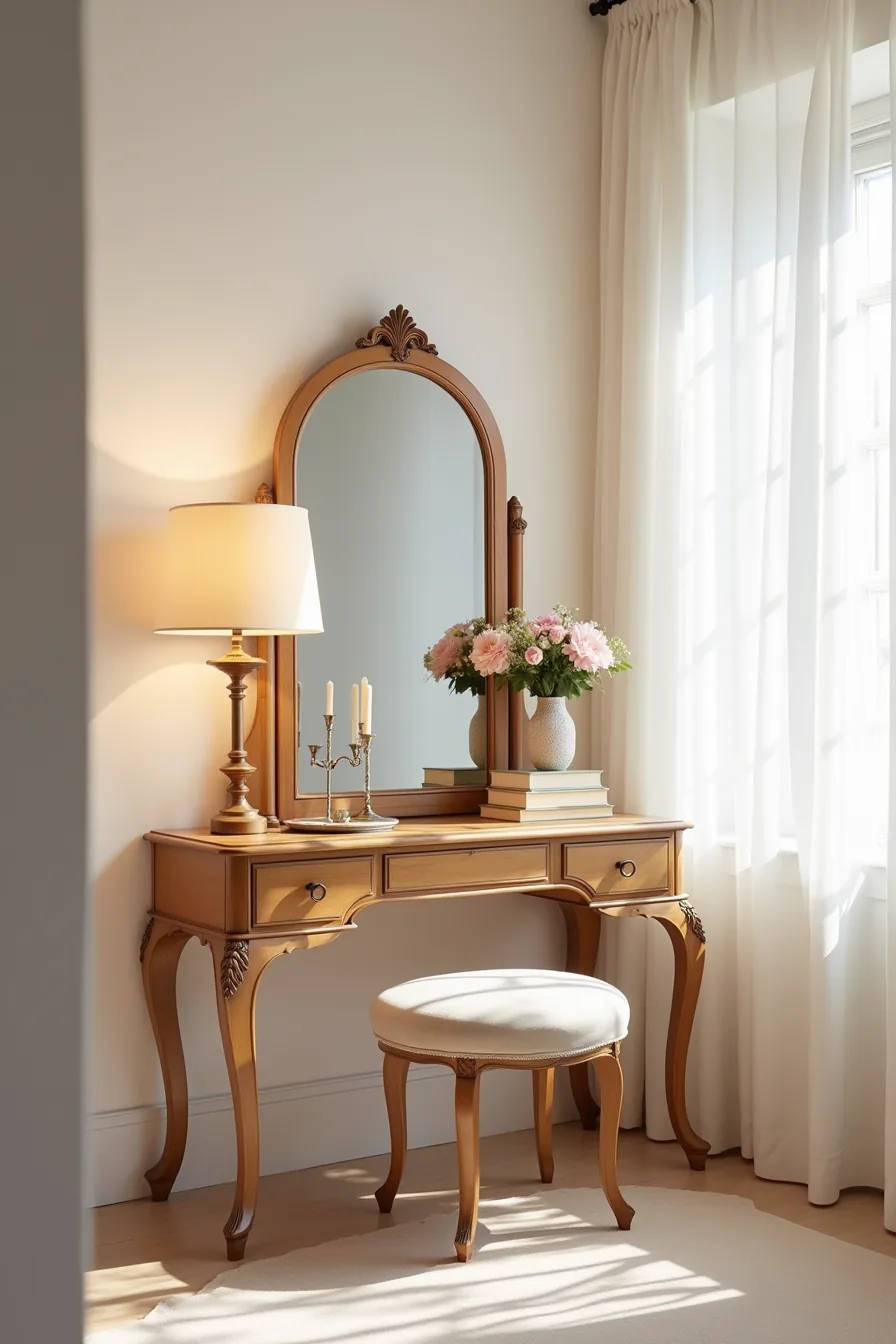
In a spacious primary suite, a freestanding bedroom dressing table earns its place as the room’s visual anchor. The vintage-style wooden piece with curved legs and a large tri-fold mirror works because its generous proportions (typically 48–60 inches wide) match the scale of a large wall, preventing the furniture from feeling lost or undersized. A velvet bench, rather than a hard chair, invites you to sit properly for a full routine, and its upholstered texture softens the wood’s formality.
Styling requires deliberate layering. A table lamp on one side provides warm ambient light for evening skincare, while the tri-fold mirror offers adjustable side angles so you can check your profile without twisting your neck. A decorative tray groups daily-use cosmetics so they read as intentional decor, and a vase of fresh flowers adds a living element that balances the dark wood’s visual weight.
This setup suits anyone with floor space to spare, at least 30 inches of clearance in front of the bench for comfortable seating and 24 inches on either side for drawer access. The curved legs and tri-fold mirror demand occasional dusting of intricate surfaces, and the wood benefits from annual polish to maintain its luster. Expect to invest $800–$2,500 for a solid-wood piece with quality joinery; this is a long-term furniture purchase, not a temporary trend.
Renter-Friendly Dressing Table Setup Without Permanent Installation
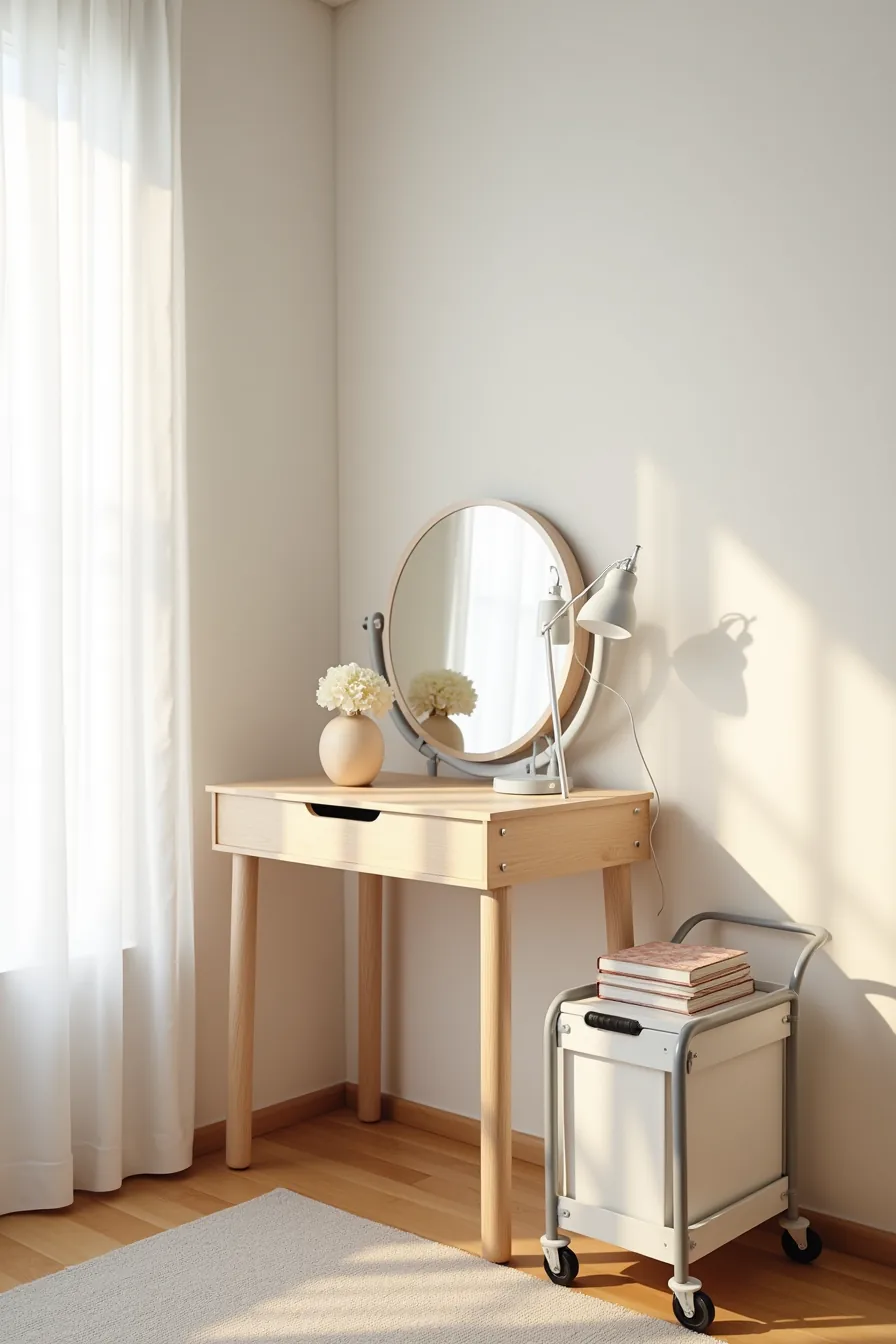
A lightweight metal-frame dressing table with a removable tabletop solves the rental dilemma: it delivers a dedicated grooming station without a single screw entering the wall. The adhesive-mounted mirror above it lifts off cleanly with minimal residue when you move, and the freestanding storage cart beside it rolls wherever you need it. This system suits renters, first-apartment dwellers, or anyone hesitant to commit to built-in joinery.
The key is choosing pieces that work independently. The metal frame typically spans 32–40 inches wide, fitting compact bedroom corners, while the removable top lets you repurpose the frame as a desk or nightstand later. Pair it with a washable rug underneath, spilled toner or foundation wipes off synthetic fibers far easier than from carpet.
Expect total costs between $150–$400 for the table, mirror, and cart combined.
You lose the built-in drawers of a permanent unit, but the cart compensates with visible, portable storage. If your lease restricts wall fixtures, confirm the adhesive mirror’s weight rating (most hold 5–10 pounds) before mounting. When you relocate, everything packs flat into a car trunk, no patching, no deposit deductions.
Morning-Routine Dressing Table with Organized Storage
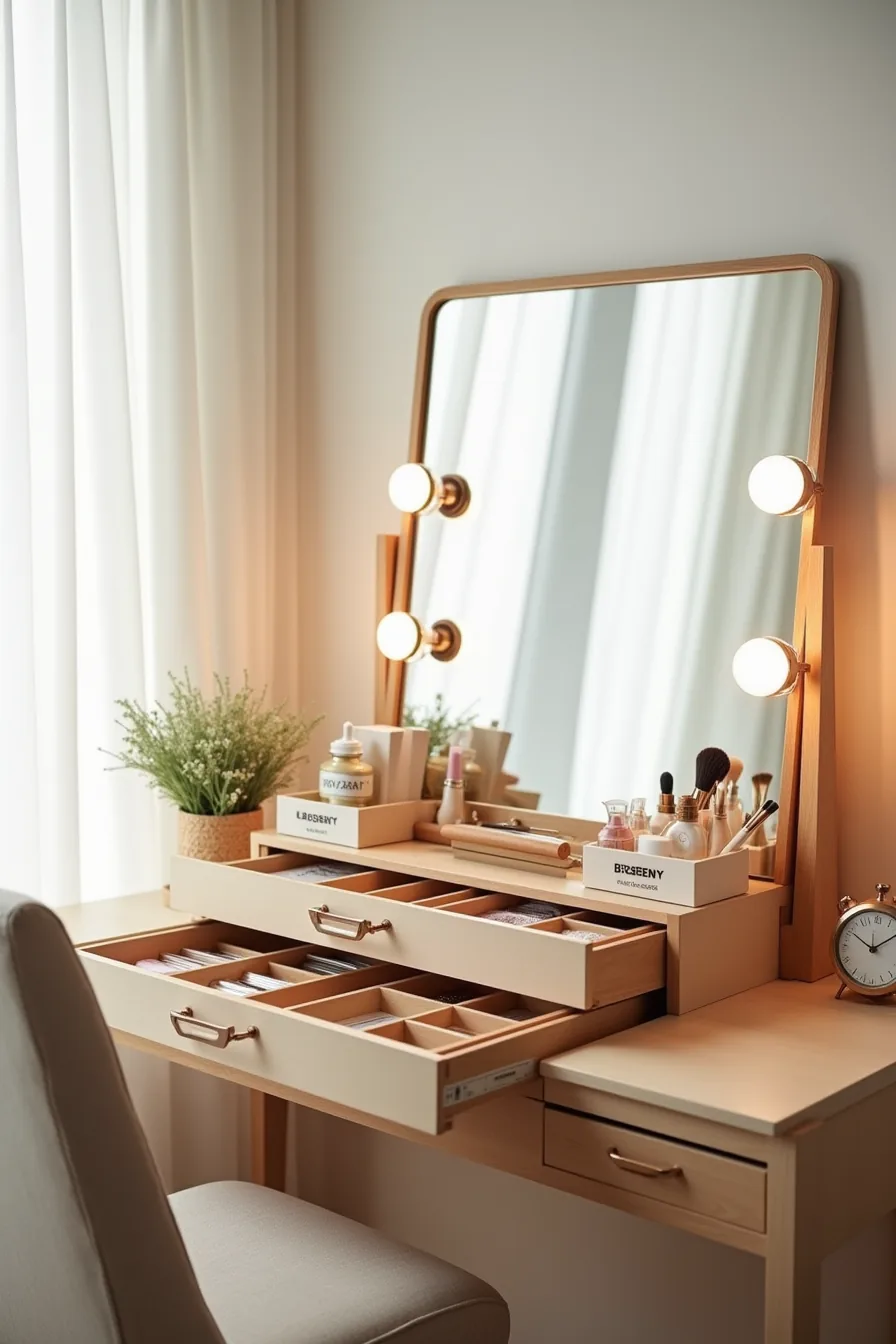
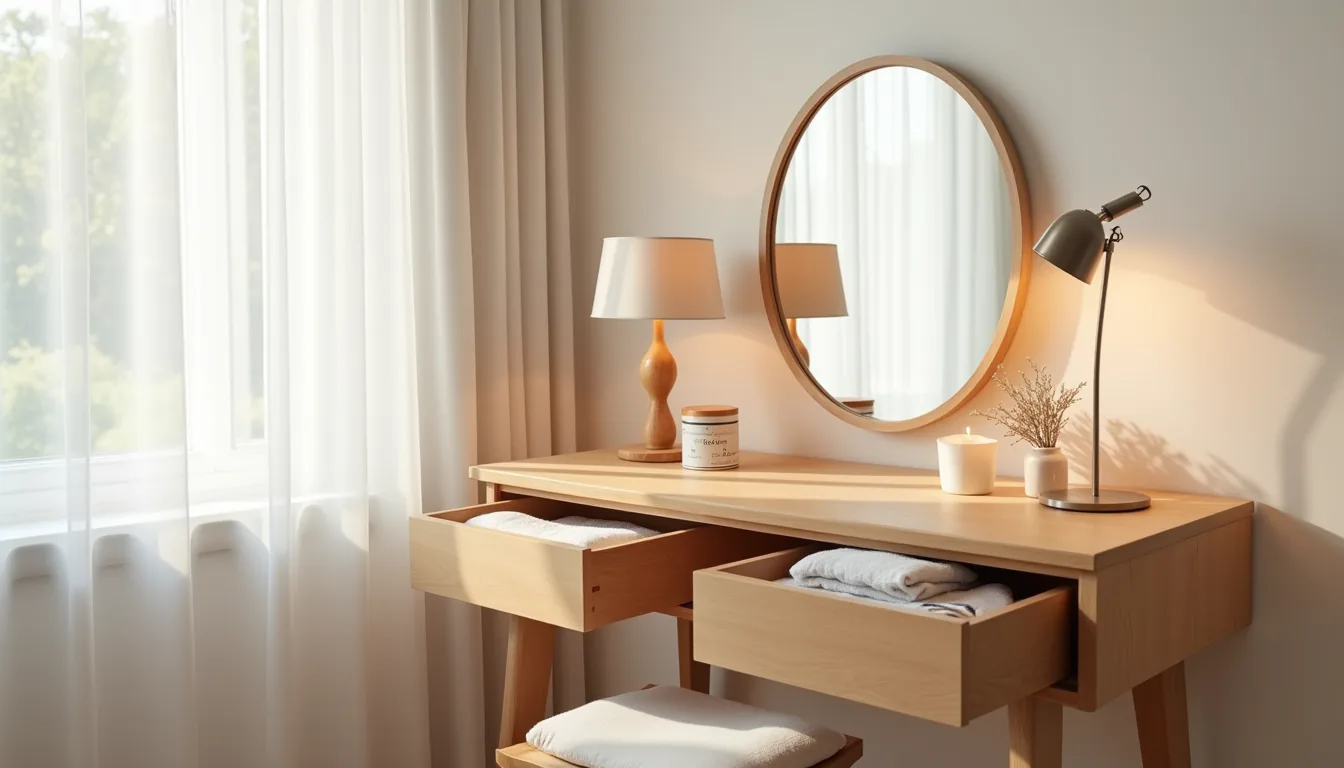
A tiered drawer system changes how quickly you get out the door. Instead of rummaging through mixed bins, you assign the top tier to daily brushes, the middle to skincare bottles, and the bottom to jewelry, each compartment labeled so your hand lands on the right item within seconds. This setup suits anyone with a 15-minute morning window, because every step becomes a reach, not a search.
Position the large mirror directly in front of you at eye level, then mount a task light on either side. This eliminates facial shadows that force you to lean in and double-check your work. The small clock on the corner keeps you on schedule without fumbling for your phone, which also removes the distraction of notifications mid-routine.
The drawers should slide fully open, look for models with soft-close runners rated for 30,000+ cycles. Clear acrylic dividers cost $10–25 per set and keep each compartment visibly sorted, so you notice when a lipstick is missing before you need it. Expect to spend 5 minutes per month wiping down the surfaces; a microfiber cloth handles daily dust buildup without needing polish or specialty cleaners.
Where to Start
Choose your priority first: budget, rental flexibility, or longevity. That single decision eliminates half the options above. Measure your wall space and floor clearance before shopping, a 120-150 cm table needs roughly 90 cm of chair pull-out room.
Match the surface to your real routine. Daily makeup users need wipe-clean materials like laminate or sealed wood; occasional users can manage raw timber or fabric skirts.
Your next step: Grab a tape measure, mark your ideal placement with painter’s tape, and sit in a chair at that spot for two minutes. If you can reach the wall comfortably and open nearby drawers fully, you’ve found your spot. Then order.
Frequently Asked Questions
What is the minimum depth required for a functional bedroom dressing table?
Aim for at least 15–18 inches of surface depth. This accommodates a mirror, skincare bottles, and your elbows while seated. Anything shallower forces you to reach awkwardly.
Can a bedroom dressing table work in a room with limited natural light?
Yes, but you must add layered lighting. Position a table lamp or wall sconce at eye level, and consider a mirror with built-in LEDs. Avoid relying solely on overhead fixtures, which cast shadows on your face.
How do you prevent a bedroom dressing table from looking cluttered in a small space?
Limit visible items to three daily-use products. Store the rest in drawers, a mounted shelf, or a lidded tray. Choose a table with a drawer or add a slim rolling cart underneath for overflow.
What is the best height for a bedroom dressing table mirror to avoid neck strain?
Mount the mirror’s center at your eye level when seated, typically 40–45 inches from the floor. Tilt it back slightly (5–10 degrees) if your table is lower. This keeps your neck neutral during use.