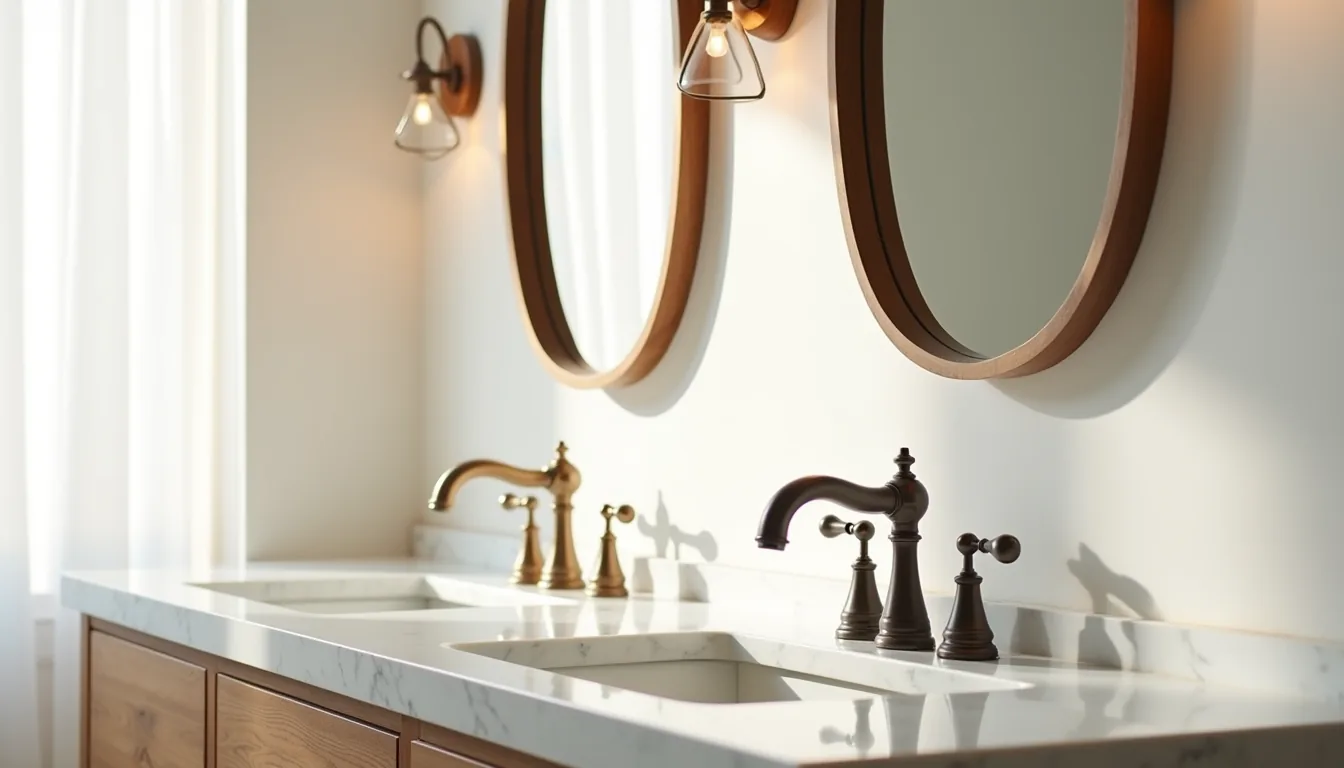
Bronze bathroom fixtures aren’t a single look, they span from deep, almost-black oil-rubbed tones to warm, brushed nickel-bronze blends, and the finish you choose changes how the entire room reads. The difference isn’t cosmetic; it dictates how much maintenance you’ll sign up for, which wall colors will flatter the metal, and whether your faucet looks at home in a powder room or a primary suite. Below, you’ll find six distinct approaches, each with the specific dimensions, upkeep, and budget trade-offs you need before you buy.
Key takeaways
- Light bronze suits small or low-light bathrooms because its warm undertones reflect more available light, while dark bronze adds contrast and hides water spots better in high-traffic powder rooms.
- Pair oil-rubbed bronze with matte black or brushed nickel only if you commit to one accent metal for all mirrors, towel bars, and light fixtures, mixing three finishes creates visual chaos under 100 square feet.
- For renters, choose adhesive-backed bronze-look pulls and a portable showerhead in a matching finish; both install in under 15 minutes, leave no holes, and cost $20–$60 total, unlike permanent faucet swaps.
- Investment-grade bronze means solid brass with a living finish (like unlacquered or aged patina), which requires quarterly waxing with a paste wax, skip it if you prefer zero maintenance, and budget 2–3× the price of a chrome equivalent.
Light vs Dark Bronze: Which Finish Suits Your Space
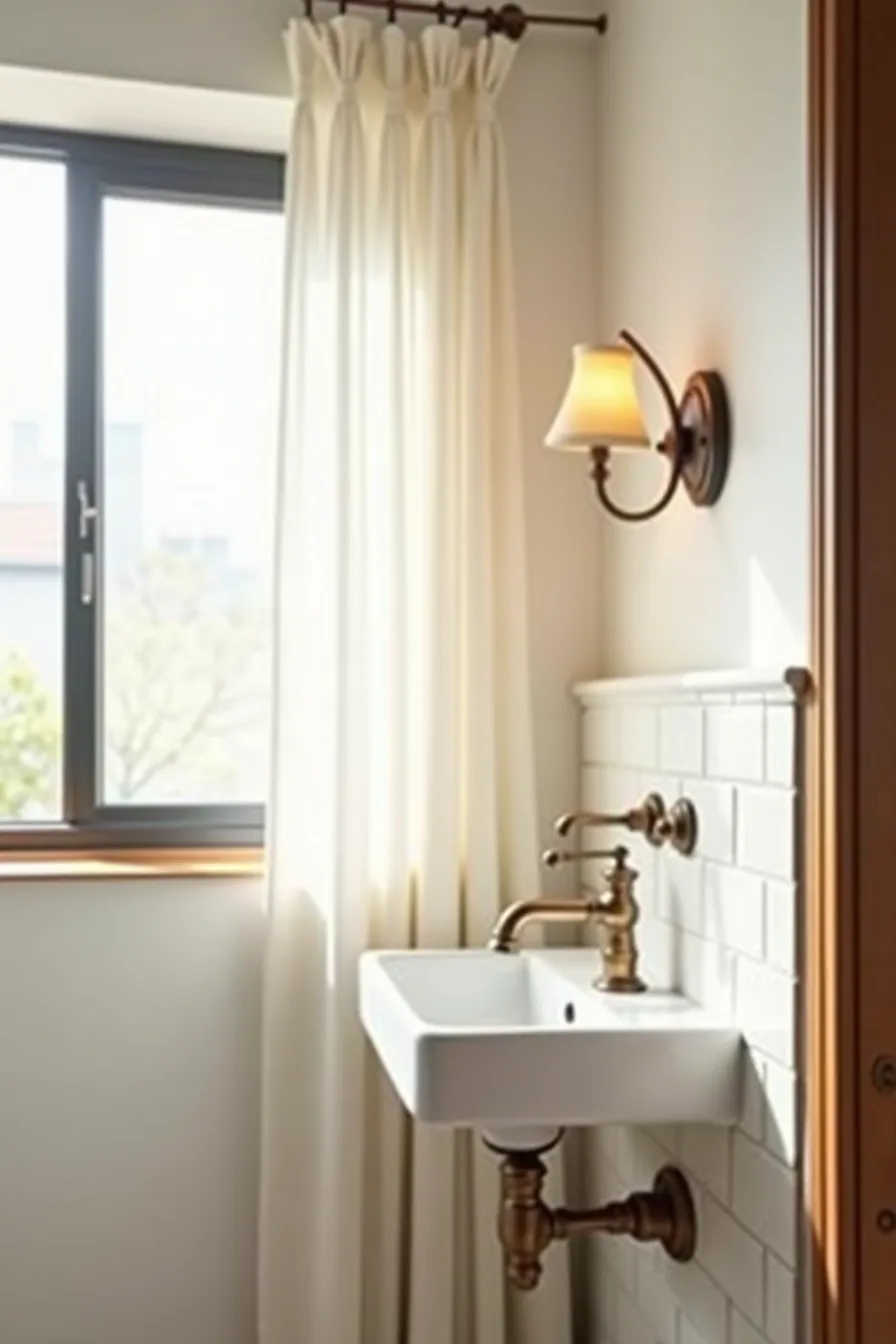
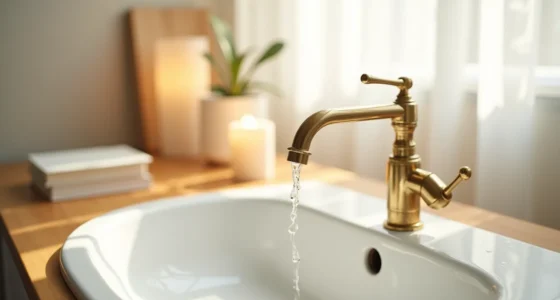
Light and dark bronze finishes aren’t interchangeable; they solve different problems. Light brushed-bronze, like the single-handle faucet mounted on the left wall of a narrow corner, reflects natural window light, making a small bathroom feel more open and less cave-like. It suits powder rooms or compact en-suites where you need to bounce daylight around, and it shows water spots less aggressively than polished chrome, though you’ll still wipe it weekly to prevent dulling.
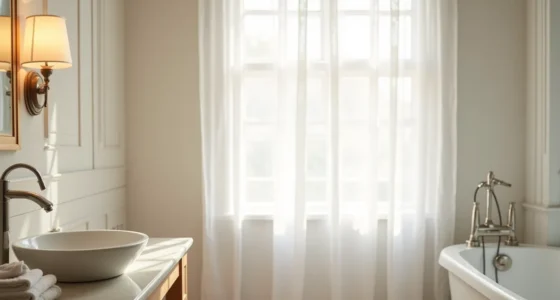
Dark espresso-bronze, as seen on the wall-mounted sconce in the shadowed right corner, absorbs light and creates depth, which works well in larger, well-lit spaces where you want contrast rather than illumination. It hides hard-water smudges better than its lighter counterpart, but it demands a matte or oil-rubbed texture; a glossy dark finish will reveal every fingerprint and streak. For a medium bathroom, pair a light faucet with a dark sconce to balance both perception and upkeep, but keep the dark fixture away from direct water splash to minimize cleaning effort.
Bronze with Stone Countertops and Walls
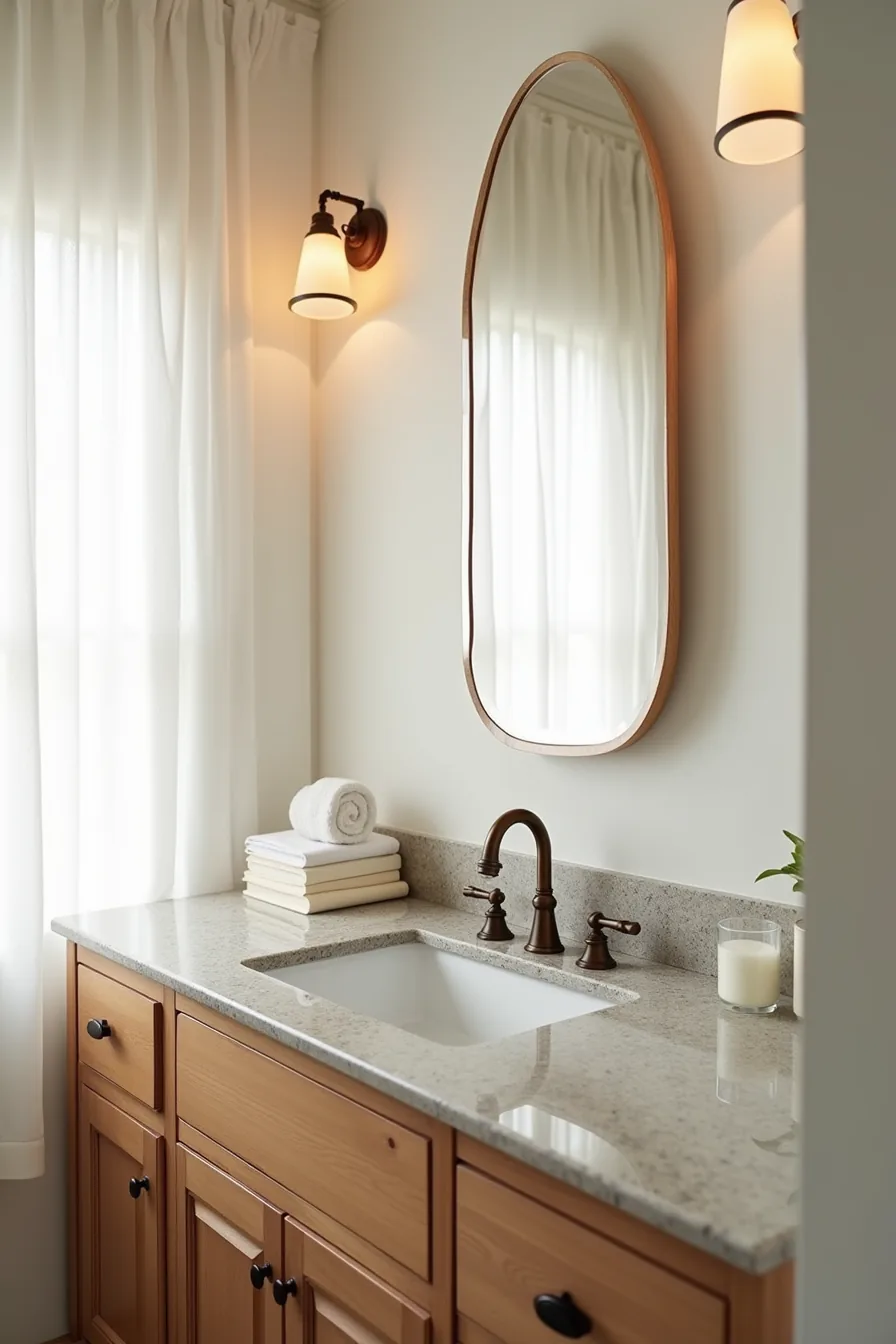
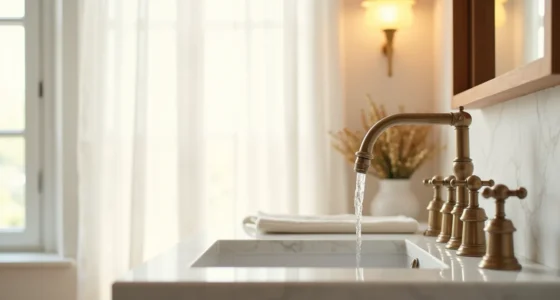
The gray granite countertop with gold veining determines which bronze undertone you should choose. Warm-toned bronze, rather than a neutral or cool variant, complements the gold veins by echoing the same mineral warmth without competing for attention. The bronze widespread faucet’s matte texture also reads as softer against polished granite, letting the stone’s pattern remain the visual anchor.
For this pairing, select a granite with medium-to-large veining; fine or busy patterns get visually muddled when a faucet’s handles and spout sit directly over them.
The soapstone backsplash panel behind the faucet introduces a different tactile quality that works for a specific reason: soapstone is dense, non-porous, and resists the alkaline deposits that bronze finishes hate. Limestone and marble, while beautiful, are more porous and require sealing; if you choose them, pair with a darker oil-rubbed bronze to mask any etching from acidic splashes. Scale matters here, on a 60-inch vanity, the widespread faucet with handles spaced roughly 10-12 inches apart anchors the composition, but on a narrower 36-inch counter, the same faucet will crowd the stone surface and visually shrink the room.
Mirror and Hardware Pairing for Cohesion
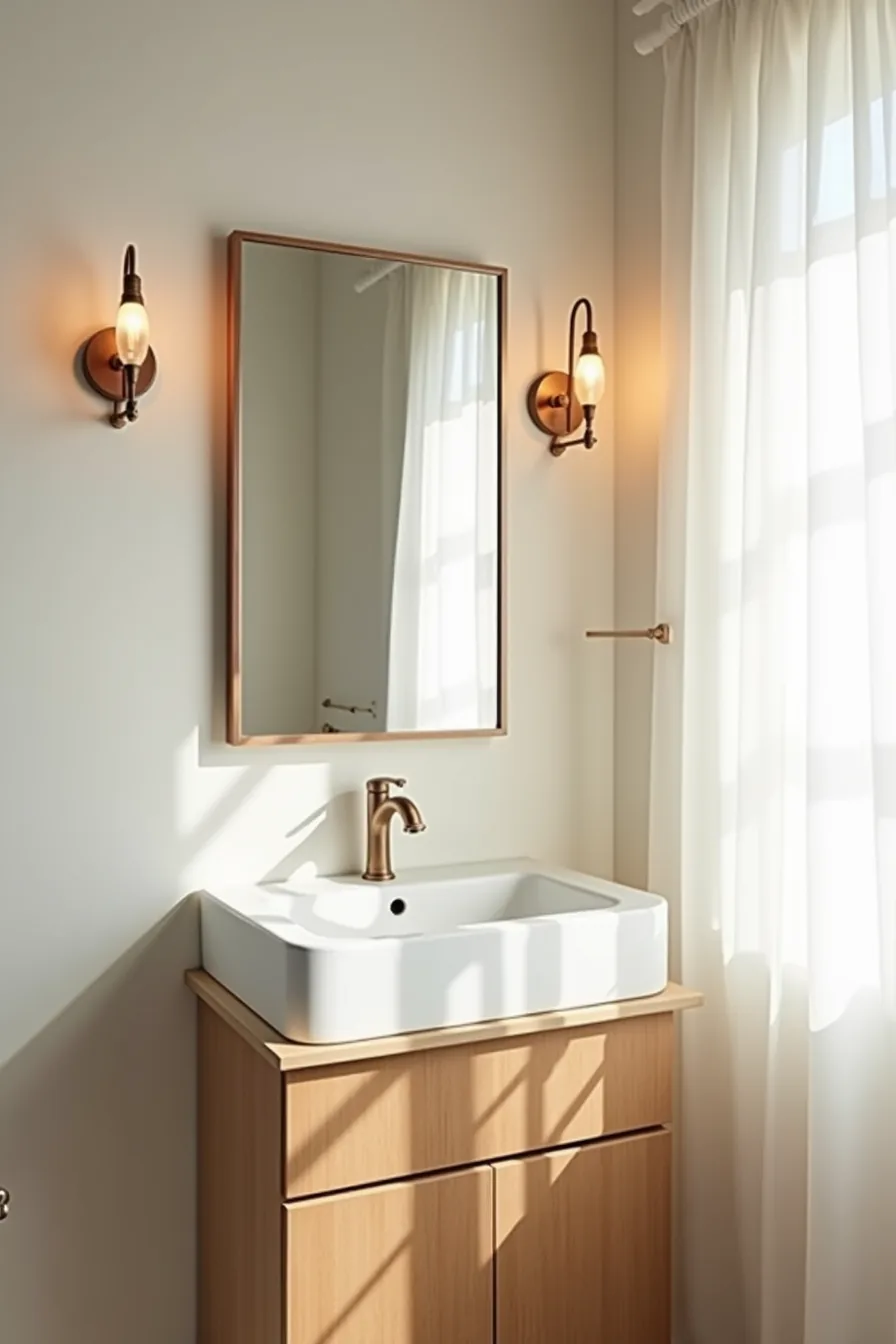
The bronze-framed mirror centered above a pedestal sink sets the finish standard for the entire wall. When you pair it with a matching bronze towel bar and cabinet pull, you create a visual system where every metal element speaks the same language, no single piece competes for attention. The identical finish across all three items matters more than their individual designs; mixed undertones within the same room read as accidental, not intentional.
Proportional spacing prevents the arrangement from feeling crowded. Mount the towel bar roughly 18 inches from the mirror’s edge, which gives your hand enough clearance to grab a towel without brushing the frame. On the vanity drawer below, position the pull 2-3 inches from the top edge, this aligns with your natural grip and keeps the hardware visually connected to the mirror above.
In a compact bathroom, limit yourself to three bronze touchpoints per wall; exceeding that creates visual noise that shrinks the space further.
Budget-Friendly Bronze Fixtures for Renters
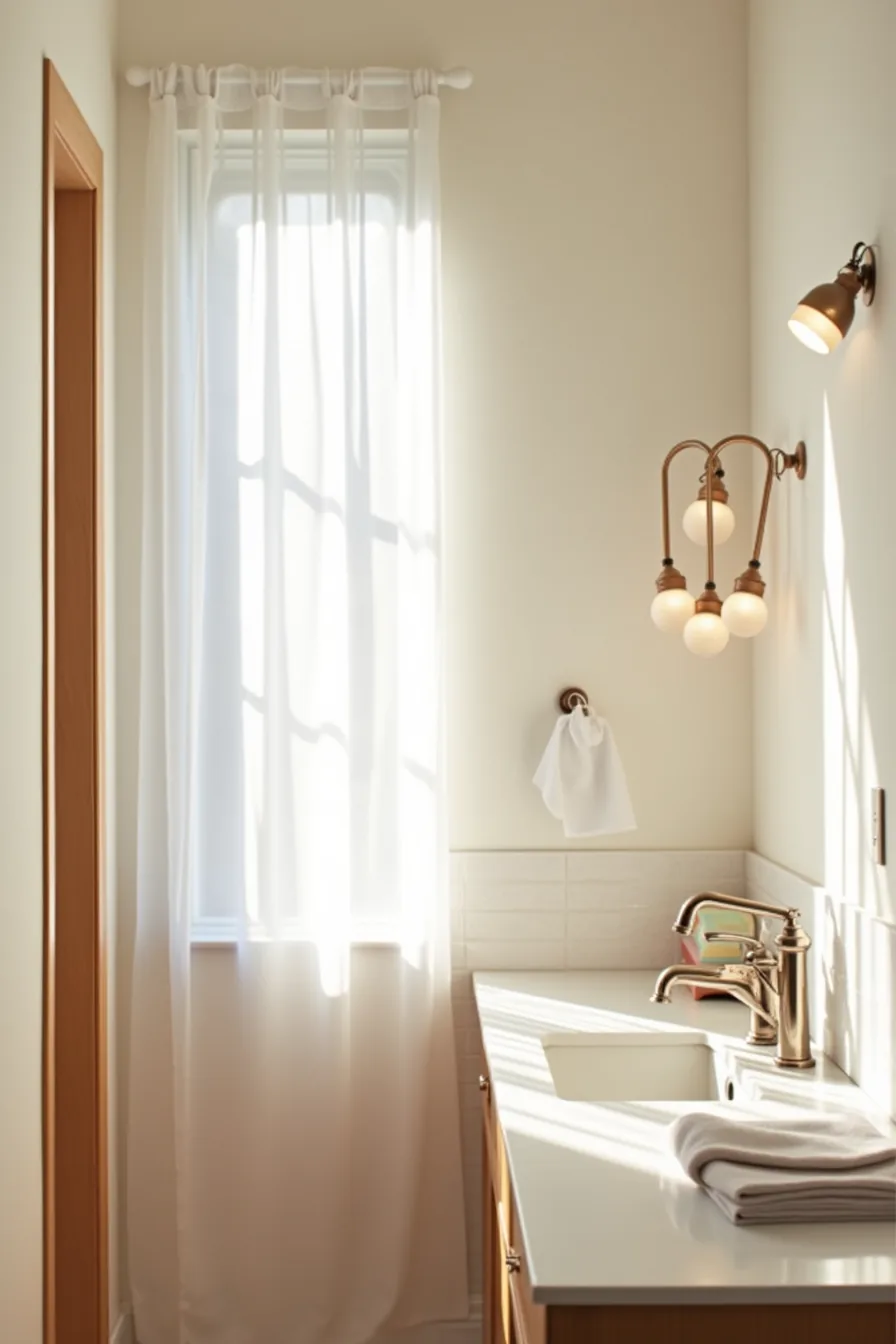
Renting doesn’t mean surrendering to chrome. The setup here proves the point: an adhesive-mount bronze towel bar grips the tile wall without a single drill hole, while a removable bronze faucet aerator sits beside the original chrome base, ready to swap out in under two minutes for a warm metal tone at the sink. A portable, battery-powered bronze LED wall light leans against the mirror, casting light without hardwiring.
Each piece requires zero permanent modification. The towel bar holds up to 5-7 pounds when installed on clean, dry tile, enough for rolled hand towels, not heavy bath sheets, and its adhesive tape leaves no residue when you peel it off at move-out. The aerator fits standard faucet threads (most are 15/16-inch outer, 55/64-inch inner), so it works on roughly 80 percent of rental sinks without a plumber.
The LED light runs on three AA batteries, giving you roughly 40-60 hours of illumination before a swap.
This route suits anyone prioritizing their security deposit over long-term durability. Expect the adhesive to weaken after 12-18 months of steam exposure, and budget $30-60 total for all three items.
Investment-Grade Bronze Fixtures for Permanence
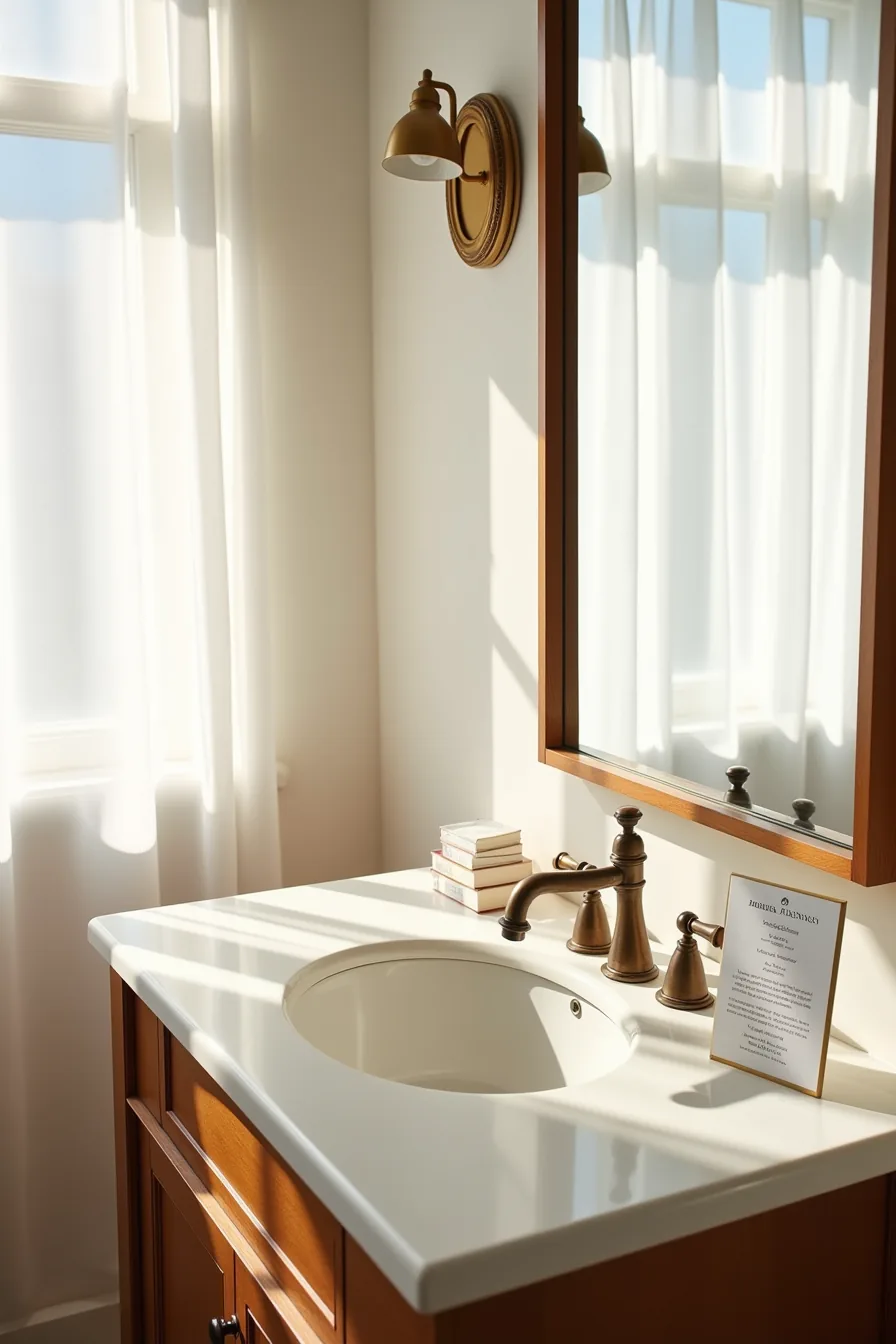
When you plan to stay put for a decade or more, solid brass construction changes the calculus entirely. The widespread faucet here uses a cast brass valve body beneath the sink, not a plastic cartridge housing, which means the internal threads and seating surfaces withstand 500,000+ cycles of hot-cold thermal expansion without cracking. The matching brass drain trim ring, often an afterthought in cheaper builds, prevents the galvanic corrosion that creates green stains around the drain opening over time.
Finish durability separates investment-grade pieces from mid-tier options. Look for a physical vapor deposition (PVD) coating, which bonds at the molecular level and resists scratching from abrasive cleaners; expect 15-25 years of daily use before the finish shows wear. Polished surfaces will develop a natural patina in high-touch areas, this is oxidation, not failure, and it actually protects the metal underneath.
Warranty terms tell you what the manufacturer expects. A lifetime warranty covering the finish, not just the cartridge, signals confidence; a 5-year finish-only warranty suggests the coating will fail sooner. Before buying, verify the warranty certificate covers labor costs, not just replacement parts.
Maintenance stays simple: wipe with a soft cloth after each use, and apply a clear metal wax every 6-8 months to slow patina formation on polished surfaces. Expect to pay $400-900 for a faucet with this construction level, roughly three to five times the cost of the renter-friendly route, but with a service life of 30+ years.
Creating a Cozy Autumn Mood with Bronze Tones
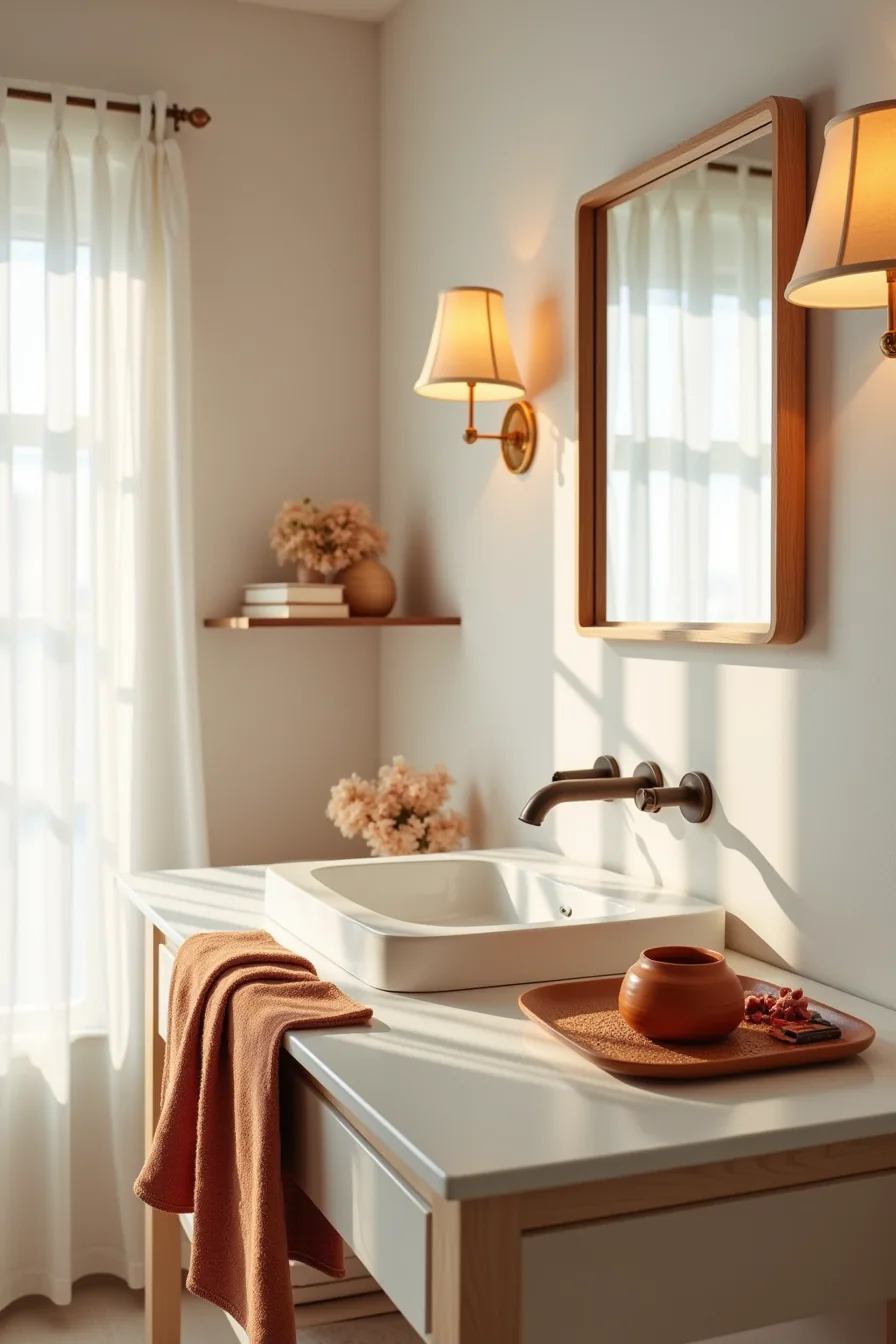
Bronze bathroom fixtures for a cozy autumn mood work because the metal’s warm undertones absorb, rather than reflect, light, making the space feel enveloping. Pair your bronze faucet with a wood-framed mirror and a brass-based table lamp on a corner shelf; the overlapping warm metals create depth without competing. The rust-colored linen towel and terra-cotta soap dish pull the earthy palette through, anchoring the bronze rather than letting it float as an isolated accent.
Keep year-round adaptability in mind: swap the rust towel for sage or oatmeal in spring, and replace the terra-cotta dish with a white ceramic version. The bronze fixtures and wood mirror carry the warmth independently, so the room never looks trapped in October. For lighting, choose a 2700K bulb in the lamp, anything cooler washes out the bronze’s reddish tones and shifts the whole scheme clinical.
Your Decision Checklist
Before you buy, confirm the undertone of your bronze finish matches your other metals. Mixing warm bronze with cool chrome rarely reads as intentional. Verify the valve type under your sink, compression, ball, and cartridge systems require different fixture connections.
Check your wall depth for recessed options and your water pressure for rain heads or waterfall spouts.
Choose finishes with a PVD coating over painted bronze for longevity. Set a realistic budget: quality bronze fixtures typically run 30–60% more than chrome equivalents.
Start by replacing one piece, your most-used faucet. It will tell you within a week whether the look suits your space.
Frequently Asked Questions
What is the difference between oil-rubbed bronze and brushed bronze finishes?
Oil-rubbed bronze is dark, nearly black-brown with a rich, uneven patina that deepens over time. Brushed bronze is lighter and warmer, with a subtle satin sheen and visible directional grain. Both resist fingerprints, but oil-rubbed shows water spots more readily.
Can I mix light and dark bronze fixtures in the same bathroom?
Yes, but anchor the room with one dominant finish, use 70% of one tone and 30% of the other. Pair dark oil-rubbed bronze faucets with lighter brushed bronze accessories for contrast. Avoid alternating finishes fixture-by-fixture, which creates visual chaos.
Keep hardware undertones consistent (warm vs. Cool).
How often do bronze bathroom fixtures need polishing or sealing?
Oil-rubbed bronze requires no polishing, it’s a living finish that patinas naturally. Wipe with a damp microfiber cloth weekly; never use abrasive cleaners. Brushed bronze benefits from a clear lacquer sealant applied every 12-18 months to maintain its sheen.
Both finishes tolerate hard water if you dry them after each use.
What wall colors work best with bronze bathroom fixtures?
Warm whites, cream, and soft greige let bronze read as a neutral anchor. Deep forest green, navy, or charcoal create dramatic contrast that makes bronze pop. Avoid cool gray or stark white, which can make bronze look muddy.
For small bathrooms, stick to light walls with bronze as the accent.