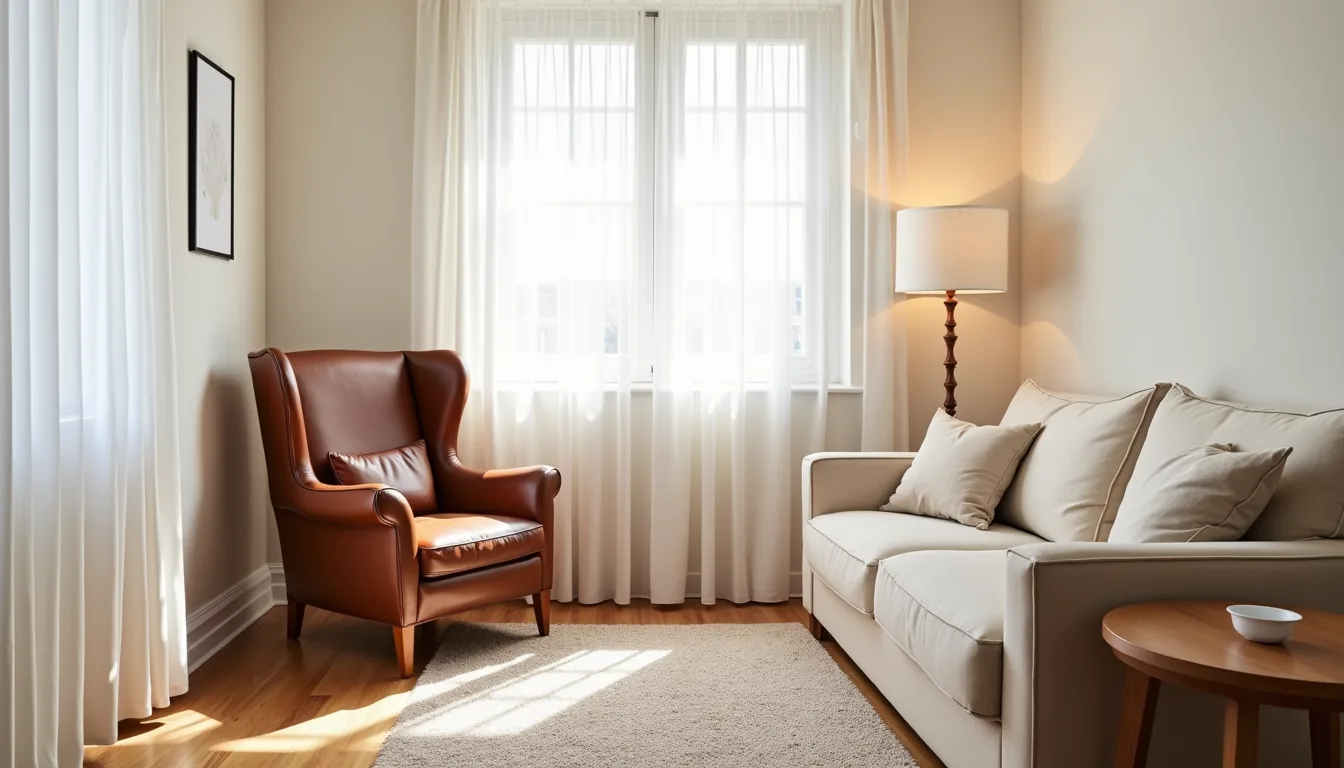
A brown leather accent chair is the rare furnishing that bridges rugged and refined, but its success in your living room depends entirely on how you anchor it, scale, placement, and contrast do the heavy lifting. Get those three variables right, and the chair becomes a hardworking focal point; get them wrong, and it reads as a bulky afterthought. The six setups that follow each solve a different spatial or stylistic problem, from cramped rentals to large open plans, with specific dimensions, material pairings, and cost trade-offs you can apply immediately.
Key takeaways
Cream walls and a brown leather accent chair create instant contrast, but anchor the pairing with a warm-toned rug to prevent the room from feeling stark. Cool gray or blue walls make brown leather pop dramatically, yet you’ll need to add at least two warm wood or brass elements to keep the space from turning cold. In small rooms, choose an armless or low-back leather chair (roughly 28–32 inches deep) and float it diagonally in a corner to avoid blocking traffic paths. For long-term durability, pick full-grain leather with a natural patina and condition it every 6–12 months, avoid bonded leather if you expect daily use or pets.
Warm Neutrals with Cream: The Foundational Pairing
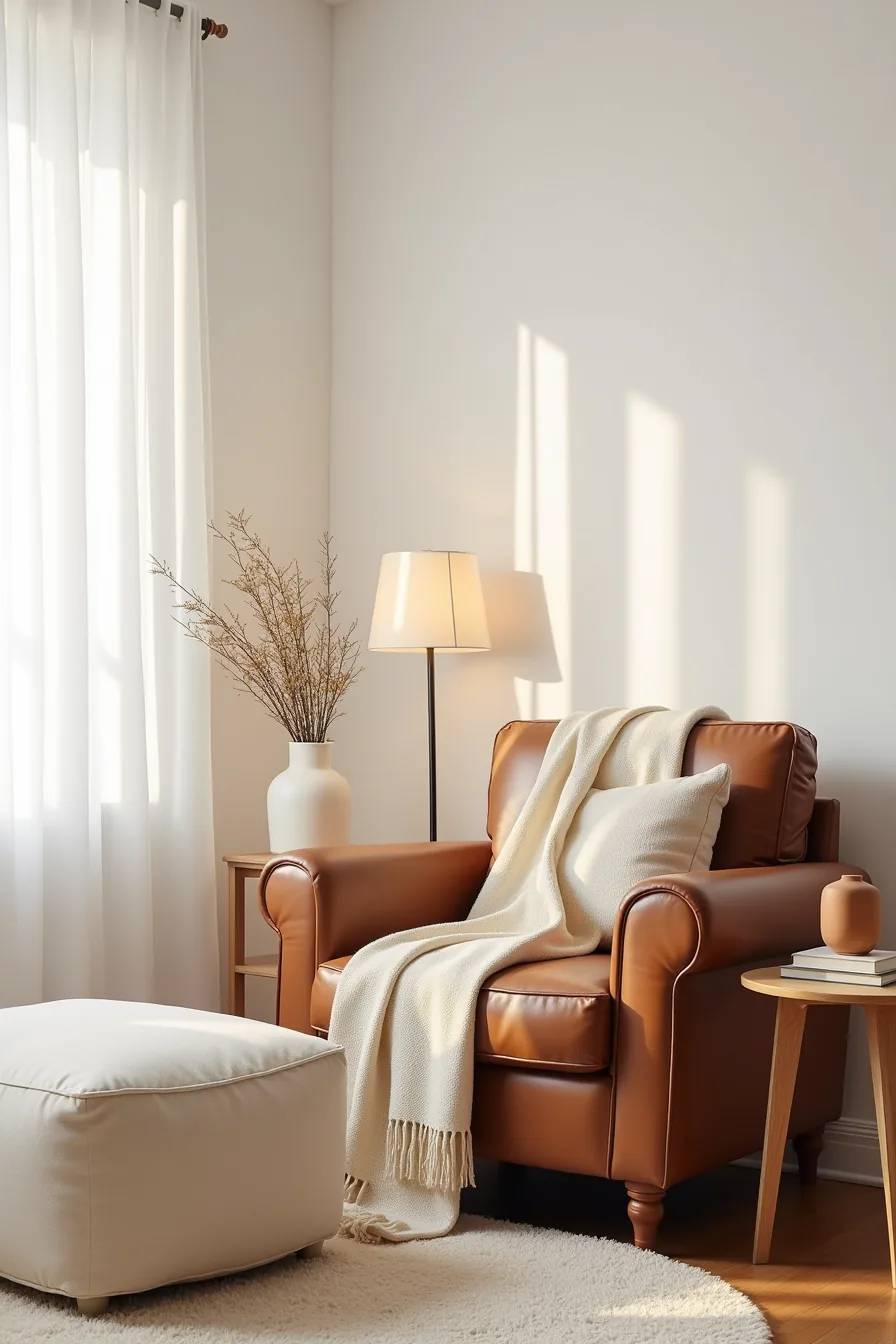
The most reliable starting point for brown leather accent chair living rooms pairs the chair’s rich tone with cream upholstery and textiles. This combination works because the contrast is gentle, cream softens the leather’s visual weight without competing with it, while the brown keeps the palette from feeling washed out. In a small room, the light tones reflect available light and keep the space airy; in a larger room, the leather anchor prevents the cream from drifting into blandness.
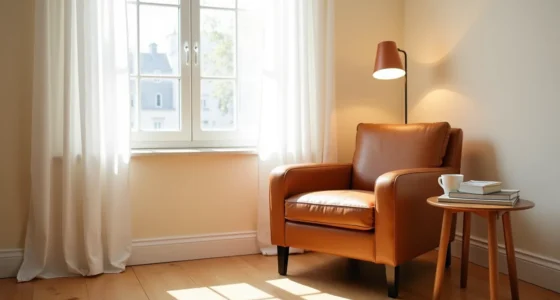
A brown leather club chair with rolled arms sets the anchor. Position it beside a cream-upholstered ottoman, both resting on a light wool rug to bridge the two tones. Drape a cream throw blanket over one arm, this introduces texture and breaks up the leather’s surface area, which matters if the chair is new and still stiff.
A warm wooden side table with a ceramic vessel completes the arrangement; the wood should match the leather’s undertone (cherry, walnut, or oak) rather than fight it.
For the cream elements, choose performance fabrics with a high rub count, cotton twill or a poly-linen blend at 30,000 to 50,000 double rubs will withstand daily use. Budget route: buy the chair secondhand and spend on a new cream ottoman. Long-term route: invest in full-grain leather (not bonded), which develops a patina over 5–10 years and outlasts two or three fabric chairs.
Cool Palettes Against Warm Leather
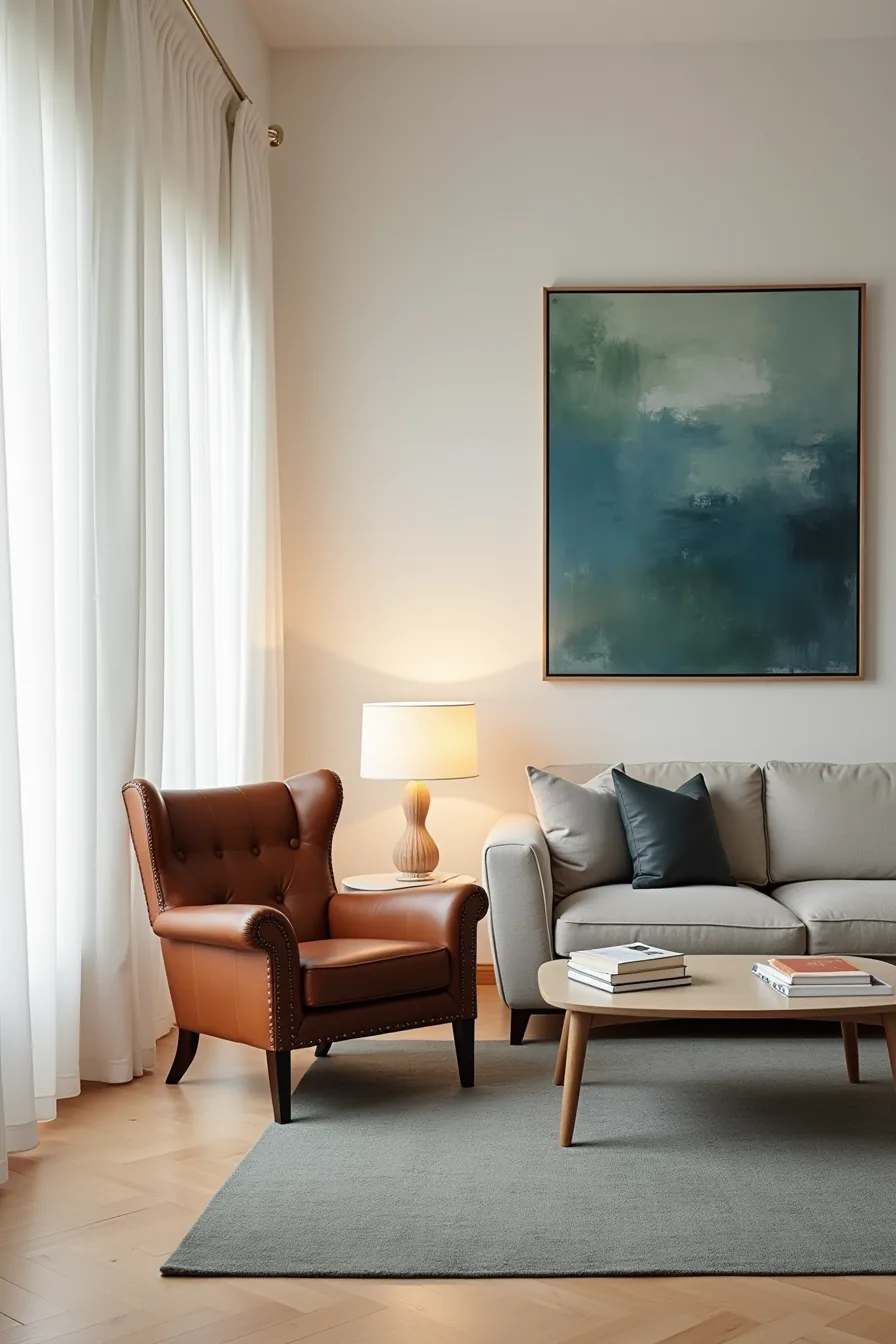
The opposite strategy, pairing brown leather with cool grays, blues, and greens, creates a deliberate tension that feels contemporary rather than accidental. The warm-vs-cool palette contrast makes the leather appear richer while the cool tones recede, giving the chair visual prominence without shouting. This approach suits north-facing rooms that lack natural warmth, or living spaces where you want the leather to feel like the focal point rather than a supporting player.
A brown leather Chesterfield chair facing a soft gray linen sofa across a low table anchors this scheme. The tufted leather reads as the warm counterweight to the gray sofa’s quiet neutrality, and a cool-toned abstract painting with blue and green fields pulls the eye upward, balancing the chair’s heavy base. A slate-colored throw pillow on the leather seat bridges the two temperatures, without it, the chair can feel detached from the rest of the room.
To prevent visual conflict, keep the cool tones muted: opt for greige or blue-gray rather than icy pastels, which will fight the leather’s warmth. Introduce one bright accent, a cobalt vase or teal book spines, rather than scattering cool colors throughout. Budget route: keep the Chesterfield generic and let the painting and pillow carry the palette.
Long-term route: choose a full-grain leather with visible grain variation, which gives the cool backdrop more texture to play against.
Leather and Textile Balance for Comfort and Durability
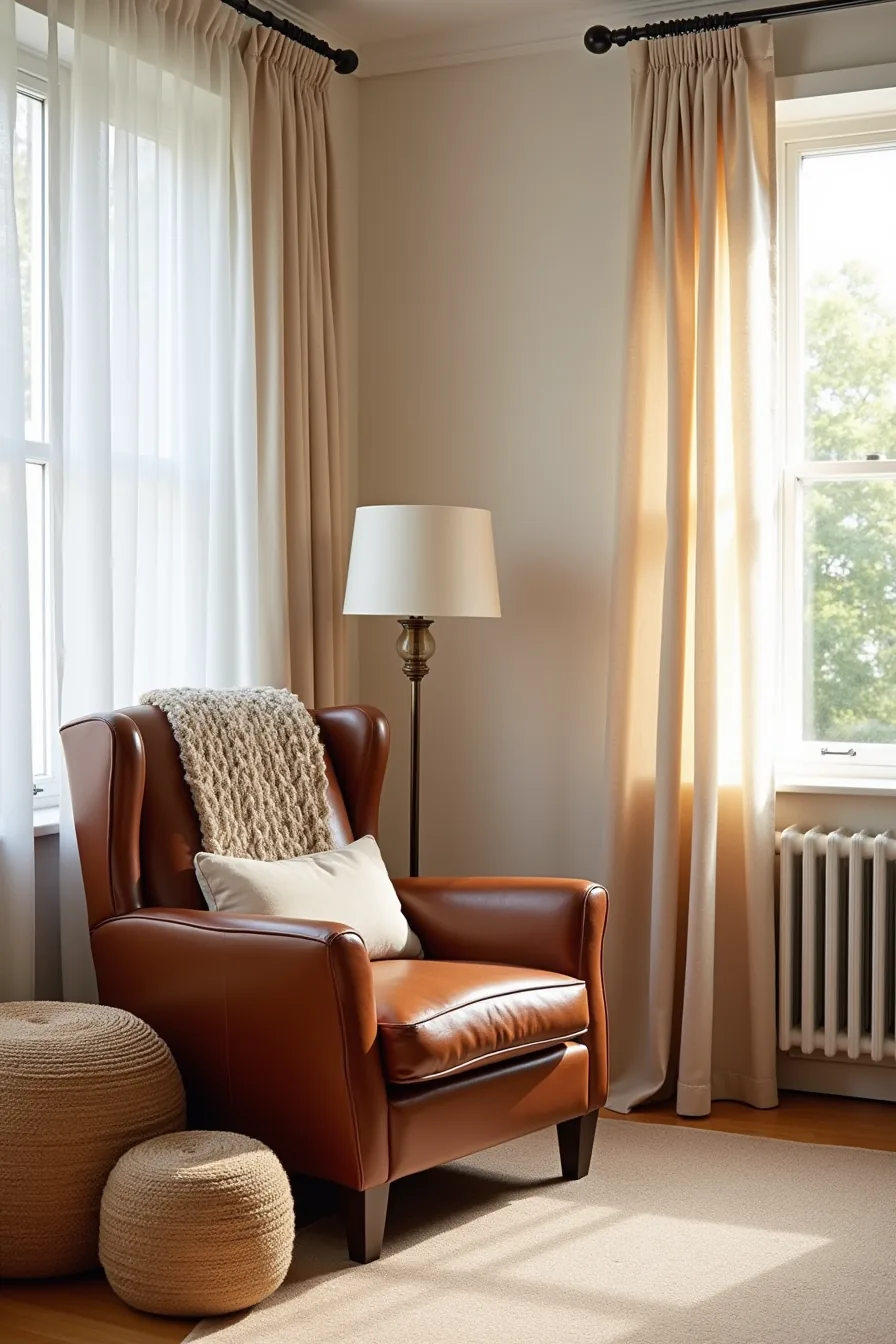
The most successful brown leather accent chair living rooms avoid the mistake of letting leather dominate every surface. A practical ratio is roughly 60% textiles to 40% leather across the room’s seating and soft furnishings, enough fabric to soften the space, enough leather to anchor it. The wingback chair’s back and arms provide the structural durability, while a chunky knit throw draped across its back protects the upper leather from hair oils and daily wear, extending its life by years.
Pairing the chair with woven jute poufs and a natural fiber rug introduces scratch-resistant textures that contrast the leather’s smoothness and are far easier to replace when they show wear. Linen curtains in natural beige echo the jute’s warmth without competing for attention. The maintenance trade-off matters: leather needs conditioning every 6-12 months, while jute and linen require only vacuuming, so budget accordingly if you prefer low-touch upkeep.
This approach suits families or pet owners who want leather’s durability without committing to a fully leather-forward aesthetic.
Small-Space Solutions with Brown Leather Accents
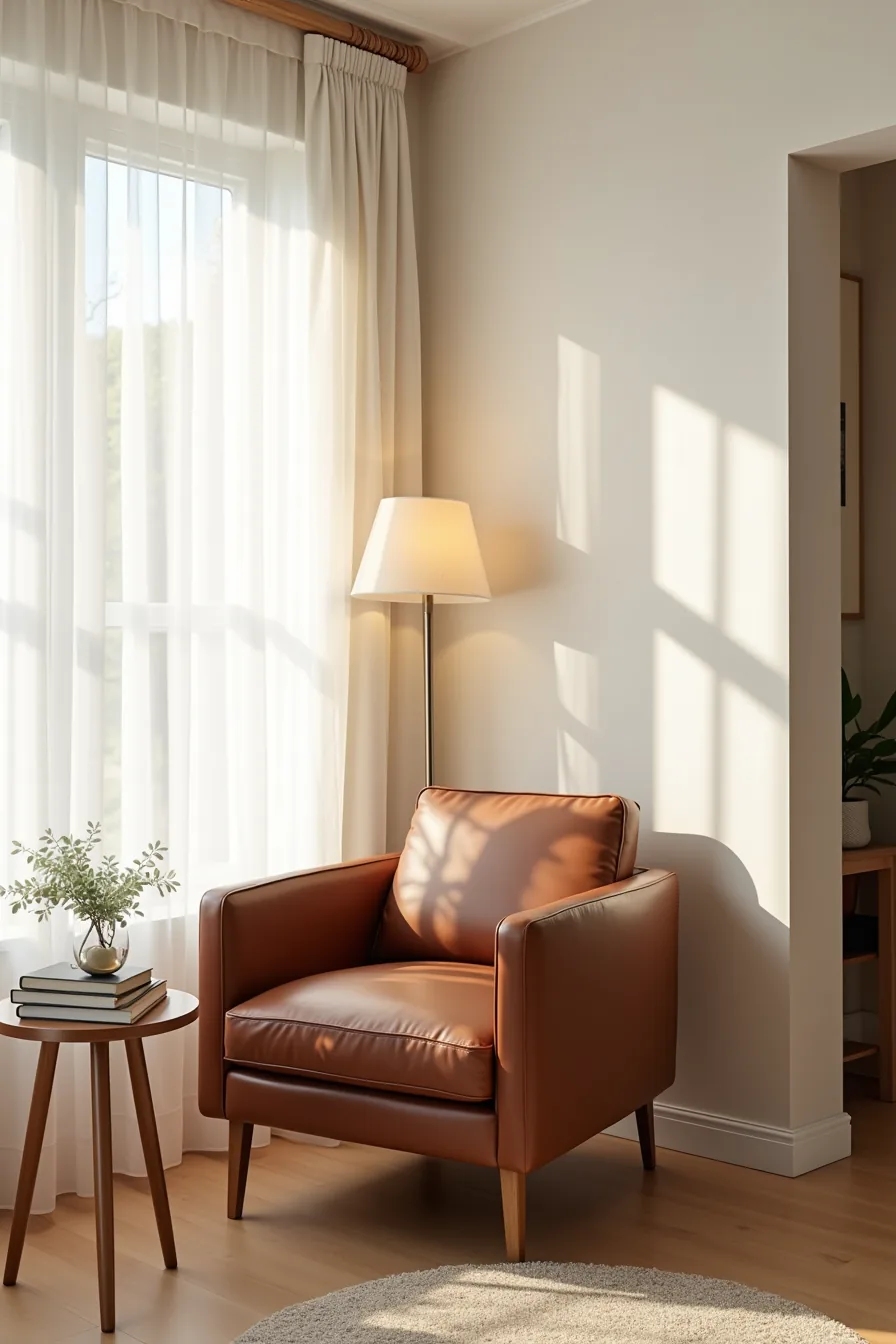
In compact brown leather accent chair living rooms, width matters more than depth. Look for a chair under 32 inches wide, most standard accent chairs run 30–36 inches, but narrow frames in the 28–32 inch range leave breathing room for a doorway or hallway. Place the chair diagonally across a corner, angling it toward the room’s center rather than flush against the wall; this opens sightlines and keeps the circulation path clear.
A narrow side table with a single shelf, positioned within arm’s reach, eliminates the need for a bulky end table while still holding a drink and a book. The woven basket beneath the shelf catches throws or magazines, and a single throw pillow, no more, adds softness without visual clutter. For renters, skip wall anchoring entirely: the chair stands independently, and the corner placement needs no drilling.
You lose storage, but you gain flexibility to reconfigure when your lease ends. This setup works best in rooms under 200 square feet where every inch of floor space competes for purpose.
Medium and Large Rooms: Layering and Proportion
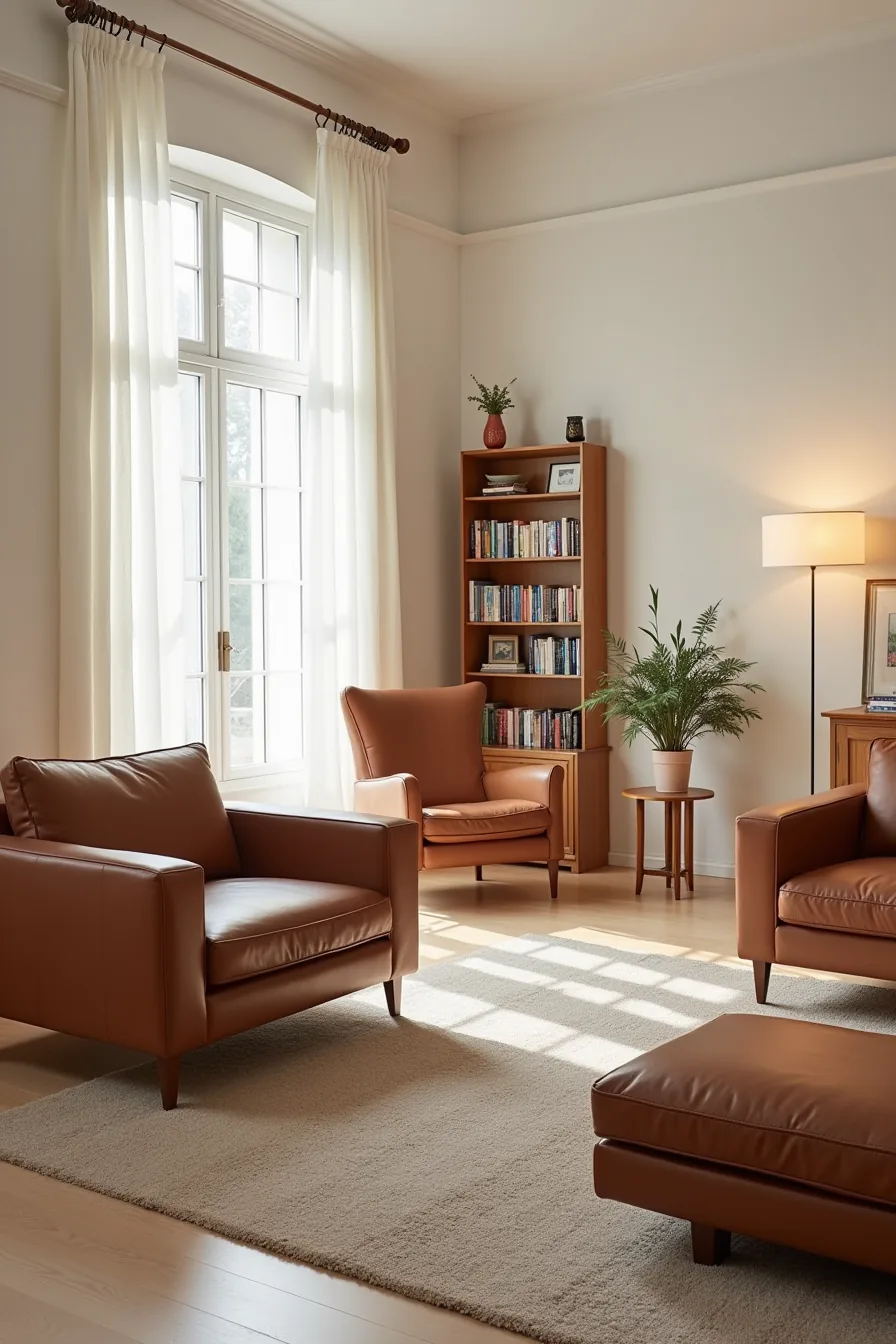
In open layouts exceeding 300 square feet, a single brown leather accent chair reads as an island. The solution is pairing it with a matching leather sofa, as seen here, and letting the pair anchor a conversation zone rather than the wall. Position the chair at a 45-degree angle to the sofa, with roughly 18–24 inches between them for walk-through space; this creates an L-shaped seating arrangement that naturally defines a distinct area within the larger room.
Multiple area rugs become zoning tools. Run one rug beneath the sofa and a second, smaller rug under the chair to visually separate the seating cluster from circulation paths and the console table beyond. The tall bookshelf behind the chair adds vertical balance, drawing the eye upward and preventing the leather pieces from dominating the horizontal plane.
For medium rooms in the 200–350 square foot range, scale down: skip the sofa and use the chair with a loveseat instead, keeping the same angled placement to preserve the conversational pull without overwhelming the footprint. Opt for a chair with a higher back (34–38 inches) in these settings, it holds its own against the sofa’s mass and keeps the zone visually cohesive.
Seasonal Styling Techniques for Year-Round Refresh
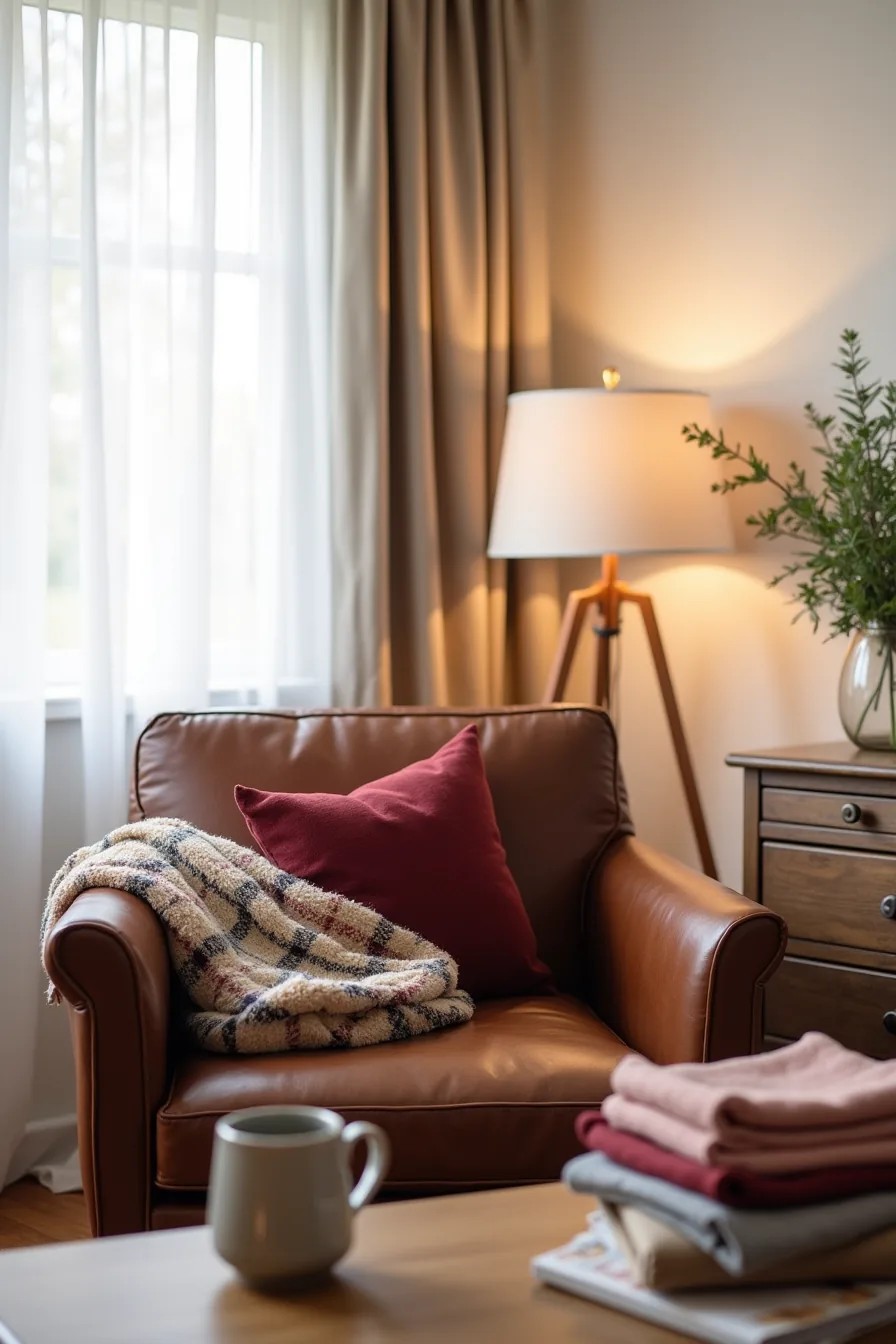
A brown leather accent chair is a fixed point, so rotate everything around it to shift the room’s mood across seasons. Start with the textiles layered directly on the chair: swap a light cotton throw for a heavy wool plaid in autumn, and switch a neutral cushion for a burgundy pillow when temperatures drop. This single change alters the perceived weight of the piece without touching the leather itself.
Your coffee table becomes the second styling layer. Replace warm-weather ceramics with a mug in a deep seasonal toneately, and keep a small stack of fabric swatches in candidate colors, rust, forest green, cream, to preview next month’s palette before committing. The trick is limiting seasonal changes to three items: one throw, one pillow, and one table accessory.
For Brown Leather Accent Chair Ideas for Seasonal Styling, budget around $40–80 per season if you buy new textiles, or rotate what you already own from other rooms. Leather needs no seasonal care beyond a twice-yearly conditioning, so your effort goes entirely into fabric and accessories. This approach lets you refresh a fixed investment without rethinking the whole layout.
What to do first
Place a rolled-up paper or tape outline where the chair will sit, then live with the empty footprint for 48 hours. This reveals whether the chair blocks a doorway, crowds a coffee table, or leaves less than 24 inches of walkway, the real test most buyers skip. If the outline feels right, measure the chair’s seat height against your sofa (they should sit within 2 inches of each other).
Your next step: order two free leather swatches from the brand you’re eyeing and tape them to your floor and wall. Check them in morning, noon, and evening light. That single hour will prevent a $900 misfire.
Frequently Asked Questions
How do I keep a brown leather accent chair from looking too heavy in a small living room?
Choose a slim-armed, low-back chair with exposed wooden legs, this lifts visual weight. Place it diagonally in a corner, not flush against a wall, and pair it with a light-colored side table to break up the mass.
What color throw pillows work best with brown leather and cream walls?
Ochre, rust, or olive green add warmth; ivory or soft gray keep it neutral; navy or teal create contrast. Stick to two pillows max, in textured fabrics like linen or wool, to avoid cluttering the chair’s silhouette.
Is brown leather a good choice for a rental apartment, or should I buy a fabric chair instead?
Leather is a strong rental choice, it’s durable, wipes clean, and hides daily wear. Just confirm your lease allows furniture damage; leather scratches and fades over time, so choose a pre-distressed hide if you want low maintenance.
How often does brown leather need conditioning, and what products actually work?
Condition every 6–12 months, or whenever the surface feels dry or looks dull. Use a pH-neutral leather conditioner with no silicone or alcohol, Lexol and Chamberlain’s Leather Milk are reliable options. Always test on a hidden spot first.