

A chic shower curtain is the difference between a bathroom that feels finished and one that feels functional, and you can get there in six distinct ways without sacrificing practicality. Each approach targets a specific space, budget, and maintenance level, from a $30 linen panel that softens a small rental to a custom waterproof canvas that anchors a master suite. The trade-offs matter: fabric weight, liner requirements, and rod height all shift the final look.
Below, you’ll find the exact specs, room matches, and cost realities for each route.
Key takeaways
Pattern discipline wins: Choose one geometric motif and repeat it consistently rather than mixing competing shapes.
Linen needs room: Expect natural wrinkles and a relaxed drape, so pair it with a textured mat and avoid high-humidity bathrooms without ventilation.
Scale follows square footage: Use a standard 72-inch curtain in tight spaces, but size up to 84 inches for large tubs or tall ceilings to avoid a stunted look.
Budget smartly: A quality polyester-cotton blend under $30 outperforms cheap vinyl for durability, while a 100% linen curtain costs 3–5 times more but lasts years longer with proper washing.
Understated Pattern: Geometric Restraint

A small-scale geometric print, like a cream curtain with a soft gray diamond grid, gives you visual interest without the weight of a bold motif. It works because the pattern reads as texture from a distance, then reveals itself up close, a quality that suits compact bathrooms where large prints can feel suffocating.
This approach pairs naturally with white subway tiles and a chrome rod, as the cool metallic finish echoes the gray in the pattern. For a small or medium room, keep the grid under three inches per repeat; anything larger will dominate the wall. A single white shelf holding a potted succulent above the toilet completes the look without adding clutter.
Choose a polyester-cotton blend for easy washing, and hang the rod at least 75 inches from the floor so the curtain pools slightly, which softens the geometry. This is a budget-friendly route: you can achieve the effect for under $40 total, including liner and hooks.
Monochrome Chic: Tone-on-Tone Layering

You can build a sophisticated shower curtain setup by layering two panels in the same color family but different finishes. The matte linen-look curtain in charcoal gray hangs closest to the tub, while a sateen-finish panel in a slightly lighter shade sits behind it, catching the light and creating subtle depth. Stainless steel hooks hold both layers cleanly, and the concrete-look floor tile anchors the cool palette.
This approach suits renters because you can achieve the effect with tension rods and removable adhesive hooks, leaving no permanent damage. It also works for permanent installations where you want a custom, tailored feel without the cost of a designer fixture. Choose fabrics with contrasting textures rather than identical weaves, and keep both panels the same length to avoid a sloppy edge at the bottom.
Expect to spend $60-$90 for two quality panels and rings, and budget for dry-cleaning the sateen layer if you want it to last beyond two years of weekly laundering.
Fabric Texture Focus: Beyond Flat Weave

A jacquard-weave curtain in cream with an embossed botanical relief pattern delivers depth that flat-woven fabrics simply can’t match. The raised surface catches water beads and ambient light differently across each motif, so the curtain reads as a textured wall treatment rather than a utilitarian screen. Mounted on a matte black rod against marble tile with visible grout lines, the contrast between the soft relief and the hard, veined stone creates the entire visual interest of the space.
This fabric texture focus suits homeowners who want a permanent, high-touch upgrade that doesn’t rely on accessories for character. Jacquard construction is denser than standard polyester blends, expect a 220-300 gram-per-square-meter weight range, which means better drape and resistance to mildew when you hang it outside the tub to dry after each use. Plan to spend $45-$75 for a quality panel, and note that the embossed areas require gentle laundering; wash on a delicate cycle with cold water and hang-dry to preserve the relief for five to seven years.
Neutral Linen Look: Natural Fiber Appeal

An undyed linen-blend curtain brings a relaxed sophistication that reads as organic rather than decorated. The slub texture and subtle color variations across the panel, both inherent to flax fibers, create movement that flat polyester mimics poorly, giving the shower a soft, diffused light quality even in windowless bathrooms. This approach suits those who prefer understated warmth over pattern or gloss, and it pairs especially well with warm wood tones and natural accessories.
The walnut rod anchors the linen’s airy drape, while a woven storage basket beside the tub and a pebble-textured floor mat complete the earthy context without adding visual clutter. True linen requires more care than synthetics: expect to machine-wash on a gentle cycle with mild detergent and hang-dry to prevent shrinkage and fiber damage. For a lower-maintenance alternative, a linen-blend with 40-60% polyester retains the matte look while reducing wrinkling and drying time, budget $25-$50 for the blend versus $60-$100 for pure flax.
This option works best in medium-to-large bathrooms where the curtain can hang without tight folding, since linen’s natural stiffness doesn’t cascade as fluidly in narrow, 54-inch tub alcoves.
Scaled Proportions: Matching Curtain to Room Size

Scale dictates whether a chic shower curtain elevates a bathroom or overwhelms it. In a spacious master bath with a full-width shower enclosure, a standard 72-inch curtain reads as a postage stamp against the wall. You need a panel that spans 80-90 inches wide and hangs floor-to-ceiling, often 96 inches, to anchor the visual field beside a freestanding tub and polished concrete floor.
The taupe fabric’s generous pattern scale fills the eye rather than getting lost in square footage.
For compact baths under 40 square feet, reverse the logic. Oversized patterns fold into cramped corners, so choose smaller prints or texture-only fabric at standard 70-72 inch lengths. Medium bathrooms around 60-80 square feet accommodate a middle ground: 72-inch curtains with medium-scale geometrics.
The rule holds universal: measure your shower width, then select a curtain at least 12 inches wider to allow proper draping without stretching the grommets.
Maintenance and Longevity: Investment Protection
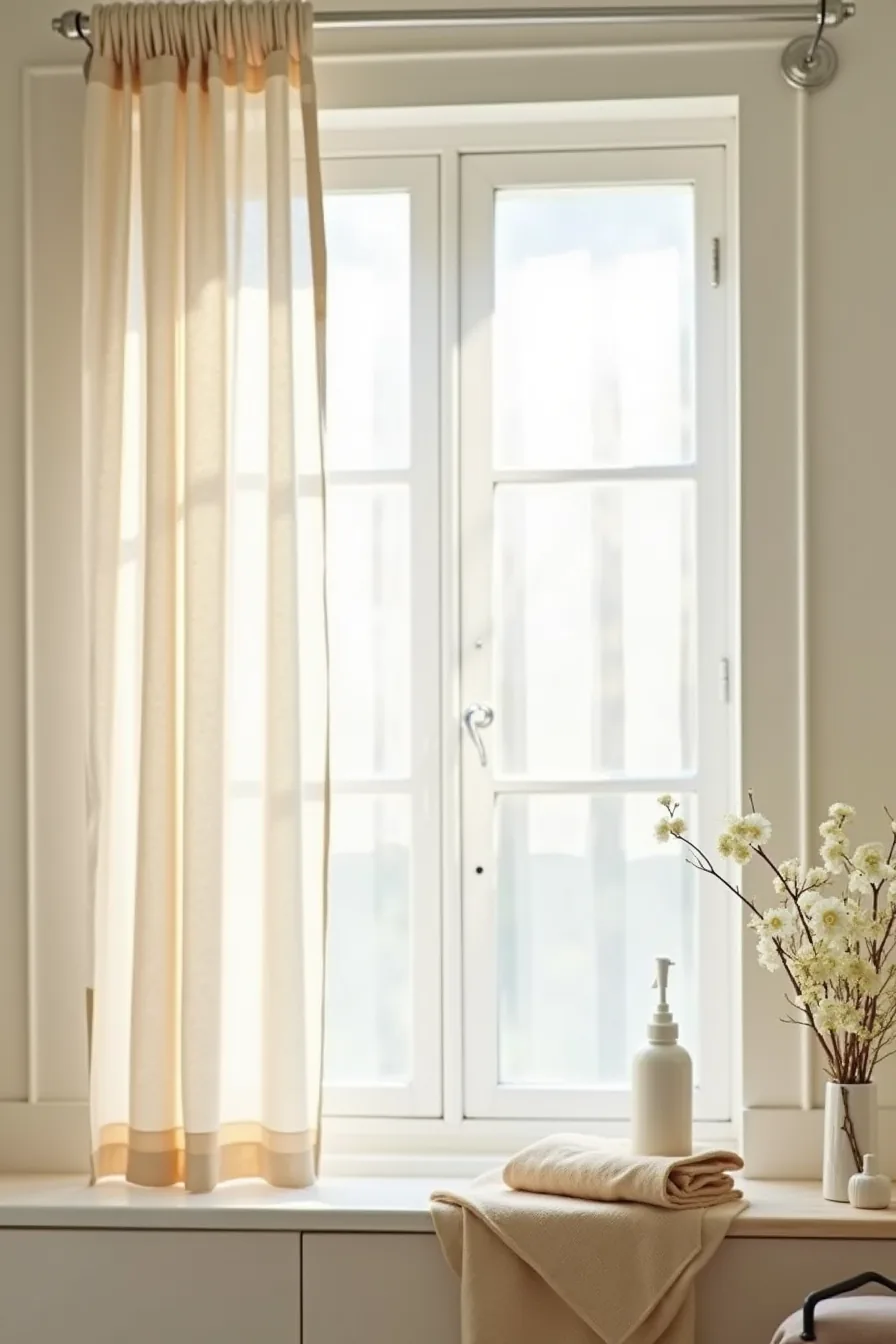
The difference between a chic shower curtain that lasts two years and one that lasts eight comes down to fabric weight and care habits. A premium polyester or linen-blend curtain with a 180-220 GSM weight resists mildew better than thin polyurethane options, but it still needs a weekly spray-down with a 1:3 vinegar-water solution to prevent soap scum from bonding to the weave. The lint brush in your setup isn’t decorative, it removes hair and dust that trap moisture against the fabric, which is the primary cause of premature fiber breakdown.
Budget curtains under $30 typically survive 12-18 months before grommets rust or seams fray, making them a $1.50-per-month cost. Mid-range options at $40-70 deliver 3-4 years with proper care, while a $120+ investment in solution-dyed acrylic or heavy cotton duck can reach 8-10 years if you machine-wash cold on delicate and hang-dry every six weeks. Never use fabric softener, it coats fibers and reduces water repellency.
The spray bottle beside your rod should hold diluted cleaner, not bleach, which yellowed most synthetic fabrics within months. For that premium curtain, skip the dryer entirely; the heat degrades elasticized edges and shrink-wraps the weave into a permanent ripple.
Your Decision Checklist
Before you buy, confirm the material matches your humidity level, cotton and linen look refined but mildew faster than polyester blends in poorly ventilated bathrooms. Measure your tub and ceiling clearance first; a 72-inch curtain needs 12–18 inches above the rim to hang freely. Check the liner separately, a 12-gauge PEVA liner costs under $15 and extends your fabric curtain’s life by years.
Your next step: Measure your shower width and ceiling height tonight, then set a budget cap, this alone eliminates half the options and makes your final choice obvious.
Frequently Asked Questions
What fabric weight works best for a chic shower curtain that won’t cling to your body?
Choose a fabric between 180 and 240 GSM, like heavy cotton or linen blends. Lighter weights flutter and stick when wet; heavier drape stays put.
Can you hang a chic shower curtain without a liner, or do you always need both?
Always use a liner for fabric curtains, water soaks through and breeds mildew on the fabric. Only a waterproof vinyl or PEVA curtain can hang alone.
How often should you replace a high-quality shower curtain, and what causes premature wear?
Expect 2 to 3 years with weekly washing. Hard water mineral buildup, bleach exposure, and steam without ventilation cut that lifespan by half.
Does a patterned chic shower curtain make a small bathroom feel smaller?
Bold, large-scale patterns shrink a tiny room visually. Opt for small-scale prints or tonal textures, they add interest without closing in the space.


