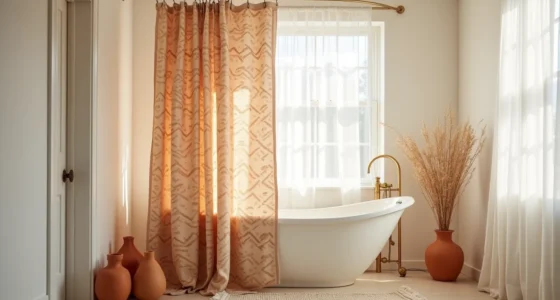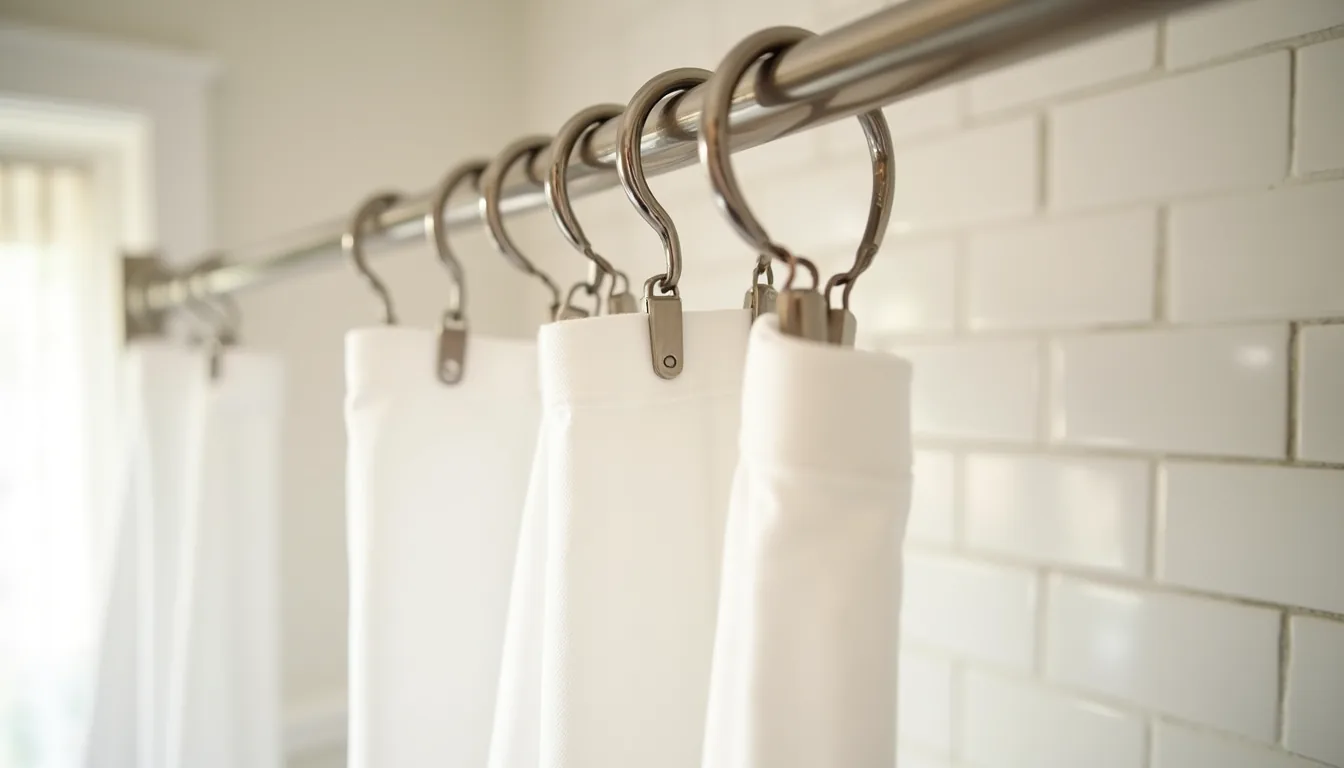

Shower curtain rings are a small hardware choice with an outsized impact on your bathroom’s look and daily function, so picking the right set comes down to three factors: material durability, visual weight against your rod, and how much noise you can tolerate during every pull. That last point, sound, is the one most people overlook, yet it separates a bathroom that feels calm from one that clatters every time you step in and out. Below, you’ll find six distinct routes, from a budget-friendly fix under $10 to a brass upgrade meant to last a decade, each matched to a specific bathroom size and use pattern so you can decide without trial and error.
Key takeaways
Match metal finishes to your faucet and showerhead to create a cohesive look, rather than letting curtain rings become a random accent. Plastic rings under $10 are a smart budget route, but expect them to snap within 12–18 months if you run a heavy fabric curtain on a standard 1-inch rod. Renter-friendly tension rings install without tools and leave zero holes, though they’re limited to lighter curtains, avoid heavy waffle weaves over 12 ounces. Measure your rod before buying: most curved rods push the curtain 6–8 inches outward, so oversized decorative rings can jam against the wall and restrict the curtain’s full open position.
Brushed Nickel Rings for Modern Bathrooms

Brushed nickel earns its place in contemporary bathrooms because it bridges cool chrome and warm bronze without committing to either. The matte, softly textured finish reads as intentional rather than flashy, making it a reliable neutral that pairs with white pedestal sinks, polished concrete floors, and minimalist wooden vanities.
You mount brushed nickel rings on a standard 1.25-inch diameter rod, and the smooth surface glides easily when opening and closing the curtain. Most rings in this finish run 1.5 to 2 inches in diameter, large enough to clear the rod but small enough to keep the curtain close to the wall, which matters when you’ve a frameless glass shower panel beside it. The gap between the panel and the rod should stay at 2 inches or less to prevent water splash from escaping.
Maintenance is straightforward: wipe the rings with a microfiber cloth every two to three weeks to remove hard-water spots. Avoid abrasive scrubbers, which dull the brushed texture. This small hardware update costs roughly $10 to $20 per dozen, making it an easy upgrade for a homeowner who wants a polished look without replacing fixtures.
Mixed Metal Rings for Eclectic Spaces

Mixing ring finishes transforms a utilitarian rod into a deliberate design statement, and the setup here proves the point: matte black, brass, and chrome rings alternate in a repeating sequence along the rod. The pattern works because the finishes share a similar sheen level, none is high-polish chrome or heavily antiqued, so the contrast reads as curated rather than chaotic. A geometric-patterned linen curtain anchors the mix, giving the eye a neutral field against which the metallic variety pops.
For this approach to succeed, follow a strict alternation rule: repeat the same three-finish sequence (e.g., black, brass, chrome) without interruption. Avoid clustering two of the same metal side by side, which breaks the rhythm. The vintage mirror and potted plant on the adjacent shelf reinforce the eclectic mood by echoing the brass and matte black tones.
This style suits bathrooms with existing mixed fixtures, a brass faucet with black sconces, for instance, where matching everything would feel sterile. Ring style comparison matters less than finish harmony here. Stick to rings of identical size and shape across all three metals so the only variable is color.
Expect to pay $15 to $30 per dozen for a mixed set, and note that the varied finishes require individual care: wipe brass with a dry cloth, but use a damp microfiber on chrome and matte black to avoid streaking.
Plastic Rings: The Budget-Friendly Route
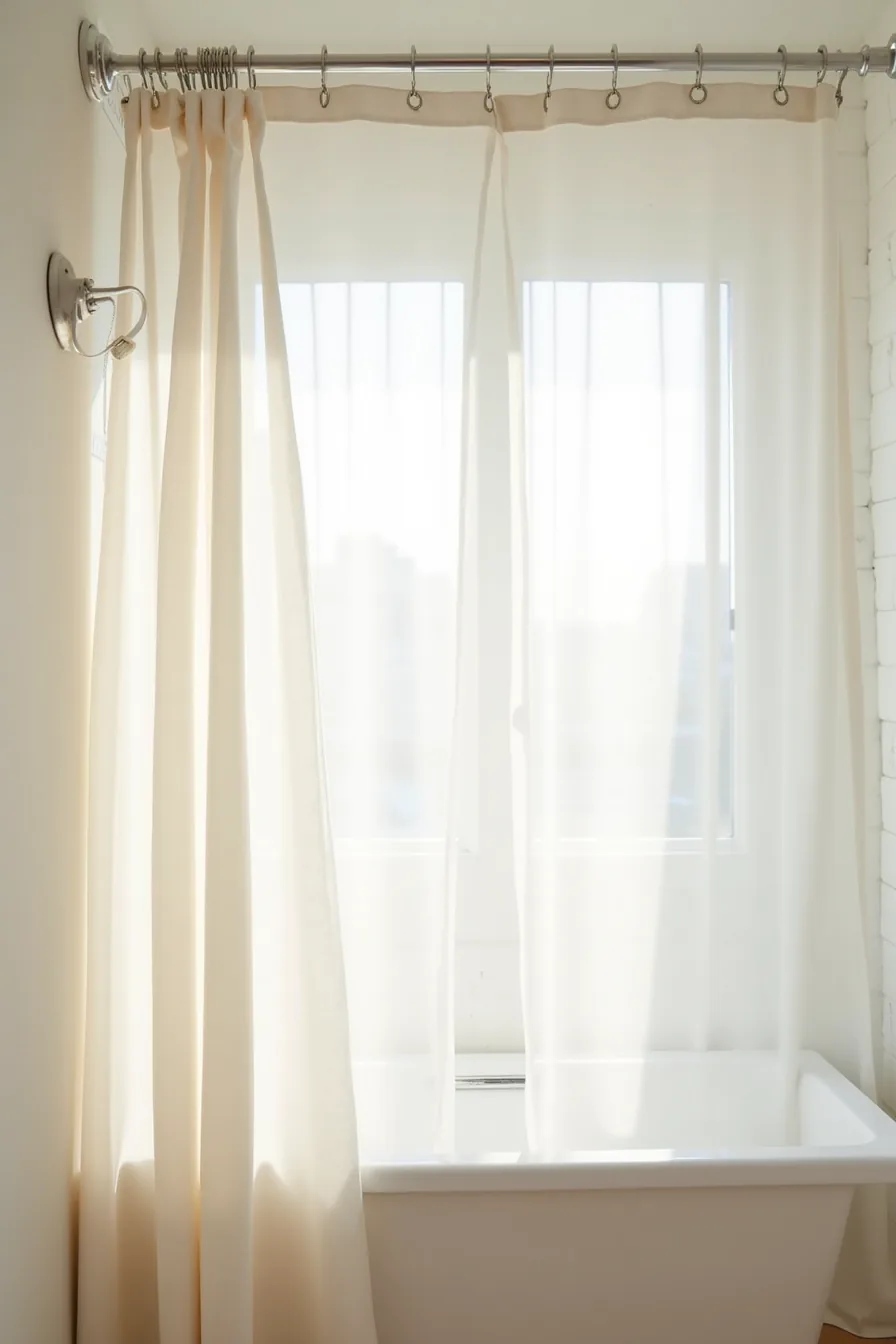
A set of translucent frost plastic rings on a chrome rod with a simple white vinyl curtain costs roughly $5 to $12 for a dozen, about a third of what you’d pay for metal. The frosted finish scatters light subtly, which softens the utilitarian look without competing with your tile or fixtures. Plastic rings glide smoothly on chrome rods, and the vinyl curtain’s lightweight weight (typically 1 to 2 pounds) keeps the mechanism friction-free.
The trade-off is durability. Standard plastic rings hold 3 to 5 pounds per ring, but the hinge pins wear after 12 to 18 months of daily use, especially in humid bathrooms where they can become brittle. If you rent or expect to move soon, this is the low-commitment option: when the rings fail, replace them with metal without swapping the curtain.
Choose opaque white or clear rather than glossy colors, which yellow visibly under heat and steam. For a slight upgrade, spend $3 more on rings with a metal eyelet at the hook point, it extends lifespan by months without changing the look.
Vintage Brass Rings for Long-Term Investment

Solid brass rings cost $20 to $40 per dozen, three to four times the price of plastic, but they outlast five or more sets of disposable rings. The material develops a warm patina over 2 to 3 years that deepens in humid air; you can accelerate it with a vinegar-salt wipe or slow it with monthly polishing. Solid brass (not brass-plated steel) resists corrosion indefinitely, though the surface will darken unevenly if you skip maintenance for more than 6 months.
These rings suit traditional, cottage, or eclectic bathrooms where aged metal reads as intentional. Pair them with a brass rod, a cream linen curtain, and vintage accessories like a brass soap dish and a small brass mirror frame to create a cohesive, lived-in look. The linen curtain’s heavier weight (typically 4 to 6 pounds) sits comfortably on solid brass rings; hook-style rings distribute that load better than eyelet designs.
Budget for 15 to 20 minutes of brass polish every 2 to 3 months to keep the finish consistent across all fixtures. If you prefer low upkeep, consider clear lacquer-coated brass rings, they skip the patina but eliminate polishing.
Tension Rings for Renters and Small Spaces

Tension rings grip the rod with a spring-loaded or silicone-lined mechanism, so you skip drilling and wall anchors entirely. Installation takes under 2 minutes per ring: twist to expand, slide onto the rod, and release. A standard tension rod holds 8 to 12 pounds across its span, enough for a lightweight polyester or cotton curtain, but avoid heavy linen or layered fabric, which can cause the rod to sag or slip overnight.
In a compact bathroom corner, a tension rod fitted between two walls with no visible brackets lets these rings carry a small decorative curtain in a neutral tone. The setup suits renters who need zero wall damage, and removal leaves no trace beyond wiping the rod’s rubber ends. Tension rings adapt to rod widths from 3/4 to 1 1/4 inches, so they fit most standard tension rods; measure your rod’s diameter before buying, as oversized rings wobble and undersized ones bind.
They cost $8 to $15 per dozen, making them the most budget-friendly option here, and they work best in spaces under 40 square feet where a full shower enclosure feels cramped. Match them with a narrow shelf and single towel bar to preserve the visual openness, every extra accessory competes for attention in tight quarters.
Decorative Rings with Hooks or Clips

Rings with integrated hooks turn the rod into vertical storage. The hook sits below the ring, letting you hang washcloths, a small rope basket, or even potted succulents in lightweight ceramic pots without adding a separate towel bar. You gain roughly 6 to 8 inches of usable hanging depth below the rod, which is enough for folded textiles but not heavy wet towels, those belong on a dedicated bar to avoid stressing the rings.
In the arrangement pictured, white curtain panels pair with decorative rings supporting succulents, folded washcloths, and a natural rope basket. The mix works because the curtain remains the visual anchor while the hooks carry only light, dry items. For small bathrooms under 50 square feet, limit hanging items to two or three per side to keep the space from feeling cluttered.
Larger bathrooms can support five or more hooks, but maintain a 4-inch gap between items so the curtain still slides freely when you open it.
Material matters: solid stainless steel or zinc alloy rings with coated hooks resist rust and corrosion in humid environments, while plastic rings with metal hooks tend to corrode at the joint after 6 to 12 months of daily use. Painted wood rings add warmth but chip in high-moisture conditions, so seal them annually or skip them in steamy shower stalls. Expect to spend $15 to $30 per dozen for durable decorative rings with hooks, about double the cost of plain rings, but they replace a separate accessory bar that would run $20 to $40 on its own.
Your next move: pick the ring that fits your routine
Start by measuring your curtain rod’s diameter and your shower curtain’s grommet size. This one measurement eliminates half your options before you even browse.
Then choose based on how you actually use the bathroom: if you clean weekly, skip brass and opt for stainless steel or coated plastic. If you rent, stick with tension-rod-compatible rings that install without tools. If you’re upgrading for the long term, invest in a stainless steel set with ball bearings for smooth gliding.
Order a single pack of the rings that match your measurements and your lifestyle. Install them on your current curtain tonight, if they feel right after three days of showers, buy enough to finish the job.
Frequently Asked Questions
How many shower curtain rings do I need for a standard tub?
A standard 60-inch tub rod fits 12 rings spaced roughly 5 inches apart. For a wider 72-inch shower, use 14–16 rings. Always buy one extra pair in case a ring breaks.
Can I mix different ring styles on the same rod?
Yes, but keep the finish or material consistent to avoid visual clutter. For example, pair matte black metal rings with brass hooks, but avoid mixing plastic and metal on the same rod, they wear unevenly and slide differently.
Do shower curtain rings work with tension rods?
Most rings do, but avoid heavy metal or decorative rings on tension rods, they can sag or slip. Use lightweight plastic or snap-lock rings instead. Check the rod’s maximum weight rating before hanging anything beyond a standard vinyl curtain.
What’s the difference between plastic and metal rings in terms of weight capacity?
Standard plastic rings hold 1–2 pounds per ring, while metal rings (stainless steel or zinc) hold 3–5 pounds. For a heavy fabric curtain with a liner, choose metal. For a lightweight vinyl curtain, plastic is sufficient and quieter on metal rods.