Boho shower curtain ideas aren’t limited to one look, they range from earthy, hand-woven textures to bold botanical prints and free-spirited geometric patterns, each requiring different materials, scale, and upkeep to work in your bathroom. The right choice depends on your humidity levels, hook type, and whether you rent or own. Below, you’ll find six distinct interpretations, each matched to a specific room size, budget, and maintenance tolerance, so you can pick the one that fits your space without guesswork.
Key takeaways
- Earthy color stories work best when you pull from 3–5 muted tones like terracotta, sage, and cream, then repeat them in your bath mat and towels for a cohesive look.
- Botanical patterns should scale with your room: choose large, bold leaves for spacious bathrooms (over 60 inches wide) and small, dense prints for compact spaces to avoid visual clutter.
- Renter-friendly alternatives include fabric shower curtains with clip-on liners or peel-and-stick tile decals, both of which install without drilling and remove cleanly within minutes.
- Budget wisely by spending $40–$80 on a durable linen or organic cotton curtain that lasts 3–5 years, rather than replacing a $15 polyester option every season.
Earthy Color Story: Building a Warm, Relaxed Bathroom Style

An earthy color story works because it removes the visual noise that makes small bathrooms feel cramped. Layering terracotta linen, warm ochre cotton, muted sage, cream, and taupe samples on a wooden surface creates a tonal progression that reads as intentional rather than accidental. The terracotta anchors the palette with warmth, while sage and taupe prevent the scheme from tipping into muddy territory.
This approach suits renters and first-time decorators because it tolerates imperfection, nothing needs to match, only harmonize. In a small bathroom, stick to two dominant shades (terracotta and cream) and use ochre and sage as accents in accessories like towels or soap dispensers. For larger rooms, you can distribute all five tones across the curtain, bath mat, and window treatments without overwhelming the space.
The key is proportion: the boho shower curtains for warm, relaxed bathroom style should introduce the deepest tone, while lighter fabrics visually expand the room’s boundaries.
Botanical Patterns: Scale and Placement for Different Room Sizes
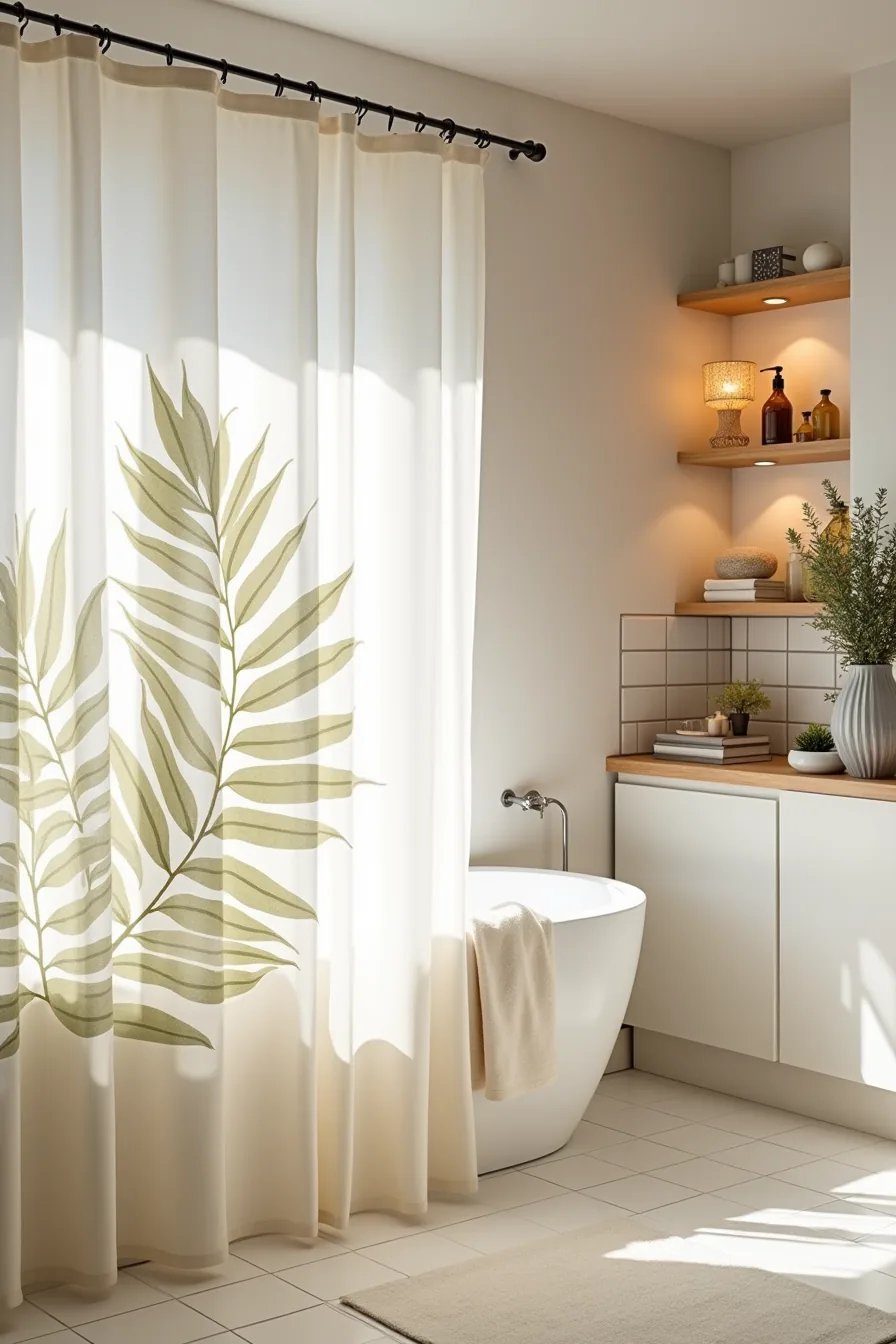
Botanical prints fail most often because of scale mismatch. In a compact bathroom under 40 square feet, you want a small-repeat pattern, think delicate sprigs or scattered leaves, hung on a rod positioned no higher than 75 inches from the floor. The dense repeat keeps the eye moving vertically, which adds perceived height without making walls feel busy.
For a spacious layout with double vanities and room to spare, commit to a large-scale fern frond printed across cream linen, like the one hanging against white subway tile with wooden shelving and glass bottles nearby. The oversized motif anchors the space, turning the curtain into the room’s focal point rather than competing with other textures. This approach works best when you’ve at least 24 inches of bare wall on either side of the curtain, otherwise, the print feels squeezed.
Pattern density matters too: a 50-60% ink coverage reads as lush; anything beyond 70% can overwhelm a light-filled room. Small bathrooms should stay under 40% coverage. If you’re torn between botanical vs geometric, botanicals offer more organic movement, but they demand you commit to a mood, geometrics tolerate a broader mix of accessories.
Geometric Boho: Woven Textures and Tribal Prints

Geometric boho works best when the curtain does the talking and the wall stays silent. A diamond-and-tribal print in indigo and cream hung against plain white tile gives your eye a single resting point, the macramé wall hanging above the rod echoes the woven texture without competing for attention. This pairing suits bathrooms with neutral walls and zero architectural detail; the pattern supplies the personality you would otherwise lack.
The key is controlling visual density. Choose a geometric print where the motifs sit on at least 50% negative space, air between diamonds prevents the pattern from reading as a solid block of color. You can push a high-contrast indigo further by keeping every other textile in the room (towels, bath mat) solid and light.
For renters, skip the drill: use a tension rod and a curtain with a 3-inch header so the pattern starts high, tricking the eye into seeing taller walls. If your bathroom leans small, select a print with 2-3 inch repeating diamonds rather than oversized triangles, smaller repeats make the space feel larger, while oversized tribal blocks will visually shrink a tight alcove.
Material Choices: Cotton, Linen, and Renter-Friendly Alternatives

The fabric you choose determines how often you wash, how quickly it dries, and whether the curtain survives a lease. A natural linen curtain offers that slubby, relaxed drape boho relies on, but linen is slow to dry and prone to water spots, plan on washing it monthly and hanging it fully stretched to avoid mildew. A cotton blend with a poly core gives you 80% of linen’s texture with faster drying and less wrinkling, making it the better daily driver for a family bathroom that sees multiple showers per day.
A synthetic polyester curtain is the renter’s practical move: it resists mold, dries within hours, and costs a fraction of natural fiber. The trade-off is a glossier sheen that reads less authentic, choose a matte-finish poly with a woven texture rather than a printed pattern to close the gap. All three hang well on tension rods since none exceed typical curtain weight, but if your rod is the spring-loaded type, the heavier linen will sag over time; swap to a fixed rod for permanent installations.
Budget Routes: Investment Pieces Versus Quick Updates

Your spending strategy depends on how long the curtain must perform. A mass-market poly curtain in clear packaging runs $15–$30 and lasts roughly one to two years before fading or pilling, fine for a dorm or a first apartment you plan to leave behind. The mid-range boxed curtain, typically $40–$80 in cotton or a cotton-poly blend, holds its color through three to five years of weekly use and survives a move without losing its shape.
At the top, a handwoven natural-fiber curtain wrapped in artisan packaging carries a $120–$250 price tag and a ten-year lifespan if you rotate it seasonally and line-dry. The premium wrap signals what you’re paying for: hand-knotted fringe, irregular weave, and dyes that deepen rather than wash out. Buy the budget option for a guest bath used twice a month; invest in the premium piece for your primary bath where it becomes the room’s focal point.
Mid-range works best for high-traffic family bathrooms where durability matters more than artisan provenance.
Styling and Maintenance: Keeping Boho Shower Curtains Fresh

Mold is the fastest way to kill a boho aesthetic, so ventilation comes before styling. Leave the curtain bunched to one side for ten minutes after every shower rather than closing it flat, trapped moisture is what turns natural fibers speckled and musty. A weekly shake outdoors, or a brisk snap over the tub, dislodges the water droplets that settle in fringe and tassels before they breed mildew.
For spot cleaning, pair a soft-bristle brush with a mild detergent diluted in cool water. The brush lifts grime from woven textures without fraying them, and the lint-free cloth blot-dries the area so you avoid soaking the fabric. Treat water spots the moment you see them; once mineral deposits set into cotton or jute, they become permanent light patches that no wash will reverse.
Washing rules differ by fiber. Cotton and cotton-poly blends tolerate a gentle cold cycle every four to six weeks, then line-dry immediately, never machine-dry, which shrinks the weave and distorts the fringe. Natural-fiber curtains like hemp or seagrass should never enter a washer; spot-treat only, and accept that they’re semi-disposable at two to three years.
Replace the curtain when stains persist after cleaning or when the bottom edge shows fraying; a $20 liner behind it extends that timeline by catching the brunt of soap scum.
What to Do First
You don’t need a full bathroom remodel to nail this look. Start with the one element that delivers the most visual impact per dollar: the curtain itself.
Choose a pattern that contains at least three colors already present in your bathroom, towels, tiles, or paint. Buy a liner separately; it protects the boho fabric from mildew and extends its life.
Hang the rod at ceiling height or 6–8 inches above the window frame. This instantly adds perceived height, making small bathrooms feel larger.
Your next step: measure your shower opening, pick your primary pattern, and order a swatch before committing. That single action prevents the most common boho mistake, a curtain that fights your existing palette instead of completing it.
Frequently Asked Questions
What size boho shower curtain do I need for a standard bathtub versus a walk-in shower?
For a standard 60-inch bathtub, choose a 72 by 72-inch curtain. Walk-in showers typically need 72 by 96 inches, but measure your opening first, most linear drains work with 70 to 74-inch widths.
Can I use a boho shower curtain in a small bathroom without making it feel cramped?
Yes. Choose a light background with small-scale patterns, large, dark prints absorb light and shrink the space visually. Hang the rod higher, about 75 to 80 inches, to draw the eye upward and add vertical height.
How often should I wash a boho shower curtain, and what’s the best method?
Wash it every two to four weeks, or sooner if you spot mildew. Use cold water, a gentle cycle, and add one cup of white vinegar to the rinse, this kills mold without fading natural fibers. Hang it back up immediately to air-dry.
Are boho shower curtains suitable for rental bathrooms, or will they damage the walls?
Yes, they’re renter-friendly. Use a tension rod that sits inside the frame, no drilling required. If you prefer a fixed rod, choose adhesive hooks rated for 10 to 15 pounds, and remove them with a hairdryer and dental floss to avoid peeling paint.