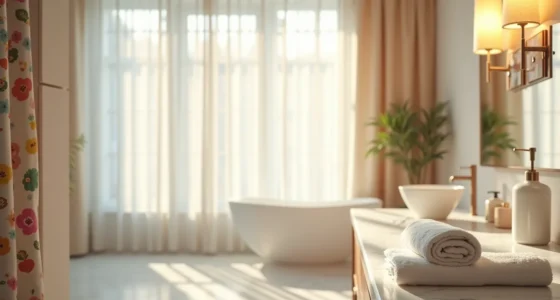
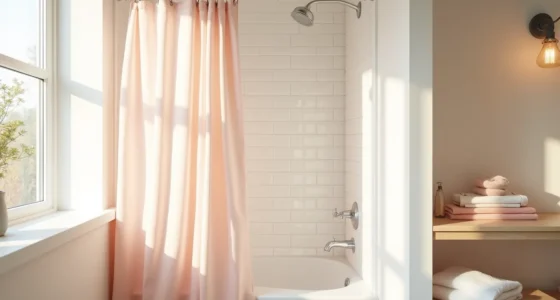
A bohemian shower curtain isn’t a single look, it’s a design range stretching from earthy, hand-dyed textiles to dense botanical murals, and choosing the right one depends entirely on your bathroom’s scale, your lease terms, and your comfort with fabric maintenance. The practical difference between a 72-inch cotton weave and a 96-inch polyester print isn’t aesthetic, it’s about mold resistance, drying time, and how much visual weight your space can absorb. The wrong pick can turn a cozy retreat into a cluttered cave or a maintenance headache.
Key takeaways
- Start with neutrals: A cream, sand, or terracotta base curtain (most run 70–72 inches wide for standard tubs) gives you the boho look without overwhelming a small bathroom.
- Choose botanical prints with oversized leaves or florals in muted greens and rust, they add organic texture and pair well with plain white or wood accessories.
- Layer macramé or fringe details on a solid curtain to introduce tactile depth, but keep the curtain at least 2–3 inches above the floor to avoid moisture wicking and mildew.
- For rentals, use a tension rod and a washable cotton or polyester curtain (machine-cold, hang-dry) so you can swap styles without drilling or damaging walls.
Earthy Boho Palette: Warm Neutrals and Muted Tones

The earthy boho palette starts with grounding tones: ochre, terracotta, sage, and cream. These four colors carry the entire Bohemian Shower Curtain look without relying on busy prints. The flat lay setup, ochre linen, cream cotton, sage green wool, and terracotta canvas, demonstrates how contrasting textures keep a muted scheme visually rich.
The dried palm frond and woven jute twine across the corner add organic texture without committing you to a permanent pattern.
For a cohesive scheme, choose two dominant fabrics and two accents. Make the cream cotton your curtain base, then introduce terracotta via a bath mat and sage through towels. This palette suits small bathrooms best because light cream reflects the most brightness, preventing the darker earthy tones from shrinking the space.
Stick to matte, unbleached materials; glossy finishes break the natural feel. Machine-wash the cotton and linen on cold, but spot-clean the wool and canvas to avoid shrinkage.
Botanical Print Option: Leaves, Florals, and Organic Motifs

Botanical prints offer the easiest entry into a Bohemian Shower Curtain because scale does the heavy lifting. On a small 36-inch curtain, a dense leaf print reads as texture rather than pattern, which suits compact bathrooms with limited visual breathing room. The medium 54-inch option with scattered ferns needs neutral walls and minimal shelving to avoid competing with the organic motifs.
For the large 72-inch curtain, flowing vines create movement that helps elongate a tall, narrow space, but they demand a matte finish, glossy vinyl cheapens the botanical effect.
Potted plants below each curtain anchor the look and connect the printed foliage to real greenery. Match your plant leaves to the curtain’s dominant shape: broad monstera leaves pair well with oversized prints, while delicate ferns need fine, spindly botanicals. Tension rods work here only if your walls are smooth; textured tile or uneven plaster will slip the rod, so switch to a fixed mount for permanent placement.
Wash botanical cotton on cold and hang dry, hot water fades green pigments faster than any other color in the boho spectrum.
Layered Textures: Macramé, Fringe, and Woven Details
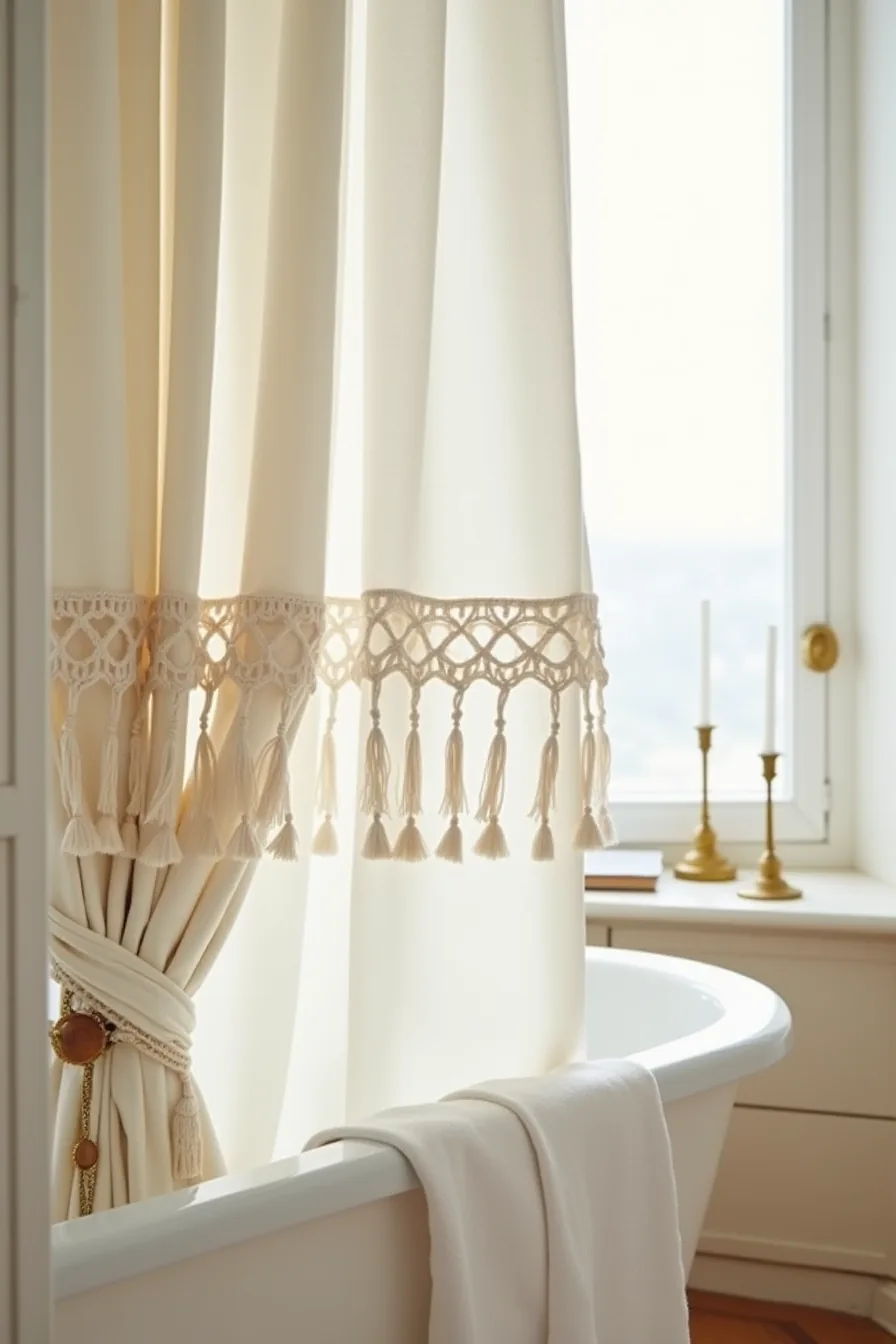
Macramé trim doesn’t belong on every shower curtain. If you pair heavy knotwork with thick fringe, the bottom edge gains enough weight to pull the fabric forward against the tub, which traps moisture against the liner. Limit tactile depth to one element at the bottom and one at the top.
The brass clip and wooden toggle on the rod serve as functional counterweights, keeping the curtain taut while adding earthy hardware that echoes the woven cotton tape between the panels.
Choose cotton weaves over synthetic blends. A short 2-inch fringe with 8-inch macramé drops offers texture without turning into a lint trap or a mossy film magnet. This suits a medium bathroom with neutral tile, the tactile roughness reads as bohemian warmth against smooth surfaces.
Inspect the stitching every three months; the trim-to-body junction is the first failure point. Spot-clean only and run the curtain through a dry cycle occasionally to keep moisture from degrading the knots.
Pattern with Simple Accessories: Balancing Visual Weight
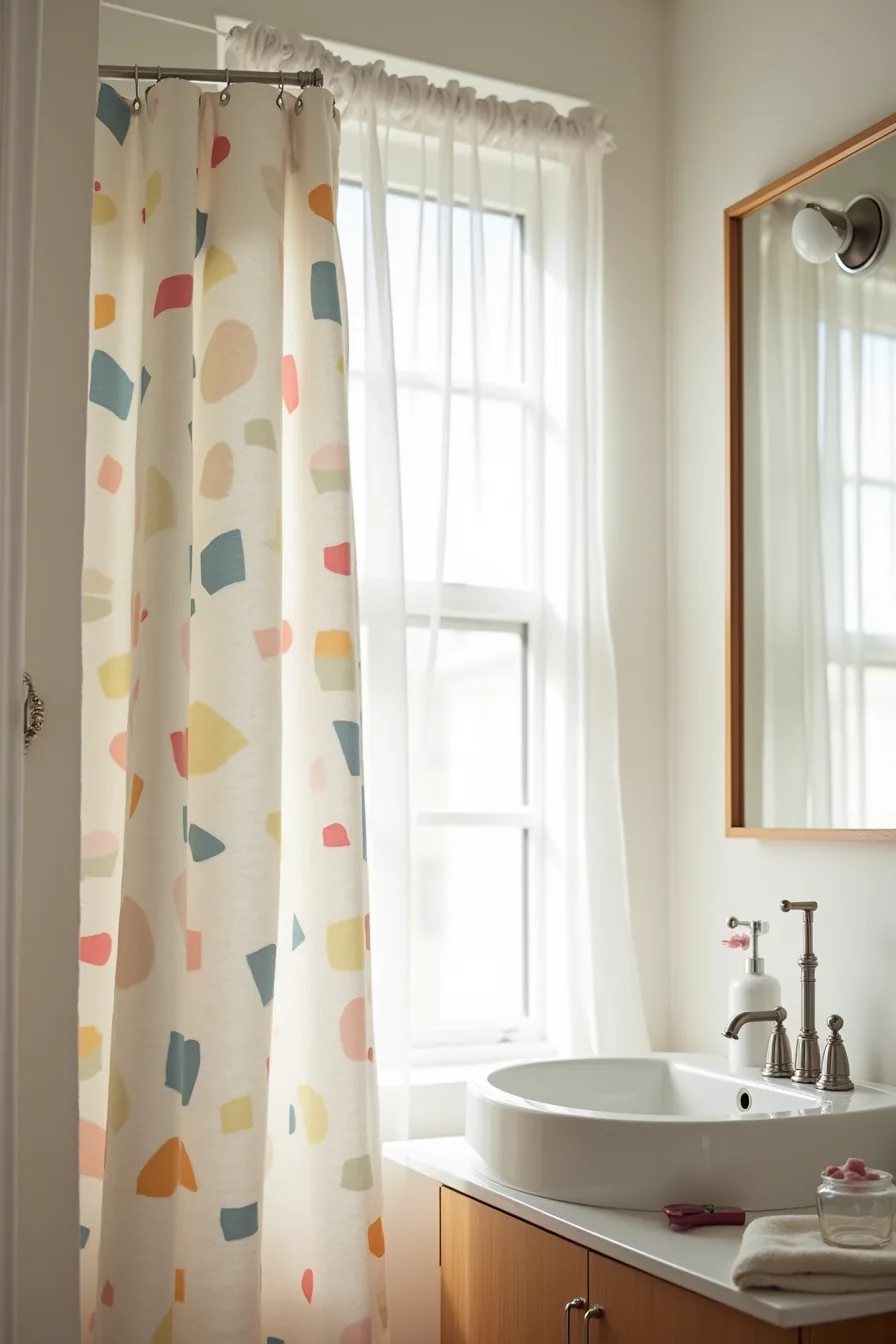
A bold geometric pattern carries the entire bohemian narrative, but it demands restraint from everything around it. When the curtain uses high-contrast shapes in terracotta or indigo, the rest of the room must drop to neutral. A single white towel bar mounted 12-18 inches above the tub rim, a clear glass soap dispenser, and a plain ceramic toothbrush holder on the sink edge give the eye three quiet resting points.
This is the pattern-with-simple-accessories formula: one loud surface, nothing else competing.
This approach suits compact bathrooms where a second patterned element would create visual noise. The geometric print reads as bohemian through its earthy palette rather than through ornament. Keep shelving open and sparsely stocked, two folded towels, one plant.
If the curtain pattern runs large-scale, the accessories should be smaller than the palm of your hand; if the pattern is small and dense, you can size accessories up slightly. White fixtures and warm brass accents preserve the boho warmth without diluting the curtain’s impact.
Bohemian Shower Curtain Ideas for Rental Bathroom Makeovers

A tension rod is your first line of defense in a rental, since it requires zero drilling and installs in under two minutes. Pair it with a lightweight bohemian curtain, cotton or polyester blends under 200 grams per square meter hold their drape without stressing the rod’s spring mechanism. Mount the rod 8-10 inches above the tub rim so the curtain falls just past the edge for proper water deflection.
Adhesive hooks rated for 5-10 pounds let you hang a matching fabric panel on the adjacent wall without touching the tile. Choose hooks with a release tab so they peel off cleanly at move-out; most leave no residue on glazed ceramic or fiberglass. The white tile and original fixtures stay untouched behind, which means your security deposit remains intact.
This route works best for renters who want the full bohemian effect without committing to permanent hardware. Stick to patterns with a white or cream background, they read as intentional against rental-grade tile, while dark backgrounds can make a small bathroom feel closed in. When you leave, the rod and hooks come down in five minutes, and the curtain moves with you to the next place.
Investment-Grade Bohemian Curtains: Durability and Longevity

A premium Bohemian Shower Curtain built from a linen-cotton blend (typically 55–65% cotton) delivers a heavier hand-feel that resists sagging and water wicking far better than budget polyester. Expect to pay two to three times more than a basic curtain, but the weave density also blocks light bleed from bathroom fixtures, which keeps the space feeling restful at night.
Mold resistance comes from the treatment label, not the fabric itself. Look for a finish that specifies an antimicrobial or moisture-repellent coating, and reapply a fabric waterproofing spray every six months to maintain it. The care tag matters here: machine-wash cold on a gentle cycle, then hang-dry immediately, linen-cotton blends can shrink up to 5% the first wash if you toss them in a hot dryer.
The polished stainless steel rod visible in this setup pairs with grommet or clip rings sized to match the rod diameter (most run 1–1.25 inches). The combination suits homeowners who want a permanent fixture and are willing to follow a consistent care routine. If you skip the spray reapplication, the mold-resistant label becomes marketing rather than protection.
Your Next 15 Minutes
Start with your bathroom’s current bottleneck. If it’s a plain white curtain and bare walls, a patterned panel plus a teak stool delivers the highest visual return for under $120.
If you rent, skip hardware changes and use a tension rod with clip-on curtain rings, no drilling, fully reversible. For a long-term investment, prioritize a washable linen blend (check the care label for cold-water only) and pair it with a waterproof liner you replace yearly.
Measure your tub width first: most standard alcoves run 54–60 inches, so buy a curtain 72 inches wide for proper draping.
Pick one texture, macramé, mudcloth, or ikat, and commit. That single choice anchors the whole scheme.
Frequently Asked Questions
What fabric weight works best for a bohemian shower curtain in a humid bathroom?
Choose a polyester or polyester-blend liner around 180–220 GSM, paired with a decorative cotton or linen outer curtain. Heavier fabrics above 300 GSM retain moisture and invite mildew between showers.
Can you use a bohemian shower curtain in a rental without damaging the walls?
Yes. Use tension rods or adhesive hooks rated for 10–15 pounds, and install a rust-proof liner ring set. Avoid drilling; most tension rods fit standard 54–72-inch tub openings without leaving marks.
How do you prevent mildew on patterned bohemian curtains?
Wash the curtain monthly in warm water with white vinegar, then air-dry fully before rehanging. Ensure the liner is separate and machine-washable; polyester resists mildew better than cotton or jute blends.
What size bohemian shower curtain do you need for a standard 5-foot bathtub?
A 72-by-72-inch curtain covers a standard 60-inch tub with 6–12 inches of overlap on each side. For wider alcoves, choose 72-by-84 inches; always measure from rod to floor plus 2 inches.