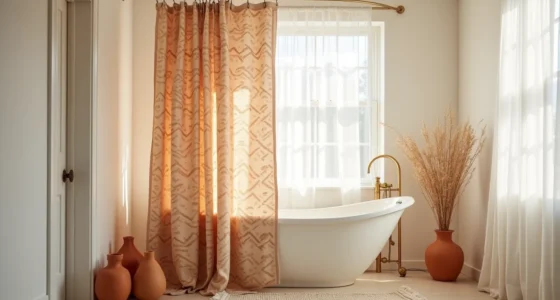
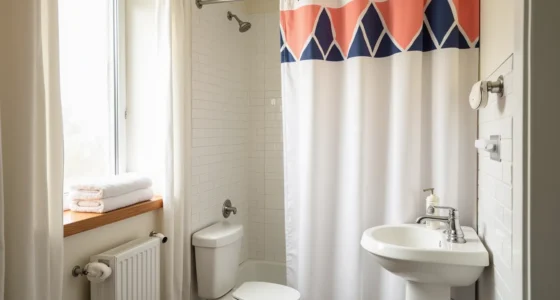
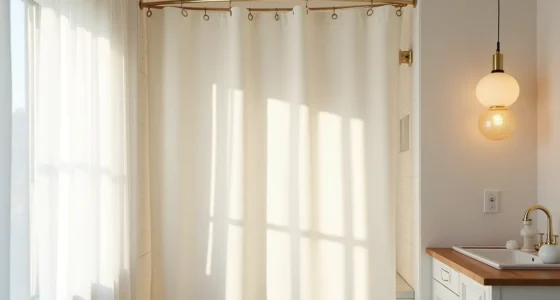
A cute shower curtain isn’t a single look, it’s a functional design decision that balances pattern, material, and scale against your bathroom’s actual dimensions and your lifestyle. Get it right, and you solve mold, privacy, and storage in one move. Get it wrong, and you’ll fight a clingy liner or a pattern that swallows a powder room.
The six approaches below break down exactly what to buy, where to hang it, and how to maintain it for your specific space.
Key takeaways
- Pastel solids work best in bathrooms under 40 square feet, where a single soft hue like sage or blush prevents visual clutter and pairs with any tile scheme.
- Botanical prints stay sophisticated when the pattern is scaled to your shower width, choose motifs under 6 inches for a 54-inch curtain to avoid a busy, overwhelming look.
- Renter-friendly upgrades include tension-rod clip-on fabric panels or peel-and-stick trim, which install in under 10 minutes and leave zero damage when removed.
- For large spaces, hang a 72-inch-wide curtain with a 12-inch drop below the rod to anchor the room, but expect to wash it monthly to prevent mildew in the extra fabric.
Pastel Solids: Why Soft Color Works Without Prints

A single pastel shade delivers “cute” through tone and texture, not pattern. In a small bathroom, a pale mint polyester curtain on a tension rod reads as intentional softness, while a busy print would visually shrink the space. Water droplets beading on the slick polyester surface confirm the material’s practical edge, it sheds moisture and resists mildew better than heavy cotton, though you’ll still want it to dry fully after each shower.
The translucent weave lets natural window light diffuse through, keeping the room airy without a second light source. Work the curtain against the white caulk line where it meets the tub edge; that crisp visual break anchors the pastel and prevents it from floating awkwardly. For small bathrooms, stick to a standard 72-by-72-inch curtain and mount the rod at 75 inches so the fabric kisses the tub lip instead of dragging.
Pastel vs bold prints comes down to longevity, soft solids tolerate seasonal decor changes, so you’re not locked into a theme after one purchase.
Botanical Prints That Stay Sophisticated
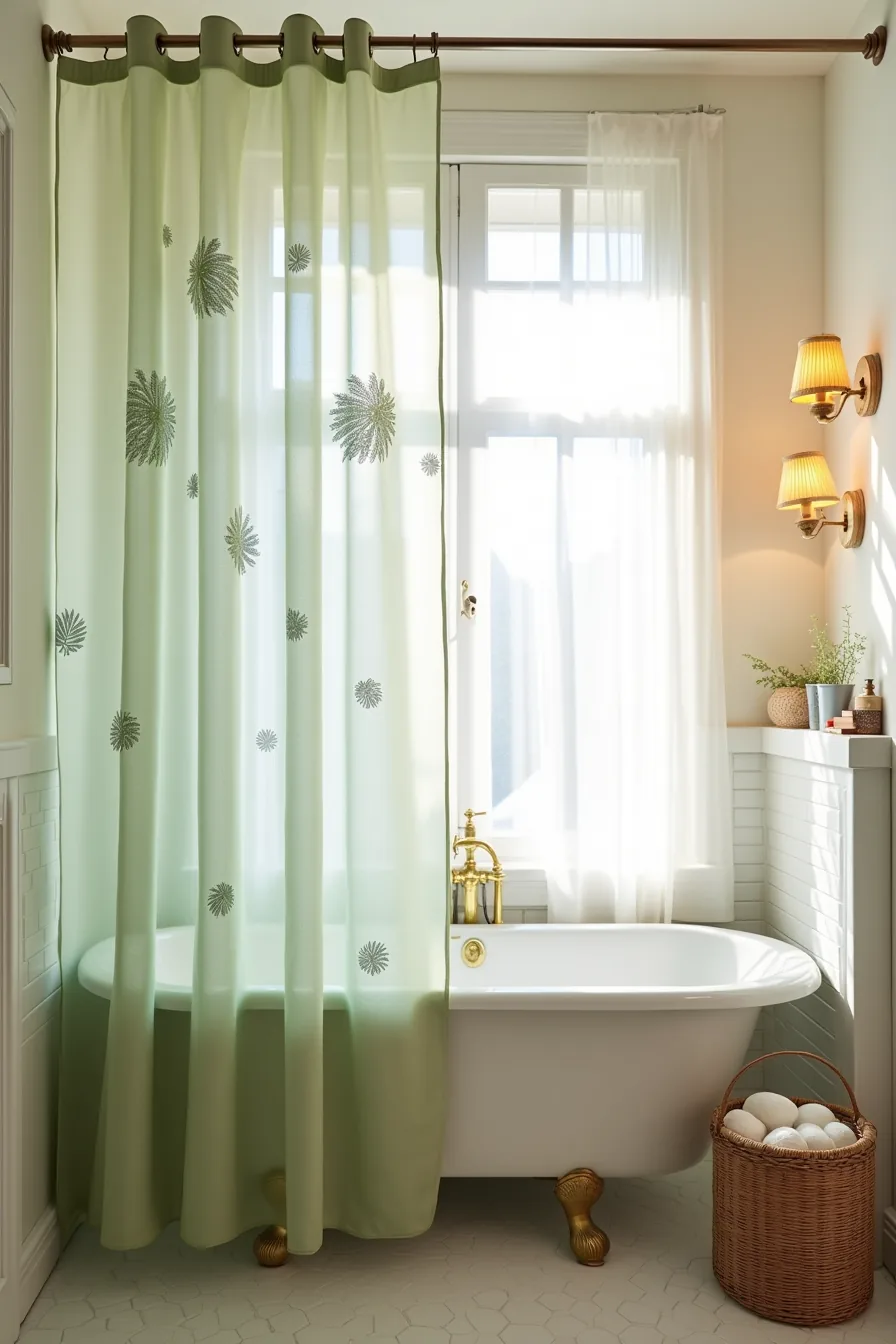
The trick to botanical prints that read cute without childish lies in print density and scale. A sage curtain scattered with fern fronds and leaf silhouettes, hanging from vintage brass ring hooks, works because the negative space between leaves keeps the pattern from shouting. Dense all-over florals feel chaotic; sparse, varied leaf placement feels curated.
Match pattern scale to room size. In a medium bathroom with white hexagonal floor tiles, medium-sized fronds balance the visual weight of the tile grid, too-large leaves overwhelm, too-small ones get lost. The natural window to the right provides daylight that softens the green, so the curtain reads muted rather than saturated.
Choose a matte polyester or cotton-poly blend; the matte finish prevents glare under direct light, and the blend resists mildew better than pure cotton. Mount the rod 75 inches high on a standard 72-by-72-inch curtain so the hem hovers just above the tub rim, keeping the print visible without pooling. For large bathrooms, size up to an 84-inch curtain with bolder leaf shapes; for small spaces, stick to single-stem sprigs on a lighter background.
Geometric and Abstract Patterns for Modern Cute

Geometric patterns earn the “cute” label through restraint, think single shapes in two or three colors, spaced generously. A cream curtain printed in navy and blush dots arranged in loose rows reads playful, not juvenile. The matte-black rod anchors the look, grounding the softness of the pink against the polished chrome fixtures nearby.
Pattern size directly shapes how the room feels. Small, evenly spaced dots recede, making a tight bathroom feel larger; oversized circles advance, cozying up a cavernous space. In this setup, the polished concrete floor and clear glass enclosure provide texture and transparency, so the curtain carries the decorative weight without competing.
Keep the palette to two accent colors plus a neutral base. Blush softens the navy’s formality, and the cream background prevents the pattern from dominating the room’s hard surfaces. Use a heavyweight fabric like 180-gram polyester to ensure the dots hang flat rather than buckling at the hem, cheaper liners will distort the geometry within months.
Renter-Friendly Refresh: Temporary Upgrades That Stick

A tension rod that twists tight inside the tub frame costs under $25 and installs in under two minutes with zero tools, no landlord approval, no patching, and no security deposit at risk. This is the fastest route to a rental-friendly refresh because the rod’s rubber ends grip the tile or fiberglass without leaving marks.
Pair it with removable adhesive hooks rated for at least 5 pounds, placed on the wall or the tub surround to hold a lightweight curtain’s corners open or keep it from clinging. Standard metal S-hooks work fine for hanging the curtain itself, but the adhesive hooks matter when your shower layout leaves circulation tight and you need the curtain pulled back flat against the tile.
Choose a polyester curtain around 150 grams per square meter, heavy enough to drape well, light enough that the tension rod won’t sag mid-span. Skip any fabric requiring ironing or dry cleaning; a machine-washable option you can bleach keeps the refresh fresh when you leave the place better than you found it.
Material and Maintenance Trade-Offs

The three swatches laid flat on your counter, polyester, cotton-blend, and a specialty antimicrobial weave, represent distinctly different cleaning schedules. Polyester is your lowest-maintenance pick: it resists mildew, dries in under an hour when left spread open, and survives repeated bleach washes. Expect to replace a basic polyester curtain every 12–18 months, with most quality options landing between $15 and $40.
Cotton-blend fabric drapes more luxuriously but demands more attention. You’ll need to wash it every 3–4 weeks with vinegar in the rinse cycle to prevent mildew buildup, and it takes 6–8 hours to air-dry fully. Budget $30–$60 for a decent blend, and plan on replacing it yearly, cotton fibers degrade faster in constant humidity.
The specialty antimicrobial weave, typically $50–$90, uses embedded treatment rather than surface coating, so it stays effective through roughly 30–50 washes. Keep the spray bottle of diluted vinegar and the soft cloth nearby for weekly spot-wiping of the bottom hem; that’s where soap scum and hard-water residue concentrate regardless of fabric type.
Scaling Cute Shower Curtain Ideas to Your Space

In a bathroom under 40 square feet, pattern scale matters more than color. A small-scale dot pattern on a light background keeps the eye moving without overwhelming the compact footprint, stick to motifs under 3 inches in diameter and match the curtain’s weight to a lightweight polyester so it doesn’t crowd the tub. The mirror reflection in this setup doubles the visual depth, making the tiny room feel larger than its square footage.
For 40–80 square feet, a medium botanical print hits the sweet spot. Leaves and stems in the 4–6 inch range balance presence with proportion, and a cotton-blend fabric adds the drape this mid-size space can afford. Color saturation should stay mid-tone, not pastel-washed, not jewel-toned, so the pattern reads clearly from the doorway frame without competing with tile or vanity surfaces.
Over 80 square feet, go bold. Oversized abstract shapes spanning 12–18 inches anchor the room and justify the visual weight of a larger curtain. This is the one scenario where a heavyweight fabric works; the extra material prevents the curtain from looking lost against expansive wall space.
If you’re hunting for Cute Shower Curtains for a Cheerful Bathroom Refresh in this size, prioritize large-format prints that fill vertical real estate without requiring a second curtain panel.
Where to start
Start with your bathroom’s existing color palette and lighting, not a trend. If your towels are white and your tile is gray, a patterned curtain in blush or sage will ground the space without competing. If you rent, skip hooks and hardware changes entirely, a tension rod and a 72-inch curtain keep your deposit safe.
Measure your shower width before buying. Standard tubs run 54–60 inches, but oversized walk-ins often need 72 inches. Always pick a fabric with a PEVA or polyester backing if you want mold resistance without weekly washing.
Your next step: pull three fabric swatches in different patterns, hold them against your tile, and pick the one you’d still like in six months.
Frequently Asked Questions
What makes a shower curtain cute without looking childish?
Choose grown-up motifs, botanicals, geometrics, or abstract watercolors, in muted tones. Avoid cartoon characters and neon palettes. Crisp white backgrounds with one accent color keep it playful yet polished.
Can you use a cute shower curtain in a rental apartment?
Yes. Use a tension rod or adhesive hooks, no drilling required. Swap the curtain and liner at move-out; both are under $40 and fully reversible.
Check your lease for rod bracket restrictions first.
How do I prevent mildew on a patterned shower curtain?
Run a weekly cycle with 1/2 cup white vinegar in the wash, then hang dry completely. Choose polyester or PEVA over fabric blends; they dry faster. Keep the curtain fully open after showers to maximize airflow.
What size shower curtain do I need for a small bathroom?
Standard 72×72 inches fits most tubs, but for a 30-inch-wide stall, use a 54×78-inch curtain. Measure from rod to floor, leave 1-2 inches clearance to avoid dragging and trapping moisture.