
Elegant shower curtain ideas come down to four measurable decisions, fabric weight, pattern scale, hanging height, and hardware finish, and getting those right transforms a bathroom without a single renovation. The six approaches below each hinge on those variables, but they diverge sharply in cost, upkeep, and the rooms they suit. You’ll see why a 12-ounce fabric drapes differently than a 3-ounce one, and where a $30 curtain outperforms a $150 version.
The checklist at the end settles the choice in under two minutes.
Key takeaways
- Tonal texture works best in small bathrooms because matte, low-contrast fabrics (linen, cotton duck, or textured poly blends) visually recede, so choose a curtain in the same color family as your walls to avoid closing in the space.
- Classic stripes suit medium to large bathrooms best, as vertical pinstripes (1–2 inch bands) add height without competing with existing tile, but avoid wide, high-contrast stripes in rooms under 40 square feet where they can feel busy.
- Polished hardware elevates any curtain: swap a standard tension rod for a brushed nickel or matte black curved rod (extending 6–8 inches beyond the tub) and use metal grommets or clip rings, this upgrade costs $30–$80 and takes under 15 minutes to install.
- Layering sheer and opaque is the renter-friendly route: hang a clear vinyl liner inside and a semi-sheer outer curtain outside, which adds depth without drilling extra holes, and machine-wash both monthly to prevent mildew buildup.
Tonal Texture for Understated Sophistication

Layering different fabric weights and weaves within a single color family gives you depth without the visual noise of a pattern. The close-up setup here pairs a heavier matte base curtain with a lighter, ribbed overlay in off-white and taupe, producing subtle shadow play across the folds. That contrast is what separates a flat, forgettable curtain from one that reads as deliberately styled.
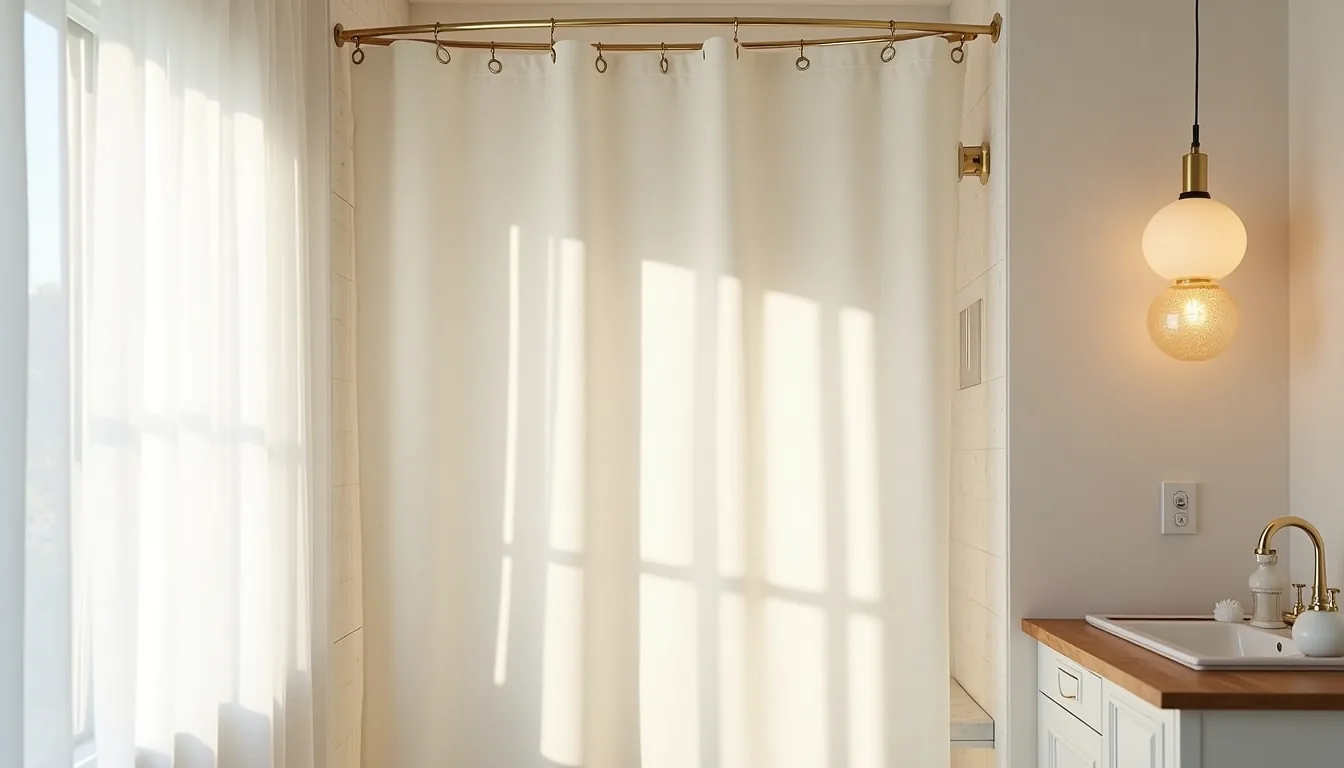
This approach suits minimalist and transitional bathrooms where a bold print would fight the tilework. You need the fabric to catch natural or overhead light, so avoid blackout liners that kill the sheen. The stainless steel rings and rod edge you see at the top are non-negotiable, polished metal against textured fabric heightens the tactile contrast, while plastic rings will cheapen the effect.
The system works across enclosure sizes. In a small shower, stick to two tones within the same hue to prevent the curtain from visually shrinking the room. For a large walk-in enclosure, add a third weave, like a waffle or slub texture, to fill the extra visual space without introducing pattern.
Expect to pay 15–30 percent more for curtains with mixed weaves versus a single-texture equivalent, and plan on washing them on a gentle cycle every four to six weeks to keep the pile from matting.
Classic Stripe Option for Timeless Appeal

A vertical-stripe curtain in navy and cream, hung from a polished chrome rod, reads as elegant because it borrows the language of tailored upholstery rather than casual beach decor. The stripes run the full height and draw the eye upward, which is why this pattern works especially well in bathrooms with low ceilings or a standard 60-inch tub enclosure, it adds perceived height without requiring any structural change. The crisp finish depends on fabric choice; a cotton-poly blend with a sateen weave holds its line and resists the limpness that pure cotton develops after repeated washings.
Pairing the stripes with white subway tile and a chrome showerhead reinforces the nautical-adjacent palette without veering into kitsch. Keep the stripe width proportional to the space: for a compact enclosure, stripes under two inches wide prevent visual vibration, while a larger walk-in shower can carry a wider band. Wash on cold and line-dry to preserve the contrast between the two tones, and expect slight shrinkage in the first wash if you choose a non-pre-shrunk cotton.
Polished Hardware Pairing to Improve Installation
The most direct way to raise the perceived value of a plain curtain is the polished hardware pairing that surrounds it. Swap the standard tension rod for a solid stainless or brass rod fixed to the wall with ornate brackets, this setup supports heavier fabrics and eliminates the mid-span sag that cheap rods develop. Brass rings with a matching finish let the curtain glide smoothly, but check the ring bore diameter against your rod thickness before buying; a 1-inch rod typically needs rings with a 1.5-inch opening to move freely.
Wall anchors are non-negotiable here. A solid rod with brackets transfers load directly to the studs or drywall, and most statement-grade fixtures weigh between 3 and 6 pounds before you hang anything on them. Use toggle bolts rated for at least 50 pounds if you can’t hit a stud.
Budget for the difference honestly: basic chrome kits run $20 to $40, while a brass or matte-black set with decorative finials starts around $80 and climbs past $200. The cost buys a corrosion-resistant finish that survives years of steam without pitting, a real consideration if your bathroom lacks a vent fan.
Layering Sheer and Opaque for Depth
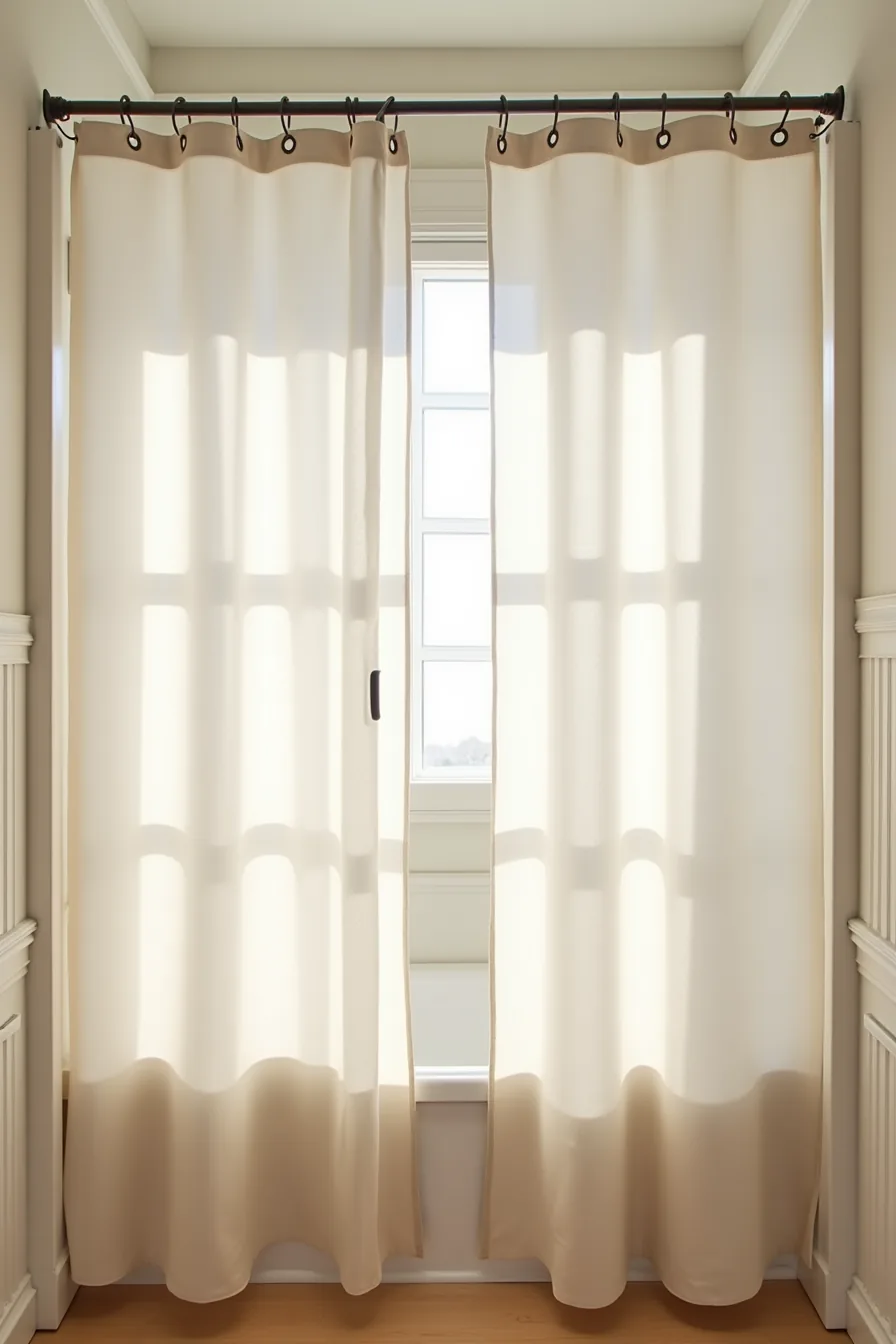
Hang a translucent linen overlay in front of a solid waterproof liner on the same rod, each with its own ring set, and you get depth without a second fixture. The sheer layer softens harsh bathroom light and adds a textured, airy focal point, while the opaque liner behind it handles the actual wet work. This dual-curtain system suits medium to large bathrooms where you’ve at least 6 inches of wall clearance on each side to accommodate the extra fabric bulk when the curtain is pushed open.
Operationally, you need a rod rated for double the weight, most steel or brass rods handle this fine, and rings that slide independently so you can draw each layer separately. The setup works best in rooms with a vent fan or window, because two fabric layers trap more steam and extend drying time; in a windowless bath, run the fan for 20 minutes after showering to prevent mildew on the linen. Choose a linen or voile blend with a 3 to 5 percent synthetic content for easier cleaning, and expect to wash the sheer layer monthly while the liner needs only a wipe-down with a mild cleaner.
Elegant Shower Curtain Ideas for Guest Bathroom Updates

A guest bath signals care through quiet, coordinated details rather than investment pieces. A pale gray curtain hung from a tension rod, which installs in under five minutes without tools or wall damage, reads as intentional when paired with a matching hand towel on a rack and a ceramic soap dish on a shelf. The framed mirror above the sink pulls the composition together by repeating the curtain’s cool undertone, so the room feels styled rather than merely furnished.
Choose a mid-weight polyester or cotton blend in a solid or subtle texture; it resists wrinkling and needs only a machine wash before the next visitor arrives. Keep the curtain within 55 to 72 inches in length depending on your rod height, and ensure it clears the tub edge by at least 2 inches to prevent water wicking. In a compact space like this one, a lighter gray visually recedes, making the room appear larger while hiding hard-water spots better than white.
Budget, Renter, and Investment Routes

The three rods mounted side by side demonstrate how the same wall space accommodates wildly different cost structures. A basic tension rod with standard plastic rings runs $15 to $30 total, and a 72-inch polyester curtain in a solid oat or warm taupe delivers the cleanest look at this price point, just steam it after unpacking to remove the factory creases.
A mid-range brushed nickel rod with simple metal rings, roughly $40 to $70, pairs well with a heavier cotton-blend curtain that drapes more fluidly. This setup works for renters because the rod compresses between walls without screws, and the neutral finish complements almost any existing fixture.
The premium brass rod with ornate rings and wall-mounted brackets represents the investment route: expect $150 to $300, plus installation if you can’t drill yourself. This route only makes sense in a space you’ll occupy five-plus years, where the warm metallic finish anchors a patterned or textured fabric that would overwhelm cheap hardware. For a long-term purchase, choose a 12-gauge or thicker rod and a 100% cotton or linen curtain that softens with washing rather than degrading.
Where to start
Pick the one idea that solves your most immediate problem, harsh lighting, a dated tub, or vinyl that sticks to your legs. Measure your curtain rod height and shower width before you order anything; that single measurement prevents 80% of fitting mistakes.
Buy one quality liner and one outer curtain, not a cheap 2-in-1 set. Then swap your current curtain this weekend, keep the receipt, and live with it for seven days before deciding whether to commit.
Frequently Asked Questions
What fabric weight works best for an elegant shower curtain that won’t cling or wrinkle?
Choose a medium-weight fabric, roughly 180–240 GSM, like cotton sateen or linen-blend. Heavier fabrics drape well but need a weighted hem; lighter ones cling. Polyester blends resist wrinkles but feel less luxurious.
Can I use an elegant shower curtain in a small bathroom without making it feel cramped?
Yes. Mount the rod 6–10 inches above the tub rim and use a curtain that skims the floor. Opt for light, solid colors or vertical textures.
Avoid oversized patterns and dark, heavy drapes.
How do I prevent a tonal texture curtain from looking flat or boring?
Layer it with a contrasting liner in a matte finish, or add a decorative valance. Choose a texture with visible depth, like waffle weave or slub linen, and pair with brushed metal hardware in a different tone.
What’s the difference between a shower curtain and a shower curtain liner, and do I need both?
A curtain is decorative; a liner is waterproof and sits inside the tub. You need both for elegance, liners protect the fabric from mildew and water damage. Use a clear or white PEVA liner for a clean, minimal look.