
Cool shower curtains are the fastest, lowest-commitment way to change how your bathroom feels, but only if you choose one that matches your space, your routine, and your tolerance for upkeep, so here’s exactly how to pick yours across six distinct looks. You’ll find a budget route under $30, a renter-friendly option that leaves zero holes, and a long-term linen investment that gets better with every wash. Each example spells out the precise room size it flatters, the hook type it requires, and the cleaning schedule it demands.
By the end, you’ll know which curtain survives daily steam, which one suits a guest bath, and which pattern hides hard water spots, without sacrificing style.
Key takeaways
- Go bold safely: Choose a graphic pattern with a primary color pulled from your existing tile or towels, keeping the curtain the only loud element in the room.
- Pick a rental-friendly route: Install a tension rod and a neutral, waffle-weave fabric curtain to add texture without drilling holes or committing to a permanent color scheme.
- Proportion matters for small baths: Hang a standard 72-inch curtain on a rod mounted 4–6 inches above the window frame, letting fabric brush the floor for vertical height without blocking ventilation.
- Invest in fabric over vinyl: A 12-gauge, machine-washable polyester-cotton blend with rustproof grommets typically lasts 3–5 years, outlasting cheap vinyl that cracks within 12–18 months.
Graphic Patterns as Bold Focal Points

A graphic curtain works because it converts a functional surface into deliberate artwork. The abstract line-art design in black and cream against the pale gray wall achieves this through a simple contrast rule: one dominant pattern, zero competing textures nearby. The wooden shelf and window frame stay visually quiet, letting the curtain carry the entire composition.
This approach suits medium to large bathrooms where the curtain sits at eye level and can anchor the room without overwhelming it. For a 60-inch standard tub, oversized geometric motifs or sweeping line work read better than small, dense repeats, which can look busy from a distance. Keep the surrounding palette muted, warm whites, soft grays, or light oak, so the graphic contrast remains the sole point of interest.
The graphic vs playful distinction matters here: line art and hard-edged geometry feel intentional and modern, while cartoonish illustrations lean casual. If you want the curtain as focal point without committing to a permanent wall treatment, this is the lowest-effort route. Fabric choice still counts, polyester blends hold crisp lines through repeated washes, whereas natural linens soften edges over time.
Playful Themes Without Clashing

Retro and character-driven curtains turn playful without tipping into juvenile territory when you anchor them with adult materials. The mustard, teal, and cream mid-century geometric print hanging over the warm wood vanity and brass faucet works because every color in the pattern already exists somewhere else in the room, the wood tones echo the cream, the brass picks up the mustard. That repetition is what separates intentional from random.
Match one accent color from the curtain to a permanent fixture, not the other way around. If your hardware is chrome, choose a novelty print with cool grays or blues; if your vanity is warm wood, lean toward amber and terracotta bases. Keep the walls neutral, soft white or greige, and resist adding patterned accessories like bath mats or framed prints within the same sightline.
For smaller bathrooms, scale the pattern down: a dense retro print reads as texture from three feet away, while oversized cartoon characters dominate the entire wall. Polyester curtains hold bright colors longest; cotton fades noticeably within 12 to 18 months of regular use.
Neutral Tones for Rental-Friendly Color
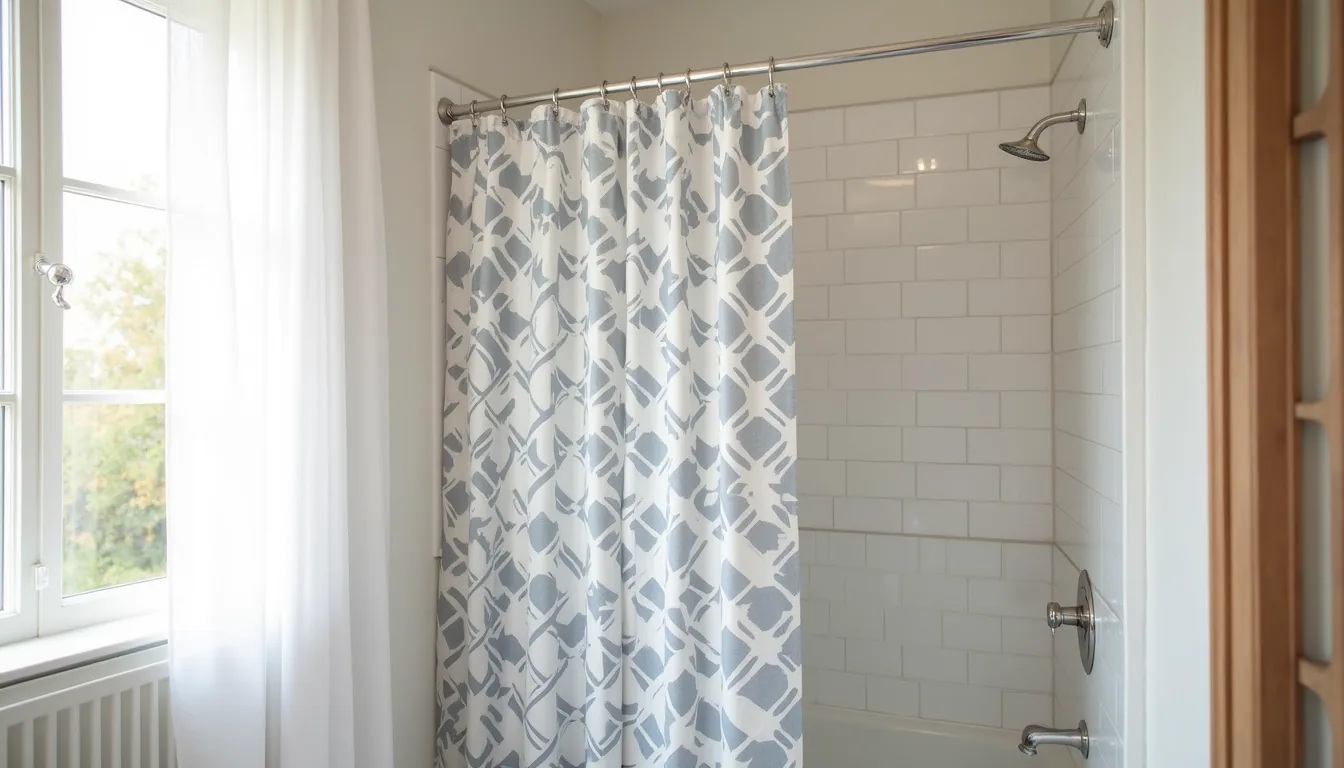
A soft gray shower curtain hung from a stainless steel rod against white subway tile delivers the safest possible palette for renters: it works with any wall color your landlord throws at you, and it photographs as intentional rather than temporary. The muted blue-gray family sits between warm beige and cool charcoal, so it reads neutral in almost any lighting, even the harsh fluorescent of a landlord-special fixture. White subway tile and neutral floor tile complete the setup with zero painted surfaces or drilled hardware required.
This route suits you if you move every 12 to 24 months or if you simply want a blank canvas you can re-dress with accessories later. A standard 72 by 72 inch polyester curtain in this color range runs $15 to $35; budget for a machine-washable liner underneath since the fabric will see damp daily. Pattern-free fabric in a single tone hides soap scum better than textured weaves, but it does show water spots, wipe it down weekly or accept the mineral marks as part of the look.
For small bathrooms, hanging the rod ceiling-to-tub edge (instead of at the standard 75 inches) visually stretches the wall height by roughly 8 to 10 percent. In larger spaces, a floor-length curtain at 84 inches adds a hotel-like proportion that a shorter standard curtain misses entirely.
Textured Fabrics and Layering

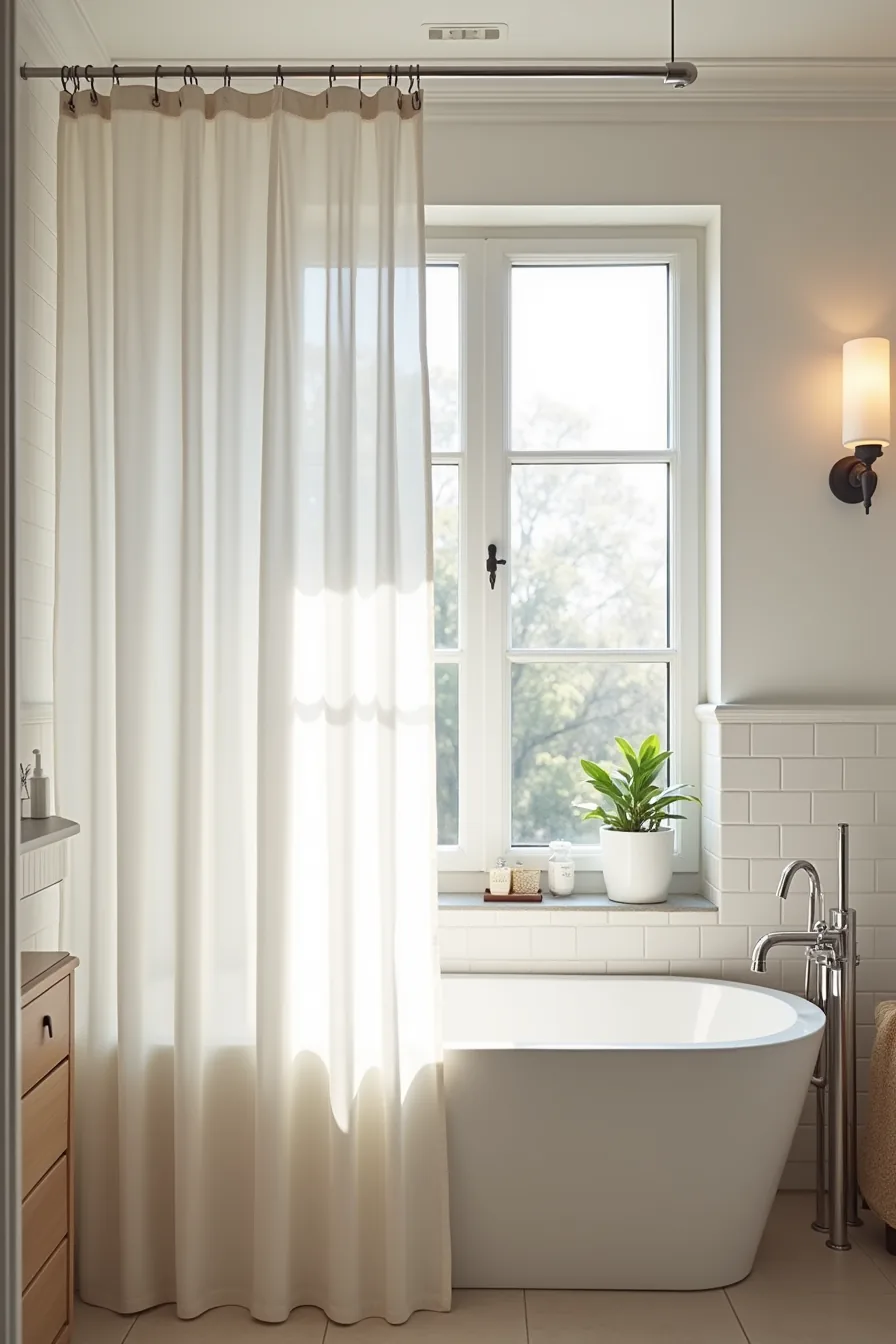
If you want depth without pattern, switch from flat polyester to a waffle-weave linen blend. The puckered grid traps air, which softens the fabric’s hand feel and gives the curtain a visual weight that reads more like textile art than bathroom utility. A natural cream tone keeps it versatile, while the weave itself does the styling work, no prints required.
This approach suits you if you prioritize tactile experience and don’t mind a longer drying time. Linen blends absorb moisture readily and can take 12 to 24 hours to fully dry in a humid bathroom, so run the exhaust fan during and after showers to prevent mildew. Expect to pay $40 to $80 for a 72 by 72 inch waffle-weave curtain; a semi-sheer overlay hung on a second rod in front of it adds privacy while letting light filter through the textured layer.
The chrome rings shown with this setup matter more than you might think. Thicker fabrics need rings with a wider glider or ball-bearing mechanism, standard thin hooks will drag and tear the top hem within six months. Machine-wash the overlay weekly and the waffle curtain monthly on a gentle cycle, then hang it back up damp to avoid creases that set permanently in the weave.
Cool Shower Curtains for Small Bathroom Makeovers
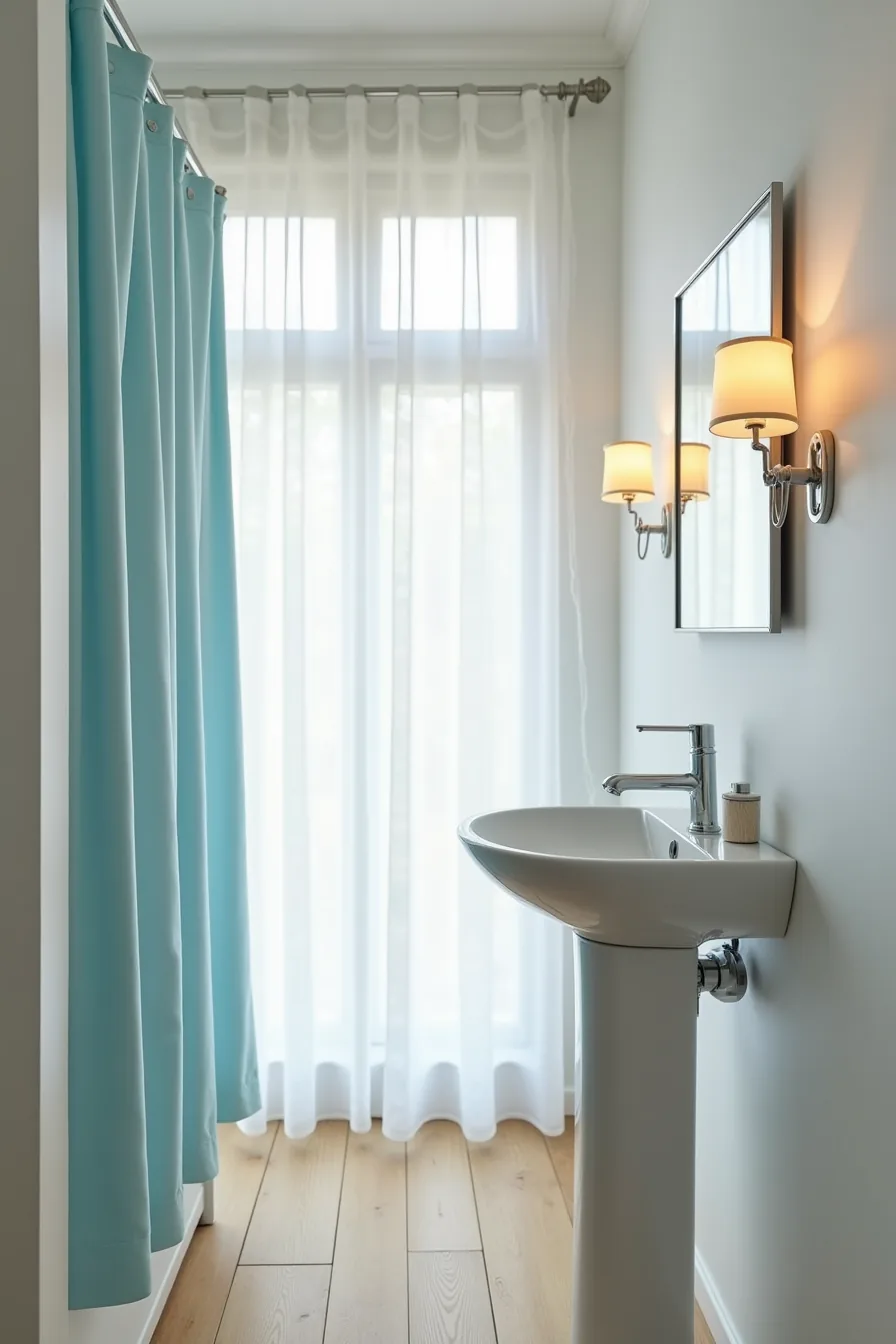
In a compact layout, the curtain’s proportions dictate the entire room’s perceived height. Hang the rod 4 to 6 inches below the ceiling and choose a floor-length panel, most standard 72-inch curtains fall short, so look for an 84-inch option or add a fabric extension. The light blue curtain you see creates vertical emphasis that visually stretches the walls, which works because it’s the only saturated element in the room; the white tiles and pedestal sink stay neutral so the color reads as intentional rather than busy.
This approach suits you if your bathroom measures under 50 square feet and you want maximum impact without committing to paint. A textured polyester or matte cotton-blend in a medium tone (not pastel, not navy) resists water spots better than smooth vinyl and hides the inevitable hard-water streaks. Keep the chrome mirror frame polished, its reflective surface doubles as a light source, and in a room with minimal counter space, every shiny inch contributes to the airy feel.
Expect to replace a $20 to $35 curtain every two to three years, as repeated washing fades the color noticeably after 30 cycles.
One non-negotiable with this setup: the curtain must sit at least 3 inches clear of the waste trim and 6 inches from the sink’s rim. A panel that touches the basin either traps moisture against the porcelain or gets snagged when you reach for a towel, and you’ll shut it a dozen times a week. Allow 1 to 2 inches of pooling at the floor for a polished spill effect, but any more creates a mildew-prone fold in the hem.
Long-Term Investment in Quality Construction

When you plan to keep the same curtain for five years or more, the construction details matter more than the pattern. Look for heavyweight fabric, typically 180 to 220 grams per square meter, that hangs with a structured drape rather than clinging to the liner. Reinforced metal grommets, not plastic ones, resist cracking after thousands of pulls; the polished chrome rings glide smoothly on a standard 1.25-inch rod and won’t corrode in steam-heavy air.
Triple-stitched header seams prevent the fabric from tearing at stress points, which is where cheap panels fail first. A premium curtain in this class costs $60 to $120, but the math works out: budget options at $25 need replacing every two years, while a well-made panel lasts five to seven with proper care. Wash it monthly in cold water with a half-cup of white vinegar (never bleach), and tumble dry on low for 10 minutes to keep the mildew-resistant finish active.
The weight of the fabric also means it stays put in a drafty bathroom, no billowing when the vent fan cycles on.
Your next move
You now have six distinct directions for cool shower curtains, from budget-friendly fabric to long-term linen investments. Each requires different maintenance, polyester handles bleach, while natural fibers demand gentler care, so match your choice to your cleaning habits, not just the aesthetic.
Before you buy, measure your shower rod length and note whether you need a liner. Most standard tubs take 72-inch curtains, while curved rods often need wider options.
Start by picking your dominant bathroom color, then choose one curtain style that complements it. Order a single option first, hang it, and assess the visual weight before committing to a full bathroom refresh.
Frequently Asked Questions
What size shower curtain do I need for a standard bathtub?
A standard bathtub requires a curtain measuring 72 inches wide by 72 inches long. For oversized tubs or curved rods, opt for 72 by 84 inches to ensure full coverage.
Can I use a cool shower curtain in a rental without damaging walls?
Yes. Use a tension-mounted curved rod that requires no drilling, or install adhesive hooks rated for bathroom humidity. Both options remove cleanly without leaving marks.
How often should I replace a shower curtain to prevent mold?
Replace a fabric curtain every 6–12 months, depending on ventilation. A polyester or vinyl liner should be swapped every 3–6 months, or immediately if you spot mildew.
What’s the difference between polyester and fabric shower curtains in terms of durability?
Polyester resists water, mildew, and tearing, lasting 1–2 years with regular washing. Cotton or linen fabric curtains are softer but less water-resistant, typically lasting 6–12 months before fraying or staining.