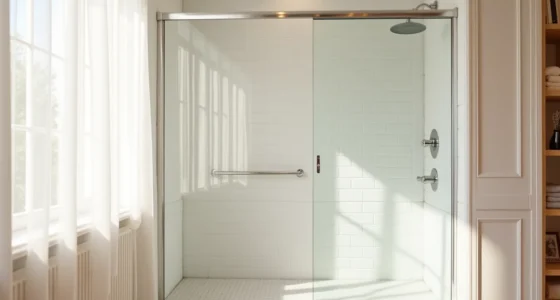
A shower lamp is any light fixture rated for wet or damp locations and positioned to illuminate the bathing zone, and choosing the right one comes down to your ceiling height, shower type, and tolerance for permanent wiring. That single definition spans six distinct looks, from a recessed retrofit in a standard 8-foot ceiling to a freestanding, plug-in sconce that you can remove before move-out day. The trade-offs are concrete: IP ratings, clearance from the spray, and whether your junction box sits inside or outside the wet zone.
What follows breaks down each route with scale, cost, and installation demands so you can match the lamp to your actual bathroom, not a catalog photo.
Key takeaways
Recessed shower lamps need IP65-rated housings and a minimum 8-foot ceiling to avoid water spray contact zones. Integrated shower head lighting works best in curbless or walk-in showers, where the fixture sits at least 6 feet from the showerhead arc. Wall-mounted sconces suit medium to large bathrooms best, requiring 5–6 feet of clearance between fixtures and a GFCI-protected circuit. Renter-friendly adhesive lamps must use removable 3M Command strips rated for humid environments, and you should expect to replace them every 12–18 months.
Recessed Shower Lamp for Smooth Ceilings
A recessed downlight disappears into the ceiling plane, leaving only a trim ring flush with the drywall. You see the fixture housing tucked behind the surface, which is exactly what makes this approach work: nothing protrudes into the shower zone, no glass globes to clean, no swing-arm to bump. The scale card beside the trim ring confirms the installed depth, typically 4-6 inches, which matters if you’ve limited plenum space above the ceiling.
For wet areas, you need a wet-area fixture check before purchase. Look for an IP65 or higher rating, which seals the housing against direct water spray. Recessed vs integrated light comes down to serviceability: recessed units have replaceable trims and drivers, while integrated LED modules often require full-unit replacement at end of life.
This solution suits small- to medium-sized bathrooms best, where a single 4-inch downlight positioned 24-30 inches from the showerhead provides even wash without hot spots. Larger wet rooms need two or three units spaced 3-4 feet apart. Expect to pay $80-$150 per fixture plus installation, which is higher than surface mounts but lower than pendants when you factor in the trim kit and housing.
Integrated Shower Head Lighting

The matte-black rainfall showerhead on a brushed-nickel arm integrates LED rings around its perimeter, turning the water stream itself into the light source. Water droplets catch the glow mid-spray, creating a shimmering effect that no wall-mounted fixture can replicate. This works because the LEDs sit above the water outlet, so they illuminate the falling water rather than casting shadows through it.
You gain two functions from one ceiling penetration, which simplifies wiring and reduces fixture clutter. The trade-off is service access: when the LED module fails, you typically replace the entire showerhead unit, not just a bulb. Expect a lifespan of 25,000-40,000 hours on quality units, but budget $200-$400 for the combined fixture.
Hard water shortens LED life by coating seals and reducing heat dissipation. If your water measures above 7 grains per gallon, plan to wipe the perimeter rings monthly with a microfiber cloth and white vinegar. This setup suits homeowners who want a dramatic, spa-like statement and have the budget for a true integrated fixture rather than a retrofit adapter.
For renters, a handheld showerhead with a small clip-on light achieves a similar glow without permanent installation.
Wall-Mounted Sconces for Soft Shower Lighting
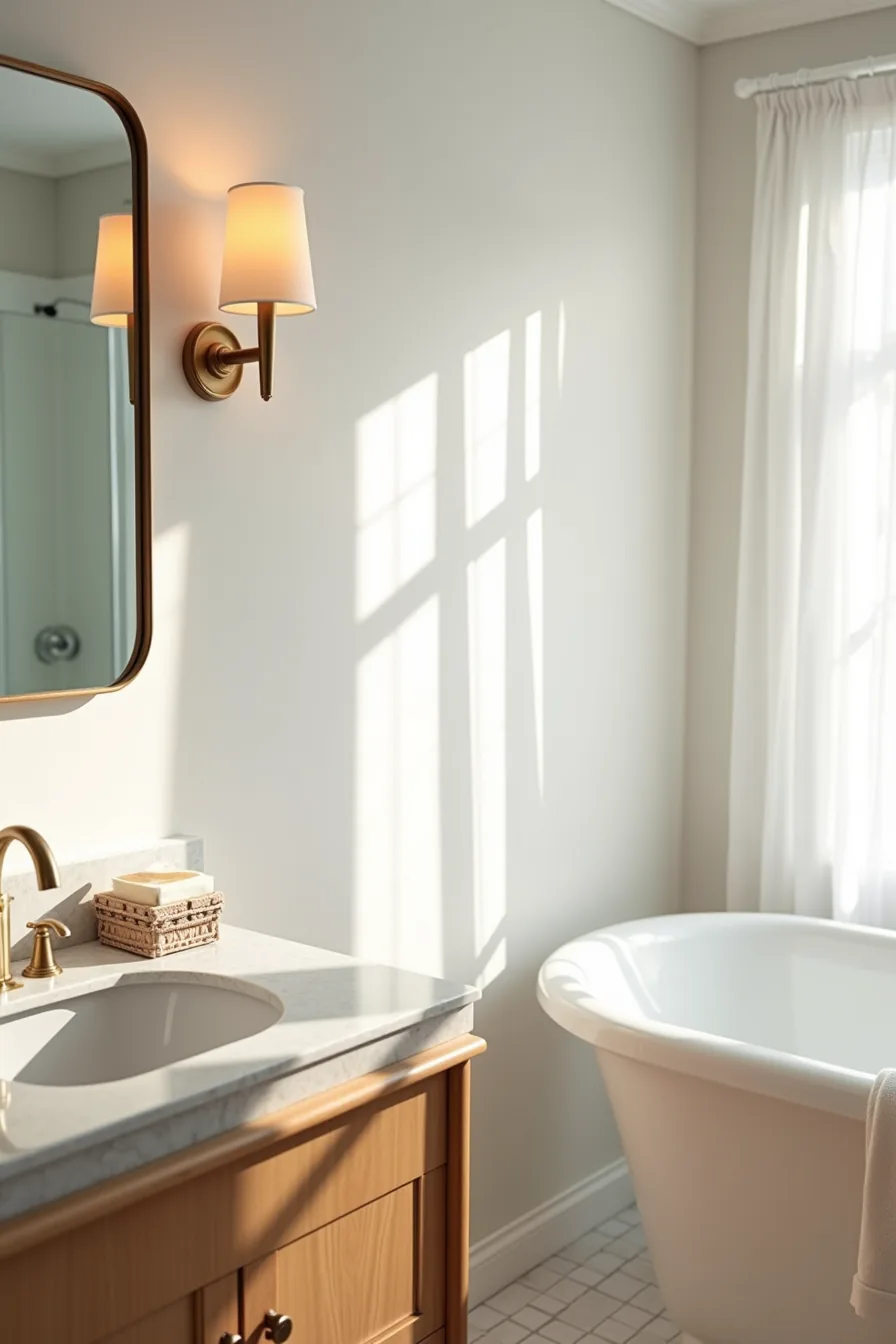
Position sconces outside the spray zone entirely, typically on a vanity wall opposite the showerhead, to keep moisture away from open bulb sockets while still washing the room in soft shower lighting. A pair of brass sconces mounted symmetrically on either side of a mirror, set 60 inches from the floor, flanks a freestanding tub and casts warm pools of light onto the vanity without ever facing direct water. That two-sconce arrangement suits medium bathrooms where a single ceiling fixture leaves the tub area too dim for safe entry.
You need a damp-rated or wet-rated fixture: damp-rated handles steam and condensation, but wet-rated is mandatory if any splash can reach the fixture directly. Choose warm bulbs (2700K) at 40-60 watt equivalents for a relaxed soak, and add a dimmer so the same sconces can deliver 100% brightness for morning shaving without glare bouncing off the mirror. Brass resists corrosion better than painted steel in humid air but still needs a monthly dry wipe to prevent water spots; expect to pay $80-$150 per fixture for a quality damp-rated sconce.
Pendant Fixtures Above the Shower Enclosure
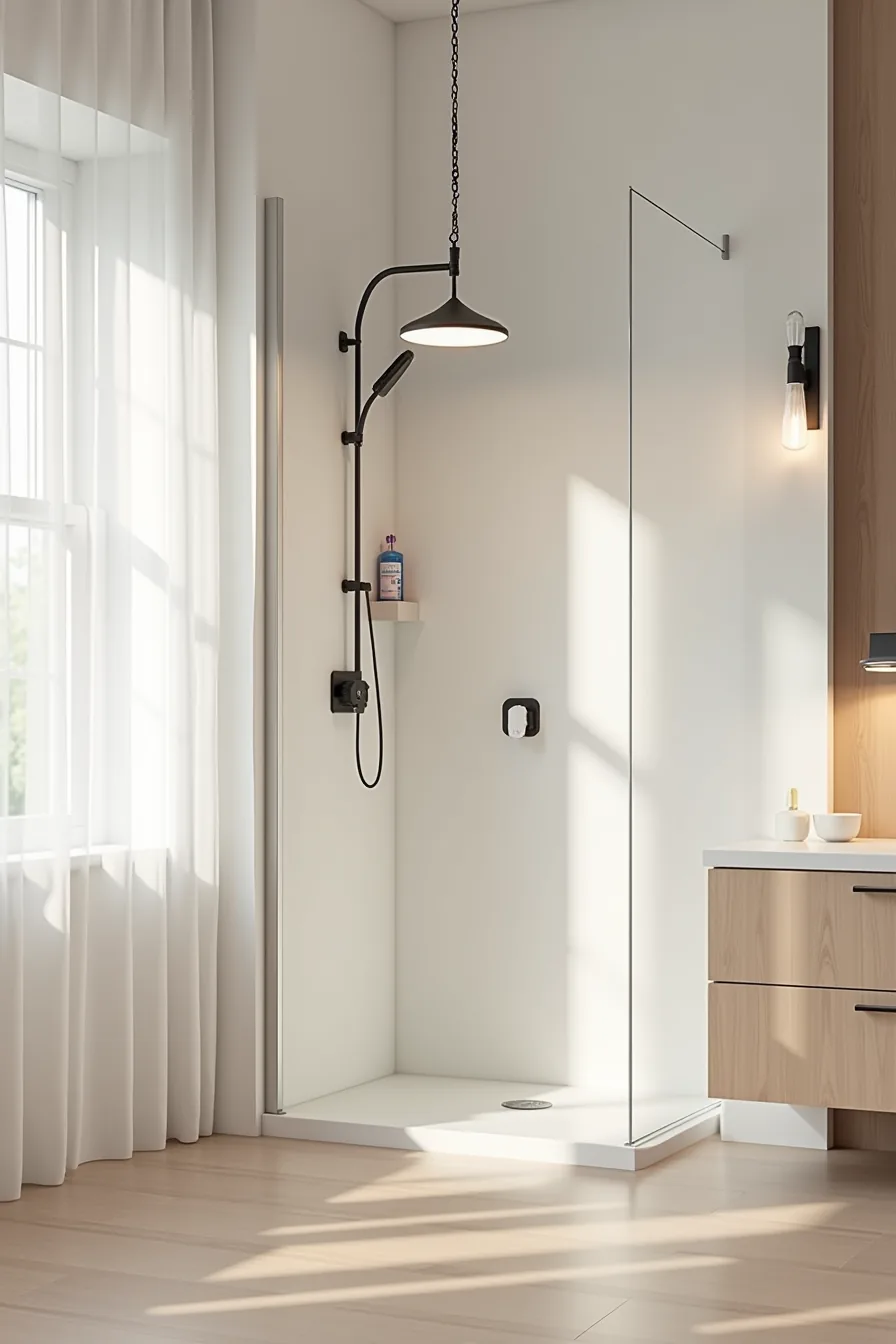
A single industrial pendant on a black chain, hanging 36 inches above the shower rim with a frosted glass shade, defines the entry point of a large walk-in enclosure without competing with the ceramic tile surround. That clearance, roughly head height for most adults, keeps the fixture out of reach while allowing light to spread across the wet zone, not just pool at the drain. Frosted glass diffuses the bulb into a broad glow, which suits bathrooms where the ceiling fixture alone leaves corners in shadow.
You must use a fixture rated IP44 or higher for steam exposure; IP44 handles splashes, while IP65 is safer if the pendant sits directly under a rainhead. Hang pendants only in enclosures with at least 80 inches of interior height, and keep the chain taut so the fixture can’t sway. Expect $120-$250 for a quality wet-rated pendant, and factor in a 10-minute monthly wipe of the glass to prevent hard-water film.
This setup works best in large bathrooms (over 100 square feet) where a single statement light anchors the space; skip it in compact stalls where the chain eats visual headroom.
Vapor-Proof Cage Lamps for Industrial Durability

A weathered-steel cage lamp with a sealed gasket at the base tackles the two things that kill ordinary fixtures in a wet room: condensation ingress and corrosion. The wire grid protects the glass from accidental knocks, while the gasket keeps steam from reaching the socket, an IP65 rating is the practical minimum here, not the IP44 you might accept for a pendant. Mount it directly on a wet-room wall where the enclosure is open to steam from a nearby showerhead, and you get task-level light that survives daily humidity cycles without fogging internally.
Look for powder-coated or true-weathered steel finishes that develop a patina rather than rust through; bare mild steel will pit within a year in continuous steam. These lamps suit powder rooms, mudroom-adjacent baths, or any space where you want a utilitarian edge without worrying about moisture damage. Budget $80-$150 for a genuinely vapor-proof unit, and expect a 5-minute quarterly check of the gasket for cracking, replace it if it hardens.
Tighten the mounting screws annually, since thermal cycling from hot showers can loosen them. Skip this option in minimalist or soft-toned bathrooms where the industrial profile fights the design language.
Renter-Friendly Surface-Mount and Adhesive Options

If you can’t touch a junction box, an adhesive-mounted LED strip on the top edge of the shower enclosure frame delivers the same brightening effect without a single wall penetration. A slim battery pack clipped to the frame corner powers the strip, and the adhesive backing holds firmly to metal or painted surfaces, provided you wipe the mounting area with isopropyl alcohol and let it dry for 10 minutes before pressing down. Expect 2,500-4,000 lumens per meter from a quality strip, which is enough to eliminate shadows in a 30-40 square foot enclosure.
This setup suits renters who want brighter early mornings without risking their security deposit. Choose a strip rated IP65 or higher so the exposed LEDs survive direct spray; standard indoor strips will fail within weeks. Peel the strip off at move-out, most adhesive tapes leave zero residue on powder-coated frames, though tile surfaces may need a gentle rub with a melamine sponge.
Budget $25-$50 for the strip and battery pack, and expect 3-6 months of daily use before recharging. Keep the battery pack outside the direct spray zone to extend its lifespan.
Where to start
Start by measuring your shower zone and identifying your existing light source. If you’ve a ceiling fixture, a pendant or flush mount is your lowest-friction swap. If you rent or lack hardwiring, a rechargeable magnetic lamp gives you the look without an electrician.
For most bathrooms, aim for a lamp that sits at least 6–8 inches away from the spray path and uses at least IP44-rated fixtures if placed near moisture. Budget around $40–$80 for a solid rechargeable option, or $150–$400 for a wired, dimmable piece worth keeping long-term.
Your next step: sketch your shower footprint, check your ceiling height, and pick one style from this list that fits both your layout and your lease.
Frequently Asked Questions
What IP rating do shower lamps need to be safe in wet areas?
You need at least IP65 for fixtures inside the shower zone, meaning they’re dust-tight and protected against low-pressure water jets. IP67 adds temporary submersion protection, which is wise for ceiling-mounted units.
Can you install a shower lamp in an existing bathroom without rewiring?
Yes, if you choose battery-operated or rechargeable models with adhesive mounts, no electrician required. Hardwired versions need a licensed electrician to run a new circuit, which typically takes half a day and costs $150–$400 depending on access.
How do you prevent mineral buildup on integrated shower head lights?
Wipe the lens dry after every use with a microfiber cloth to stop hard-water spots. Once a week, run a vinegar-dampened cloth over the surface, then rinse briefly with shower water, never use abrasive cleaners that scratch the glass.
What’s the difference between soft shower lighting and standard bathroom lighting for early mornings?
Soft shower lighting uses warm dimmed LEDs (2700–3000K) that reduce melatonin suppression, easing you awake gradually. Standard bathroom lighting runs bright cool whites (4000–5000K), which jolt your system instantly, better for post-workout showers, worse for 6 a.m. Starts.