Dream bathroom luxury isn’t a single look, it’s a set of deliberate decisions about space, material, and light that you can adapt to any room size or budget. It hinges on four practical pillars: scale, material honesty, layered illumination, and storage that disappears. You’ll see how a steam shower suits a large footprint while a freestanding tub transforms a compact alcove.
The choices ahead range from a $300 renter-friendly refresh to a permanent tile and plumbing investment, each with clear trade-offs.
Key takeaways
- Material contrast works only when stone and warm wood share a similar undertone, so pair a beige-toned travertine with oak rather than gray marble with walnut.
- Spatial hierarchy beats square footage, so place a freestanding tub near natural light and push storage to the perimeter to make a 5×8-foot bathroom feel expansive.
- Lighting needs three layers, ambient, task, and accent, with dimmers on each circuit so you can shift from bright grooming to low-light soaking without rewiring.
- Renter-friendly luxury relies on peel-and-stick zellige tile, a tension-rod shower curtain, and a brushed-nickel faucet swap, all reversible under an hour and under $200 total.
Material Contrast: Stone and Warm Wood
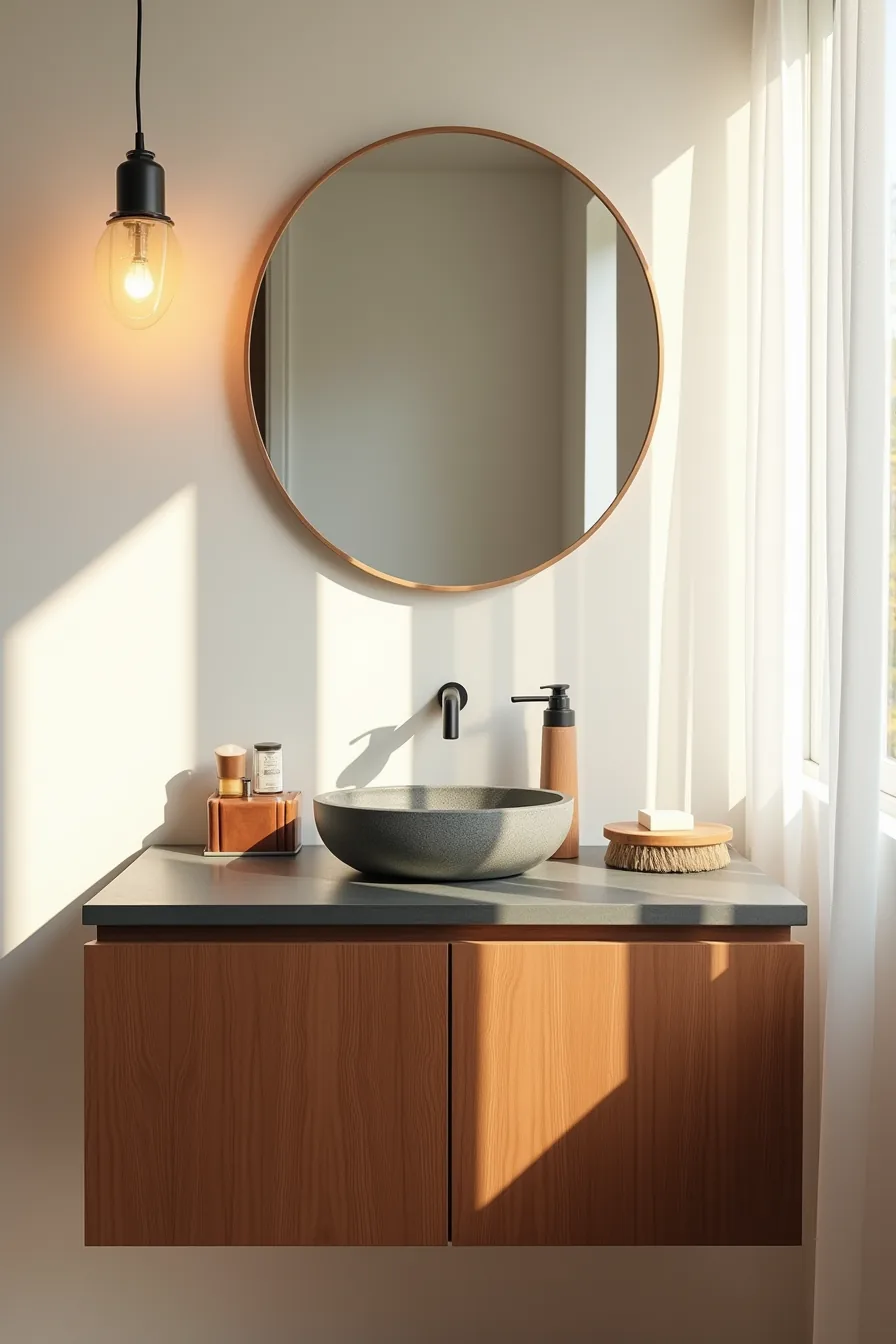
Pairing a slate countertop with a walnut vanity base delivers luxury through tactile opposition: cool, matte stone against warm, figured wood. Slate costs less than marble and resists etching from acidic spills, though it requires annual sealing and can chip along edges if you drop heavy objects. The walnut base brings the visual weight, most vanities with this profile run 36–48 inches wide, and its grain pattern shifts depending on your lighting angle, creating depth without ornamentation.
A stone soap dish beside a wooden-handled brush extends the material story to your everyday objects, proving the scheme works beyond the main surfaces. You can reproduce this look with a teak or oak vanity if walnut strains your budget, but expect softer woods to dent more easily near the sink. For rental bathrooms, laminate countertops with a slate-effect finish and a solid-wood bath tray introduce the same contrast without permanent changes.
Spatial Hierarchy: Luxury Beyond Size

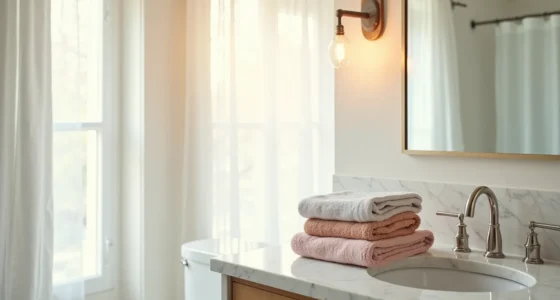
True luxury beyond size comes from how you distribute visual weight across a room, not from how many square feet you’ve. In a small bathroom, a pedestal sink with a single framed mirror above it creates a deliberate focal point that draws the eye upward, making the ceiling feel taller than it’s. The narrow wall-mounted shelf holding three rolled towels adds a horizontal counterpoint at eye level, breaking the vertical line and giving the space a composed, gallery-like rhythm.
A recessed light centered above the mirror anchors the composition and eliminates the harsh shadows that vanity fixtures often cast across your face. This setup works best in rooms under 50 square feet, where a bulky vanity would consume circulation space and make the room feel like a storage closet. The pedestal sink requires you to store toiletries elsewhere, so reserve this approach for a guest bath or a powder room with a nearby linen closet.
Lighting Layers for Calm and Private Spaces
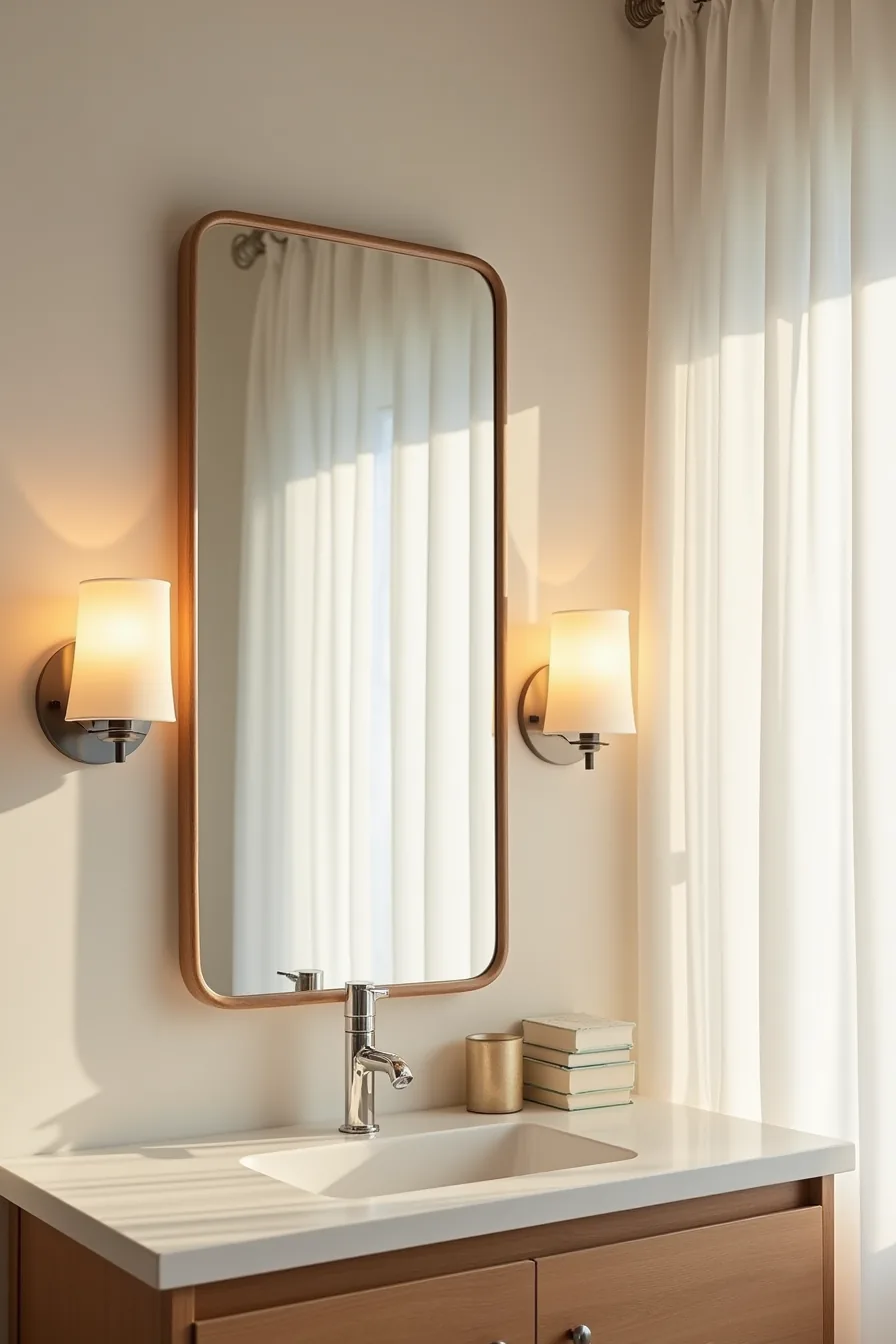
Luxury in a bathroom is as much about how you feel entering the room as how the fixtures look. You achieve that shift from utilitarian to spa-retreat by layering three distinct types of light: task, ambient, and accent. In the vanity setup you see here, the designer stacked all three.
A recessed ceiling fixture provides the even, shadow-free ambient glow that fills the room, while a pair of sconces flanking the mirror deliver crisp task light for shaving or applying makeup. The lit candle and its reflection in the mirror add the accent layer, a warm, flickering counterpoint that signals the end of the day, not just the start of your morning routine.
This three-tier system works because each source serves a separate purpose. The recessed light alone would flatten your features; the sconces alone would leave the ceiling in darkness. You connect the layers to your daily rhythm: bright, cool-toned task light for precision, dimmed ambient for soaking, and the candle for winding down.
For a practical takeaway, install your sconces at eye level, roughly 60 to 66 inches from the floor, mounted 36 inches apart to avoid casting shadows across your face. The candle is the only element that requires your attention, so place it at least 12 inches from the mirror and any fabrics to keep the calm feeling from becoming a fire hazard. This approach suits any room size, but it truly shines in a private en suite where you control the entire lighting scene from one switch panel.
Hotel-Inspired Layouts vs. Residential Reality
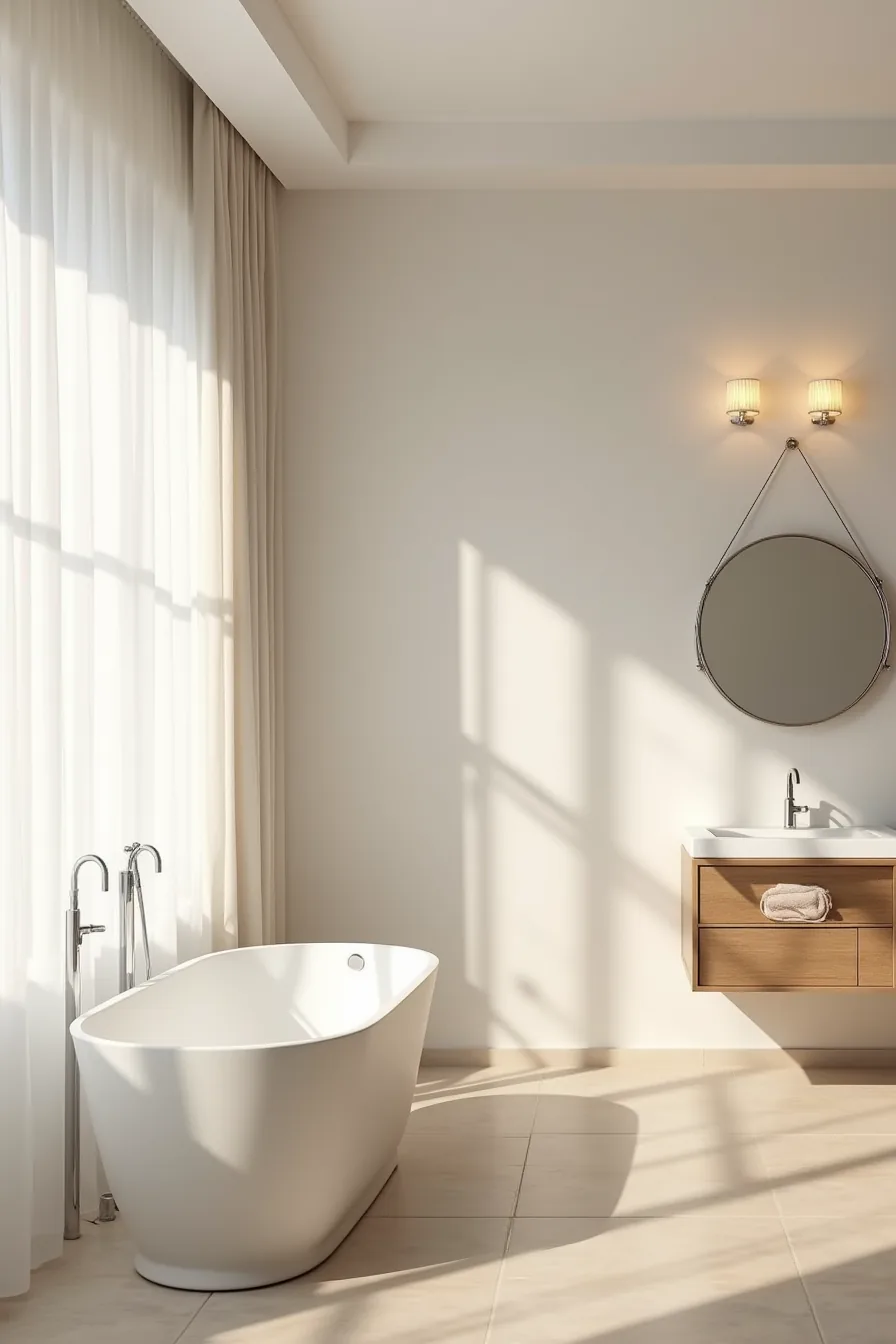
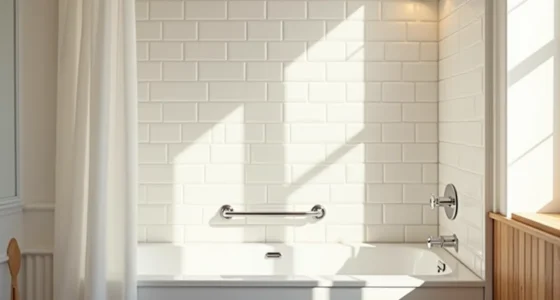
The freestanding soaking tub positioned away from the wall is the single most copied hotel gesture, and it works at home because it turns bathing into a deliberate destination rather than a corner afterthought. You see this in the arrangement before you: the tub commands the center sightline, the separate shower enclosure tucks behind it, and the vanity unit anchors the opposite wall. That zoning, wet zone, dry zone, grooming zone, is what makes a hotel bathroom feel expansive, and you replicate it by giving each function its own floor footprint instead of merging them along one wall.
Where the commercial template fails is maintenance. Hotels clean these rooms twice daily with industrial ventilation and staff; you don’t. That open tub placement demands waterproof flooring beneath it, a floor drain within reach, and a daily squeegee habit to prevent soap scum on surrounding tile.
A freestanding tub against an exterior wall also introduces cleaning access issues, so keep at least 6 inches of clearance behind it for wiping. If you lack the 8 to 10 feet of length this layout needs, skip the island tub and push it partially against a wall, you keep the sculptural silhouette without sacrificing the shower-to-vanity flow that defines hotel vs home comfort.
Budget Routes: Renter-Friendly to Investment Grade

Your spending tier dictates how close you get to Dream Bathroom Luxury without risking a deposit or overbuilding a home you might leave. The renter-friendly route costs roughly $50–$150 and reverses completely in an afternoon: adhesive hooks rated for tile hold washcloths and robes beside the shower, a removable mirror leans against the wall at eye level to fake a built-in vanity reflection, and a metal caddy consolidates toiletries into one intentional cluster rather than scattered bottles. A woven basket on the floor absorbs visual clutter, towels, rolls, styling tools, so the room reads as curated, not chaotic.
The semi-permanent tier, about $300–$800, swaps peel-and-stick tile behind the vanity and replaces the shower curtain rod with a tension-mounted brushed brass version. These survive a year or two but may strip paint or leave adhesive residue on porous surfaces, so budget for patching.
At investment grade, $3,000–$15,000, you’re looking at heated floors, a rainfall shower system, or custom millwork, improvements that return roughly 60–70% at resale but demand professional installation and permanent commitment. Match the tier to your tenure: renters should never spend beyond what they can walk away from.
Finishing Details That Signal Luxury
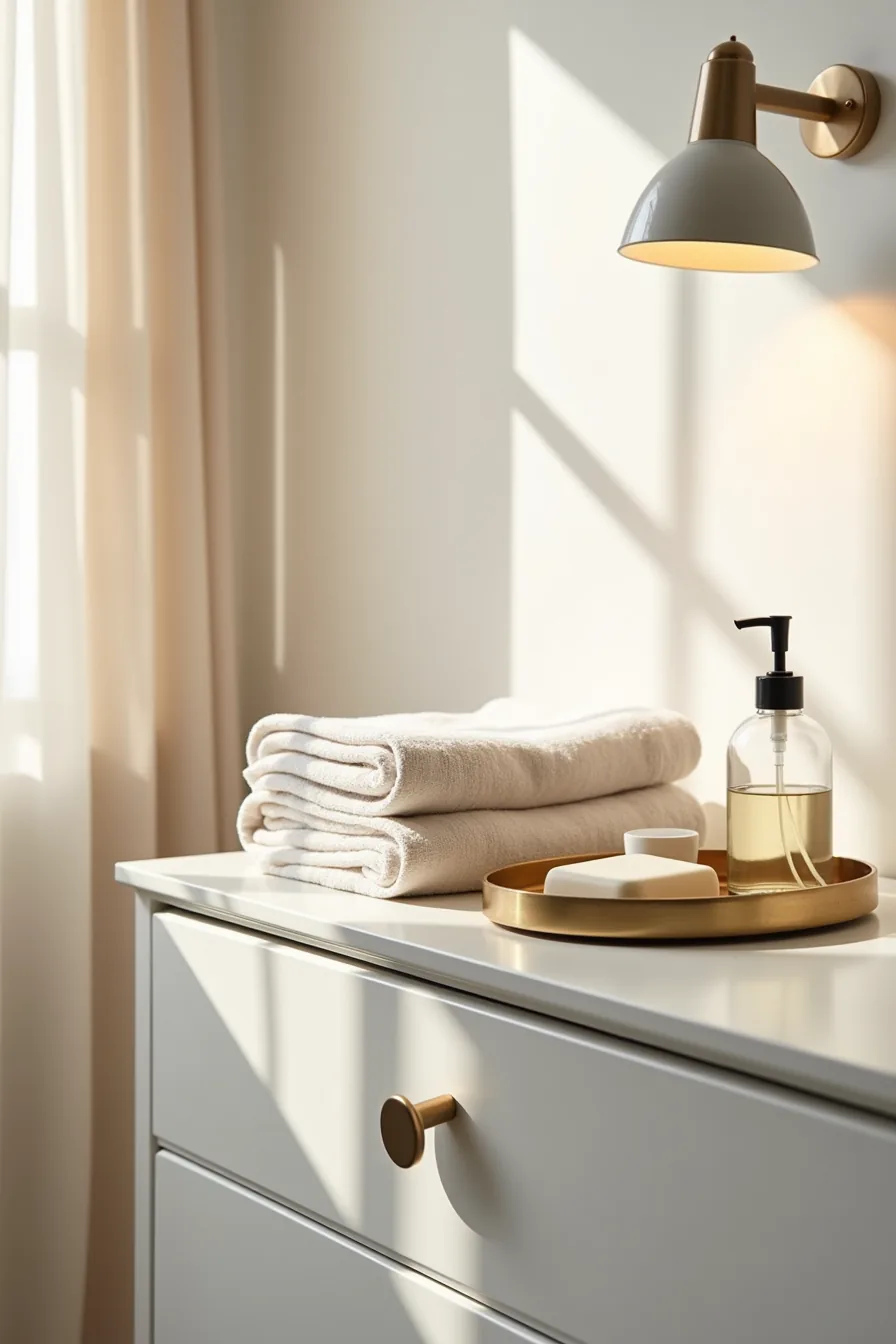
The gap between a functional bathroom and one that feels deliberate lives in the details you touch and see last. Swap the chrome drawer pull for a polished brass or matte black version, a 15-minute change that alters the entire vanity’s character. The metallic finish should echo one other accent in the room, whether that’s a faucet or a mirror frame, to create a cohesive visual thread.
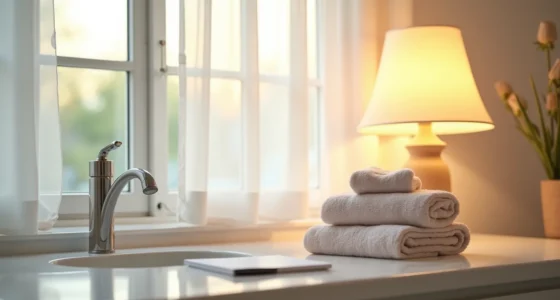
Textiles carry the heaviest sensory weight. A stack of folded towels in neutral linen, arranged by size with the largest at the base, signals order and softness simultaneously. Keep them within arm’s reach of the shower but off the floor to prevent mustiness, a wall-mounted shelf or the vanity edge works when space allows.
Accessory placement matters more than the accessories themselves. A small brass tray holding a soap bar and hand cream bottle corrals daily-use items into one deliberate zone, while a glass apothecary jar nearby stores cotton balls or bath salts without visual noise. Group items in odd numbers and leave negative space around them; density reads as clutter, restraint reads as luxury.
The maintenance cost is minimal, wipe the tray weekly to prevent water spots, and rotate towels frequently to keep the fold lines crisp.
Where to Start
Your first move is to pick one idea that solves a problem you already have. If your bathroom feels cramped, start with the floating vanity. If it feels dated but the layout works, swap the lighting.
If you rent, focus on the shower curtain and accessories, no permanent changes needed.
Match the idea to your budget: under $300 for the budget route, $1,500–$4,000 for the investment pieces. Measure your floor space before buying anything. Then tackle the single highest-impact change first.
That one decision will tell you what to do next.
Frequently Asked Questions
What’s the difference between a luxury bathroom and just a clean one?
Luxury adds deliberate layering: natural stone or matte finishes, warm lighting on multiple circuits, and tailored storage. A clean bathroom feels fresh; a luxury one feels composed, with every surface chosen for texture, durability, and how it responds to humidity.
Can you create dream bathroom luxury in a small space under 40 square feet?
Yes. Focus on one statement piece, a freestanding tub, a rainfall showerhead, or floor-to-ceiling tile. Use large-format tiles (12×24 inches or bigger) to reduce grout lines, and install a wall-mounted vanity to free up visual floor space.
Skip bulky cabinets.
Which materials in a luxury bathroom actually hold up to daily use and humidity?
Porcelain and glazed ceramic tile resist moisture and staining; quartz and solid-surface countertops outperform marble for maintenance. For fixtures, choose brushed nickel or matte black PVD finishes, they withstand cleaning chemicals better than polished chrome. Natural stone requires annual sealing.
How much does it cost to renovate a bathroom to luxury standards?
A full luxury remodel typically runs $15,000 to $40,000 for a standard 40–60 square foot bathroom, depending on region and material choices. Expect $50–$150 per square foot for mid-range to high-end finishes. Freestanding tubs, custom vanities, and heated floors add $2,000–$8,000 each.