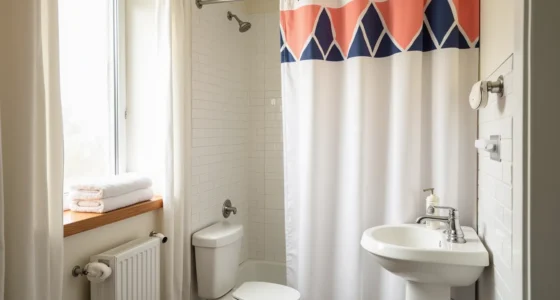
The shower curtain rod is the most constrained fixture in your bathroom, and the right choice depends less on style and more on the specific dimensions of your tub, alcove, or corner. A tension rod that works for a 60-inch alcove will fail spectacularly in a 72-inch freestanding tub, and the wrong mount can tear tile off the wall. Before you buy a single bracket, you need to match the rod type to your exact span, wall material, and ceiling height, the six setups below cover the full range, from a $25 rental fix to a $300 permanent install, with the precise measurements and trade-offs for each.
Key takeaways
Straight rods work best for tub enclosures 54–60 inches wide, but you’ll need wall anchors for anything over 48 inches to avoid sagging. Curved rods add roughly 6–8 inches of elbow room at the center, making them ideal for standard 60-inch tubs in narrow bathrooms. Ceiling-mounted rods require a solid header or joist above the tub, drywall alone won’t hold the weight of a heavy fabric curtain. Tension rods suit renters, but they slip on textured tile; use rubber grips or a spring-loaded model rated for at least 10 pounds.
Straight Rod for Standard Tub Enclosures

The brushed nickel straight rod anchored to studs above a standard rectangular tub remains the most straightforward solution for enclosures that are 54 to 60 inches wide. Wall-mounted brackets at both ends carry the full weight of a beige linen curtain without sagging, provided you secure them into wood studs or use heavy-duty toggle bolts rated for drywall. This setup works best for homeowners who want a permanent, low-maintenance installation, metal finishes like brushed nickel resist corrosion better than chrome in humid air, though both need a wipe-down every few weeks to prevent water spots.
For renters, a tension-mounted straight rod is the practical alternative since it requires no drilling, but it limits you to lighter fabric curtains and may slip under heavy use. A straight vs curved rod decision here comes down to clearance: straight rods keep the curtain flush against the tub edge, which suits narrow bathrooms where every inch of floor space matters, but you sacrifice roughly 3 to 5 inches of shoulder room inside the bath compared to a curved profile.
Curved Rods to Maximize Interior Space

A brass curved rod bows outward into the alcove, adding roughly 4 to 7 inches of elbow room across the middle of the tub, enough to make washing your hair or shaving your legs noticeably less cramped. The frosted glass curtain follows the arc naturally, keeping water inside while the bulge of the rod extends into the room rather than the bath. This interpretation of shower curtain rod ideas suits medium to large bathrooms where the extra floor footprint at the tub’s midpoint won’t block a vanity or door swing.
Installation demands more precision than a straight rod. The curved profile concentrates stress at the flange points where the rod meets the wall, so anchoring into studs is non-negotiable; toggle bolts alone risk gradual sag over a year of daily use. Expect to pay 30 to 60 percent more than a comparable straight rod, with brass finishes requiring periodic polishing to maintain their luster against hard-water spotting.
The marble floor beneath tolerates the slight outward reach without issue, but measure clearance from the tub edge to any opposite fixture, you need a minimum of 24 inches of open floor to accommodate the arc comfortably.
Ceiling-Mounted Rods for Visual Height

A matte black ceiling rod above a corner tub changes the room’s proportions instantly. Because the mounting point is the ceiling rather than the wall, the gray fabric curtain hangs floor-to-ceiling, drawing the eye upward and making an 8-foot ceiling feel taller. The exposed ceiling joists at the edge anchor the design visually, so the rod reads as intentional architecture rather than a functional afterthought.
This ceiling-mounted look works best in bathrooms with at least 9 feet of ceiling height; anything shorter can feel like the curtain is swallowing the space. You need solid structure above the drywall, screw directly into joists or add blocking between them, because the rod bears constant tension from the fabric’s weight. For renters, this is the most invasive option: it leaves visible holes in the ceiling that are harder to patch than wall mounts, so reserve it for owned homes or get written permission first.
Use a matte black finish to hide fingerprints and pair it with a heavyweight fabric curtain that drapes without swaying in ventilation drafts.
Corner Shower Solutions for Compact Bathrooms

An L-shaped chrome rod anchored into two adjacent walls turns an awkward corner into a fully enclosed shower without sacrificing floor space. The rod meets at the corner stud, where the two arms join, giving the navy curtain a taut 90-degree track that keeps water contained on both sides. This setup suits bathrooms under 50 square feet where a standard straight rod would leave a gap at the end or force the curtain to bow into the room.
Measure both walls carefully before buying: each arm should extend 28-34 inches from the corner, depending on your tub or pan depth. The chrome finish holds up well in the moisture zone because it resists corrosion, but wipe it monthly to prevent water spots from hard water buildup. The trade-off is accessibility, the corner entry requires stepping across the tub threshold at an angle, so this works best for able-bodied users.
For a tight bathroom layout, it reclaims the corner that a pedestal sink or storage cart would otherwise leave unused.
Tension Rods for Renters and Quick Changes
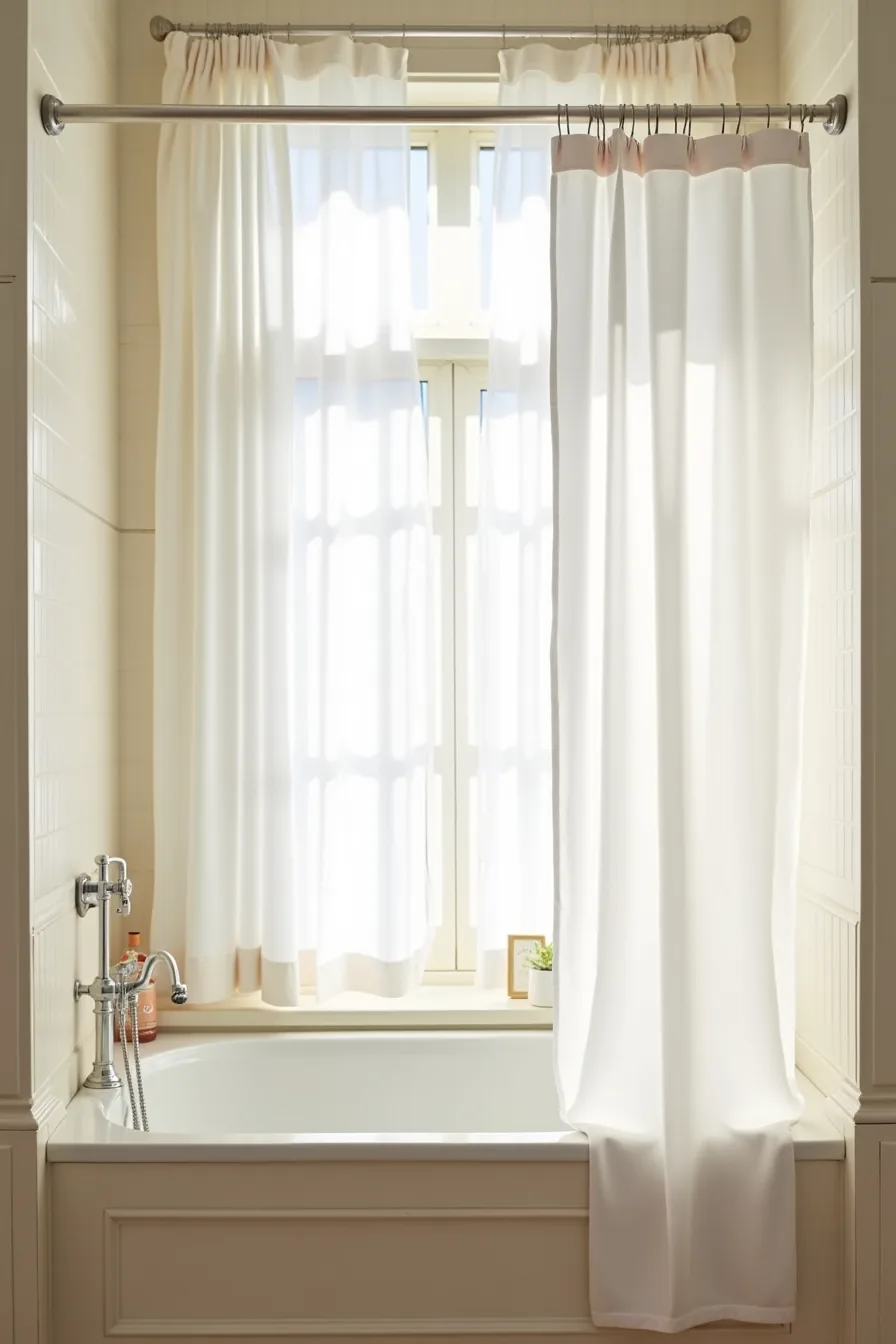
A spring-loaded tension rod wedged between two tile walls needs no drilling, no brackets, and no patching when you move out. The mechanism compresses the rod’s end caps against the tile, and the curtain hangs from the rod’s simple rings or built-in hooks. This particular setup pairs a lightweight cotton curtain with plain white tile, which keeps the total weight low, essential because most tension rods safely support 10-20 pounds, enough for fabric but not for heavy vinyl liners or glass panels.
Installation takes under five minutes: twist the rod to extend it until both ends press firmly, then test by tugging downward. Expect the tension to hold reliably for 1-3 years, but re-tighten the rod every few weeks, as temperature shifts and curtain weight gradually loosen the grip. The catch is that tension rods fail on textured or curved surfaces, where end caps can’t create a seal, and they won’t support a second curtain layer.
For renters or anyone testing a layout before committing to hardware, this is the lowest-cost route, most rods run $10-30, but budget for eventual replacement rather than long-term durability.
Adjustable and Telescoping Rods for Variable Spaces

A telescoping rod solves the problem of non-standard openings, think oversized alcoves, freestanding soaking tubs positioned well off the wall, or windows-turned-shower conversions where a fixed-length rod lands nowhere near the bracket spacing. The rod’s two or three nested sections slide within a collar, extending from roughly 36 inches up to 72 inches depending on the model, so you set the length to the nearest eighth of an inch rather than forcing a stock size to fit. The overlapping sections, visible along the run above the tub, are the first thing to inspect before buying: thicker steel or aluminum walls at the overlap points resist sagging, whereas thin-gauge versions flex noticeably once you hang a wet liner.
Load capacity drops as you extend the rod, so a fully stretched 72-inch span supports less weight than the same rod compressed to 48 inches, assume a safe ceiling of 10-15 pounds when fully extended. The sliding collar mechanism needs occasional attention: wipe the sections dry after humid showers and apply a silicone lubricant to the collar every few months, or the twist-lock will seize. The lightweight linen curtain shown here keeps total strain lowwing, making the setup viable for a soaking tub alcove where a fixed rod would require permanent mounting into tile you may not want to drill.
Frequently Asked Questions
What is the difference between a straight and curved shower curtain rod?
A straight rod sits flush against the tub, giving you roughly 15 inches of interior space. A curved rod bows outward 3–6 inches, adding elbow room and keeping the curtain off your body, ideal for narrow tubs.
Can I install a shower curtain rod without drilling into studs?
Yes. Tension rods need no drilling, but they require a stable grip between two walls. For drywall, use a spring-loaded rod with rubber ends, it holds up to 20 pounds.
Avoid tile-only mounting; it can crack.
What weight can a tension rod hold, and is it safe for heavy curtains?
Most tension rods support 10–20 pounds, enough for standard polyester or vinyl curtains (1–3 pounds). Heavy linen or layered curtains exceed this, use a fixed rod anchored into studs or heavy-duty drywall anchors rated for 50 pounds.
How do I measure for a shower curtain rod in a small or oddly shaped bathroom?
Measure the exact width between the two mounting walls at the rod’s height. For a curved rod, add 3–6 inches to that width for the bow. In alcoves, check clearance above the tub, leave 2–3 inches for rings and hooks.
For angled ceilings, use a corner rod kit.