Walk in shower curtain ideas aren’t about hiding a beautiful tile job, they’re about solving the three problems every open wet area creates: water on the floor, cold drafts, and zero privacy when someone else needs the bathroom. The fix isn’t a single curtain, but a system of placement, length, and material that matches your actual shower footprint. Whether you’ve a 36-inch alcove or a 6-foot wet room, the wrong choice turns a luxury feature into a daily nuisance.
You’ll need to decide between a floor-to-ceiling panel, a curved rod, or a tension-mounted liner, and that decision hinges on your drain location and ceiling height. The six setups that follow are sorted by budget, rental restrictions, and long-term durability, so you can match one to your exact layout without guessing.
Key takeaways
A straight rod across the opening suits narrow walk-ins up to 36 inches wide, but you must mount it 6–12 inches above the entry height to prevent water from escaping over the top. An L-shaped rod works best for corner or alcove showers, protecting a 30–36 inch wide entrance while keeping the curtain tucked against one wall for full open access. A curved rod adds 6–10 inches of elbow room inside a 32–40 inch opening, making it ideal for small stalls where the curtain would otherwise brush your shoulders. For renters, tension-mounted curved rods and adhesive hooks offer a zero-drill setup, but you should verify the rod’s weight limit (most support 8–15 pounds) to avoid sagging with heavy fabric curtains.
Single Rod Across the Opening
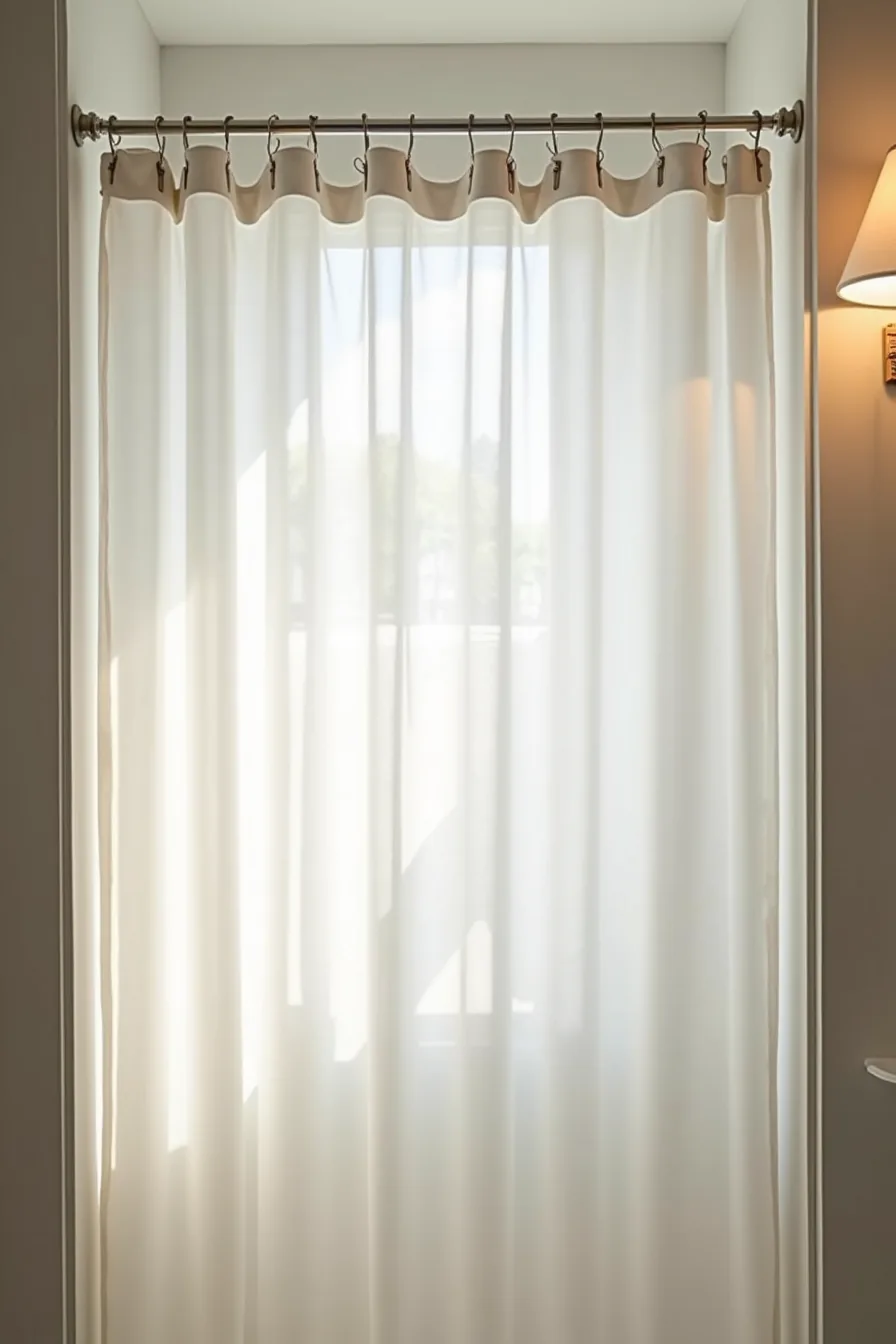
A single straight rod mounted across the shower entrance is the most straightforward of all Walk In Shower Curtain Ideas, and it’s the right choice when your opening is narrow, typically 30 to 36 inches wide. The chrome rod, paired with brushed nickel hooks, creates a clean line that reads as intentional rather than temporary, especially when the bathroom wall is finished in soft gray paint that picks up the metallic tones. You hang a translucent white curtain here, which keeps the space feeling open while still containing spray.
This setup works best for an elderly user or anyone with mobility concerns because it removes the need to reach around a corner or wrestle a curved track. Reproduce it with a tension rod if your tile is sound, or use a flanged wall-mounted rod for a permanent fix. The trade-off is that a straight rod does nothing to keep water off the floor outside the opening, so pair it with a bath mat or a slight inward slope on your tile.
L-Shaped Rod for Corner Protection
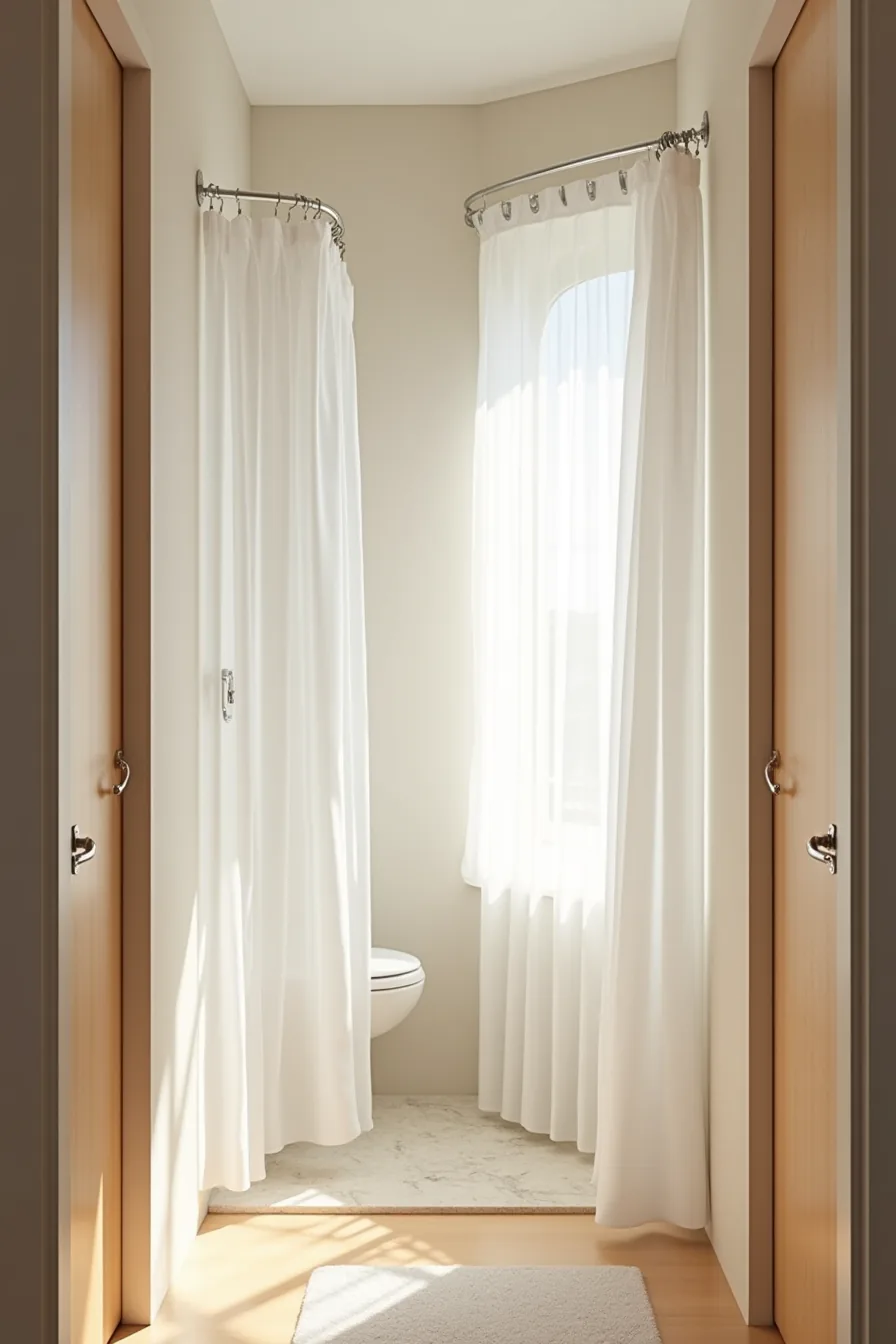
When your shower opening sits at the corner of the room, spray doesn’t just travel forward, it ricochets off one wall and heads for the other. An L-shaped rod setup solves this by mounting two connected segments: one along the back wall and one along the side wall, meeting at a 90-degree angle. The frosted vinyl curtain drapes from both rods, wrapping the wet zone on two sides instead of just one.
This configuration suits open-plan bathrooms where the shower shares floor space with a vanity or freestanding tub, and it’s particularly effective when you want open-shower privacy without a full enclosure. You’ll need a solid corner, tile or cement board, to anchor the flanged brackets, and the dual-rod hardware typically runs $40 to $80 more than a single straight rod. The frosted vinyl filters light while obscuring movement, and the corner tile and light stone floor stay dry because the curtain intercepts spray before it arcs past the opening.
Curved Rod for Wider Coverage

A bow-front rod pushes the curtain outward 6 to 10 inches at the midpoint, which adds roughly 10 to 15 percent more elbow room inside the wet zone. The curved profile also creates a natural tension point, the fabric sits taut across the arc, so water droplets lose momentum and drop straight down instead of beading along the hem and escaping through the opening. This buys you an extra few inches of clearance without enlarging the tile footprint.
The brass mounting brackets anchor into the wall studs at both ends, which is non-negotiable: the outward pull of the curtain exerts constant use on the flanges, and drywall alone will strip out within months. A curved rod costs $50 to $120, roughly double a straight tension rod, but it suits medium and large bathrooms where you’ve floor space to absorb the bulge. The cream fabric curtain follows the bow cleanly, and the hexagonal floor tiles outside the wet zone stay dry because the arc positions the curtain’s leading edge a full 8 to 10 inches past the showerhead’s spray radius.
Fabric vs. Vinyl: Material Trade-Offs for Walk-In Showers

The material choice determines how well a curtain performs in an open shower layout, where there’s no door to contain splashes or block drafts. A heavyweight linen fabric curtain in natural cream offers a textured, opaque barrier that absorbs sound and provides true visual privacy, ideal if your walk-in shower faces a bedroom or hallway. Linen drapes with a visible weave, but it requires a fabric liner behind it, adding $15 to $30 to the total cost, and you must machine-wash it monthly to prevent mildew from settling into the fibers.
A translucent vinyl curtain in clear achieves the opposite trade-off: it’s waterproof on its own, so no liner is needed, and a quick wipe-down with a squeegee after each use prevents soap scum from bonding to the surface. Vinyl runs $10 to $25, roughly half the price of linen, and it suits guest bathrooms or high-humidity climates where drying time matters. The catch is transparency, water beads on the surface as in this setup, but anyone outside sees silhouettes through the material, so you sacrifice privacy for convenience.
If you prefer the Curtain vs glass debate leaning toward fabric, choose a polyester blend instead of pure linen; it mimics the weave but resists moisture better and costs $20 to $40.
Renter-Friendly Curtain Solutions Without Permanent Installation

A tension rod wedged between two walls at the shower entrance delivers the walk-in shower curtain ideas you need without a single drill hole. Most tension rods extend from 42 to 72 inches, enough to span a standard 54- to 60-inch walk-in opening, and they hold 20 to 30 pounds when properly tightened, sufficient for a lightweight polyester curtain. Install the rod at mid-height, around 54 to 60 inches from the floor, so water stays inside while you retain headroom.
Adhesive hooks on the tile replace traditional rings, letting you attach the curtain directly to the rod without threading it through grommets. Choose removable hooks rated for humid environments; they grip glazed tile for weeks and peel off cleanly when you move. This setup costs $35 to $55 total, rod, hooks, and curtain, and suits renters, dorm bathrooms, or anyone testing a walk-in layout before committing to a permanent track or glass enclosure.
The trade-off: tension rods can slip if bumped hard, so check the tension mechanism monthly and retighten it to keep the curtain aligned.
Adapting Curtain Layout to Small, Medium, and Large Bathrooms
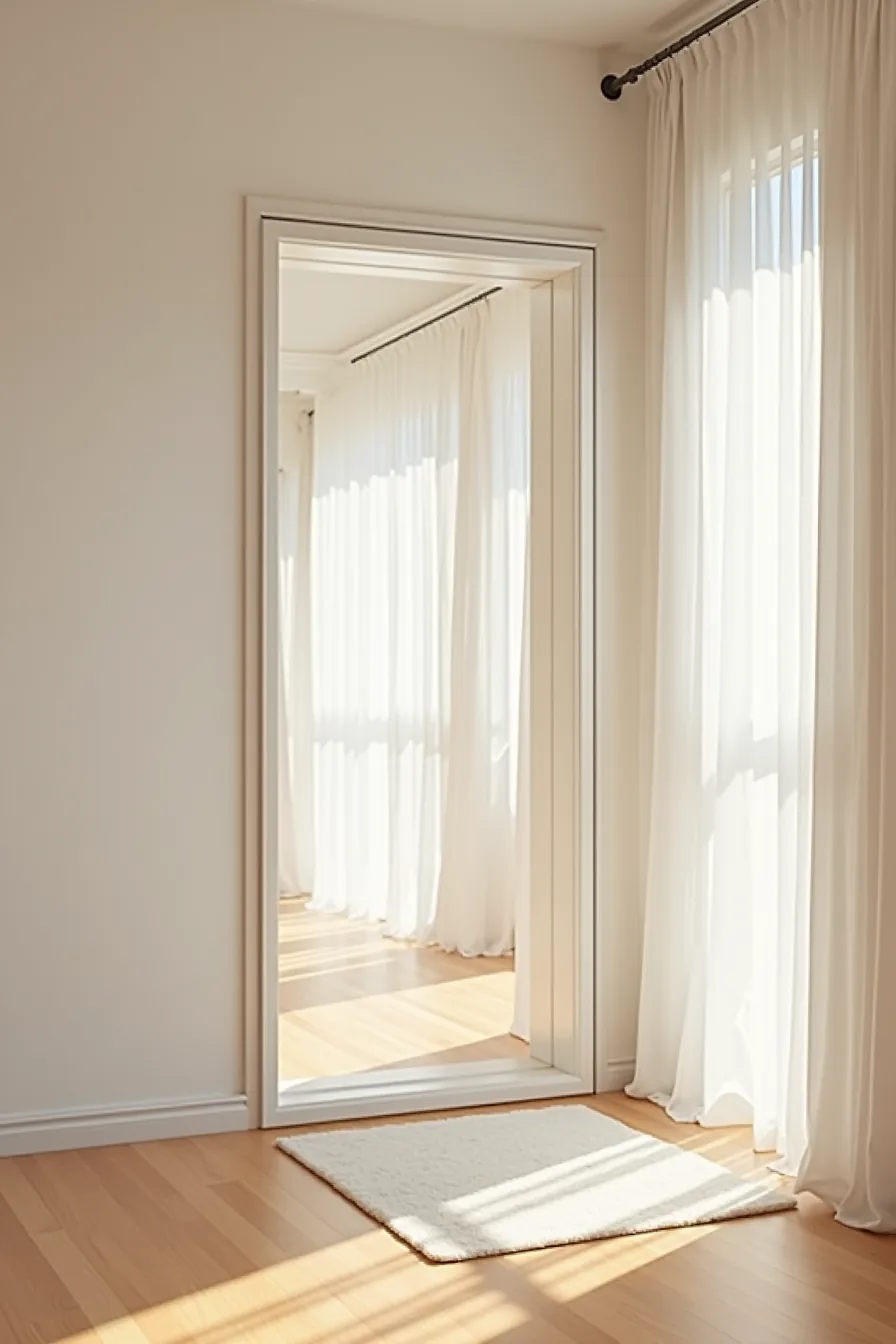
For a compact alcove, a single narrow rod spanning 36 to 42 inches keeps the curtain close to the wall, preserving every inch of floor space. Choose a straight rod here, a curved option would push the curtain into the room and reduce your turning radius to an uncomfortable 24 inches or less.
A standard bathroom opening of 54 to 60 inches calls for a centered straight rod with a curtain that overlaps the opening by 4 to 6 inches on each side. This prevents water from sneaking around the edges while leaving enough clearance for a 30-inch-wide path past the shower when the curtain is open.
In a spacious bathroom with a 72-inch or wider opening, an extended curved rod adds 6 to 8 inches of elbow room inside the shower without sacrificing floor space. The curve pulls the curtain outward at the center, so you can wash your hair without your elbows brushing the fabric, ideal for large walk-in layouts where the shower is a focal point rather than a squeezed-in afterthought.
Your first move
Start with the shower you already have. Measure the opening width and ceiling height, then check whether your curtain rod can support a heavier liner or curved track before buying anything.
Choose one idea from this list that solves your biggest problem, privacy, water containment, or style, and test it with a budget-friendly version first. A curved rod and a quality liner cost less than $80 combined and fix most walk-in shower issues overnight.
Order a fabric curtain in a water-repellent polyester blend, not cotton, and pair it with a weighted bottom hem. Install it this weekend, run the shower for five minutes, and check for gaps. That test tells you exactly what to adjust next.
Frequently Asked Questions
Do I need a curtain if I have a walk-in shower with a floor drain?
No. A floor drain handles water that escapes, but a curtain stops splash from soaking towels, rugs, and walls. Skip it only if you’ve a wet-room layout with waterproof surfaces throughout.
What rod placement options prevent water from splashing onto the bathroom floor?
Mount the rod 2–4 inches beyond the shower opening on each side, and set it 75–80 inches high. Angle the rod slightly toward the shower interior to direct water back in.
Can I use a regular shower curtain rod in a walk-in shower, or do I need a special one?
A regular tension or fixed rod works if the span is under 60 inches. For wider openings, use a ceiling-mounted track or a wall-mounted rod with center support to prevent sagging.
How do I choose between a curved rod and a straight rod for my walk-in shower?
Choose a curved rod if you’ve at least 30 inches of clearance from the shower edge to the opposite wall, it adds elbow room. Use a straight rod for tight spaces, as curves reduce usable floor area.