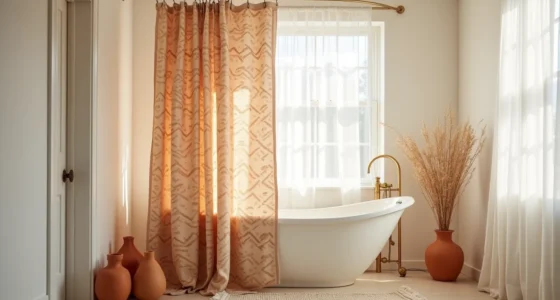
Choosing the right towel hanger ideas bathroom solutions comes down to matching the fixture to your wall space, daily routine, and budget, not just picking the first chrome bar you see. A 24-inch bar suits a compact powder room, while a double rail handles a family bath. The trade-offs between drilled mounts, adhesive strips, and freestanding racks affect both wall damage and load capacity, so your decision hinges on whether you prioritize permanence or flexibility.
Key takeaways
- Choose bars over hooks when you want towels to dry fully and stay wrinkle-free; hooks win for quick access and compact spaces.
- Mount a bar 60–80 inches off the floor beside the shower so you can grab a towel without stepping out wet.
- Use over-door hooks or adhesive rails for a zero-drill, renter-friendly setup that supports up to 5–10 pounds per hook.
- Invest in solid brass or marine-grade stainless steel if you want a finish that resists corrosion for 10+ years in humid air.
Bar vs Hook: Which Fits Your Space and Routine

Start with your daily towel volume. A single stainless steel hook at shoulder height suits a guest bath or a powder room where one hand towel rotates daily, you grab, dry, and the loop hangs back over the same hook. A 24-inch chrome bar, by contrast, holds three full-size bath towels spread flat, so they dry faster and stay wrinkle-free, making it the better pick for a primary bath with two users.
Bars need 4-6 inches of clear wall space on each side for easy draping; a hook needs only a 4-inch diameter clearance. If your wall has exposed studs near the vanity, a hook mounted directly into one stud carries up to 25 pounds safely, while a bar spanning two studs offers the most stable long-term mount. For family bathrooms where towels are tossed rather than hung, choose hooks, they catch a damp towel one-handed.
For a spa-like aesthetic or frequent guests, the bar wins on presentation. Small spaces under 40 square feet lean toward hooks to avoid the visual bulk of a horizontal rail; larger baths can handle both, with a bar for bath towels and a hook beside it for robes or washcloths. Mount the bar so its center sits 48-52 inches above the floor; place hooks 60-66 inches high so a towel hangs without dragging on the floor.
Beside Shower Placement: Positioning for Wet-Hand Access

Mount your towel hanger on the outer wall beside the shower, not inside the wet zone. The setup that works best places a brushed brass bar 18 inches from the shower edge at 48 inches above the floor, close enough to grab without stepping out dripping, far enough to stay clear of splash. That 18-inch clearance is the practical minimum; anything less and the towel absorbs spray, staying damp and musty between uses.
The placement suits anyone who showers daily and dislikes reaching across cold tile. A damp bath towel hangs ready on the bar, while the chrome shower frame and wet ceramic tile stay on the other side of the edge. On drywall, use a stud finder to anchor the bar into framing; on tile, a diamond bit and masonry anchors are required, adding roughly 30 minutes to installation.
Keep the bar below the shower head’s spray arc, typically 20-30 inches to the side, so water never hits the towel directly.
Small-Wall Solutions: Maximizing Tight Bathrooms
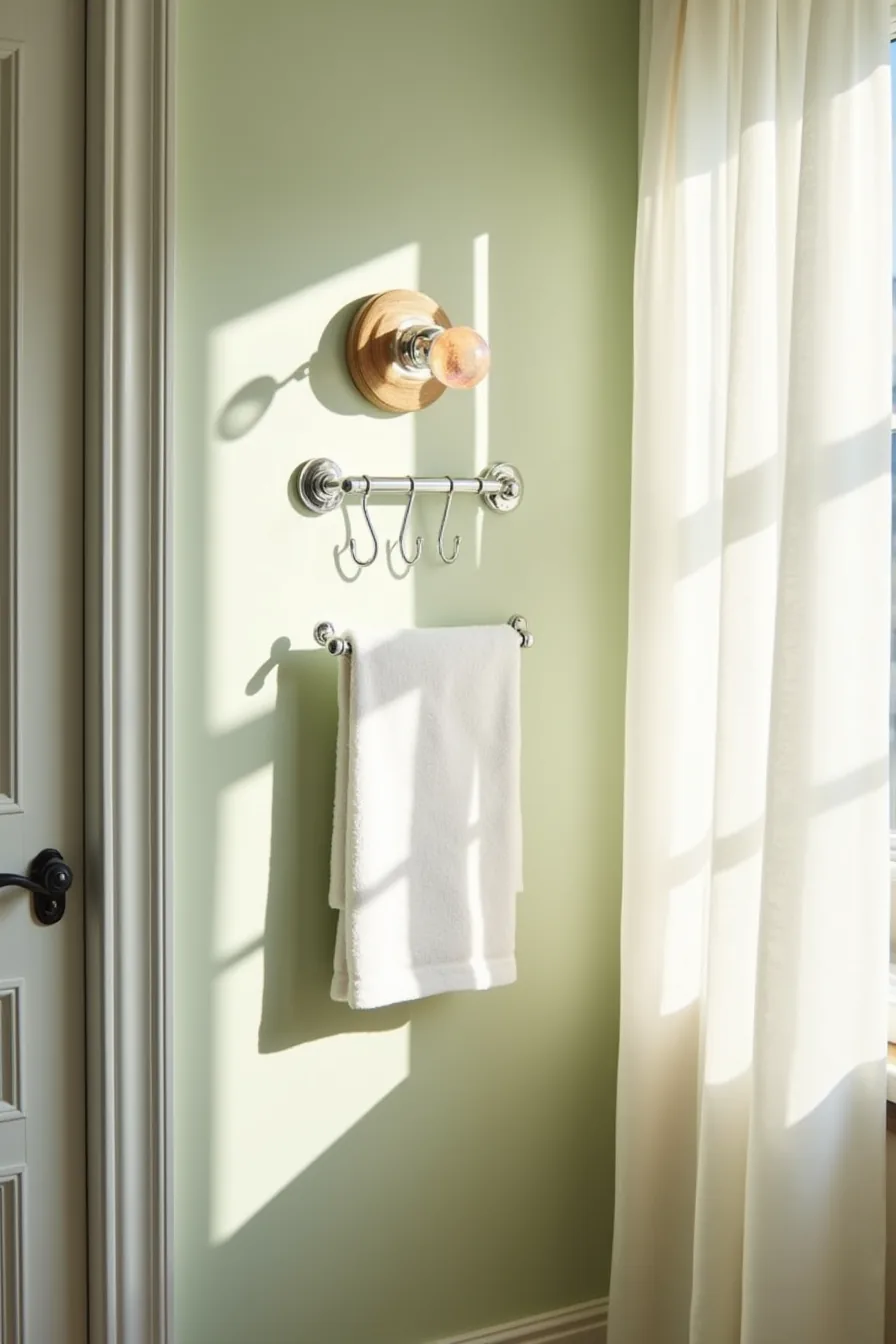
When your wall space measures barely 24 inches across, the answer is to think vertically instead of horizontally. Stack three independent hanging points down a single narrow strip: an over-door hook rack near the top for bath sheets, a 16-inch chrome wall bar at mid-height for the daily towel, and a corner tension rod tucked low for washcloths and hand towels. Each element serves a different towel length, so nothing overlaps or drips onto the one below.
This small-wall solution works best in bathrooms under 40 square feet where a standard 24-inch bar would crowd the vanity or block the door swing. The over-door rack requires zero drilling and clears the frame by about 1 inch, confirm your door has that gap before buying. The chrome bar needs anchors rated for hollow drywall, while the tension rod fits corners 18-28 inches wide; measure diagonally across the corner, not wall-to-wall.
Keep the chrome bar around 52 inches off the floor so it clears the over-door rack’s lowest hook by 6-8 inches, leaving room for long towels to hang without bunching. The pale green wall reflects light well, which helps the narrow setup feel intentional rather than cramped.
Budget-Friendly Renter Options: No-Damage Installation

Adhesive hooks rated for at least 5 pounds each handle rolled hand towels without pulling paint, clean the drywall with rubbing alcohol first and press firmly for 30 seconds before hanging anything. Stagger them vertically 8-10 inches apart so the bottom towel’s fold doesn’t brush the one above. A tension rod fitted snugly between studs takes a damp bath towel without sagging, but check the rod’s rubber end caps grip firmly by giving it a sharp tug before you walk away.
Magnetic hooks work only where a steel surface already exists, like the side frame of a metal towel rack or a cabinet door; they fail on aluminum or plastic. For move-out, adhesive hooks peel off with a heat gun or hair dryer, then a dab of Goo Gone removes residue. Total cost: $15-30 for all three solutions, and you leave zero holes behind.
This route suits anyone whose lease forbids drilling or who plans to relocate within two years.
Long-Term Investment: Durable Materials and Finishes

If you own your bathroom and plan to stay put, spend once on materials that outlast a decade of daily steam and wet cotton. Polished brass with ceramic mounting brackets resists tarnishing far better than plated alternatives, though it demands an occasional wipe with a soft cloth to maintain its shine. Solid stainless steel is the lowest-maintenance choice, it shrugs off humidity and never needs polishing, making it ideal for a busy primary bath.
Brushed bronze with decorative corner supports adds warmth without the fingerprint issues of polished finishes, but verify the bar is solid metal rather than a coated hollow tube before you buy. Mount all three bars at 48-52 inches above the floor, spaced 12-16 inches apart so thick towels hang without overlapping. Expect to pay $80-150 per bar for quality that survives 10-plus years; cheaper hollow versions will bend under a heavy wet towel within months.
Bathroom Towel Hanger Ideas for Busy Family Spaces
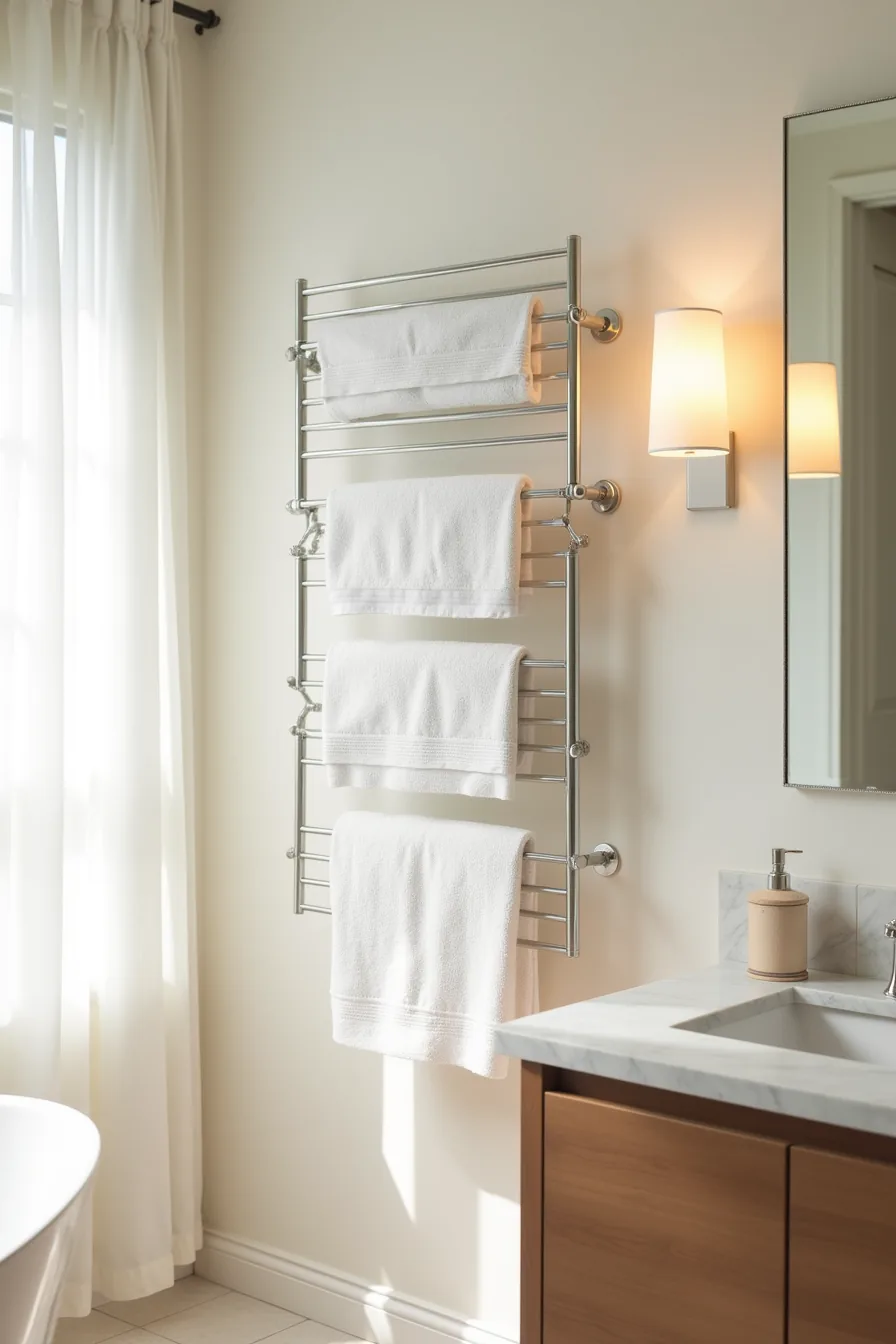
When four people share one bathroom, a single bar becomes a damp, tangled mess by mid-morning. Stack three bars vertically on one wall instead, positioning the top bar at 60 inches from the floor for adult bath towels, a middle bar at 48 inches for hand towels, and a lower bar at 36 inches so children can reach their own washcloths without climbing.
Each bar in this configuration runs 24-30 inches wide, which gives every user a designated zone without requiring extra floor space. Assign one bar per person or per towel type to cut down on arguments and cross-contamination. Load capacity matters here, choose bars rated for at least 25 pounds, especially the top unit that will repeatedly bear heavy, wet bath towels.
If your family cycles through towels faster than they dry, swap the middle bar for a heated rail; it costs $150-250 but eliminates that sour-milk smell in humid climates.
Your 15-minute decision plan
You now have six viable routes, each matched to a specific constraint. If you rent, the over-the-door hook and adhesive bar solve 90% of towel storage with zero deposit risk. If you own and want permanence, the wall-mounted rail delivers the best daily experience for roughly the cost of two bath towels.
Before buying anything, measure your wall space and map towel traffic for one day. That single observation eliminates half the options immediately.
Your next step: Grab a tape measure, mark the spot where a towel hangs most naturally in your bathroom, and order the simplest option that fits that space, start with one hanger, not a set.
Frequently Asked Questions
How much weight can a typical towel bar hold before it pulls away from the wall?
A properly anchored towel bar supports 15–30 pounds, enough for two bath towels. Drywall anchors rated for 50+ pounds are safer. Screws into studs or solid blocking hold 75–100 pounds without issue.
What’s the best distance from the shower edge to mount a towel bar for safe, convenient reach?
Mount the bar 18–24 inches from the shower opening, centered at 48–54 inches above the floor. This keeps towels dry from splash while letting you grab one without stepping out fully.
Can you use adhesive towel hooks on tile, and how long do they typically last?
Yes, on clean, dry, non-porous tile. Quality adhesive strips hold 5–10 pounds and last 6–12 months in humid bathrooms. They fail faster on textured or grout surfaces.
Replace strips yearly to avoid sudden drops.
Should towel bars be horizontal or angled, and does it affect how towels dry?
Horizontal bars dry towels faster because air circulates along the full length. Angled bars (15–30 degrees) drain water better but slow drying by 20–30%. Use angled only for hand towels you reuse frequently.