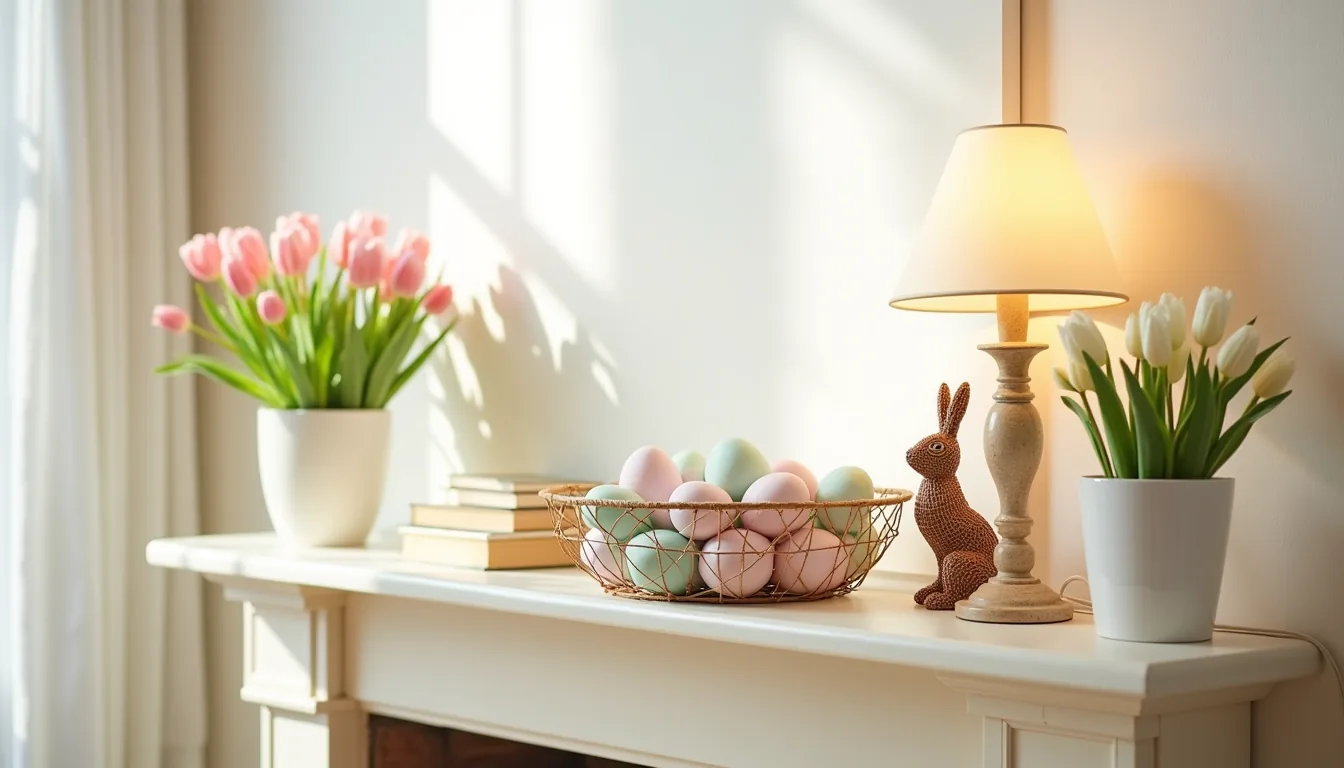
Easter decorating ideas for the home range from a single sculptural table centerpiece you can assemble in 20 minutes to a season-long natural wreath that requires planning and upkeep, and choosing the right approach depends entirely on your available square footage, budget, and how much maintenance you’re willing to commit to between Palm Sunday and the last chocolate egg. The six concepts that follow are separated by their physical footprint, cost, and daily care demands, not by color palette alone, so you can match a scheme to your actual living conditions rather than a catalog photo. You’ll also find a renter-friendly route that leaves no wall damage, a budget version that repurposes items you already own, and a long-term investment piece that stores flat for next year.
Key takeaways
- Prioritize vertical space in entryways and mantels by using tall vases or wall-mounted wreaths, which deliver Easter impact without consuming floor area in tight layouts.
- Opt for modular table decor like a single centerpiece bowl with eggs and greenery, which suits both 4-seat breakfast nooks and 12-person dining tables by scaling the base diameter from 12 to 24 inches.
- Choose renter-friendly window clings or tension-rod curtains with pastel bunting, which install in under 10 minutes and leave zero residue, perfect for apartments with strict lease clauses.
- Match your budget route to permanence: spend under $30 on paper lanterns and dyed eggs for a one-week display, or invest $150–$300 in ceramic bunnies and linen napkins that last for a decade with proper storage.
Entryway and Mantel Displays: High-Impact, Low-Footprint Approach
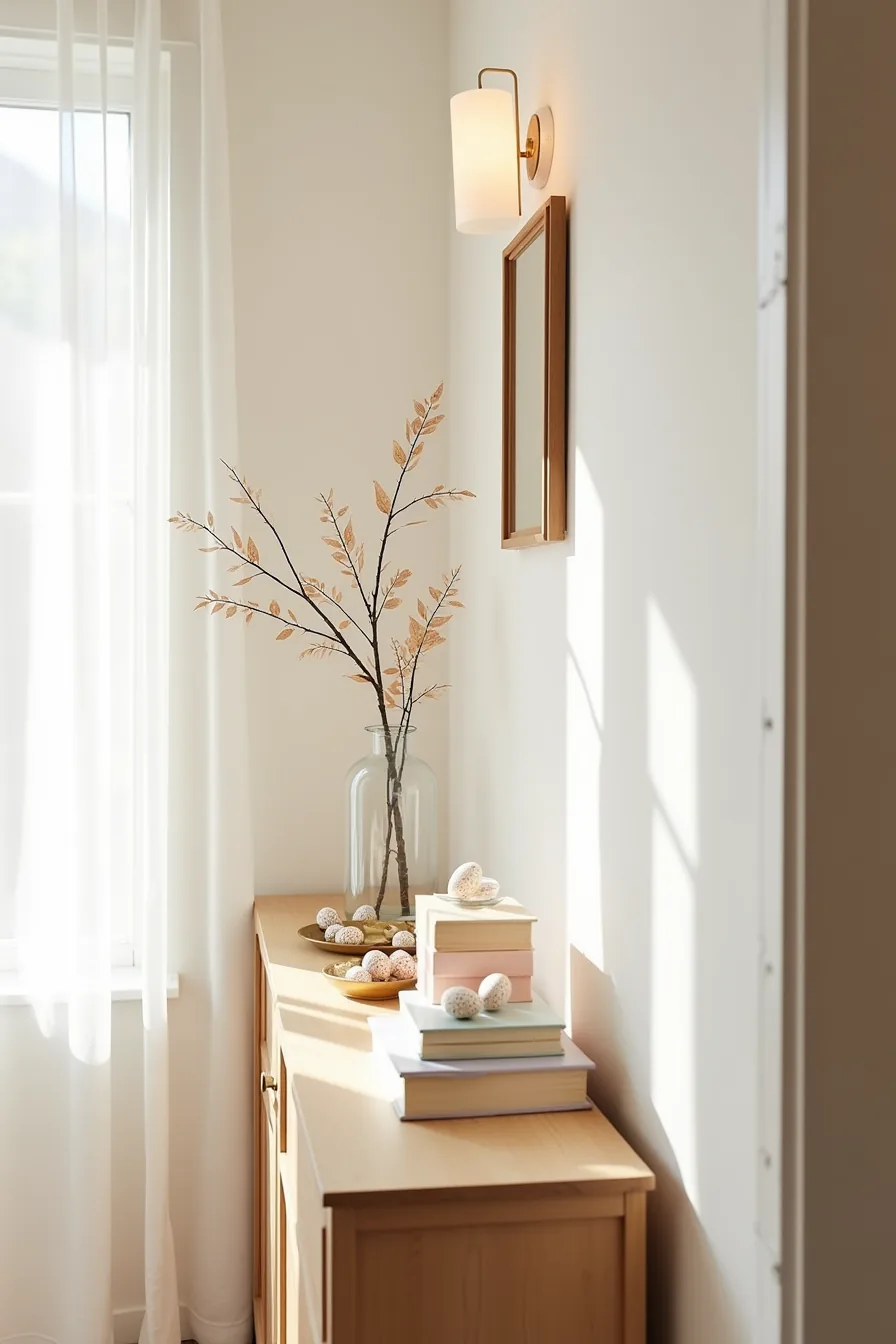
Concentrating your Easter decorating ideas for the home into one dedicated focal zone, an entryway console or mantel, delivers maximum seasonal impact without overwhelming a room. This approach is the most practical for renters and small-space dwellers because it requires zero permanent fixtures or wall damage; you work entirely with the surfaces you already have. It also creates a welcoming “first impression” moment that frames the rest of your home’s decor.
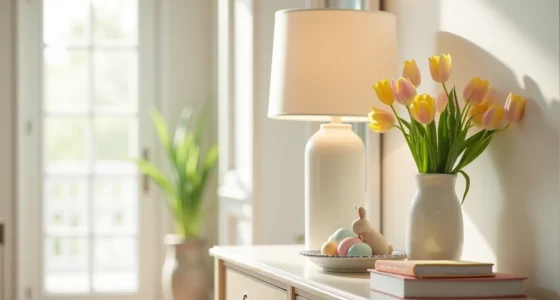
To reproduce the example setup, start with a narrow console table, typically 12–18 inches deep, to avoid blocking a hallway’s circulation path. Stack two or three pastel-colored wooden boxes of varying heights, solid, durable, and easy to dust, to create vertical dimension without crowding the surface. Place a small brass tray (8–12 inches wide) beside them to corral a dozen or so speckled eggs; the metal adds a subtle, non-seasonal shine that carries past Easter.
Finish with a single tall branch, roughly 3–4 feet high, in a clear glass vase, adorned with paper leaf cutouts. This is a low-maintenance, zero-water option that requires only a quick dusting and swap-out of the eggs each year, making it ideal for busy households.
Table Settings and Dining Room Centerpieces: Seasonal Refresh Without Permanent Installation
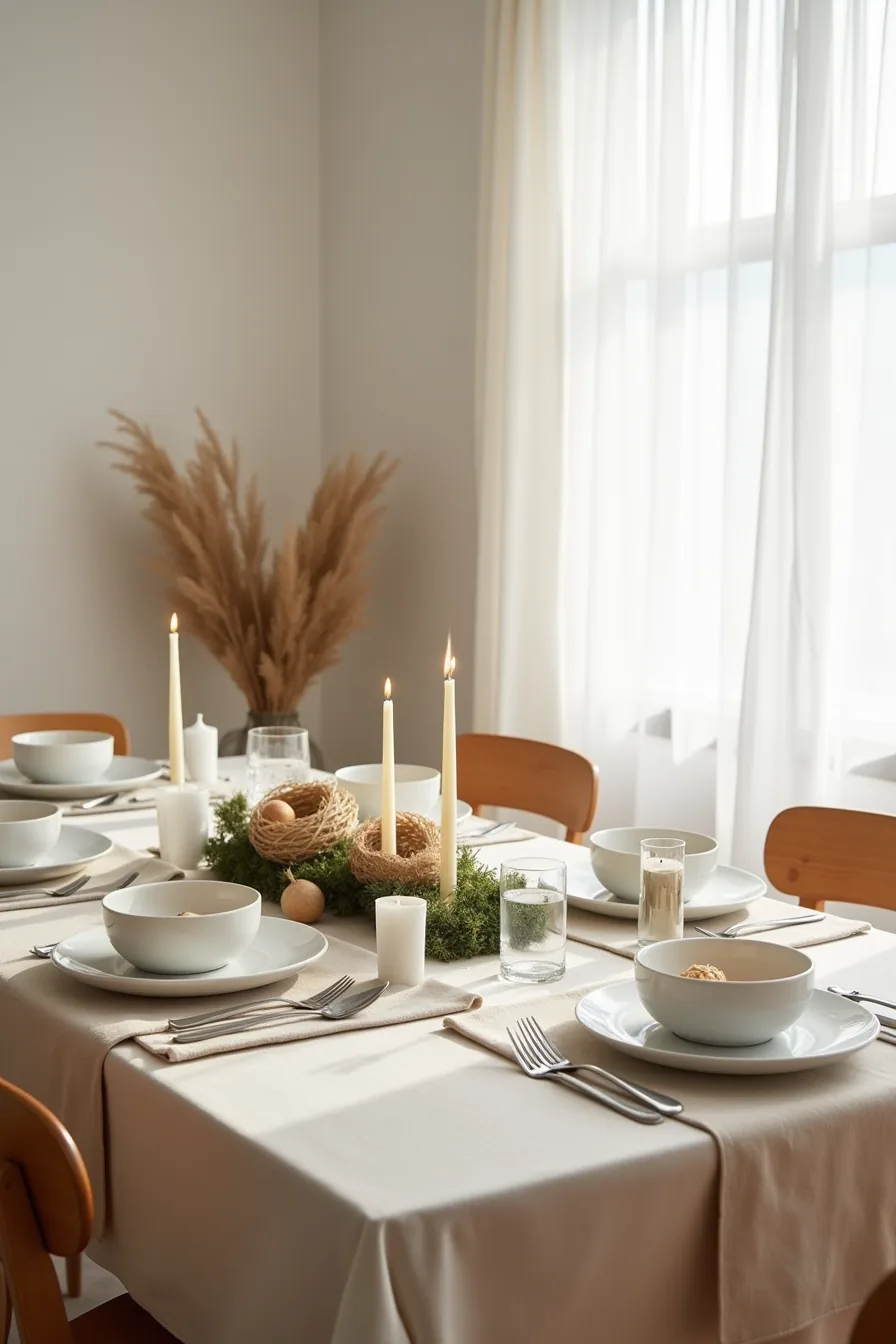
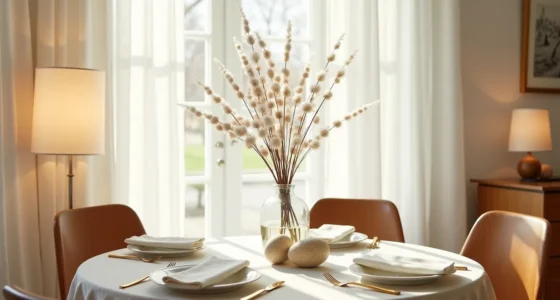
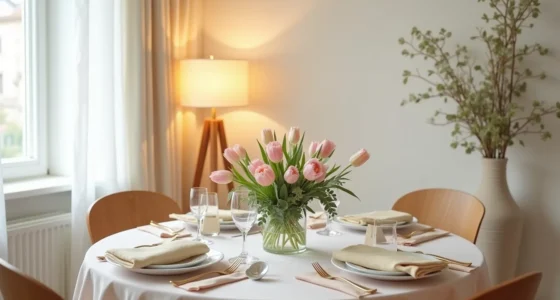
Your dining table offers the most flexible canvas for Easter decorating ideas for the home because it converts a functional surface into a four-to-eight-week seasonal anchor with zero installation. For a standard 60–72 inch table seating four, keep the centerpiece under 12 inches tall so guests can see across the table and pass dishes without obstruction. A low runner running the table’s length ties the setting together, with nested paper nests, cream candles, and fresh moss arranged directly on it, nothing requires hardware, wiring, or wall anchors.
Scale rules matter: for a 48-inch round table, shrink the runner to a 12–15 inch square mat and cluster nests into a tight trio; for an 84-inch table seating eight, extend the runner full-length and multiply nests to five or six. Pair white linen placemats and pastel ceramic plates with the centerpiece, the linen absorbs spills for machine washing, while glazed ceramic wipes clean with a damp cloth. Fresh moss needs misting every two to three days or it browns within a week; swap it for preserved moss if you want the setup to last the full season untouched.
These Practical Easter Decorating Ideas For The Home planning tips let you rotate the table back to daily use in under ten minutes by lifting the runner and nests onto a shelf.
Window and Door Treatments: Renter-Friendly Alternatives to Permanent Fixtures
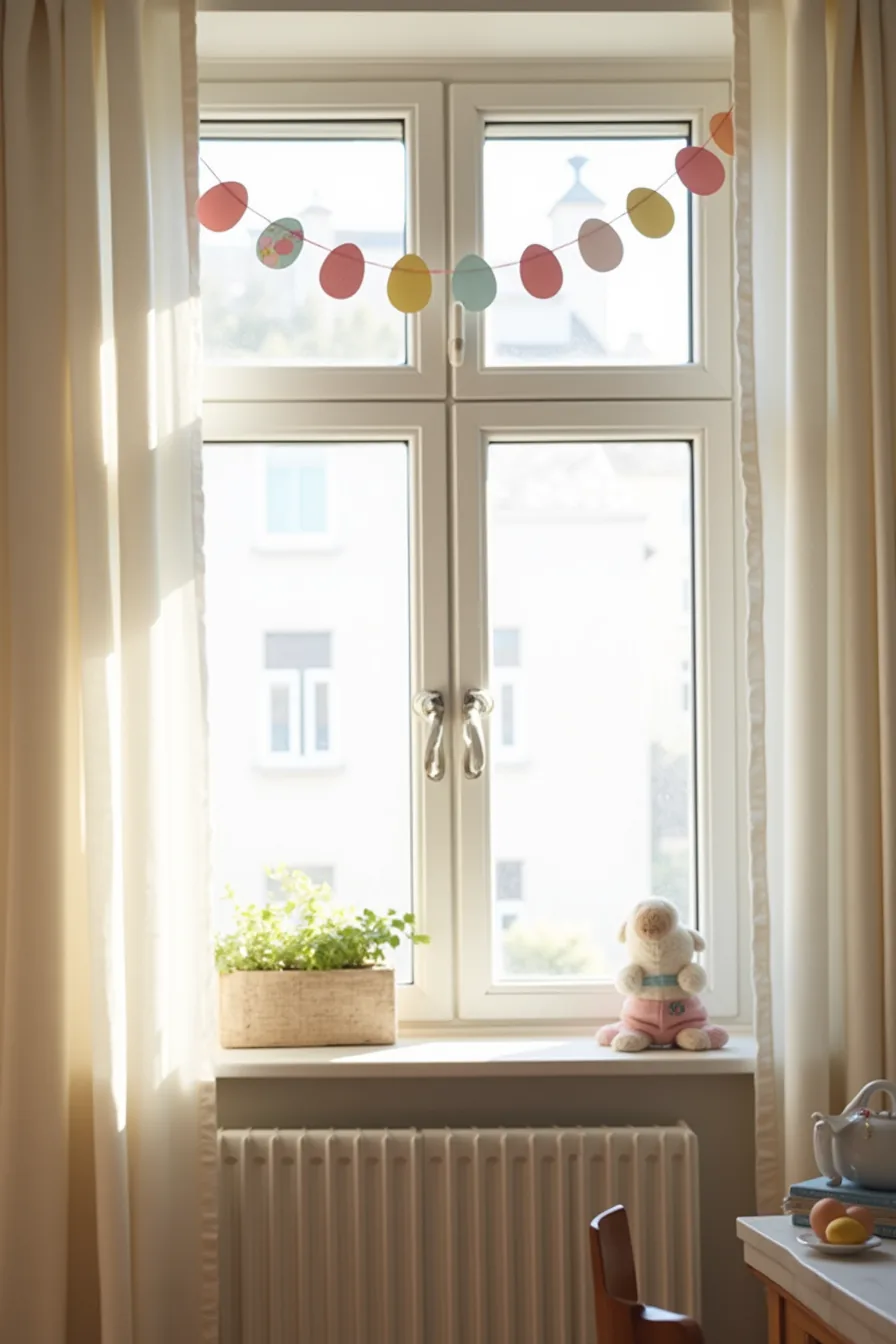
Windows convert into seasonal displays with zero wall damage if you stick to two mounting methods: adhesive strips rated for glass and suction cups. On a standard double-hung window, run paper bunting horizontally across the panes using small adhesive hooks at the frame corners, the bunting’s lightweight cardstock holds securely for four to six weeks, and removal takes under two minutes with warm soapy water to dissolve any adhesive residue. Drape a suction-cup Easter egg garland along the top frame instead; the cups grip smooth glass firmly and release instantly without leaving marks.
Use the garland’s length to define your window’s proportion, aim for the garland to span 70–80 percent of the frame width, leaving the corners open for natural light. The paper bunting suits rooms where you want color without opaque coverage; the translucent eggs work in darker spaces because daylight still filters through. Avoid pressing suction cups onto textured or frosted glass; they lose grip within days.
Store bunting flat in a document sleeve and garlands coiled in a shoebox, and both reuse across multiple Easters. These Easter Decorating Ideas For The Home mistakes to avoid include hanging anything over operational window cranks or locks, which blocks ventilation and access.
Outdoor Porch and Entryway Staging: Curb Appeal and Guest Experience
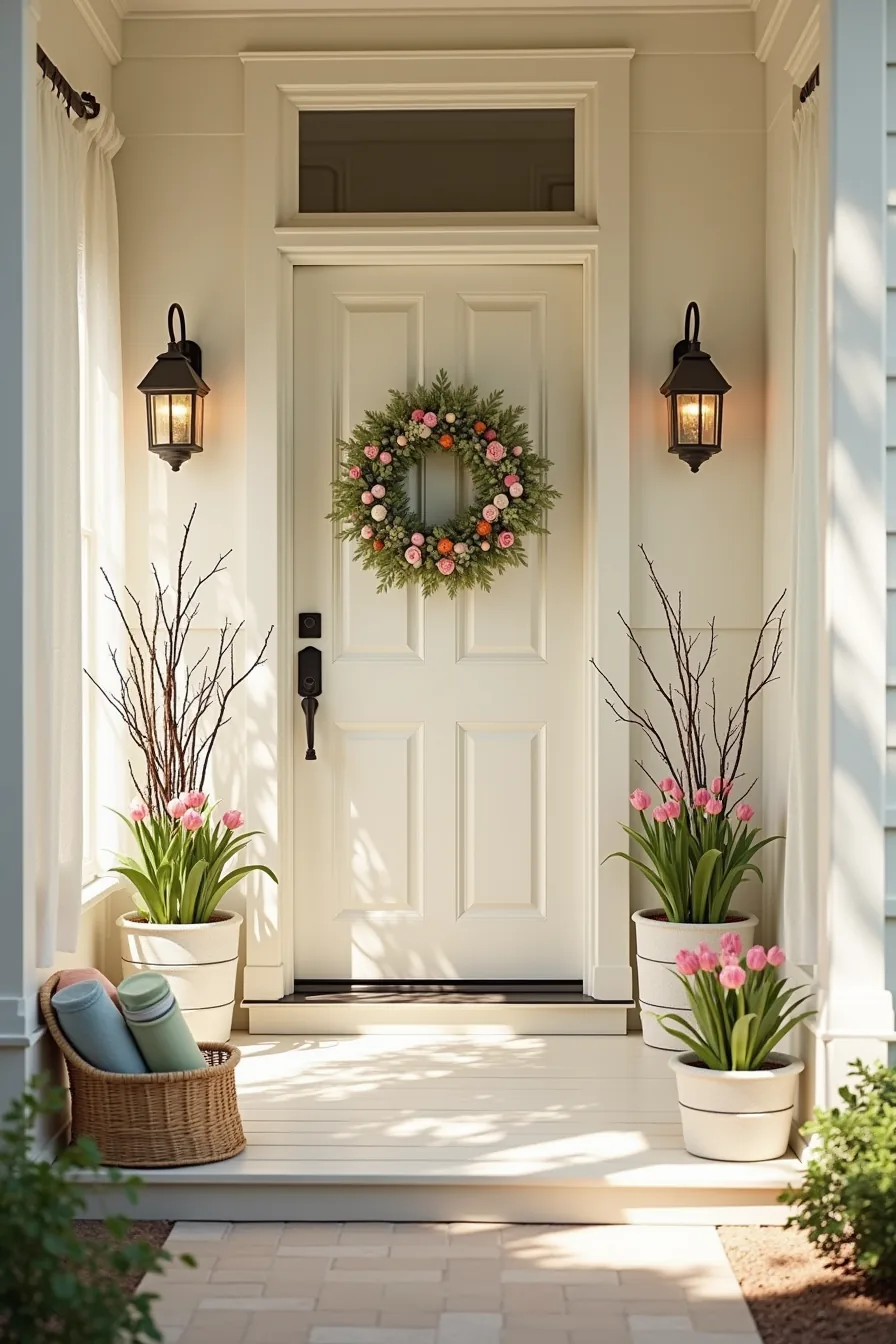
Your porch sets the tone for every guest who arrives, and Easter staging works best when it respects the weather. A street-level setup of painted wooden planters holding spring bulbs in staggered heights flanking your front door creates depth without blocking the entry path, keep the tallest planter under 30 inches so it stays proportional to standard door heights of 80 inches. Staggering the planters at alternating heights, say, one at 24 inches and its partner at 16 inches, produces visual rhythm that reads as intentional from the sidewalk.
Place a woven basket containing rolled pastel blankets to the left of the door. The blankets serve dual duty: they offer a grab-and-go layer for chilly spring evenings and soften the hard edges of the planters. Choose blankets that tolerate dampness, such as cotton or acrylic blends, since morning dew will settle on them overnight.
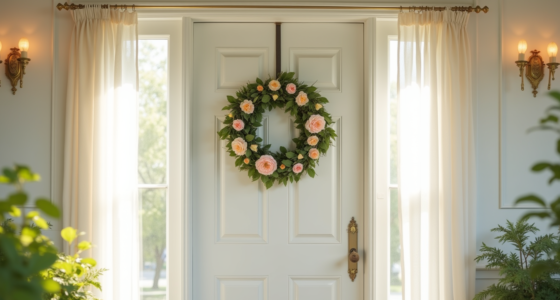
Finish with a wreath made of faux branches and paper flowers on the door. Faux materials resist rain, sun-fading, and wind far better than fresh blooms, which wilt within days in fluctuating spring temperatures. This setup suits medium-to-large porches; for narrow entryways, swap one planter for a smaller bulb pot and shift the basket against the wall to keep the walking path at least 36 inches clear.
Weatherproof all wooden elements with exterior-grade sealant in spring’s variable rain-and-sun cycles.
Bedroom and Bathroom Accents: Subtle Seasonal Touches in Private Spaces
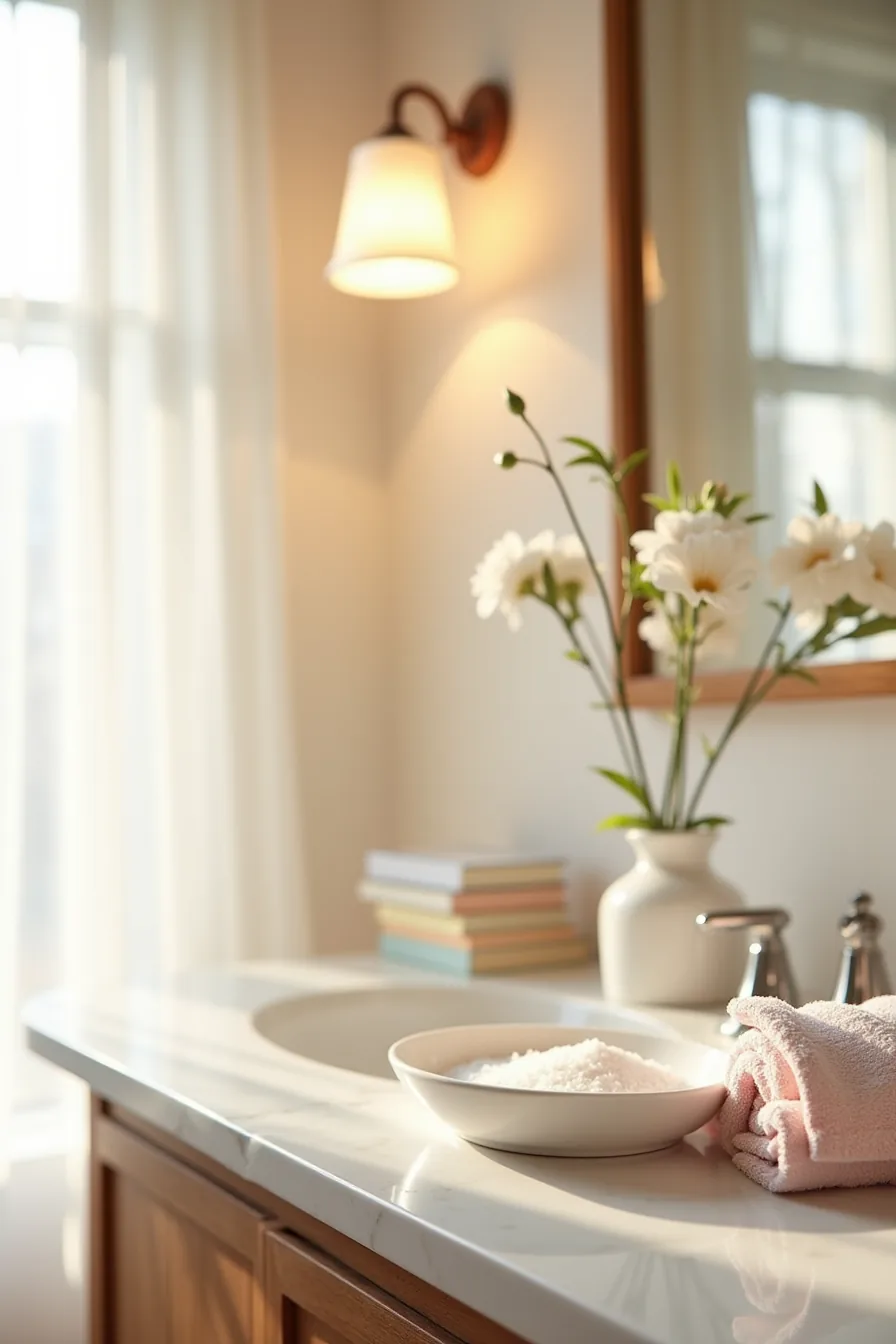
Low-traffic rooms tolerate Easter touches that would overwhelm a busy living area. A bathroom vanity setup, a small ceramic dish holding bath salts, a folded pastel hand towel with embroidered detail, and a single stem in a bud vase, reads as intentional rather than decorative clutter. The key is limiting yourself to three objects on one surface, which suits vanities between 30 and 48 inches wide; anything larger starts competing with daily-use items like soap and toothbrush holders.
Pastel towels work because they rotate out easily after the holiday, but choose cotton with a dense weave so they survive repeated washing. The bud vase should stay under 8 inches tall to avoid blocking the mirror’s reflection at standard mounting heights. In a bedroom, apply the same restraint: one accent on the nightstand, a small nest or egg dish, rather than spreading pieces across every surface.
This approach suits small spaces and anyone who prefers seasonal shifts that take under five minutes to set up or remove.
Budget, Renter, and Investment Routes: Choosing Your Easter Decorating Strategy
Your budget determines how much of your Easter decorating ideas for the home survive past the first week of April. The lowest-cost route, paper cutouts and dollar-store eggs, runs roughly $10–$20 total and requires zero upkeep, but these materials rarely survive a second season. They suit anyone decorating a shared space like a kitchen or office where the look matters more than the longevity of each piece.
Renter-friendly options sit in the middle price range of $30–$60. Reusable adhesive strips and removable hooks let you hang a lightweight garland without drilling into walls, though adhesive strips lose grip over 70-degree temperatures and need replacement after two or three uses. This route suits apartments with strict deposit clauses and anyone who wants to recycle the same hardware for other holidays.
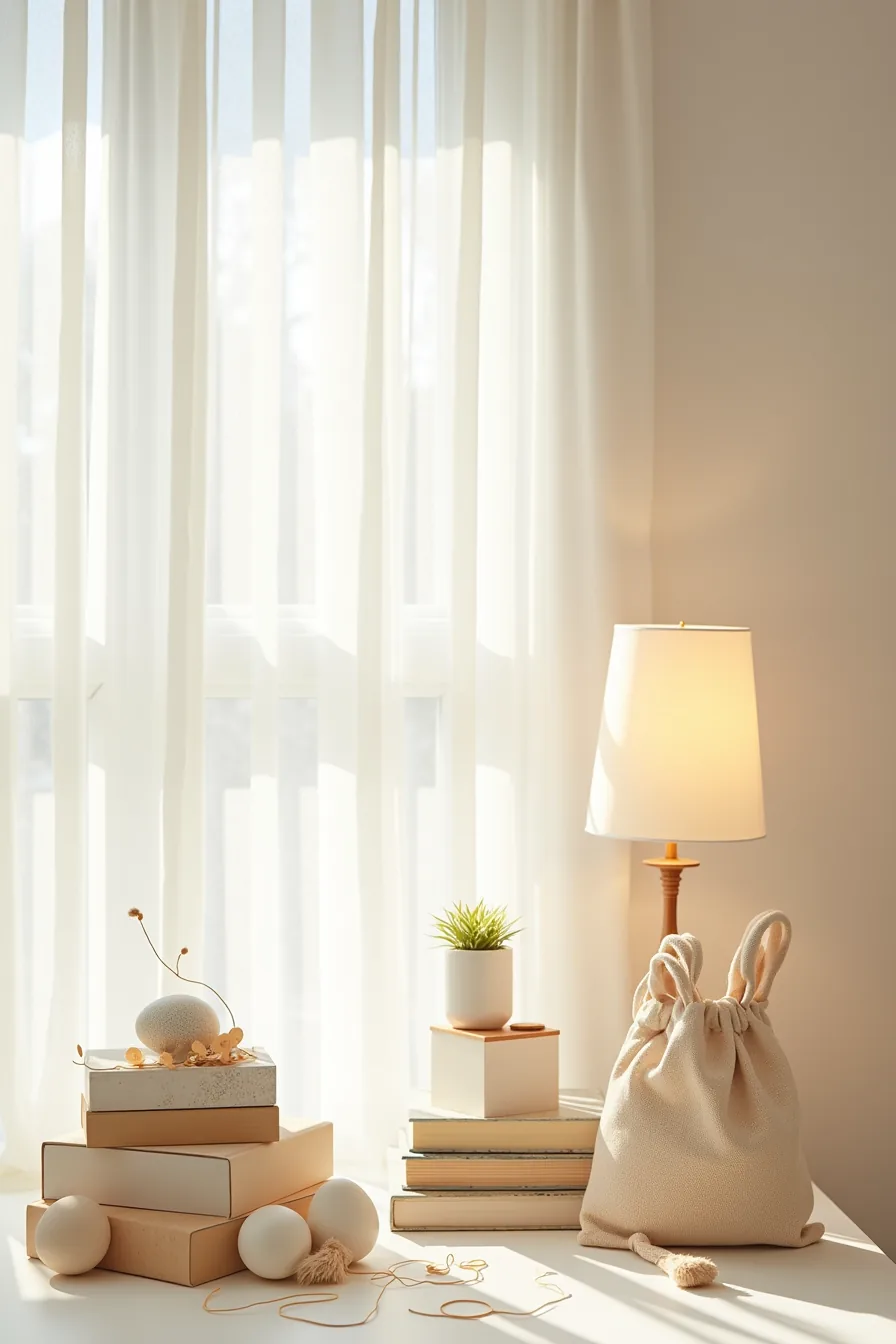
The investment tier, wooden nesting boxes, ceramic planters, and a linen storage bag, costs $80–$150 upfront but functions year-round. The boxes double as catch-all trays, and the linen bag replaces seasonal wrapping paper. These pieces work best in a dining room or entryway where natural materials harmonize with existing furniture, and they demand only occasional dusting with a dry cloth.
Where to start
You don’t need to decide on one look before you act. Pick the single room where you’ll notice the decor most, usually the entryway or dining table, and choose one idea from the six above that fits its size and your maintenance tolerance. If you rent, skipanything requiring nails or paint; if you expect to reuse items for years, buy natural materials like wood or ceramic rather than plastic..
Start with one focal point: a centerpiece, a wreath, or a mantel arrangement. Measure the surface or wall space first, most dining tables take a centerpiece under 18 inches wide without blocking sightlines, and a wreath around 20-24 inches suits a standard front door. Assemble that single piece this week, live with it for three days, then decide whether to expand.
That one finished corner will tell you more than browsing a hundred photos ever will.
Frequently Asked Questions
How early should I start Easter decorating ideas for the home before the holiday?
Start one to two weeks before Easter Sunday. This timing keeps fresh flowers and natural elements like branches alive, while still giving you a full weekend to set up, arrange, and adjust your displays without rush.
What Easter decorating ideas for the home work in apartments and rental properties?
Focus on removable, non-damaging items: tabletop arrangements, wreaths hung with over-door hooks, and window clings. Skip anything requiring nails, adhesive strips on painted walls, or heavy installations that could violate lease terms or leave marks.
How do I store Easter decorating ideas for the home after the season ends?
Use labeled, clear plastic bins with dividers for fragile items like ceramic eggs. Wrap textiles in breathable cotton bags, not plastic, to prevent mildew. Store in a cool, dry closet or under-bed container; most decorations compress well into two medium bins.
What Easter decorating ideas for the home suit a modern or minimalist aesthetic?
Choose a monochrome palette, white, beige, or matte black, with natural textures like linen, wood, and stone. Limit items to three per surface, such as a single branch vase, one ceramic egg, and a small candle. Avoid pastel clutter or patterned bunting.