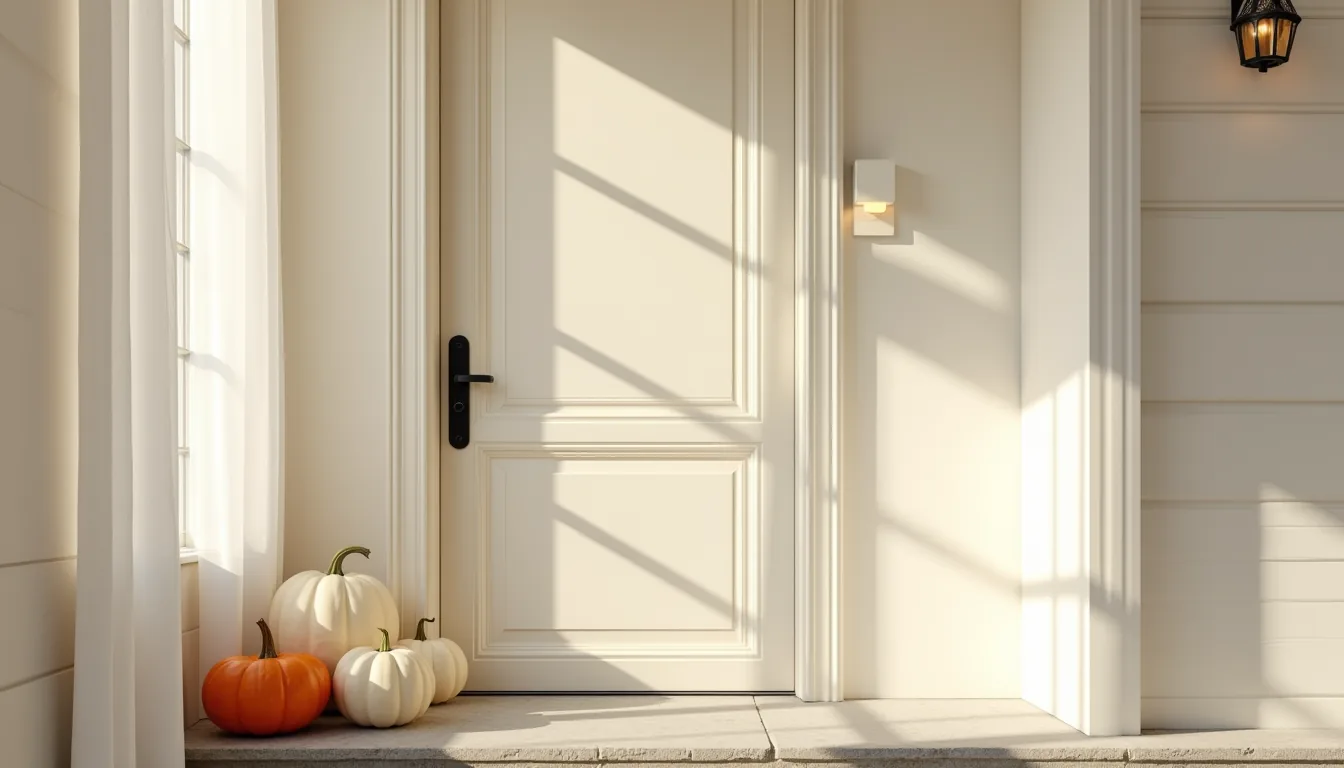

Your front door is the first thing guests see, so make it the creepiest (or cutest) statement on the block with these six practical Halloween decorating approaches, each tailored to your budget, space, and whether you rent or own. Each idea below breaks down the exact materials, installation time, and seasonal maintenance so you can pick the one that fits your entryway without wasting money or risking your security deposit. You’ll know precisely which look works for a narrow stoop versus a wide porch, and what to skip if you face wind, rain, or direct sun.
Key takeaways
- Pairing pumpkin clusters with a single dominant color (white, black, or rust) trims visual noise and reads as intentional from 20 feet away.
- On rental doors, command hooks with removable adhesive strips support garland frames up to 5 pounds without drilling, and they release cleanly with a hairdryer.
- For evening safety, stake solar pathway lights 6–8 inches from the walkway edge and aim them downward to avoid glare that obscures steps.
- Choose materials by climate: natural corn husks and real pumpkins last 2–3 weeks in dry cold, while sealed foam or metal pieces survive 3+ seasons with zero upkeep.
Monochromatic Pumpkin Clusters for Compact Entryways
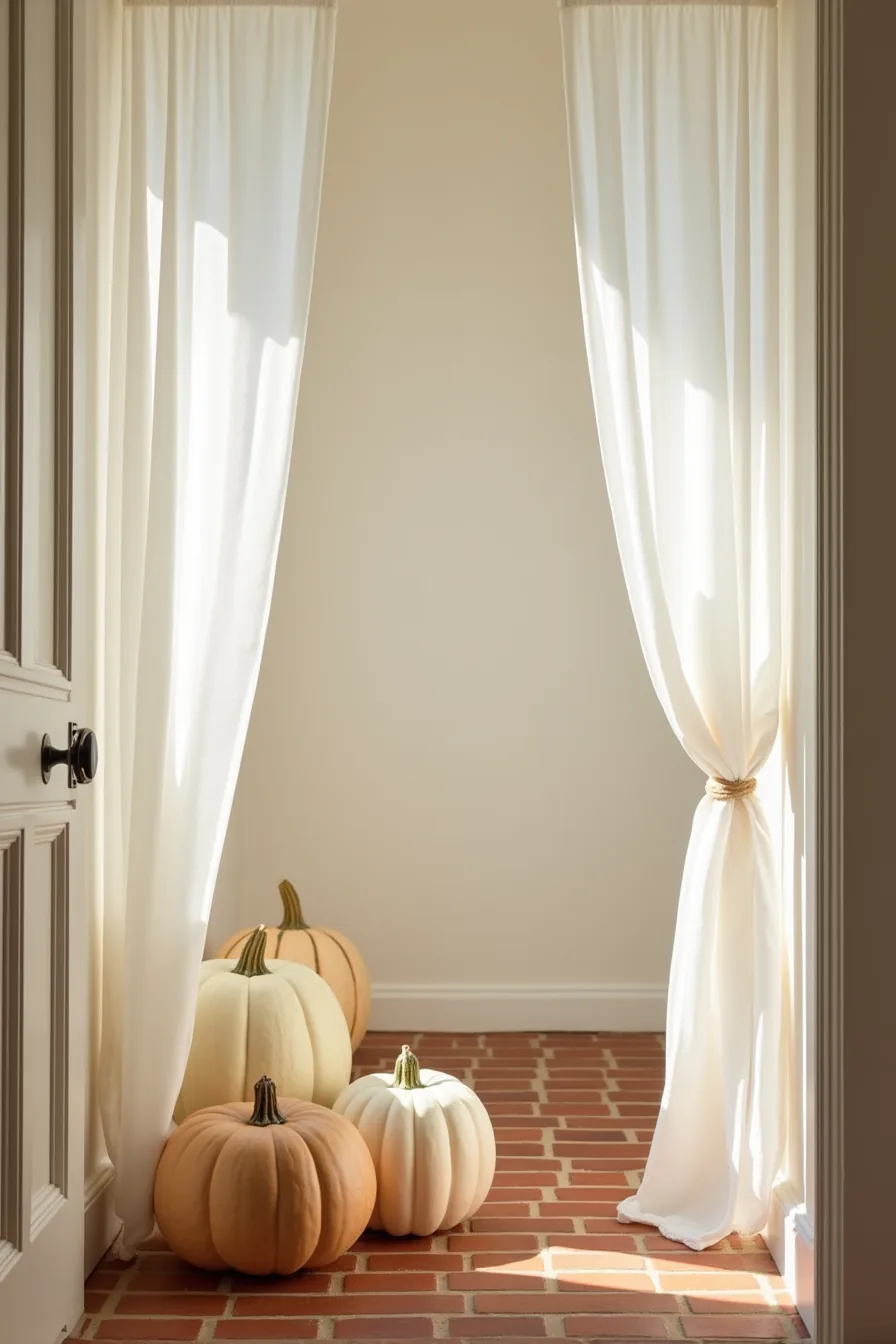
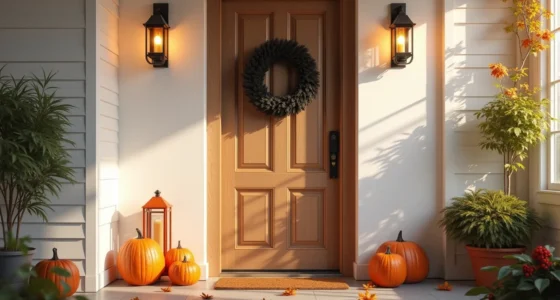
A narrow stoop doesn’t require a sprawling, multi-colored harvest spread. Instead, group five pumpkins in a single, tight color story, white, cream, and pale green, to deliver a curated, modern look that reads as intentional. On a standard 3-foot-wide brick stoop, choose a graduated arrangement: place the largest pale-green pumpkin at the back-left corner, then step down in size through two cream varieties, finishing with a small white one at the front-right.
This diagonal line draws the eye upward toward your door without encroaching on the walkway.
Keep the cluster within a 24-inch diameter footprint to leave at least 18 inches of clear path for safe entry. Real pumpkins are the budget-friendly route at $15–$30 total; for a splurge, opt for heirloom varieties with textured ridges, they cost $8–$12 each but last up to six weeks if kept dry. Avoid carving these; intact skins resist rot and frost far longer.
Improve the smallest pumpkin on a stack of two books or a small crate to add height variation without widening the base. Sweep the stoop weekly to prevent leaf litter from staining the brick, and swap in a faux version if you want a reusable, zero-maintenance option for next year.
Hanging Garland Frames That Work on Rental Doors
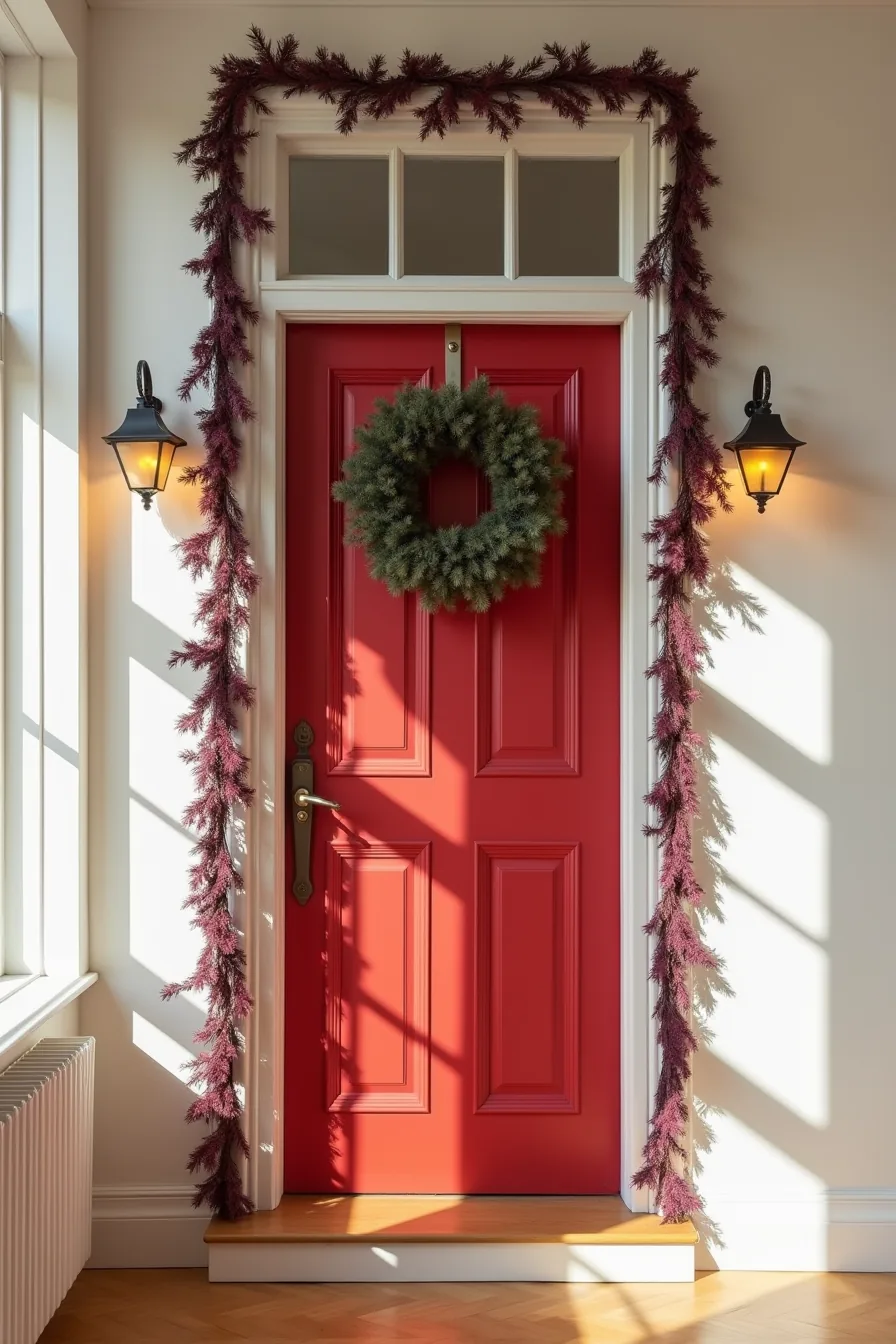
Renting doesn’t mean your entry has to skip the drama. A faux purple vine garland draped around your door frame delivers maximum visual impact with zero permanent damage, a practical front door Halloween decor ideas approach for anyone avoiding security deposits. Secure the garland at the four top corners using clear adhesive hooks rated for 5–10 pounds; the weight of a lightweight faux vine falls well within that range, and the hooks pull off cleanly with a hairdryer at the end of the season.
Weave a burgundy ribbon through the vine at 12–18 inch intervals to anchor the color palette to your door’s finish, the contrast works especially well against a red door, where the purple and crimson register as layered rather than clashing. Skip the wreath entirely; the frame treatment alone carries the look, and it keeps the door surface fully functional for daily use. Measure your frame’s perimeter before buying: a standard 36-inch-wide door needs roughly 12–15 feet of garland to drape both sides and the top with a gentle sag.
Adhesive hooks cost under $10 for a pack of eight, and the garland runs $15–$35 depending on length, fully reusable next October if you store it coiled in a bin.
Illuminated Pathway Lighting for Evening Visibility
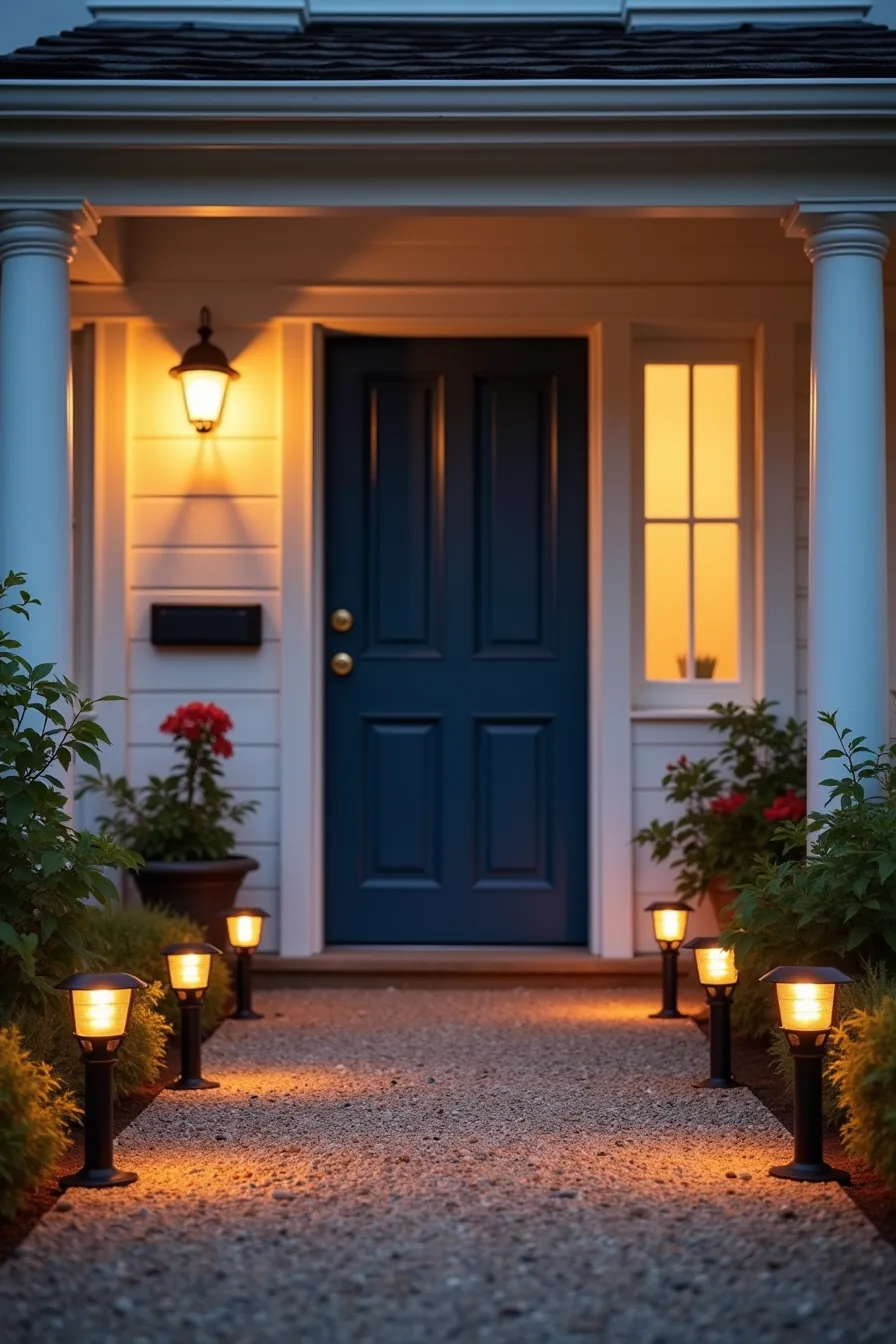
Your front door Halloween decor ideas should do more than look good, they need to light the way. Solar stake lights along a gravel walkway solve both problems at once. A set of six stake lights with warm orange glow positioned at alternating sides of the path creates a guided route that reads as intentional, not accidental.
Space them 4–6 feet apart and push each stake 3–4 inches into the soil or gravel so they stand firm against wind.
Battery-powered options with timers run $25–$60 for a six-pack and last roughly 8–10 hours on a full charge. Solar versions cost more upfront but eliminate cord management entirely, just confirm the stakes get 6+ hours of direct sun during the day. Position them to cast light forward along the path, not back toward the door, so visitors see the walking surface rather than a glare.
Against a dark blue door, the warm orange glow provides the contrast that makes the entrance itself feel inviting without washing out the door’s color.
Wreath Layering and Door Hardware Styling
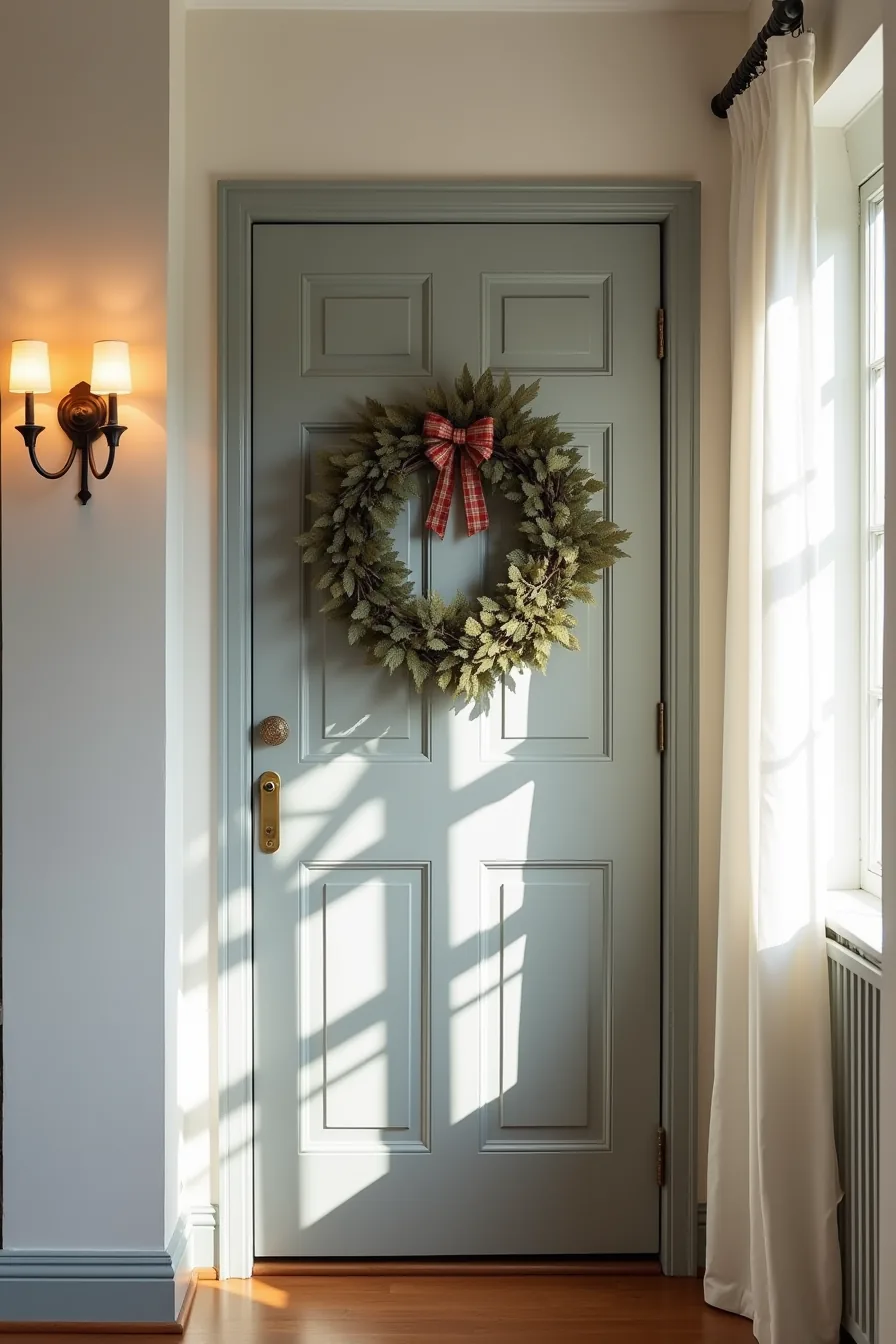
Layering two wreaths creates depth that a single piece can’t, and it suits a standard 36-inch door without overwhelming the width. A larger faux-leaf wreath in muted greens behind a smaller plaid ribbon wreath offers a fall palette that reads as curated rather than cluttered. Offset the front wreath slightly to one side, aim for a 2–3 inch offset toward the hinge side, so the design gains asymmetry that draws the eye across the door face.
The gold door knocker below the wreaths anchors the arrangement and gives the eye a resting point that prevents the composition from floating. Coordinate any hardware you add with that finish: a matching gold mailbox or kickplate in the same tone ties the styling together. On a gray door with black frame trim, this setup takes about 15 minutes to hang using a wire wreath hanger over the existing hook.
Avoid adding more than two wreath layers on a narrower door, three or more layers will pile visual weight that crowds the entry.
Freestanding Displays for Porches and Stoops
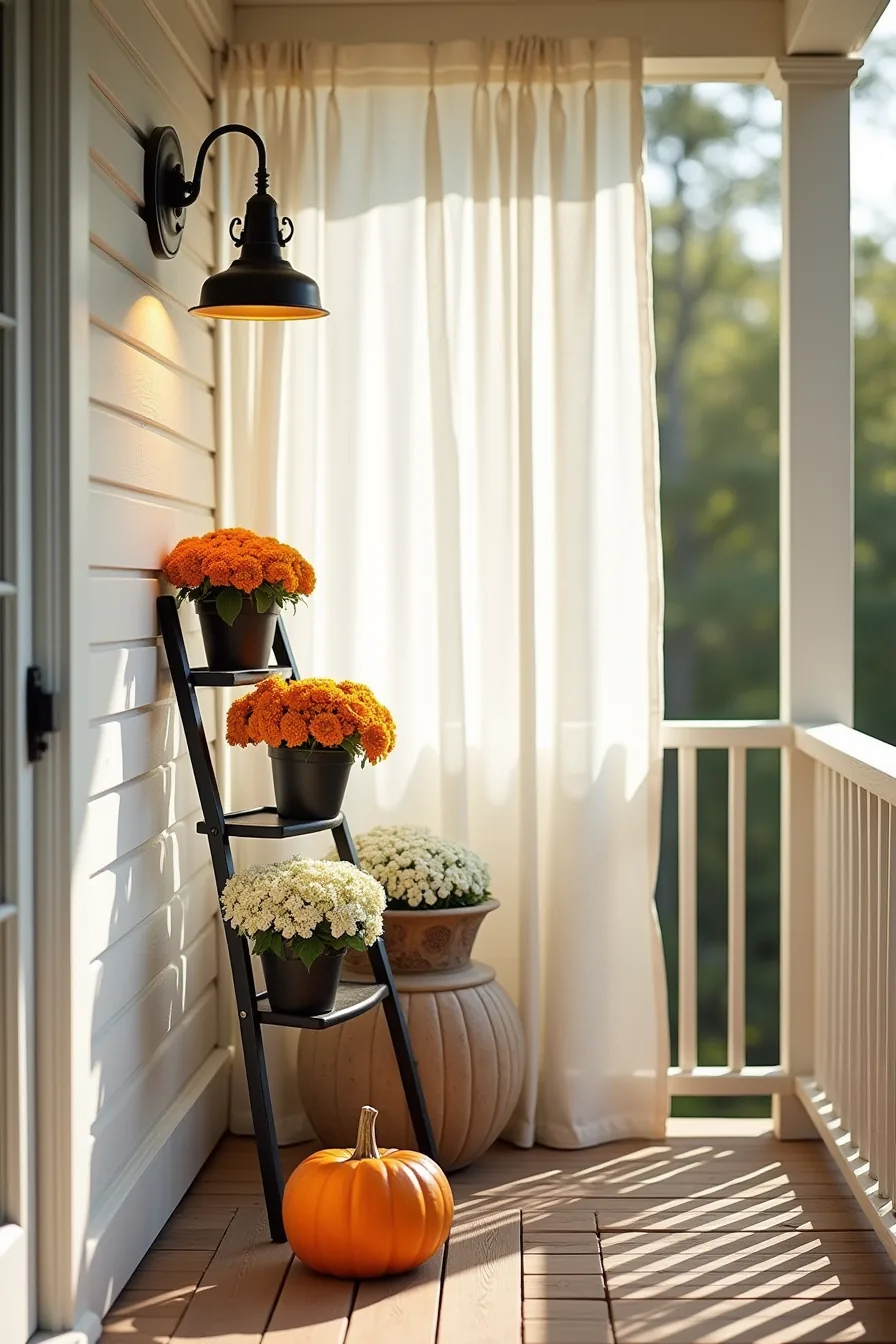
A black metal tiered plant stand flanking your door gives you three display levels in roughly two square feet of floor space, ideal for a stoop that can’t take wall anchors. Alternate pots of orange and white mums between tiers, and leave the top tier for a single tall element like a dried grass bundle. The visual rhythm keeps the arrangement lively without requiring daily attention, and mums tolerate cool nights down to around 30°F before they need replacing.
Lean a wooden ladder against the porch wall at a 15–20 degree angle and rest gourds on two rungs for a second, taller layer of interest. This setup suits renters because nothing mounts to the door or siding, and the whole display breaks down in under five minutes. Group the ladder and stand so there’s at least 30 inches of clear walking path to the door, crowding the threshold becomes a trip hazard when delivery packages or wet leaves accumulate.
For a small porch, use one tiered stand only; for a large wraparound, place the ladder on one side and the stand on the other to balance the composition.
Material Selection and Longevity Planning

The flat lay in front of you, foam pumpkin, ceramic mini gourd, fabric faux leaf garland, and wooden carved pumpkin, represents four distinct investment tiers, and mixing them is the smartest approach for a door display that survives October. Foam pumpkins cost the least and weigh under a pound, but direct sun fades their orange within three weeks and wind snaps their stems; plan to replace them annually. Ceramic gourds hold color for years and shrug off rain, yet they chip if dropped on concrete and need bubble wrap in storage.
A fabric garland handles moisture well but collects pollen and spider webs, so shake it out weekly and store it in a sealed bin to keep pests away. Carved wooden pumpkins are the long-term play, sealed surfaces resist weather for five-plus seasons, though untreated varieties can warp, and their weight makes them best for a sheltered stoop rather than an exposed porch. Before buying, check the item’s finish: matte surfaces show water spots, glossy ones hide them.
Where to start
Begin by choosing one focal point, your door, porch, or entryway floor, and build outward from there. Measure your door’s width and height first; this determines whether you opt for a full-door cover, a half-height swag, or a leaner-style arrangement. For a balanced look, keep any vertical decor within 24 inches of the doorframe, and leave at least 18 inches of clear walking space on the approach.
If you’re renting, start with adhesive hooks or over-the-door hangers, no drilling required. For homeowners, consider a permanent wreath hook or magnetic mounting system. Set a budget of $30–$60 for a complete first-year setup using reusable items like faux foliage, battery-operated lights, and a removable vinyl decal.
Test your lighting placement at night before committing: position fixtures to highlight the doormat and door handle, not just the decoration itself. Finally, schedule 30 minutes on a dry afternoon for installation, and keep a small repair kit (zip ties, command strips, and scissors) handy for quick adjustments as Halloween approaches.
Frequently Asked Questions
How do I keep front door halloween decor ideas from blocking my entrance or creating a safety hazard?
Keep all decor at least 24 inches from the door swing and 36 inches from the latch side. Avoid floor-level items on steps; secure everything with weatherproof tape or weights.
What front door halloween decor ideas work best for renters who cannot drill or nail into frames?
Use over-the-door hooks, suction cups, or adhesive strips rated for outdoor use. A wreath, fabric door wrap, or leaning ladder display requires zero hardware and removes cleanly.
Should I use real pumpkins or artificial ones for front door halloween decor ideas, and how long do they last?
Real pumpkins last 2-4 weeks outdoors in cool weather but rot faster in heat or rain. Artificial pumpkins last years, cost more upfront, and need only a wipe-down.
How much space do I need for front door halloween decor ideas on a small apartment stoop?
You need roughly 3 feet of clear floor area for safe door access. A slim doormat, one wreath, and two small pumpkins fit a 3×4-foot stoop without crowding.