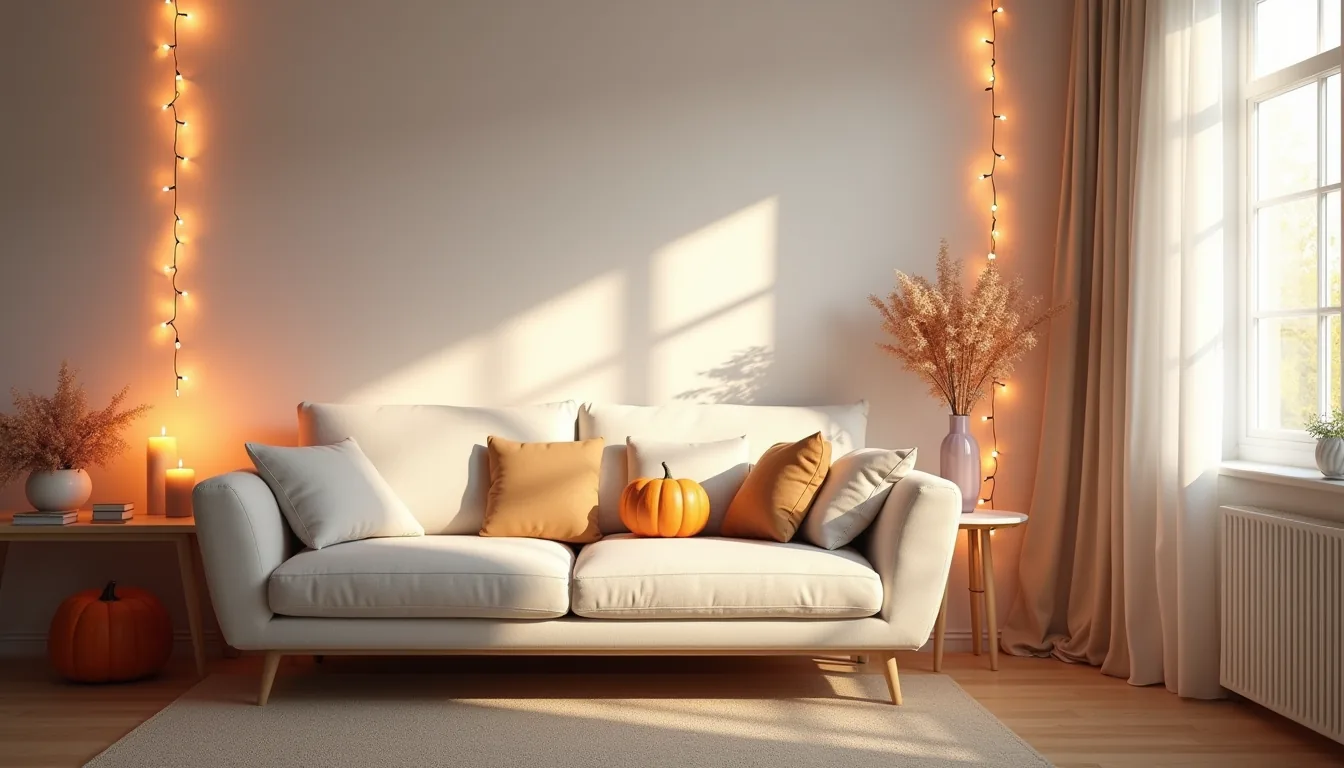

Decorating for Halloween doesn’t require a full haunted-house overhaul; these six distinct approaches, from a minimalist mantle to a maximalist gallery wall, offer practical, scalable strategies that let you match the fright factor to your space, budget, and lease agreement. Each option is tailored to a specific room size, rental restriction, or spending limit, so you can pick what fits your actual living situation. The real trick is knowing which elements to prioritize for impact without committing to permanent changes or costly installations.
Key takeaways
- Start with lighting: Swap in warm-toned bulbs and dimmers to create a moody base that costs under $20 and works in any room size.
- For renters, prioritize textiles: Use washable throw pillows, blankets, and table runners for Halloween impact without paint, nails, or permanent fixtures.
- Anchor with one large piece: A single oversized prop, like a 5-7 foot inflatable or a sculptural candelabra, delivers more drama than ten small knick-knacks.
- Scale decor to your layout: In small rooms, stick to vertical displays and corner placement; in large rooms, cluster props in odd numbers across multiple sightlines to avoid empty gaps.
Moody Lighting Layers for Instant Atmosphere
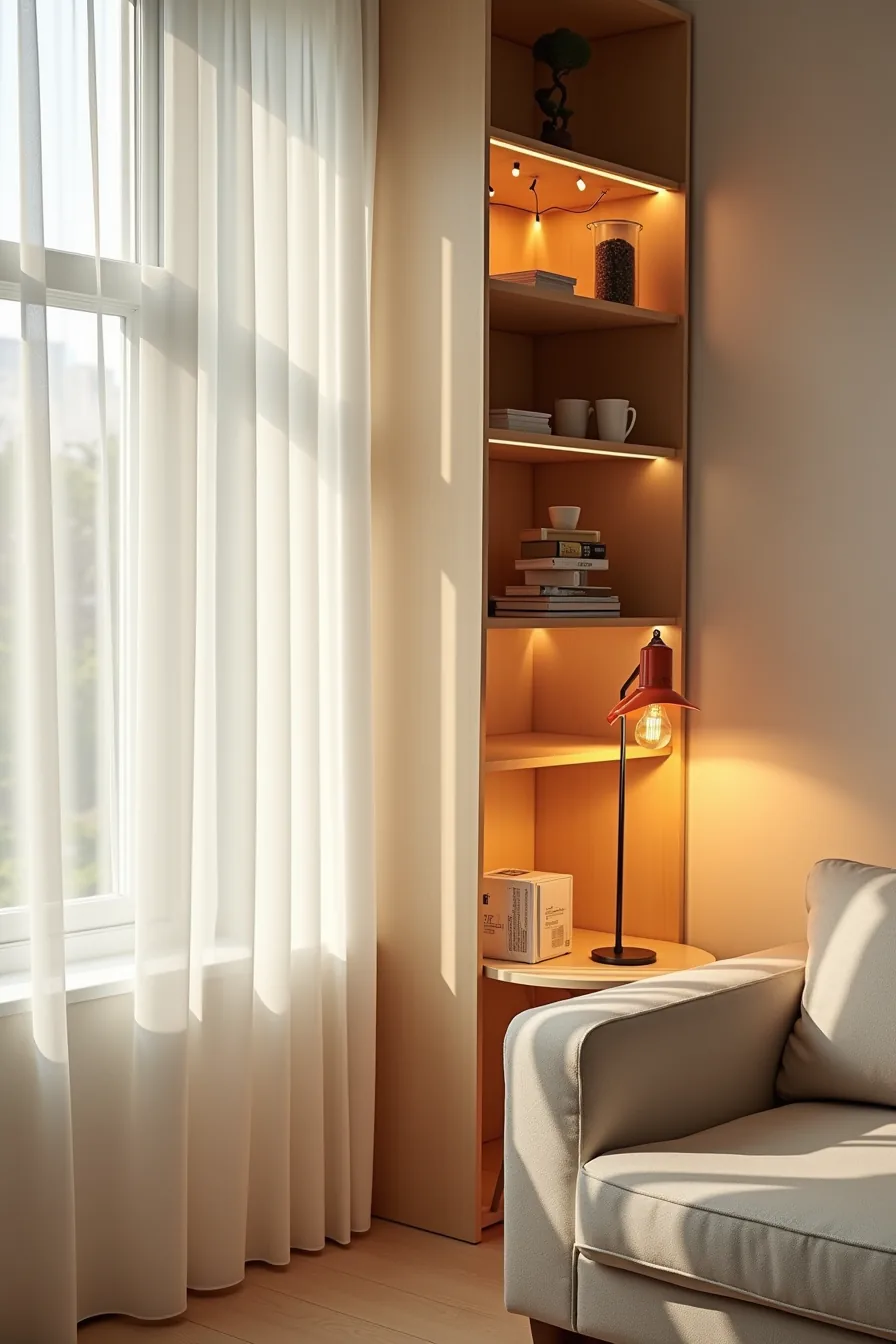
Skip the orange plastic and focus on dimmable, warm-toned fixtures. The quickest way to shift a living room from everyday to eerie is layering three distinct light sources at different heights. Start with a table lamp fitted with a 2700K LED bulb (around 450 lumens) placed on a side table, this creates a low, intimate pool of light that anchors the space.
Next, wrap a set of 50-bulb warm-white string lights around a tall shelf unit, tucking them near the spines of books or along the edges of framed art; keep them on a timer to avoid overheating and use only UL-rated indoor strands. Finally, position an uplighter on the floor behind a potted plant or in a corner, aimed upward. Fit it with a 9-watt LED bulb and a removable orange gel filter (sold in theater-supply sheets) to cast a subtle amber wash across the ceiling.
Avoid relying solely on overhead recessed lights, they flatten the mood. Instead, run all three on separate switches or a smart plug so you can adjust intensity. This setup works in any room size; for small spaces, choose a compact uplighter under 12 inches tall, and for larger rooms, add a second string light along a curtain rod.
Clean dust from bulbs weekly to maintain the glow, and never exceed the fixture’s wattage rating, most cap at 60 watts. The result is a layered, cinematic atmosphere without a single permanent change.
Textile-Based Decor for Renters and Quick Changes
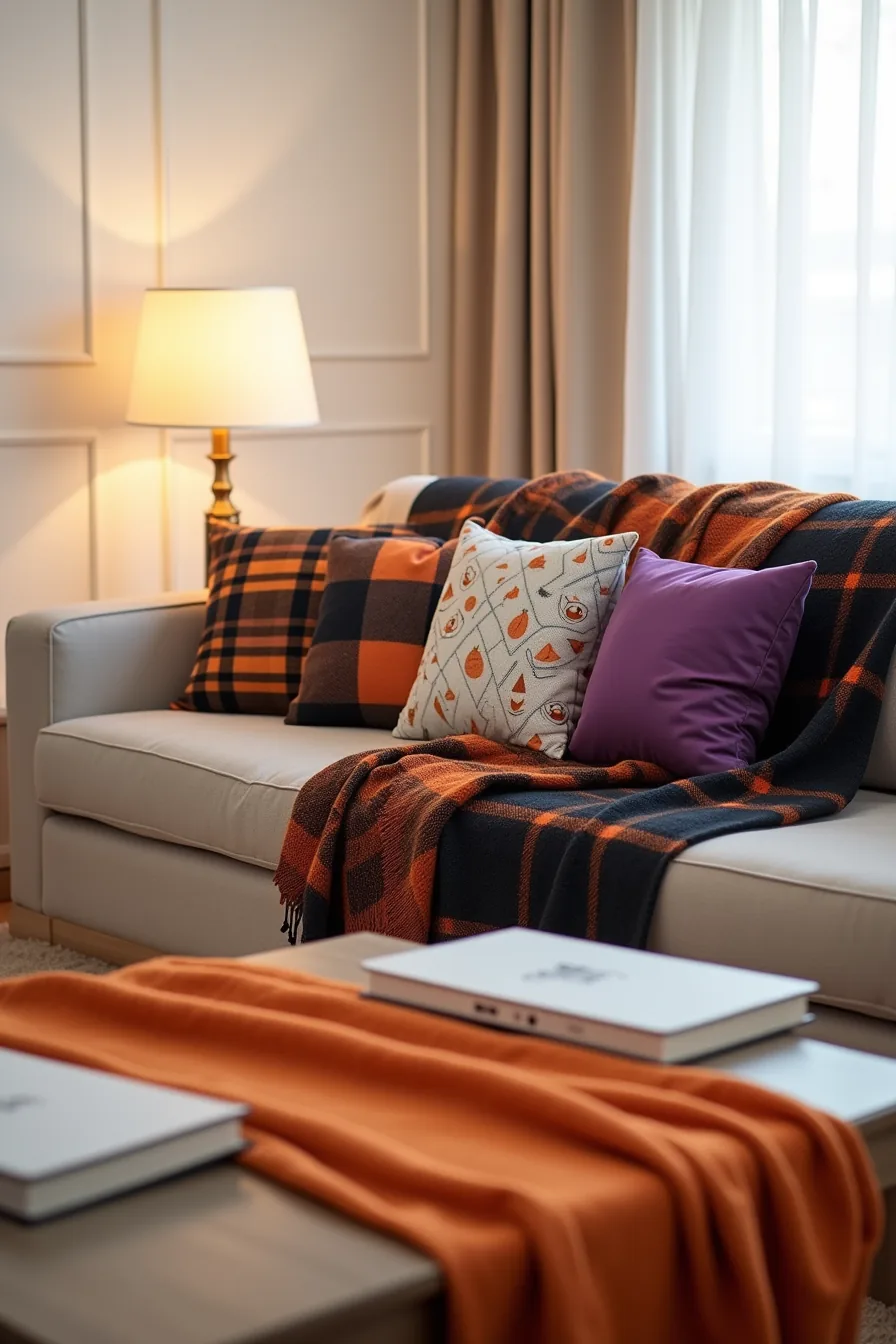
Start with a draped throw blanket in a black-and-orange plaid pattern, laid diagonally across your sofa’s backrest and one arm, this defines the color story without permanent commitment. Add four pillow covers in varied Halloween prints: one with thin vertical stripes, one with a subtle geometric spiderweb motif, one solid deep purple, and one with a small embroidered bat. Mix textures, velvet, linen, and faux suede, to keep visual interest high.
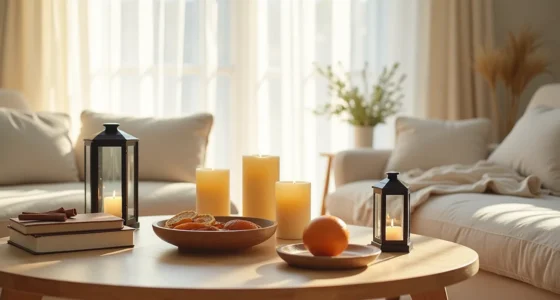
On the coffee table, place an orange table runner down the center; choose a cotton blend that’s machine-washable to handle spills. For small living rooms, use only two pillows and a shorter runner to avoid overwhelming the seating area. In large spaces, layer a second runner across a console table or ottoman.
All pieces should be removable and washable, check care labels for cold-water cycles, so you can pack them away in a single bin come November 1st. Avoid anything with glued-on sequins or metallic thread that sheds; those fail after one season. Measure your sofa length before buying throws: a 50×60-inch throw fits a loveseat, while a 60×80-inch covers a standard three-seater.
Focal Point Displays: Mantels, Shelves, and Console Tables
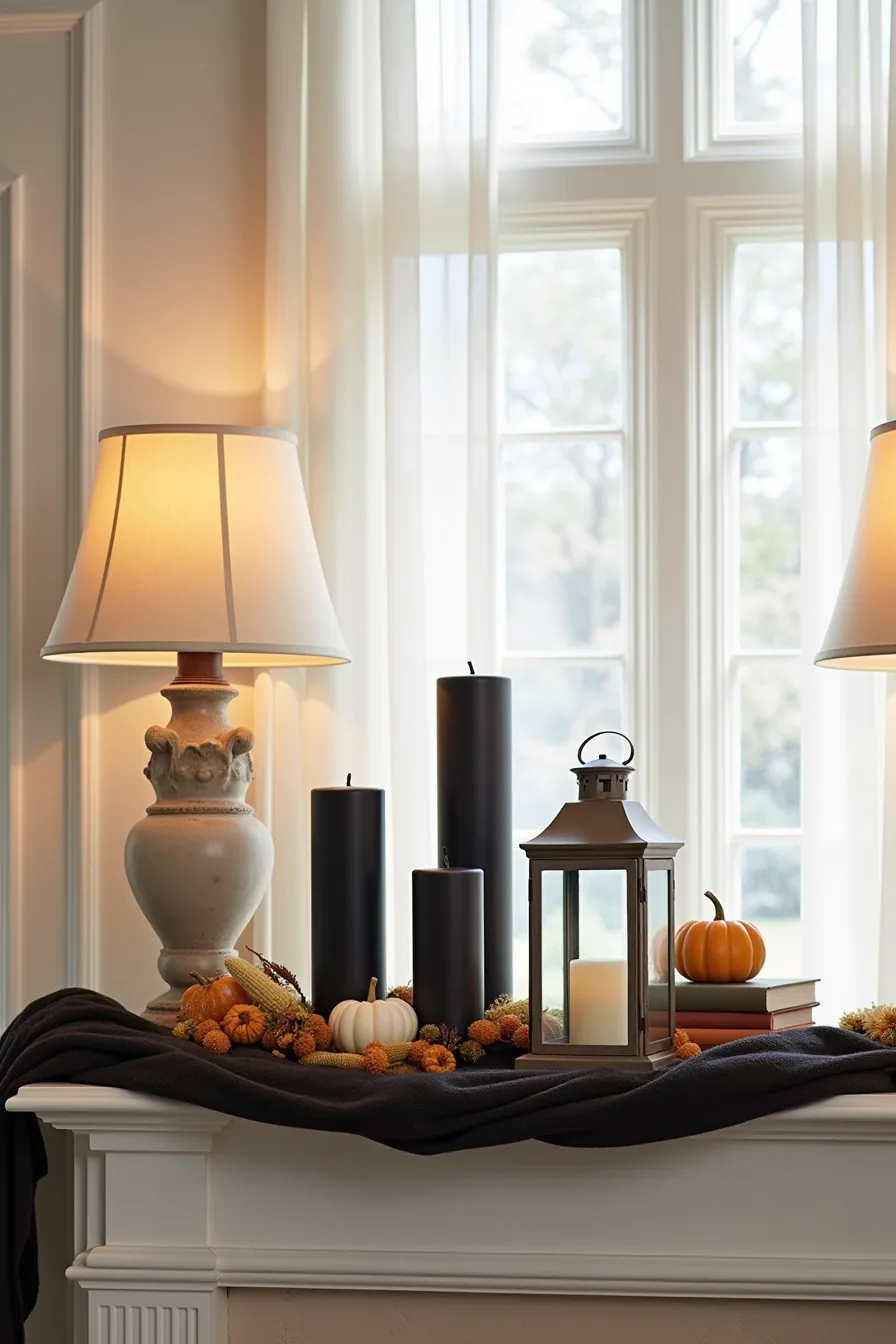
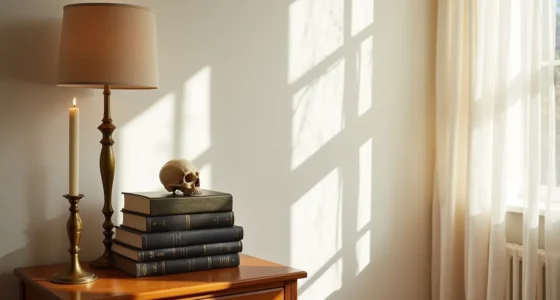
Concentrate your effort on one horizontal surface to create a vignette that reads from across the room. A fireplace mantel is ideal, but a console table or wide bookshelf works equally well if you apply the same rules of depth and asymmetry. On a mantel, build in three layers: place black pillar candles of varying heights at the center (12, 18, and 24 inches works well), flank them with vintage-style lanterns, and stagger ceramic pumpkins and dried corn stalks at different depths along the front edge.
Drape a dark fabric garland loosely along the back rather than the front lip, this adds texture without hiding the props.
Proportion is the deciding factor. For a mantel under 48 inches wide, limit yourself to five objects total; for anything over 72 inches, you can safely double that number. Keep the tallest item at roughly one-third of the mantel’s height above the shelf itself.
Always place the vignette off-center if your fireplace is flanked by built-ins or windows, so the display feels intentional rather than symmetrical. Battery-operated taper candles avoid wax drips on fabric and eliminate open-flame risk near dried corn stalks, which are highly flammable. Dust the arrangement weekly with a microfiber cloth, and expect the corn stalks to shed kernels after two to three weeks, place a tray underneath to catch the debris.
Statement Pieces That Anchor the Room
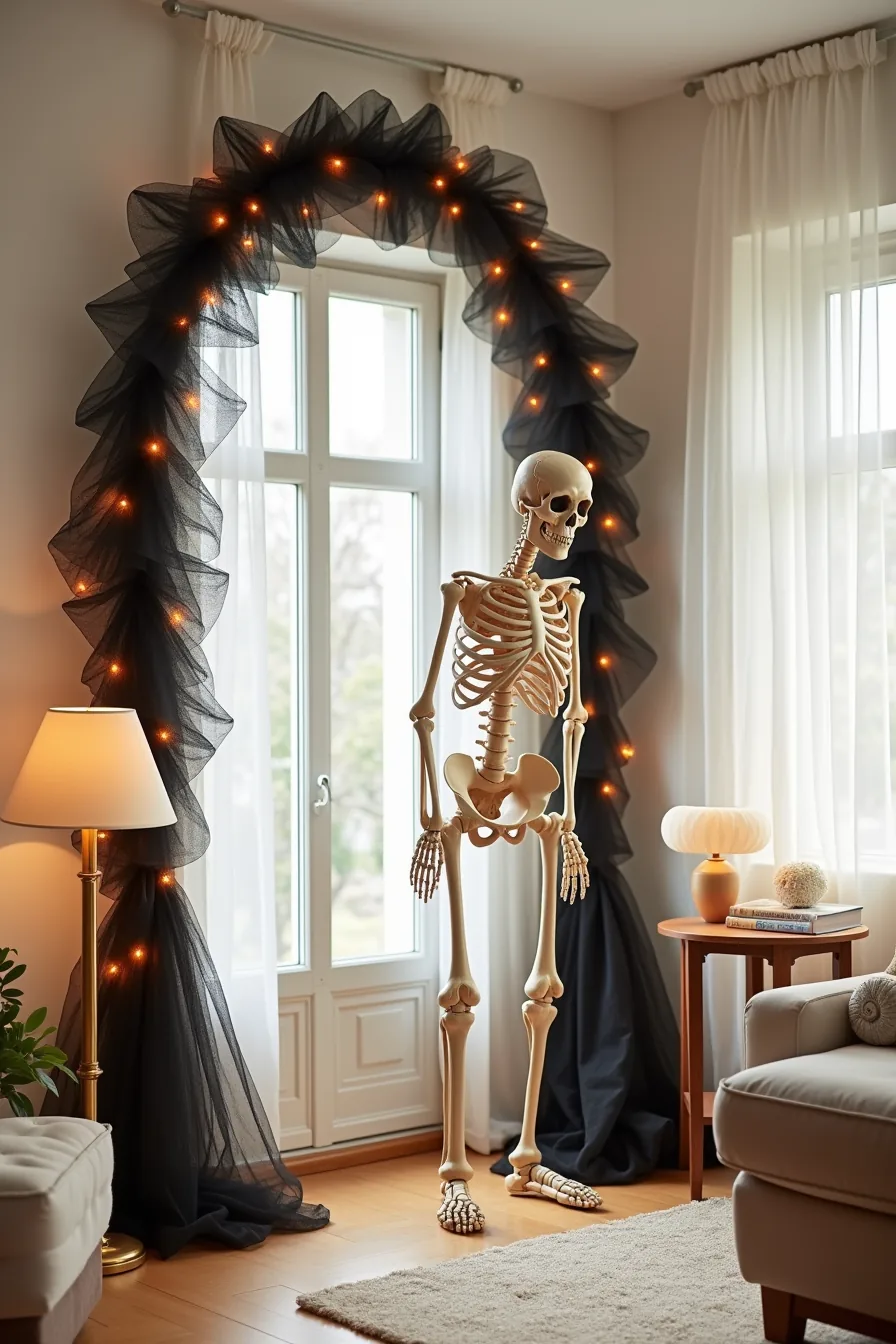
A life-size skeleton figure leaning against a corner creates an immediate focal point without requiring permanent installation. Position it diagonally across from your seating area, so it catches peripheral vision rather than dominating the sightline; this placement adds surprise while keeping conversation zones comfortable. The skeleton’s pose, casual, almost lounging, softens the horror vibe into playful drama, making it suitable for homes with children or guests who prefer subtle scares.
Flank the figure with a tall archway frame wrapped in black tulle and orange fairy lights to draw the eye upward and balance the visual weight. This pairing works best in living rooms with at least 10 feet of wall space; in tighter areas, swap the full arch for a half-frame or lean it behind a console instead. For a budget route, source a plastic skeleton (typically $30–$60) and DIY the tulle wrap for under $15; a premium version with articulated joints and weather-resistant lighting runs $150–$300 but stores flat and lasts for years.
Ensure the archway’s base is weighted with sandbags if you place it in a high-traffic path, and use LED lights only, they stay cool against fabric and reduce fire risk. This statement setup suits renters because everything is freestanding and removable without wall damage, and it anchors the room’s theme so smaller accents like pumpkins or candles can stay minimal.
Color Palettes and Material Choices Across Budget Levels
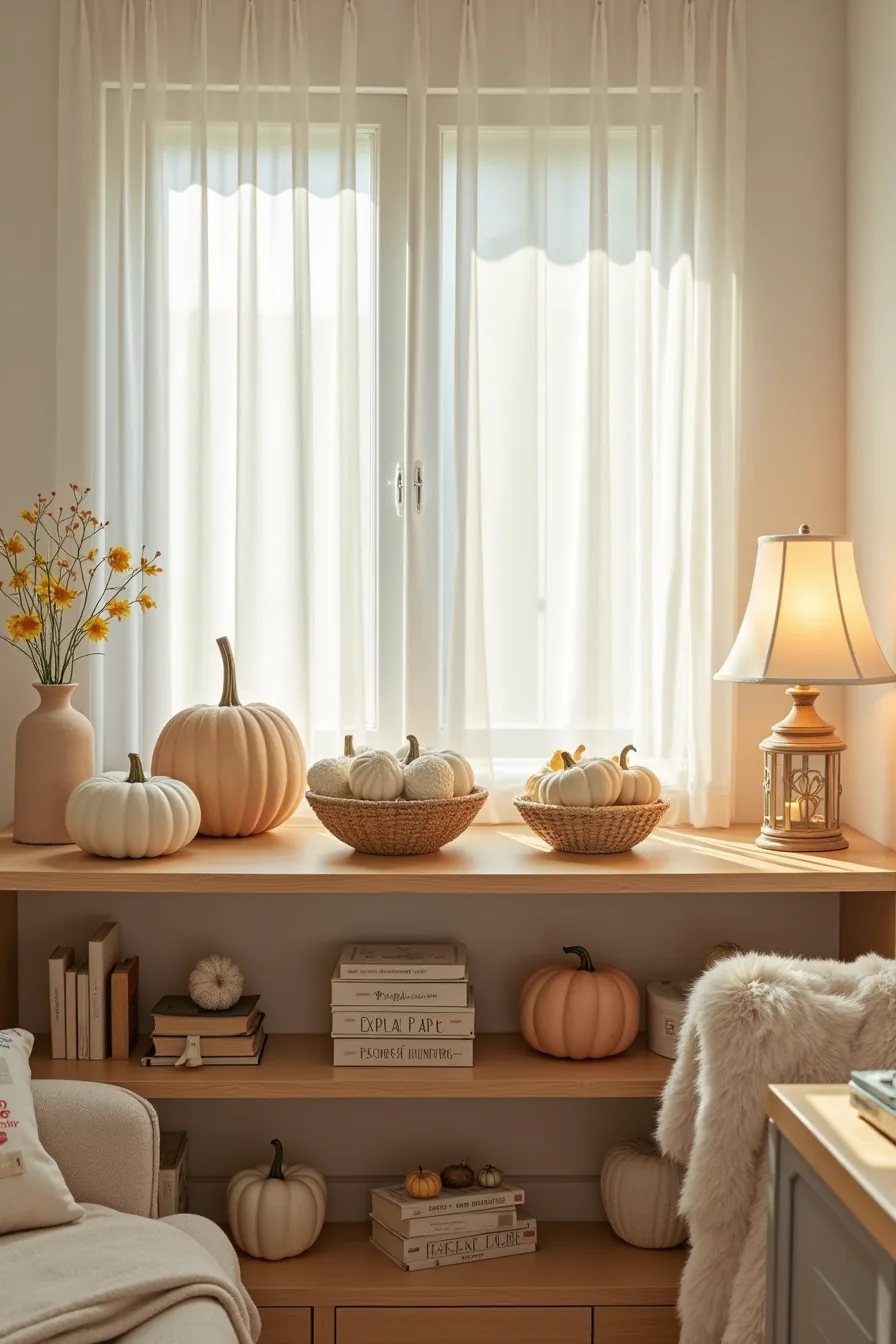
Traditional orange, black, and purple reads instantly as Halloween but can feel heavy in small rooms, use it sparingly on throw pillows and a single garland. Jewel tones (deep emerald, burgundy, and navy) deliver the same festive mood with more sophistication, and they transition into fall decor smoothly. Monochrome black-and-white schemes, paired with textured fabrics like velvet or linen, create a chic, editorial look that suits modern or minimalist interiors.
For materials, paper is the most affordable route: flat pumpkins and printed cutouts cost under $10 per pack, but they tear easily and won’t survive storage. Plastic is durable and washable, yet glossy finishes can look cheap under direct light. Resin and ceramic pieces, like the textured gourds and aged lanterns on the shelf, offer heft and realism, but expect $25–$60 per item.
Fabric elements (burlap runners, cotton bats) balance cost and longevity, and they fold flat for next year. Avoid fragile glass or thin metal unless you’ve no pets or kids; these bend or shatter with routine contact.
Scaling Decor to Your Room Size and Layout
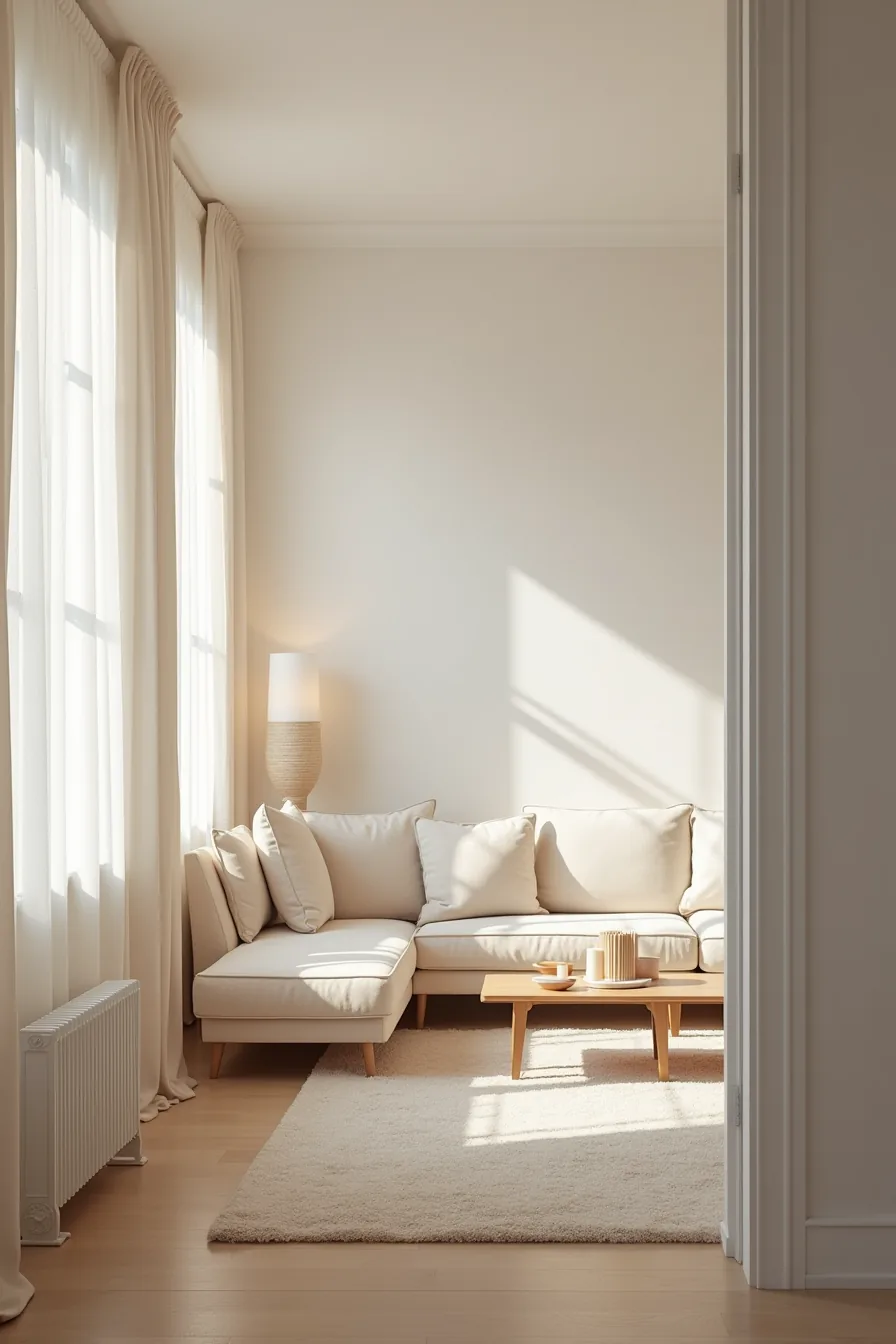
Start by mapping your room’s traffic paths before placing anything. In a small apartment, confine decor to a single corner, two candles on a side table plus one small arrangement on a shelf is enough to register the theme without cluttering a 10-by-12-foot space. Keep items at least 12 inches away from door swings and walkways; anything closer becomes a tripping hazard.
For a medium seating area, layer four items at 18-24-inch intervals across surfaces, a candle cluster on the coffee table, a small arrangement on the console, and two accent pieces on opposite shelves. This spacing creates visual rhythm without making the room feel like a haunted gift shop. On a large open wall in a bigger space, build multiple focal points: a full-scale display centered at eye level, with clusters spaced 3-4 feet apart so the eye travels naturally.
Anchor the largest piece at the midpoint, then flank it with smaller items to avoid a lopsided look. If your room exceeds 300 square feet, resist filling every flat surface, empty zones make the decorated areas read intentional, not sparse.
Your Next Step: Pick One Focal Point
Start with a single anchor, a mantel arrangement, a corner vignette, or a statement pillow set, and build outward from there. This keeps costs low (under $50 for a thrifted mix) and prevents the room from feeling cluttered. For renters, stick to removable hooks and battery lights; for long-term spaces, invest in washable fabric decor that stores flat.
Measure your seating area first to avoid blocking walkways, and swap in pieces gradually as the season progresses. Your move: choose one surface tonight, gather three items from your home or a dollar store, and style it for 15 minutes.
Frequently Asked Questions
Question: How much does a complete Halloween living room decor setup typically cost?
A complete setup ranges from $50 to $300. Budget options use DIY crafts and dollar-store finds; mid-range costs $150–$300 with quality faux cobwebs, lighting, and themed pillows. Premium setups exceed $500 with animatronics and custom pieces.
Question: Can I use Halloween decor in a rental without losing my security deposit?
Yes, if you use removable, non-damaging materials. Avoid nails, screws, and adhesive residue. Use command hooks, tension rods, and peel-and-stick decals.
Never paint walls or leave sticky tape on surfaces; photograph everything before removal.
Question: What’s the best way to store Halloween living room decorations between seasons?
Use clear, lidded plastic bins labeled by category, lighting, textiles, wall decor, and figures. Wrap fragile items in bubble wrap or tissue. Store in a cool, dry closet or under-bed boxes.
Vacuum-seal fabric items to save space and prevent dust.
Question: How do I prevent Halloween decor from looking cluttered in a small living room?
Limit decor to three focal points: one shelf, one corner, and one tabletop. Use vertical space with wall hangings or garlands. Choose oversized pieces over many small ones.
Stick to a two-color palette, like black and orange, to keep visual noise low.