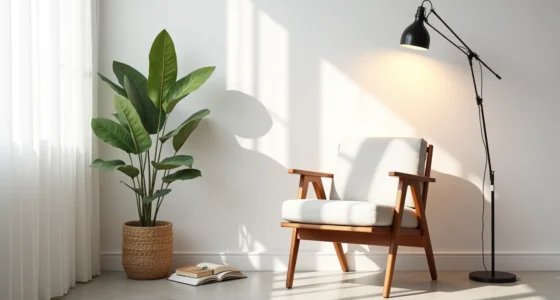
Iron Chair Design isn’t a single look but a material category that spans everything from minimalist café stools to sculptural, hand-forged statement pieces, and choosing the right version for your room comes down to knowing how each style performs in real living conditions. The practical gap between a powder-coated steel frame that shrugs off scratches and a raw-iron piece that rusts within a season is enormous, yet most buyers only learn that after installation. You need to match the finish, weight, and silhouette to your actual traffic patterns, floor type, and maintenance tolerance before you commit to a single chair.
Key takeaways
- Choose a direction first: Café-style tubular frames suit casual dining areas, while ornate wrought iron works best in formal entryways or conservatories, so match the style to the room’s primary function before buying.
- Budget for cushions upfront: A 2-inch foam pad with a removable, water-resistant cover costs roughly $40–$80 per chair and converts a hard metal seat into a 2-hour-comfort option for daily dining.
- Paint with a rust-inhibiting primer: Apply a spray-on zinc-rich primer followed by two coats of satin enamel for outdoor chairs, which extends the finish’s life by 3–5 years compared to bare metal.
- Scale to your floor plan: Allow 24–30 inches of clearance between chairs for pull-out room, and in a small 8×10-foot dining area, stick to a 42-inch round table with four chairs rather than a rectangular six-seater.
Café Style vs Ornate: Understanding Your Iron Chair Design Direction
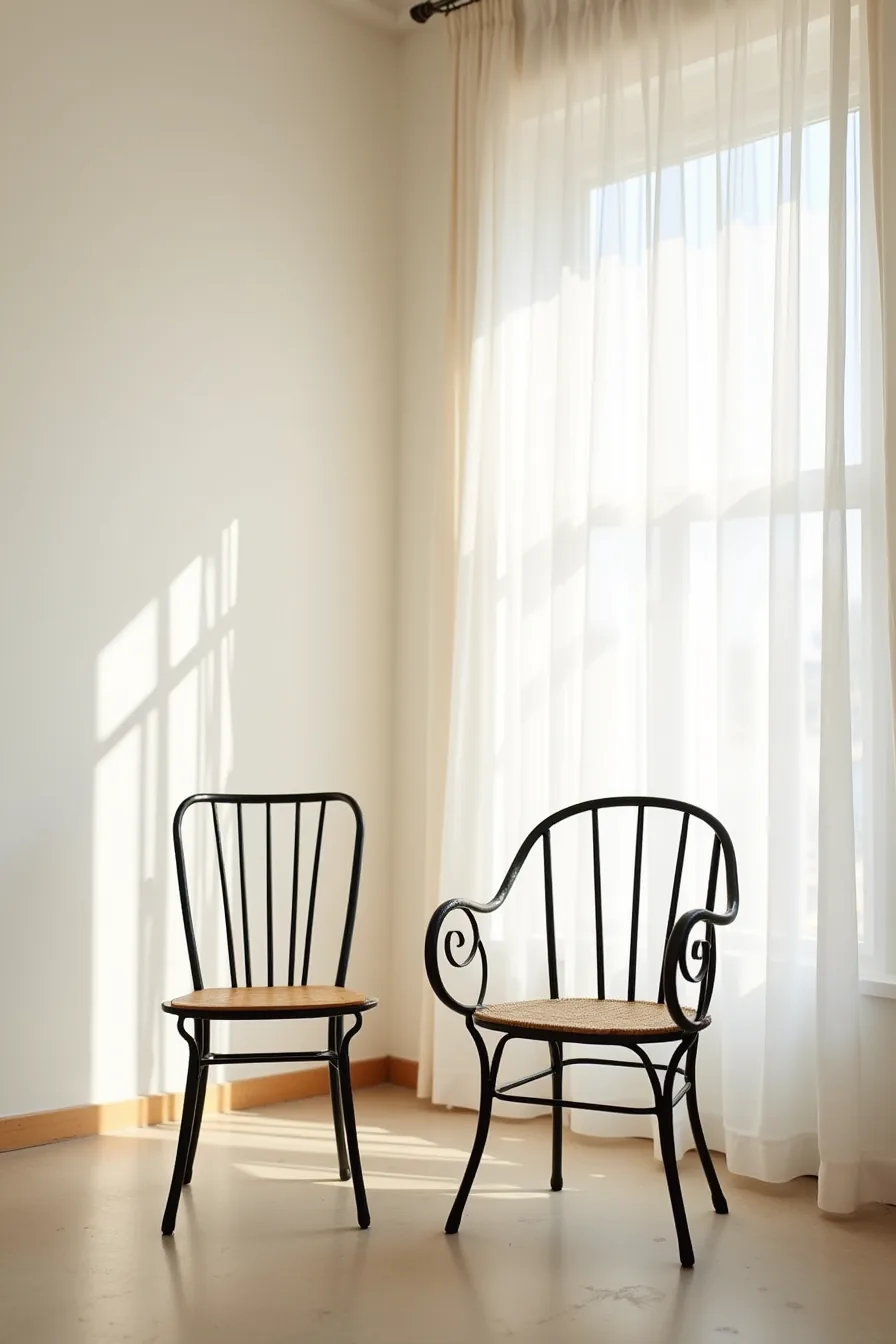
Before you commit to a set, place two chairs on a polished concrete floor and study them from the front. A simple iron chair with a rectangular frame and straight legs reads as café style: lean, utilitarian, and visually light even when the metal is heavy. The ornate counterpart, with scrolled armrests and detailed scrollwork along the seat rail, carries Victorian influence and demands more physical and visual space.
The practical difference comes down to maintenance tolerance. Smooth, minimal frames wipe clean in minutes and hide wear well; intricate scrollwork collects dust in its crevices and requires a soft brush or compressed air every few weeks to avoid a grimy buildup. Café style suits busy kitchens, compact dining nooks, and anyone who prefers function over fuss.
Ornate iron chair design fits formal dining rooms, entryways, or spaces with traditional architectural details where the chair should anchor the room rather than disappear into it. If you rent or move frequently, choose café style, ornate pieces are heavier and more fragile during relocation.
Metal Softened with Cushions: Balancing Comfort and Industrial Edge
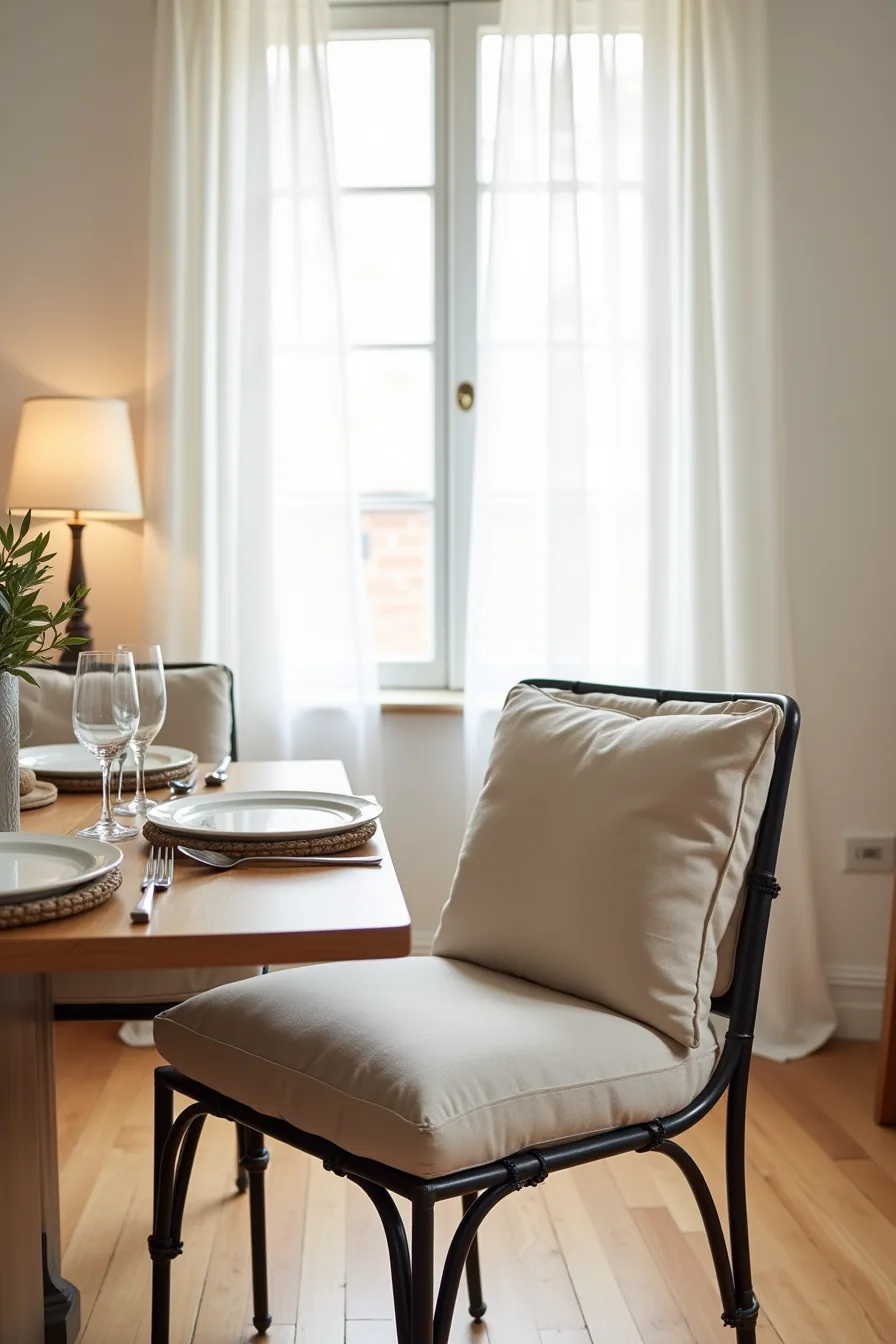
The trick to upholstering an iron frame chair is to keep the padding proportionate to the metal. A seat cushion between 2–3 inches thick and a back pillow around 4–5 inches thick provides enough give for hour-long meals without swallowing the frame’s silhouette. Thicker than that, and the chair starts to look like a padded throne rather than an industrial piece.
The visible setup, an iron frame chair with a thick seat cushion and matching back pillow in neutral linen, placed at a dining table with a place setting, works because the fabric is the only soft element. Linen with a 200–250 thread count or a performance fabric rated for 30,000+ double rubs will survive daily use; avoid velvet or chenille, which flatten under repeated pressure. Ties or snap-button straps are essential for keeping the cushion anchored, unsecured pads shift on slick metal every time you sit down.
Budget route: buy a bare iron chair and add 2-inch foam pads wrapped in heavyweight cotton with ties, costing a fraction of a fully upholstered model. For renters, choose removable covers with zippers so you can wash or replace them without touching the frame. The structure stays exposed, so the chair retains its industrial edge, you’re softening the contact points, not hiding the material.
Painted Iron Finish: Color Choices That Extend Lifespan
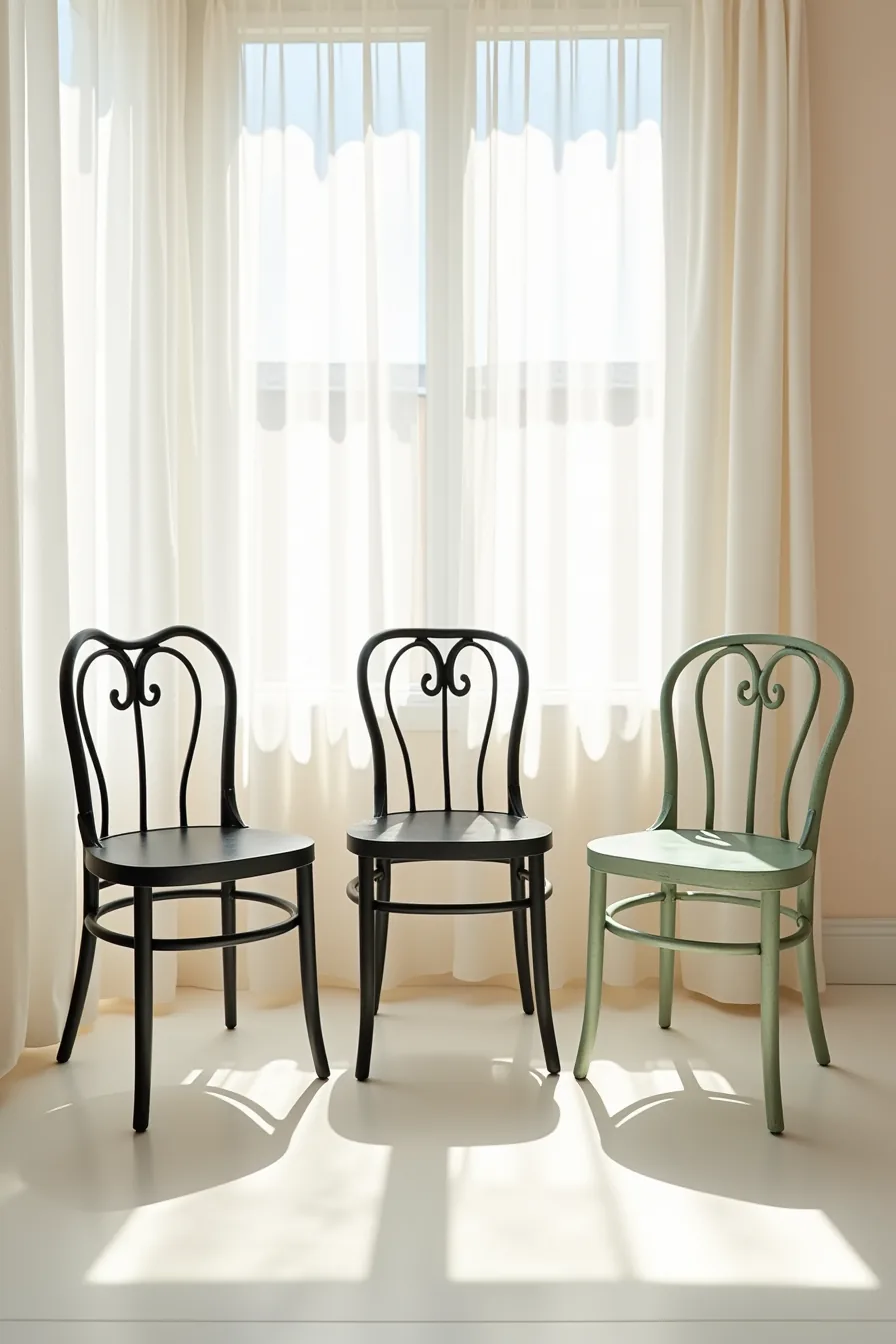
Your finish choice determines how often you repaint, not just how the chair looks. Powder coating, the factory-applied option, typically lasts 10–15 years before chipping, while brushed-on enamel needs touch-ups every 2–3 years in high-use dining areas. For the three frames you see, matte black, deep charcoal, and soft sage green, the darker two hide scuffs and dust far better than lighter shades, which show every fingerprint within weeks.
Matte black reads as the default industrial look, but charcoal adds depth without the stark contrast that makes scratches obvious. Sage green softens the piece for warmer interiors, yet it requires a primer with rust inhibitors underneath, or bare spots will oxidize rapidly. Whatever your color, keep a small jar of matching touch-up paint, apply with a fine artist brush immediately after any scratch appears.
A bare metal spot left for a month becomes rust that bleeds under the surrounding finish, turning a 5-minute repair into a full-strip-and-recoat job costing several times more.
Scaling Iron Chair Design for Your Room Size
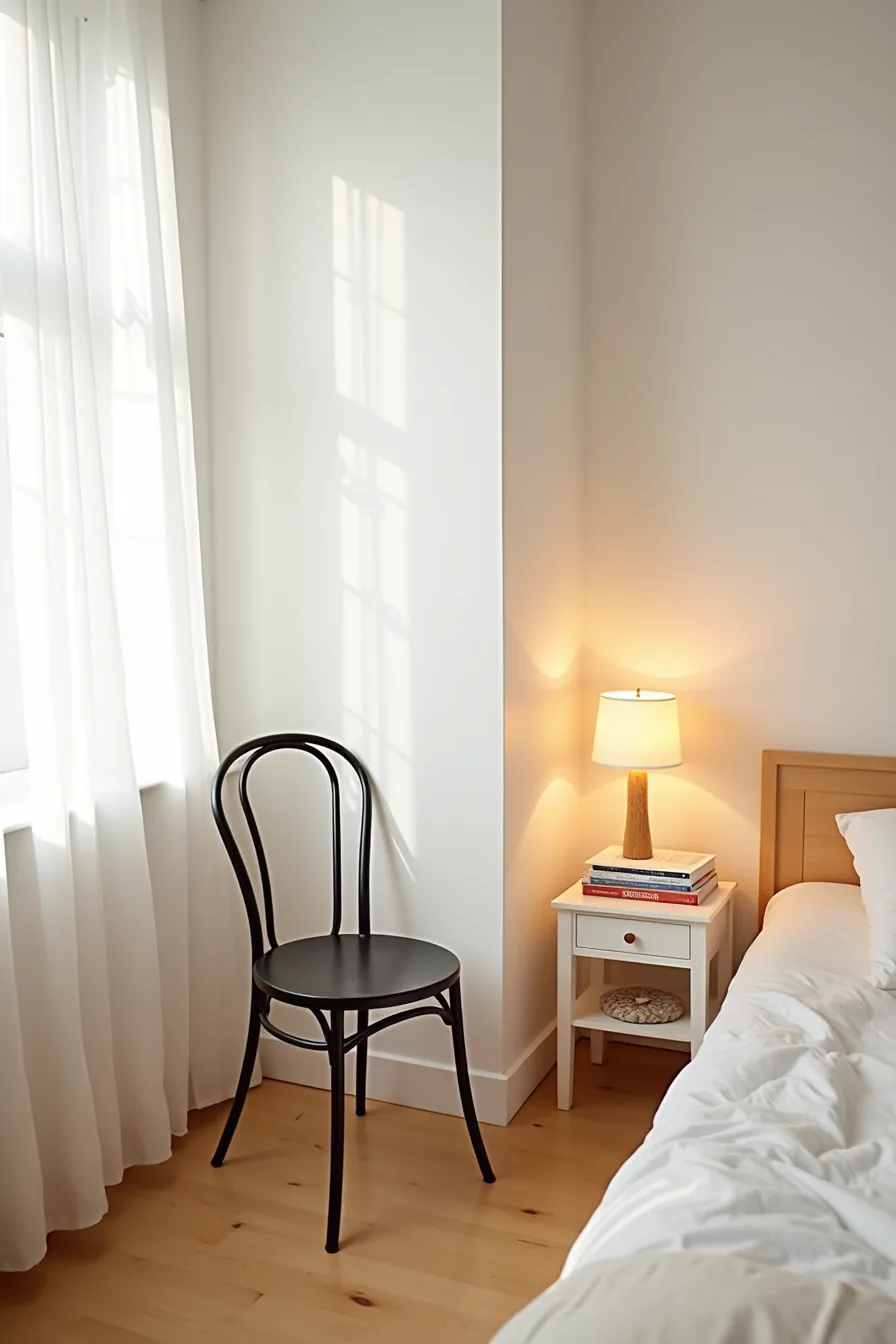
The frame’s footprint matters more than the seat’s width when space is tight. Most iron chairs run 16–19 inches deep at the legs, but compact versions, like the small iron chair beside that narrow side table in a studio corner, slim down to 14–16 inches. You need at least 24 inches of clear floor space to pull the chair out and sit without scraping the wall or the table’s legs.
In a standard dining room, allocate 24–30 inches per chair width and keep 36–48 inches between the table edge and any wall behind. Open-plan spaces give you room to cluster three or four chairs loosely, but avoid pairing oversized frames (over 20 inches wide) with slim pedestal tables, the visual weight will overwhelm the top surface. A simple test: the chair’s total height should stay under two-thirds of your table’s height for balanced proportion.
Renter-Friendly Iron Seating Without Permanent Commitment
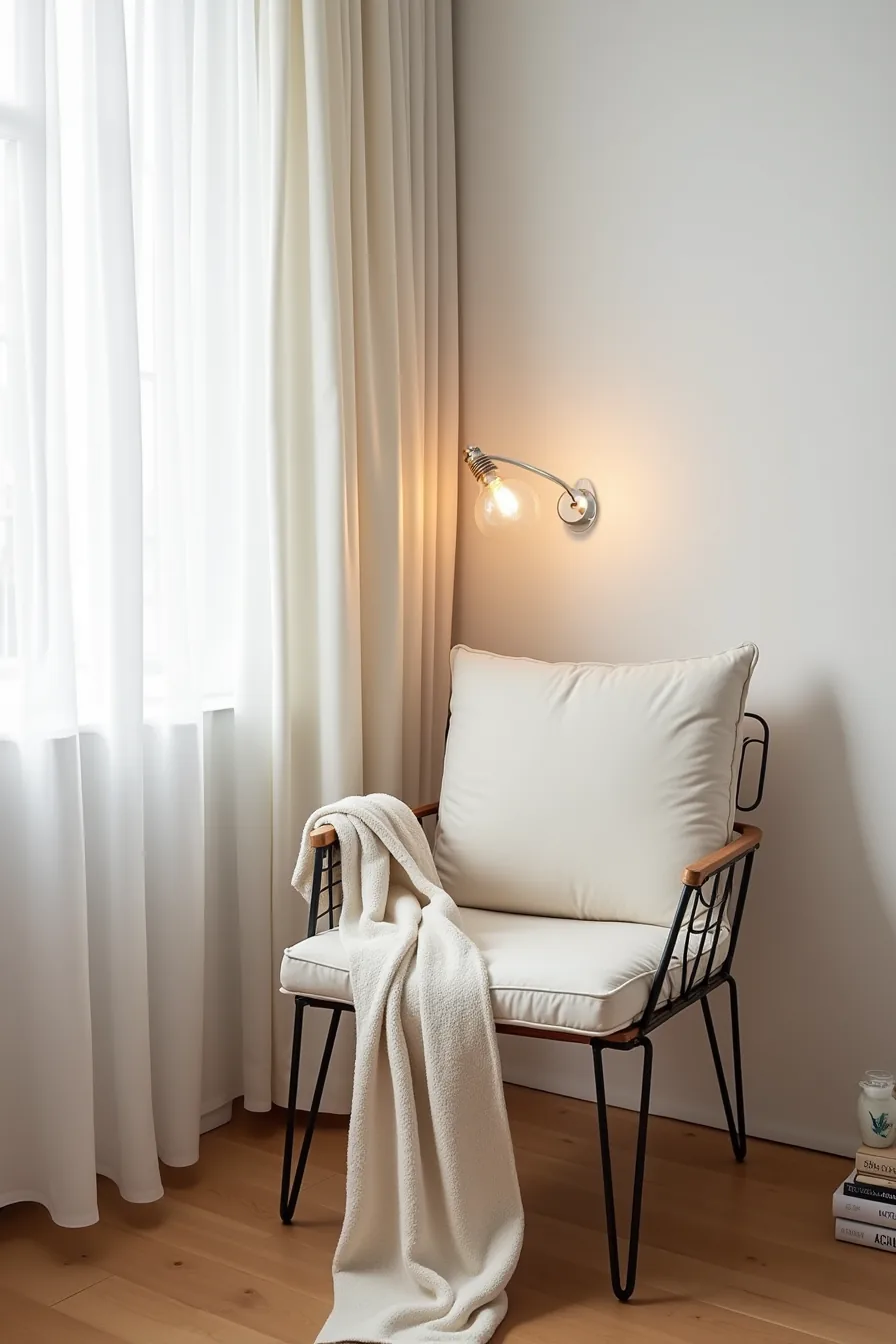
The zipper on that removable cushion is your lease’s best friend. Buy a cushion cover in a washable fabric like cotton duck or polyester blend, expect to pay $25–$60 for a replacement set, and you can strip the chair down to bare iron in under two minutes when the landlord schedules an inspection or you move out. No refinishing, no structural changes, no security-deposit deductions.
That throw blanket draped over the arm does double duty: it protects the iron from wrist sweat and rings during summer wear, and it hides minor surface rust that develops in humid rental climates. Wash the blanket weekly if you use the chair daily; the cushion cover monthly.
Source secondhand iron chairs from Facebook Marketplace or Habitat for Humanity ReStores for $15–$80. Look for frames with intact joins and no cracks, surface rust you can sand off, but broken welds mean professional repair costs that exceed the chair’s value. Skip any piece requiring paint stripping or chemical treatment; that’s a permanent commitment disguised as a bargain.
Long-Term Investment: Restoration and Seasonal Updates
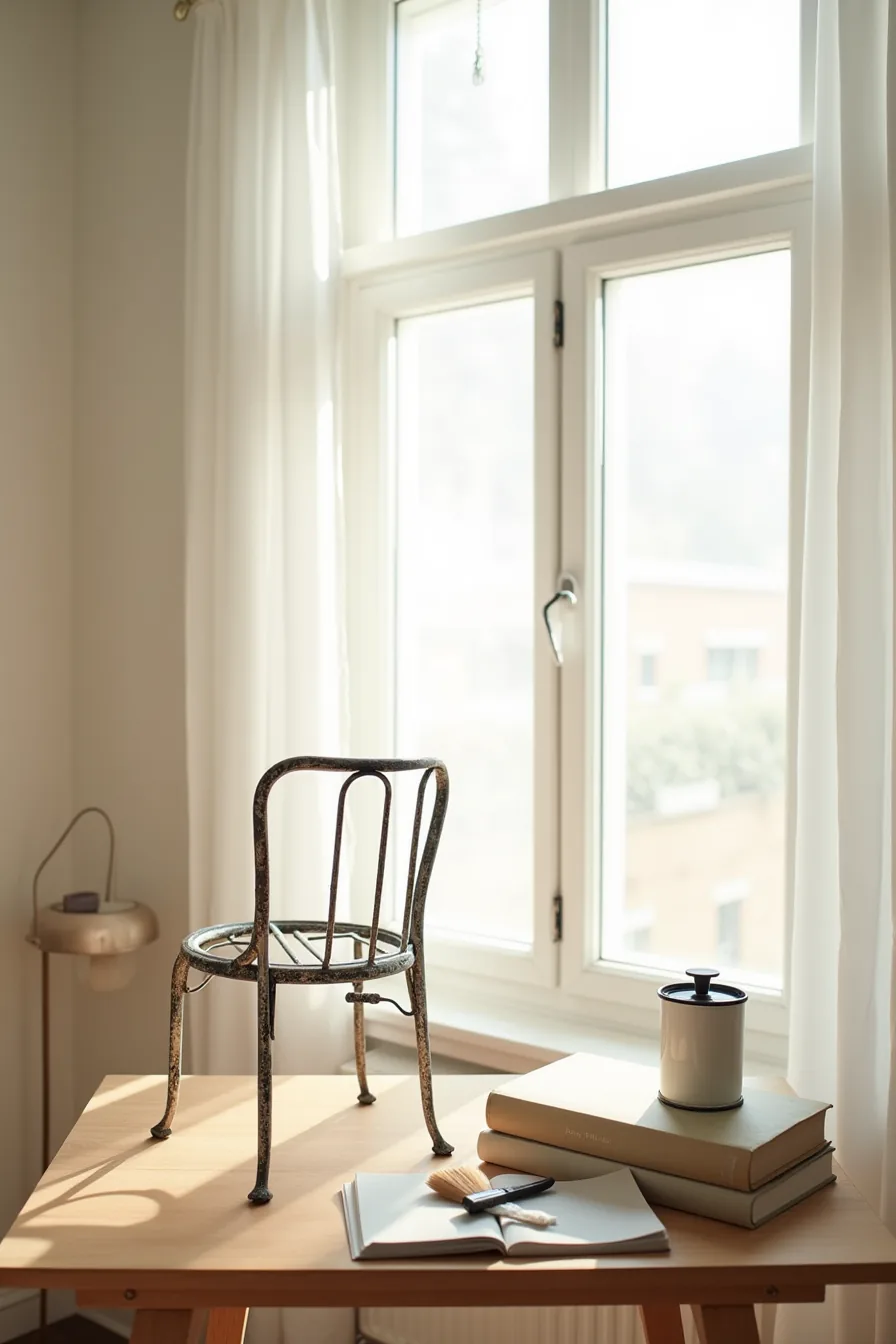
A vintage frame with intact joins and honest patina is worth restoring, provided you commit to the annual maintenance cycle it demands. Set aside 2–3 hours each spring: sand active rust with 120-grit paper, wipe down with a lint-free cloth, and apply a rust-inhibitive primer before a fresh topcoat. That small can of touch-up paint, soft brush, and cloth arranged beside your chair are the only tools you need for a 10-minute spot repair when a scratch appears mid-season.
Refinishing beats repainting when the original finish has failed, peeling, blistering, or bare metal, but only if you can dedicate a weekend to stripping and recoating. Expect to pay $40–$80 for materials on a standard dining chair; professional powder coating runs $100–$150 per piece and lasts 5–10 years with proper care.
Seasonal cushion swaps extend both comfort and frame life. Use quick-dry foam cores with zip-off covers in outdoor-rated fabric for summer; switch to thicker, velvet or bouclé covers in cooler months. This rotation protects the iron from constant moisture contact and gives your Iron Chair Designs for a Fresh Seasonal Update without touching the frame.
Over 5–10 years, a quality vintage frame ($50–$200) plus restoration costs undercuts a comparable new powder-coated piece ($300–$600) by roughly 30–40%, provided you catch rust early. Skip the investment if you can’t commit to biannual inspections, neglected iron will outlast your patience, not your budget.
Where to start
Walk through your dining area or desk setup before you browse. Measure the floor space you actually have, armchairs typically need 24–30 inches of clearance for seating and stand-up access, while side chairs can slip into tighter 18-inch gaps. If you rent, anchor the room with one or two powder-coated iron chairs under $150 each; their matte finish hides scuffs and they move easily when you relocate.
For a permanent home, invest in a hand-forged piece with a sealed, powder-coated finish, expect to pay three to five times more, but you get rust resistance and a silhouette that outlasts trends.
Pick one interpretation that matches your daily habits, then test it for a week before committing to a full set.
Frequently Asked Questions
How do you prevent rust on iron chairs indoors and outdoors?
Apply a rust-inhibiting primer and a weather-resistant topcoat annually. Indoors, control humidity below 50 percent; outdoors, use a furniture cover or store chairs under shelter during wet seasons.
What thickness of cushion padding works best on iron frames without looking bulky?
Choose 2 to 3 inches of high-density foam for dining chairs; 3 to 4 inches suits lounge seating. Thinner padding feels hard, thicker looks disproportionate on slender iron frames.
Can you paint over existing rust, or does it need to be stripped first?
You must remove loose rust first. Wire-brush or sand affected areas, then apply a rust converter. Painting over active rust traps moisture and accelerates corrosion beneath the new coat.
What’s the typical seat height range for iron dining chairs?
Standard iron dining chair seats measure 17 to 19 inches from floor to seat top. Match this to your table’s underside clearance, usually 10 to 12 inches, for comfortable legroom.