The window over your sink is the one spot in the kitchen where decor must earn its keep, it has to survive steam, grease, and splashes while still looking intentional, and the right treatment depends less on style trends and more on your space, budget, and how much maintenance you actually want. Six distinct approaches exist, from a zero-cost bare sill to a custom valance that anchors a whole design scheme, and each carries different trade-offs in light control, cleaning effort, and visual weight. The next section breaks down every option with exact placement rules, material limits, and who each style genuinely fits, so you can pick the one that will still look right after a year of dish duty.
Key takeaways
- Prioritize waterproof materials like ceramic, glass, or sealed metal near the sink to avoid warping and mildew, and skip untreated wood or fabric that requires constant drying.
- Choose plants over curtains when you need maximum light and airflow; a single trailing pothos or a row of succulents on the sill delivers visual interest without blocking the window’s function.
- Install tension rods with clip-on hooks for a renter-friendly curtain alternative that leaves zero damage, and swap in sheer or quick-dry polyester panels that you can machine-wash weekly.
- Add a narrow floating shelf 12–18 inches above the sill for long-term storage of everyday mugs or spice jars, but keep the depth under 6 inches so it doesn’t obstruct the faucet or your reach.
Splash-Friendly Styling With Waterproof Materials
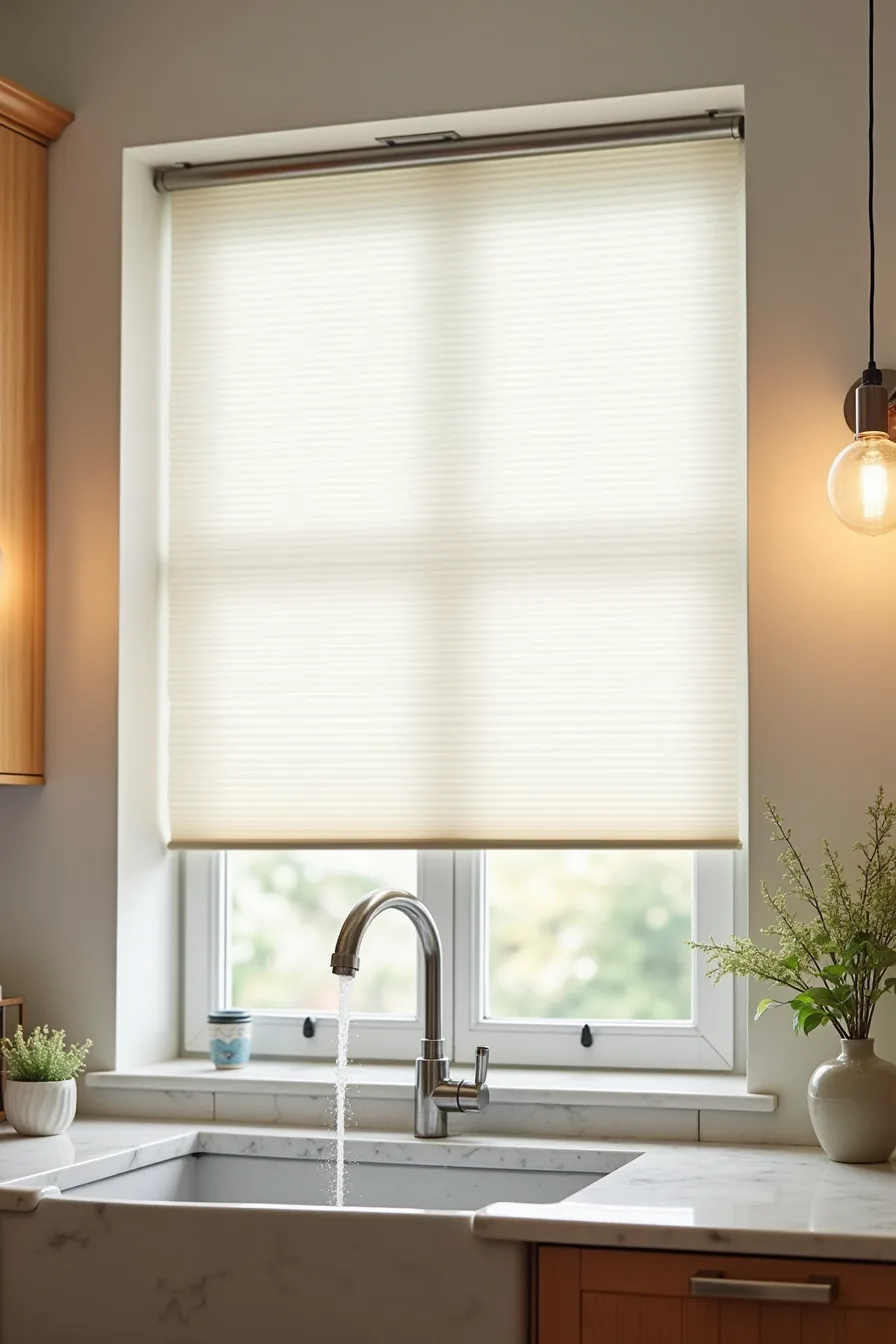
The most practical starting point for kitchen window decor over sink is a cellular honeycomb shade mounted on a stainless steel rod. When lowered halfway, it blocks harsh afternoon glare while still letting you glimpse the yard, and the honeycomb cells trap a layer of air that insulates against cold drafts, a real asset when the sink sits against an exterior wall.
Honeycomb shades handle moisture better than fabric Roman or roller blinds because the polyester material resists water absorption, and the pleats allow droplets to evaporate quickly rather than soaking in. You should still lower it fully when boiling pasta or canning, since continuous steam exposure can eventually weaken the adhesive seams. The stainless steel rod matters: it won’t rust or leave oxide streaks on your marble countertop, unlike a standard iron curtain rod that corrodes within a year of daily splashing.
Install the rod at the frame edges, not the ceiling, so the shade tucks closer to the glass and stays out of your work zone. For a typical 24–30 inch window above a sink, a 20–28 inch cellular shade at $30–$60 fits without custom order. Wipe the shade monthly with a dry microfiber cloth to catch mineral deposits from hard water spray, don’t use wet wipes, which can leave a soapy film that attracts more dust.
This setup suits any household that cooks daily and wants zero-maintenance coverage over a busy washing station.
Plant vs Curtain: Choosing Your Primary Layer
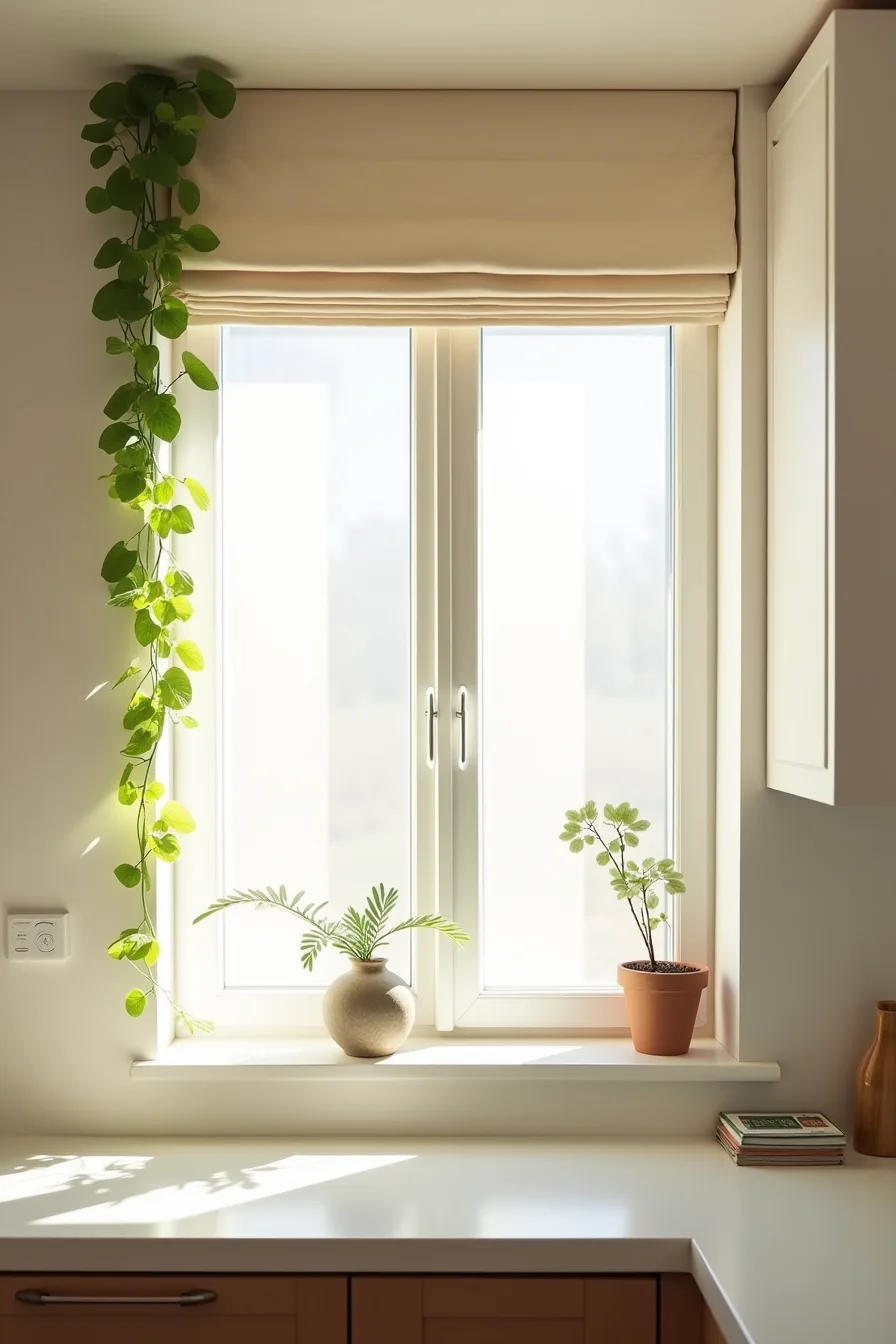
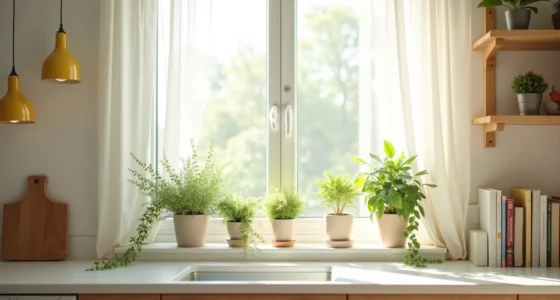
The decision between living greenery and fabric treatment determines how much natural light enters your kitchen and how much daily upkeep you commit to. A trailing pothos plant on a white sill delivers soft, organic texture that filters light naturally as it cascades down the wall, but it needs consistent watering every 5–7 days and occasional pruning to stay within the window frame. A cream linen Roman shade offers instant privacy control at the pull of a cord, yet the fabric requires monthly dusting and spot-cleaning to prevent hard water stains from accumulating on the lower hem.
Choose the pothos if you’ve a bright south or west-facing window and you already maintain houseplants, it tolerates low light but thrives with indirect sun, and it costs $10–$25 from most nurseries. Choose the Roman shade if your sink faces a street or neighbor’s window, since plants alone won’t block visibility at night. You can also run both layers without visual clutter: mount the shade high on the frame and keep the pothos trimmed to the sill, so the two share the same width without competing for vertical space.
The pothos suits renters who want removable decor with zero hardware; the Roman shade suits homeowners who want a finished, tailored look that anchors the whole kitchen palette.
Small Sill Solutions for Compact Kitchens
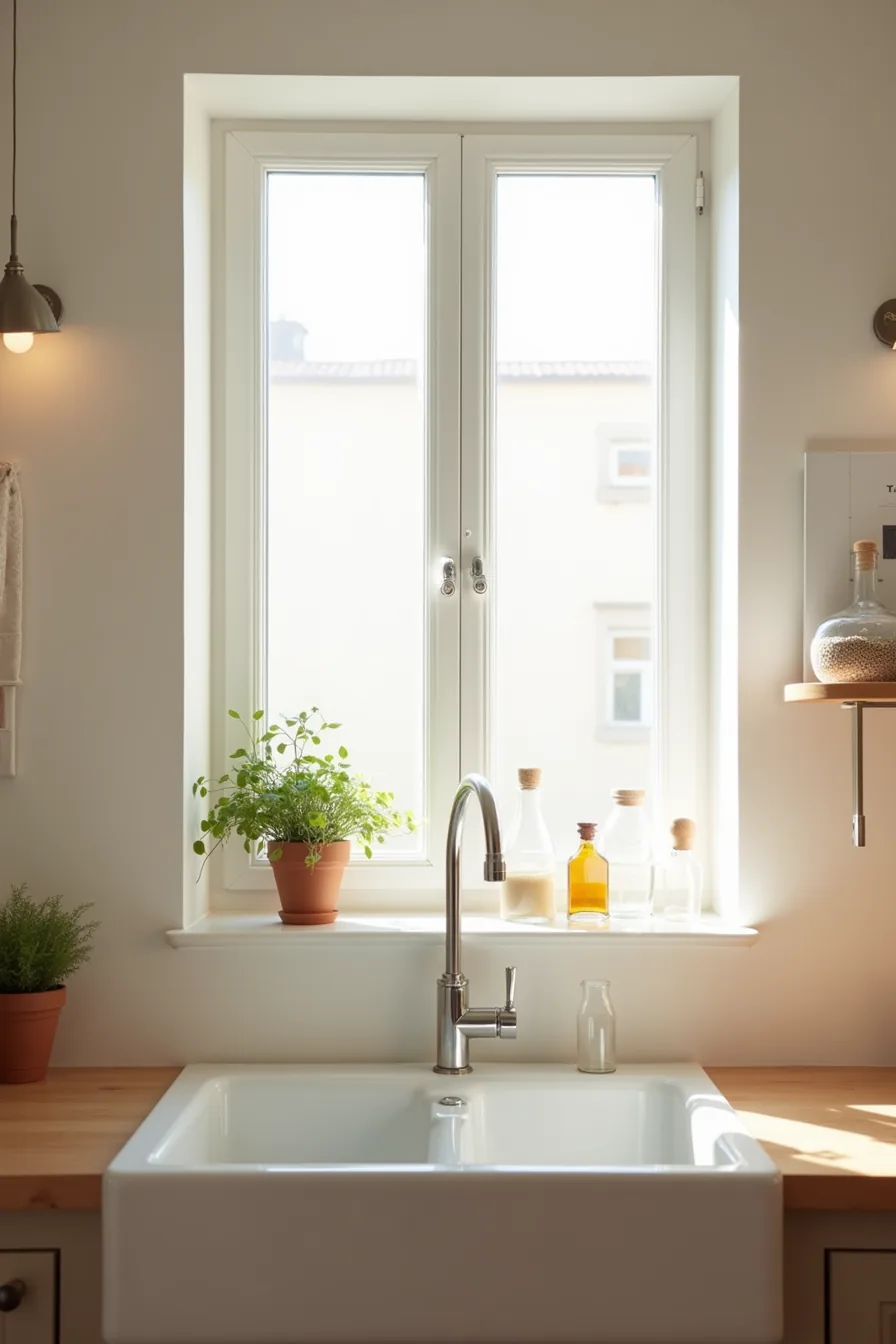
When your sink window has a sill only 3–5 inches deep, every inch of surface counts. Place a single small terracotta pot with herbs at the far corner rather than centering it, this keeps the view unobstructed and leaves the area above the faucet clear for washing tall pots. A narrow sill handles one element only; adding a second pot risks knocking it into the basin every time you reach for the sprayer.
To multiply storage without eating into the window glass, mount an adhesive clear acrylic shelf below the sill. Three small glass bottles holding dish soap, hand lotion, or olive oil fit neatly here, keeping the sill itself free for the single plant. This setup suits galley kitchens or apartments where counter space runs under 24 inches, the shelf adds roughly 6 inches of staging area while preserving ventilation and natural light.
The acrylic option costs $15–$30, installs in minutes with no drilling, and removes cleanly, making it a practical small sill solution for renters. Just verify the adhesive rating holds at least 5 pounds before loading the bottles.
Renter-Friendly Decor That Leaves No Trace
Peel-and-stick frosted film solves the privacy problem on a sink window without a single screw. Apply it to the lower panes only, leaving the top third clear for daylight; you can cut the film to fit odd pane sizes with a utility knife and reposition it for up to an hour before it bonds. Expect to pay $8–$20 per roll, and removal takes ten minutes with a hair dryer and a spray bottle of soapy water, no residue, no paint damage, no lease violation.
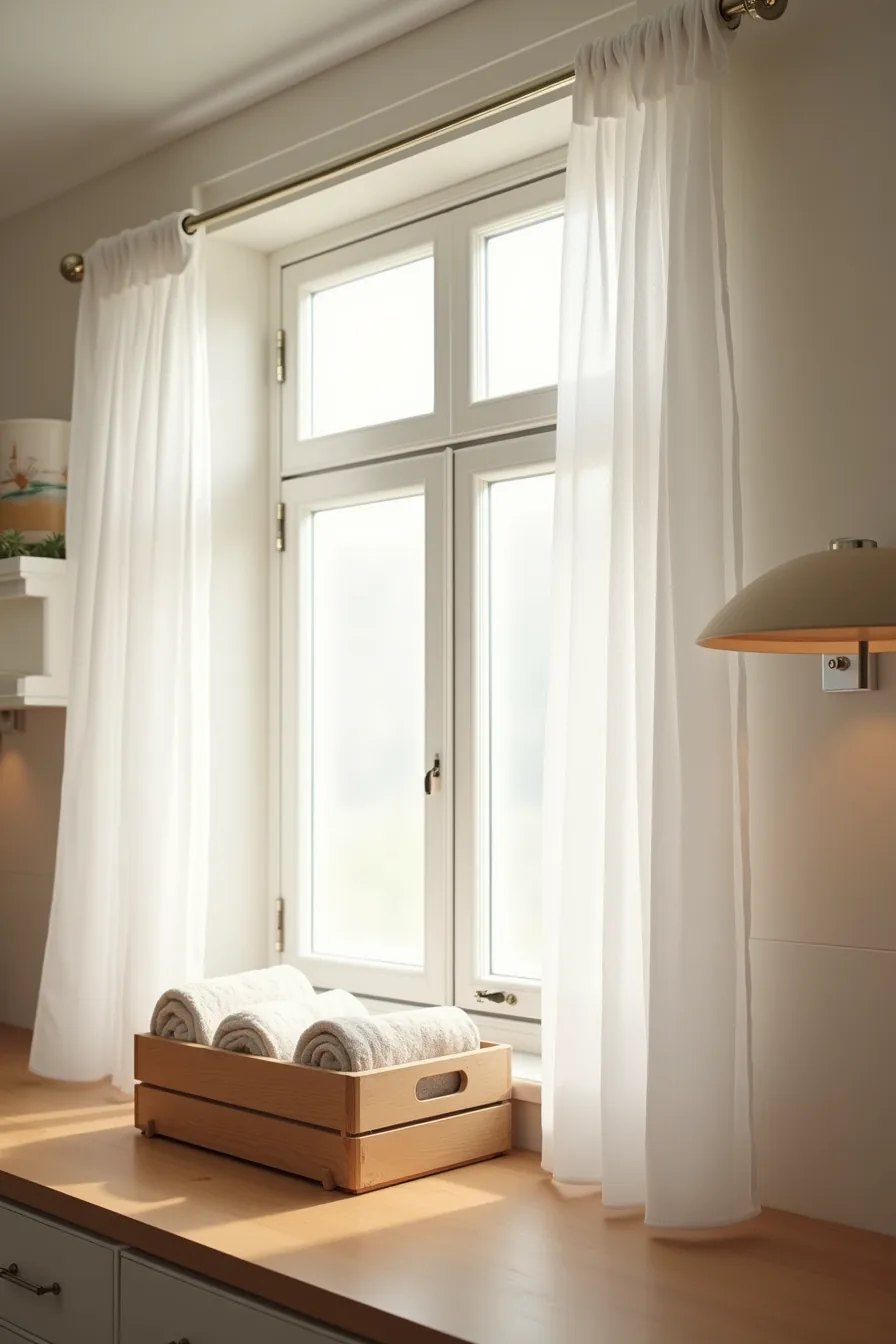
A tension rod mounted inside the window frame carries a lightweight gauze panel that softens the hard edges of the glass. The rod holds 10–15 pounds, needs no drilling, and adjusts to fit most standard window widths between 18 and 36 inches. Skip the rod if your window frame is less than 2 inches deep; the tension grip will fail over time.
On the counter beside the sink, a portable wooden crate stacked with rolled linens and dish towels adds texture and organizes daily-use items without permanent installation. Move it to the table for meal prep or out of the way during a deep clean, the entire setup breaks down in under five minutes.
Long-Term Investment: Built-In Shelving and Millwork
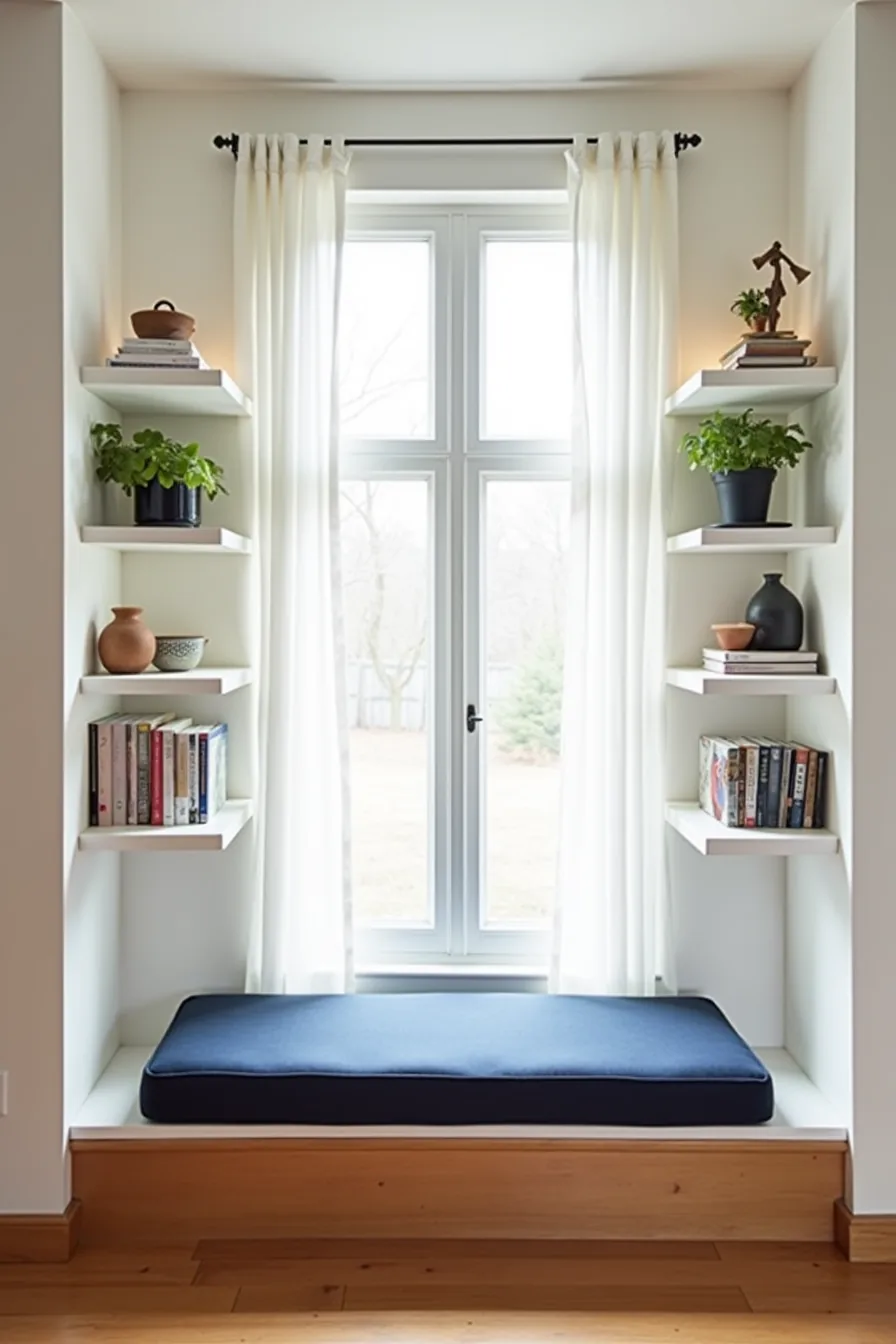
If you own your home and plan to stay for five years or more, custom millwork around the sink window turns dead space into permanent storage that tracks with the property’s value. Floating shelves mounted directly into the studs on both sides of the window frame, three per side, give you nine linear feet of display depth without encroaching on the counter or blocking the sill. Pair them with a built-in window seat cushion in a stain-resistant navy fabric; the seat adds seating for two and hides plumbing access behind a hinged top.
Expect to pay $1,200–$2,800 for materials and professional installation, depending on wood grade and whether you need the trim matched to existing casing.
This setup suits larger kitchens where the sink sits on an exterior wall with at least 12 inches of clearance on each side of the frame. The shelves carry ceramics, framed art, and potted plants, items you rotate seasonally, while the hardwood trim ties the whole composition to your cabinetry. Budget an extra $150–$400 for a licensed carpenter if your window is off-square or the wall has plumbing lines running through it; DIY floating shelves over a sink risk hitting a drain pipe, so verify with a stud finder rated for metal before drilling.
Seasonal Refresh: Spring and Year-Round Transitions
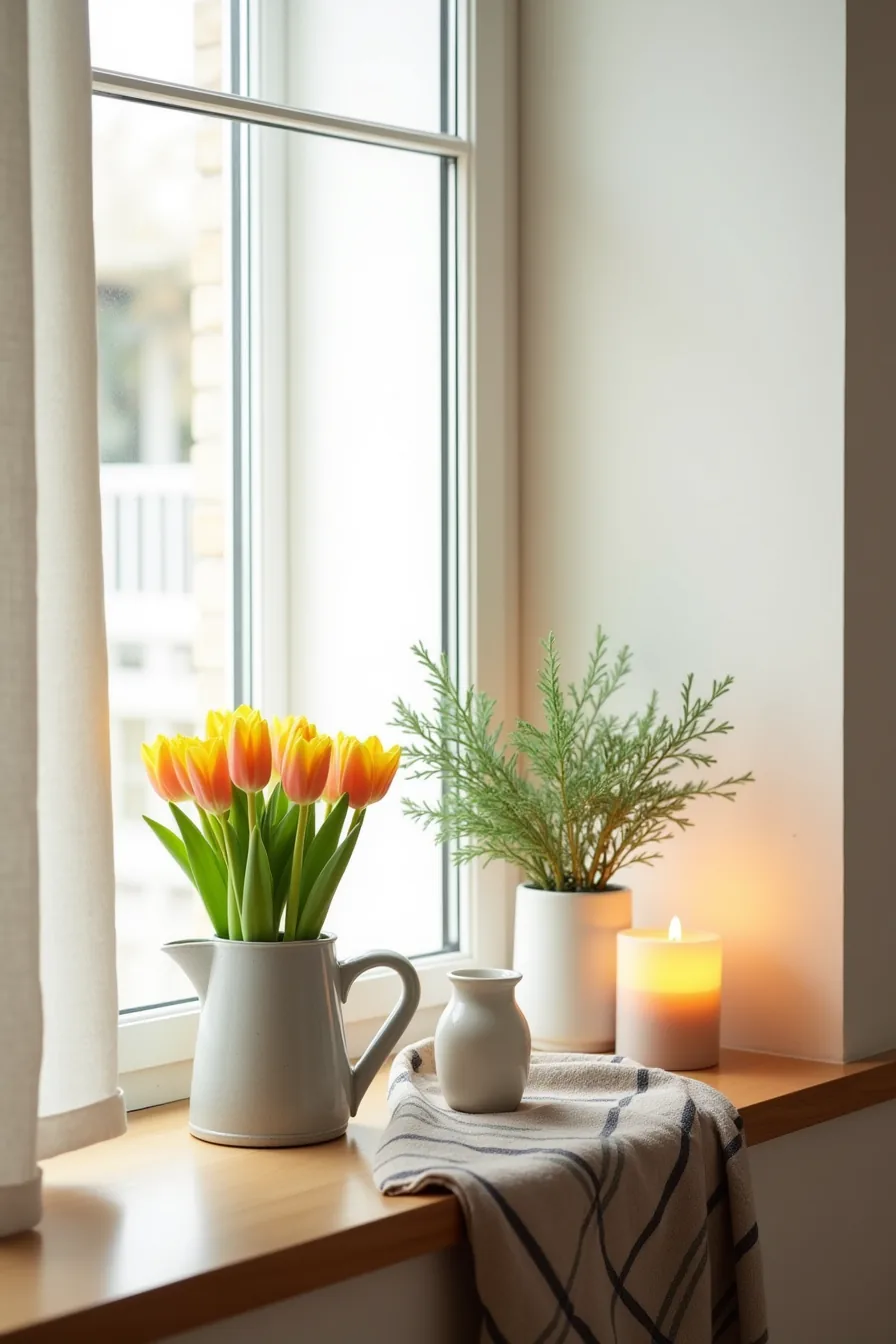
Rotating a single shelf layout between seasons costs under $40 and takes less than 30 minutes if you keep a plastic bin labeled by season in the pantry. For spring, swap the evergreen branches and pillar candle for potted tulips, a small watering can, and a ceramic figurine; the linen napkin folded beneath them softens the grouping and catches drips from the pots. Winter’s plaid cloth and heavy candle return in November, a two-option cycle that prevents decor fatigue without requiring a single new purchase.
This approach suits renters and anyone with a narrow sill who can’t justify permanent millwork. Limit spring decor to three items max; a cluttered sill traps condensation from the sink and promotes mildew on the frame. Water the tulips in place with a long-spout watering can, and pull the ceramic figurine forward by 2 inches so it doesn’t block the window’s crank mechanism if your sash opens outward.
Where to start
You already know your window’s width, your sink’s depth, and your maintenance tolerance. That’s 90 percent of the decision made. If you rent, start with a tension rod and two lightweight plants.
If you own and want a permanent upgrade, measure the window frame and price a custom shelf.
Take one action today: stand at your sink, note how long your arms are when reaching across the basin, and mark the maximum depth anything on the sill can be without bumping your wrists. That single measurement eliminates half the options instantlyning you toward a window that actually clears your workspace.
Frequently Asked Questions
What materials won’t rot or mold above a kitchen sink?
Use marine-grade polymer, sealed ceramic, powder-coated aluminum, or tempered glass. Avoid raw wood and untreated iron. Stainless steel brackets with powder-coated finish resist moisture best for daily splash exposure.
Can I put a shelf over my kitchen sink window without blocking light?
Yes, if the shelf sits at least 6-8 inches above the window frame and is narrower than the window opening. Use open slats or a glass shelf to maintain brightness. Anchor into studs for load safety.
How do I style a kitchen sink window in a rental apartment?
Use tension rods, adhesive hooks, or freestanding caddies, no drilling. Hang a lightweight cotton curtain or place a slim bamboo tray with a small vase and dish soap. Remove everything at move-out without damage.
What’s the best plant for a kitchen window that gets indirect light?
Pothos or spider plant tolerate low indirect light and humidity from sink steam. Both tolerate occasional neglect and propagate easily. Avoid succulents, they’ll stretch and rot without direct sun.