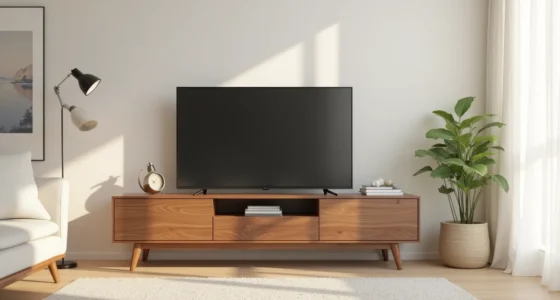
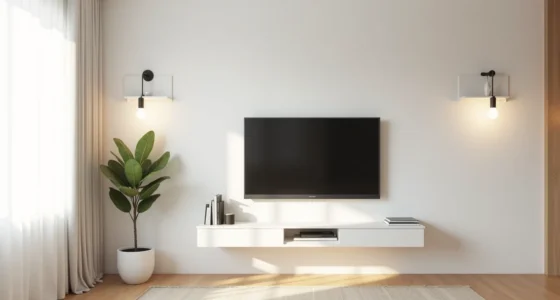
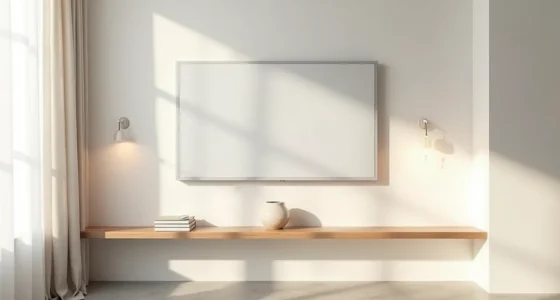
Modern luxury in a living room TV unit isn’t a price tag, it’s a disciplined composition of scale, material contrast, and hidden storage that makes a 55-inch screen feel intentional rather than dominant. You achieve it by pairing a floating walnut console with a matte black back panel, or by recessing the TV into a full-height stone-clad wall. The difference between a showroom look and a cluttered corner comes down to three variables: how far the unit sits from your seating, how much visible cable you tolerate, and whether your storage matches your actual media habits.
The six approaches below break down what each style costs, who it fits, and the exact measurements to copy.
Key takeaways
- Pair calcined stone with smoked oak or walnut veneers for a luxury TV wall that resists fingerprints and requires only damp-cloth cleaning.
- Layer two light types, a 3000K LED strip behind the panel and dimmable spotlights, to kill screen glare and sharpen texture on the stone veneer.
- Conceal every cable inside a floating shelf’s rear channel using a cord cover kit that expands to 2–3 inches, costing under $15 per channel.
- Choose asymmetric floating cabinets (one side deeper, one shallow) to balance a large 75–85-inch screen, keeping 36–48 inches of clear floor space in front for traffic flow.
Stone Plus Wood: The Foundation of Understated Luxury

Stone plus wood is the closest thing modern luxury has to a default setting, and for good reason: the pairing delivers instant visual weight without shouting. A base built from stacked slate or limestone panels grounds the unit, while natural oak or walnut shelves mounted above introduce warmth and horizontal grain that softens the stone’s density. The material joint where the two meet becomes the design’s quiet focal point, especially when shelf edges cast soft shadows across the stone face.
This approach suits rooms with natural light and medium-to-large floor plans, since substantial stone panels visually anchor a wide wall. Expect to reinforce the base structurally, full-height stone panels are heavy, so the lower half typically sits on a concealed steel frame or reinforced plywood substrate. Sourcing local stone and solid hardwood keeps costs in check, but budget between $1,200 and $3,000 for materials alone on a standard 60-70 inch unit.
Maintenance is straightforward: seal the stone annually and treat the wood with hardwax oil to preserve the grain.
Integrated Light Detail: Layering Ambient and Task Lighting

Integrated light detail is the difference between a TV unit that looks expensive and one that simply is expensive. The most effective approach uses three distinct layers: LED strips tucked into the front lip of each open shelf cavity, recessed ceiling spots aimed at a 30-degree angle to graze the shelf surfaces, and a single accent light mounted behind the floating shelf to create a soft halo against the wall. When the screen is off and the room dims, the warm 2700K LED strips define the storage cavities while the ceiling spots pick out the texture of the wood edges, depth without a single visible fixture.
This setup suits evening-heavy living rooms where you want the unit to function as ambient light rather than compete with a floor lamp. Run the LED strips on a separate dimmer from the recessed spots; that lets you drop to 10% brightness for movie watching or raise everything for reading. Budget roughly $150-300 for the LED strips and drivers, plus another $200-500 for the recessed fixtures and installation if you’re not confident cutting into drywall.
The maintenance cost is minimal, but replace the LED strips every 4-6 years as they dim imperceptibly. For renters, skip the recessed spots and rely on plug-in picture lights clipped to the top shelf, same effect, zero wall damage.
Floating Shelves with Hidden Cable Management
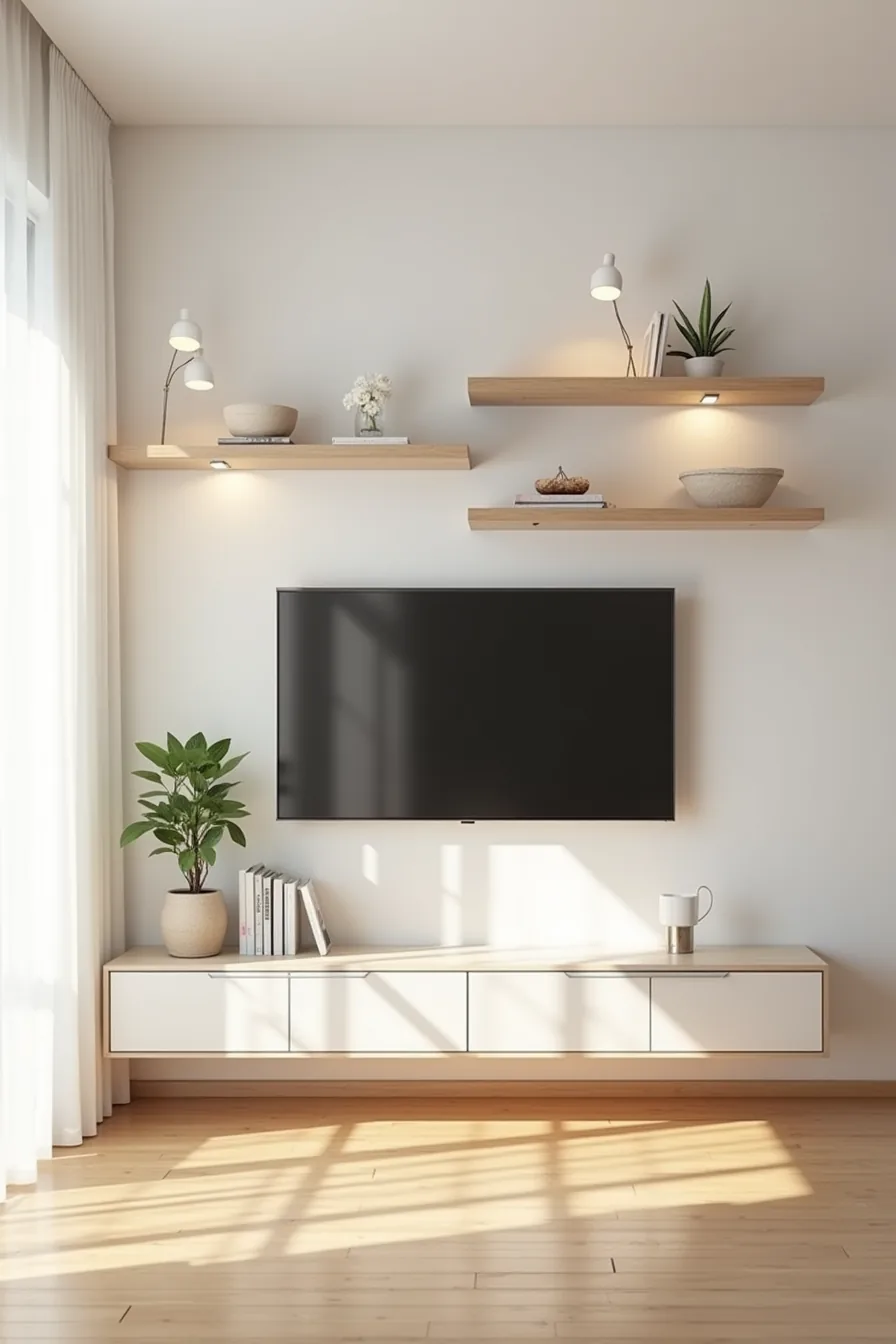
Wall-mounted floating shelves strip the visual weight out of a living room TV unit designs modern luxury setup, leaving you with four slim ledges at staggered heights and a television mounted dead-center. The trick that makes this look work is the bracket-free undersides: each shelf carries a concealed steel channel that routes power, HDMI, and speaker wire from a wall outlet behind the TV, down through a single 2-inch vertical chase cut into the drywall, and out behind the baseboard. No clips, no zip ties, no visible cords, just the potted plant and single decorative object you place on one shelf to break the monotony.
Floating shelves suit narrow living rooms where a floor-standing cabinet would eat 16–18 inches of depth; these run only 10–12 inches deep, preserving walkway clearance. Weight capacity is the hard limit, most wall-mounted brackets hold 30–50 pounds per shelf, so distribute heavier items like a soundbar across two shelves rather than stacking them on one. Route all cables before you attach the shelves, and mark the stud locations first; drywall anchors alone won’t hold a TV bracket.
Budget $400–700 for four hardwood shelves, the concealment kit, and installation if you lack a stud finder. Expect to reseal the wall chase every 5–7 years, and for renters, use cord covers painted to match the wall instead of cutting drywall, the effect is 90% identical and fully reversible.
Closed Storage with Textured Fronts
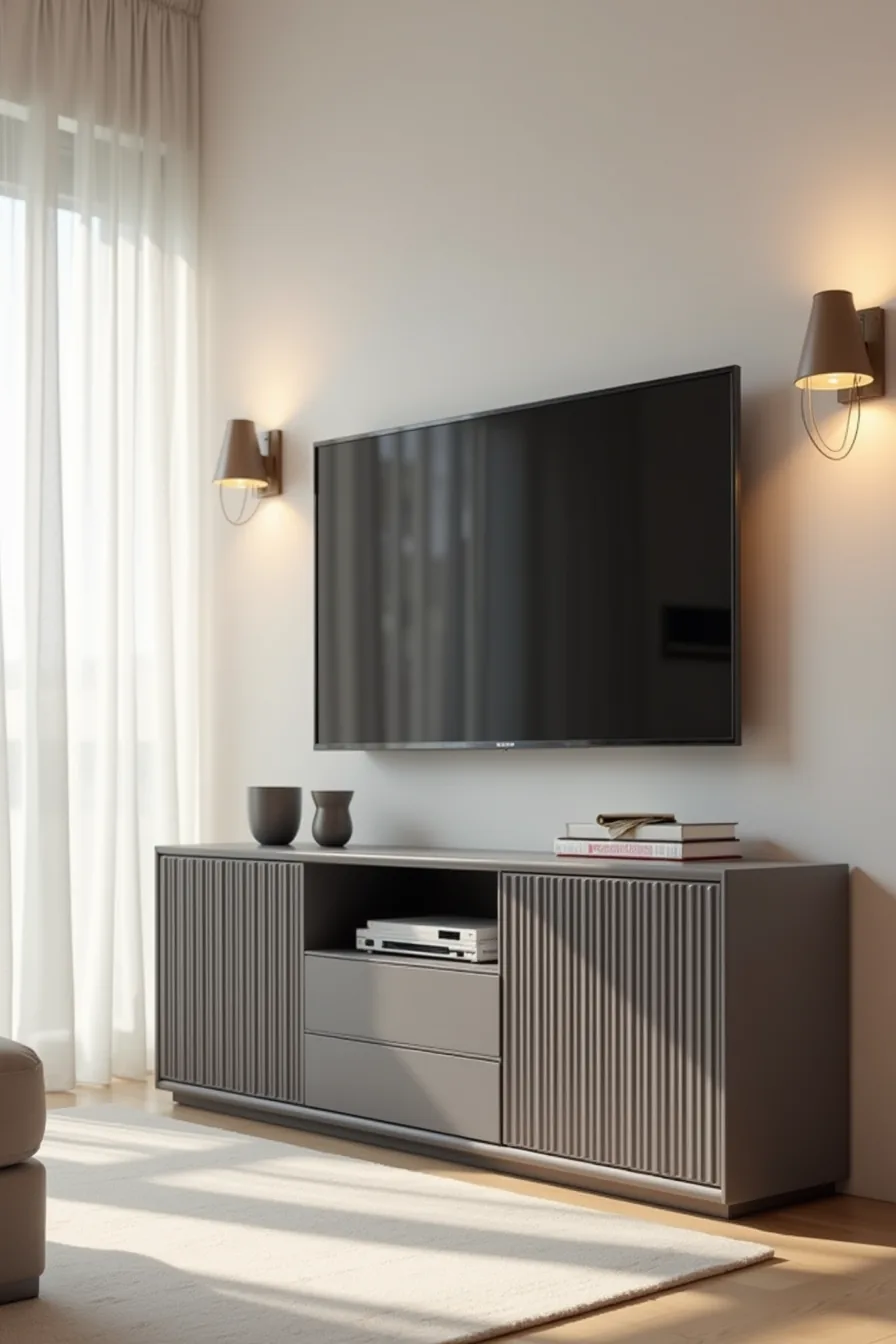
Fluted cabinet doors turn a living room TV unit designs modern luxury setup into a tactile anchor rather than a flat black rectangle. Vertical 3D ribs, typically 8–12 millimeters apart, catch overhead light and cast soft shadows across the facade, adding depth without a single ornament. The matte charcoal finish hides fingerprints far better than glossy lacquer, which is why you’ll see this texture on units in households with children or pets.
Closed cabinetry solves what open shelving can’t: hiding the game consoles, cable boxes, and routers that occupy 12–18 inches of cabinet depth. Budget for soft-close hinges rated for at least 60,000 cycles; fluted MDF panels cost 20–30% more than flat slabs, so expect $1,200–2,200 for a 60-inch unit with two drawers and two door pairs. Dust settles in the grooves, run a vacuum brush attachment over them monthly, and avoid abrasive cleaners that dull the matte finish.
This design suits medium-to-large rooms where the TV unit anchors the wall and you prefer visible texture over visible clutter.
Asymmetrical Layouts for Medium and Large Rooms

Mount the TV off-center, roughly 20–30 inches from the wall’s midpoint, and you free up the opposite side for a staggered shelving composition that gives the eye somewhere to land beyond the screen. Vary shelf depths from 10 to 16 inches and heights from 12 to 20 inches, keeping the heaviest and lowest shelf nearest the TV to anchor the visual weight. This layout suits rooms over 250 square feet where you’ve at least 4 feet of clear floor space between the media wall and the primary seating, preserving a natural circulation path.
The unequal shelving works because it distributes mass unevenly, which reads as intentional in a large room and allows you to display oversized art or a tall plant on the deeper shelves while keeping slim objects on the shallow ones. Place the main sofa at a 30–45 degree angle facing the screen’s center, not the wall’s center, to maintain comfortable viewing from every seat. Open floor space around the unit is non-negotiable for this design, aim for 36 inches of clearance on the wide side so the asymmetry reads as deliberate, not accidental.
Staggered shelving costs roughly 10–15% more than a symmetric unit due to custom bracket placement and non-standard cuts, making it a Modern Luxury TV Units for Statement Living Rooms choice for homeowners who treat the wall as a gallery rather than a utility surface.
Modular Systems for Renters and Small Spaces

Stacked cubic and rectangular boxes in natural wood offer the full Living Room Tv Unit Designs Modern Luxury aesthetic without a single hole in the wall. A freestanding base with two or three modular cubes reaching 48–54 inches high gives you the vertical presence of a built-in, but each box typically breaks down flat in under 20 minutes with just a hex key. This system suits apartments, first-time buyers, or anyone who moves within a five-year horizon and wants to take the unit with them.
Choose modules in two depths, say, 14 and 18 inches, so the staggered face catches light and reads as custom, despite being standard retail pieces. Keep the width around 60 inches for a 55–65-inch TV, and confirm the base module is at least 2 inches wider than the TV’s feet on each side for stability. Expect to pay 30–50% less than a comparable custom built-in, but budget for heavier boxes: particleboard cores with wood veneer weigh 40–60 pounds per module and need two people for safe stacking.
Scratch-prone veneer demands felt pads under decorative objects, and you should re-tighten all cam locks every six months to prevent sag between modules.
What to do first
Start by measuring your wall and seating distance before you browse a single design. A TV unit should sit roughly 40-48 inches from floor to screen center for comfortable viewing from a sofa.
Choose your anchor material first, wood veneer, matte lacquer, or stone, and let everything else follow. If you’re renting, buy a freestanding unit that works without wall mounting; if you own, consider built-ins for the long term.
Set a budget split: 60% for the unit, 30% for lighting and hardware, 10% for cable management. Then measure twice, order once, and style the surfaces last, after the electronics are wired and hidden.
Frequently Asked Questions
What is the typical width and depth of a modern luxury TV unit?
Widths range from 60 to 100 inches for large screens, while compact units run 40–55 inches. Depth sits between 14 and 18 inches to balance component clearance and living room floor space.
Can I install a stone and wood TV unit in a rental apartment?
Yes, if you use freestanding pieces or adhesive-mounted panels instead of drilled stone slabs. Avoid cutting into walls for heavy materials; use a large console with a stone top that stands independently and leaves no permanent damage.
How much does integrated lighting add to the cost of a TV unit?
Expect a 15–25% price increase over a non-lit unit, typically $150–$400 for LED strip kits plus installation. Dimmable, color-tunable systems cost more but reduce glare and extend LED lifespan.
What cable management system works best with floating shelves?
Use a vertical cable raceway that runs behind the shelf face, paired with a power strip mounted to the wall. Choose a kit with removable covers and a 2-inch minimum interior width to handle HDMI, power, and speaker wires without crimping.