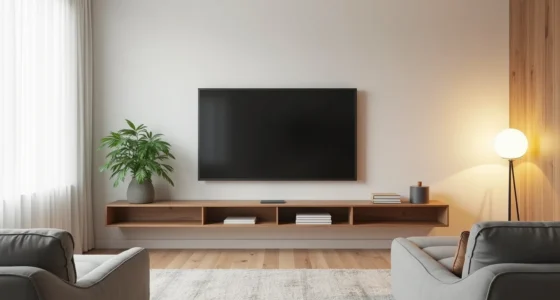
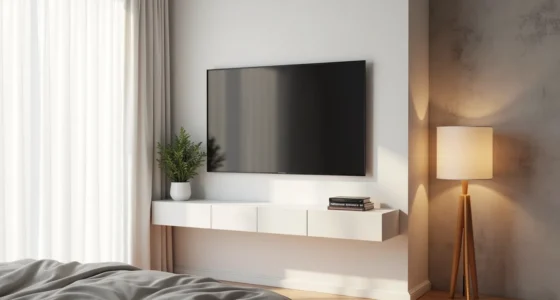
A living room TV unit design only works when it balances three things at once: the size of your television, the depth of your room, and the way you actually use the space around the screen. Get that balance wrong and you end up with a unit that dominates the room, blocks sightlines, or collects clutter you never touch. The six approaches that follow each solve that equation differently, from budget builds to permanent installations.
Your job is to match the right one to your floor plan, viewing distance, and storage habits before you commit to a single shelf or bracket.
Key takeaways
Floating shelves cost roughly $30–$80 per shelf and install with 4–6 wall anchors, making them the cheapest route for renters who want a TV unit without permanent cabinetry. Compact units work best in rooms under 200 square feet, where a 48–55 inch TV pairs with a 40–48 inch-wide console to keep walkways clear. Screen height matters more than aesthetics: mount the TV center at 42–48 inches from the floor so your eye line lands naturally when seated, not tilted up. Matte finishes hide dust and fingerprints better than gloss, and medium-density fiberboard (MDF) with a laminate top resists scratches longer than solid wood at half the price.
Floating Shelves: The Renter-Friendly Route
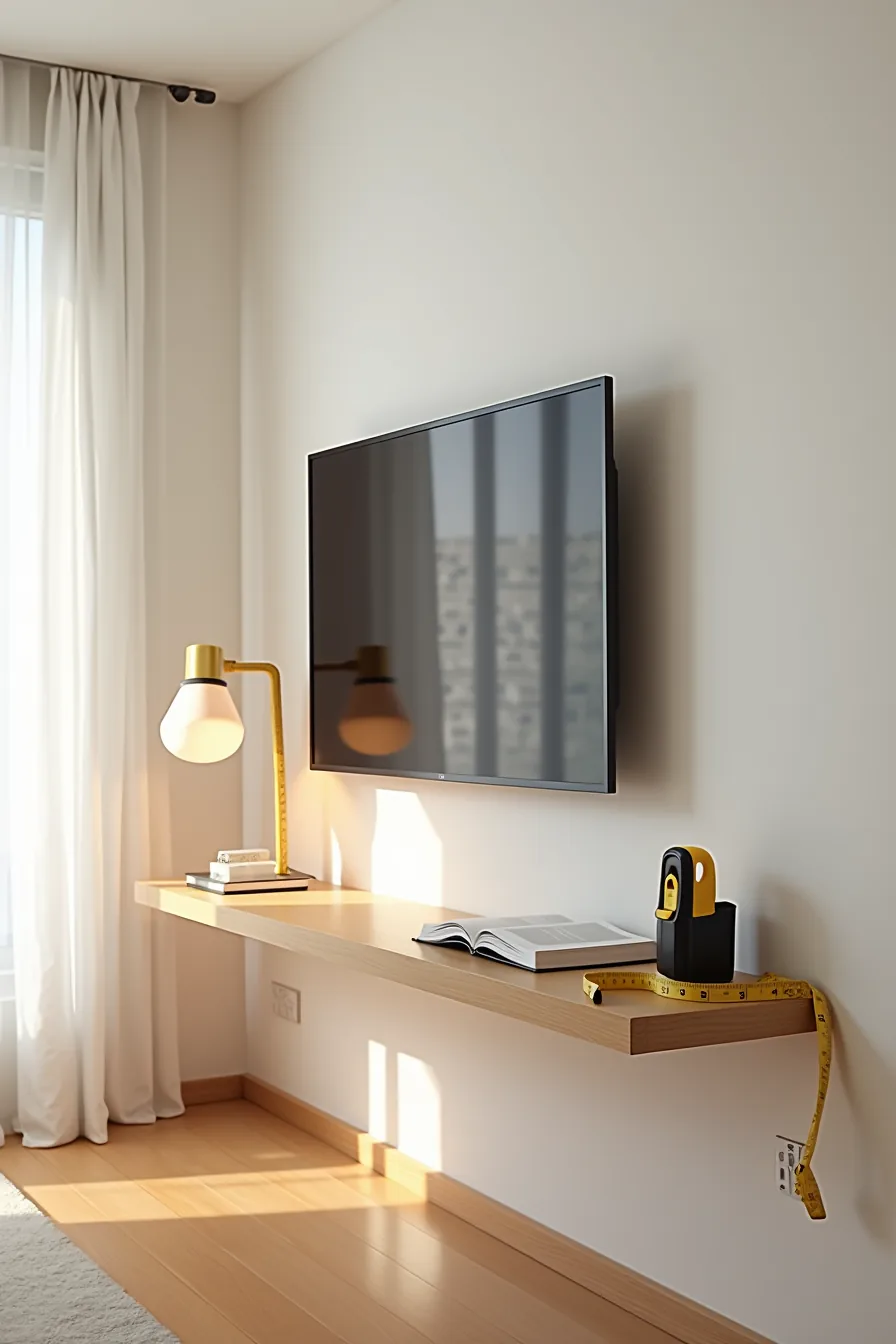
A single floating shelf rated for 50–100 pounds handles most 40–55 inch TVs, provided you anchor into wall studs. That measuring tape draped across the shelf edge in this setup isn’t decorative, it marks where the stud finder located solid wood behind the drywall. The visible brackets underneath carry the real load; the shelf itself is just the visual platform.
This approach suits anyone in a lease who can’t cut into walls or install a permanent media console. You lose cabinet storage entirely, so pair it with a rolling cart or a fabric storage ottoman for the components. Mount the shelf 4–6 inches above a low console or sideboard to hide cable clutter, and keep the TV’s center line at seated eye level, roughly 40–42 inches from the floor.
When you move, you patch four screw holes and take the shelf with you, no deposit forfeited.
Compact vs Full Wall: Choosing Your Footprint
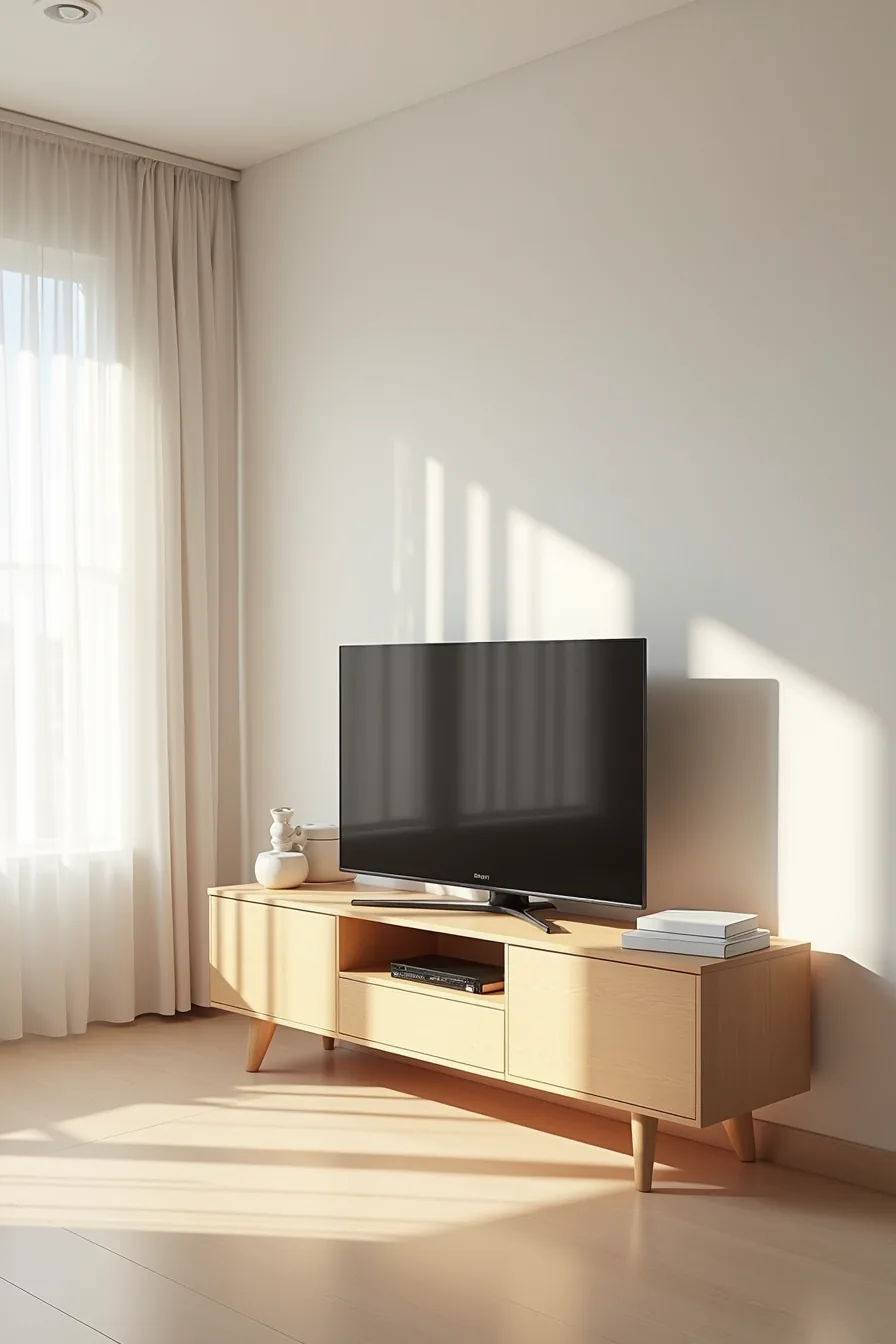
A compact TV console around 48 inches wide keeps the floor space on either side open and leaves the wall above it bare, which changes how the entire room breathes. That visual lightness matters most in rooms under 200 square feet, where a wall-spanning unit would visually swallow the seating area and force you to rearrange furniture to accommodate its depth.
Measure your wall and your viewing distance first. For a 55-inch TV, you want roughly 8–10 feet between the screen and your sofa; if you can’t achieve that, a compact unit with a smaller screen beats a massive wall system you end up watching from too close. The trade-off: a compact console holds roughly half the storage of a full wall unit, so you must edit what lives there.
A full wall approach (120–140 inches wide) suits larger rooms and gives you closed cabinets for everything, but it costs more to install and takes a full day to mount securely. It also demands dusting across the entire span weekly, whereas the compact unit cleans in under five minutes.
Screen Prominence: Balancing TV Display with Room Function

How prominent your screen is when off determines how much the room feels like a theater versus a living space. A recessed TV behind closed wooden cabinet doors, with open shelving on either side holding books and objects, gives you a layered focal point rather than a black rectangle demanding attention. This setup works best when your seating sits 8–12 feet back, because the recessed screen requires a sightline that’s level or slightly downward, if you sit closer, the recessed depth narrows your viewing angle and causes glare off the cabinet edges.
The trade-off is access: opening those doors every time you watch requires 2–3 inches of clearance in front of the unit, so your coffee table must sit low or slightly off-center. For a more static alternative, mount the TV flush on a slim bracket and rely on closed cabinetry below to absorb visual weight. Either way, keep the screen’s vertical center at eye level when seated, typically 40–42 inches from the floor, and let the shelving carry the decorative load so the unit reads as furniture, not electronics.
Seating-Layout Connection: Aligning Your Unit to How You Sit

Your TV unit’s height and depth should be dictated by where your sofa lands, not by what looks balanced on the wall. Measure the distance from the leading edge of your seat cushion to the screen surface, for most living rooms, that falls between 8 and 10 feet. At that range, the vertical center of the screen should sit 40–42 inches off the floor, keeping your eyes level with the middle of the display when you’re seated normally.
A sofa placed closer than 7 feet demands a lower unit or a tilted mount, because a fixed-height cabinet forces you to crane your neck upward. The overhead arrangement of a sofa, two armchairs, and a coffee table in a standard 12-by-16-foot room leaves a clear 9-foot sightline; run a measuring tape from your eyeline to the wall to confirm your unit’s depth doesn’t push the screen beyond that distance. If you’ve a deep unit, 18 inches or more, pull the sofa forward 4–6 inches so the coffee table still sits within arm’s reach without blocking the path to the screen.
Match the unit’s width to your seating cluster: a 60–70-inch console suits a sofa plus two chairs, while a wider sectional calls for a 72–90-inch run.
Material and Finish Choices for Long-Term Durability
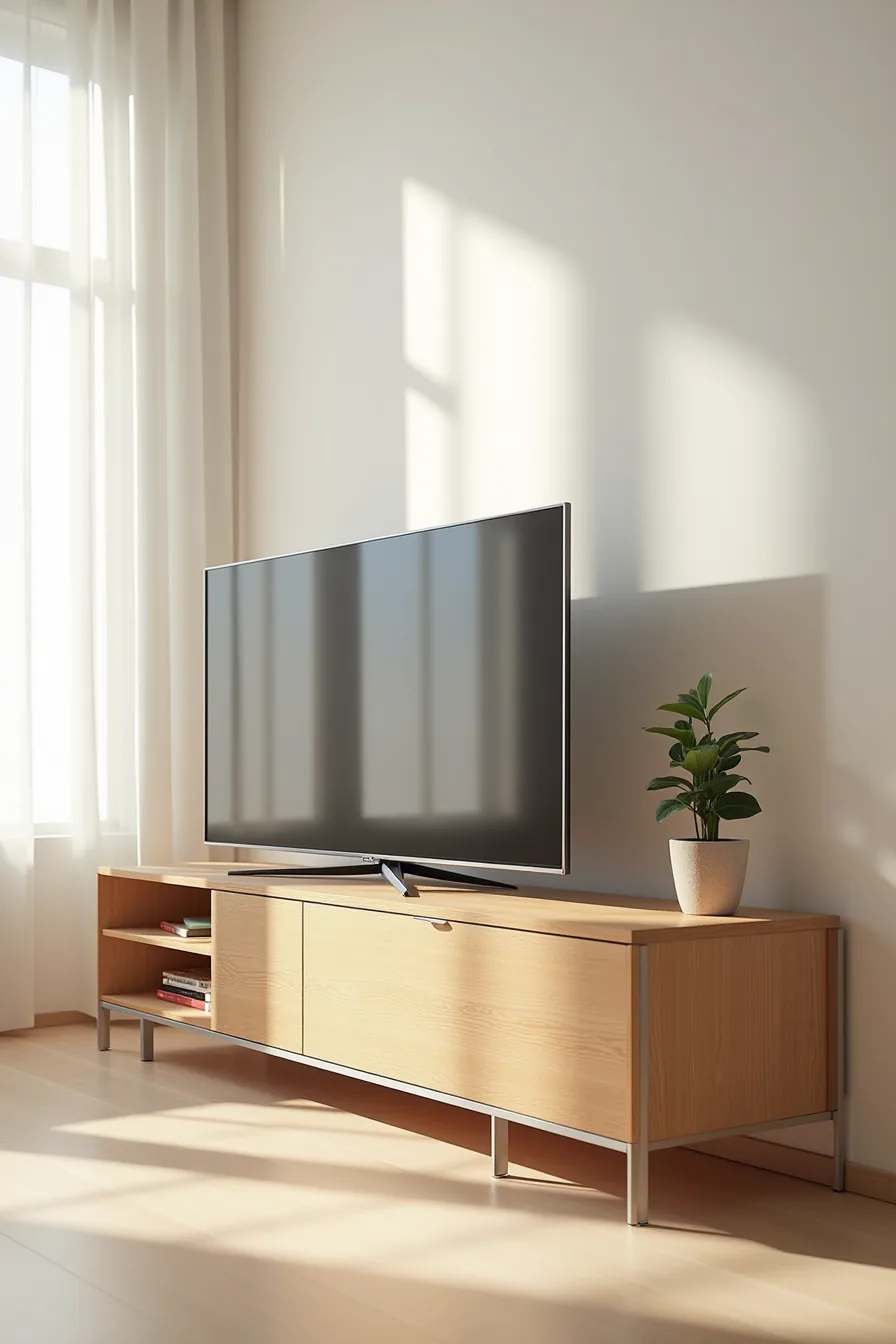
Solid wood, oak, walnut, or maple, handles years of daily use without peeling, but expect to pay 1.5 to 2 times more than engineered options, and plan for periodic oiling to prevent drying and cracking. With visible grain across the front, solid wood suits a low-humidity, low-traffic room where you want a long-term investment piece that ages gracefully.
Engineered wood with a laminate finish, what you see on the middle unit, is the pragmatic choice for pet-heavy or kid-active homes. A quality laminate resists scratches and moisture far better than veneer, costs roughly $200–600 for a 60-inch console, and wipes clean with a damp cloth. The trade-off: chips on the edges expose the particleboard core, and repair is effectively impossible.
The metal frame with glass shelves, the third unit, reads visually light and keeps components dust-free, but glass shows every fingerprint and smudge, and the open design puts your cables and consoles on display. Budget $80–150 annually for cleaning supplies and cable management. This option works best in a formal, adult-only space where aesthetics outweigh maintenance, not in a room where toys land on shelves daily.
Living Room TV Units for Cleaner Visual Flow in Small Spaces

When square footage is tight, the fastest way to open up a room is to eliminate the base cabinet entirely. Wall-mount your TV and pair it with open floating shelves stacked vertically, this setup keeps the floor completely exposed, which visually expands the room by letting sightlines run uninterrupted from wall to wall.
The key is vertical stacking: place two or three floating shelves above or beside the screen, reserving the lowest shelf for a soundbar and the upper ones for decor, books, or a small plant. Because the shelves are open rather than closed, they read as airy and intentional instead of bulky, and they cost roughly $40–120 per shelf depending on width and material.
Limit yourself to two or three floating units in a small space; anything more creates visual clutter that defeats the purpose. This approach suits renters too, floating shelves require only a few drilled holes, and you can patch and repaint before moving out. For large TVs on this setup, verify your wall studs can handle the combined weight of the screen and shelves, typically 50–100 pounds for most 55-inch models.
Your 30-Minute First Move
You now have six viable directions, but analysis paralysis is your real enemy. Pick the one design that solves your biggest current frustration, cable clutter, cramped proportions, or wasted wall space.
Measure your TV’s width and your wall’s available span tonight. Write both numbers down. That single measurement will eliminate half your options immediately and make the remaining choices obvious.
Tomorrow, order one material sample or save one reference image. Action beats intention.
Frequently Asked Questions
What size TV unit do I need for a small living room?
For a small living room, choose a unit no wider than your TV by more than 4–6 inches on each side. A 50-inch TV typically pairs well with a 60–66-inch unit, keeping proportions balanced without overwhelming the space.
Can I install a floating TV shelf myself, or do I need a professional?
You can install a floating TV shelf yourself if you’ve a stud finder, level, and drill. However, hire a professional if your wall is plaster, tile, or concrete, or if the shelf must support over 40 pounds of equipment.
How far should my couch be from the TV, and does that affect unit placement?
Sit your couch 1.5 to 2.5 times the TV’s diagonal screen size away, roughly 6–10 feet for a 55-inch TV. This distance determines unit placement, as the screen center should sit at eye level when seated. Adjust unit height accordingly.
What’s the best material for a TV unit if I have kids or pets?
Choose solid wood or high-pressure laminate with a matte, scratch-resistant finish. These materials withstand bumps and spills better than glass, veneer, or glossy MDF. Avoid sharp corners and opt for rounded edges to reduce injury risk.