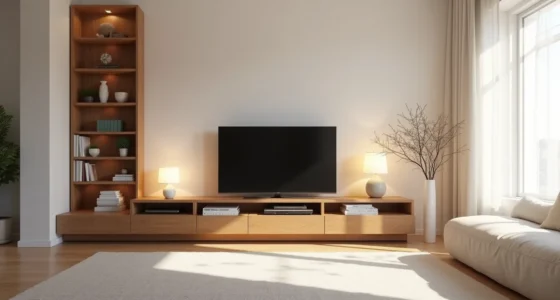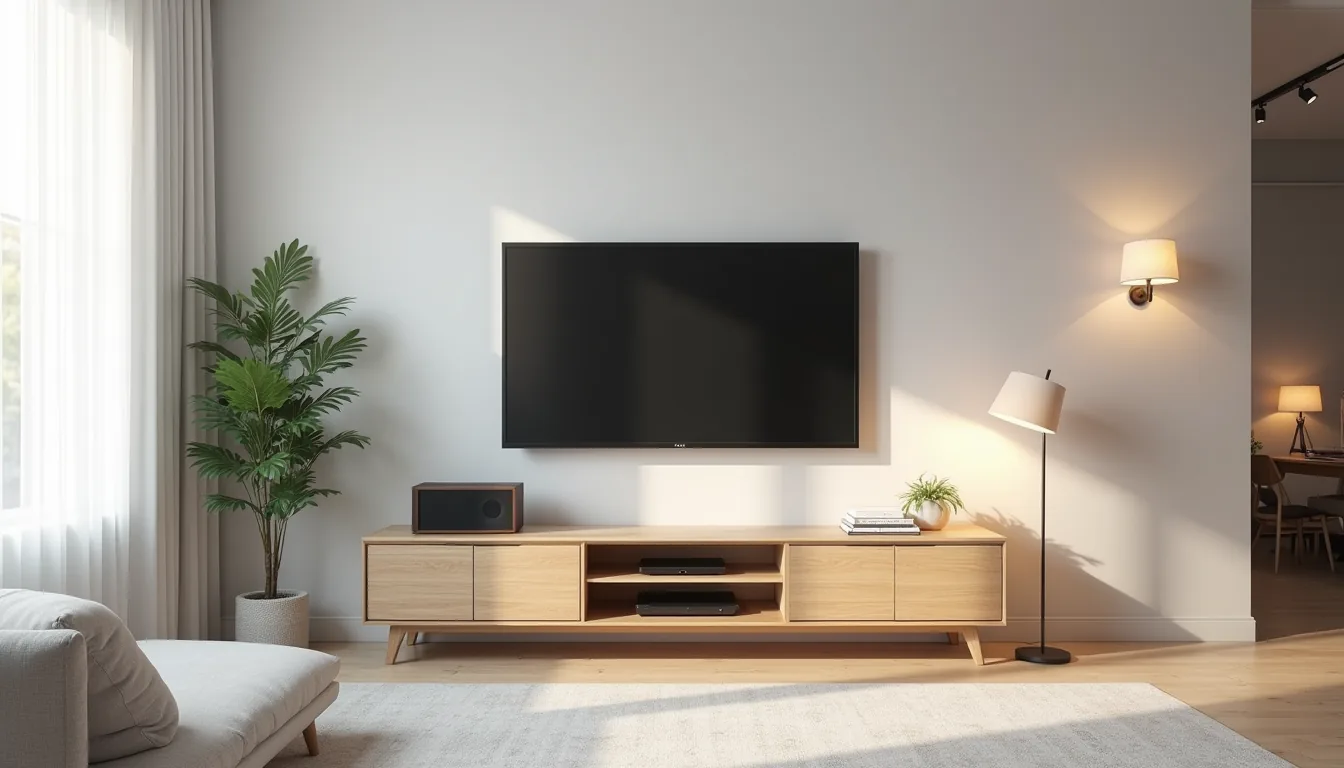
The best TV unit designs for living room spaces aren’t about chasing a catalog look, they’re about matching the unit’s size, storage depth, and material weight to your wall dimensions, viewing distance, and daily habits. A floating console suits a compact rental, while a full-height cabinet handles media-heavy households. Six configurations below cover budgets, renter constraints, and long-term builds, each with the exact proportions and clearance you need to avoid a costly mismatch.
Key takeaways
- Freestanding stands suit renters and frequent movers because they require no wall mounting, assemble in under an hour with basic tools, and can be repositioned when you rearrange seating.
- Built-in walls maximize storage and hide cables permanently, but they cost 3–5 times more than a standalone console and demand professional installation, making them a long-term investment for homeowners.
- Closed storage consoles reduce visual clutter by hiding game consoles and cables behind doors, but they require ventilation gaps of 2–4 inches on the sides or back to prevent electronics from overheating.
- Corner placements work best in rooms under 12 feet wide, but they force seating to angle toward the unit, so measure your viewing distance to keep the screen at least 6–8 feet from the primary sofa.
Freestanding TV Stands: Flexibility and Quick Setup

A freestanding TV stand with wheels is the most adaptable option for renters or anyone who rearranges furniture seasonally. The mobile platform in this setup lets you pull the television forward for movie nights or tuck it against the wall when you need floor space, all without tools or mounting hardware.
Most freestanding units run 48–70 inches wide for a 55–65 inch TV, with a depth of 16–18 inches to keep the screen safely back from high-traffic pathways. You’ll want at least 24 inches of clearance on the open side for the casters to roll freely. Metal legs paired with a wood or engineered-wood frame hold up well under daily use, though you should check the caster locks, they’re essential if you’ve kids or pets that might bump the unit mid-viewing.
The lower shelf is your practical storage zone. Keep it to a single row of media components or decorative baskets; stacking items above knee height creates a visual wall that makes the whole unit feel bulkier than its actual footprint. For small living rooms under 200 square feet, choose a narrower stand (under 52 inches) and skip the side cabinetry entirely, the wheels already give you the flexibility that a built-in can’t match.
Built-in TV Walls: Permanent Storage and Visual Impact

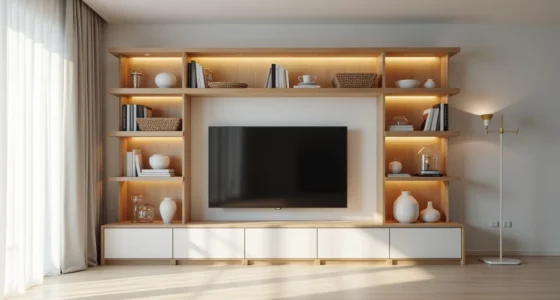
A floor-to-ceiling built-in wall system with a recessed TV niche transforms your living room from a collection of furniture into a single architectural feature. The white painted cabinetry framing the niche visually expands the wall, making the television feel intentional rather than dominant. Closed cabinet doors below hide gaming consoles and cable boxes behind a clean façade, while open shelving above displays books and objects in symmetrical arrangement that draws the eye upward and adds vertical interest.
Built-ins suit homeowners who plan to stay put for five or more years and want maximum storage without floor footprint. Unlike freestanding units, the recessed niche places the TV flush with the surrounding cabinetry, which reduces glare and keeps the screen protected from accidental bumps. You lose the flexibility to rearrange, but you gain a smooth look that increases perceived room height, especially effective in spaces with 9-foot ceilings or higher.
Installation requires professional carpentry and typically runs $2,000–$6,000 depending on wall complexity, materials, and finish. Hardwood plywood with a painted MDF façade offers the best balance of durability and cost; solid wood triples the price without visible benefit once painted. Plan cable management during the rough-in phase: install a low-voltage conduit behind the drywall so HDMI and power cables route invisibly from the niche to the lower cabinets.
The trade-off comes when technology changes. A niche sized for today’s 65-inch TV may not fit a future 75-inch model, so design the opening with 4–6 inches of extra width and height as buffer. If you upgrade frequently, consider a recessed mount that lets the TV pull forward slightly, or opt for a built-in with an open front panel that can be modified later.
Recessed lighting in the soffit above the shelving adds ambient glow without competing with the screen, use dimmable LEDs to control the mood.
Floating Shelves and Minimalist Mounting

Three stacked floating wooden shelves on a white wall hold a single flat-screen TV on the top shelf, with only a few minimal decorative objects below. This setup works best in small living rooms or apartments where floor space is scarce and you want to keep the visual weight near eye level. The generous gaps between each shelf prevent the arrangement from feeling crowded while allowing natural light to pass through, preserving an airy, open atmosphere.
Weight limits are the critical constraint here. Standard floating shelves with 2–3 cm solid wood and hidden metal brackets support roughly 15–25 kg, which fits most 43–55-inch TVs but not larger models. Wall construction matters: drywall requires hollow-wall anchors rated for the combined weight, while solid brick or concrete gives you more margin.
Verify the bracket rating against the TV’s actual weight before mounting, and place the shelves 35–40 cm apart to accommodate soundbars or streaming devices on the middle level.
Styling stays disciplined: one or two books, a small plant, and a cable box tucked behind a shelf edge. Exposed wires can ruin the effect, so route them through a cable raceway painted to match the wall or install an in-wall power kit, check local electrical codes before cutting into drywall. This approach suits renters who can patch a few screw holes at move-out, but confirm your lease allows wall mounting first.
If you expect to upgrade to a larger TV, budget for a media console instead, since shelf limits cap your screen size.
Media Consoles with Closed Storage

A dark walnut media console with three front drawers and a recessed base delivers the most balanced solution for hiding cables, game controllers, and streaming devices while keeping the TV at a comfortable viewing height. The recessed base creates a floating visual effect that makes the piece feel lighter than its footprint, and it leaves a clean gap for robotic vacuums to pass through. Closed storage suits households with children, pets, or anyone who prefers a clutter-free sightline from the sofa.
Console depth typically runs 35–45 cm, which accommodates most soundbars and set-top boxes without protruding into walking paths, while height should land between 45–60 cm so the screen center sits near eye level when seated. Walnut and other oiled woods require occasional conditioning every 6–12 months to prevent drying and cracking; a matte polyurethane finish reduces that maintenance to simple dusting. In small living rooms, choose a 120–150 cm console to avoid overwhelming the wall, medium rooms can handle 150–200 cm, and large open-plan spaces benefit from a 200–240 cm piece that anchors the seating zone.
This is the long-term investment route, expect to spend two to three times what a budget shelving unit costs, but the joinery and solid wood construction typically outlast multiple TV upgrades. Pairing the console with matching side cabinets creates Living Room TV Units for a More Cohesive Look, but measure your available wall width first to prevent the arrangement from crowding doorways or heating vents.
Corner and Angled TV Placements
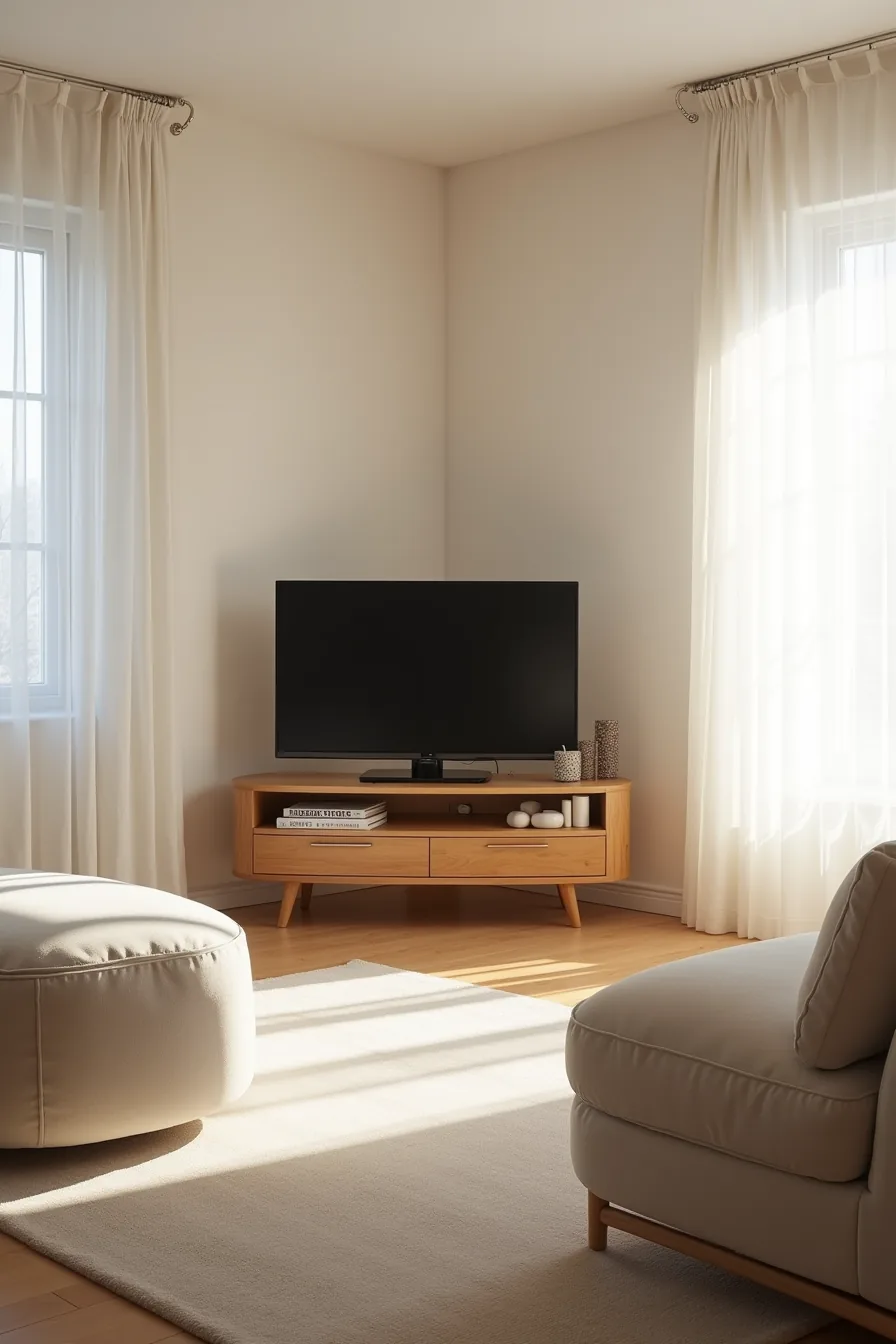
A corner TV unit with the flat-screen mounted on an angled bracket at 45 degrees to the room corner solves the awkward layouts where a long wall is broken by a doorway, window, or radiator. The low wooden storage drawers beneath keep the silhouette compact while holding media accessories, and the bracket lets you pivot the screen up to 30 degrees for glare control. This setup suits L-shaped rooms or open-plan spaces where two perpendicular sofas face each other, and it frees the longest wall for shelving or art.
Sight-line math matters more here than anywhere else: the screen center should sit within 15 degrees of your primary viewing axis, so measure the distance from the corner to each sofa’s center point before committing. Angled placement trades a few degrees of optimal viewing for dramatically better traffic flow, you gain a clear path behind the seating zone instead of squeezing past a console. Which layout fits?
If your room measures under 3.5 meters across the narrowest dimension, corner placement often beats fighting a shallow wall. Budget route: a basic corner cabinet from a flat-pack retailer plus a wall-mounted swivel bracket, both under ₹15,000 combined; renter-friendly option: a freestanding corner stand with no wall anchoring, though you lose bracket adjustability.
Matching Your TV Unit to Room Size and Viewing Needs
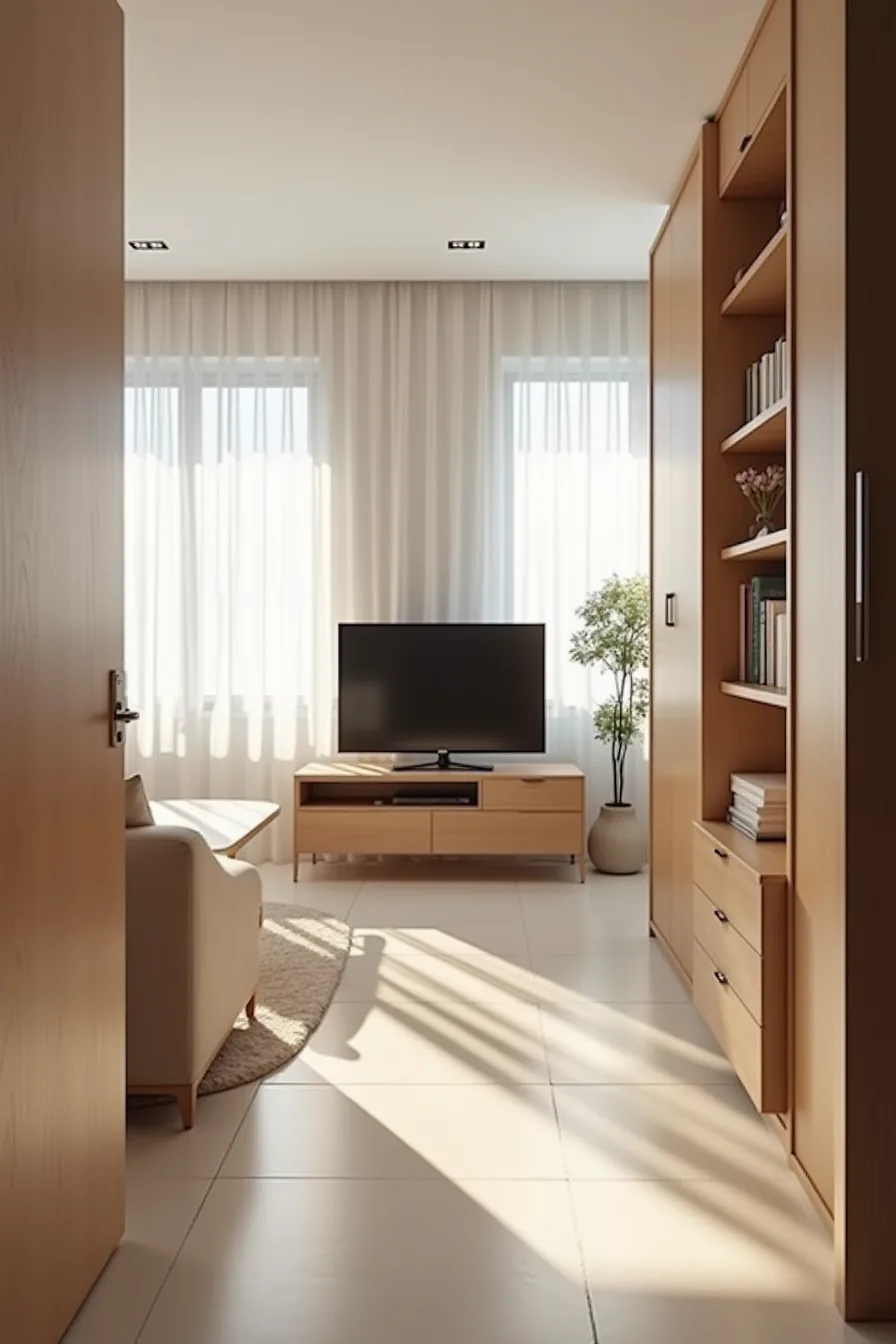
The scale of your TV unit should follow your room’s dimensions, not the size of your screen. In a compact apartment, a small TV unit with a flat-screen TV mounted centrally above it keeps the visual weight low and preserves floor space, but the real constraint is your seating distance. For a 43-inch screen, your sofa should sit roughly 2 to 3 meters away; anything closer strains the eyes, and anything farther makes the picture feel small.
A unit depth of 30–40 centimeters works in tight rooms, leaving you a clear walking path of at least 60 centimeters in front of it.
Your storage and viewing needs dictate how much cabinetry you actually require. Count your devices, set-top box, game console, soundbar, and measure their widths before choosing shelving. If you own fewer than ten physical discs or no gaming hardware, a slim unit with one open shelf and one closed drawer handles daily clutter without making the wall feel heavy.
In larger open-plan spaces, scale up proportionally: a 55–65-inch screen pairs with a unit spanning 180–240 centimeters, and you can add closed cabinets for media you rarely access. Match the unit’s finish to your floor tone (lighter floors pair well with darker units, and vice versa) to anchor the arrangement without overwhelming the room.
Your next move
Start with the wall you watch from most, not the one you think looks best. Measure the viewing distance from your sofa to that wall, if it’s under 2.5 meters, a floating shelf or slim console under 40 cm deep will serve you better than a bulky media wall.
Before you buy anything, tape out the unit’s footprint on the floor with painter’s tape. Live with it for two days. If you keep nudging the tape back, your unit is too big.
Pick one direction from this guide, budget, renter-friendly, or investment, and stick to it. Then order your TV mount before the unit arrives, so you’re not waiting two weeks with a leaning screen.
Frequently Asked Questions
Should I choose a built-in TV unit or a freestanding stand?
Choose built-in for a permanent, custom look that maximizes wall space and integrates lighting. Choose freestanding if you rent, move often, or want flexibility to rearrange. Built-ins cost two to three times more.
What is the ideal height for a TV unit in a living room?
Center the screen at seated eye level, typically 40–48 inches from the floor. For a unit, that means a top surface around 36–42 inches high. Adjust for taller seating or recliners.
How much storage do I actually need in a TV unit?
Measure your media devices, games, and décor. Most households need 4–6 closed drawers or cabinets plus one open shelf. If you stream only, two shelves suffice.
Over-storing invites clutter.
Can I install a TV unit myself, or do I need a professional?
Freestanding units: assemble yourself in 1–2 hours with basic tools. Wall-mounted or built-in units: hire a professional for structural mounting, cable concealment, and leveling. Incorrect installation risks wall damage and safety hazards.