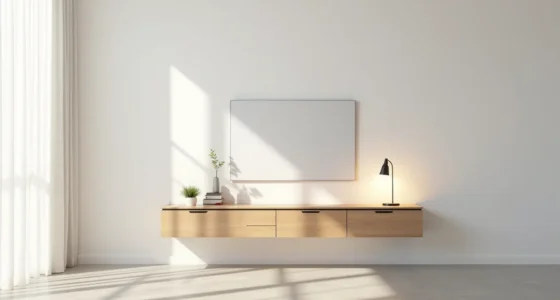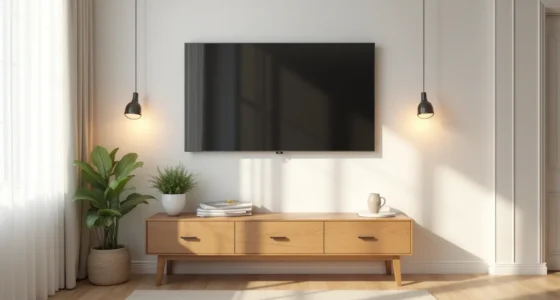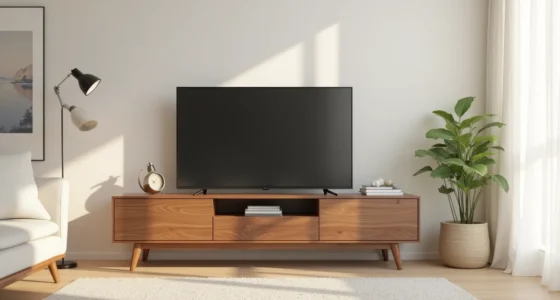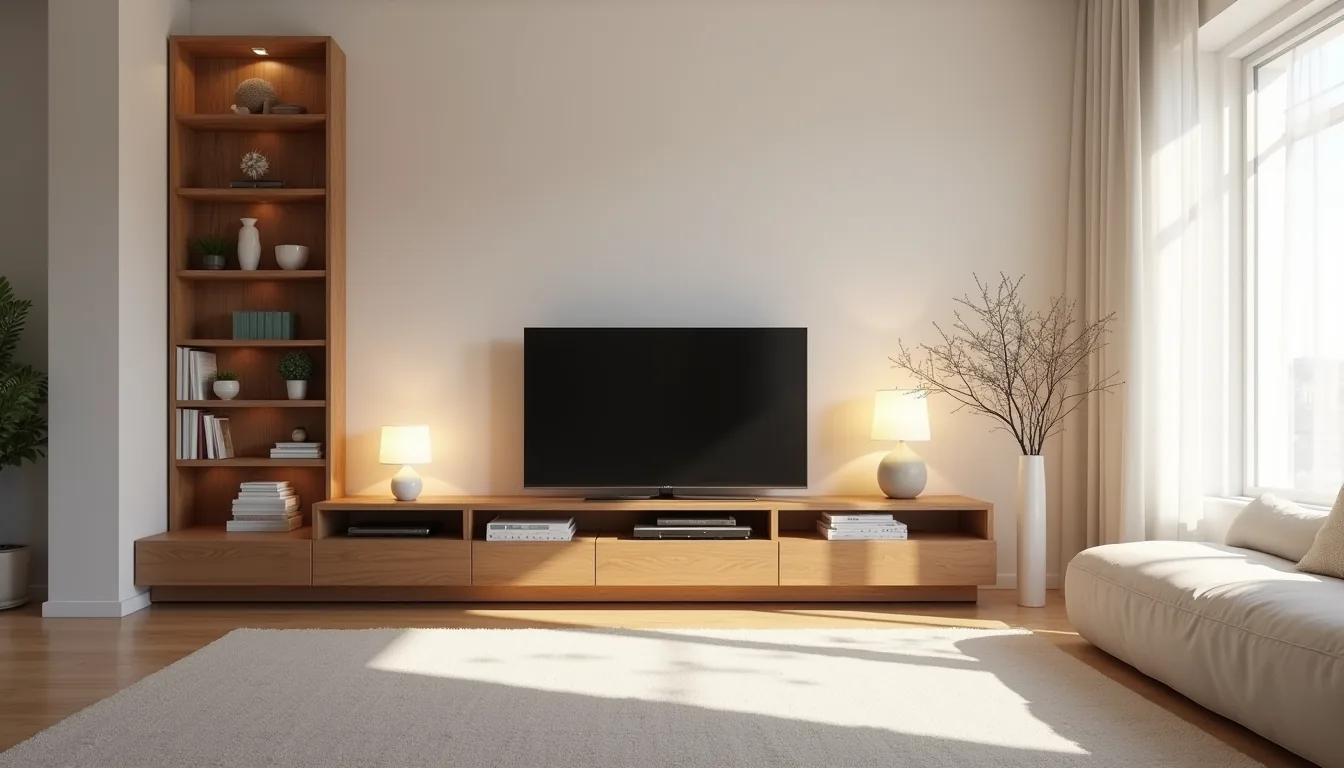
Your TV unit interior design should start with the wall it sits on, not the television you plan to mount, because the cabinet, shelving, and negative space around the screen determine how the entire room feels. That wall dictates your proportions, your storage depth, and your traffic flow before you ever pick a finish. The six approaches that follow range from a floating shelf on a rental wall to a full built-in joinery system, each with the exact dimensions, costs, and maintenance realities you need to match one to your space.
Key takeaways
- Match proportions first: Your TV unit should span roughly two-thirds of the wall width and sit at eye level when seated, with 6–8 inches of clearance above the screen for ventilation.
- Plan for both states: Choose a unit with closed storage or adjustable shelving to hide cables and clutter when the screen is off, and keep decorative items minimal to avoid visual noise during viewing.
- Prioritize freestanding for flexibility: If you rent or plan to rearrange, a modular freestanding unit under 70 inches wide suits most medium rooms, while built-ins require permanent wall anchoring and cost 2–3 times more.
- Match materials to your lifestyle: Opt for matte laminate or MDF with a wipe-clean finish in high-traffic homes, and avoid open particleboard shelves near heat sources, which can warp within a year.
Match Your TV Unit to Surrounding Furniture

A TV unit succeeds when it reads as part of the room’s furniture family, not as a standalone appliance stand. Look at a mid-century modern credenza in oak with tapered legs positioned below a wall-mounted TV. The sofa arm and side table beside it share the same warm wood tones, which creates a single visual language across the entire sitting area.
Match your unit’s finish to the dominant wood in the room, or intentionally contrast it with a complementary material like matte black steel against light oak. Proportion matters equally: the credenza’s top should extend at least a few inches beyond the TV’s width on each side to anchor the screen visually. For open-plan rooms, repeat one accent color from your rug or cushions in the unit’s hardware or shelf liners to tie the composition together without introducing competing patterns.
Plan for Screen On vs Off Visual Impact
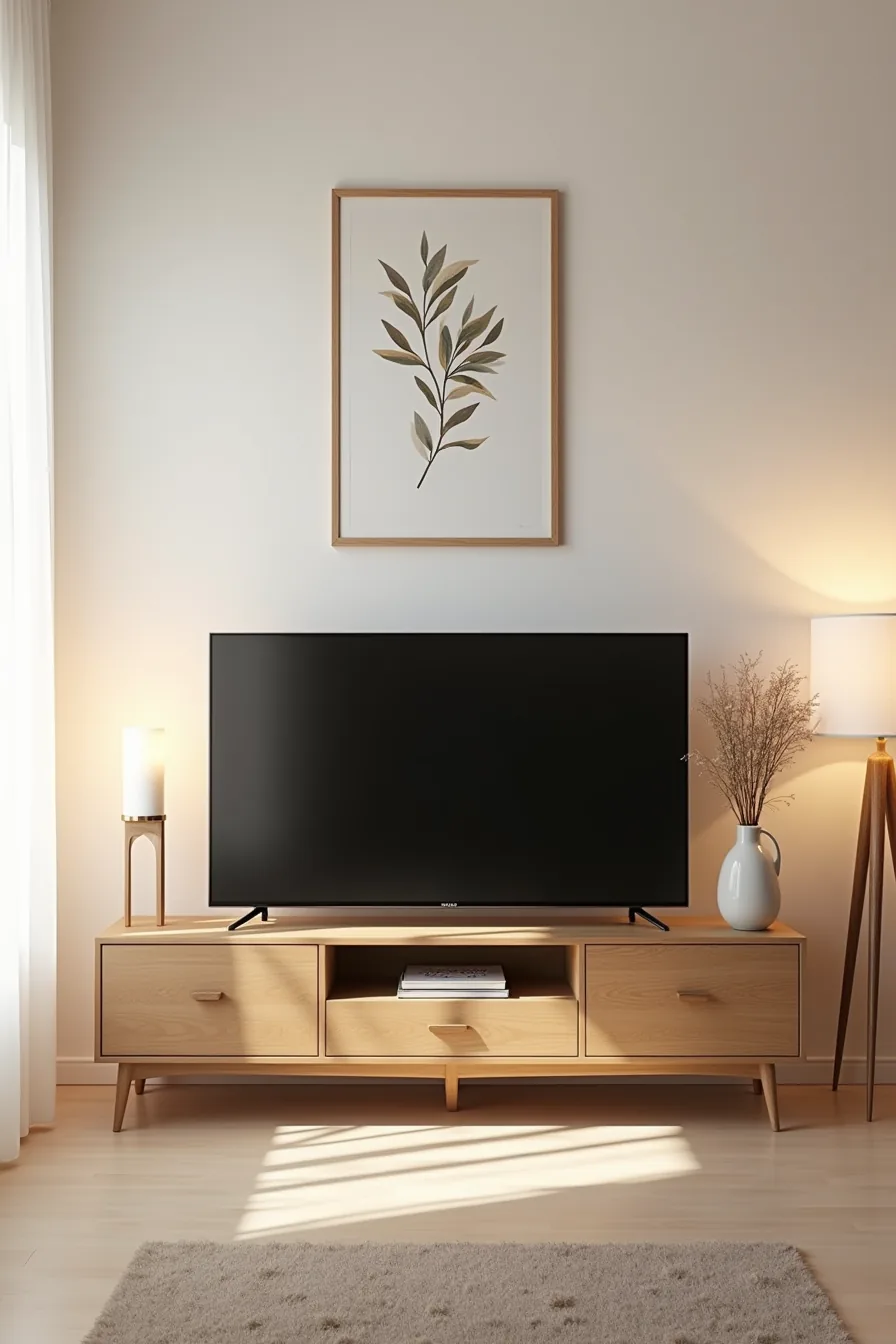
A powered-off TV is a black rectangle that can dominate your wall. The dark TV unit, framed botanical print, decorative vase, and candle in this setup work together to soften that effect. When the screen is off, your eye lands on the print and objects first, not the blank glass.
Position the framed print directly above the screen and keep the vase and candle at slightly different heights on either side. This asymmetry draws attention outward and breaks the TV’s hard edges. For the screen-on state, avoid placing anything glossy or reflective near the unit, candlelight and vases with mirrored finishes create distracting glare during evening viewing.
Choose a matte-finish TV if you’re buying new; it reduces reflections significantly compared to glossy panels. And consider bias lighting behind the unit, a simple LED strip costs little and improves perceived contrast while making the screen feel intentional rather than dominant.
Choose Between Freestanding and Built-In Composition
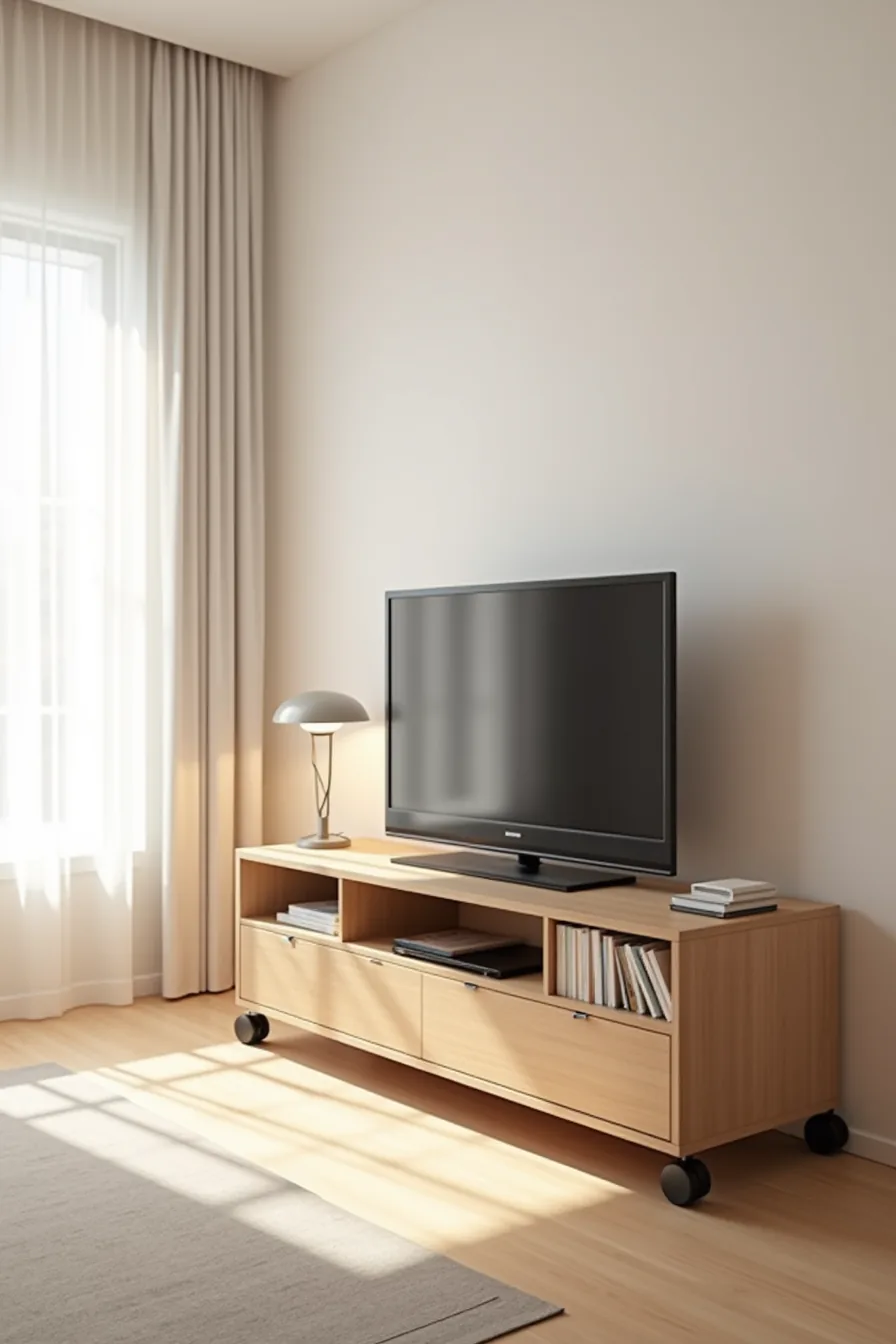
Your first structural decision determines everything else: whether the TV unit anchors to the wall or stands independently. A freestanding modular unit on wheels, like the one with multiple compartments and the TV mounted directly on top, gives you total flexibility. You can reposition it for gatherings, shift it to reduce glare during afternoon viewing, or take it with you when you rent.
Built-in composition means a fixed, custom installation, typically floor-to-ceiling cabinetry or a recessed wall niche. It costs 2–3 times more than a freestanding setup and requires permanent modification, but it reclaims floor space and integrates wiring, storage, and ventilation behind flush panels. Freestanding suits medium and large rooms where you want the floor visible around the unit; built-ins work best in small spaces where every inch of floor clearance matters.
For renters, the wheeled modular route avoids wall damage entirely. For owners planning a 5+ year stay, built-ins deliver the smooth look that freestanding units can’t match.
Give Your TV Unit a Cleaner Visual Rhythm
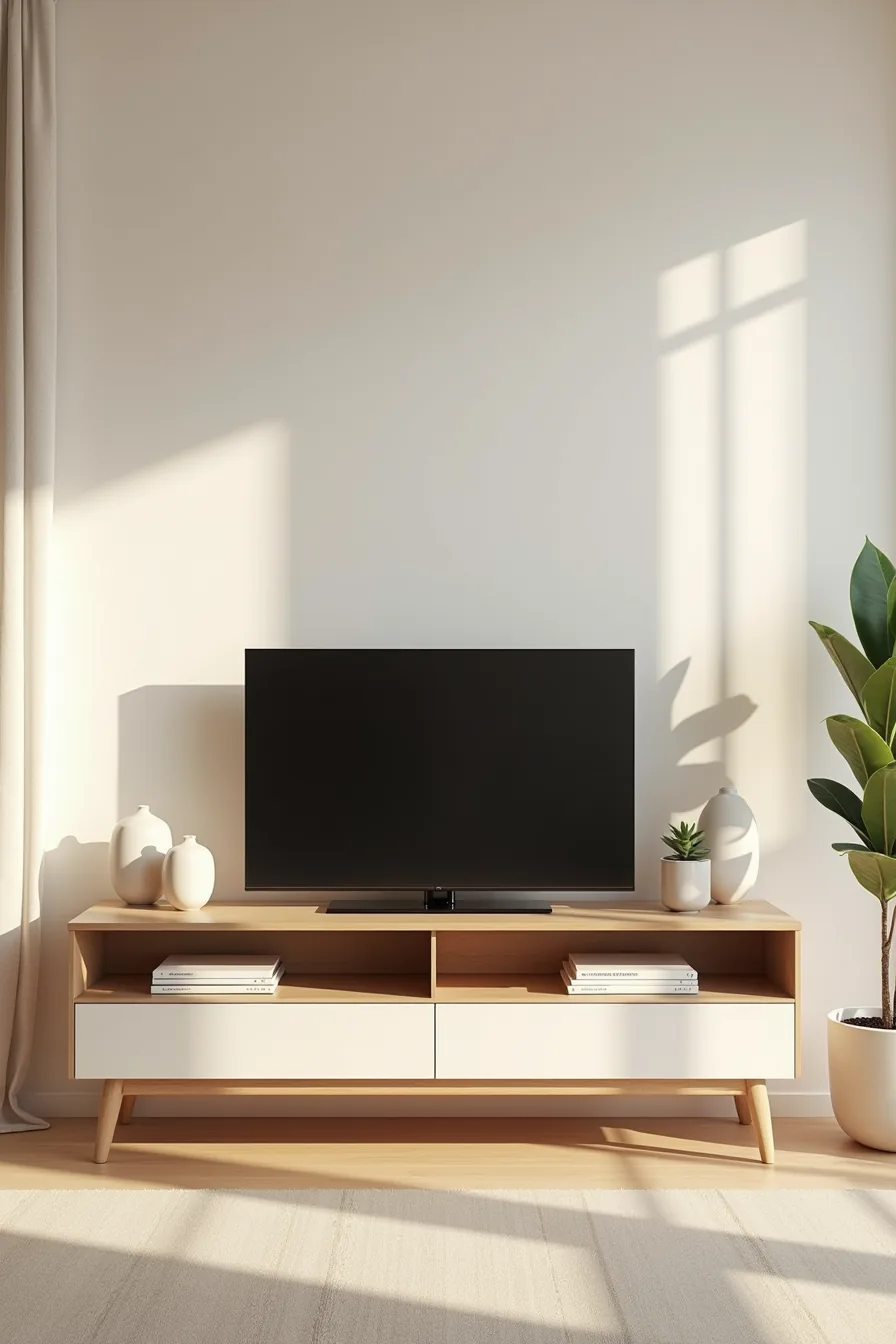
Symmetry is the fastest path to a calm focal point. Center the TV, then mirror your storage: identical ceramic vessels on the left and right shelves create a deliberate frame around the screen. The negative space between objects matters as much as the objects themselves, leave at least 30–40% of each shelf surface empty so the eye rests instead of scanning.
This approach suits living rooms where the TV doubles as architectural anchor rather than background noise. To reproduce it, choose two matching décor pieces per shelf level, keep spines and cords out of sight, and limit each shelf to one functional category. If you prefer asymmetry, balance visual weight instead of exact copies, a tall plant on one side offsets a stacked book pile on the other.
Either way, the rule holds: the TV occupies one-third of the unit’s total width, and everything else supports that proportion.
Scale and Proportion for Your Room Size
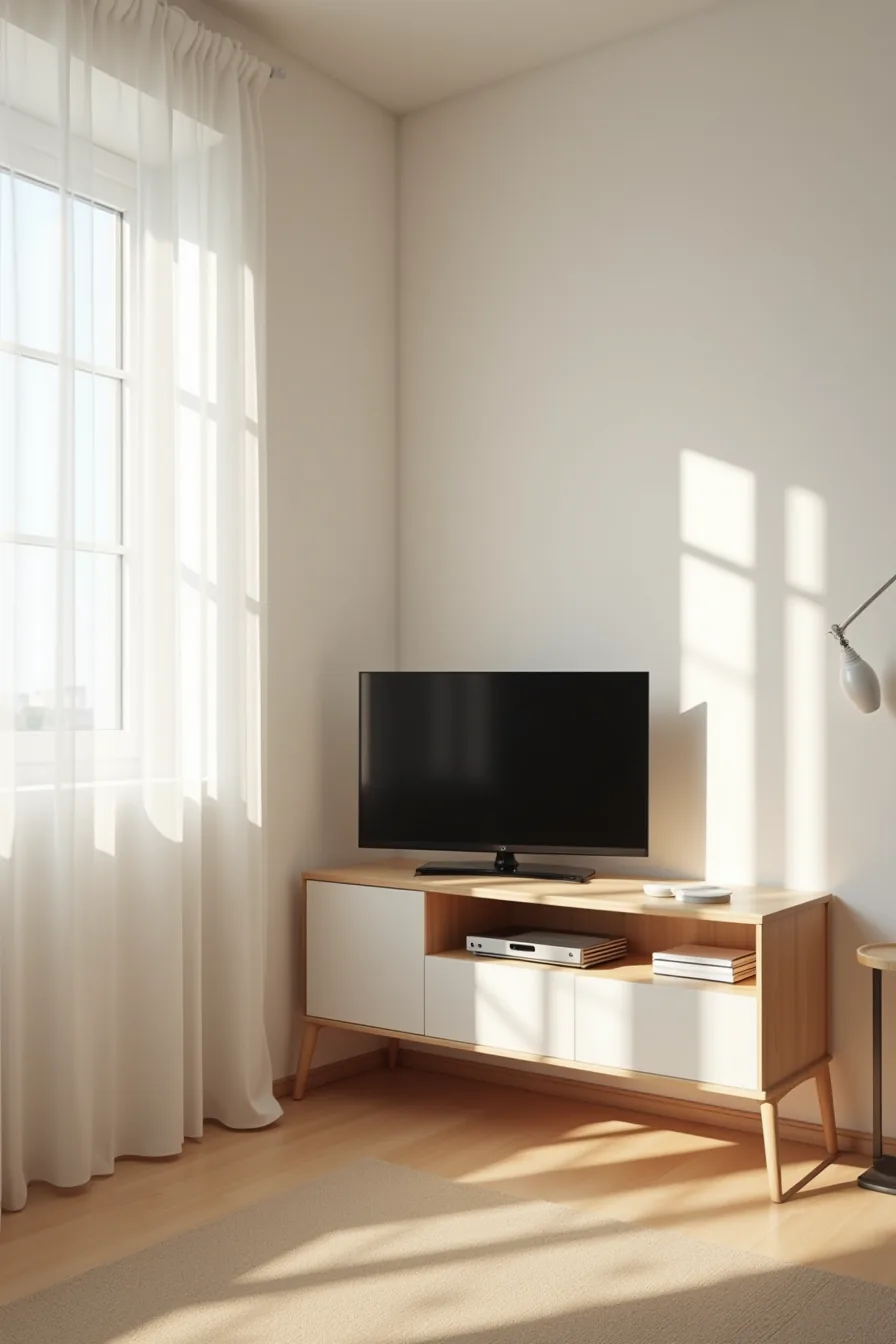
In a small living space under 150 square feet, your TV unit should occupy roughly one-third of the wall it sits on. A compact unit around 36–44 inches wide with a depth of 12–16 inches leaves enough clearance for walking paths and keeps the room from feeling crowded. The white wall and corner placement in this setup work because the unit hugs the wall without jutting into traffic flow, the minimal clearance on either side is intentional, not an oversight.
For this scale, choose a unit that’s slightly wider than your TV but not by more than 6–10 inches per side.
Medium rooms between 150 and 300 square feet can handle units 60–80 inches wide with depths up to 18 inches. This gives you room for flanking storage without overwhelming the sightline. For large spaces over 300 square feet, go wider, 90 inches or more, but keep the unit height under 60 inches unless you’ve vaulted ceilings.
A low, wide profile anchors the TV while preserving the room’s openness. Whatever your room size, the TV should fill no more than 60–70% of the unit’s width; the remaining space keeps the composition balanced.
Material and Maintenance Considerations
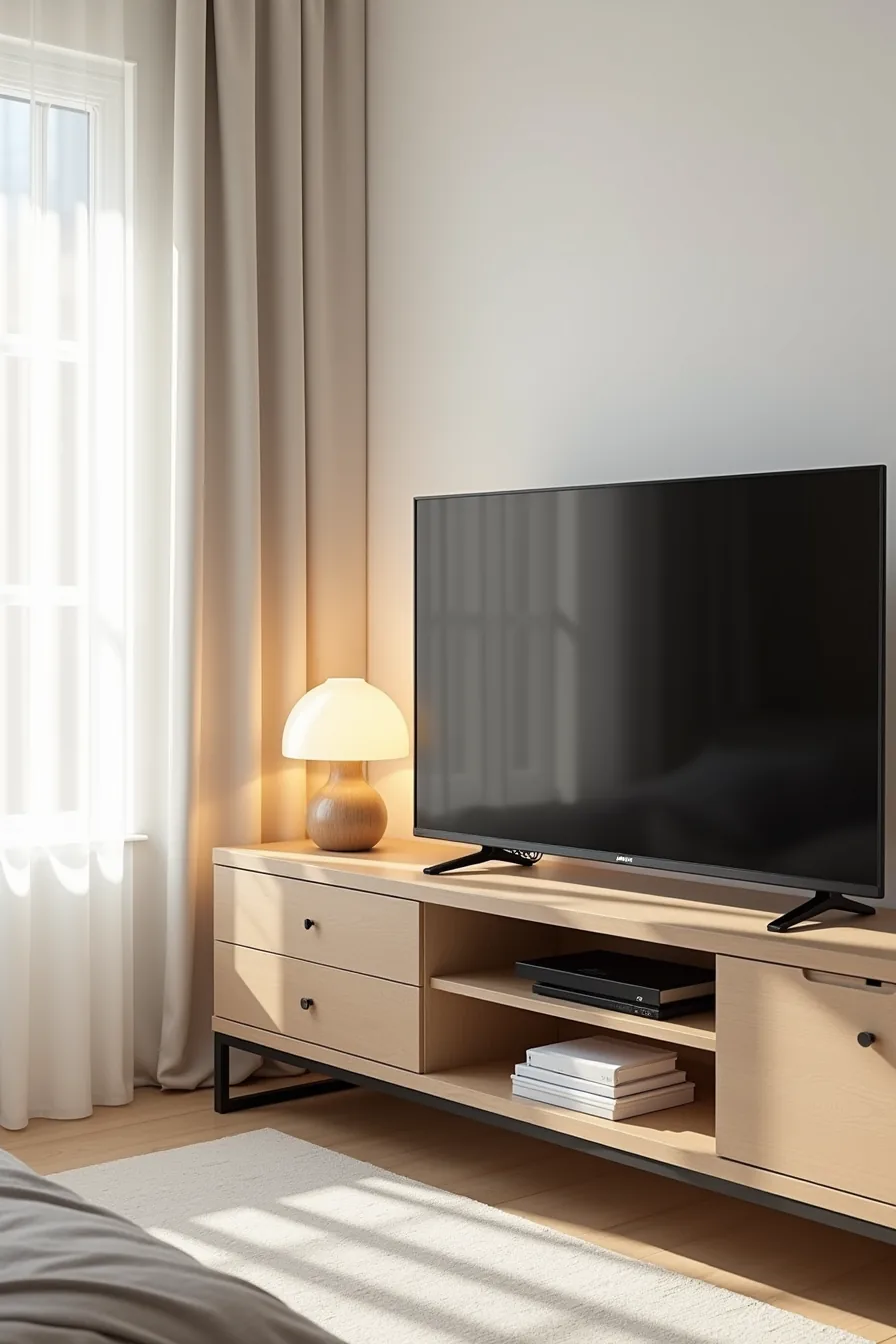
Wood and metal combinations, like the matte black frame and light oak shelves in this unit, strike the best balance between durability and upkeep. Solid oak resists scratches better than pine or MDF veneer, and a matte black powder-coated metal frame hides fingerprints far more effectively than a glossy or brass finish. Expect to dust the open shelves weekly; a microfiber cloth lifts dust without scratching the surface or leaving lint on the glass front panel.
Glass-fronted lower cabinets demand the most attention, smudges show within days, especially if you’ve kids or pets. Use an ammonia-free glass cleaner and a lint-free cloth; avoid paper towels, which leave streaks. For the wood, apply a furniture polish every two to three months, but skip silicone-based products, which build a film that attracts dust.
The cost trade-off is clear: engineered wood with a thermofoil finish runs 30–50% less than solid wood but chips at the edges within a few years, while solid oak lasts decades with minimal care.
Where to Start
You now have six viable directions for your TV unit, each with distinct costs, maintenance demands, and visual payoffs. Match your choice to your actual constraints: rental rules, wall type, viewing distance, and how much clutter you need to hide.
Measure your wall width and viewing distance before committing to any design. A unit that dominates the room or sits too far from your seating will undermine the best styling.
Start with a single measurement and a tape sketch of your wall. That ten-minute exercise will eliminate half the options and clarify which route fits your space.
Frequently Asked Questions
What size should my TV unit be relative to my TV screen?
Your unit’s width should exceed your TV’s diagonal by roughly 15–25 percent. For a 55-inch screen, that means a 63–69-inch unit. Depth matters less, but keep it under 18 inches to avoid blocking walkways.
Can I use a TV unit in a rental apartment without damaging walls?
Yes, if you choose a freestanding console and skip wall-mounting. Anchor it using removable adhesive straps or furniture anti-tip brackets that screw into the unit’s back, not the wall. Leave the wall untouched, and patch any minor marks with putty before moving out.
How do I prevent my TV unit from looking cluttered with cables and devices?
Install a cable management tray or raceway behind the unit, and route wires through a single grommet hole. Use a power strip with individual switches, then tuck unused plugs into labeled pouches. Limit visible devices to two, game consoles and a soundbar, and hide the rest in closed cabinets.
What’s the best material for a TV unit that gets heavy daily use?
Solid oak or birch plywood with a sealed matte finish handles scratches and moisture best. Avoid MDF with foil laminate, it chips at edges within a year. For budget, choose powder-coated steel frames with solid wood tops; they resist dents and are easy to wipe down.