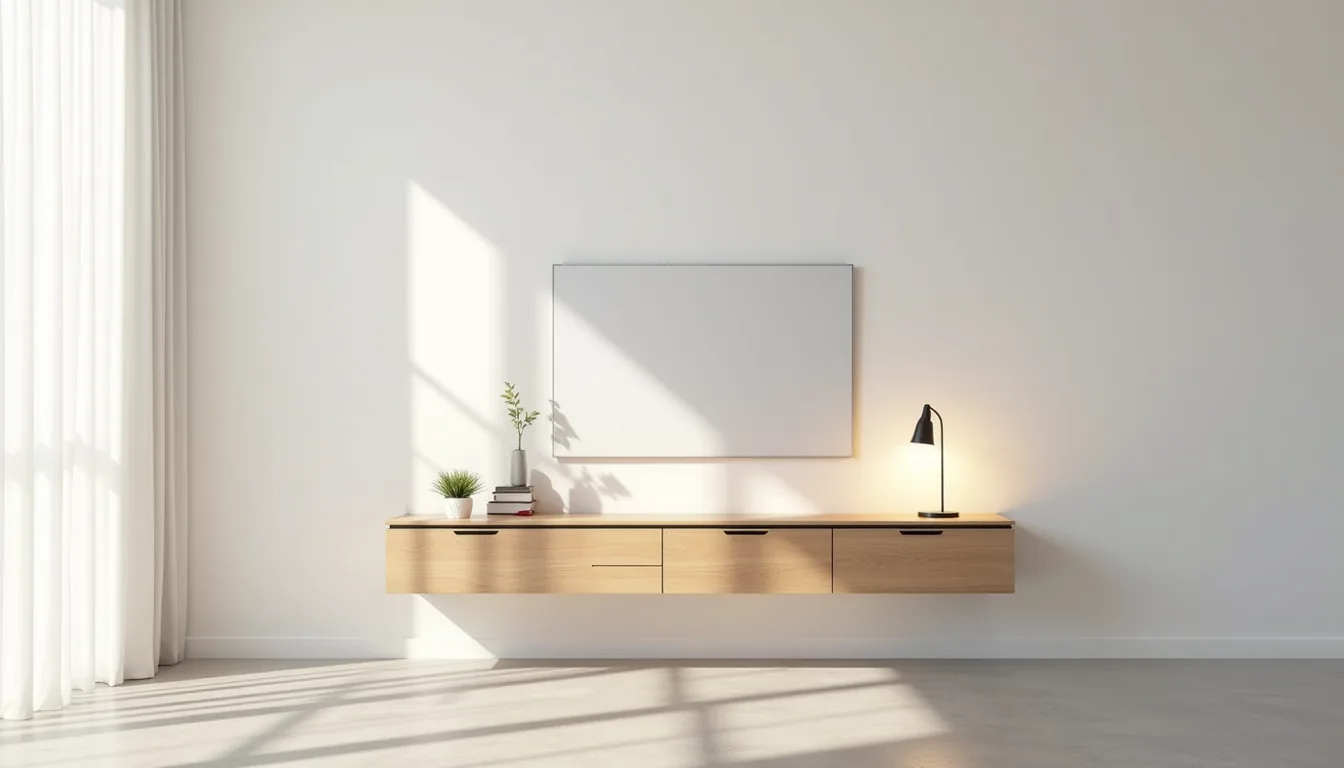
The TV table you choose determines not just where your screen sits, but how much floor space you lose, how your cables run, and whether your room feels open or cluttered. Six distinct approaches, from floating shelves to repurposed sideboards, each solve a different problem, and the right one depends on your room’s dimensions, your viewing distance, and whether you rent or own. You’ll see exactly what each option costs, what it demands in assembly and maintenance, and which layout mistakes to avoid before you commit.
Key takeaways
- Match your TV table to your room’s circulation: wall-mounted units need 6–10 inches of clearance from a walkway, while corner tables require at least 24 inches of open floor on each side.
- For renter-friendly setups, a modular cube storage system with a TV nook works best because it’s freestanding, requires no drilling, and disassembles into flat panels for easy transport.
- A low-profile console in a bedroom should sit 24–30 inches tall so the screen aligns with your sightline when lying down, and it must leave 2–3 inches of gap behind for cable airflow.
- Repurposed credenzas and vintage cabinets suit long-term investments, but verify the surface depth is at least 16 inches to support a TV base and that drawers clear the wall when opened.
Wall-Mounted Slim Media Table for Minimal Floor Impact
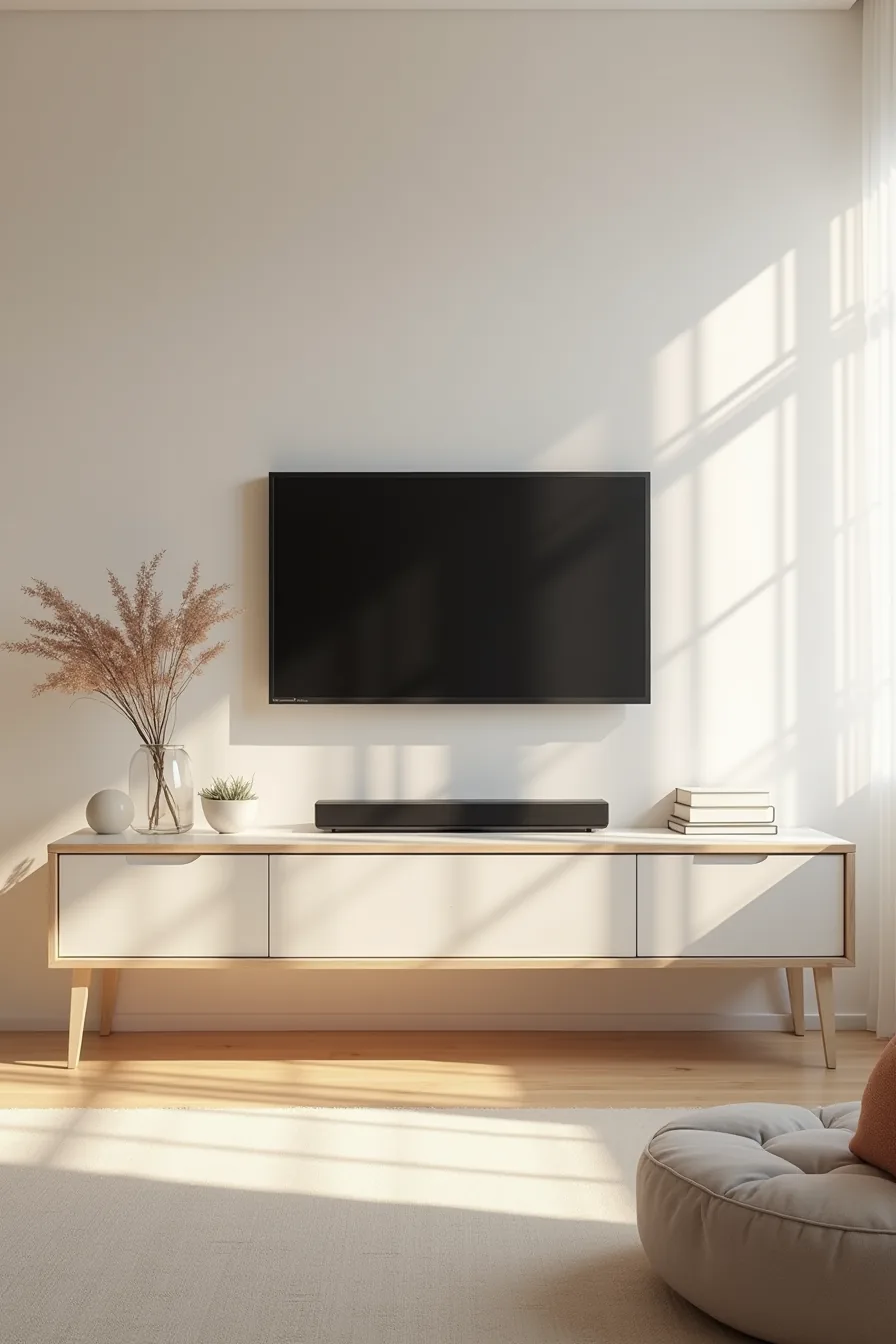
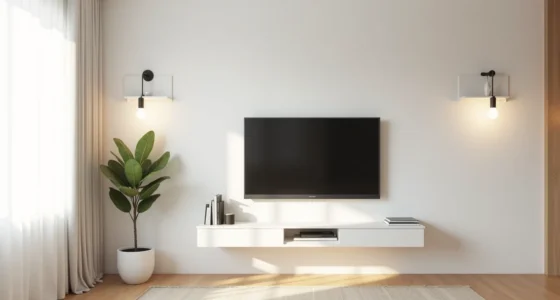
If your priority is reclaiming square footage, a wall-mounted slim media table is one of the most effective Tv Table Ideas That Free Up Floor Space. The example setup uses a console only 8–10 inches deep, which is enough for a soundbar and a single decorative object without protruding into the walkway. You anchor the unit directly into wall studs using heavy-duty brackets rated for 50–75 pounds, which accommodates most TVs up to 65 inches.
This approach suits small apartments and narrow living rooms where every inch of floor matters. You lose the ability to stash items below, so budget for a separate basket or side table for remotes and cables. Renters can use heavy-duty adhesive strips rated for 30–40 pounds instead of drilling, but check your lease first, as removal can peel paint from drywall.
Expect installation to take 45–60 minutes if you’ve a stud finder and a level; the visible studs in this setup confirm you’re hitting solid wood, not hollow drywall anchors.
Low-Profile Console as a Bedroom TV Solution
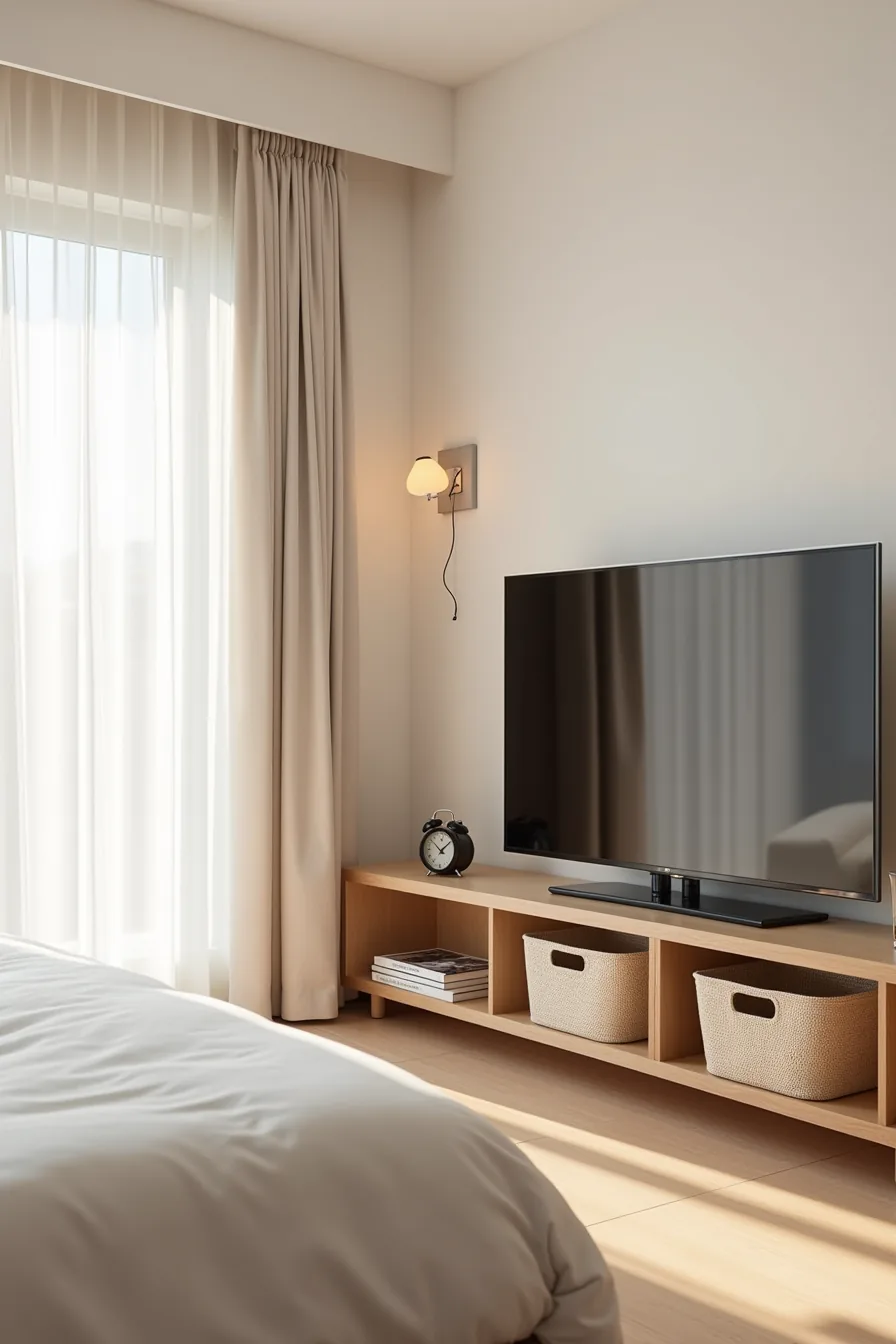
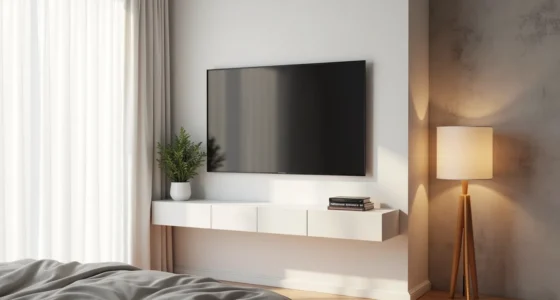
A shallow console at 12–16 inches deep works as a bedroom TV solution because it leaves enough floor space to walk around the bed comfortably. The setup pictured here uses a 14-inch-deep wooden console at the foot of the bed, centered for a clean sightline from your pillows. You gain a surface for a TV without turning the room into a media cave.
Choose solid wood or a sealed laminate finish, as both resist the fine dust that settles on bedroom surfaces far better than open-grain oak or raw MDF. The fabric storage basket and alarm clock on the remaining surface show you can mix function with decor, just keep the top two-thirds clear so the TV’s ventilation isn’t blocked.
Position the screen so its center sits at or slightly below eye level when you’re seated in bed; raise it with low feet if needed. Darker finishes hide smudges longer, but lighter woods reflect less glare from bedside lamps. Wipe the surface weekly with a dry microfiber cloth to prevent dust buildup around the screen’s vents.
Modular Cube Storage with TV Nook Integration
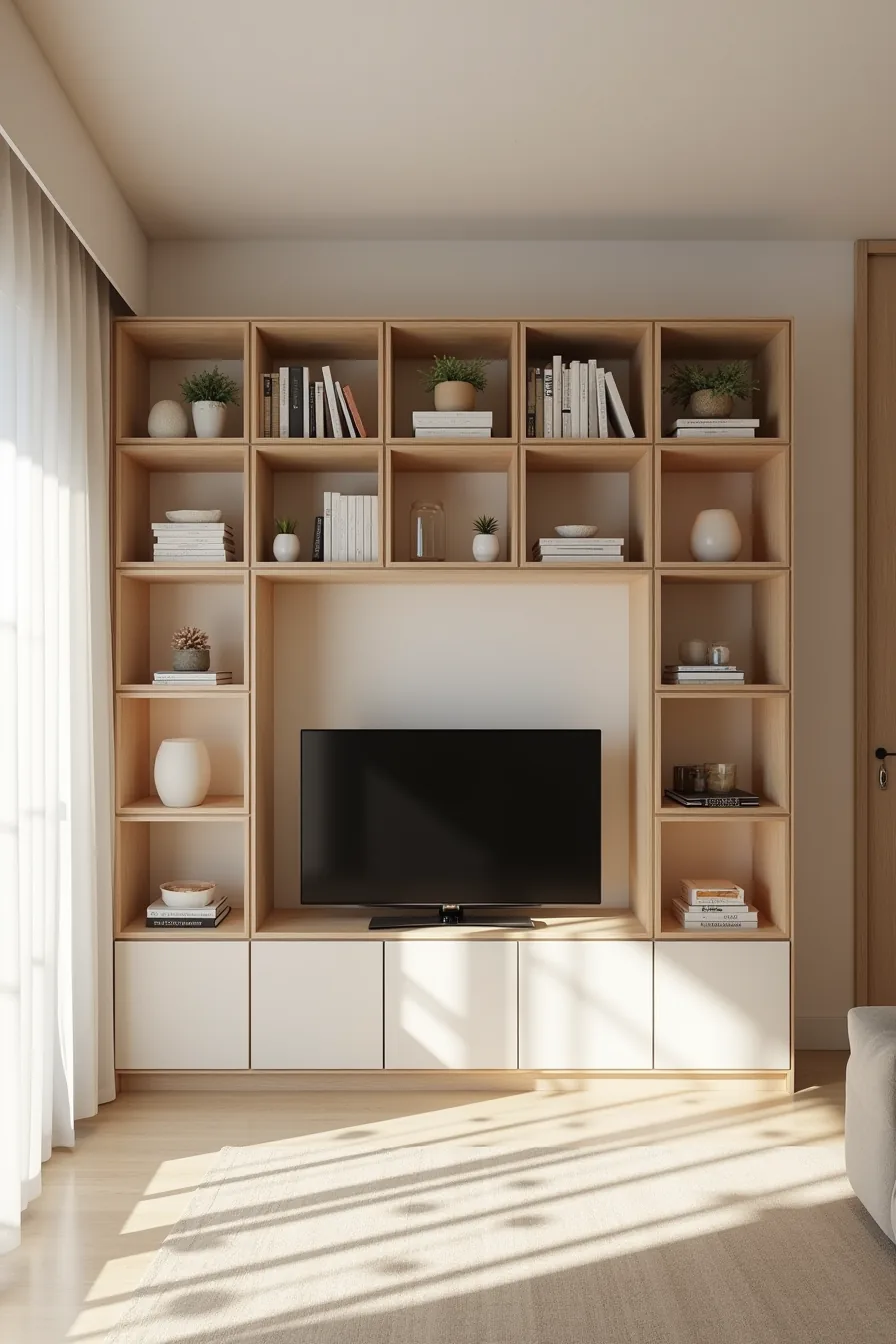
Stacking cube units into a 3×3 grid creates a TV table that doubles as a full wall-storage system, which suits living rooms where you need space for both media gear and everyday clutter. The center cube opening becomes the TV nook, with the screen recessed about 12–15 inches from the front face of the shelves. Check your TV’s width against the cube’s interior dimensions before assembly, most standard cubes run 13–15 inches square, so a 32–43 inch screen will fit flush only if the opening is wide enough.
You gain flexibility that a single-piece console can’t offer: rearrange the grid to a 2×3 layout for a low profile, or add a fourth cube column for a media wall in larger rooms. The surrounding cubes hold storage boxes for cables and remotes alongside decorative objects, which keeps the look intentional rather than cluttered. Expect assembly time of 1–2 hours for a 6–cube unit, and anchor the grid to the wall if you’ve children or pets, a top-heavy stack can tip forward when the lower shelves are empty.
Particleboard units with laminated surfaces are the budget route at roughly half the cost of solid-wood alternatives, but they won’t survive a move as well; if you’re renting, choose a lighter-weight option that disassembles cleanly. For minimal storage needs, this system still earns its footprint because the TV itself occupies the depth you’d otherwise waste.
Repurposed Credenza or Vintage Cabinet as TV Base
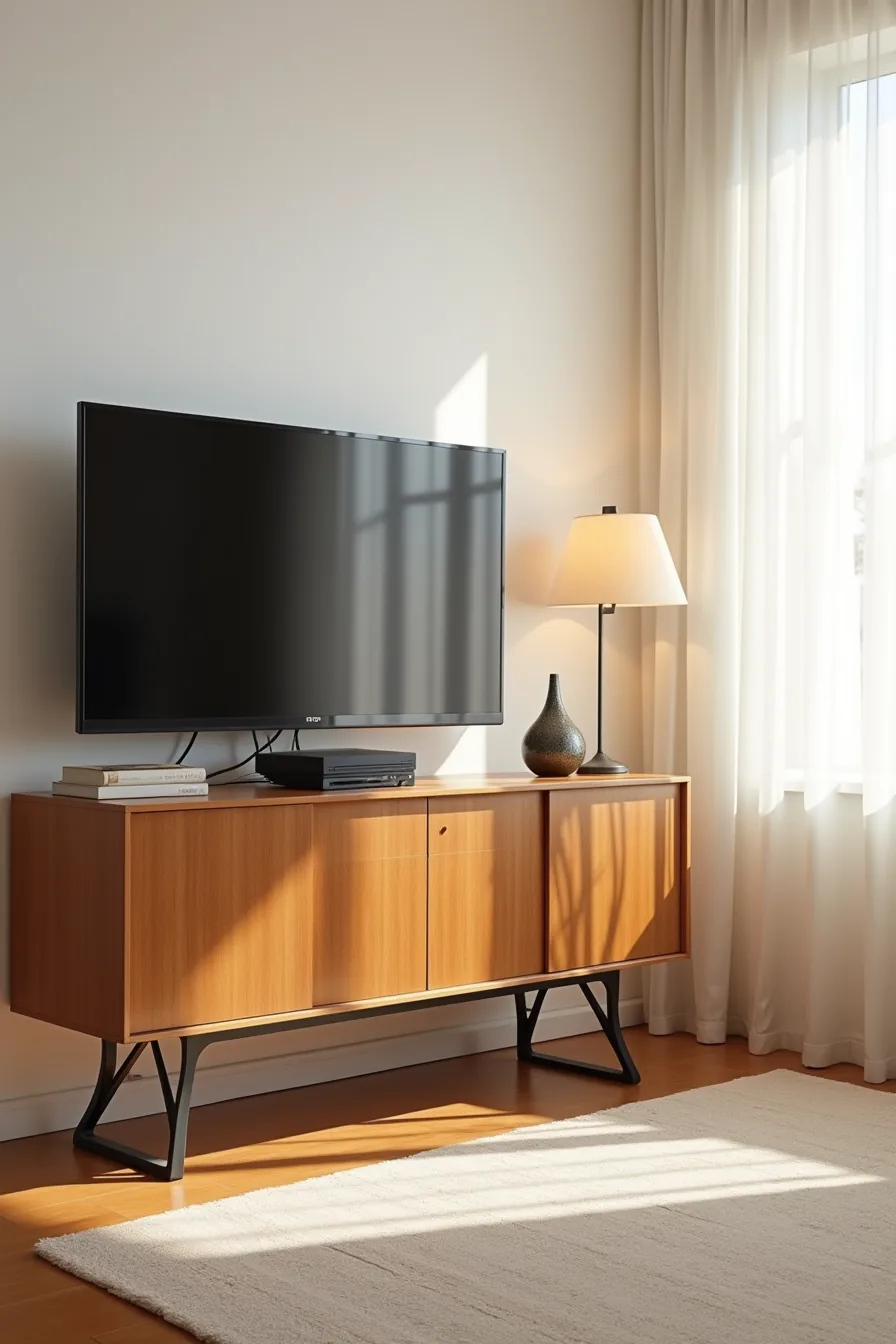
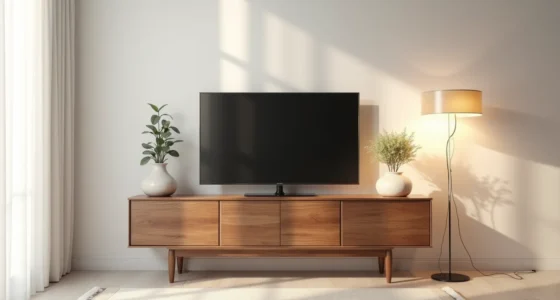
A mid-century credenza with solid wood veneer and tapered metal legs offers character that new flat-pack units rarely match, and the enclosed cabinet hides cable boxes, gaming consoles, and streaming devices behind closed doors. Before committing, measure the interior depth, most vintage credenzas run 16–20 inches deep, which comfortably fits modern equipment but leaves little airflow, so drill 2-inch ventilation holes in the back panel if none exist. Check that the surface is level and the legs are structurally sound; a wobbly base will transfer vibration to your flat-screen TV and shorten its lifespan.
For cable management, run cords through the credenza’s existing back gap, then secure them with adhesive cable clips along the rear edge so nothing dangles visibly. A vintage decorative object on one side and your streaming device on the other balances the composition without competing with the screen. Expect to pay $150–$400 for a quality secondhand piece, and budget another $30–$60 for wood cleaner, felt pads, and clips.
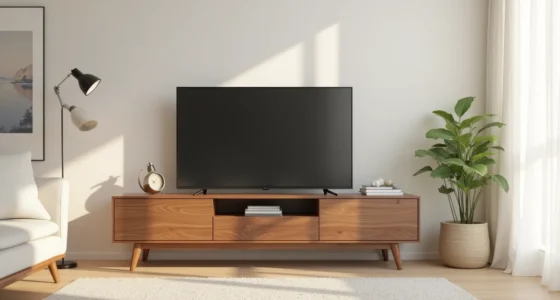
This route suits renters because it’s freestanding and leaves no wall damage, but weigh the trade-off: older cabinets often lack the wide, low proportions of modern consoles, so confirm your TV’s height doesn’t exceed the credenza’s top surface or the piece will look top-heavy. Avoid painted or laminate finishes that chip easily; solid wood with original patina requires only occasional dusting and annual oil treatment.
Narrow Bench with Open Shelving Underneath
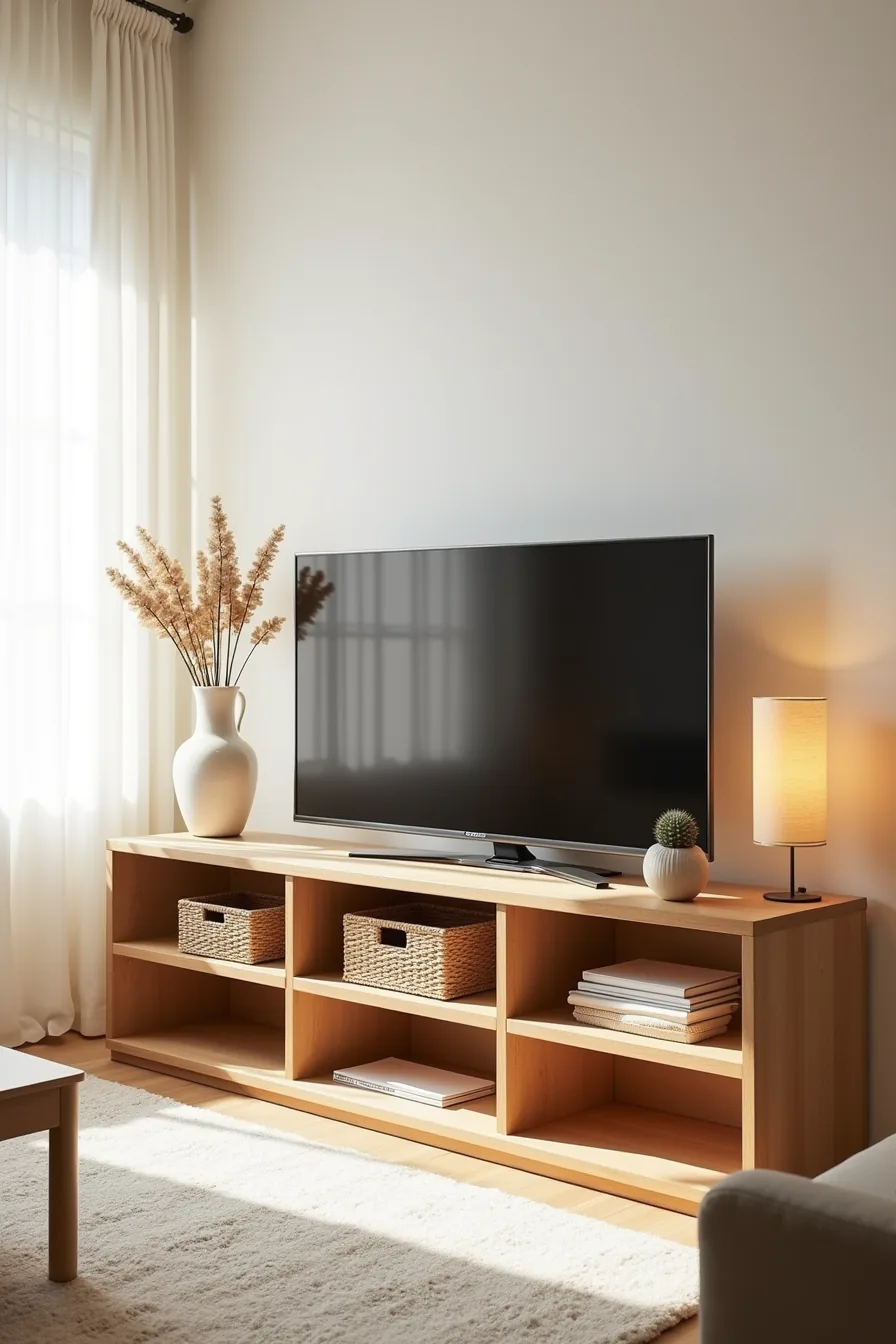
A bench-style TV table in the 36–48 inch range suits apartment living rooms where a bulky console would dominate. The 16-inch depth keeps the piece close to the wall, preserving valuable floor space for foot traffic, while the open lower shelves hold woven storage baskets that hide remote controls, cables, and children’s toys without hiding the visual lightness of the design. Because the shelves are exposed, keep baskets to two or three identical pieces; mismatched containers make the open storage read as clutter rather than intention.
The bench surface at 18–20 inches tall pairs well with a flat-screen TV of 43–55 inches, leaving a balanced proportion between the furniture and the screen. For durability in high-traffic areas, choose solid acacia or rubberwood over pine, which dents easily when children or pets brush against the corners. Expect to pay $120–$250 for a well-constructed piece; budget models with particleboard shelves sag within two years under the weight of filled baskets, so inspect the shelf thickness, anything under 0.5 inches is a red flag.
The open design collects dust visibly, so plan for a weekly wipe-down of the shelves and baskets.
Corner TV Table to Maximize Awkward Spaces
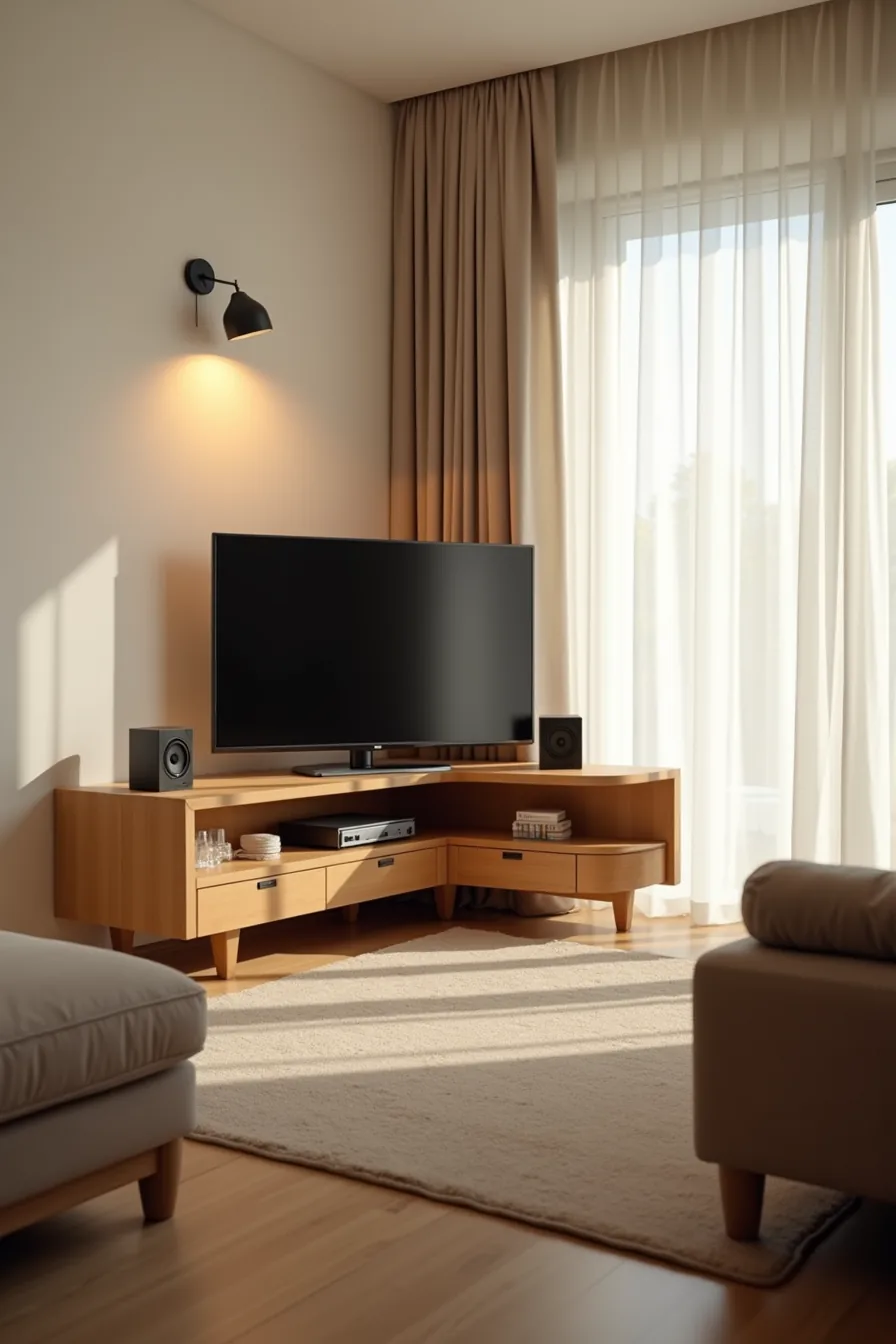
An L-shaped corner unit turns a dead zone into the room’s focal point. In a typical medium-to-large living room, one arm extending 20 inches along a side wall and the other 24 inches along the back wall angles the flat-screen TV toward the primary seating without forcing furniture into the center of the room. The inner corner becomes a natural staging area for a cable box and speaker, keeping both components within reach of their wiring while staying visually tucked away.
This configuration works best when you’ve at least 4 feet of clearance between the corner and your sofa. In smaller rooms, the L-shape can choke circulation, measure the diagonal path from the entry door to the seating area before committing. Opt for a solid wood unit with a matte finish to disguise fingerprints, and expect to pay $200–$400 for a piece with a 10–12 inch deep surface that won’t overhang into the walkway.
What to do first
Before you browse another furniture site, measure your TV width and the wall space you plan to use. The console should be at least a few inches wider than the TV on each side, most living rooms work best with a unit 6–12 inches wider than the screen.
Decide your budget range first: under $200 for a repurposed dresser or IKEA hack, $300–$600 for a quality mid-range unit, or $1,000+ for a solid-wood piece that will last decades.
Then apply the one-question test: does this piece clear walkways, keep cables hidden, and leave ventilation gaps for electronics? If yes, buy it.
Your next step: Measure your TV, note the clearance around it, and save three options that fit those numbers before making any purchase.
Frequently Asked Questions
What depth should a TV table be to avoid blocking walkways?
Aim for 12–16 inches in tight living rooms, or up to 18 inches if you’ve at least 36 inches of clear path. Measure from the wall to the table’s front edge, not the TV’s depth.
Can I use a slim media table in a rental without drilling into walls?
Yes. Choose a freestanding console with a low profile, under 24 inches tall, and run cables along the baseboard with adhesive clips. No wall anchors or screws are needed for stability if the table has a wide, flat footprint.
How much weight can a floating TV table safely hold?
A properly anchored floating shelf rated for studs can hold 50–100 pounds, but never exceed the manufacturer’s stated limit. If you’re mounting a 55-inch TV, confirm the bracket and shelf share the same studs; otherwise, stick to a floor-standing unit.
What’s the best TV table height for viewing from a bed or sofa?
Match the table’s top to your seated eye level, typically 24–30 inches from the floor for sofas, and 30–36 inches for beds. If your TV sits on the table, its center should land at or slightly below your eye line when reclined.