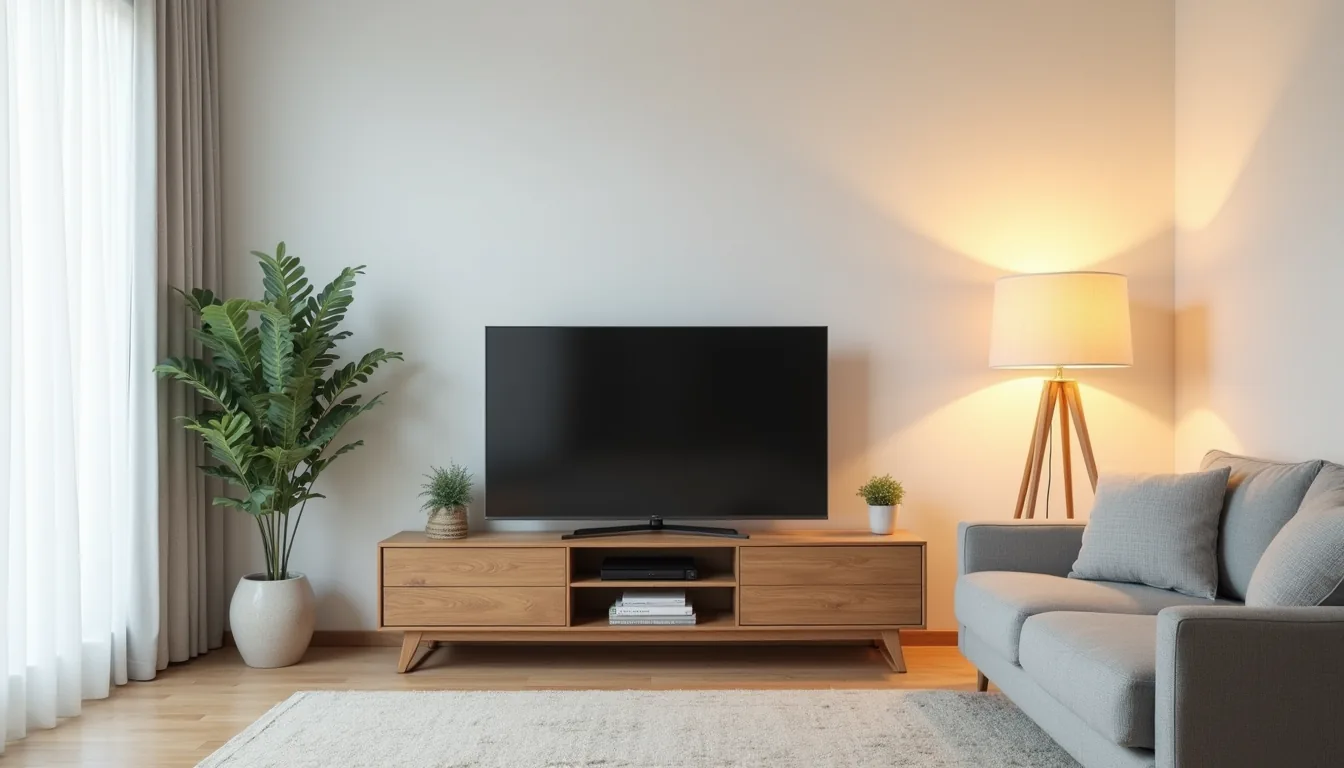
Your TV stand is the visual anchor of your living room and the workhorse that hides your cables, consoles, and clutter, so choosing the wrong one means living with the mistake daily. The right one balances screen height, storage depth, and material durability against your room’s proportions hometown. Below are six distinct approaches, from a budget-friendly IKEA hack to a solid-wood heirloom piece, each matched to a specific space and lifestyle.
You’ll learn exactly what to measure, what to avoid, and how to adapt each style to small, medium, or large layouts without sacrificing airflow or access.
Key takeaways
- Height dictates function: Choose a low console (16–20 inches) for eye-level viewing from a sofa, or a tall media tower (60–72 inches) to save floor space and suit standing-focused rooms like a loft.
- Open shelving suits display lovers: Exposed shelves work best for gaming consoles and decor, but they demand dusting weekly and visible cable management; closed storage hides clutter but requires measuring internal depth for AV components.
- Match stand width to your TV: For a 55-inch screen, pick a stand 48–60 inches wide, and for a 75-inch TV, go 70–80 inches, always keep the stand at least 2 inches wider than the screen on each side to prevent tipping.
- Prioritize material by lifestyle: Solid wood or plywood stands last 10+ years but cost more and need periodic polishing, while MDF with laminate is budget-friendly and scratch-resistant but can warp in humid rooms, avoid particleboard for heavy equipment.
Low Console vs. Tall Media Tower: Choosing Your Height
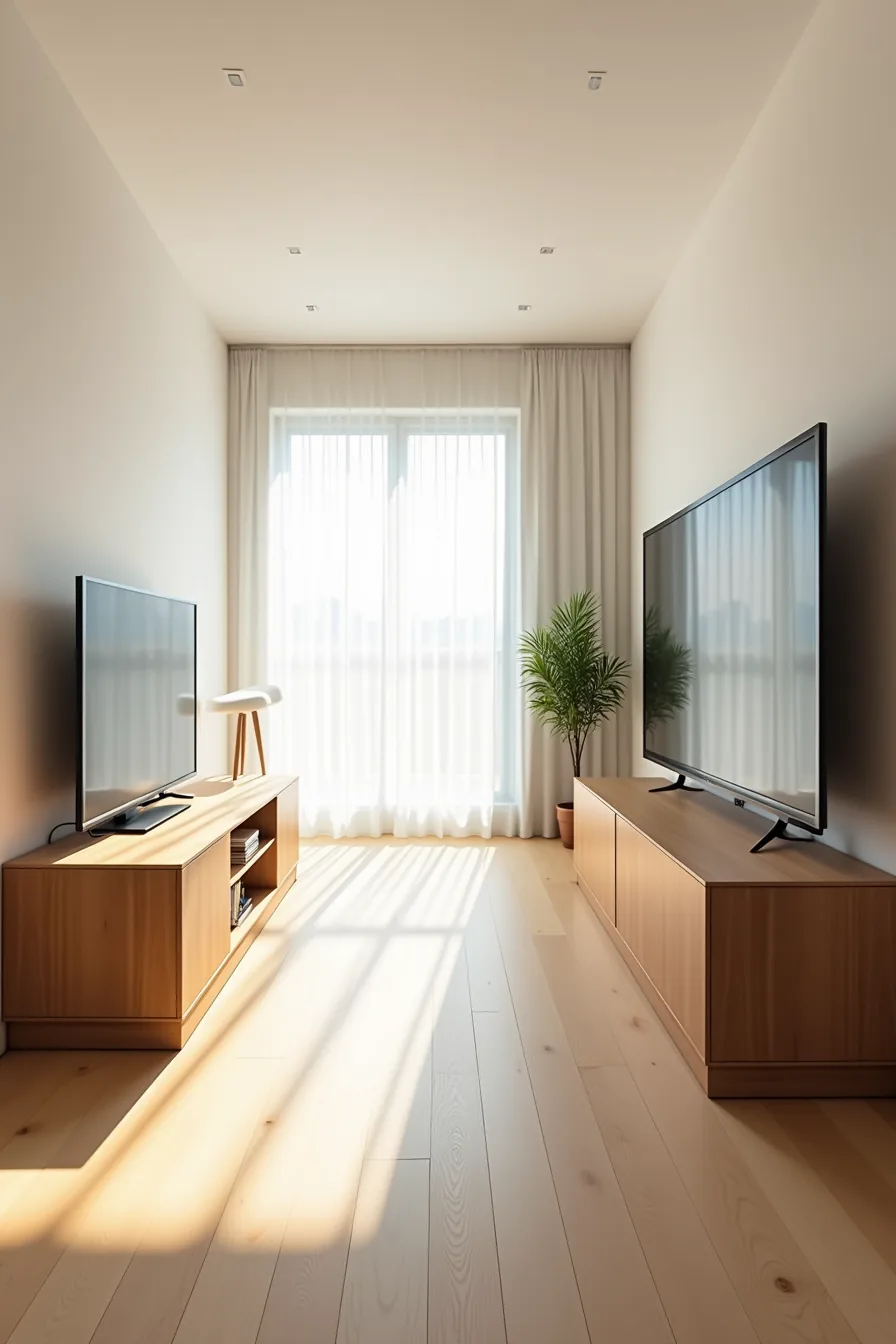
The split view of a low wooden console and a tall media tower holding the same television set highlights your core decision: where your eyes should rest. A low console, typically 12–18 inches tall, keeps the screen close to seated eye level, which suits rooms where you watch from a sofa or armchair. It also preserves sightlines across the room, making small or open-plan spaces feel larger.
A tall media tower, running 36–48 inches, positions the TV higher, which works best in bedrooms where you watch reclined or in narrow rooms where floor space is at a premium. You gain substantially more closed storage per square foot of footprint. Before choosing, measure your seated eye height; the center of the screen should sit within 5–8 inches of that line.
If your room proportions lean low-ceilinged and wide, the console will feel anchored. If ceilings run high and the room feels cramped, the tower draws the eye upward and uses vertical space efficiently.
Open Shelving: Display and Accessibility
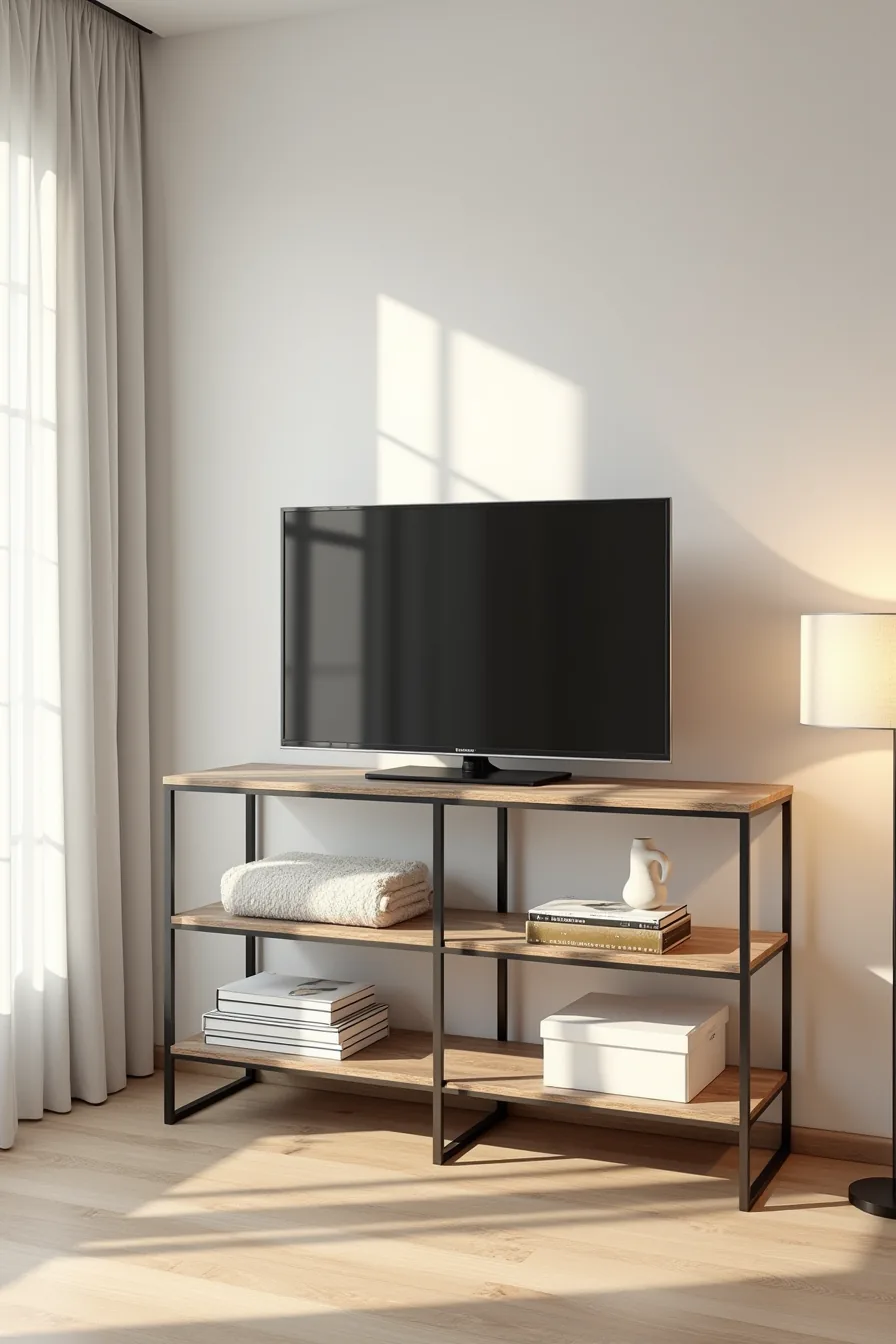
Open shelving turns your TV stand into a living display, not just a support surface. The trade-off is direct: you gain frictionless access to every item, but you inherit a visible dust problem, expect to wipe shelves weekly if your home has average air circulation, especially in rooms with rugs or pets.
The metal-frame stand with three open shelves works precisely because it keeps visual weight low. The small sculptures on the middle shelf break up the horizontal line, the rolled blanket adds a soft texture contrast against the metal, and the stacked storage boxes on the bottom shelf anchor the unit visually while hiding small clutter. This layout suits minimalist rooms where every object earns its place.
It also fits active users who swap decor seasonally or need frequent access to game consoles and streaming devices without bending behind closed doors.
Styling requires deliberate restraint: limit each shelf to one functional item plus one decorative piece. The open vs closed storage decision here favors openness, but only if you commit to editing what you display. For rooms where you want the TV to recede, choose darker metal frames that blend into the wall rather than contrast against it.
Closed Storage: Concealment and Cable Management
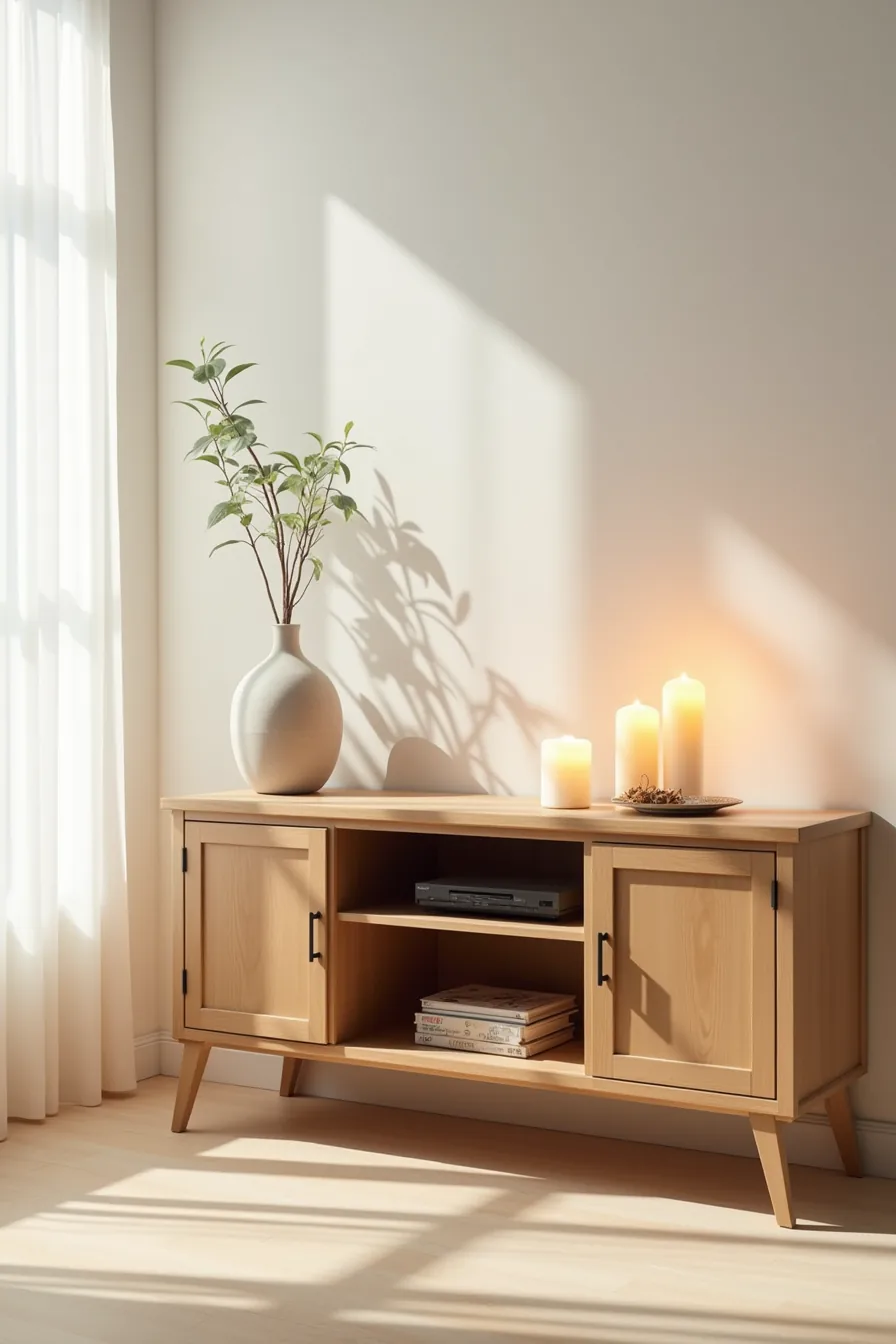
A closed TV stand with a recessed niche solves the two problems open shelving can’t: visual noise and visible wiring. When the cabinet doors are shut, the entire unit reads as a piece of furniture rather than a technology rack, which is why this approach suits formal living rooms, media rooms with a traditional decor scheme, or any space where you want the television to blend into the architecture rather than dominate it.
In this solid wood veneer cabinet, the recessed TV niche holds the screen at a comfortable seated eye level, while the slightly ajar doors reveal the real payoff: bundled cables tucked into the cavity behind the screen. The decorative object on top, a ceramic vase or sculptural piece, anchors the vertical line without competing with the niche. This works best for users who prioritize a clean, furniture-forward look over instant equipment access.
The maintenance trade-off is ventilation. Enclosed cabinets trap heat, so confirm the rear panel has open vents or cutouts before committing; if it doesn’t, leave the doors partially open during extended viewing sessions. Expect to dust the top surface weekly, but the interior only needs attention every few months since closed doors keep the dust out.
This is the right choice if you own equipment you rarely touch, cable boxes, a Blu-ray player, a soundbar, and want a stand that looks as intentional as a sideboard when the TV is off.
Matching Screen Size to Stand Width and Depth
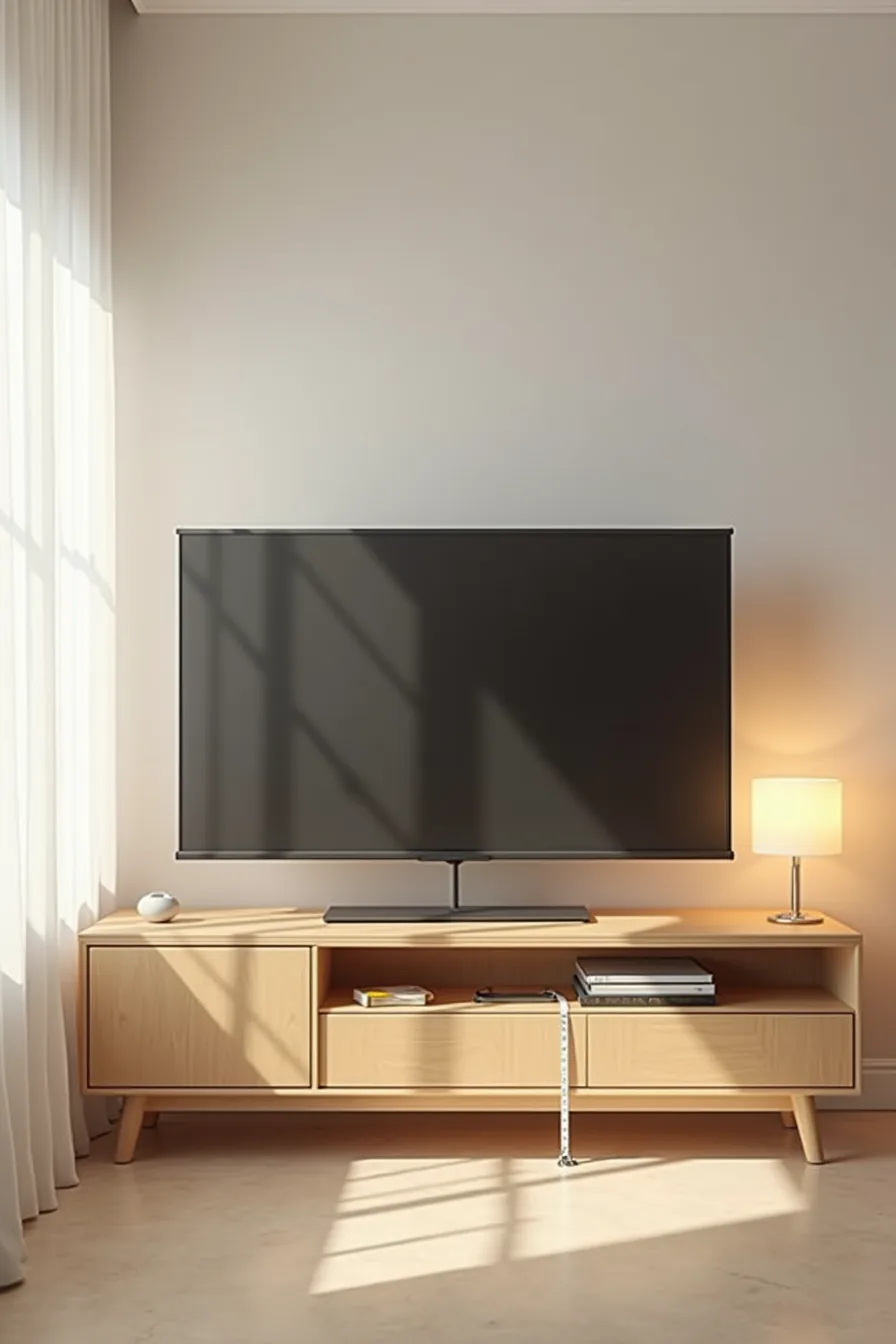
Screen-to-stand scale is a simple proportion rule: the stand should always be wider than the television. Most interior designers recommend the stand overhang the TV by at least 4 to 6 inches on each side, which means for a 55-inch TV, you want a stand roughly 63 to 67 inches wide. The stability principle matters more than the exact number, a wider base spreads the weight and prevents the unit from tipping forward when you accidentally lean on it or when a child pulls at a cable.
The measuring tape across the stand top in the example shows the practical method: measure the stand’s actual surface width, not the cabinet’s overall footprint, and compare it against the TV’s diagonal. A large flat-screen positioned with a slight overhang on both sides is acceptable only if the overhang stays under 2 inches per side; anything more creates a use risk. The leveling tool resting against the base isn’t decorative, most stands have adjustable feet that must be calibrated on uneven floors, because a 3-degree tilt becomes a genuine stability problem with a heavy screen on top.
Before you buy, measure the TV’s leg width at its widest point (usually 70-90 percent of the screen diagonal) and require the stand to exceed that by at least 10 inches total.
TV Stand Ideas for Small Apartments and Tight Rooms
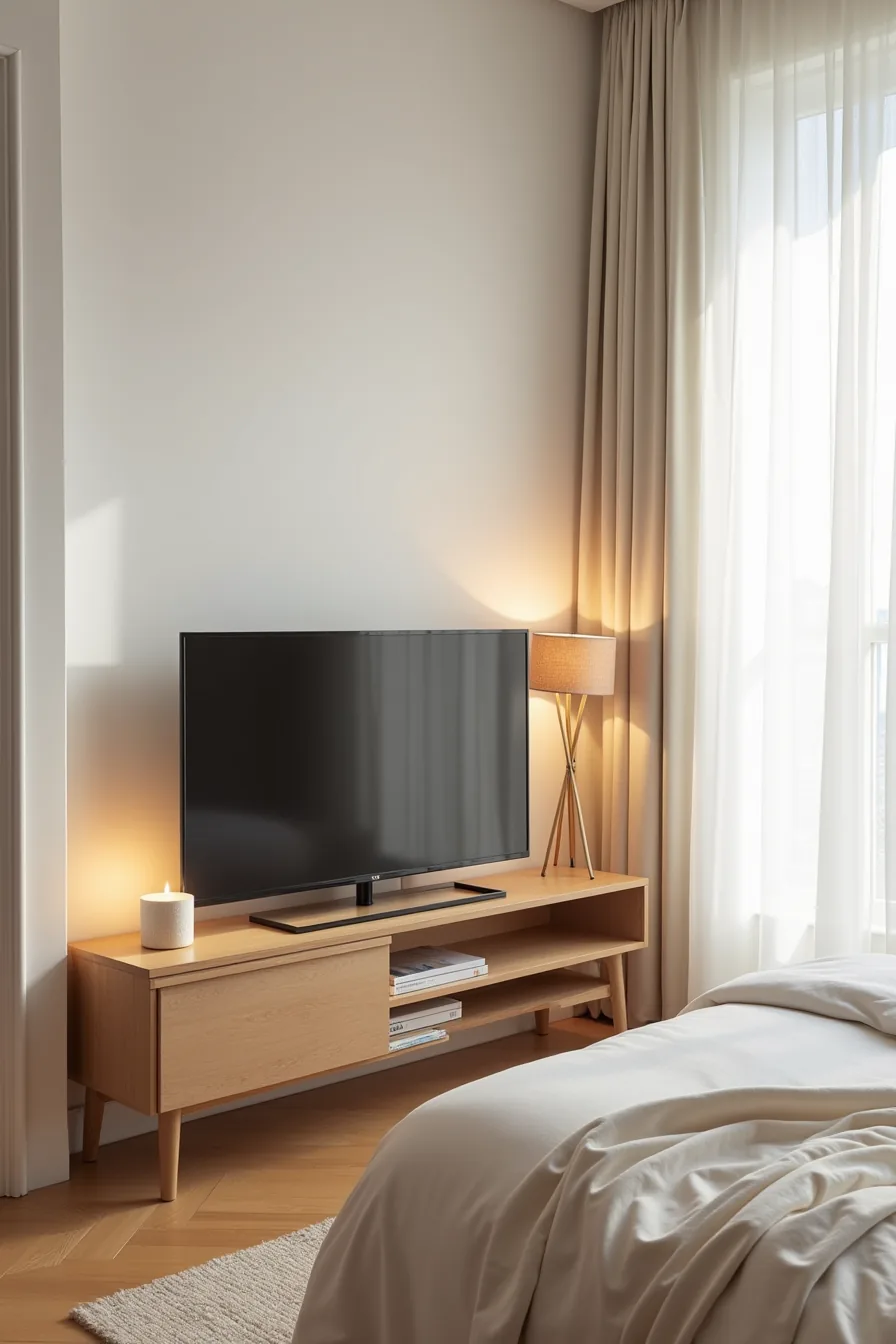
In rooms under 150 square feet, a conventional console eats up prime real estate. A narrow corner stand like the one pictured changes the geometry: it tucks into the unused 90-degree angle, leaving the wall opposite open for a slim console table that can hold a lamp or books without crowding the walking path. The minimal gap between the stand and the adjacent wall keeps the room from feeling blocked, and because the unit is vertical rather than horizontal, it takes up roughly half the floor footprint of a standard low-profile stand.
This setup suits renters and studio dwellers because it requires no wall mounting and the medium television sits safely on a solid base, not a swivel arm. Measure the corner’s diagonal depth first, the stand’s back panel must clear the baseboard, typically adding 1 to 2 inches to the clearance you expect. Pair it with a narrow console table no deeper than the stand itself to preserve circulation; anything wider turns the corner into an obstacle rather than a solution.
Materials, Finishes, and Long-Term Durability
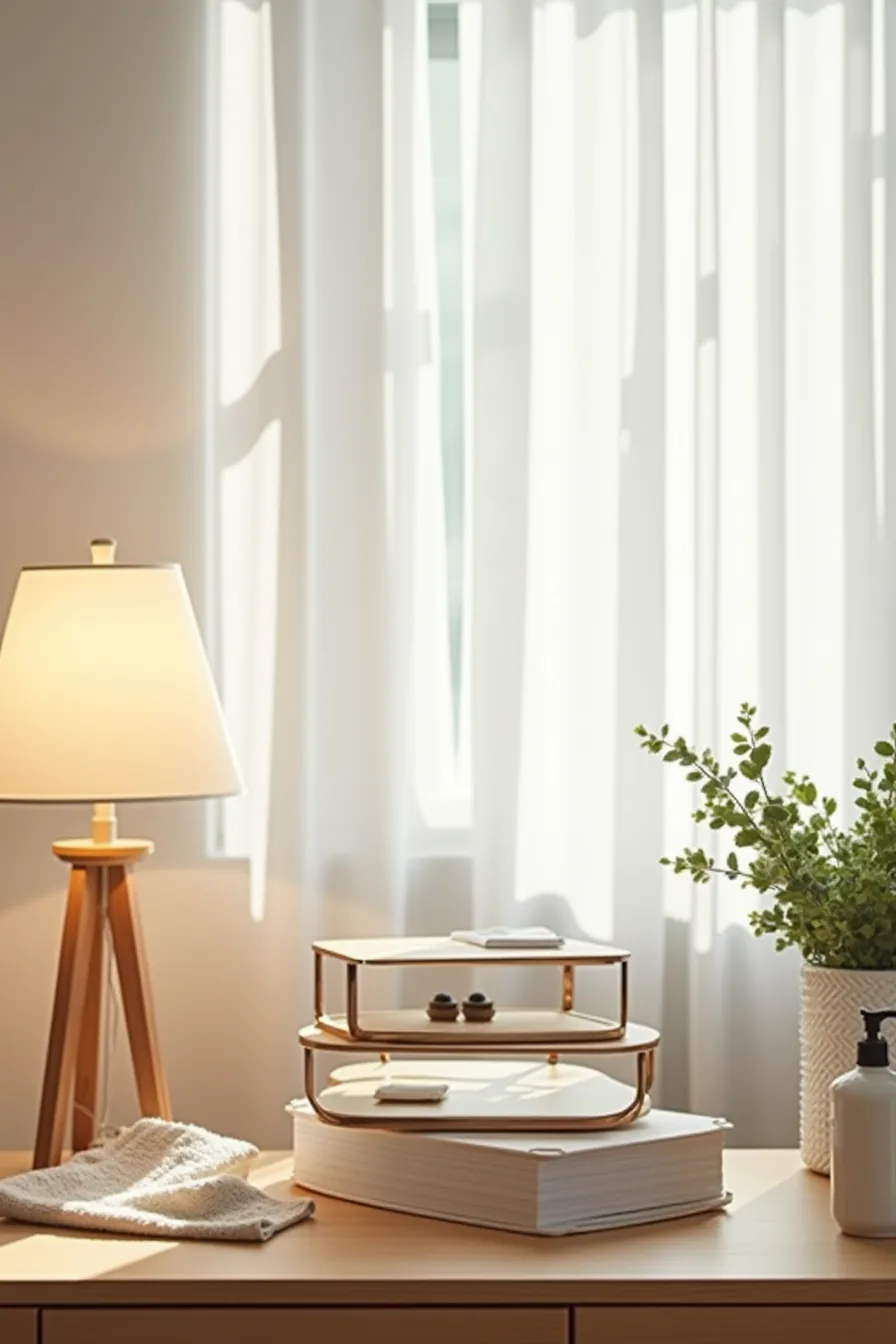
The four samples in front of you each answer a different question about how long a TV stand will actually serve you. Solid wood, typically oak, walnut, or maple, carries the highest weight capacity, often supporting 100 to 150 pounds across a 50-inch top, and it dissipates heat from electronics naturally without warping. Expect to pay 2 to 3 times more than composite, and reapply furniture oil every 12 to 18 months to keep the grain from drying out.
Metal frames, usually powder-coated steel or aluminum, handle 80 to 120 pounds and resist scratches better than any finish, but they transmit vibration, place them on a rug or felt pads to stop speaker hum. Tempered glass shelves look weightless and clean with a spray bottle and microfiber cloth, yet they show every fingerprint and limit you to roughly 40 to 60 pounds per shelf, so keep amplifiers and receivers off them. Composite board, the budget route, costs a third of solid wood and hides dents well, but its veneer chips at the corners within a few years and swells if you wipe it with a damp cloth rather than a barely-moist one.
The dust cloth and cleaning spray beside the samples are non-negotiable for glass and metal; wood demands a dedicated polish, not a general-purpose cleaner.
Your decision checklist
Before you buy, measure your TV’s width and add 4-6 inches on each side for the stand. Account for cable management, if you’ve a soundbar, add 2-3 inches of clearance above it. For media consoles holding 30+ pounds of gear, prioritize solid wood or plywood over particleboard.
Match the stand’s height to your seated eye level: 24-30 inches is standard for most living rooms. Budget under $150? Look for laminate over MDF with metal legs.
Renting? Choose a freestanding unit under 60 inches wide that won’t require wall mounting. Long-term?
Invest in solid oak or walnut, expect to pay $600-$1,200 but gain decades of use.
Start here: grab a tape measure, note your TV’s width and your room’s wall space, then filter online listings by those exact dimensions before browsing styles.
Frequently Asked Questions
What is the ideal height for a TV stand in a living room?
Aim for the screen’s vertical center to sit at eye level when you’re seated, typically 40–45 inches from the floor. This usually means a stand 24–30 inches tall, depending on your sofa and TV size.
Can I use a TV stand in a rental apartment without damaging walls?
Yes. Choose a freestanding unit with a low profile and wide base, no wall mounting required. Keep it a few inches from the wall to avoid scuffs, and use felt pads under the feet to protect flooring.
How much weight can a typical TV stand support?
Most mid-range stands hold 50–100 pounds on the top surface, while heavy-duty models support 150 pounds or more. Check the manufacturer’s rated capacity before placing a large TV, and distribute weight evenly across the top.
Should my TV stand be wider than my television screen?
Yes. A stand at least 2–6 inches wider than the TV on each side looks balanced and prevents tipping. For a 55-inch TV, choose a stand 60–70 inches wide; for a 65-inch model, go 70–80 inches.