Japandi TV cabinets merge Japanese minimalism with Scandinavian warmth, but choosing the right one depends less on trend and more on your room’s dimensions, your wall-to-furniture ratio, and how much visual weight you want the unit to carry. Before you buy, measure your media components and the clearance you need for airflow, then decide whether you want the cabinet to disappear into the wall or anchor the entire seating arrangement. The six approaches below range from a $200 flat-pack hack to a solid-oak heirloom piece, and each one solves a specific spatial problem, so your choice should start with your floor plan, not the finish.
Key takeaways
- Proportion dictates success: A Japandi TV cabinet should span roughly 60–75% of your console’s wall width, leaving at least 6–12 inches of breathing room on each side to avoid a cramped or floating look.
- Match wood tone to light: In rooms with less than 200 lux of natural light, choose pale oak or ash finishes to reflect brightness; for sun-drenched spaces, dark walnut or smoked oak anchors the visual weight without feeling heavy.
- Renter-friendly means freestanding: Skip wall-mounted units and select a low-profile cabinet on slim legs or a plinth base, this avoids drilling, preserves the floor, and still delivers the floor-hugging Japandi silhouette.
- Budget hinges on joinery: A solid-wood cabinet with dovetail or finger joints costs 2–3 times more than veneered particleboard, but it survives 15+ years of daily use; if you choose veneer, verify the core is at least 18mm thick to prevent sagging under a 30–40 kg TV.
Light Wood Japandi TV Cabinet for Airy Rooms
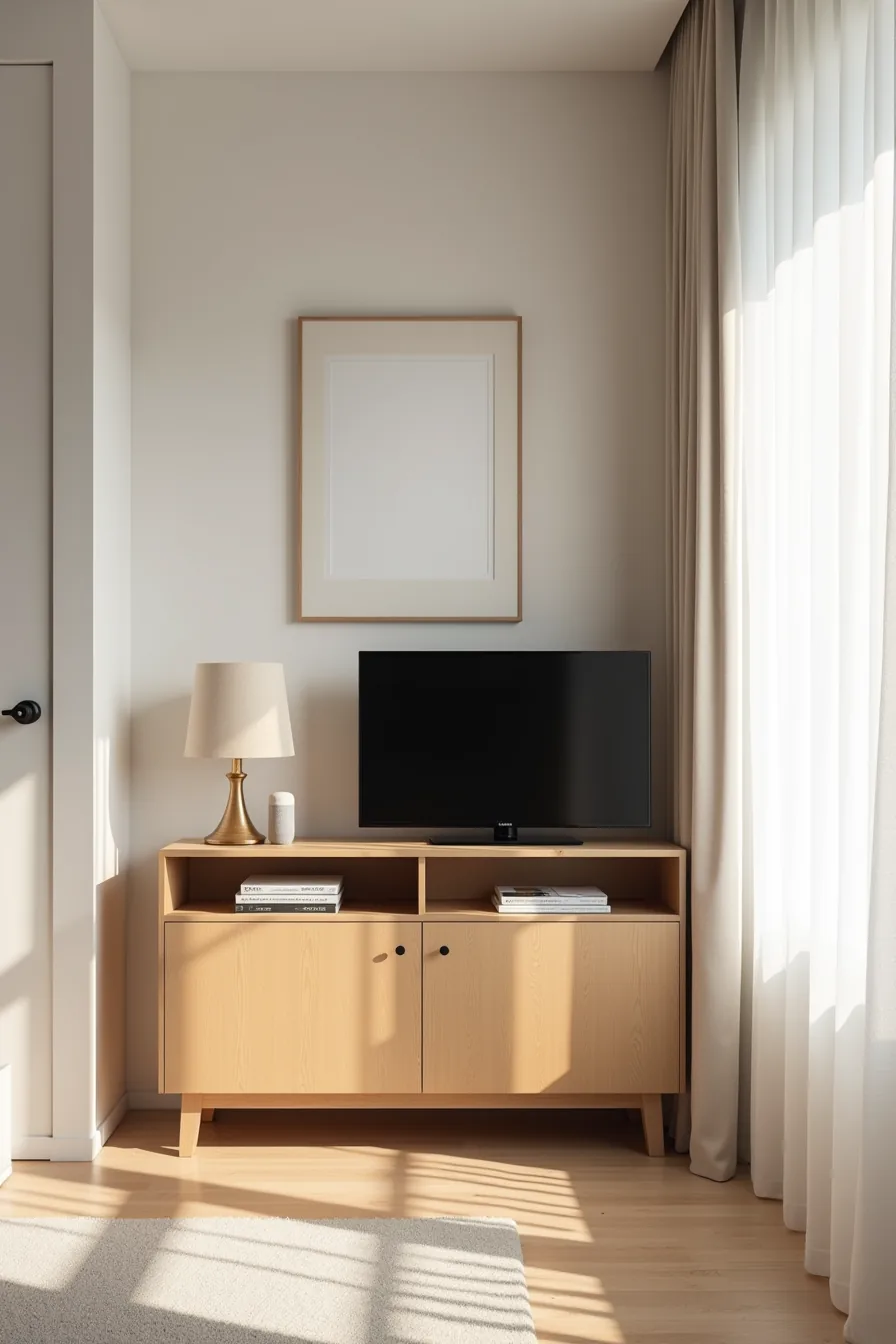
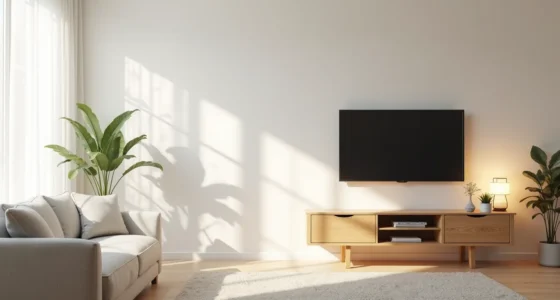
Pale ash or birch cabinets suit compact spaces because they reflect ambient light rather than absorb it, making a tight room feel larger without adding a single mirror. The birch-veneer cabinet in this studio sits at 54 inches wide, which leaves roughly 8–12 inches of breathing room on each side in an apartment under 900 square feet, that negative space is what prevents the unit from reading as a wall of furniture.
Pair the light wood with a single framed artwork above and a wall-mounted TV at eye level to reinforce the vertical line. Keep the floor in front completely clear; a 24–30 inch walkway keeps the room functional and reinforces the airy Japandi TV cabinet effect. This route works best if you’ve less than 8 feet of wall length and prefer a background piece over a focal point.
Light wood shows scratches more readily than dark finishes, so budget for a matte protective coat and touch-up markers for daily-use edges.
Dark Wood Statement Piece with Minimalist Hardware
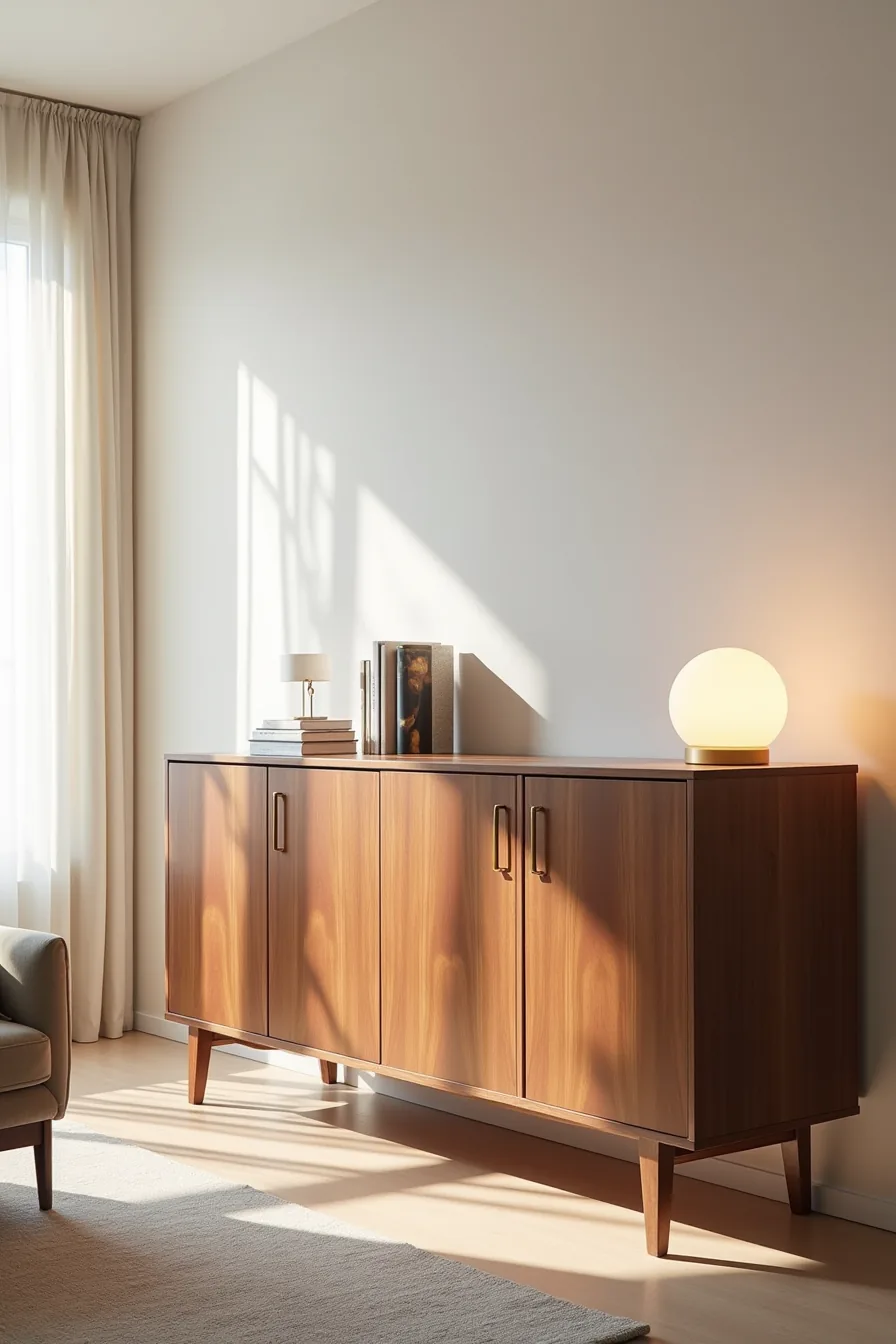
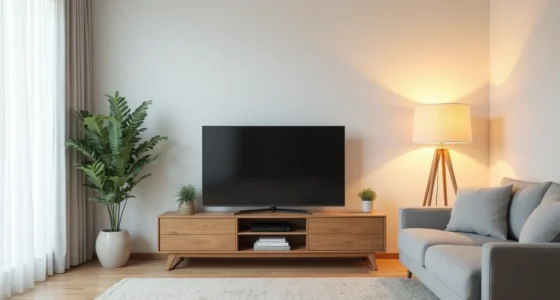
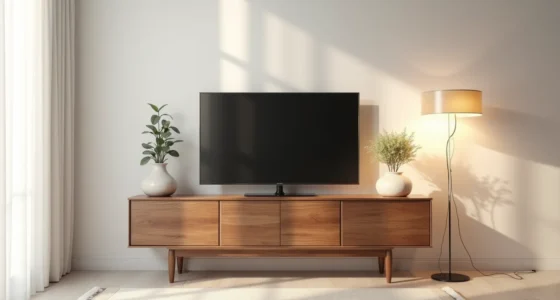
A walnut or ebonized oak cabinet anchors a large living room by giving the eye a heavy, grounded point of contrast against pale walls and flooring. The walnut-stained unit in this space runs 70–80 inches wide, which suits walls of 10 feet or more; anything narrower would leave awkward gaps that dilute the statement effect. Brass or matte black hardware, kept to slim pulls rather than knobs, adds a subtle metallic accent without competing with the wood grain.
The bare wall behind it’s intentional: dark wood needs negative space to breathe, so avoid layering art, shelves, or sconces directly above. A single ceramic vase or sculptural object on top provides enough interest without visual clutter. This look suits homes with 12-foot-plus wall spans and existing warm neutral tones in sofas or rugs.
The trade-off is weight, dark cabinetry absorbs light, so pair it with floor lamps or recessed lighting to prevent the room from feeling cavernous.
Mixed Materials: Wood, Metal, and Concrete Blend
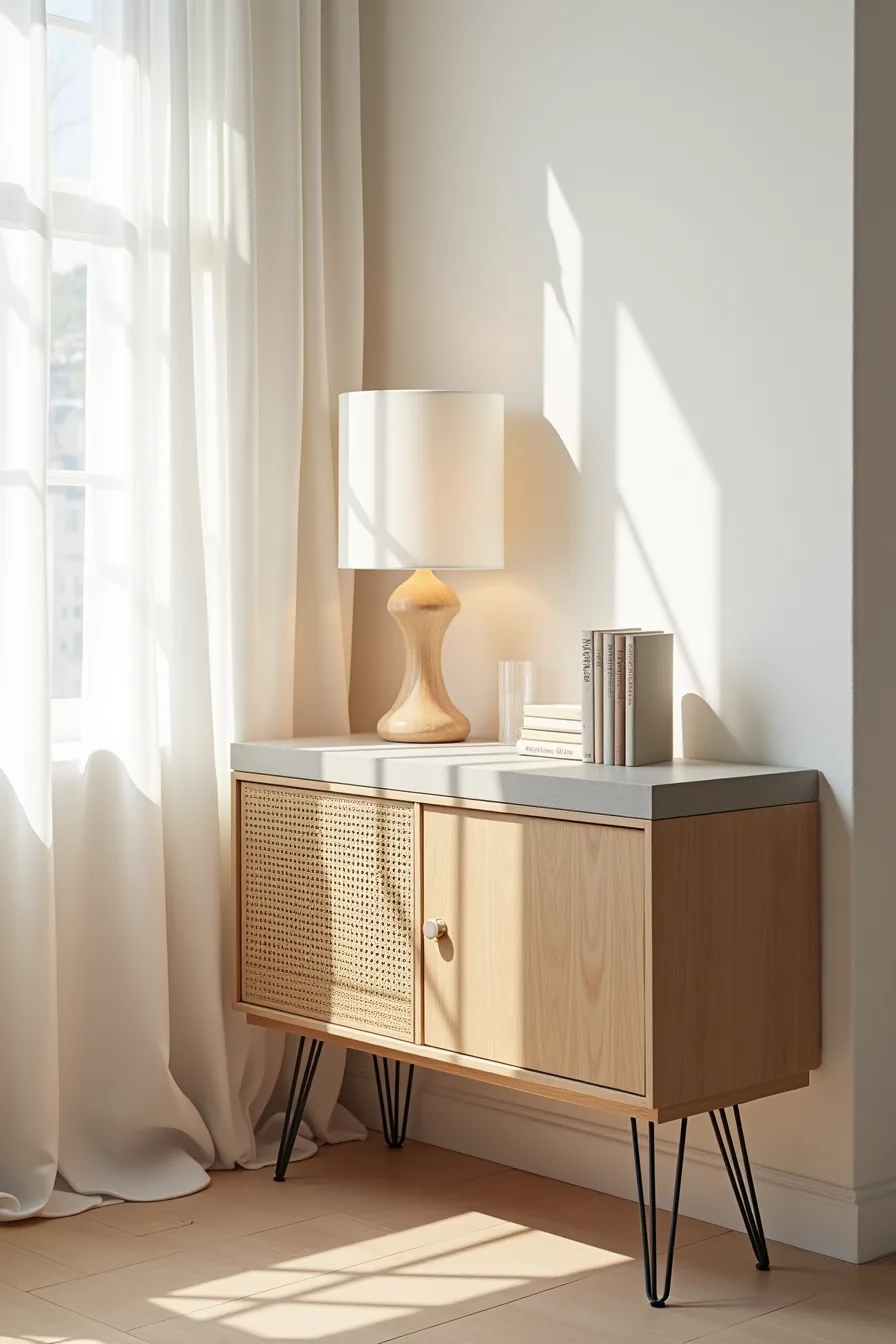
A Japandi material mix works best when each component earns its place through function, not decoration. The cabinet in this setup pairs a natural oak frame with slim steel hairpin legs and a concrete or light stone top surface, while a woven panel insert softens one side. That combination gives you the warmth of wood, the industrial edge of metal, and the tactile coolness of stone, three textures that keep the piece from reading as generic.
For high-traffic homes, this blend is practical: concrete resists scratches and heat, steel legs improve the unit for easier floor cleaning, and the woven panel hides media clutter without needing doors that swing into walkways. Expect to wipe the top weekly with a pH-neutral cleaner, since concrete stains from coffee rings or plant runoff. The hairpin legs suit rooms with 18–24 inches of clearance below, keeping sightlines open in compact spaces.
Choose this route if you want a piece that bridges industrial and organic styles without committing to a fully rustic or fully modern look.
Low-Profile Calm: Floor-Hugging Cabinet Design

A Japandi TV cabinet that sits at roughly 16–20 inches tall changes the entire energy of a room. Instead of a towering entertainment center, you get a horizontal line that anchors the wall and lets the television float above it, visually speaking. This low-profile approach creates that signature Japandi tranquility by keeping the visual weight near the floor and leaving the upper wall clean.
To make it work, measure your TV’s height first. Your eye level when seated should land about halfway up the screen, so a 55-inch TV typically pairs with an 18-inch cabinet. The cabinet in this setup runs the full width of the living room, with a shallow depth of 14–16 inches, just enough to house a soundbar and a media player, but not deep enough for large AV receivers.
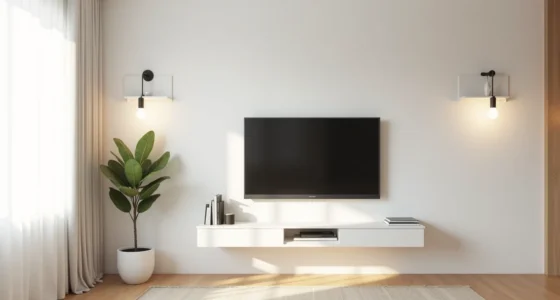
A recessed TV mount sits flush against the wall, and the minimal base leaves a 2–4 inch gap underneath, which makes the piece feel as though it’s floating.
The trade-off is storage. You’ll lose the tall shelving that conceals game consoles and cable boxes, so plan for open baskets on adjacent shelves or a separate slim credenza nearby. This style suits minimalist households that stream most content and own few physical media items.
Renter-Friendly Japandi TV Cabinet Solutions
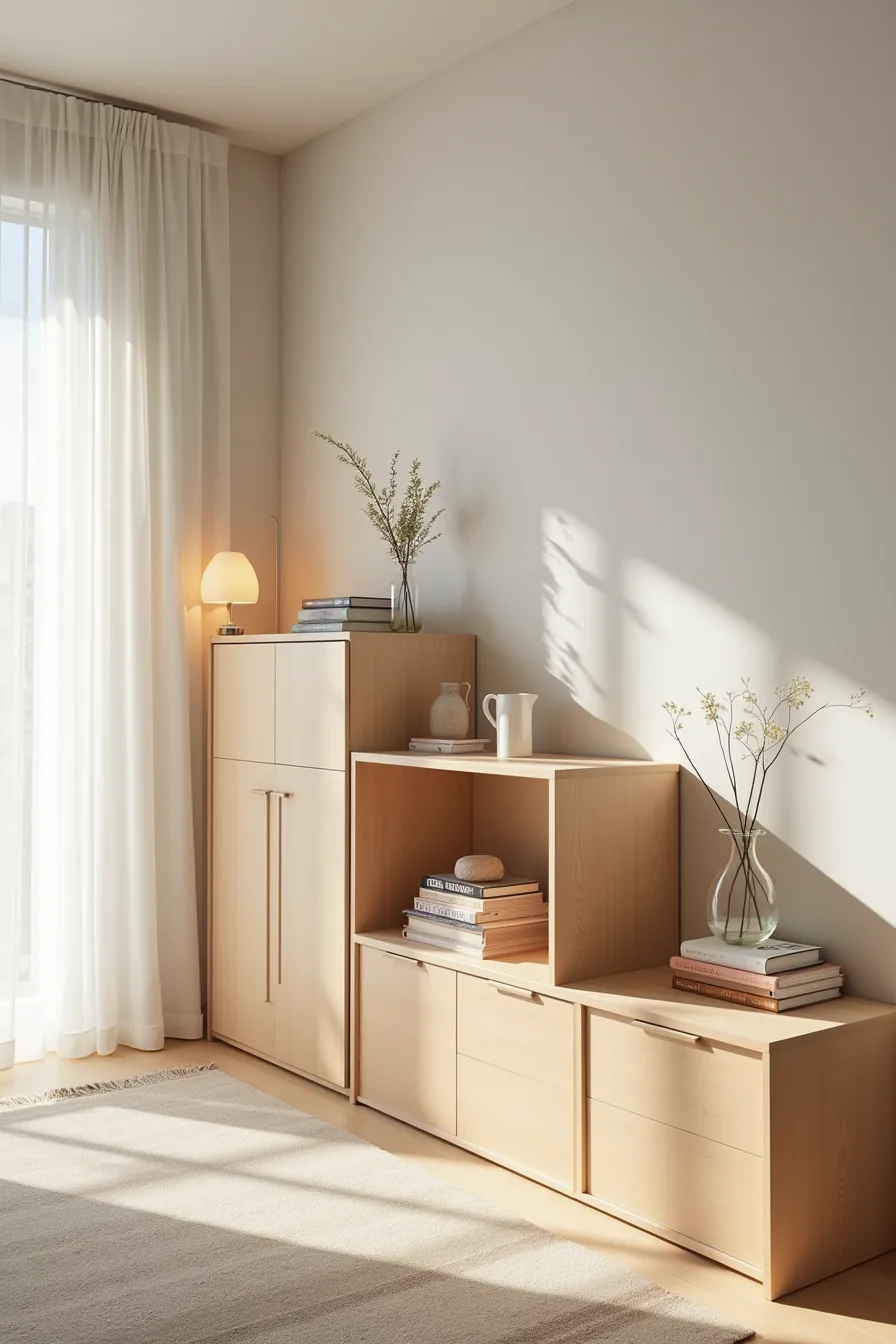
When you can’t drill into walls or repaint before moving out, a modular unit is your best path to the Japandi look. A freestanding base with stacked or interlocking sections gives you the same low, horizontal silhouette as a built-in, without a single anchor. You can reconfigure the blocks as your TV size or room layout changes, which makes this the most adaptable option for apartments.
Look for a modular system in light oak or warm beige laminate, with a depth of 15–17 inches so the sections sit flush against the wall without protruding into walkways. The visible furniture pads underneath serve a double purpose: they protect hardwood floors from scratches and raise the base slightly, preserving that airy floating effect you get from a recessed mount. Conceal cables by routing them through the gaps between stacked sections, and keep the top surface clear except for a soundbar.
This route suits renters who move every 2–3 years and want to avoid patching holes or losing a security deposit. The trade-off is stability, taller stacks can wobble on uneven floors, so check that each section has anti-tip brackets even if you never attach them to the wall. For Japandi TV Cabinets for peaceful apartment living rooms, this is the lowest-risk option you can choose.
Investment-Grade Japandi TV Cabinet: Joinery and Longevity
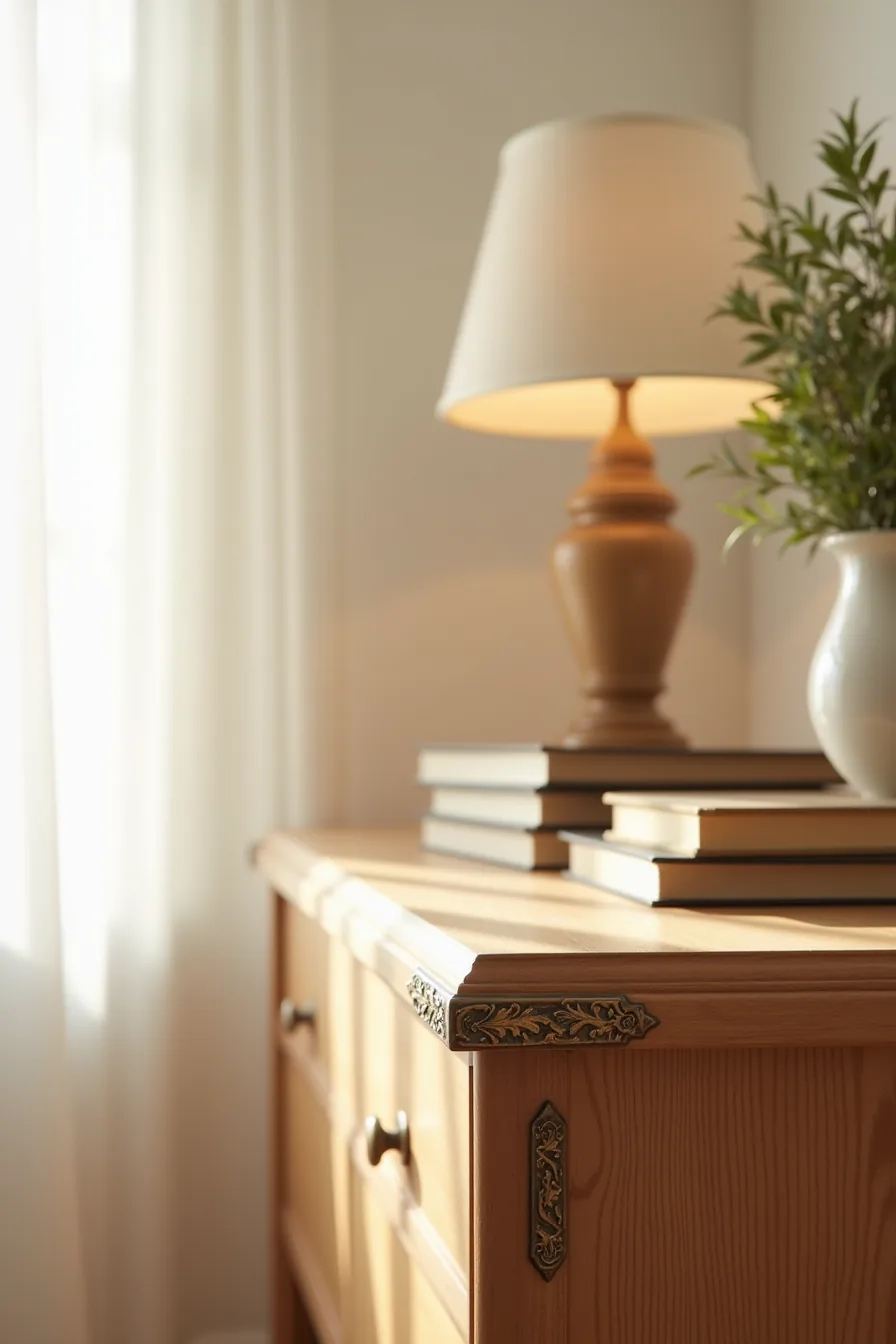
Examine the corner of a serious Japandi TV Cabinet and you’ll see dovetail joinery, interlocking pins and tails that hold without a single screw or bracket. That detail changes everything about how the piece ages. Dovetails allow solid wood to expand and contract with humidity shifts without cracking, which is why a cabinet built this way can outlast three flat-screen upgrades.
Veneer seams and dado joints, by contrast, fail first at the edges, usually within 5–8 years in a climate-controlled home.
Solid oak or walnut with an oil-based finish is your benchmark here. The aged hardware, matte brass or dark bronze pulls, develops a patina that aligns with Japandi’s wabi-sabi appreciation of wear, so minor scuffs read as character rather than damage. Expect to pay 2–3 times what a laminate unit costs, but the cabinet adapts as your décor shifts: restain it in a decade, swap the hardware, and it still anchors a completely different room.
The depth should run 16–18 inches for proper AV component clearance, and you want a finish rated for 10+ years of UV exposure if the cabinet sits near a window. This is the route for anyone who views furniture as a decades-long relationship, not a seasonal purchase.
Your decision checklist
Before you buy, verify these five points: the cabinet width leaves at least 60 cm of walking space on your main traffic side; the depth clears your TV stand mount by 5–10 cm for ventilation; the material finish suits your floor tone (warm oak pairs with beige tiles, dark walnut anchors grey concrete); the storage volume covers your actual devices, not your idealised ones; and the price fits the room’s role in your home, not just the aesthetic.
Start with the room, not the cabinet. Measure your TV’s width, note your viewing distance, and photograph your wall. Then compare against the six approaches above, you’ll know which one fits within ten minutes.
Frequently Asked Questions
What is the difference between a Japandi TV Cabinet and a standard minimalist cabinet?
A Japandi TV cabinet pairs Scandinavian functionality with Japanese restraint, think warmer wood tones, softer edges, and visible craftsmanship. Standard minimalist cabinets prioritize clean lines and often use cool whites or matte blacks; Japandi adds texture, asymmetry, and a quieter, more organic feel.
Can I fit a 65-inch TV in a low-profile Japandi TV Cabinet, and what depth do I need?
Yes, a low-profile Japandi cabinet can hold a 65-inch TV, but you’ll need a depth of at least 14–16 inches to keep the screen stable and allow cable clearance. Measure your TV’s stand width first, most 65-inch models need 20–24 inches of horizontal surface.
How do I maintain light wood on a Japandi TV Cabinet in a humid apartment?
Wipe spills immediately with a dry microfiber cloth, and use a furniture wax with UV protection every 3–4 months. Keep humidity below 60% using a dehumidifier, and place felt pads under any objects to prevent moisture rings from forming.
Is a Japandi TV Cabinet suitable for open-concept living rooms, or does it work better in enclosed spaces?
It suits open-concept rooms well, provided you anchor it with a low, wide silhouette that defines the viewing zone without blocking sightlines. In enclosed spaces, opt for a taller, slimmer Japandi cabinet to avoid overwhelming the wall; in open plans, a longer, shallower unit works better.