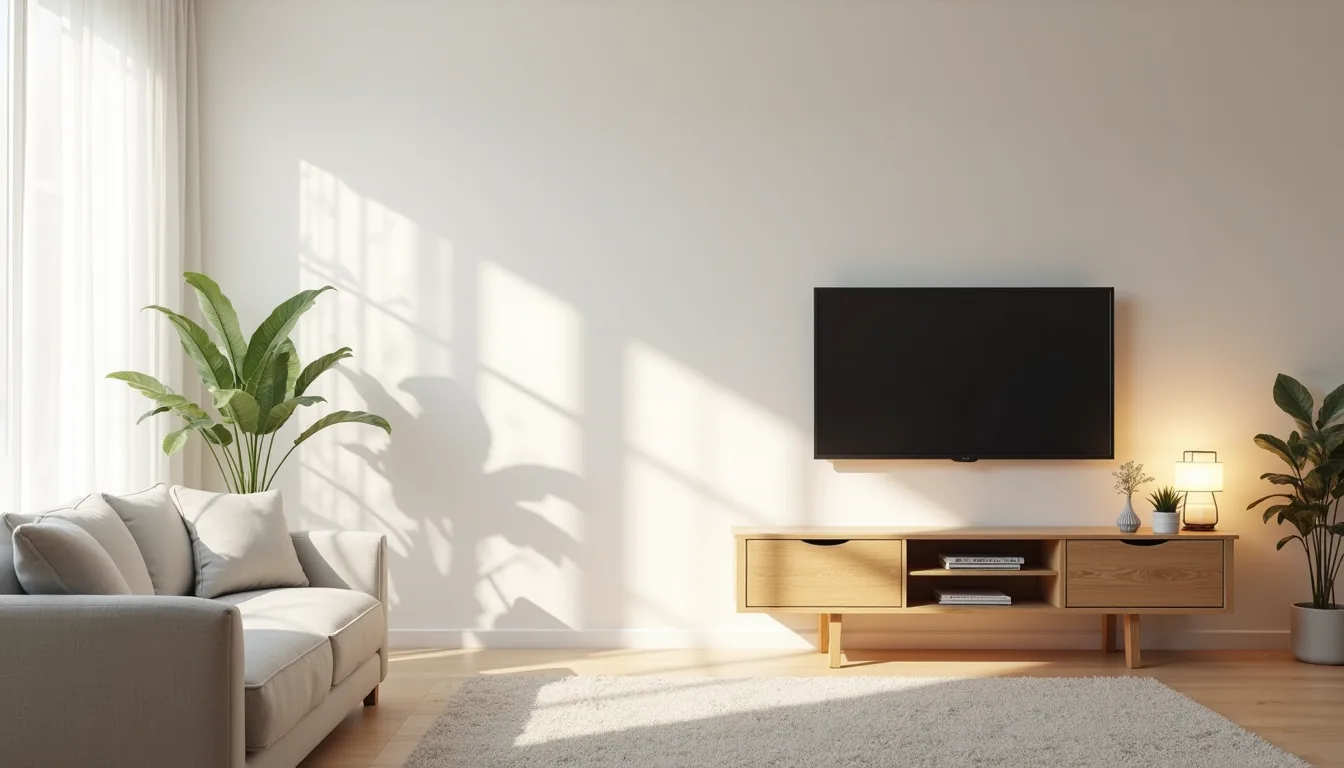

Your TV stand is the second-largest piece of furniture in your living room, and getting its scale, placement, and storage wrong can undermine the entire layout. The fix isn’t about buying a bigger unit, it’s about matching the stand to your viewing distance, wall proportion, and the actual clutter you own. Below are six distinct routes, from a $150 DIY console to a solid-wood heirloom piece, each with the exact dimensions, clearance needs, and maintenance trade-offs you’ll face.
Key takeaways
Measure first: Your TV stand should span at least as wide as your TV, ideally extending 2–4 inches beyond each side to anchor the visual weight. Match height to sightline: The center of your screen should sit at eye level when seated, typically 42–48 inches from the floor, so choose a stand or wall-mount accordingly. Prioritize cable routing: Before buying, confirm the stand has cutouts or a back panel you can remove; otherwise, budget for adhesive clips, a cord cover, and a power strip with a surge protector. Test the room’s flow: Leave 18–24 inches of clearance in front of the stand and at least 12 inches on each side for doors, vents, or walkways, corner units only work if the TV angle doesn’t force you to twist your neck.
Floating vs Freestanding: Which Fits Your Space
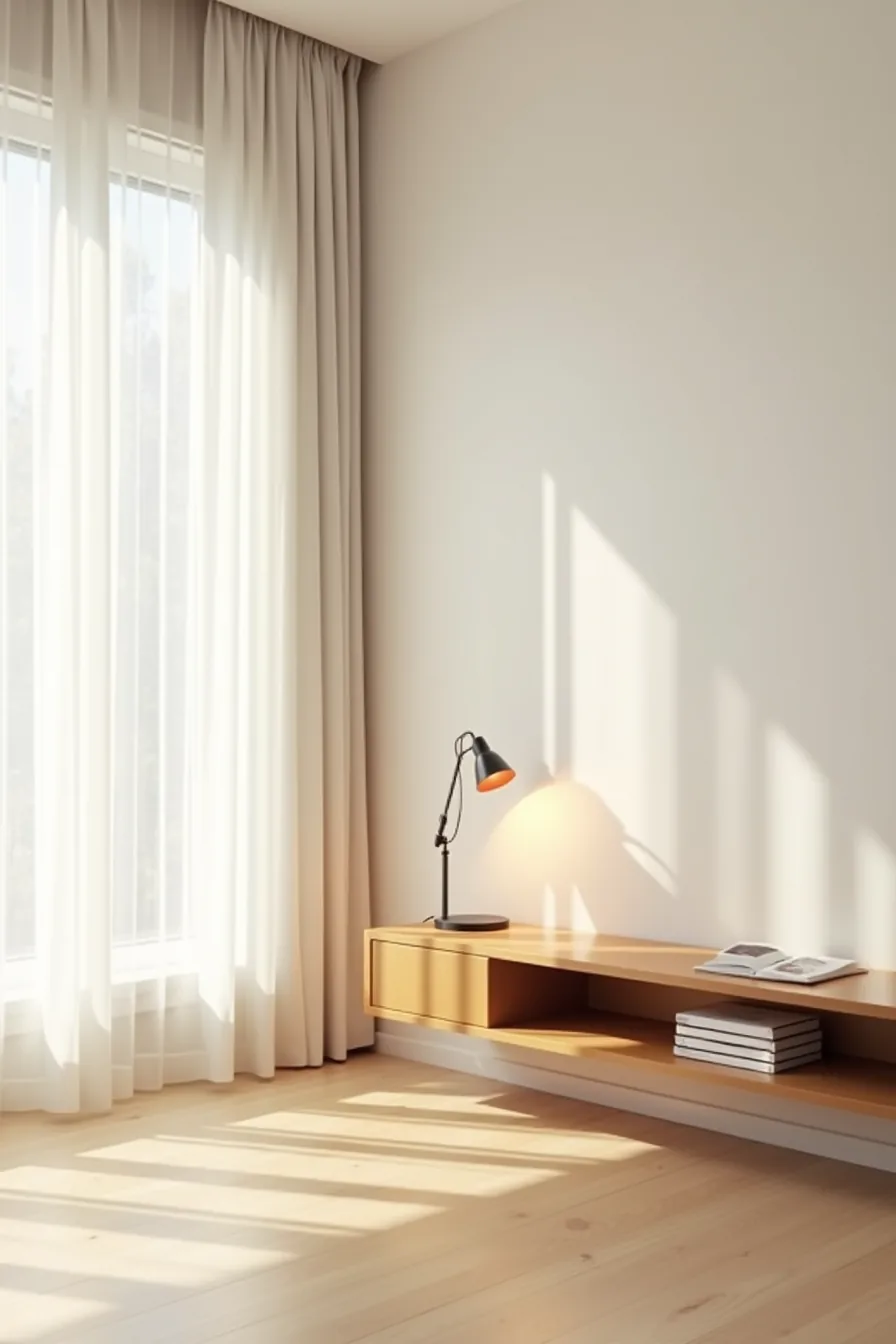
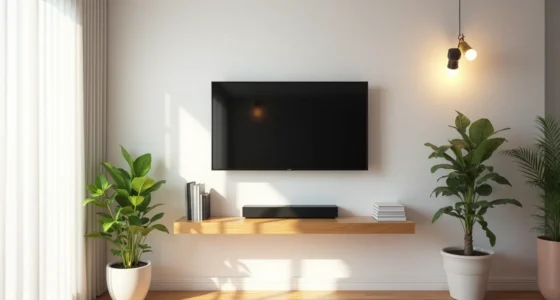
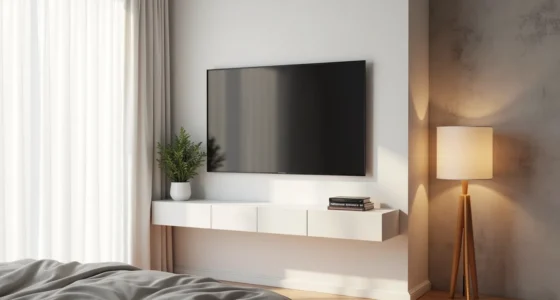
The choice between a floating stand and a floor console comes down to your lease terms, wall construction, and how often you rearrange. A floating stand mounted 24 inches deep at eye level works best in a room with 8-foot ceilings and clean drywall behind it, you’ll need wall studs rated to hold 40–60 pounds of combined TV and equipment weight. That setup suits homeowners or long-term renters who can patch and repaint before moving out.
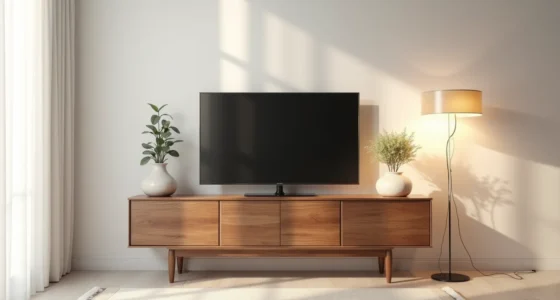
A floor console standing 18 inches tall offers the opposite flexibility: no drilling, instant repositioning, and cable channels routed down the back leg into baseboards for the same clean look. It fits renters on a 12-month lease or anyone renting a space with plaster or lath walls where anchoring is risky. Budget-conscious buyers should pick the floor console, it runs $150–$400 versus $300–$800 for a floating unit plus professional mounting.
If you value long-term flexibility over a sleek silhouette, freestanding wins; if your wall is solid and you rarely change layouts, floating feels intentional and opens up floor space underneath.
The Compact Console for Small Living Rooms
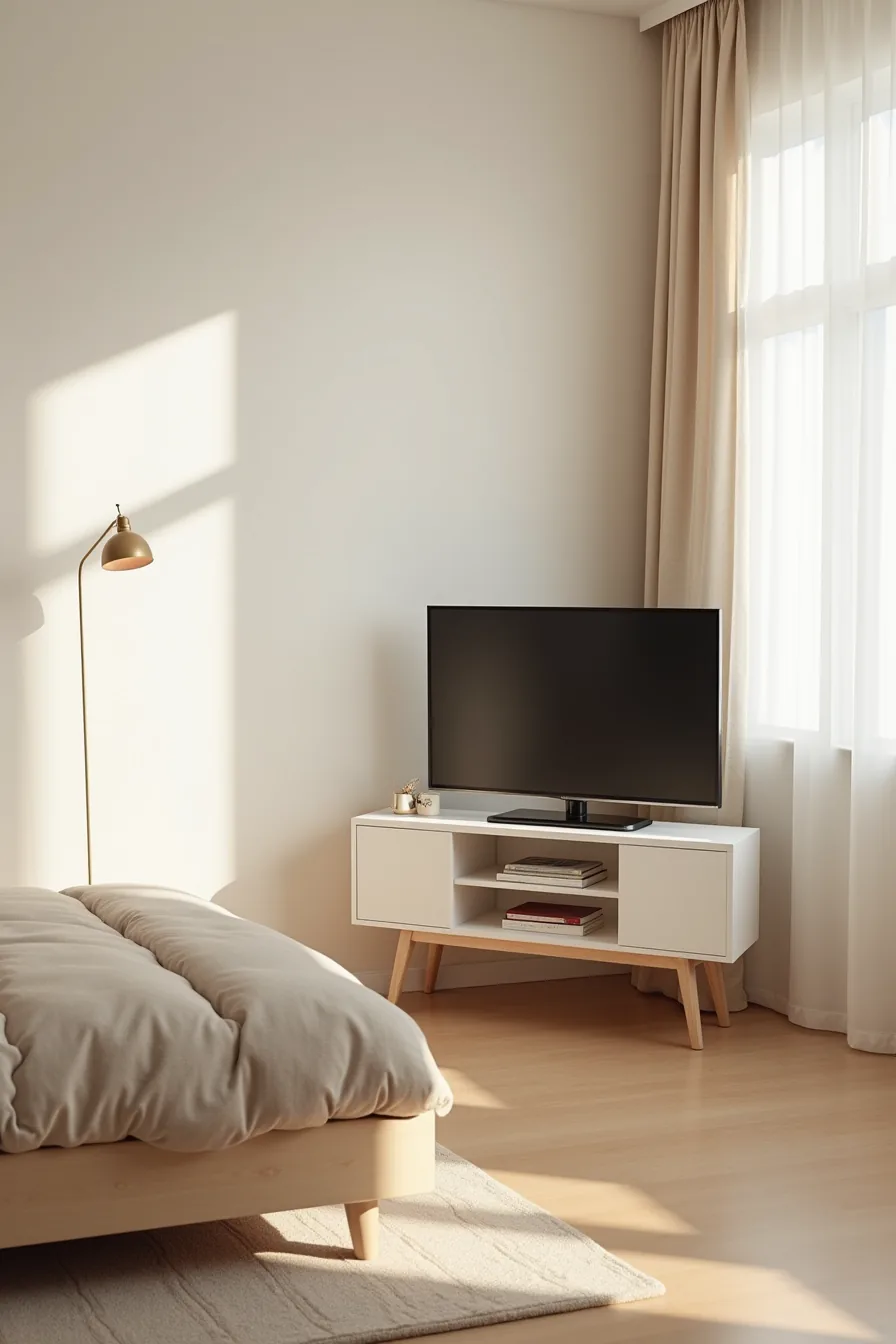
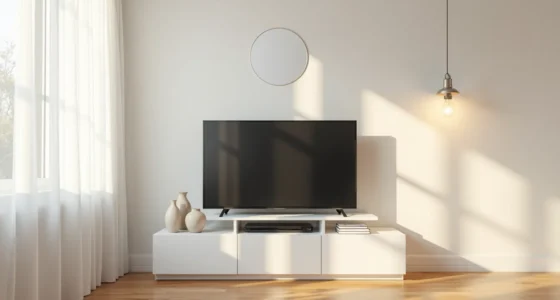
A 36–48 inch wide stand is the practical ceiling for most studio apartments and compact living rooms. The narrow console in this setup runs 42 inches wide and sits against a short wall, holding a 32-inch television and three small decorative objects without visual clutter. You want the stand’s depth between 14–16 inches, anything deeper eats into walkways and makes a small room feel tighter than it’s.
Position it so the TV sits at seated eye level, roughly 40–42 inches from floor to screen center. That leaves a clear sightline to the window beyond, which matters more than centering the stand on the wall. Skip bulky media components; a streaming stick or soundbar mounted behind the TV keeps the surface clean.
This small living room option suits renters and first-time buyers who need function over storage, and most models in this width run $100–$250.
Open Shelving for Modern, Minimal Rooms
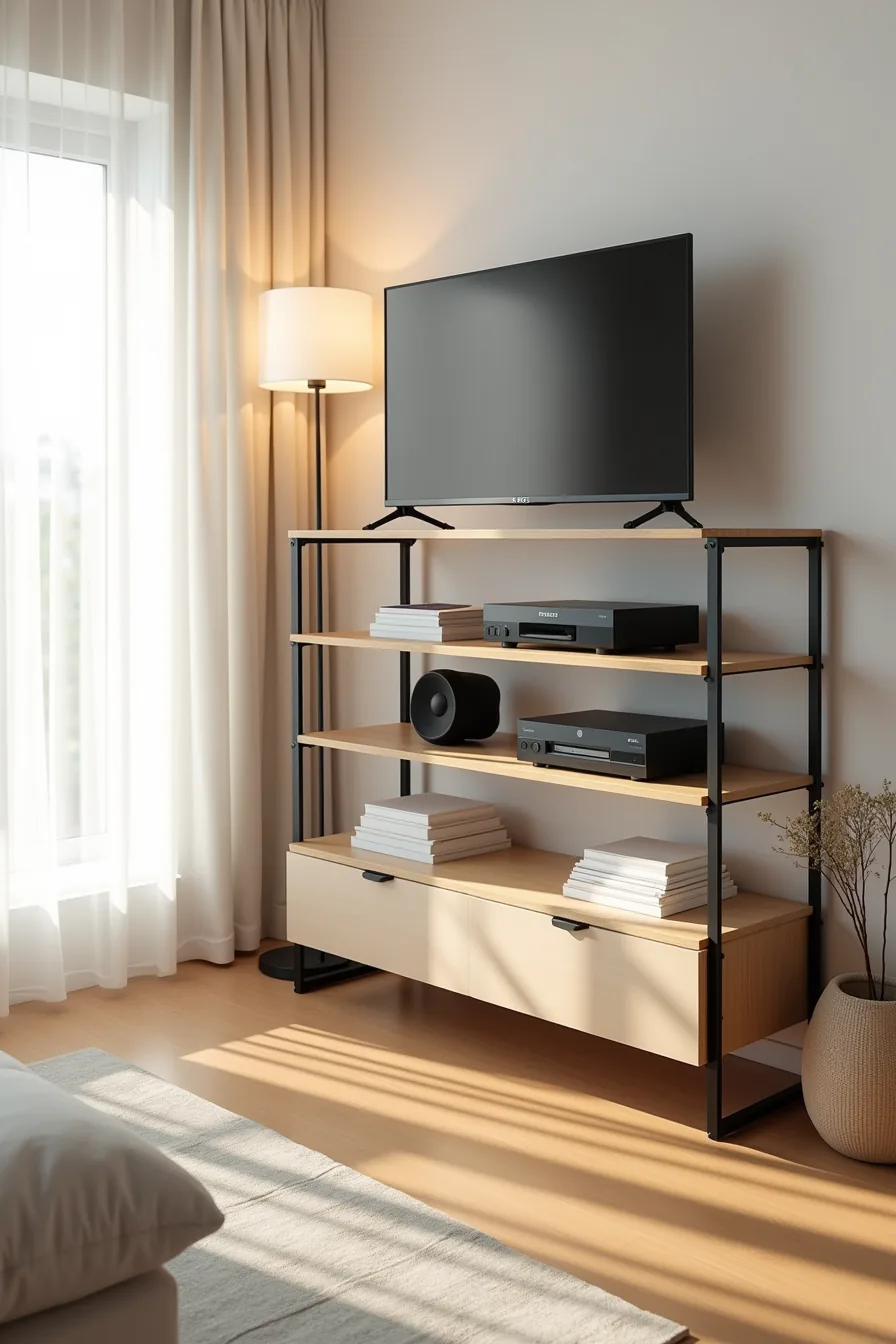
Where a solid cabinet hides everything, open shelving puts your equipment on display and makes the wall feel lighter. The three-tier modular unit in this setup uses a thin metal frame with wood shelves, a combination that reads as intentional rather than cluttered because the negative space between each level gives the eye room to rest. The top tier carries the flat-screen television, the middle holds a media player and speaker, and the bottom stays empty to balance the visual weight.
Open shelving suits modern and Scandinavian interiors where you’re comfortable styling what you own. You sacrifice dust protection, so budget ten minutes weekly to wipe surfaces and cables. Modular systems let you reconfigure heights as your TV or audio gear changes, and most units in this style run $150–$400.
For cable access, leave a 2-inch gap behind each shelf and use adhesive clips to run cords down the frame’s rear channel rather than letting them dangle across the open face.
Hidden Cable Setup: Routing and Concealment
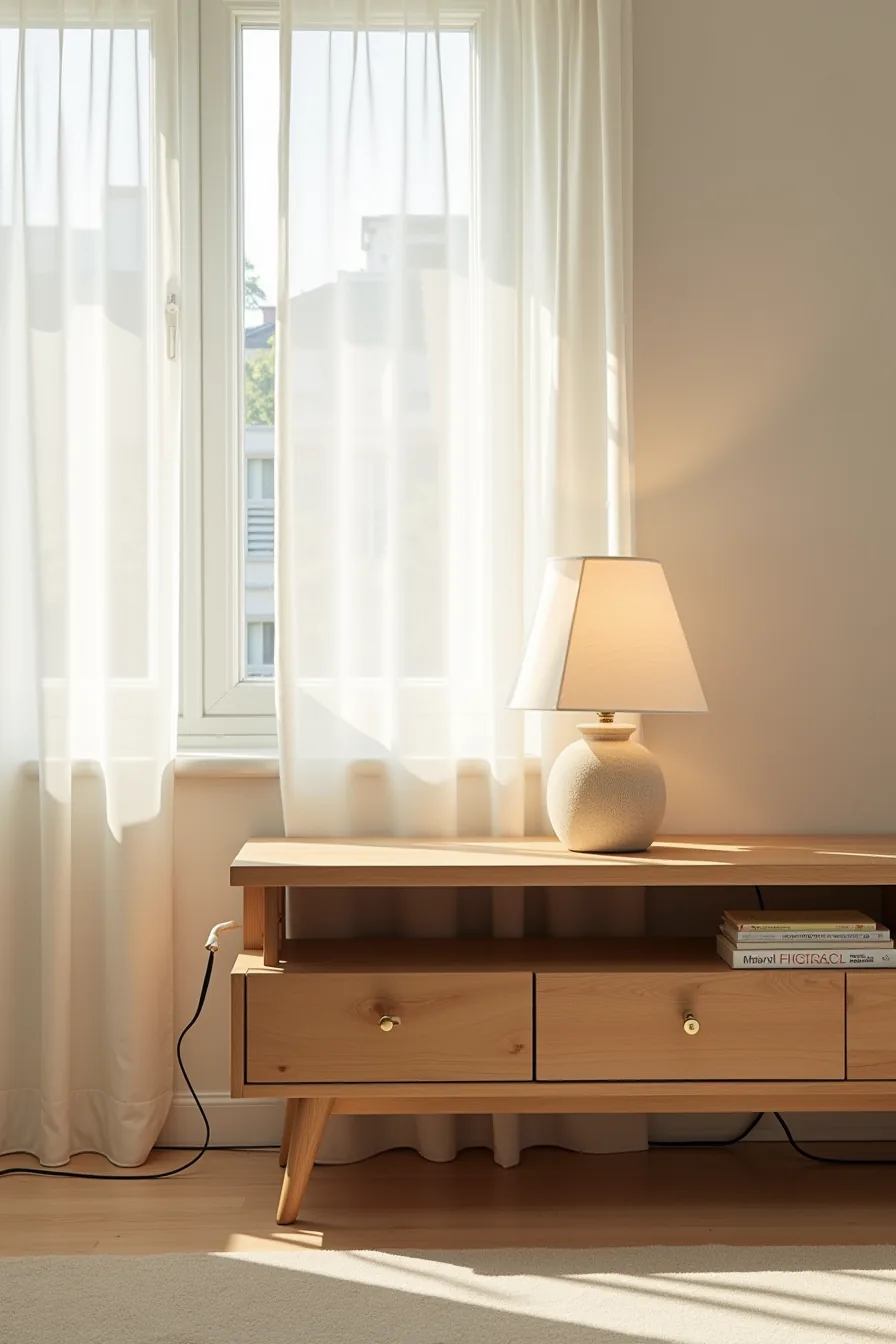
A finished TV stand depends on what you can’t see. The cleanest route for most setups is a fabric conduit, a flexible sleeve that bundles all cords into one manageable line. Run it vertically down the inside of a stand leg and exit at floor level into a cable management box, exactly where your power strip and excess cord length should live.
Label each cable with reusable ties before you bundle them; you’ll save yourself twenty minutes of untangling the next time you swap a device. The fabric conduit costs $10–$25 for a 6-foot length and flexes around corners without kinking. Match its color to the stand’s leg, black or dark gray disappears against most wood finishes.
For a truly invisible result, cut a 1.5-inch hole behind the TV mount and another at baseboard height, then fish cables through the wall cavity. That route requires a drywall saw, a stud finder, and roughly an hour of work. Renters should stick with the conduit method, it leaves zero permanent damage and fully solves the tangling problem.
Corner and Angled Placements for Awkward Layouts
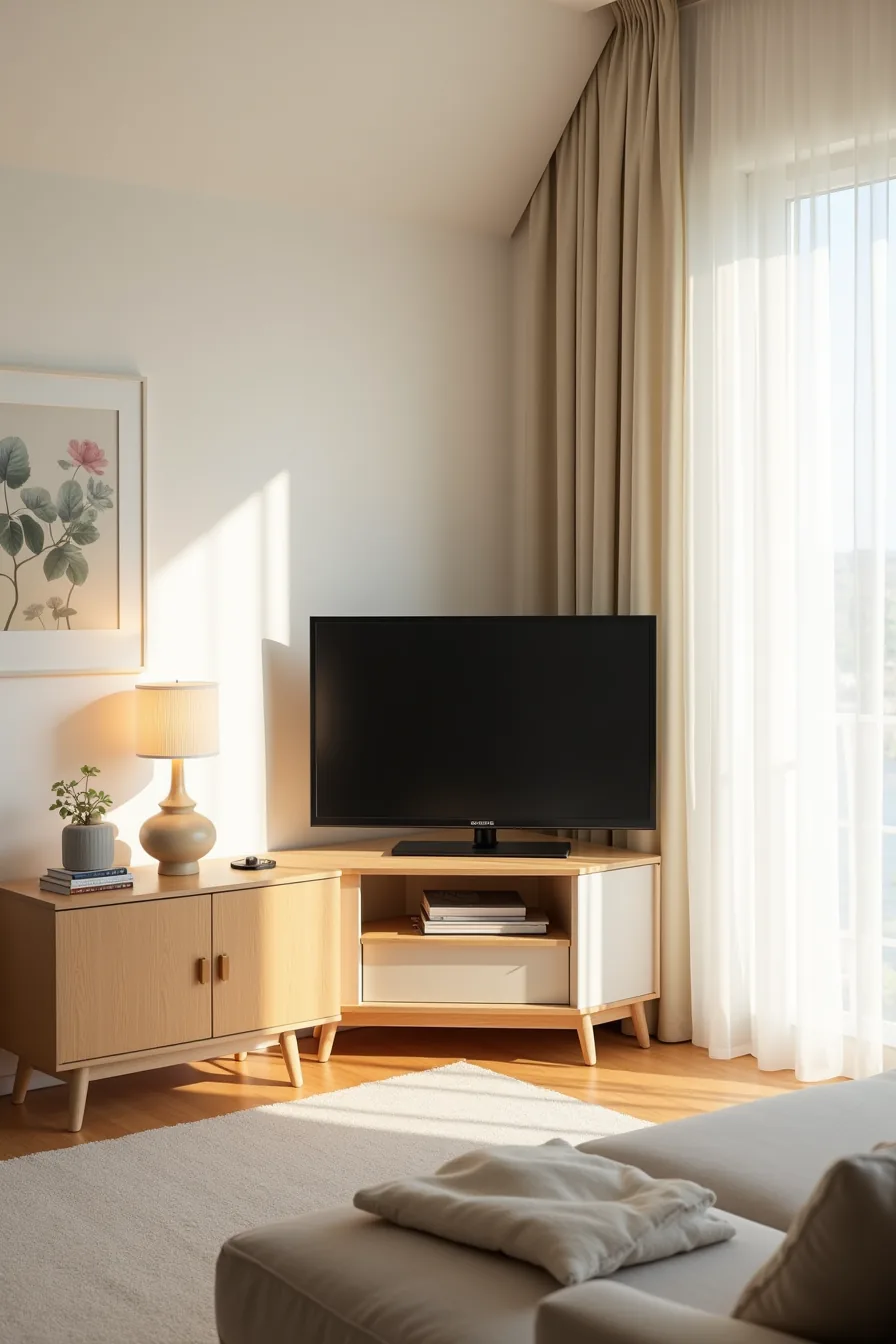
When a room hands you a sloped ceiling or an off-center wall, fight the geometry instead of fighting the furniture. A corner stand set at 45 degrees turns dead space into the room’s focal point, and it’s the single most effective way to open up a small floor plan. Pair it with a rotating base so the television swivels toward your seating area when you watch and flushes flat against the corner when you don’t.
That rotating base is the piece that makes the layout work, it gives you a 30-degree swing in either direction without moving the stand itself. Budget for a base rated for your TV’s weight plus 20 percent; a 55-inch display typically needs a base supporting 80–110 pounds. Measure the stand’s depth against your wall clearance before buying; most corner units run 20–24 inches deep, so you need at least that much open floor from the corner outward.
Sloped ceilings call for a low-profile stand under 24 inches tall, which keeps the screen below the roofline and preserves sightlines from every seat in the room.
Quick Room Refresh: Swapping or Styling Your Current Stand
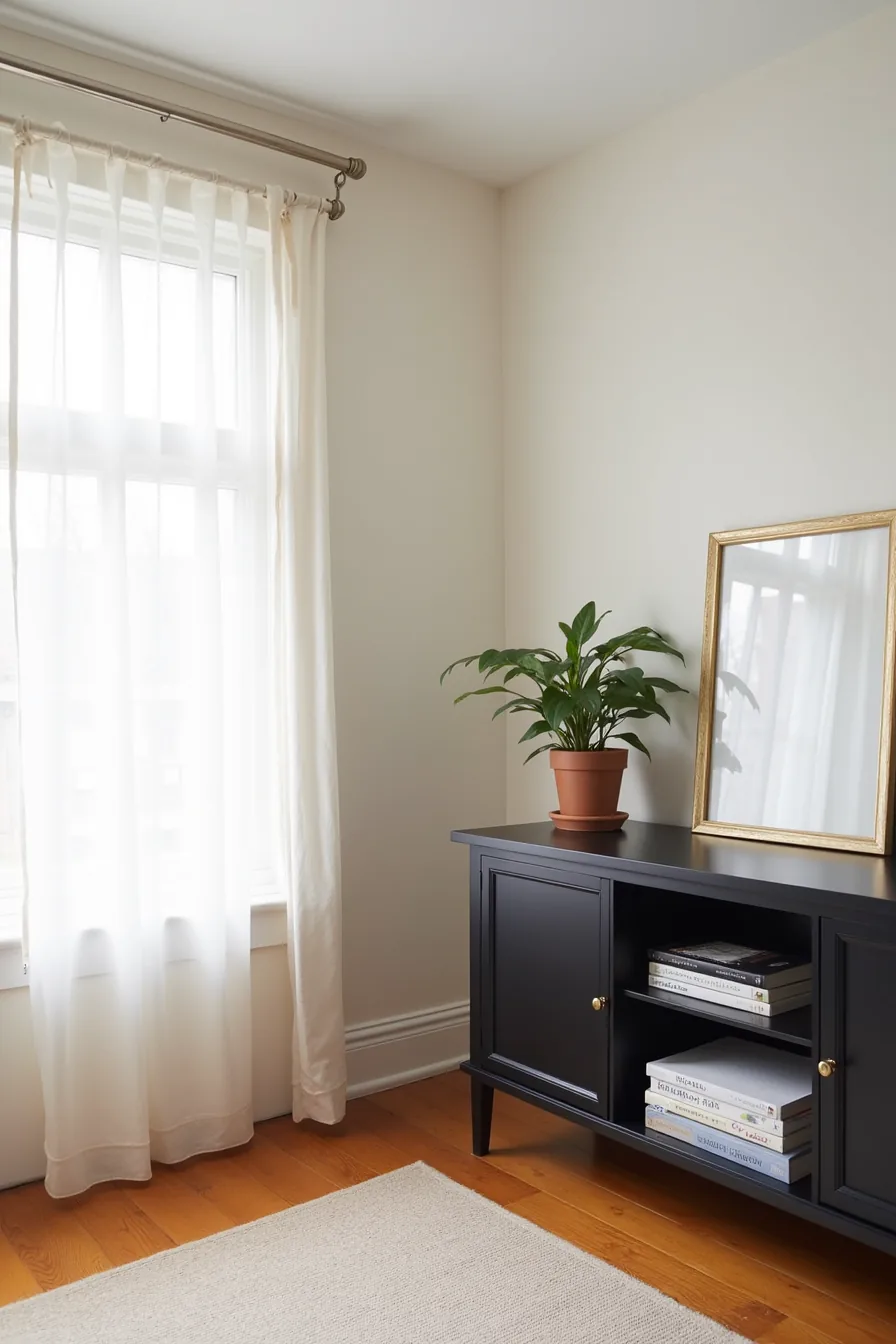
You don’t need a new piece of furniture to change the room, you need a new finish. Painting your existing stand matte black and swapping the stock pulls for brass hardware costs roughly $40–$60 in materials and takes a weekend, with the paint itself needing 24 hours to cure before you handle it. This is the fastest TV stand idea for a quick room refresh: it transforms the visual weight of the piece without altering its footprint, making it ideal for renters who can repaint before moving out.
Style the refreshed surface with the potted plant on one side and a framed print leaning against the back edge rather than hanging, that angled placement adds depth without requiring wall anchors. Beneath, tuck media boxes to contain cables and remotes; woven or fabric bins in a neutral tone keep the look intentional while hiding the clutter that makes a stand read as messy. This refresh suits small spaces best, where a lighter or darker finish can visually recede or anchor the wall, and it works on any stand with flat, paintable surfaces, skip it for veneered or laminate pieces that won’t accept latex paint without peeling.
What to do first
Measure your TV’s width and the distance from your primary seating position before you browse a single product. That gives you two hard numbers: the minimum surface width (TV width plus 4–6 inches on each side) and the maximum screen size your room supports (seating distance in inches divided by 1.5 to 2).
Write those figures on a sticky note and keep it visible. When you shop, compare every option against that note first, if it doesn’t fit, move on regardless of how good it looks. Your next step is choosing one room constraint you’ll prioritize: budget, rental flexibility, or long-term durability.
Frequently Asked Questions
What size TV stand do I need for a 55-inch TV?
Choose a stand at least 48–55 inches wide, roughly the TV’s width or slightly wider. Depth should be 15–18 inches to support the base securely. Measure your TV’s actual footprint before buying.
Can I use a floating TV stand in a rental apartment?
Yes, if you use heavy-duty anchors rated for your wall type and patch holes before moving out. Avoid floating units on plaster or thin drywall. A freestanding console is safer if you lack permission to drill.
How do I hide cables behind a wall-mounted TV?
Install an in-wall cable kit with a power-rated low-voltage pass-through, or run cables through a cord cover painted to match the wall. Never route power cords inside walls without a proper kit. Leave slack at both ends for adjustments.
What is the best height to mount a TV stand?
Mount the stand so the TV’s center sits 42–48 inches from the floor, eye level when seated. For a console, choose a piece 24–30 inches tall. Adjust for your viewing distance and seating height.